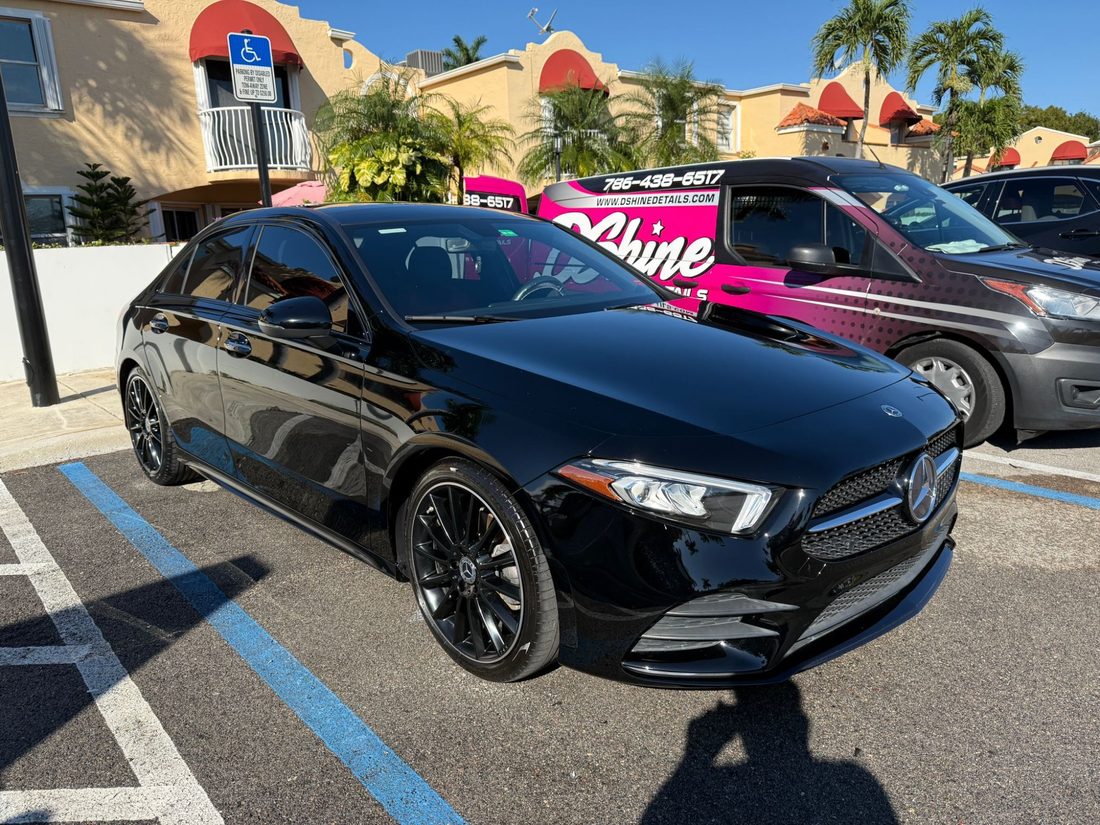
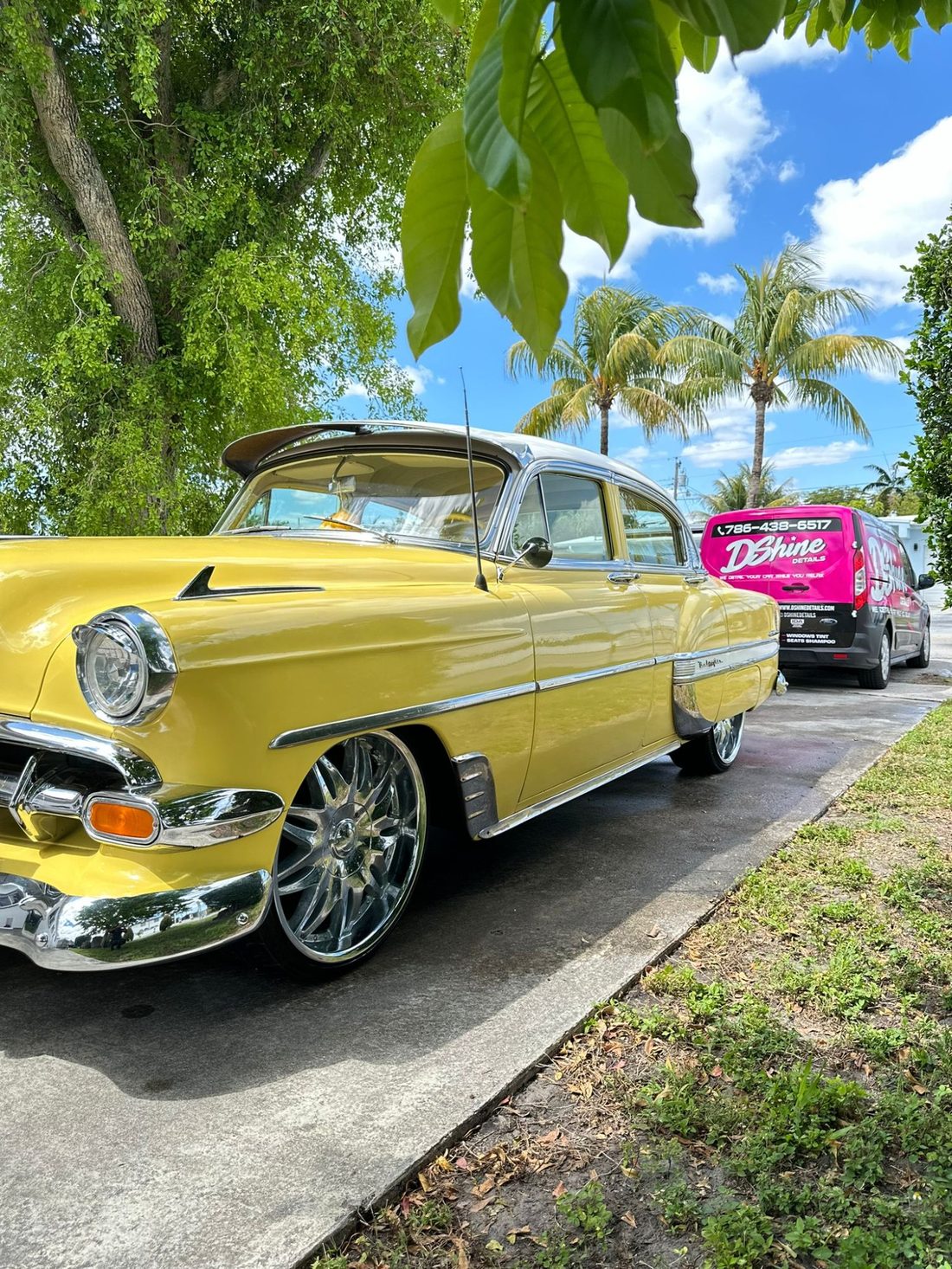
The standard "detail twice a year" advice was written for someone in Chicago or Denver. In South Florida, following that schedule means watching your paint oxidize, your leather crack, and your interior accumulate humidity damage before you notice anything is wrong. Florida's climate requires a completely different approach.
In South Florida’s UV, salt air, and humidity, detail your car every 3–4 months — more often for coastal or daily-driven vehicles. A maintenance Premium Detail ($299) covers interior steam + exterior decon in one visit; VIP plans from $149/visit keep it consistent. Mobile, IDA certified, travel included.
Why Florida Is Categorically Different
Three environmental factors make South Florida uniquely aggressive on vehicles:
- UV Index 9–11 year-round — compared to 3–5 in northern U.S. summers. UV is the primary cause of paint fading, oxidation, and clear coat breakdown.
- Salt air — microscopic salt particles from the ocean travel up to 15 miles inland and deposit daily on every surface, including your paint. Salt accelerates oxidation and micro-etches clear coat.
- 70–85% relative humidity — ideal conditions for interior mold growth, metal corrosion, and keeping contaminants wet and reactive on paint surfaces longer.
The Numbers
An unprotected car in Miami loses measurable paint gloss within 8 months. The same car in Minneapolis takes 3+ years to show the same degradation level. Florida's climate is 3–4x more aggressive on paint.
The South Florida Detailing Schedule
| Service | Frequency | Why It Matters |
|---|---|---|
| Hand wash / rinse | Every 2 weeks | Remove salt, bird drops, tree sap before they etch |
| Interior wipe-down | Monthly | Prevents mold, removes UV-degrading dust from dash |
| Full interior detail | Every 3–4 months | Deep cleaning, leather conditioning, mold prevention |
| Full exterior detail | Every 3–4 months | Clay bar, decontamination, protection refresh |
| Ceramic coating boost | Every 12–18 months | Maintains hydrophobic protection layer |
| Full correction + recoat | Every 3–5 years | When coating fails or paint needs restoration |
By Vehicle Type
Daily Driver — Non-Luxury
Full detail every 4 months, wash every 2 weeks. A basic ceramic spray wax applied every 6 months provides meaningful protection at low cost. Focus on keeping contaminants off the paint and the interior dry.
Luxury or Exotic Vehicle
Full detail every 3 months, wash every 2 weeks, professional ceramic coating with annual boost. The investment is proportional to the vehicle's value — a $150,000 car in South Florida depreciates significantly faster without paint protection.
Weekend / Stored Vehicle
Full detail before and after any storage period. Monthly visual inspection for mold and bird drop contamination. If oxidation or scratches appear, paint correction restores the finish before it gets worse. Ceramic coating on stored vehicles is especially valuable since they don't receive regular washing to remove contaminants.
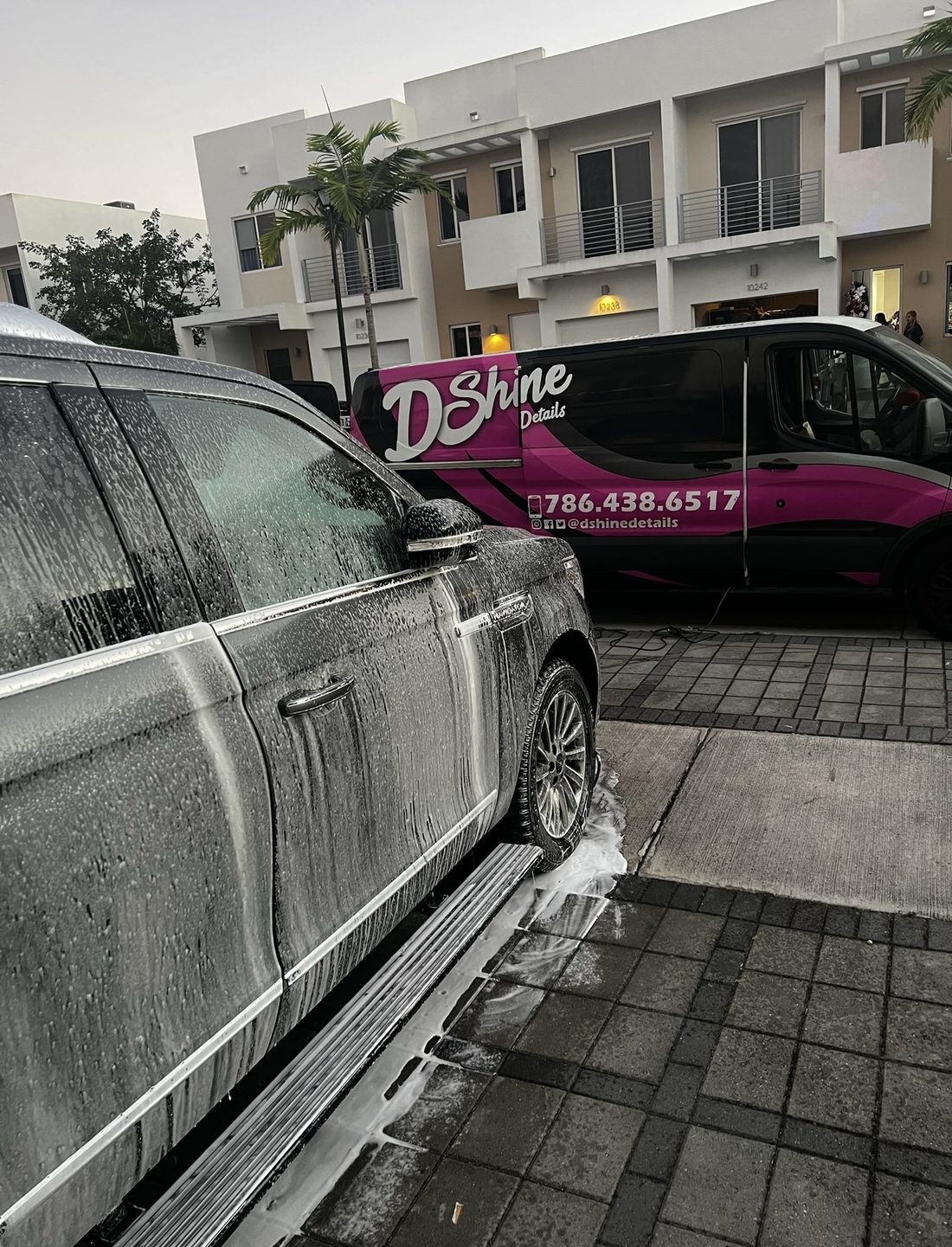
Evening mobile detail — we work around your schedule, South Florida
Warning Signs You Have Waited Too Long
- Paint looks chalky or flat in sunlight — UV oxidation has begun
- Water doesn't bead on paint surfaces — protection layer is depleted
- Musty smell inside the car — mold colony is forming or established
- Dashboard or leather cracking — UV damage is irreversible at this stage
- Visible swirl marks under any direct light — protection was lost and damage has occurred
IDA & XPEL certified · $2M insured · 5.0★ Google · travel included across 65 cities.
Frequently Asked Questions
How often should you detail your car in Florida?
In South Florida, a full interior and exterior detail every 3–4 months is recommended — not the national average of twice per year. Florida's UV, salt air, and humidity are significantly more aggressive than northern climates.
How often should you wash your car in Miami?
Every 2 weeks at minimum in Miami, and immediately after coastal drives or heavy rain. Salt deposits from ocean air should not remain on paint for more than 24–48 hours.
Does Florida heat damage car interiors?
Yes. UV radiation penetrates car windows and causes leather cracking, dashboard fading, and plastic degradation. South Florida car interiors age 2–3x faster than interiors in northern states without UV protection.
What is the best time to detail a car in South Florida?
Early morning (7–10 AM) or late afternoon (4–7 PM) to avoid peak UV hours and the daily afternoon thunderstorm window. Detailing in direct midday sun causes water spots and product flashing.