What a Boynton Beach Mold Job Includes
This is not a car wash. Car Mold Removal uses Concrobium Mold Control treatment, pH-balanced products, and machine assistance, the same process used in pre-sale preparations for luxury dealerships.
Why it matters for your health: Mold in a vehicle is a different exposure than mold on a wall at home. With the AC recirculating, everyone inside is breathing concentrated spores for the length of the drive. The EPA and CDC both link mold exposure to respiratory irritation, allergic reactions, headaches, and worsened asthma symptoms. Children, older passengers, and anyone with a compromised immune system typically react faster and more severely than a healthy adult would. By the time the smell is noticeable, spores have usually already spread through the HVAC system into every vent in the cabin.
Curious what actually happens during the visit? Tap through our real 11-step process below to see what we do at each stage and why it matters.
What every Boynton Beach mold job gets you
Most detailers in Boynton Beach charge less. Here’s exactly what you gain — and what you risk — with each choice.
| DShine DetailsFrom $549 · travel included | Avg Boynton Beach Detailer$149 – $199 | |
|---|---|---|
| Industry certificationsIDA, Koch Chemie, Meguiar’s, 3M, Symplex, XPEL | ✓6 verified | —0 credentials |
| $2M liability insuranceWe cover any damage — in writing | ✓ | —Often uninsured |
| Deionized water systemZero mineral residue, no water spots | ✓ | —Tap water, water spots |
| Fresh microfibers per vehicleNo cross-contamination between jobs | ✓ | —Shared towels, swirl risk |
| Mold-specific chemistry onlyConcrobium, Benefect & Meguiar’s, no harsh acids | ✓ | —Industrial degreasers |
| Before & after photosSent via WhatsApp on completion | ✓ | —No documentation |
| 100% written satisfaction guaranteeReturn & redo at no cost if unsatisfied | ✓ | —No written guarantee |
| Travel to your address — $0Home, office, condo — no drop-off | ✓ | Sometimes adds fee |
DShine vs. any other detailer
in Boynton Beach, Palm Beach County
Three things most detailers won't tell you. We put them in writing.
 Since 2018
With more than 20 years of hands-on experience in the automotive care industry, Evelio launched DShine Details in August 2018 with one van and zero shortcuts. For the first six months he slept in the van to keep costs down and standards up. Today DShine runs 7 certified vans across Miami-Dade, Broward, and Palm Beach, and the commitment hasn't changed. Every vehicle is treated as if it were his own.
What clients say
in their own words.
Before & After: Mold Removal We've Actually Done
No stock photos. These are real DShine mold removal jobs across South Florida, the same 11-step process and chemistry used on every Boynton Beach appointment.
 Before
 After
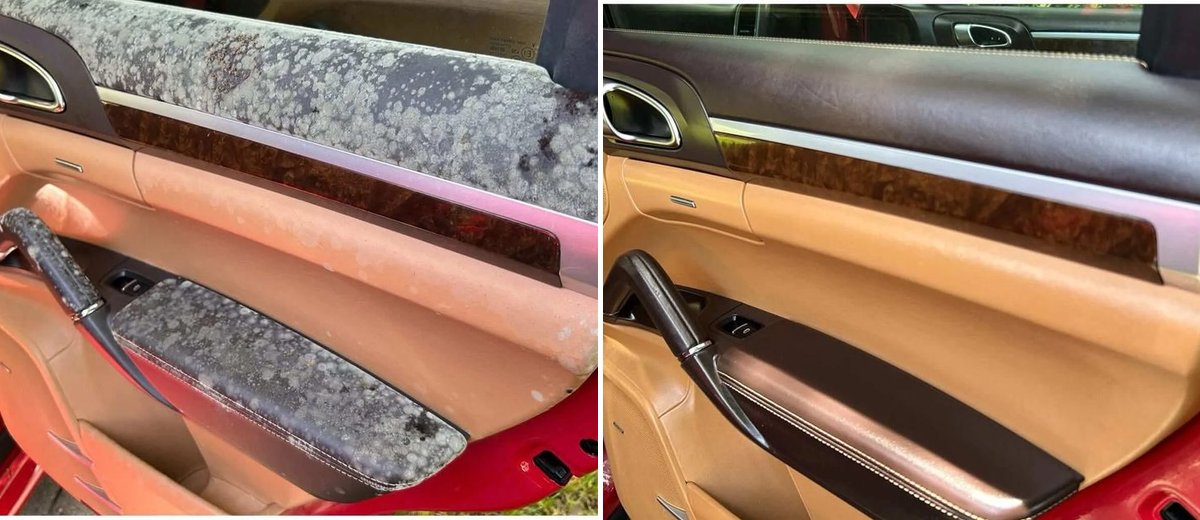
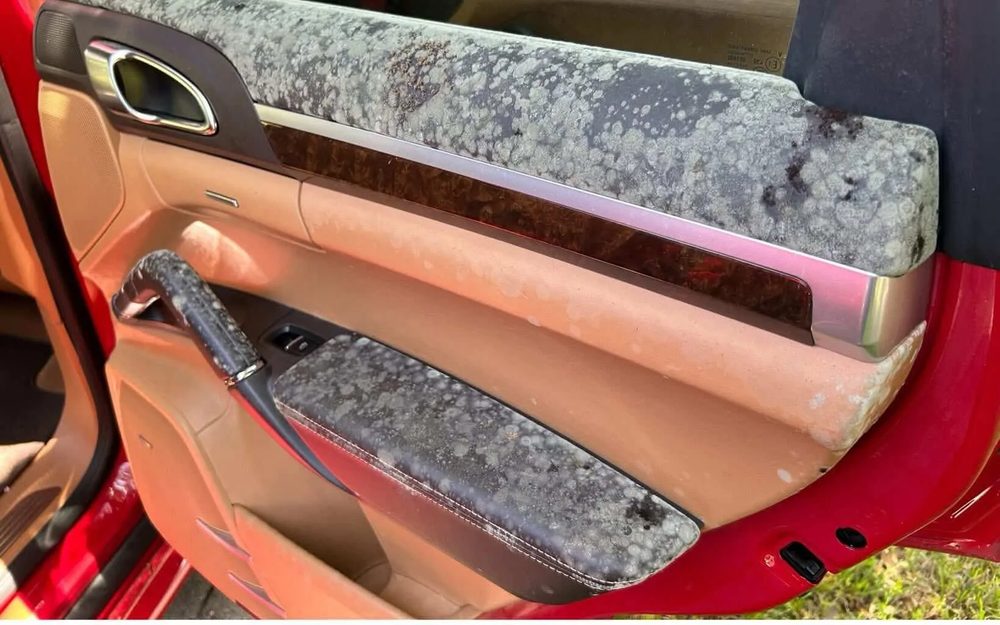
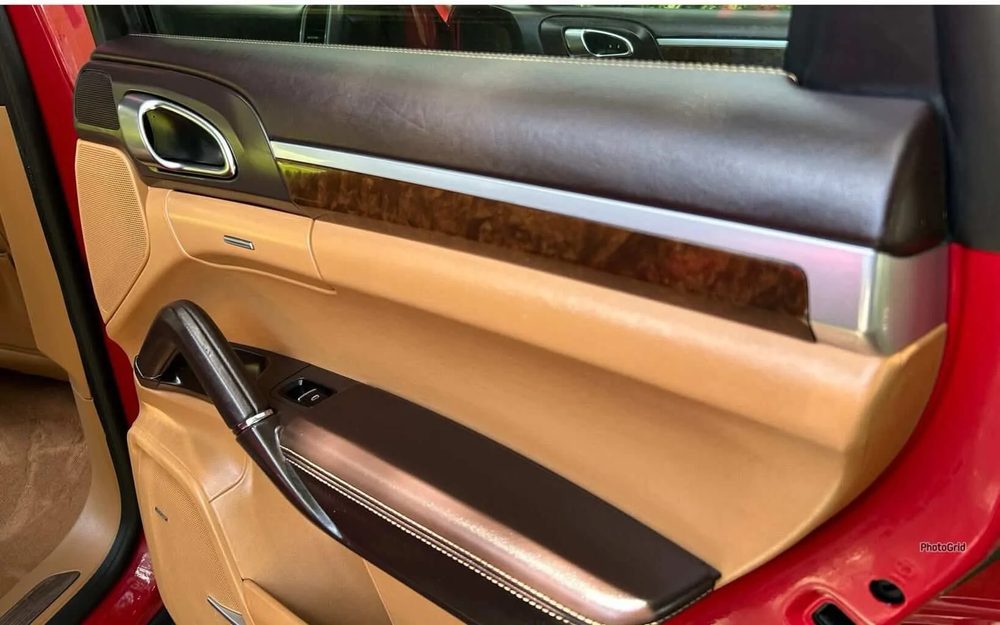
Porsche Cayenne — Door Panel & Armrest
Mold has spread across the tan leather door panel and armrest, and onto the wood trim beside it. Leather like this does not tolerate scrubbing, so the treatment is a leather-safe protocol, steam and extraction around the trim, Concrobium, then the sealed ozone cycle. A pattern worth knowing in Boynton Beach: a door seal that lets in storm water is often the starting point.
 Before
 After
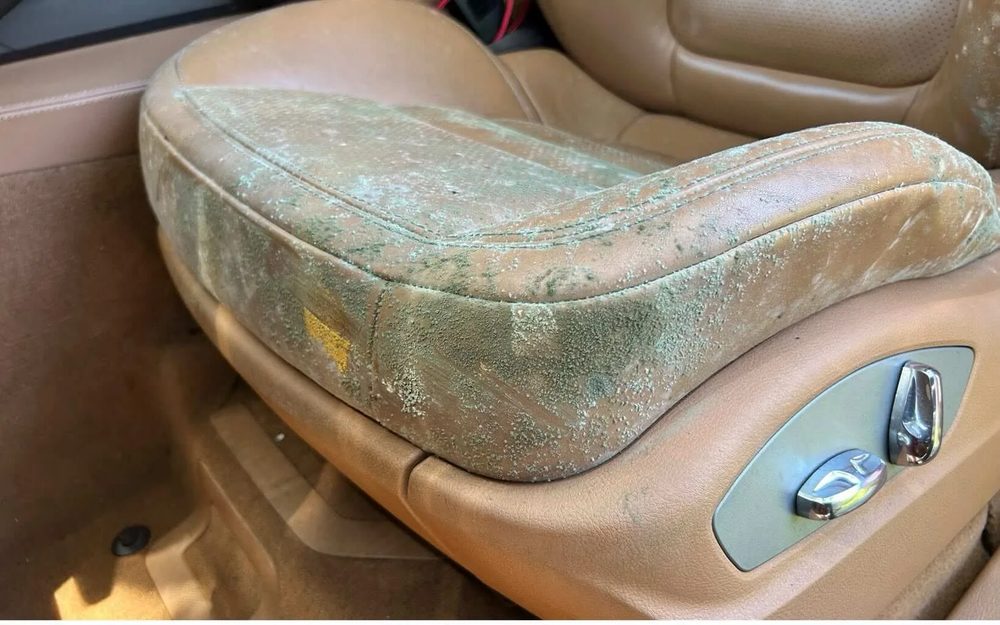
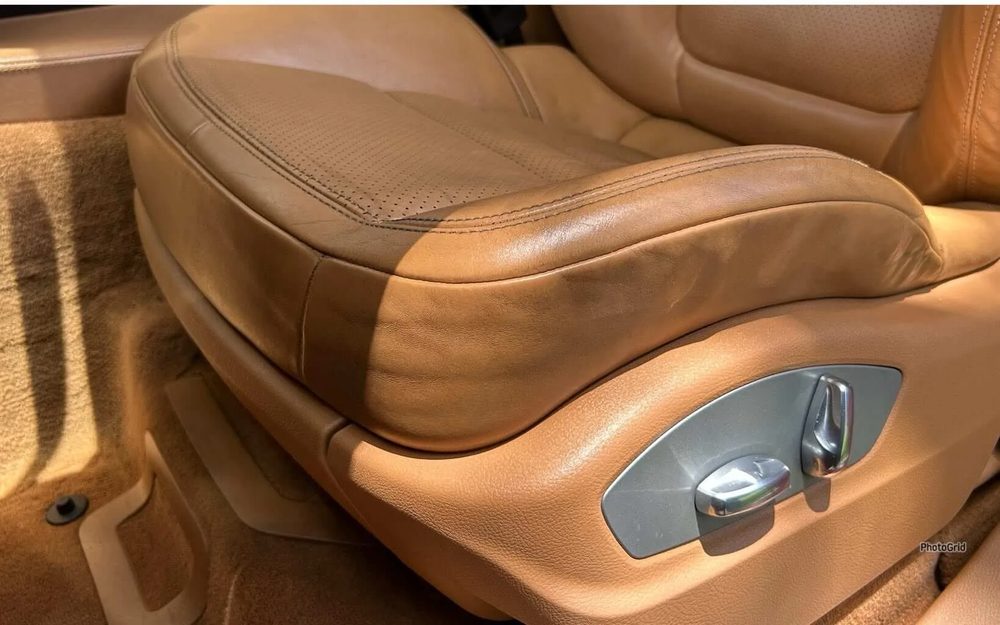
Leather Seat Bolster — Green-Blue Mold
A tan leather front seat bolster covered in green-blue mold. Color like this means an established colony, and it grows in the creases and stitching first. We lift it with a leather-safe antimicrobial, steam and extraction, then let ozone reach what is airborne. In a city this low and humid, a closed car with a damp spot is usually all it takes.
 Before
 After
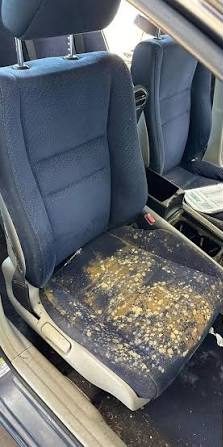
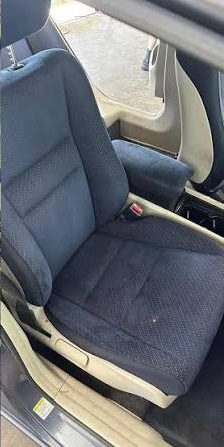
Cloth Seat Cushion — Stain Residue Underneath
On this dark blue cloth sedan, the seat cushion has been lifted to show tan and yellow mold-stain residue on the seat bottom. Hidden spots like this are why we inspect under and behind surfaces, not only what is visible. Treatment is steam, extraction and Concrobium, with a full dry-out. Daily drivers that carry damp items often show this pattern.
 Before
 After
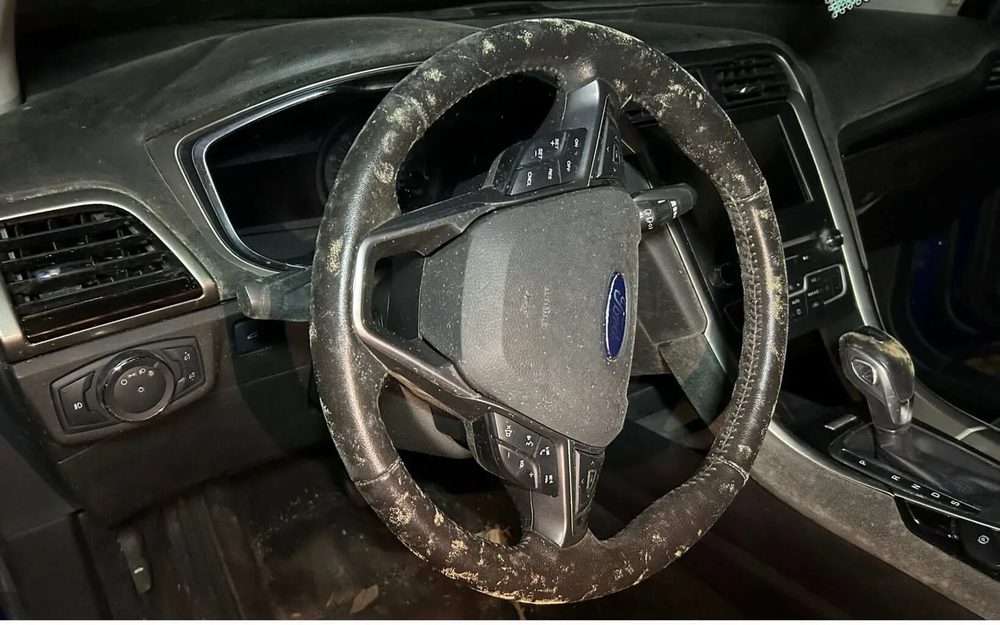
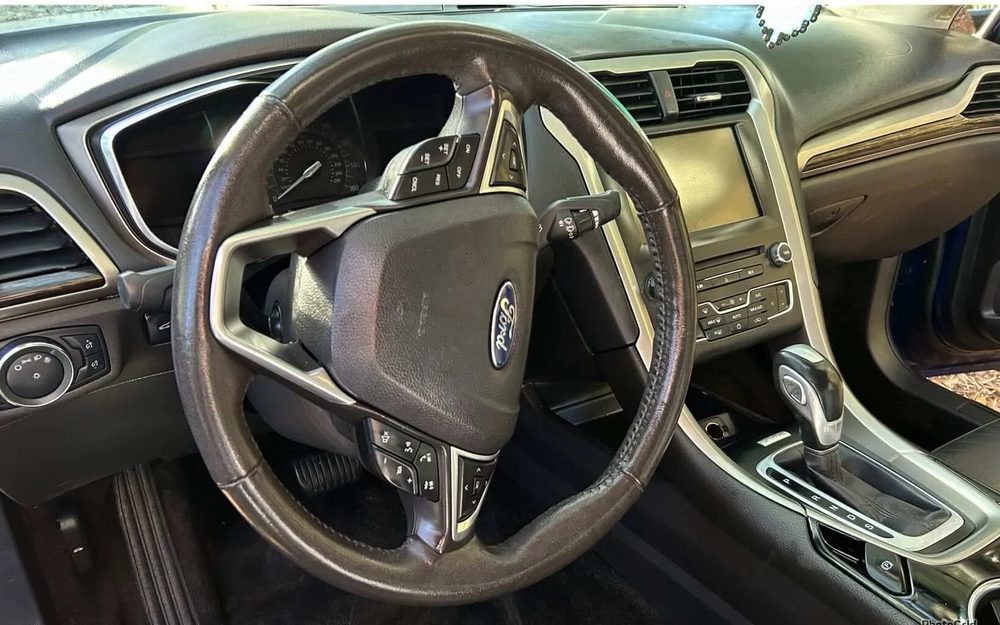
Ford Interior — Steering Wheel, Dash & Vents
A grey-white mold bloom covers the steering wheel, the dash and the vents of this Ford sedan. The vents matter most, because the A/C moves spores through them with every start. We steam and treat each hard surface, clean the vent area, and run the sealed ozone cycle. A closed car left in strong sun and humidity makes this pattern easy to see.
 Before
 After
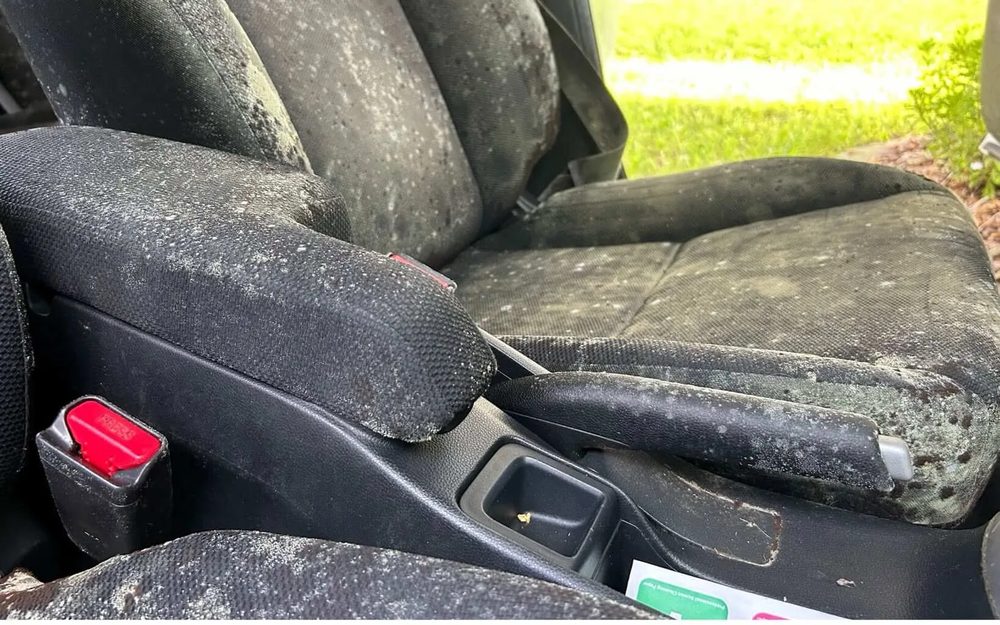
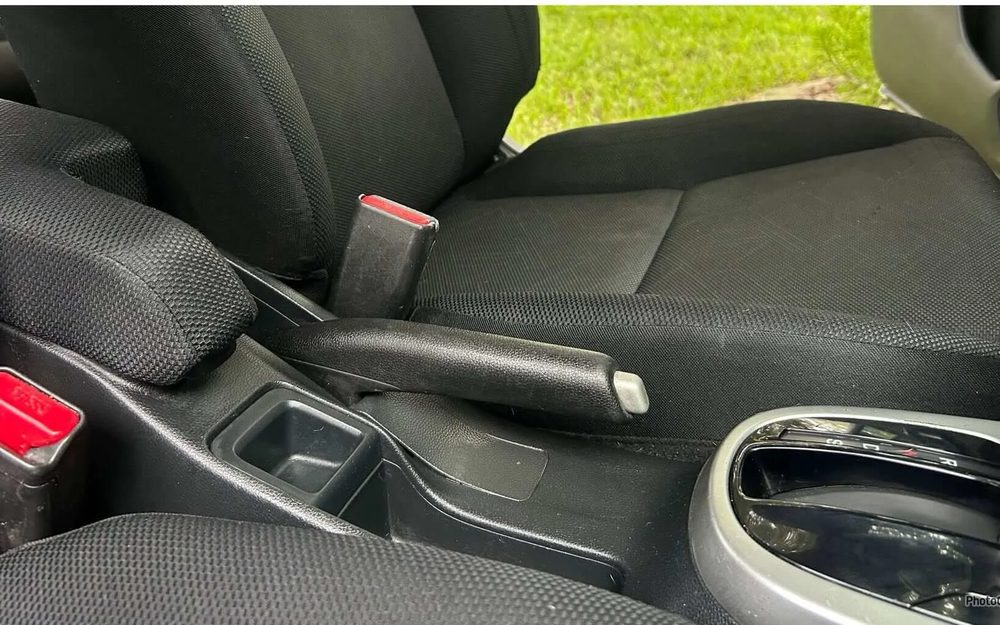
Cloth Driver Seat & Console — White Bloom
The black cloth driver seat and the armrest and console show a grey-white mold bloom, with a green lawn visible outside the window. Surface bloom like this is the easiest stage to treat, and the cloth responds well to steam, extraction and Concrobium. It often follows a stretch of damp weather with the car closed and a wet item left inside.
 Before
 After
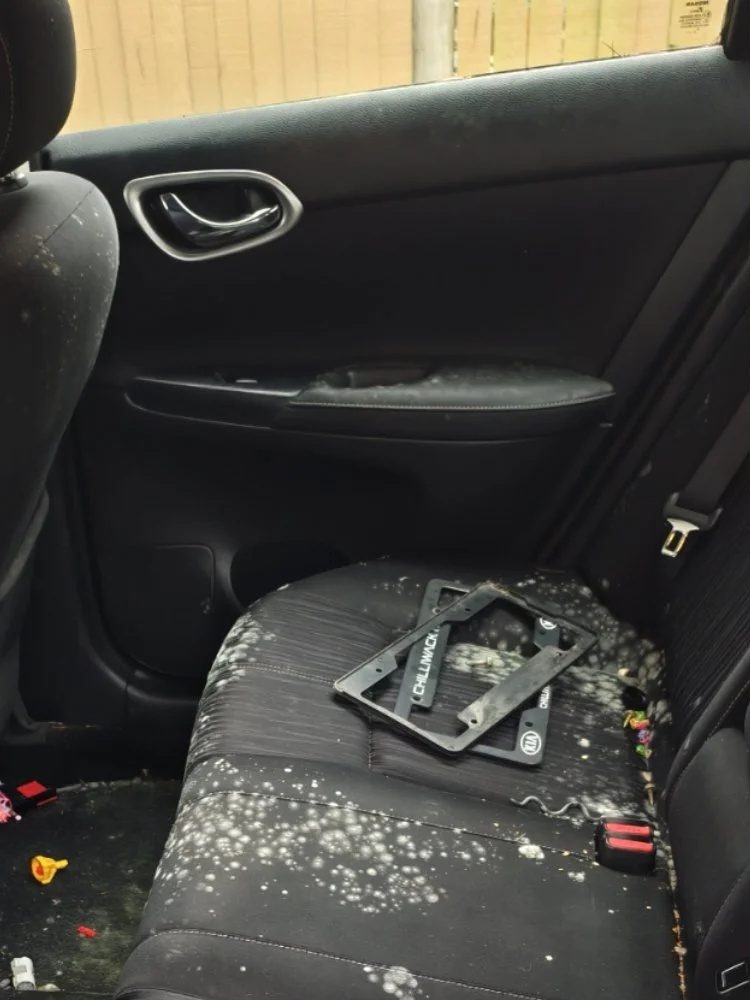
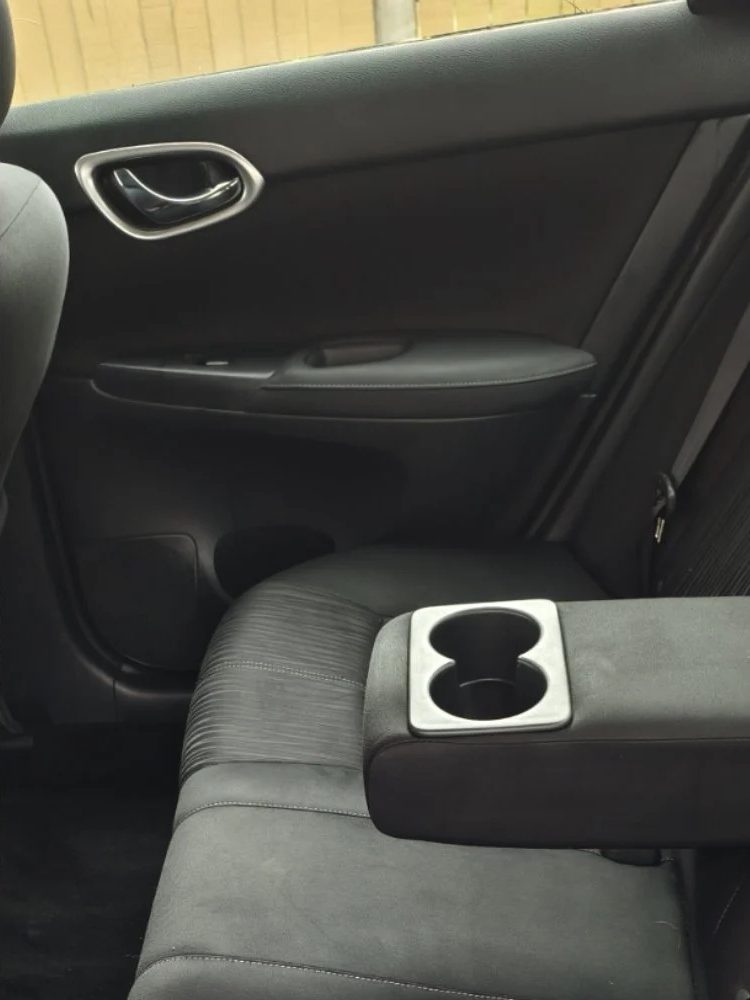
Rear Seat & Door Panel — White Mold Spots
A black sedan rear seat and door panel with white mold spots across the rear cushion, plus loose debris and a license plate frame left on the seat. We clear the debris first, vacuum with a HEPA filter, then steam, extract and treat the cushion and the panel. Back seats get less attention than the front, so mold often goes unnoticed there for longer.
 Before
 After
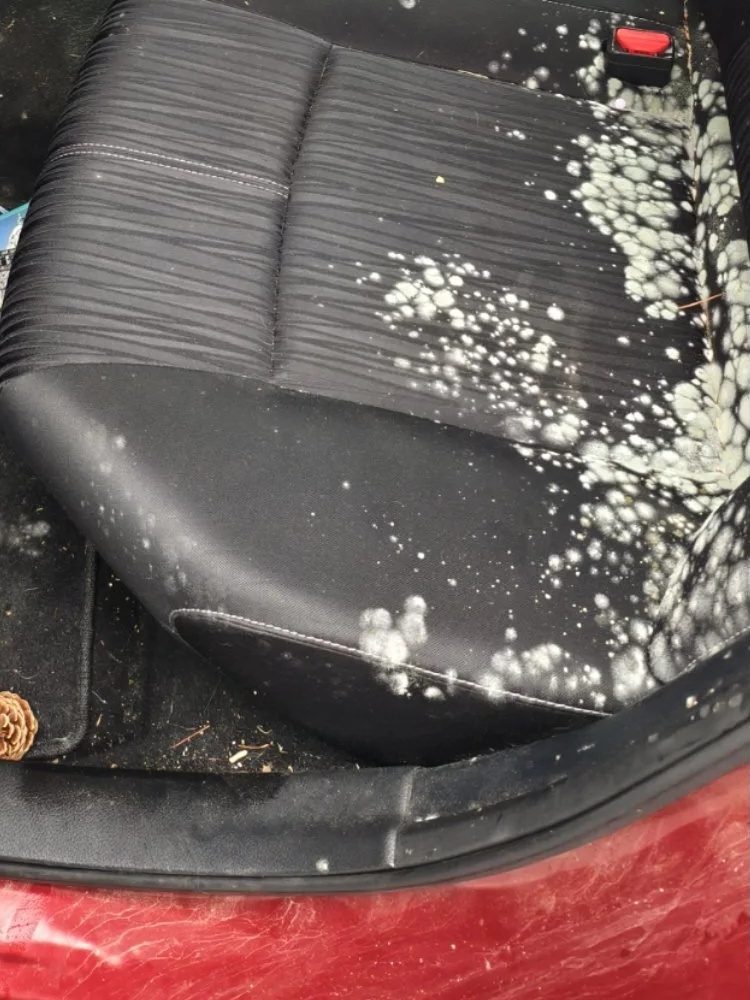
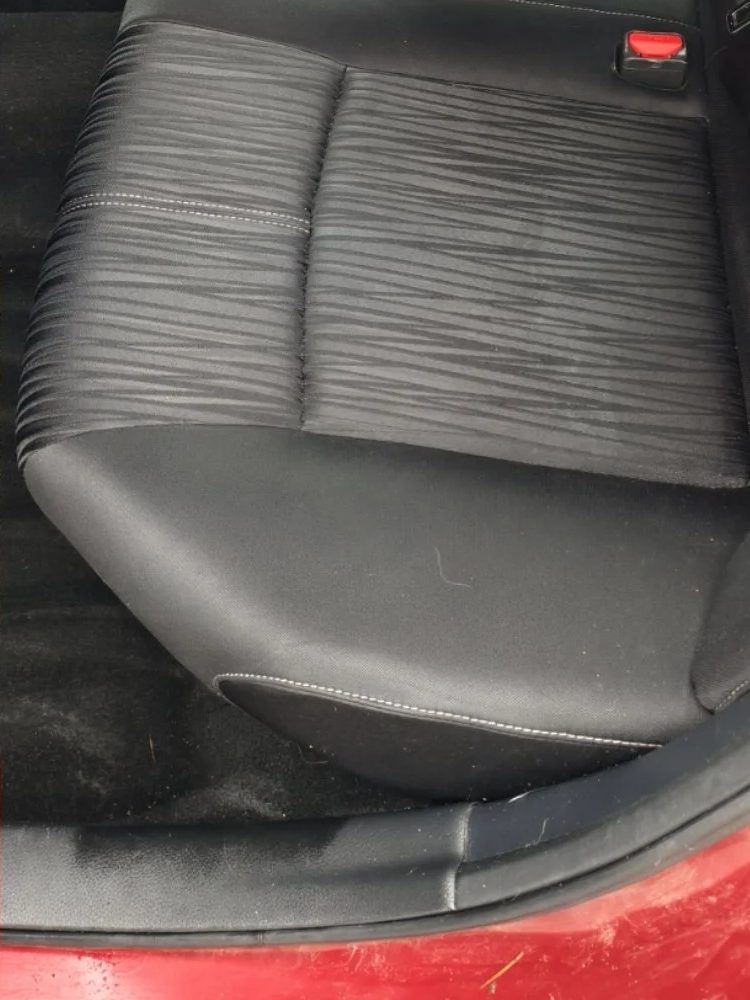
Black Cloth Seat — White Speckles
A black cloth seat covered in fine white mold speckles, with the red car body visible below the window. Speckled growth can look light but still reaches into the weave and the foam under it. We treat the surface and the layer beneath, then dry the seat fully. Wet gear or a damp towel on the seat in a closed car is a common start.
 Before
 After
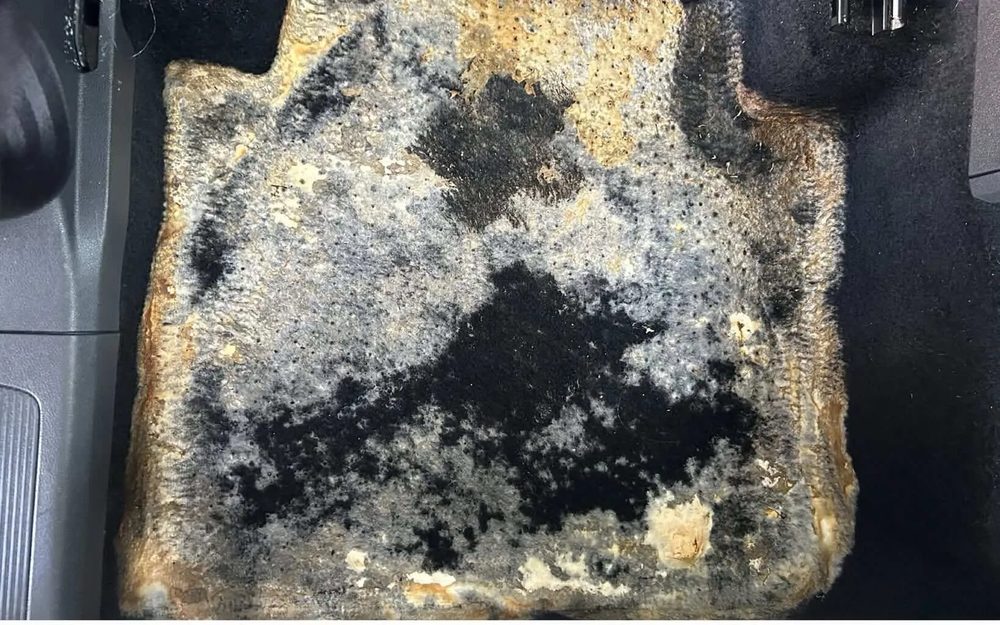
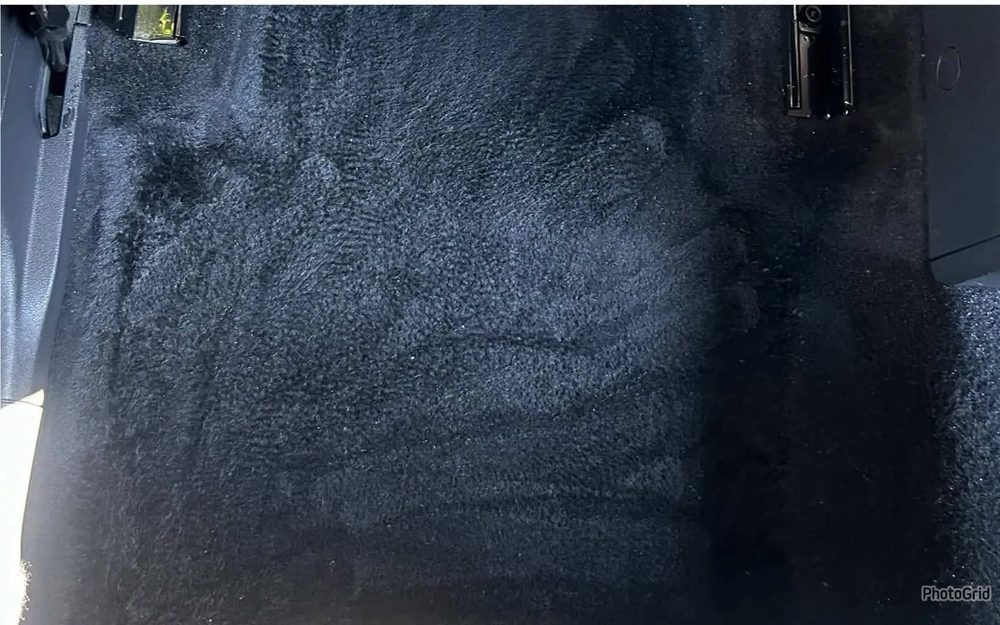
Floor Mat — Heavy Colony Growth
A carpeted floor mat with heavy black, brown and white mold colonies. This is the stage where the carpet and padding under the mat are almost certainly affected, so we lift the mat, treat the carpet and extract moisture from the padding. Floor mats collect rain and spilled drinks, and in a humid coastal city the pad underneath can stay wet for days.
100% Satisfaction.
Written. No exceptions.
If the result doesn’t meet our standard, or yours, we come back and redo it at no charge. No forms to fill out, no arguing over what “counts.” The guarantee is in writing before we ever touch your vehicle.
Request Mold Removal in Boynton Beach · From $549
Fill this in once and send it. We get your address, vehicle, and the situation all in one message, no phone tag.
Rating
Detailed
Response
Three steps at your Boynton Beach address.
We handle everything else.
No drop-off. No waiting. We come to Boynton Beach.
We come to you in Boynton Beach,
from the Harbor to Congress Avenue.
Mobile service: home, office, condo, or marina. No drop-off, no travel fee.
Not seeing your city? Ask us — we likely cover it.
A daily driver that never dries out
is what mold needs in Boynton Beach.
Boynton Beach sits about ten feet above sea level beside the Intracoastal Waterway, so the air stays heavy for most of the year and a car closed up wet can start growing mold within days. Left untreated, what starts as a musty smell becomes a real health issue for the next person who drives the car. DShine's Concrobium Mold Control and ozone process address the cause, not just the symptom, backed by $2M insurance and a written guarantee. Mold doesn't need much to get started, any trapped moisture inside a closed cabin is enough given South Florida's humidity. The source is almost always one of four things: a clogged AC condensation drain letting water pool silently on the floor pan, a failed door or window seal letting rain in, a clogged sunroof drain, or the car simply sitting unused for two or more weeks without the AC running. Around Boynton Beach, the cause we meet most is not a car forgotten in a garage. It is a car in daily use, closed up hot with something damp inside, while a drain or door seal admits a little more water each week.
Boynton Beach areas we cover,
Harbor to Congress Ave
Boynton Beach areas we serve, and how parking and housing change the mold risk at each.
Boynton Harbor Marina — At 735 Casa Loma Boulevard, about half a mile south of Boynton Inlet. Trucks and SUVs here carry fishing and diving gear, damp coolers and wet towels, and the salt air wears seals faster. A closed cabin with gear inside is the usual cause. We treat at the address where the vehicle is parked.
Boynton Beach Oceanfront Park — The beach side of the city, just north of the original Boynton Hotel site. Beach days mean damp towels, sandy mats and wet swimwear shut in a hot car. The fix is simple at first, but when towels sit for days, sand and moisture together can start mold in the carpet.
Ocean Avenue and the Intracoastal Crossing — Ocean Avenue has crossed the Intracoastal Waterway since 1911. Homes and condos near the water see humid, salt-tinged air, and cars at driveways or shared lots here are exposed daily. Door and window seals are the first things to wear, so leaks behind trim are common.
Boynton Beach Mall and Congress Avenue — The mall opened in 1985 and anchors a busy retail corridor along Congress Avenue. Cars parked in large surface lots through long shifts or long errands return to hot, sealed cabins. Retail and office staff can book treatment at home, or at work where the property allows it.
Boynton Town Center and Renaissance Commons — Part of the restaurant and retail concentration along Congress Avenue south of Gateway Boulevard. Spilled drinks, takeout bags and open surface parking make this a common source of odor and mold in daily-driver cars. Send us the lot and parking rules and we plan the visit around them.
Tri-Rail Station (High Ridge Road) — The Boynton Beach Tri-Rail station opened in December 1989, west of Interstate 95 and north of Gateway Boulevard. Commuters who leave a car for a full workday come back to a cabin closed up in the heat. If wet items are inside, mold can begin within days.
Bethesda Memorial Hospital Area — Bethesda Memorial Hospital opened in 1959 and employed 2,579 people in 2020, the city's largest payroll. Many nearby residents work nights or irregular shifts, so their cars are shut up hot after work with damp clothing inside. We book around your off hours, and you do not need to be present.
Don't see your area? Ask us — we likely cover it.
Mold in a Boynton Beach car:
what people ask us first.
Tap any topic to read the full breakdown.
The city stands at roughly ten feet of elevation, and the Intracoastal Waterway runs along its eastern side. Ground that low rarely dries out between rains, and the city's own marina page notes that the Gulf Stream runs closer to this shoreline than to any other U.S. city.
A typical year brings about 61 inches of rain, and June is the wettest month at roughly 9 inches. For a parked car, the daily rhythm matters more than the yearly total: a cabin baking in afternoon sun, a downpour around four o'clock, then a closed door all night.
Mold needs very little to begin. Fabric, carpet padding and seat foam that stay damp for 24 to 48 hours can start to grow colonies, which is why one wet weekend inside a sealed car is enough to leave a musty smell behind.
Ordinary daily drivers fill most of our calendar here: compact SUVs, family sedans and crossovers that spend the work week in a condo garage or an apartment lot and the weekend hauling beach bags, kids, groceries and wet gear. Boynton Beach is a city of families and retirees, and the cars reflect it.
A second group is the shift-worker's car. Bethesda Memorial Hospital employed 2,579 people in 2020, the largest payroll in the city, and many staff drive to nights or long shifts. Those cars sit in a hospital lot all night, then get shut up in a driveway through the hottest hours of the morning.
Then there are the low-mileage cars owned by retirees, driven a couple of times a week and often parked in the same shared condo space for months. They are rarely abused, which makes the mold harder to spot, because nobody sits in them long enough to notice the first smell.
Finally, trucks and SUVs that serve the marina and the beach: fishing and diving gear, damp coolers, wet towels and sandy mats. They are the least mysterious calls we get, since the cause usually rides in the back seat.
Condo garage or covered space: shaded and out of the rain, but often poorly ventilated. A garage that stays closed for weeks traps whatever moisture the car brings in, so a wet floor mat or a leaking AC drain has nowhere to go. The problem tends to sit hidden in the carpet until the car is next opened and the smell hits.
Open apartment or condo lot: the car takes full sun and full rain, so door, window and sunroof seals work harder and age faster. Heat bakes the cabin, a storm cools it in minutes, and that swing pushes moisture into seams. These are the cars where we most often find seal-related leaks behind the trim.
Single-family driveway or garage: a driveway beneath a large tree collects sap and leaves, and its shade leaves the roof wet well after a storm passes, while a garage can double as storage and leave the car boxed in by shelves. Neither is bad on its own; trouble starts when the car also sits unused for days at a time.
Waterfront lots and workplace lots: parking near the marina, the Intracoastal or the beach adds salt-laden air, which wears rubber seals sooner. Hospital, retail and office lots are different: the car spends hours sealed in the sun, so any wet item left inside has plenty of time to turn into a colony. If your lot has covered spots, tell us which; the shade also keeps the cabin cooler while we work.
June to October: the wet season and the busiest stretch of hurricane season. Daily storms, sealed cars in hot sun and a rain-soaked floor mat that never quite dries add up fast, and this is when most of our mold calls arrive. A leak that was invisible in spring shows itself now.
November, the tail end of hurricane season: the official season runs through November 30, so storm-prep habits linger. Cars get shut in garages, shutters go on and routines change. The first cool, dry days can fool people into thinking a smell has gone, when it has only faded for a while.
December to March: lower humidity and cooler nights mean fewer cars grow mold from scratch. This is when we find damage caused months earlier, such as a stained carpet or a damp headliner, often noticed because the owner finally keeps the windows up and the A/C running on a cool morning.
April and May: the first heavy rain after a dry spell. A seal that held all winter lets in water for the first time, and the owner often connects the smell to one afternoon storm. It is also a good moment to check the drains and wiper cowl before June arrives and the daily storms start. Hurricane-season prep that shuts a car in a garage for several days is the single moment we see most cases begin.
Most Boynton Beach visits happen at a shared property, so the first question is access. Send us the gate or guard instructions, the unit or building number, and whether guest parking is limited. If a service vehicle must register at a front desk, we can arrange that in advance rather than at the curb.
Condo and HOA rules sometimes limit vehicle work in common areas. Tell us what applies, and we plan around it: a covered space, a guest spot, or a spot in your assigned parking. We do not wash cars in ways that leave runoff in a shared lot, and we flag anything the board would care about before we start.
For hospital staff and office workers, we can work at home or, where the property allows it, at work. A nurse finishing a night shift can send a photo and a gate code, go to sleep, and find before-and-after pictures on WhatsApp once the car has aired out.
For waterfront and marina addresses, tell us the slip, the lot and any dock rules. Travel is included in the price no matter which side of the Intracoastal you live on. If the property has a rule we have not heard about, tell us early and we will adapt the plan, not discover it at the gate.
1. Damp items sealed in a hot cabin. The usual cause we find here is plainly human: scrubs, a gym bag, wet towels, an umbrella or a cooler left on the seat or floor, the doors shut, the car parked in a lot for hours. Add heat, and fabric and carpet padding stay wet long enough for mold to begin.
2. A clogged AC condensation drain. When the drain outlet clogs, water backs up and spills onto the floor pan under the front carpet. Owners often notice a musty smell the moment the A/C starts, or a damp patch under the dash, which is one reason this fault is so common in a city of daily drivers.
3. Aged door, window and sunroof seals, plus blocked cowl or sunroof drains. Rain enters during an afternoon storm, runs behind panels and soaks foam where nobody looks. Salt-laden air near the water speeds up seal wear, so this cause tends to be more common close to the Intracoastal than farther west.
4. A car that barely moves. A car driven twice a week from a shared condo space, with the A/C off and windows up, is the quiet version of the same story. It is less common here than in a resort town, but it does show up, especially after a long trip or an illness keeps the owner away from the wheel. In every case, the inspection decides which cause we are dealing with.
Most jobs begin with a short WhatsApp or text exchange covering where the car is, what you have noticed and a few pictures. We use those to give you a price range within minutes, and then we ask the practical questions about access, parking and when the car is free.
On arrival, we inspect the headliner, seats, carpet, door panels, trunk and HVAC vents before quoting a final number, which takes about ten minutes. Treatment itself runs three to four hours at your address, between the steam and extraction work, the Concrobium application and the sealed ozone cycle that closes the job.
You do not need to be there. People work through the appointment from a hospital break room, a desk or their bed after a night shift. Before-and-after photos arrive by WhatsApp, and we message you when the car has fully aired out and is ready to drive.
The first question is almost always price, and people want a number before they send photos. Our answer: $549 when mold is in one area, $749 when it is throughout the vehicle, with travel included. The exact figure is confirmed after we review your photos or description, before any work begins.
Night-shift workers ask whether they have to be awake and present. They do not. The second question from them is whether the car can be treated while parked at home during the day, and the answer is yes, as long as access is clear and the spot is allowed.
Condo residents ask about gates and guest parking, and boat owners ask whether we come to the marina. We come to the address where the car is. People also ask whether the treatment is safe for kids and pets, and we explain that nobody stays inside during ozone and the car is aired out first.
The pairing we see most is Odor Removal, since people often wonder whether the smell is mold or something else, and sometimes the answer is both. Odor Removal is $349. We look at the car first and tell you honestly which service the car needs, so you do not pay for the wrong one.
Flooded Car Detailing, also $349, is for a car that took in water recently, within 72 hours of entry. After that window mold may already be present, and Car Mold Removal is the right service. People also ask us to look at paint or protection while we are there, particularly for cars parked near salt air.
If the cabin is also dirty, the decision is simple. When mold is limited to one corner and the rest of the car is clean, we focus on the affected area so you pay for what the car actually needs. When there are sticky floors, pet hair and mold together, the job is bigger, and we tell you that before we start.
Fogged windows that take longer than usual to clear, a faint musty note only when the A/C first blasts on, or a damp patch you feel with your hand rather than see: these usually show up before the smell does. A pale dusty film on a seat belt, a seat bolster or the steering wheel is another quiet sign.
Allergy flare-ups in the car are worth noting. If a passenger sneezes, coughs or gets headaches only while driving, the cabin air may be carrying spores. Lift the floor mat and press the carpet beneath it; if it feels cool or damp days after the last rain, something is wet underneath.
Look for stains as well. Tan or yellow marks on a cloth seat cushion, small dark flecks along a seam, or white speckles on a dark seat usually mean moisture has been present for some time. Check the seat rails and the seat-belt anchors too, because they are low and shaded, and dry slowest after a spill or a leak.
Idle periods in Boynton Beach are usually short and irregular: a week of 12-hour shifts, a business trip, a spell of bad weather, a long recovery after surgery. Take everything out of the cabin that could hold water, including towels, umbrellas, takeout bags and gym clothes, before the car sits.
Park in the driest spot you have, leave the car locked with the windows fully up, and check the door seals for cracks. After a hot drive with the A/C working hard, let the fan run alone for a minute at the curb so the cooling coil is not left wet and dripping. Then start the car once a week and let it run with the vents open.
If a long idle stretch is unavoidable, ask a neighbor or relative to start the car and open the doors for a few minutes on a dry day. If you return to a smell, do not wait for it to fade, because it rarely does. Treat it before it settles into the foam, when the job is still smaller.
Plenty of Boynton Beach homes keep a car per working adult plus a spare that rarely leaves the space. If one has mold, check the others, because they often share the same garage, the same lot, and the same habits of leaving wet things inside.
When we treat more than one car at an address, we can plan the visit so the cars are done back to back, rather than on separate days. Send photos of each, and we will confirm a price for every vehicle before any work starts, so you know the total up front.
Households with a work truck and a family car often find the truck brings the moisture in, from wet tools, boots and bags, while the family car carries snacks and beach towels. Tell us what each car is used for and we will point out where we expect to find the problem before we arrive.
Our promise on this service is a 100% written satisfaction guarantee lasting 30 days. Should mold or its odor reappear in that period, we return and treat the car again, free. You get the terms in writing along with your job photos.
It is not a promise that no new moisture will ever enter the car. If a clogged drain or a failed seal is still letting water in, mold can return, which is why we point out the likely source during the inspection and advise fixing it first.
To use the guarantee, message us on WhatsApp with a photo and a short description of what you see or smell. We schedule the re-treatment at your address, the same way as the first visit, at no charge. We compare against the original before-and-after photos, so there is a clear record of what was treated.
An older car, or a work truck that has carried tools, wet boots and bags of ice, gets a different plan than a three-year-old crossover. Seals are drier and more brittle, carpet may be thinner, and the headliner may already show stains. We inspect first and tell you what steam and extraction can recover.
For older cars with original upholstery or cracked dashboard plastic, we use gentler settings and spot-test products before applying them. If a panel or foam section is too far gone, we say so during the inspection, rather than promising a result we cannot deliver.
Work trucks and vans deserve a separate note. Rubber floor liners hold water in a way carpet does not, and mold often grows underneath them while the top looks clean. We lift them, treat the carpet or bare floor, and tell you if a damaged liner or a clogged drain is the reason water keeps collecting.
Clear the cabin of anything damp or organic: towels, uniforms, coffee cups, fruit, food wrappers and the bag in the footwell. Wipe the dash, fold the sun shade, and check that all windows and the sunroof are fully closed.
If you can, park under cover and away from sprinklers or a dripping tree. Run the A/C on fan for a minute before shutting off, ask someone to start the car for a few minutes, and take a photo of the interior before you leave, so you can compare it when you return.
After a trip, do the opposite. Open the doors for a few minutes before you get in, sniff the carpet near the pedals, and run the A/C with the windows down for a short drive. A musty smell right after a long absence deserves a photo and a message to us, not an air freshener.
Mold does not wait for an inconvenient week. Once it takes hold in carpet padding or seat foam, it spreads through the material, and the longer it sits, the deeper it travels. A small, single-area problem treated early costs $549, while one that has spread across the cabin costs $749.
Waiting also affects health and resale. Passengers breathe whatever the A/C blows across the vents, and a car with a musty smell loses value fast. If a car already smells, treat it now, because the next storm will not make it smaller.
There is a quieter cost too: foam and carpet padding that stay wet for weeks can stain for good, and a damaged headliner or seat cushion may need replacement. We treat everything that is salvageable, and our inspection tells you honestly whether the damage has gone past what cleaning can fix.
Picture the cycle. A nurse or technician leaves a hospital lot in the morning, drives home with the cabin damp from a rain shower or sweaty scrubs, parks at the curb or in a driveway, and shuts the car for the day while sleeping. Nothing moves air through it for eight hours of rising heat.
Repeat that five or six nights a week through summer, and the carpet under the driver's seat never fully dries. The fix is simple: take wet items out, crack the windows if it is safe, run the A/C on fan before parking, and ask us to treat the car if a smell has already begun.
Two small habits help a lot. Hang scrubs and towels outside the car instead of tossing them on the seat, and park in the shade rather than a sun-baked driveway. If something damp must stay inside, leave the car where rain cannot reach it. These do not replace treatment, but they slow the clock.
Send us photos or a description, and we reply with a price within minutes: $549 when mold is in one area, $749 when it is throughout the vehicle, travel included. We confirm the exact figure after reviewing your photos or description, before any work starts, and we never change it halfway through.
If the car turns out to need something else, such as Odor Removal at $349, we say so before starting. On site, the inspection either confirms the figure or adjusts it. You approve it first, and only then do we begin.
The price depends on how far the mold has spread, not on the make of the car or on which part of Boynton Beach you live in. One seat or a door panel is one area; a headliner, carpet and vents together is the whole vehicle. If you are unsure, send photos of everything and we will tell you which tier fits.
Boynton Beach is low, humid and full of daily drivers, so mold here usually starts with moisture trapped in a car that is used every day, not with a car that is forgotten. Wet clothes, a clogged AC drain, an aging seal or a stormy afternoon are the usual causes.
Our price is $549 for mold in one area and $749 for mold throughout the vehicle, with travel included and the exact figure confirmed first. We come to your home, condo, office or marina lot, and you do not need to be present.
Every visit follows the same 11-step sequence and carries a 100% written satisfaction guarantee: if mold or mold odor returns within 30 days, we re-treat the car free.
For readers across town: we cover the whole city, from the Intracoastal side to the neighborhoods west of Interstate 95, plus nearby Palm Beach County addresses. The same steps apply whether the car sits at a condo, a house, a workplace or a marina.
Once the steam, moisture removal and Concrobium work is done, the doors close and a professional ozone generator runs in the sealed cabin. The gas finds spores and odor molecules in vent paths and fabric that a cloth never touches. Nobody stays inside the vehicle while it runs.
When the cycle ends, the car is opened and left to ventilate until it is safe, and we message you when it is. A closed condo garage can slow that stage compared with an open lot, so we plan extra time for it.
A few practical points. Keep pets and children away from the car while the cycle runs, because it runs sealed and unoccupied. When the car has aired out, we do the Meguiar's odor bomb and the final check, so the cabin smells clean rather than perfumed, and we confirm with you before you open the door.
Straight answers
for Boynton Beach drivers.
Add-ons Boynton Beach clients book
Still deciding? Read: the complete mold removal guide · does insurance cover it? · why DIY mold removal fails.
Mold in your Boynton Beach car? Book the visit.
Serving Boynton Beach and all of Palm Beach County. Fixed pricing, no travel fee. We confirm in under 2 minutes.
It Might Just Be an Odor Problem
If there's no visible mold growth yet, the smell alone is usually an Odor Removal Detailing case ($349 flat) — faster than full mold remediation ($549–$749). See which one matches what you're dealing with: