What a Wellington Mold Job Includes
This is not a car wash. Car Mold Removal uses Concrobium Mold Control treatment, pH-balanced products, and machine assistance, the same process used in pre-sale preparations for luxury dealerships.
Why it matters for your health: Mold in a vehicle is a different exposure than mold on a wall at home. With the AC recirculating, everyone inside is breathing concentrated spores for the length of the drive. The EPA and CDC both link mold exposure to respiratory irritation, allergic reactions, headaches, and worsened asthma symptoms. Children, older passengers, and anyone with a compromised immune system typically react faster and more severely than a healthy adult would. By the time the smell is noticeable, spores have usually already spread through the HVAC system into every vent in the cabin.
Curious what actually happens during the visit? Tap through our real 11-step process below to see what we do at each stage and why it matters.
What every Wellington mold job gets you
Most detailers in Wellington charge less. Here’s exactly what you gain — and what you risk — with each choice.
| DShine DetailsFrom $549 · travel included | Avg Wellington Detailer$149 – $199 | |
|---|---|---|
| Industry certificationsIDA, Koch Chemie, Meguiar’s, 3M, Symplex, XPEL | ✓6 verified | —0 credentials |
| $2M liability insuranceWe cover any damage — in writing | ✓ | —Often uninsured |
| Deionized water systemZero mineral residue, no water spots | ✓ | —Tap water, water spots |
| Fresh microfibers per vehicleNo cross-contamination between jobs | ✓ | —Shared towels, swirl risk |
| Mold-specific chemistry onlyConcrobium, Benefect & Meguiar’s, no harsh acids | ✓ | —Industrial degreasers |
| Before & after photosSent via WhatsApp on completion | ✓ | —No documentation |
| 100% written satisfaction guaranteeReturn & redo at no cost if unsatisfied | ✓ | —No written guarantee |
| Travel to your address — $0Home, office, condo — no drop-off | ✓ | Sometimes adds fee |
DShine vs. any other detailer
in Wellington, Palm Beach County
Three things most detailers won't tell you. We put them in writing.
 Since 2018
With more than 20 years of hands-on experience in the automotive care industry, Evelio launched DShine Details in August 2018 with one van and zero shortcuts. For the first six months he slept in the van to keep costs down and standards up. Today DShine runs 7 certified vans across Miami-Dade, Broward, and Palm Beach, and the commitment hasn't changed. Every vehicle is treated as if it were his own.
What clients say
in their own words.
Before & After: Mold Removal We've Actually Done
No stock photos. These are real DShine mold removal jobs across South Florida, the same 11-step process and chemistry used on every Wellington appointment.
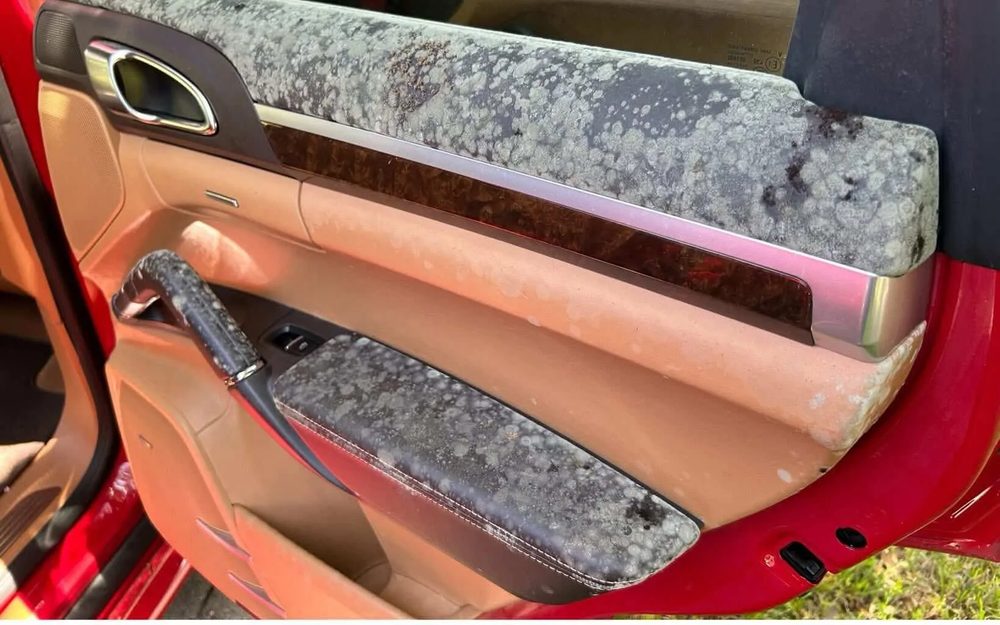 Before
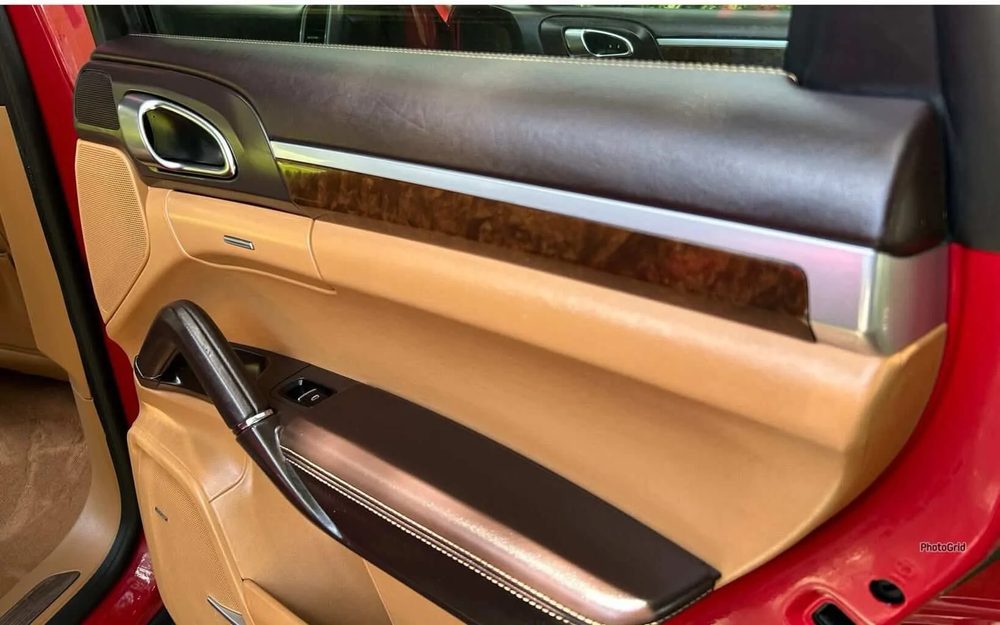 After
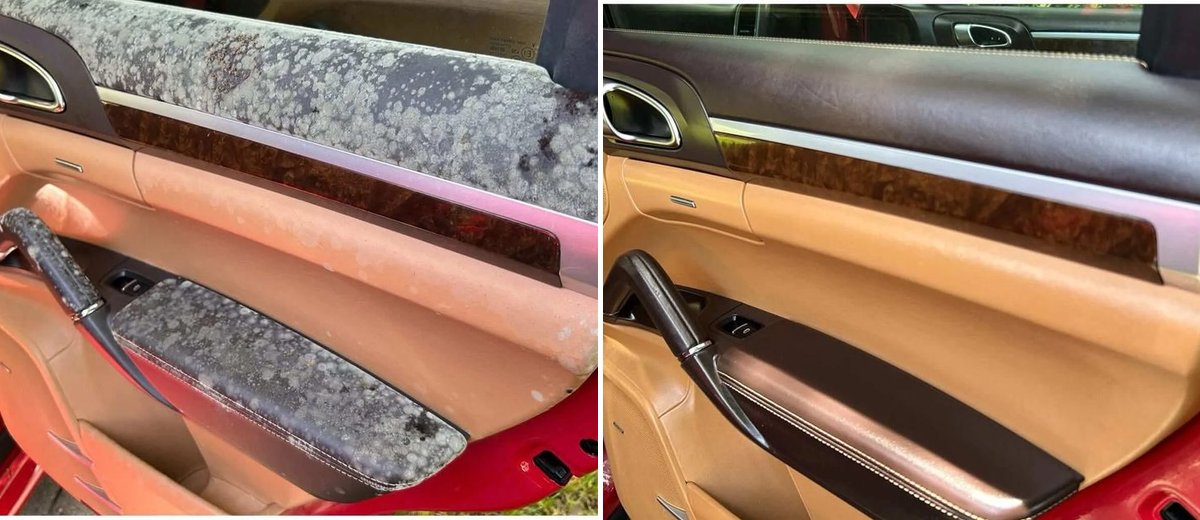
Porsche Cayenne — Door Panel & Armrest
Mold across the tan leather door panel and armrest of a red Porsche Cayenne, with wood trim nearby. Leather like this gets a leather-safe protocol: controlled steam, a leather-compatible antimicrobial and careful extraction, so the finish is not dried or cracked. In Wellington, the usual pattern behind door-panel growth is a window gap or seal that lets summer storm moisture in, or a damp item left against the door.
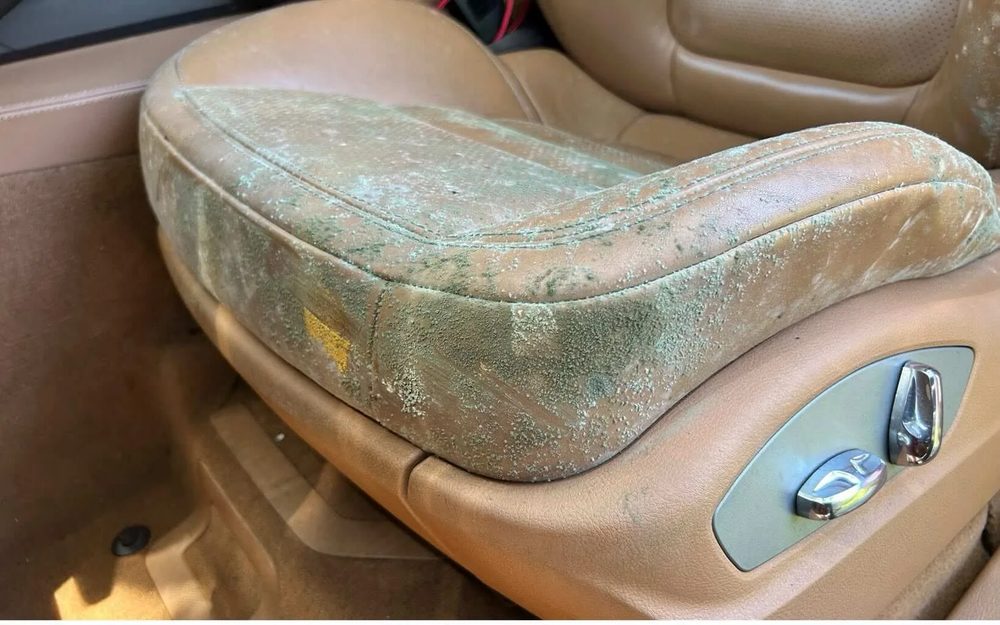 Before
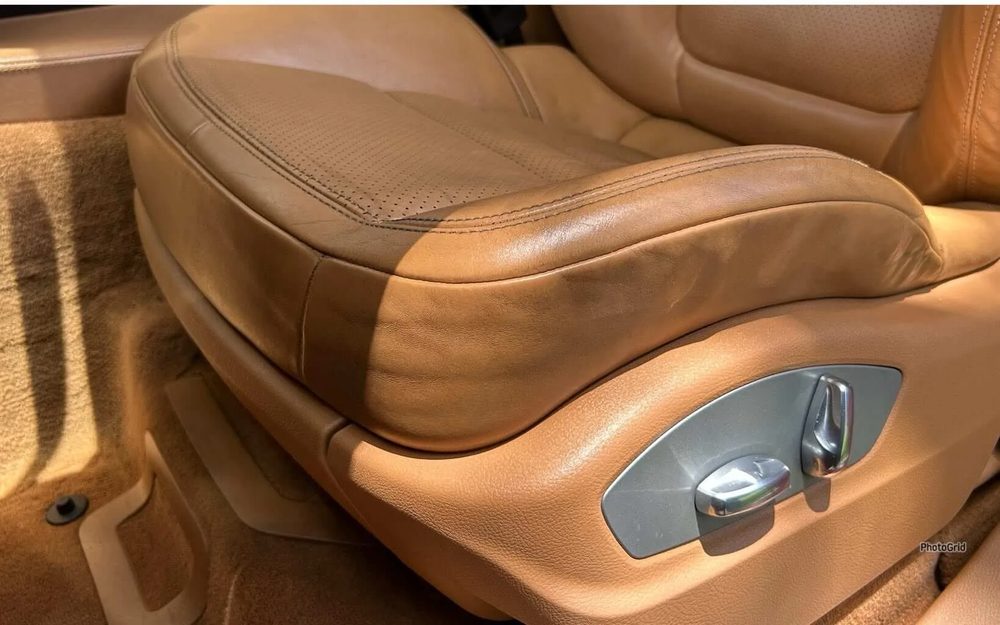 After
Leather Seat Bolster — Green-Blue Mold
A tan leather front seat bolster covered in green-blue mold. Bolsters are the first place growth shows on a daily-use vehicle, since they take the most contact and the most trapped moisture. We treat leather with a leather-safe antimicrobial and steam, then condition it. In a Wellington truck or SUV used daily, damp riding clothes and gear leaning against the seat are a common pattern behind it.
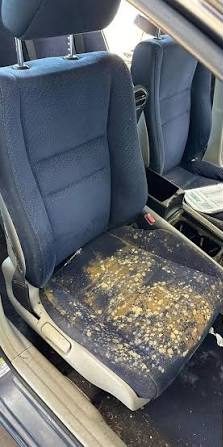 Before
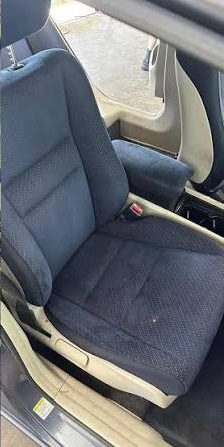 After
Cloth Bench Seat — Mold Stain Under the Cushion
A dark blue cloth sedan bench seat with the cushion lifted, showing tan and yellow mold-stain residue on the seat bottom. This is the kind of growth you cannot see until the cushion comes up. We steam and extract the fabric, treat the foam underneath with Concrobium, dry it and finish with ozone. Moisture trapped under cushions is a common pattern in humid Florida climates where a cab stays closed.
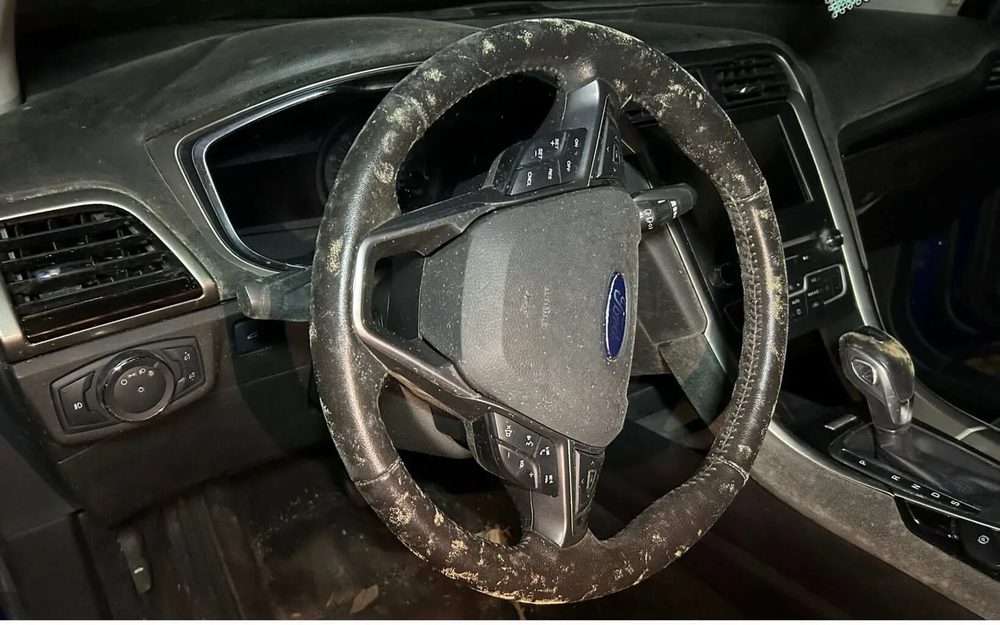 Before
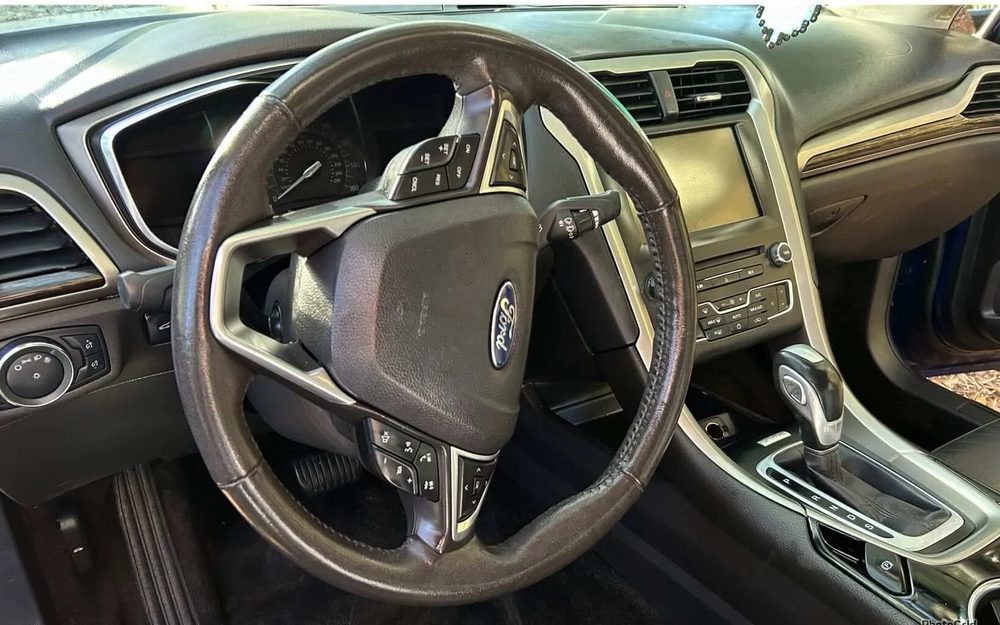 After
Ford Interior — Steering Wheel, Dash & Vents
Grey-white mold bloom on the steering wheel, dash and vents of a Ford sedan. Bloom on the dash and wheel means humidity in the cabin air itself, not just a damp seat, so the vents and HVAC path need treatment too. We steam hard surfaces, treat the vents and finish with ozone. A cab that is closed up with the A/C off in a hot, humid garage is a common cause in Wellington summers.
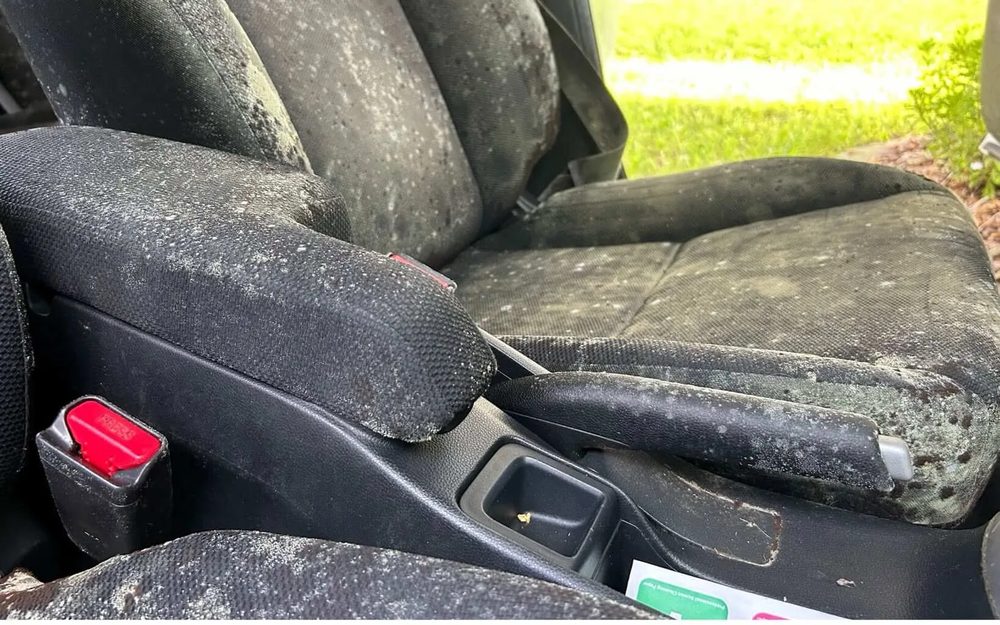 Before
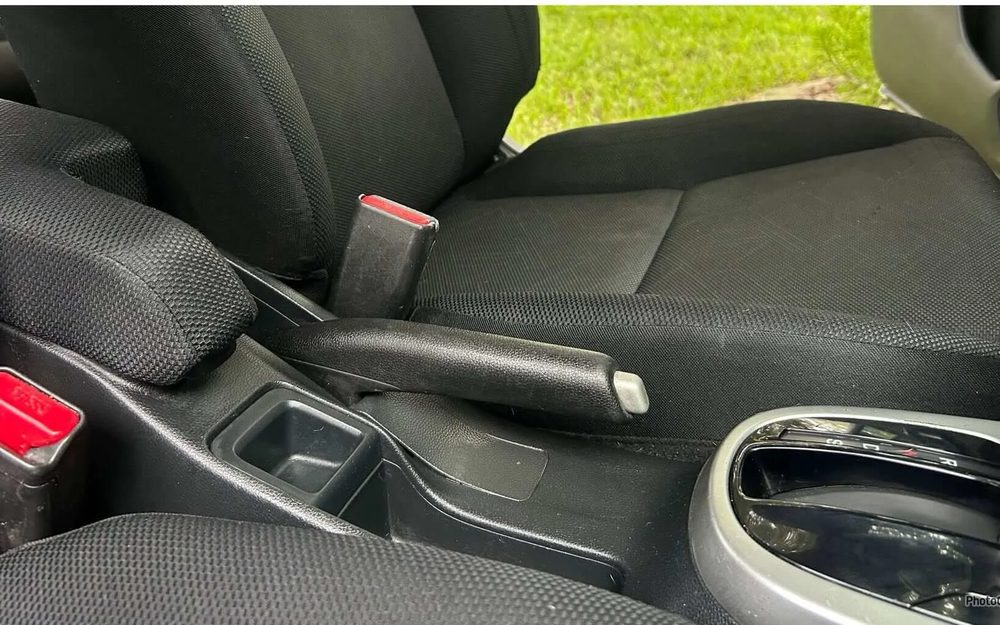 After
Black Cloth Seat & Console — Mold Bloom
A black cloth driver seat, armrest and console with grey-white mold bloom, and green lawn visible outside the window. Dark cloth hides early growth until it blooms white on the surface. We vacuum with a HEPA unit first, then steam, extract and treat with Concrobium before ozone. Vehicles parked on or near grass and watered ground, as in many Wellington yards and paddocks, see higher humidity around the cab.
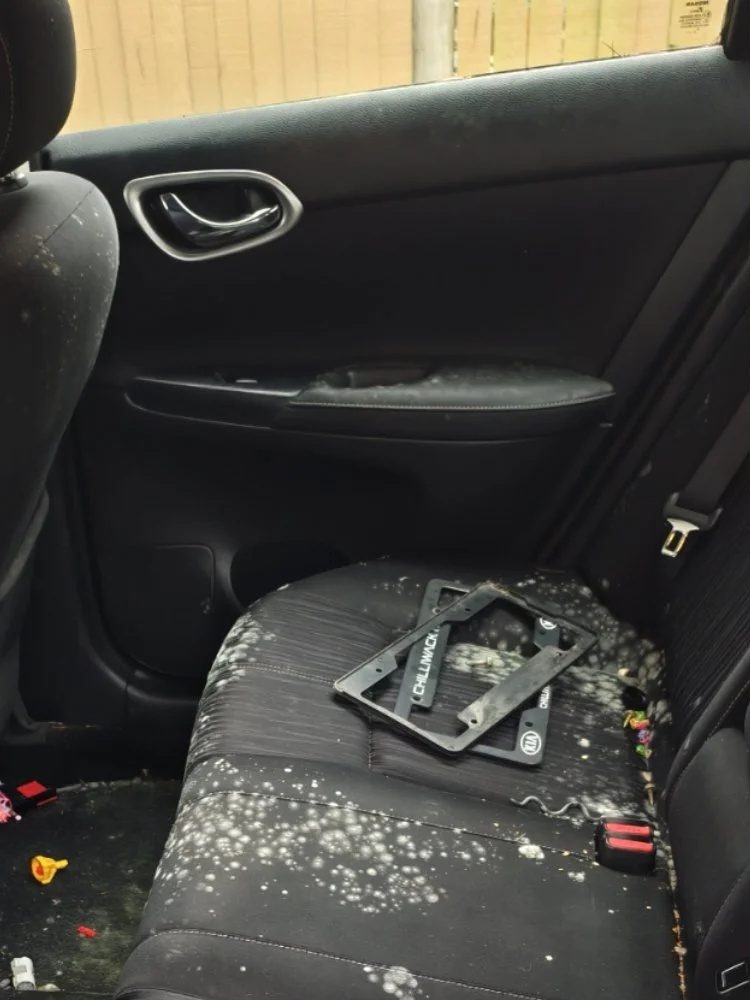 Before
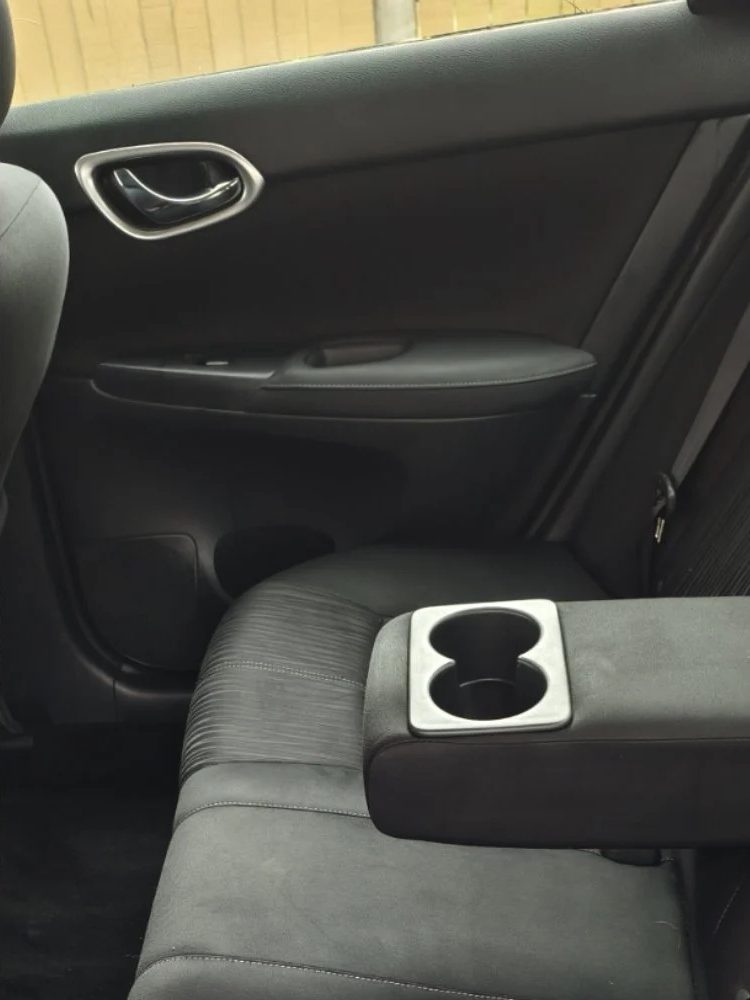 After
Rear Seat & Door Panel — White Mold Spots
A black sedan rear seat and door panel with white mold spots across the rear cushion, plus loose debris and a license plate frame on the seat. Rear seats collect the clutter and the moisture, so they are where we often find growth in family vehicles. We remove the debris, HEPA vacuum, steam and extract, then treat the seat and door panel. Wet gear and spills on the back bench are a common Wellington pattern.
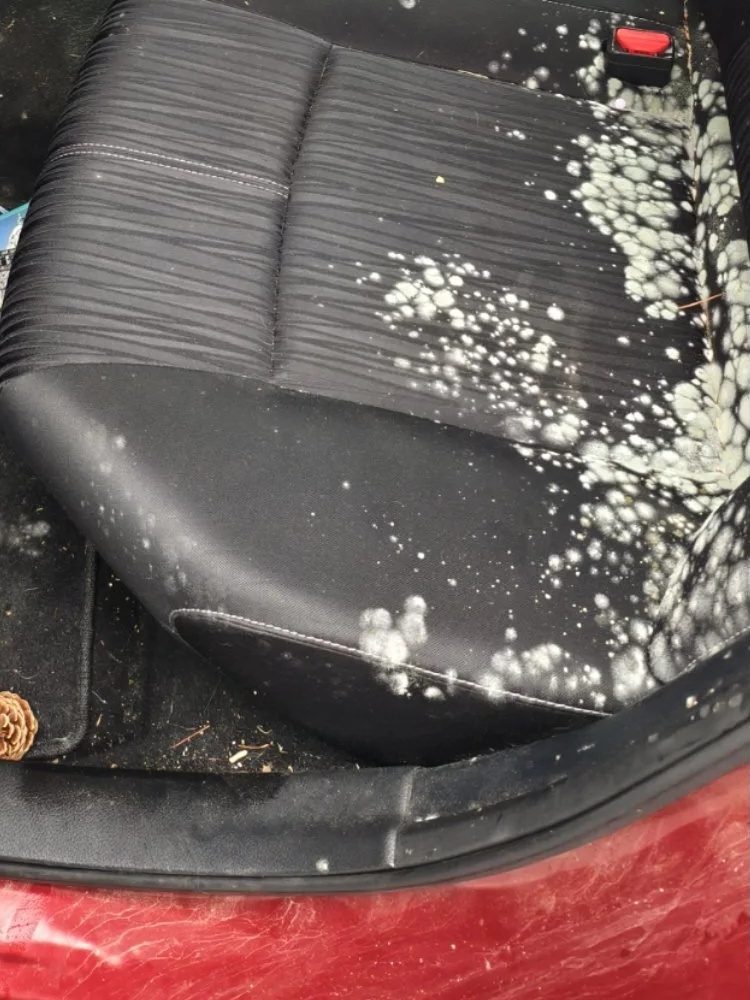 Before
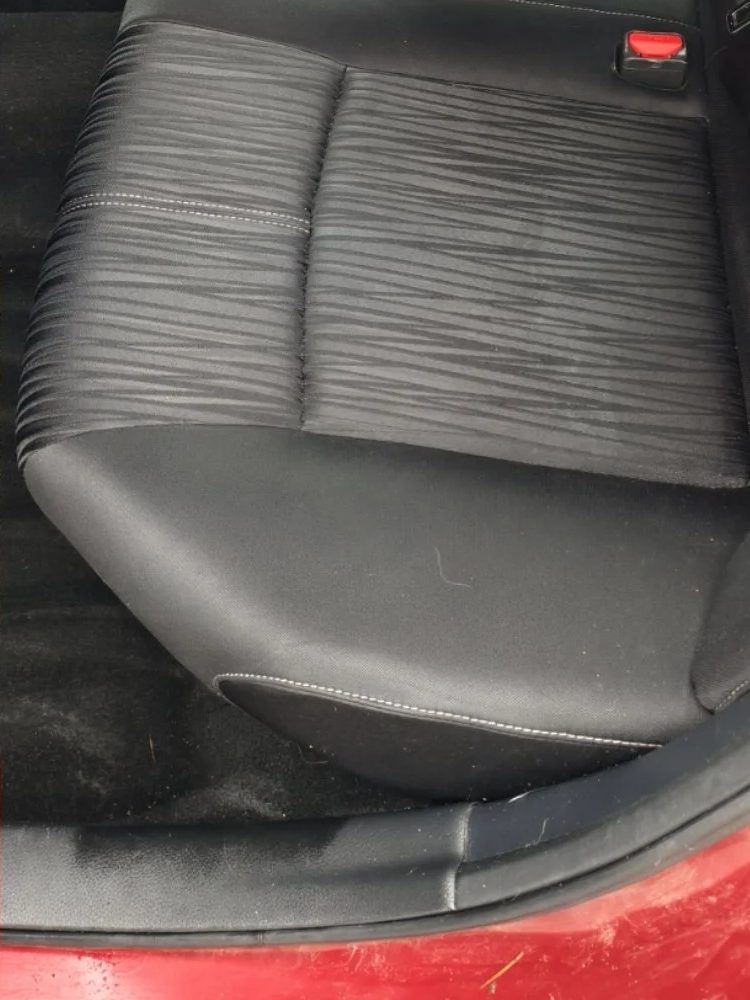 After
Black Cloth Seat — White Speckled Mold
A black cloth seat with white mold speckles, with the red car body visible below the window. Speckled growth like this is typically early to mid stage, still on the surface, but it signals the padding underneath is damp. We steam and extract the fabric, treat the foam and run ozone to reach the air and the seams. Daily humidity in Wellington and a cab closed overnight make this a common stage to catch.
 Before
 After
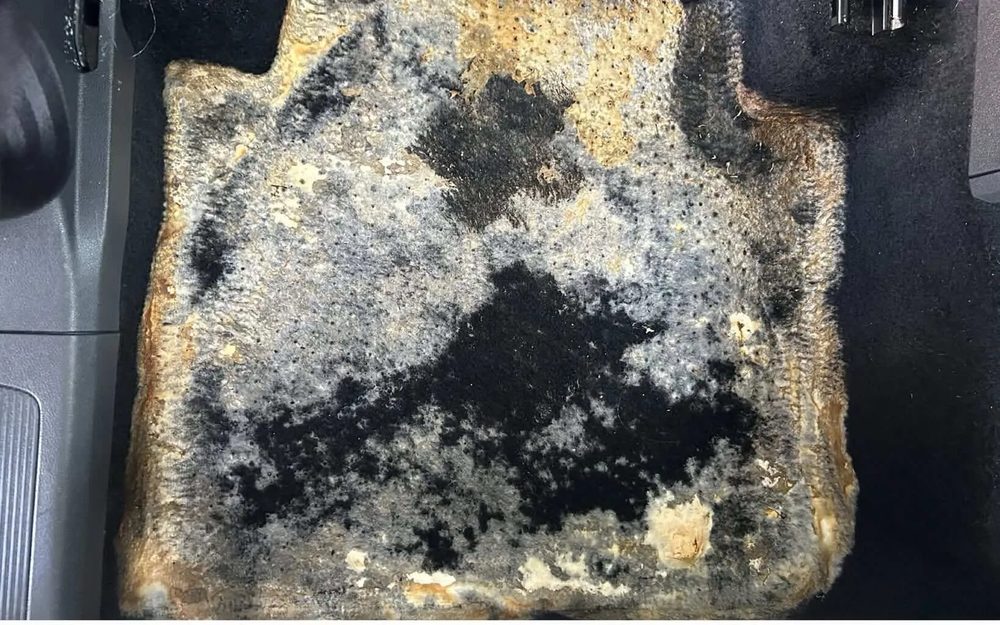
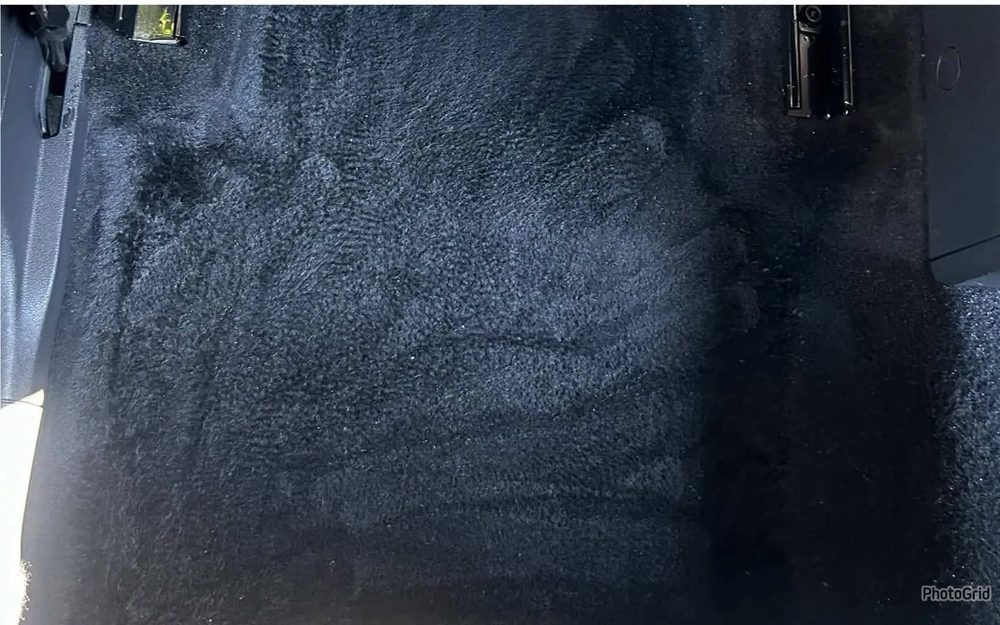
Floor Mat — Heavy Colony Growth
A carpeted floor mat with heavy black, brown and white mold colonies. A mat in this state has been wet for a long time and usually means the carpet and padding beneath are affected too. We lift the mat, HEPA vacuum, steam and extract the carpet, treat the padding with Concrobium and finish with ozone. Mats rinsed and put back damp are the most common cause we see in Wellington barn trucks.
100% Satisfaction.
Written. No exceptions.
If the result doesn’t meet our standard, or yours, we come back and redo it at no charge. No forms to fill out, no arguing over what “counts.” The guarantee is in writing before we ever touch your vehicle.
Request Mold Removal in Wellington · From $549
Fill this in once and send it. We get your address, vehicle, and the situation all in one message, no phone tag.
Rating
Detailed
Response
Three steps, from the gate to the barn.
We handle everything else.
No drop-off. No waiting. We come to Wellington.
We come to you in Wellington,
Grand Prix Village to Palm Beach Polo.
Mobile service: home, office, condo, or marina. No drop-off, no travel fee.
Not seeing your city? Ask us — we likely cover it.
Hay, wet boots and damp floor mats
ride home in a Wellington truck.
Wellington sits about 16 feet above sea level on drained former Everglades swampland, and a truck cab that takes in wet boots, wet gear and damp hay every single day rarely gets a chance to dry out. Left untreated, what starts as a musty smell becomes a real health issue for the next person who drives the car. DShine's Concrobium Mold Control and ozone process address the cause, not just the symptom, backed by $2M insurance and a written guarantee. Mold doesn't need much to get started, any trapped moisture inside a closed cabin is enough given South Florida's humidity. The source is almost always one of four things: a clogged AC condensation drain letting water pool silently on the floor pan, a failed door or window seal letting rain in, a clogged sunroof drain, or the car simply sitting unused for two or more weeks without the AC running. In Wellington the most common cause is the working vehicle itself: daily barn traffic, hosed-down mats and a cab that is shut tight every night. A car forgotten for months comes second.
Wellington communities we serve,
Aero Club to Little Ranches
Gated polo communities, horse-farm roads and family neighborhoods: here is how each Wellington area changes the mold risk and the way we work.
Grand Prix Village — A guard-gated equestrian farm community beside Wellington International, with custom homes on lots averaging around four acres. Working barns, trucks parked beside them and short bridle-path or golf-cart trips to the showgrounds mean daily wet-gear traffic. Give us the gate code or guest-list access and we work at the barn or driveway.
Palm Beach Polo — A large guard-gated community of roughly 45 villages around two golf courses and polo fields, with condos, villas, townhomes and big single-family homes. Garages with the A/C low and second cars that rarely move are the main risk. We need gate access and a parking space where every door can open.
Aero Club — A neighborhood built around a private airpark, part of the early planned-community development of Wellington. Vehicles often sit in residential garages when owners travel, so stagnant air and a closed cab are the typical pattern. We work at the driveway or garage, and we message when we are at the gate.
Wellington International — The 111-acre showgrounds with 18 competition arenas and 400 permanent stalls. We treat vehicles at your home, barn property or rental, not on the grounds. Trucks that spend long show days here return with wet gear and hay dust, which is the pattern we see most often in barn vehicles.
National Polo Center — The USPA's Wellington polo club on 120th Avenue South, with nine polo fields and a winter season of Sunday matches. Owners and grooms who drive to the fields come back with wet boots and grass in the cab. We treat the vehicle at your address, and we schedule around the polo calendar where we can.
Palm Beach Little Ranches — A non-gated acreage community just off Southern Boulevard, with lots from two acres up and many properties with barns and paddocks. Without gates, access is easy, but long drives and barn yards mean organic dust in the cab. We want a clear address and a text on arrival.
The Mall at Wellington Green — The village's commercial hub and a major shopping and office area. Many family and commuter vehicles here are parked outdoors at work or in lots, and mold usually traces to a leaking seal, a spilled drink or a clogged sunroof drain. We can treat at an office lot with room to open every door.
Don't see your area? Ask us — we likely cover it.
Wellington car mold,
the questions we hear.
Tap any topic to read the full breakdown.
Wellington is about 16 feet above sea level and was swampland until the 1950s. The land became safe to build on after the Army Corps of Engineers raised a levee south of the old Flying Cow Ranch between 1952 and 1953, and the Acme Drainage District and the lakes dug for the planned community took it from there. Drained is not the same as dry, though, and the climate still works against a closed vehicle.
The weather here is two seasons, not four. January highs sit around 75°F with lows near 55°F, and humidity is relatively low. By July the highs are around 92°F with lows near 75°F, the rainy season is in full swing and humidity climbs sharply. For a car, the winter months are the easy ones. The summer months are when a cab that never fully dries goes from damp to musty in a matter of days.
Heavy-duty pickups lead the list here: three-quarter-ton and one-ton trucks that tow, haul feed and shavings, and double as the family car. Next come three-row SUVs used for school runs, riding lessons and weekend shows, then ordinary sedans and crossovers from the village's family neighborhoods. Wellington had 61,637 residents at the 2020 census, so the vehicles run well beyond the show-grounds crowd.
What they have in common is how they get wet, which is rarely one big event. It is a daily trickle: boots rinsed at the wash rack, rubber mats hosed out and not dried, a damp saddle pad on the back seat, a dog that rode along after a bath, a drink that leaked into a console. Each is small. Repeated for weeks in a closed cab, they add up to a mold problem that surprises owners because there was never a flood.
Leather and cloth both show up. Higher trims of the big pickups often have leather, and crew-cab bench seats and rear floors are where growth tends to hide. We inspect under the rear seat cushions, inside the center console and along the carpet edges first, because that is where a cab like this holds moisture longest.
Beside the barn or in a farm yard: the vehicle is exposed to the whole barn environment, hay dust, bedding fines, manure and urine vapor, plus whatever moisture hangs around wash racks and hoses. A cab parked here with the windows cracked still collects organic dust in the vents and carpet, and that dust is food for growth once the cab gets damp.
Open driveway, carport or apartment lot: air moves, which helps, and the sun does some work on a closed cab. The trouble is driving rain in summer storms and the habit of leaving a window down a finger-width. Door seals and sunroof drains on a daily truck take a beating from heat cycling, and in an open lot a leaking seal or a spilled drink never fully extracted is the usual culprit.
Garage of a villa, townhome or estate in a gated community: Palm Beach Polo, for example, mixes condos, villas, townhomes and large single-family homes across roughly 45 named villages. A closed garage with the A/C turned down or off while the owner is away is the classic stagnant-air setup, especially for the second car that rarely moves.
Long show or polo days away from home: a truck parked for many hours beside a trailer in afternoon heat, then closed up and driven home with wet gear inside, repeats the same damp cycle week after week through the winter circuit.
January through March, show weeks: Wellington hosts the Winter Equestrian Festival, which starts in January and runs for months, plus high-goal polo at the National Polo Center. Trucks work hard, and the weather is mild and relatively dry, so mold risk is lower. The exceptions are the daily wet-boot, hosed-mat and wet-gear habits, which can start growth even in a dry month.
April and May, the changeover: the circuit winds down, trailers go out, and many seasonal households start closing up. Vehicles get a deep wash and are parked. This is when the stagnant-cabin clock starts for any vehicle that was damp when it was put away, and temperatures are already climbing toward summer.
June through October, rainy season: July highs around 92°F, lows near 75°F and regular afternoon storms, plus hurricane season. A closed garage, a failing seal or a window left cracked is enough. Storm damage matters too: a tornado spawned by Hurricane Milton damaged homes in Wellington on October 9, 2024, and broken glass or torn trim lets rain straight into a cabin.
November and December, reopening: owners and grooms return, vehicles come out of storage and the first thing anyone notices is the smell. This is the best time to book, before the first show week fills the calendar and before a musty cabin is driven daily for months.
We treat the vehicle at your address, so the practical questions are about access. Palm Beach Polo and Grand Prix Village are both guard-gated, and some equestrian properties add their own gates and long drives. Give us your gate code or add us to the guest list, and we will confirm arrival by message so the guard is not surprised.
Farm properties add a second layer: horses in paddocks, working barns, grooms and delivery trucks moving through. We park out of the traffic lane and keep equipment where an animal cannot reach it. If a ring or paddock is in use near the driveway, tell us and we will set up on the far side of the property.
Non-gated acreage such as Palm Beach Little Ranches is simpler, since there is no gate at all, but long drives and shared access roads mean we want a clear address and a text on arrival. For an office or condo lot we only need a space with enough room to open every door and run the ozone cycle safely.
1. Wet boots, wet gear and hosed-out mats: the single most common cause here. Rubber mats rinsed at the wash rack and put back damp, boots stored in the footwell, a wet riding helmet or saddle pad on the back seat. The moisture goes into the carpet and the padding underneath, which stay wet far longer than the surface suggests.
2. Hay, bedding and manure residue in the carpet and vents: barn dust is organic material, and once it settles into carpet pile, seat seams and the cabin air filter it holds moisture and feeds growth. This is also where the ammonia-type barn smell lives, which we cover in the FAQ on odor versus mold.
3. A cab closed up for weeks or months: the second vehicle in a gated-community garage, a truck left while the owner travels, a car in a shut-up winter home from spring until the next show season. No airflow plus summer humidity is all it takes, and nobody is there to catch the first smell.
4. Door seals, sunroof drains and spilled drinks: heat cycling in a pickup that sits in the sun wears seals out, and a sunroof drain clogged with pollen or leaf litter sends water into the headliner and A-pillars. Add sugar residue from a spilled drink or a wet dog under a rear bench, and a humid week is enough for a colony.
We arrive at your home, barn property, office or condo lot, and a standard vehicle usually takes three to four hours. We start with a full inspection, taking out the rear seat cushions where they come out and lifting the mats and carpet edges, because the growth in a barn truck is rarely where the owner expects it.
From there it follows the 11-step process: inspection, HEPA vacuum, Benefect decontamination, deep clean, steam, extraction, drying, Concrobium Mold Control, the sealed-cabin ozone cycle, the Meguiar's odor bomb and a final check. Hay chaff and bedding fines go into the HEPA vacuum first, before any moisture touches them and turns them to paste.
You do not have to stand next to the truck. Many Wellington owners hand over the keys and carry on, since they are at the barn or in the ring. Nobody stays inside the vehicle during the ozone step, and we send before-and-after photos by WhatsApp before we call it finished.
The first question is nearly always some version of whether it is the barn smell or actual mold. The honest answer is that it can be either, or both, and the inspection tells us which. A cab that smells like a stall but shows no growth is a different job from a cab with visible bloom on the carpet or seat bolsters.
The second question is price, usually with a worry that a big pickup costs more. It does not: the badge on the grille is irrelevant, and what counts is how much of the cabin is affected. One affected area is $549, mold all through the vehicle is $749, and travel is included either way.
Third is timing around the show calendar and travel. Owners want it done before a trailer trip, before the family arrives, or before a seasonal house reopens. We will tell you honestly what the schedule looks like when you message us, and we do not promise a slot we cannot keep.
The most common add-on is a deeper interior reset on the truck itself, because once the mats and carpet are out, owners want the whole cab brought back, not just the damp section. Leather conditioning after a leather-safe treatment is the usual second booking, particularly on higher-trim pickups with heavy driver-seat use.
Owners with several vehicles often ask us to look at the second car on the same property. Sharing a garage or a yard with an affected vehicle means the same moisture and the same closed-up air, so it is worth sending photos of those cars too, and we price each one separately.
Odor Removal at $349 is the other booking we see. It is for vehicles where the smell is the whole problem and the inspection finds no active growth. We say so plainly when that is the case, because it is the cheaper and the correct service.
A cab that smells normal can already have growth in the carpet padding. The earlier signs are visual and physical: a floor mat that feels cool and damp when you lift it, a film or faint haze on the inside of the windshield that returns after wiping, dark speckling in the seat seams, or a cabin that smells fine on a cool morning and sour once the A/C has run for a few minutes.
In barn trucks, pay attention to the vents. If the air coming through smells like old hay or a damp stall for the first thirty seconds, the cabin air filter and the evaporator housing are holding dust and moisture. A gray or white bloom on the leather at the driver's bolster is usually mold, not dust, and a damp spot under a seat after a rainy week deserves a closer look.
A simple test after any storm week: press your palm flat on the carpet under the floor mat and hold it for ten seconds. If your hand comes away cool and clammy, the padding underneath is wet, and that is the point where treatment is a one-area job instead of a whole-vehicle job.
Many Wellington households are fully occupied only through the show months and closed from roughly spring until the next season. That leaves vehicles untouched for months in a garage with the A/C low or off. The goal is a clean, dry cab and a bit of airflow, not a sealed box.
Before you leave, remove every floor mat and let it dry outside in the sun, clean the interior, take out food, drinks and gear, and run the A/C on fresh air for a few minutes to dry the system. Leave the garage ventilated if it is safe, and avoid parking on a wet surface or under a dripping eave.
Ask someone to start the vehicle and drive it a short distance every couple of weeks. A cab that is opened, aired and run regularly is far less likely to be a problem than one that stays sealed for six months. If the vehicle will sit through the whole rainy season, book a mold inspection when you return, before it goes back into daily use.
A typical Wellington driveway has a truck, an SUV and often a third vehicle used only for shows or only in winter. If one of them has a mold problem, the others sharing the same garage or the same barn routine may have early signs, and it is more efficient to look at all of them in one visit.
When you message us about more than one vehicle, send a few photos of each and tell us which one is used for what. We confirm the price for every vehicle separately, from $549 for one area or $749 throughout, travel included, so you can decide which ones to book before we arrive.
For farm properties with several people using the same vehicles, tell us who drives what. Mats that are shared, a wet-gear habit in the second truck, or a leaking cooler in one cab are the kind of details that help us find the source quickly and keep the treatment from being repeated.
The guarantee is a written document, good for 30 days from the visit. Should mold or a mold smell reappear inside that window, we come back and re-treat the vehicle free of charge. Having it on paper means there is nothing to argue about later.
It depends on the moisture source being dealt with. A sunroof drain that is still clogged, or floor mats that keep going back in wet, can bring mold back for reasons that have nothing to do with the treatment. Before we leave we show you the probable cause and what to change.
In a barn truck that source is often a habit, not a defect. Letting the mats dry fully, keeping wet gear out of the cab and cleaning the cabin air filter on schedule are the changes that keep a treated vehicle clean, and we will walk you through them.
A daily barn truck has years of ground-in debris, worn seals and well-used carpet. We expect to find more than one source and plan the visit for that: more time on the carpet and padding, careful work in the rear footwells and a close look at the HVAC system, since an older evaporator housing can hold moisture for a long time.
Higher-value vehicles and anything with leather get the leather-safe protocol: steam and extraction at a controlled temperature and a leather-compatible treatment, not harsh chemicals that dry or crack the surface. Wood trim, soft-touch panels and older plastics are handled gently.
If a surface cannot take a standard treatment, we tell you before we start and show you what we plan to do instead. That might mean a gentler method on a vintage dash, or extra drying time on a thick rubberized floor liner that traps water against the metal.
Pull and dry every floor mat, then vacuum the carpet and the seat seams. Remove food, gym and riding gear, wet jackets, pet bedding and anything organic. Check that the sunroof drains are clear and the door seals are intact, and look under the seats for a spill that has been there all season.
Run the A/C on fresh air for a few minutes to dry the system, then park with the windows fully closed and the garage ventilated if you can. If you will be away more than a month, ask someone to drive the vehicle every two weeks.
If you notice any smell or dampness before you leave, book an inspection before you go rather than after you return. Treating a small area in April is a $549 conversation; treating a whole cabin in November after a rainy season in a closed garage is more often a $749 one.
Mold can begin to germinate within 24 to 48 hours of a surface becoming damp, and in a Wellington summer the cab temperature does the rest. A problem confined to one mat in June can have spread into the carpet padding and the seat base by September. That is the difference between a $549 job and a $749 job.
Waiting also means driving daily in a cabin that is releasing spores into the air you and your family breathe, and it makes the finish on leather and fabrics worse, since mold stains can become permanent once they set into the material.
The cheapest time to treat it is as soon as you see or smell it. If you are unsure whether what you have is a small spot or a spreading problem, send photos and we will give you an honest read and a price before anyone drives out.
Barn managers, grooms and trainers use their vehicles harder than anyone, with early starts, wet gear and constant in-and-out. Vehicles are often shared across shifts, so a single damp mat or a leaking cooler can affect everyone who drives it. We work on the property around the barn routine so the horses and the day are not disrupted.
For show families the pattern is different: a family SUV that carries kids, tack bags, snacks and wet jackets, then sits in a closed garage between weekends. We look at the rear footwells and the third row first, since that is where lost gear and spills hide.
Whichever group you are in, the fix is the same two things: treat what is there now, and change the habit that put it there. We will tell you what we saw, show you the photos, and keep the advice practical enough to follow on a busy barn morning.
Message us a few photos or a short description and the number comes back in under two minutes: $549 when the growth is confined to one area, $749 when it runs throughout the vehicle. Travel is included in both prices, wherever you are in Wellington or nearby.
The exact figure is confirmed once we have looked at your photos or description, and always before any work starts. If what we see on site differs from the pictures, we explain it to you first and change nothing without your say.
The price covers the vehicle's interior. If you also want a trailer's living quarters or another vehicle looked at, mention it when you send photos so we can say honestly what we can do and what it costs.
Wellington's mold problem is mostly a daily-use problem, not a storage problem: wet boots, hosed mats and barn dust in a cab that is closed every night. The second pattern is vehicles left in closed-up winter homes from spring until the next show season.
We come to your address and run the 11-step process: HEPA vacuuming, Benefect, steam, extraction, Concrobium and ozone among the steps, with photos sent to you on WhatsApp at the end. Pricing starts at $549 for a single area and $749 for the whole vehicle, with a 30-day written guarantee.
If you are not sure whether you have mold or just barn smell, send a few photos and we will tell you which it looks like, and what it will cost, before anyone drives out.
Once the cleaning, steam and extraction are done, we seal the vehicle and run an ozone generator inside the cabin. The gas works on spores and odor molecules floating in the air and sitting in fabric, including the headliner and vent path, places a wipe-down never reaches.
No one stays in the vehicle while the cycle runs. Afterward we ventilate the cabin, apply the Meguiar's odor bomb and do the final check. In a barn truck this is the step that handles the organic smell that remains in carpet and seats once the physical cleaning is finished.
You will not smell much of anything unusual when we hand the vehicle back, and that is the point. If a faint trace of ozone lingers on a hot day, it fades quickly with the windows down, and it is not the mold or barn smell returning.
Plain answers
for Wellington truck and SUV owners.
Add-ons Wellington clients book
Still deciding? Read: the complete mold removal guide · does insurance cover it? · why DIY mold removal fails.
Damp cab or musty SUV in Wellington? Book the visit.
Serving Wellington and all of Palm Beach County. Fixed pricing, no travel fee. We confirm in under 2 minutes.
It Might Just Be an Odor Problem
If there's no visible mold growth yet, the smell alone is usually an Odor Removal Detailing case ($349 flat) — faster than full mold remediation ($549–$749). See which one matches what you're dealing with: