What a Coral Springs Mold Job Includes
This is not a car wash. Car Mold Removal uses Concrobium Mold Control treatment, pH-balanced products, and machine assistance, the same process used in pre-sale preparations for luxury dealerships.
Why it matters for your health: Mold in a vehicle is a different exposure than mold on a wall at home. With the AC recirculating, everyone inside is breathing concentrated spores for the length of the drive. The EPA and CDC both link mold exposure to respiratory irritation, allergic reactions, headaches, and worsened asthma symptoms. Children, older passengers, and anyone with a compromised immune system typically react faster and more severely than a healthy adult would. By the time the smell is noticeable, spores have usually already spread through the HVAC system into every vent in the cabin.
Curious what actually happens during the visit? Tap through our real 11-step process below to see what we do at each stage and why it matters.
What every Coral Springs mold job gets you
Most detailers in Coral Springs charge less. Here’s exactly what you gain — and what you risk — with each choice.
| DShine DetailsFrom $549 · travel included | Avg Coral Springs Detailer$149 – $199 | |
|---|---|---|
| Industry certificationsIDA, Koch Chemie, Meguiar’s, 3M, Symplex, XPEL | ✓6 verified | —0 credentials |
| $2M liability insuranceWe cover any damage — in writing | ✓ | —Often uninsured |
| Deionized water systemZero mineral residue, no water spots | ✓ | —Tap water, water spots |
| Fresh microfibers per vehicleNo cross-contamination between jobs | ✓ | —Shared towels, swirl risk |
| Mold-specific chemistry onlyConcrobium, Benefect & Meguiar’s, no harsh acids | ✓ | —Industrial degreasers |
| Before & after photosSent via WhatsApp on completion | ✓ | —No documentation |
| 100% written satisfaction guaranteeReturn & redo at no cost if unsatisfied | ✓ | —No written guarantee |
| Travel to your address — $0Home, office, condo — no drop-off | ✓ | Sometimes adds fee |
DShine vs. any other detailer
in Coral Springs, Broward County
Three things most detailers won't tell you. We put them in writing.
 Since 2018
With more than 20 years of hands-on experience in the automotive care industry, Evelio launched DShine Details in August 2018 with one van and zero shortcuts. For the first six months he slept in the van to keep costs down and standards up. Today DShine runs 7 certified vans across Miami-Dade, Broward, and Palm Beach, and the commitment hasn't changed. Every vehicle is treated as if it were his own.
What clients say
in their own words.
Before & After: Mold Removal We've Actually Done
No stock photos. These are real DShine mold removal jobs across South Florida, the same 11-step process and chemistry used on every Coral Springs appointment.
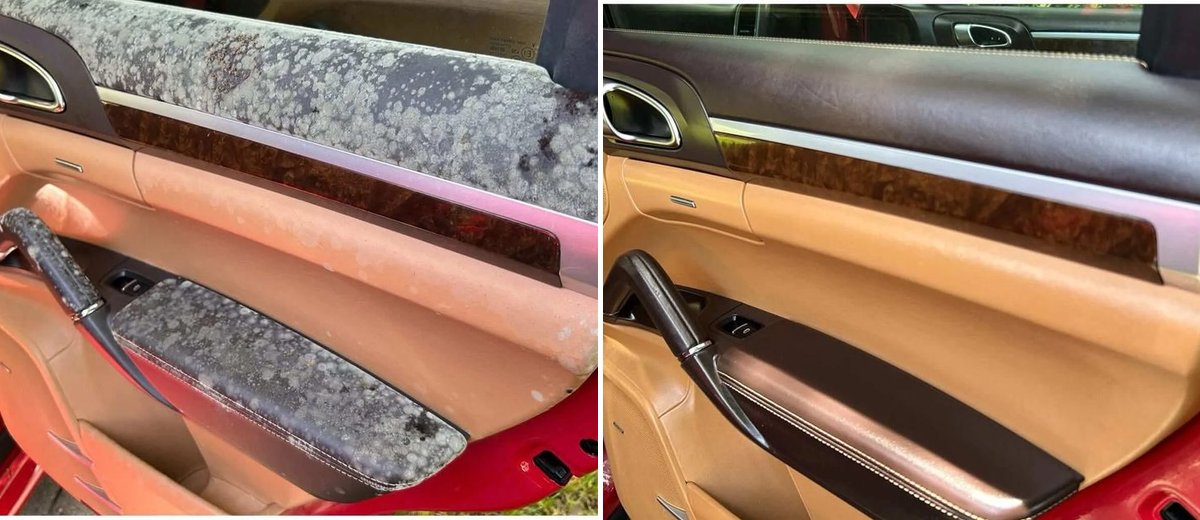
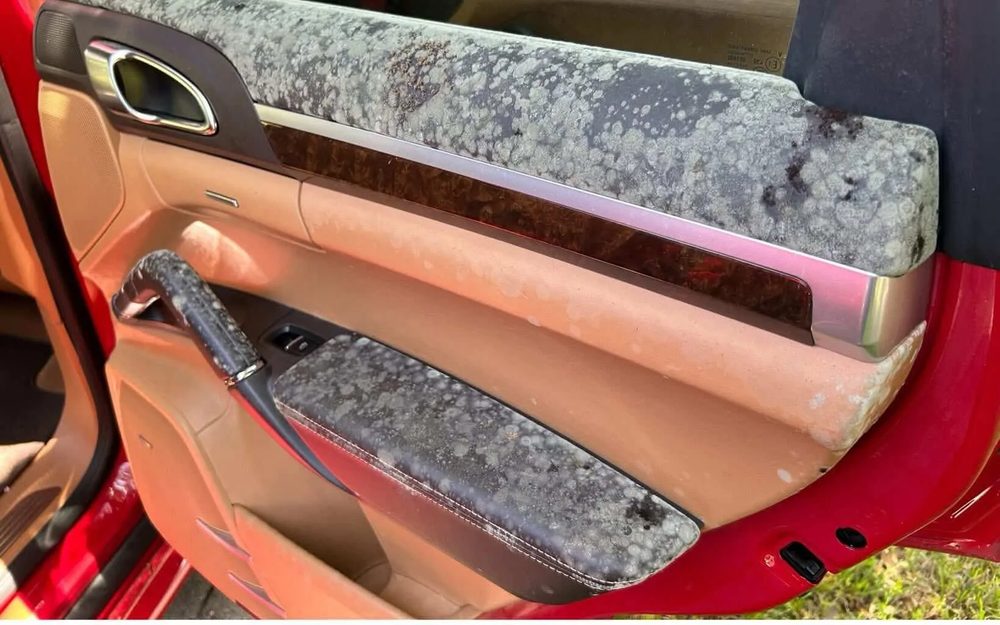 Before
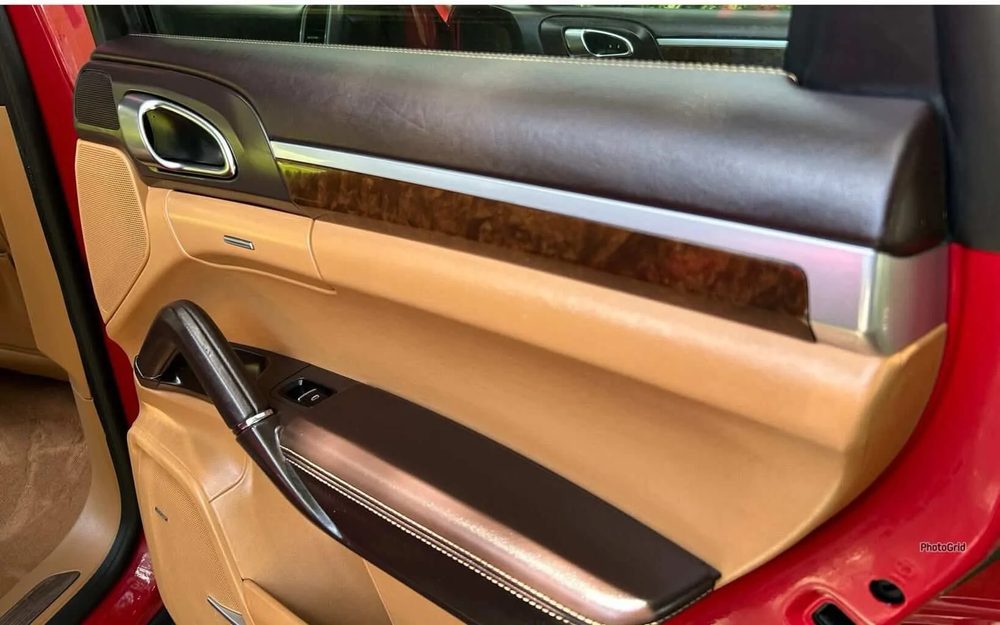 After
Porsche Cayenne — Door Panel & Armrest
Mold across the tan leather door panel and armrest of a red Porsche Cayenne, running up to the wood trim. Leather like this gets the leather-safe protocol: controlled steam and extraction, Concrobium on the surface, then ozone for the cabin air so the finish is not stripped. In Coral Springs a pale-leather SUV that waits in the garage between weekend drives fits this pattern well.
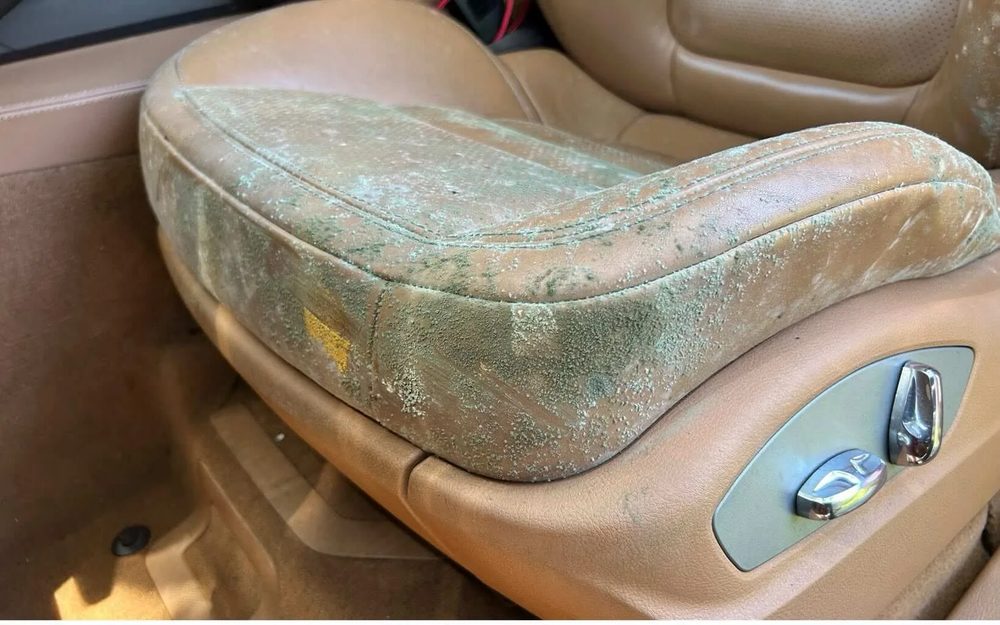 Before
 After
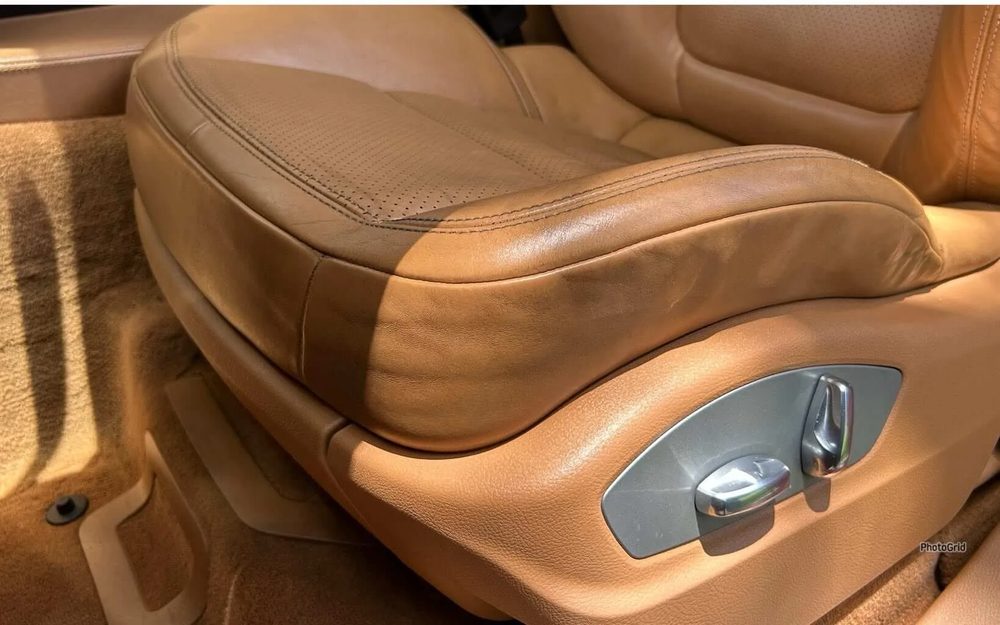
Leather Seat Bolster — Green-Blue Growth
A tan leather front seat bolster covered in green-blue mold. The bolster is where the body rests against the seat, so it collects moisture, skin oils and dust, and the growth tends to show there first. We lift it with gentle steam, extract the moisture, treat with Concrobium and finish with ozone. After a pool or rink afternoon, a damp change of clothes against leather in a closed car is the kind of pattern behind this in Coral Springs.
 Before
 After
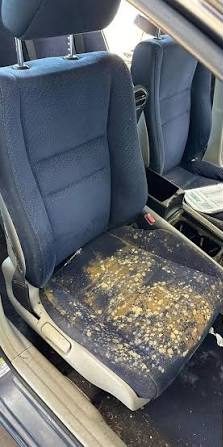
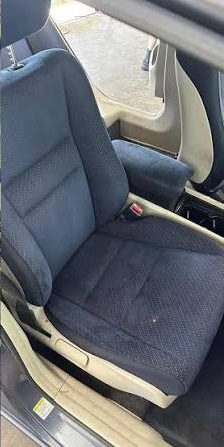
Cloth Bench Seat — Stains Under the Cushion
A dark blue cloth sedan bench seat with the cushion lifted, showing tan and yellow mold-stain residue on the seat bottom. The surface looks acceptable until the cushion is raised, which is why we inspect under and behind seats rather than only on top. The fabric and foam get HEPA vacuuming, steam and extraction, then Concrobium and ozone. A car shared among several drivers in a busy household can easily hide a spill like this for weeks.
 Before
 After
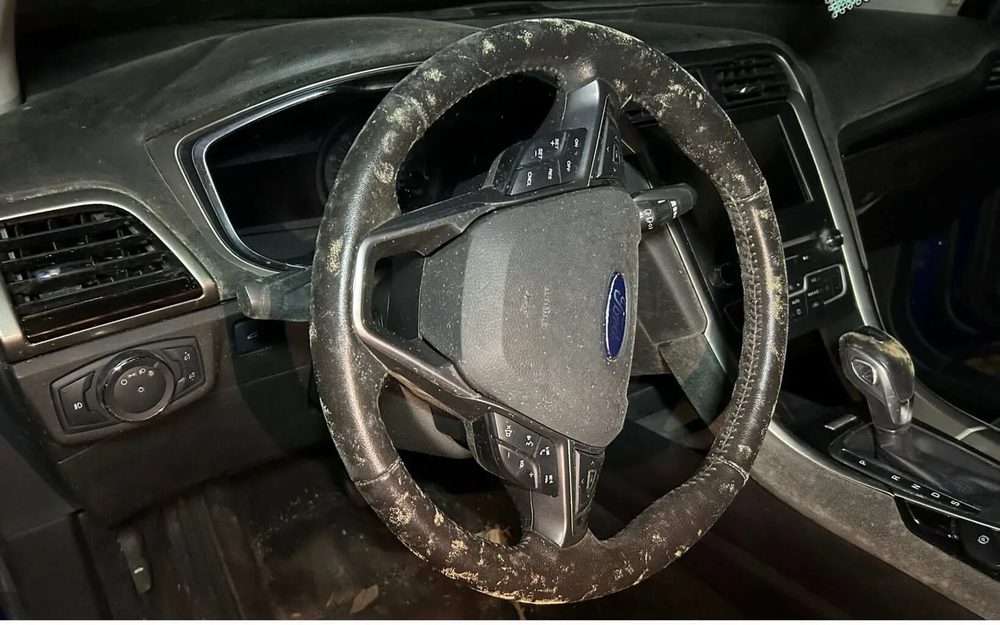
Ford Sedan — Steering Wheel, Dash & Vents
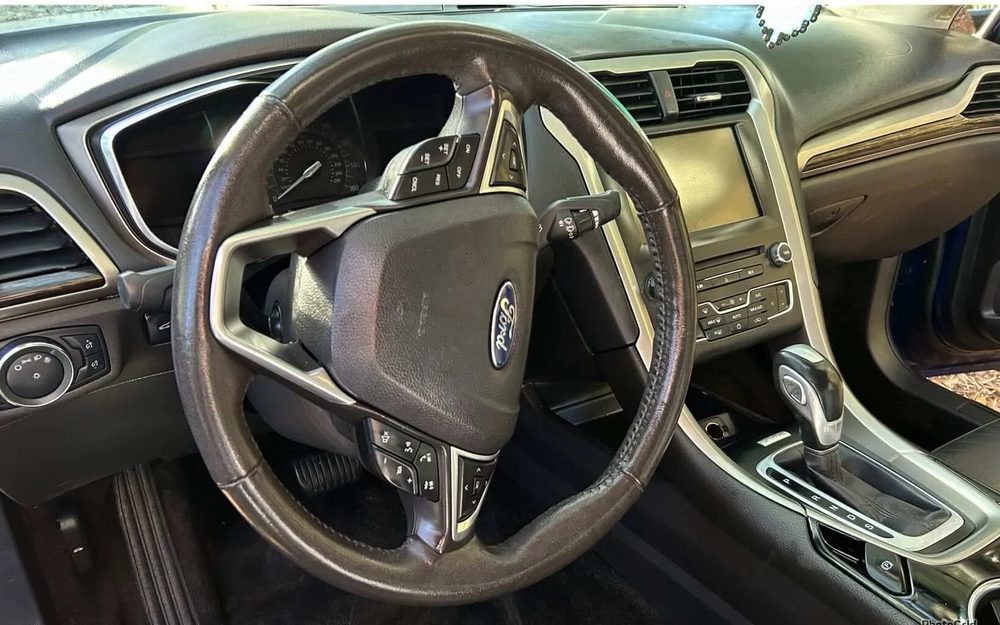
Grey-white mold bloom on the steering wheel, the dashboard and the vents of a Ford sedan interior. Plastics and a steering wheel grow a thin, powdery film when humid air condenses overnight in a closed cabin. We steam and wipe each surface, treat the vent housings, apply Concrobium and run the ozone cycle. With roughly 57 inches of rain a year in Coral Springs, a car closed up wet with the A/C off is the usual setting.
 Before
 After
Black Cloth Seat & Console — Grey-White Bloom
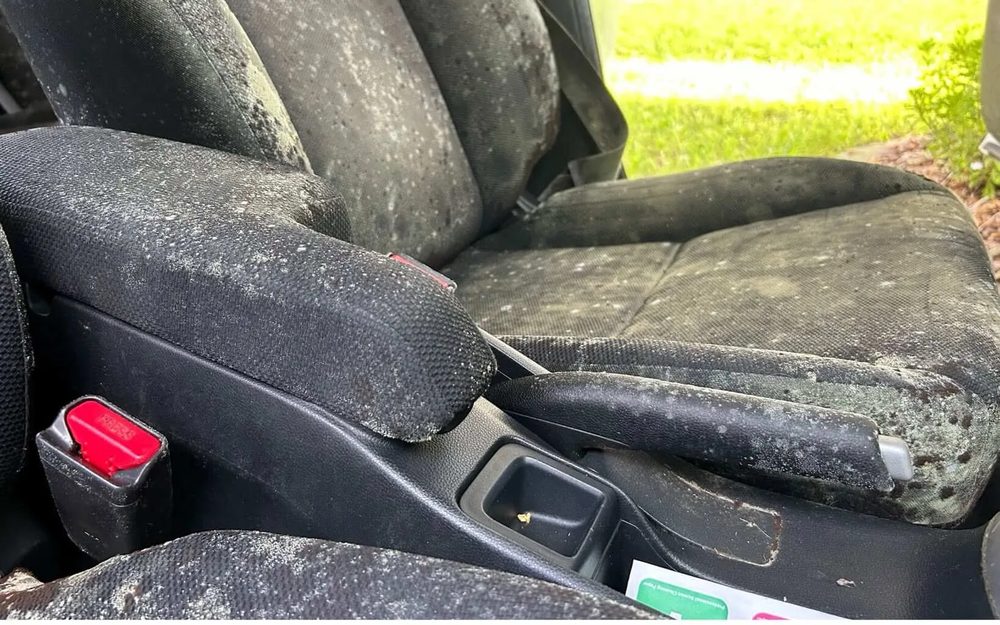
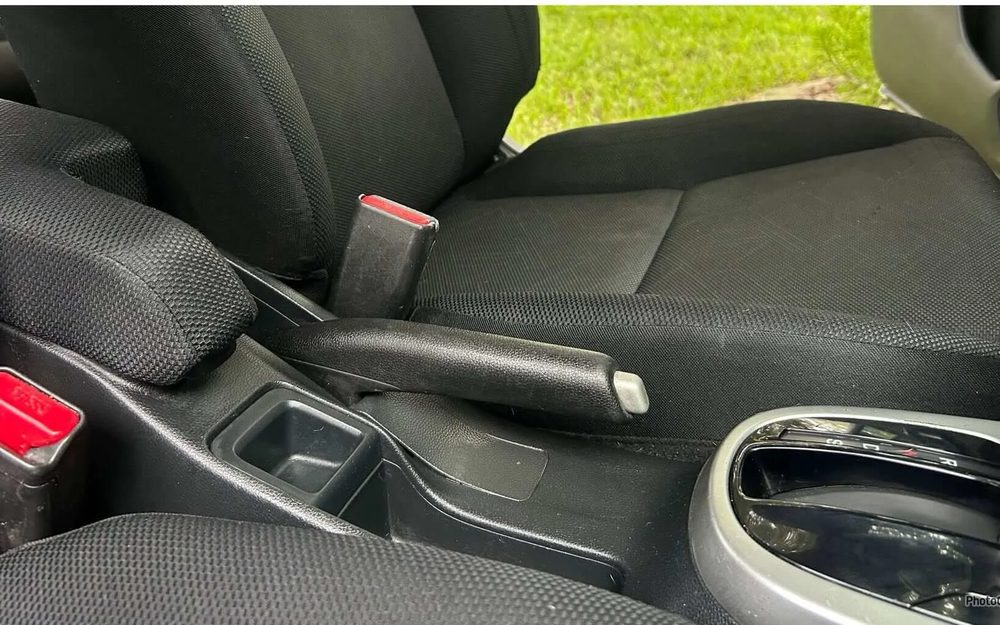
A black cloth driver seat and the armrest and console, coated with grey-white mold bloom, with a green lawn visible outside the window. Dark fabric hides early growth until it turns powdery, and a console is a place where hands and drinks meet. We run HEPA vacuuming, Benefect, steam and extraction, then Concrobium and ozone. Lawns and irrigation are part of daily life in Coral Springs, and a cracked window beside a sprinkler zone can let in moisture.
 Before
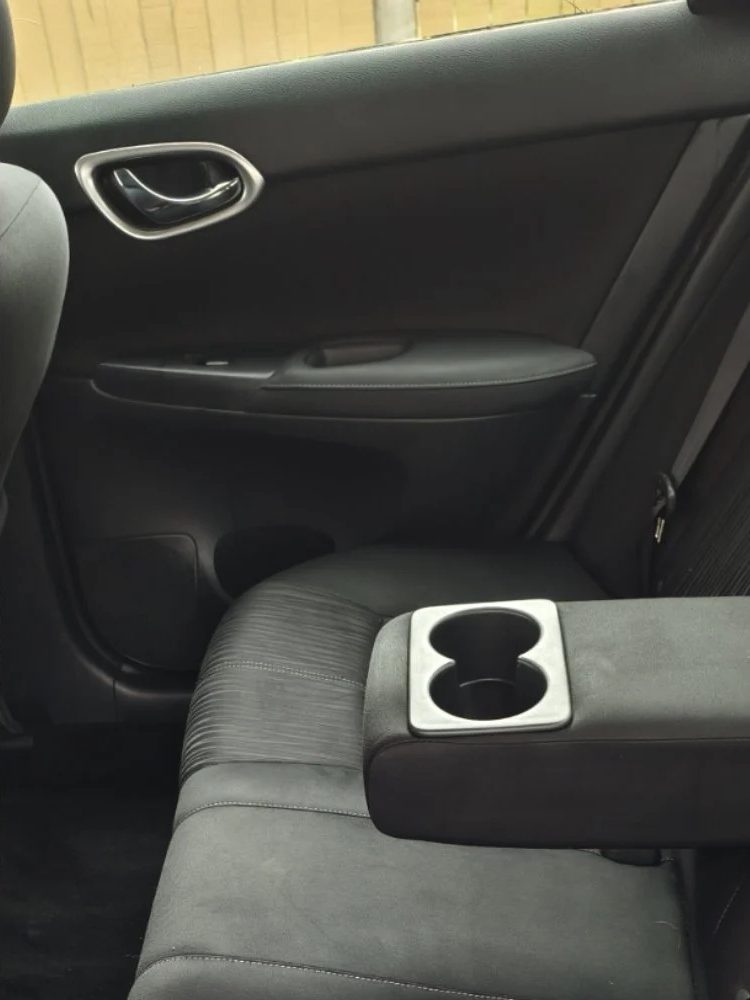 After
Rear Seat & Door Panel — White Mold Spots
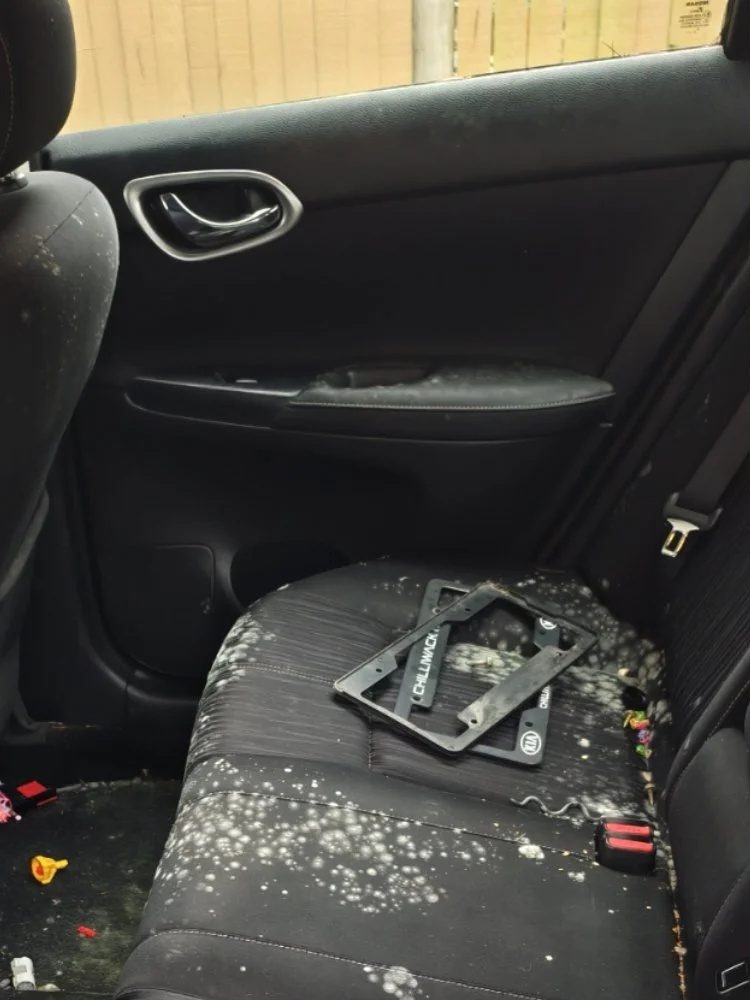
The rear seat and door panel of a black sedan with white mold spots on the rear cushion, along with loose debris and a license plate frame lying on the seat. Back seats collect crumbs and moisture and rarely get the attention the front does. We clear the debris, then HEPA vacuum, steam, extract and treat the cushion and the door card with Concrobium. In a family car in Coral Springs, the rear seat is often the least checked spot.
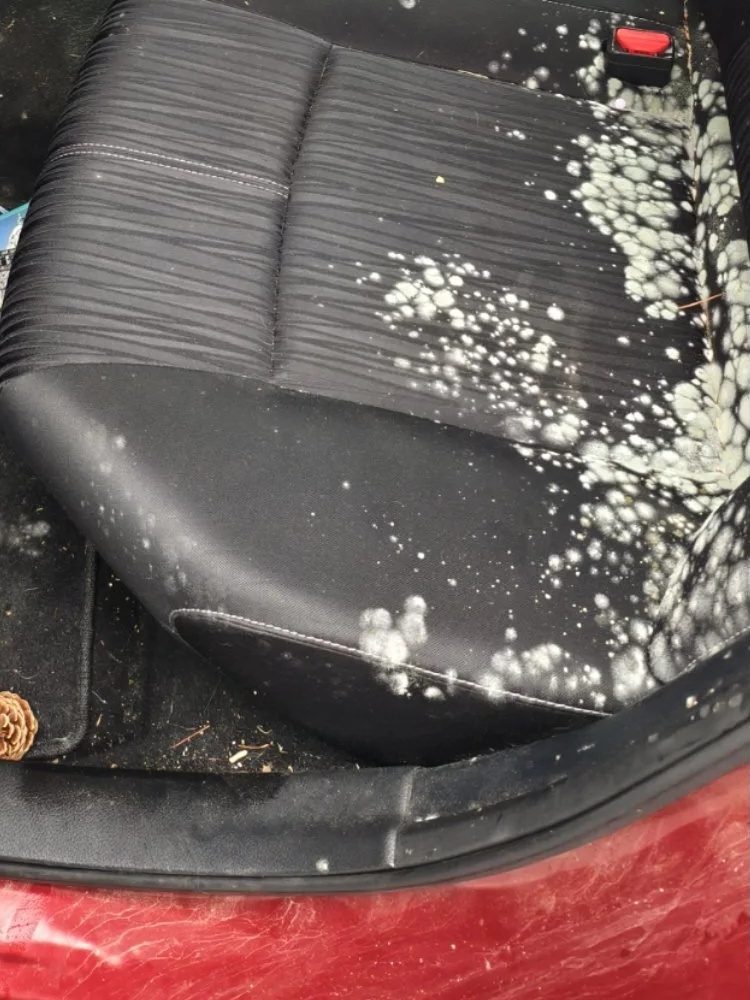 Before
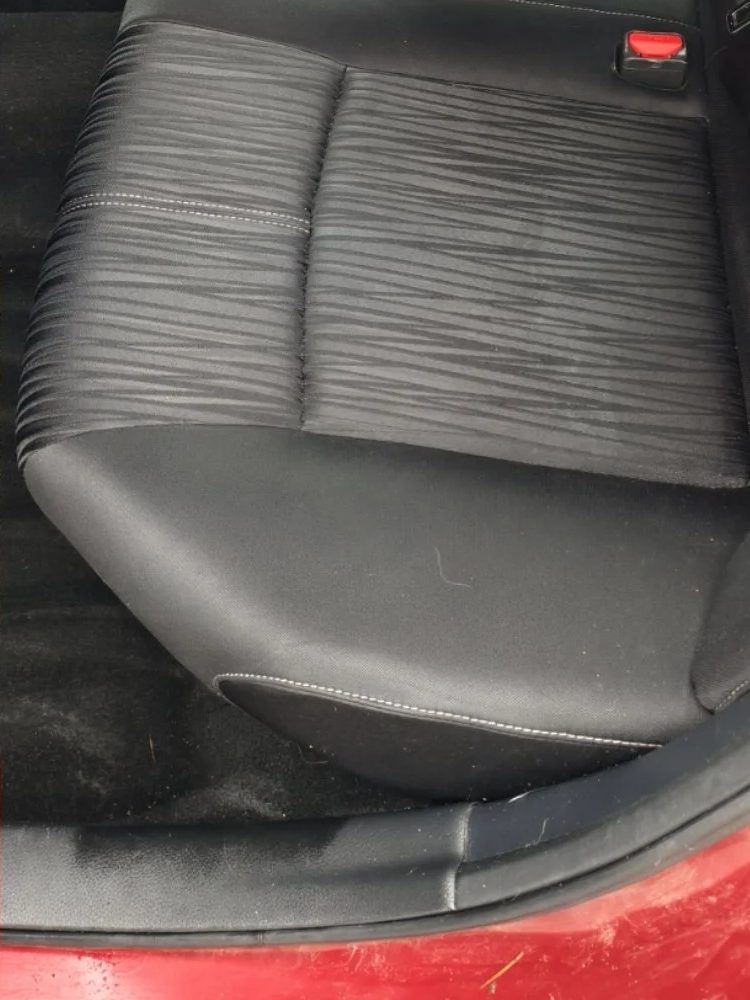 After
Black Cloth Seat — Early White Speckles
A black cloth seat covered in small white mold speckles, with the red car body visible below the window. At this stage the speckles are easy to mistake for dust or lint, and a quick brush often spreads them. A monthly check catches it. Treatment is HEPA vacuuming, steam, extraction and Concrobium, then ozone for the cabin air. In Coral Springs, with June averaging about 7.3 inches of rain, a damp week can start a pattern like this.
 Before
 After
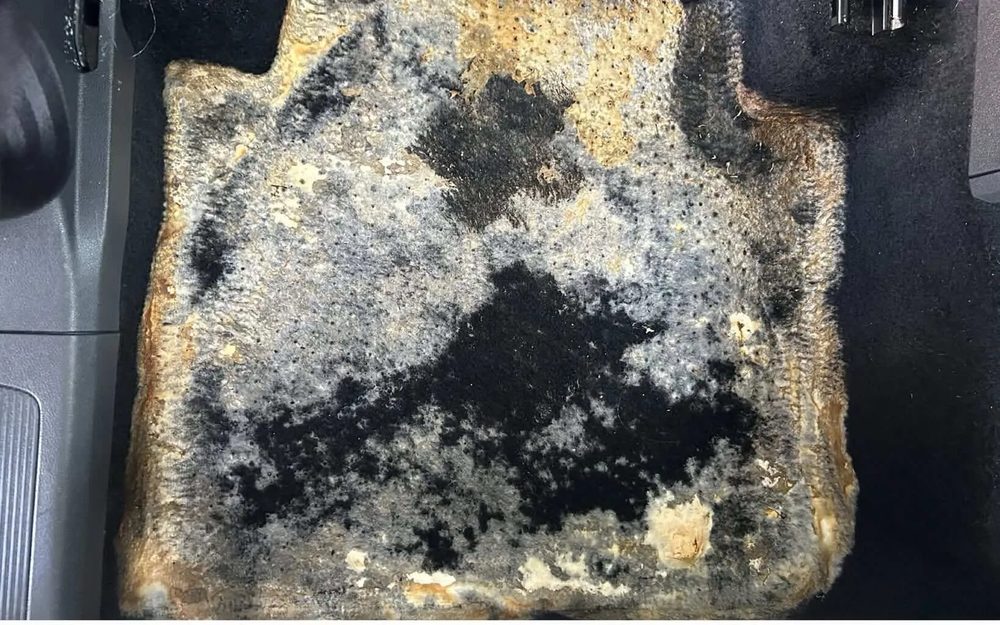
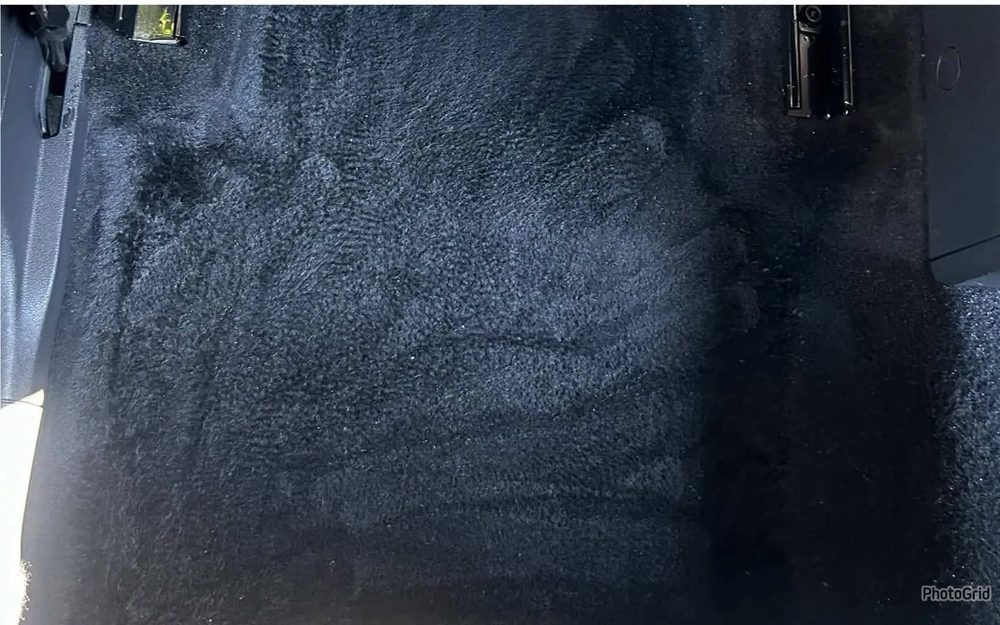
Floor Mat — Heavy Colony Growth
A carpeted floor mat with heavy black, brown and white mold colonies. Floors hold moisture the longest, so growth here is often the most advanced, and the carpet and padding beneath the mat are usually involved. We treat the mat and carpet with HEPA vacuuming, Benefect, a deep clean, steam and extraction, then Concrobium and ozone. A clogged A/C evaporator drain that soaks the front carpet is a typical cause in Coral Springs.
100% Satisfaction.
Written. No exceptions.
If the result doesn’t meet our standard, or yours, we come back and redo it at no charge. No forms to fill out, no arguing over what “counts.” The guarantee is in writing before we ever touch your vehicle.
Request Mold Removal in Coral Springs · From $549
Fill this in once and send it. We get your address, vehicle, and the situation all in one message, no phone tag.
Rating
Detailed
Response
Three steps from musty to clean,
and we handle the rest at your driveway.
No drop-off. No waiting. We come to Coral Springs.
We come to you in Coral Springs,
from The Walk to the Sportsplex fields.
Mobile service: home, office, condo, or marina. No drop-off, no travel fee.
Not seeing your city? Ask us — we likely cover it.
Daily storms, packed gear bags and a closed trunk,
the quiet routine behind most Coral Springs car mold.
Coral Springs sits about 10 feet above sea level on drained Everglades-edge land, and with roughly 57 inches of rain a year a small amount of moisture in a closed car goes a long way. Left untreated, what starts as a musty smell becomes a real health issue for the next person who drives the car. DShine's Concrobium Mold Control and ozone process address the cause, not just the symptom, backed by $2M insurance and a written guarantee. Mold doesn't need much to get started, any trapped moisture inside a closed cabin is enough given South Florida's humidity. The source is almost always one of four things: a clogged AC condensation drain letting water pool silently on the floor pan, a failed door or window seal letting rain in, a clogged sunroof drain, or the car simply sitting unused for two or more weeks without the AC running. In Coral Springs the cause we meet most often is ordinary family use: damp gear, spills and a quietly clogged A/C drain in a car that gets driven daily but checked rarely.
Coral Springs places we serve,
from Coral Square to Commerce Park.
Where Coral Springs drivers park: shopping lots, ballfields, pool decks and office parks, and what each means for mold risk and for how we work.
The Walk — The open-air shopping and dining center on University Drive. Cars here sit in surface lots for a lunch or an evening, so the risk comes less from the lot than from what the car carries. We usually treat vehicles at a nearby home or workplace and confirm the parking space first.
Coral Square — The regional mall at the northeast corner of Atlantic Boulevard and University Drive, open since October 1984. Employees and shoppers leave cars outdoors for long shifts. We coordinate with an employer or property office when a visit happens in the lot, and note where the car can ventilate.
Mullins Park — A 62-acre park at 10000 Ben Geiger Drive with courts, a pool and athletic fields, named for the city's first elected mayor. On game days, cars come back with damp gear that gets zipped into the cargo area. We treat those cars at the owner's home, where the driveway gives us space to air them out.
Cypress Park — A 46-acre community park at 1301 Coral Springs Drive, known for its baseball and soccer fields and a lake on the grounds. Neighborhoods along this corridor tend to have attached garages and driveways, so we work in the driveway with the garage door open and check access if the community has a gate.
Sportsplex — The city's recreation hub at 2800 Sportsplex Drive, with the Aquatic Complex, Tennis Center and Florida Panthers IceDen nearby. Families here bring wet swim bags and hockey gear in the car, a common source of damp carpet, and we focus on floor mats and cargo areas during the inspection.
Commerce Park — A 442-acre business park off the Sawgrass Expressway with fintech, logistics and engineering tenants. Weekday visits are common here: the car is treated in an office lot while its owner works. We confirm the space with the property manager and tell you when it is ready for the drive home.
Riverside Park — A 15-acre park at 205 Coral Ridge Drive with a boat ramp, pickleball courts and a jog trail. A car that has been to a waterside park carries more dampness than one parked at an office. We treat vehicles at the owner's address and look closely at floor mats and the cargo area.
Don't see your area? Ask us — we likely cover it.
Coral Springs car mold,
the questions suburban drivers ask us.
Tap any topic to read the full breakdown.
Rainfall is the number to start with: about 57 inches a year, with June the wettest month at roughly 7.3 inches and January and February the driest at around 2.8. A parked car in June sees more than two and a half times the rain it sees in a dry-season month, and the cabin has to cope with whatever gets carried in.
The ground matters too. Coral Springs stands about 10 feet above sea level in the northwest corner of Broward County, with the Everglades to the west, on land that canals and levees drained after the 1947 floods. The planned streets that followed run beside lakes and canals, so moisture is never far from a driveway.
None of that makes mold inevitable. It needs moisture, warmth and a few days, and it can start within 24 to 48 hours once something stays damp. In a well-kept suburb the trigger is usually minor and easy to catch early: a wet mat, a clogged drain, a drink that soaked into a seat seam and was never fully dried.
The city describes itself in terms of family atmosphere and top-rated schools, and the Census puts the average household at about three people. So the vehicles we see most are SUVs, minivans and crossovers that carry kids, sports bags, groceries and lunch leftovers on the same seats. Mold in these cars usually starts in the details of daily use, not in any dramatic event.
The second profile is the commuter sedan. The Census puts the average trip to work near 30 minutes, so these cars run the A/C every weekday and stay dry. The trouble starts when the household switches vehicles for a few weeks and the sedan goes quiet in the driveway with a damp mat or a half-clogged A/C drain nobody knew about.
Then there is the vehicle that is nobody's daily driver: a teenager's first car between school terms, a spare crossover kept for visiting relatives, a weekend convertible. These get driven just often enough to seem fine and not often enough to dry out. Leased luxury SUVs with light leather also turn up regularly, since pale seats show every stain early.
Work vehicles are a smaller but steady group. Commerce Park and the other offices and warehouses along the Sawgrass Expressway employ people who drive in daily, and service vans and delivery vehicles spend long days moving in and out of wet weather. Their floor liners and cargo areas pick up damp gear from job sites, and they are often parked outside overnight.
Attached garage, door mostly shut: the usual setup in a suburb built out over several decades. A garage keeps the weather off the car but also keeps the air still, and it tends to fill with bikes, coolers, holiday boxes and shelving that push the cars toward the walls. The vehicle parked deepest, usually the least used, is the one that ends up with a damp mat and a slow musty smell.
Driveway under trees and sprinklers: open air dries a car faster, but lawn irrigation that sprays a door seal every morning keeps the rubber wet, and leaves packed into the cowl below the windshield hold water against the body. That water can overflow toward the cabin air intake, and an owner often notices it first as a sour smell when the A/C starts.
Apartment, condo and townhome lots: the Census puts owner-occupied housing at about 60 percent here, so many residents rent or live in multi-unit communities with assigned or open parking. With no garage the car takes every afternoon downpour, and a shared lot limits where it can sit with the windows cracked to air out, so we agree on a spot before we arrive.
Lots at the fields, the rink and the office: the Sportsplex, Aquatic Complex and Florida Panthers IceDen sit close together, and cars there return with damp bags that get zipped into a closed cargo area. The 442-acre Commerce Park off the Sawgrass Expressway is the opposite case, a car in a sun-baked lot all day. Neither lot is the cause, but the weekday visit works because we come to the car.
Summer break, June through August: June is the wettest month at about 7.3 inches, and it arrives just as school lets out. Families travel, send kids to camp and swap cars around, so a vehicle that stops being the daily driver for two or three weeks in the rainiest stretch of the year is the one that comes out smelling like wet carpet. Flights and spring-break trips create the same gap.
Peak storm weeks, mid-August to mid-October: NOAA puts the Atlantic hurricane season at June 1 to November 30, with most activity between mid-August and mid-October. Wind-driven rain tests door and sunroof seals that ordinary showers never touch, and a garage kept shut through several days of storm watch holds whatever moisture was already inside.
School-year sports seasons, fall and spring: fields and rinks fill up, and the back of the family SUV turns into a changing room. Damp uniforms and swim bags ride home in a closed car, then sit in a garage overnight. This cause builds slowly, so we see it spread across the calendar instead of spiking in one month.
Winter dry spell, January and February: the driest months, near 2.8 inches each, are the best time for a preventive check. Cooler nights and less rain mean you can leave the doors open in the driveway, pull the mats and let the cabin air out, and have a drain or a seal looked at before the wet months return.
Many Coral Springs homes sit in communities with an HOA, and some have a guard house. Tell us the community name when you book and we will arrive with the details they ask for, such as your name, the vehicle and the time window. If the guard house needs advance notice, send us the contact and we will handle that before the visit.
The work happens in your driveway or with the garage door open so the cabin can air out afterward. We do not need you home. If you would rather be at work or at school pickup, leave the keys with a family member or tell us where the car is, and we confirm by message when we arrive and when we finish.
Apartment and townhome lots, and workplace parking such as the offices around Commerce Park, mean checking with a property manager first. A short note on which space the car is in and where it can sit while it ventilates is usually enough. We carry $2 million in liability insurance and can share that with an HOA or building office on request.
A common snag at the gate is a name missing from the visitor list. Send the community name, the type of gate and any guard phone number when you book, and we confirm that our name is on the list before we leave the road. If the community needs a code, a family member can text it to us on the morning of the visit.
1. Damp gear and spills in the family cabin: the most common cause in a city built around families and youth sports. Juice that soaked into a seat seam, a lunch bag left under a seat, uniforms and swim bags zipped into a trunk or left on the floor. None of it looks serious on the day, and a closed car turns it into a warm, humid pocket within a week or two.
2. A clogged A/C evaporator drain: the condensation the A/C makes is meant to exit under the car. When the drain plugs with debris, that water backs up behind the dash and soaks the front passenger carpet. Owners notice a musty blast when they turn the A/C on, and the carpet and padding under the mat are usually wet by the time we look.
3. A seal that lets storm water in: a worn door or trunk seal, a sunroof drain that has clogged, or a window that did not quite close before a storm. With roughly 57 inches of rain a year a small leak gets tested often, and the water collects in the footwells, the trunk well or the headliner edge, where nobody looks. Surface-dried floods belong here too.
4. A car that sits while the household is busy: summer camps, a swap of daily cars, a flight out for a week. The car is not wet when it is parked, but any trace of moisture is sealed in with the A/C off. This is the leading cause among the cars we treat that were never visibly wet in the first place, and the easiest to prevent.
The first half hour: we confirm the car, the keys and where it will sit, then open every door and look before touching anything. Seats, carpet, headliner, trunk, vents, and under the seat cushions where mold likes to hide. This is where the tier you were quoted is confirmed or adjusted, and where we show you the worst spots.
The middle hours: the HEPA vacuum, Benefect decontamination, deep clean, steam, extraction and drying steps run one after another with the doors open on your driveway. Leather gets the leather-safe protocol instead of hard scrubbing. Then Concrobium Mold Control goes onto every treated surface.
The last stretch: a sealed-cabin ozone cycle, ventilation, the Meguiar's odor treatment and a final check of every surface. The whole visit lands in the three-to-four-hour range. Before and after photos reach you by WhatsApp when we finish, and the written 30-day guarantee starts that day.
If the plan changes: a storm line pushing through on the day, or a gate that will not open, is not a problem. We move the visit with you instead of treating a car in a downpour with its doors open. A rescheduled afternoon beats a half-dried cabin, and we would rather agree on a new time than rush a step.
The first question is almost always how much, and whether the number will change on arrival. It will not: you send a photo or a short description, we tell you in under 2 minutes which tier it looks like, $549 or $749, and we confirm the exact price after reviewing what you sent, before we begin any work.
The next question is about the kids. Parents ask whether the products are safe around car seats and whether the cabin is usable the same day. We give the car time to ventilate after the ozone cycle, nobody stays inside during it, and we tell you when it is ready to use. We cannot give medical advice, but we can explain each step.
Then comes the doubt about whether it is really mold or just an old smell. If you can see spots, powder or fuzz on a seat or mat, or the smell gets stronger when the A/C starts, send us a photo. If it turns out to be an odor problem with no growth, we will say so and point you to the right service.
A fourth question comes from parents who drive kids to school and back: how soon can the car be used again? We give you a plan when we confirm the visit, and the answer depends on how long the cabin needs to ventilate after ozone. We tell you when it is ready, and we do not guess ahead of time.
Odor Removal Detailing at $349 is the add-on we hear about when a household has a second car with a milder smell but no visible growth, such as a minivan after a long road trip. Many owners fold it into the same visit so both cars are done in a single appointment.
Ceramic Coating comes up when a family has just leased a new SUV or finished a long summer of parking in the sun. Owners who are already investing in the cabin often want the paint protected while we are at the house. Paint Correction follows on dark vehicles that show swirl marks after years of automatic washes.
Engine Bay Cleaning is less common but sensible on a car that has sat for a while, since a vehicle that has not moved collects dust and leaves in the bay as well as moisture in the cabin. We are happy to say plainly which add-ons are worth doing and which are not.
Whatever you add, each service is priced and confirmed on its own, so nothing appears on the day that you did not agree to. Some families book the mold visit first, see how the car looks, and add a coating or a correction later. Others do everything in one appointment. Both work, and there is no pressure either way.
The smell is a late sign. Earlier clues are easy to check on a routine basis: a mat that feels cool or damp underneath, windows that fog up at the edges when the A/C starts, a faint sourness only when the fan is first turned on, or the car smelling fine when the doors are open and musty a minute after you close them.
Visual clues are just as telling. Look for light powder or fuzz on seat seams, a white film on the dash plastic or the steering wheel, dark freckles on the headliner near a sunroof, and discoloration on the seat belt webbing. Pull the floor mats and press the carpet with your palm; if it is damp, the cause is almost certainly still active.
If you find any of these, take a photo before you clean it. A clear picture lets us tell you whether it is a small spot or something larger, and it spares you from wiping a surface that may need a different approach, especially on leather where the wrong cleaner can damage the finish.
The weather is a tell as well. If the car smells fine on dry days and stuffy just after a rain, water is getting in somewhere: a seal, a sunroof drain, a cowl packed with leaves. In a city that gets about 57 inches a year, that pattern is worth chasing down early, before the damp turns into growth.
Every month: pull the mats, press the carpet with your palm and look under the seats. Take lunch bags, bottles and gear bags out of the car the day they are used, and run the fan for a minute before you shut the engine off so the evaporator can dry. It takes two minutes and catches most of what we see.
After every storm: check the places water gathers, the trunk well, the footwells and the sunroof drain channel. If anything is damp, dry it that day with a towel and a fan. If it is more than a few spots, message us before the next rainy week rather than after the smell shows up.
Every school break: if the car will sit for more than a week, close the windows fully, clear the floor and set the A/C to fresh air instead of recirculate. In a garage, open the door for an hour every few days if you can. A little airflow does more than any moisture absorber on the dash.
Before the rainy season: in May, ahead of June's roughly 7.3 inches, clear the leaves from the cowl below the windshield, clean the sunroof drain channel and ask a shop or a handy neighbor to check that the A/C drain is open. It is a small chore that saves a lot of wet carpet later in the summer.
Households of about three people often run two or three vehicles, and the garage that holds them is where problems begin. If one car has mold, we look at its neighbors during the same appointment, because the moisture that got into one cabin may well have reached the next.
Each car still gets its own inspection, its own tier and its own written price, so you only pay for what a vehicle needs. We say plainly which cars need treatment and which just need a source fixed, such as a drain, a seal or a window that does not close all the way.
If a teenager drives one of the cars, mention it when you book. The person behind the wheel tells us more than the odometer does: where the gear goes, how often the floor is cleared, and whether anyone cracks a window in the rain.
Booking order: tell us which car shows the problem and which one just sits beside it. The affected car gets the full 11 steps, and the neighbor in the next bay is usually a look-over, so you are not paying for treatment a vehicle does not need. We would rather say a car is fine than treat it for the sake of it.
On paper it is simple: 30 days, in writing, and a free re-treatment if mold or mold odor comes back in that window. Where it earns its keep is the part nobody puts in a contract, which is working out why it came back, since mold does not return from nowhere.
We look at it by cause. If a clogged A/C drain wets the front carpet again, the treatment cannot hold, and the same goes for a worn seal in the next storm. So at the first visit we point out what looks likely and what you can do about it, and on any return visit we begin by checking that cause.
If something seems off after we leave, whether a smell on a hot afternoon or a spot you spot while vacuuming, message us a photo. A re-treatment inside the window costs nothing, and the earlier we see it, the smaller the job. Waiting until the car is musty again is the only way to waste a guarantee.
Keep the thread: your before and after photos arrive by WhatsApp, and that conversation is also where you reach us if something returns. Keep it handy. A message with a date, a photo and a sentence about what changed lets us decide quickly whether a return visit is needed, and it keeps the 30-day clock simple for both of us.
Older vehicles in a household often become the teen car or the spare, and their seals and drains have had more time to wear. The treatment steps are the same, but we adjust how much moisture we put into worn upholstery and we are more careful with brittle plastic and aged leather.
Work vehicles and company trucks follow a different pattern. A vehicle that is parked at an office or a job site and used constantly dries out well, but one that sits for a week and carries tools, uniforms or deliveries can hold moisture in the floor liner. We treat the surfaces and liners, then flag any source that needs repair.
If you are not sure how worn the leather or trim is, send a photo and tell us the year. We would rather use the gentler path on a delicate interior than push the most aggressive option, and we will tell you which approach we plan to take before we begin.
Leased luxury SUVs with pale leather are a different case again. Light leather shows green and grey bloom early, and it is easiest to treat before the finish is stained. We avoid soaking it, and we flag any tired stitching or cracked bolsters for you so you can decide what to do about them before the lease turn-in.
Do a quick lap with the doors open. Take out everything that holds moisture: gym bags, towels, lunch containers, paper bags, cups and anything on the floor. Lift the trunk floor and check that the spare-tire well is dry, since a damp well is a hidden source of odor.
Run a finger around the door seals, make sure each window closes fully and look into the sunroof drain channel for leaves. If a seal is cracked or a drain is full, fix it before you go. Then run the fan for a minute before you shut the car off, so the vents are not holding water.
If the car will sit in a garage, leave room around it instead of nosing it up against stacked boxes. If you can, ask a neighbor or relative to start it and run the A/C for ten minutes once a week. If you come back to a musty cabin, tell us before you air it out.
Coming home: open every door for ten minutes before you load the car, and check the mats and the trunk well before the first rainy day. If the cabin smells stale or sour, do not wait to see if it airs out; send a photo and we tell you whether a quick dry-out is enough or a visit is worth booking.
A small patch of mold on one seat or one mat is a one-area job at $549. Left alone, it spreads through the padding, along the carpet and into the vents. Once it reaches several areas, it becomes a $749 job, and in the worst case the foam or padding underneath is too saturated to treat without replacement.
There is also the health side. The cabin is a small space, and the A/C moves air across the evaporator and out of the vents. We are not doctors, but a family that spends time in a car with active mold is breathing the same air that touches those surfaces, and children are in the car for school runs every day.
And there is the car itself. Mold on leather can leave staining, and on fabric it can leave marks that treatment controls but cannot always erase. The earlier we treat it, the more of the original finish stays intact. A quick message with a photo is cheaper than waiting for the odor to confirm what you suspected.
A musty cabin also costs you at trade-in or sale time, since buyers and dealers notice a smell within seconds and the discount they ask for can easily exceed the cost of a treatment. Treating mold before a sale, or before a lease return, is one of the better uses of $549 or $749 we know of.
Few places pack as much youth recreation into one area as the Sportsplex stretch of the city, with its athletic fields, the Aquatic Complex and the Florida Panthers IceDen nearby, plus the city's other parks. The practical result is that many family cars carry damp gear more often than they carry anything else.
Ice gear and swim bags are the worst offenders, because they come out of a wet environment and go straight into a closed bag. Cleats and uniforms are drier but muddy, and grass and soil carry spores. The trick is to unpack the bag at home the same day and let the contents dry in the open air.
If you cannot do that, use a mesh bag and keep the trunk or the back of the SUV ventilated on the drive home. When a smell does set in, we find it usually starts in the floor mats, the cargo area carpet or the seat bottom, which is where we begin the inspection.
Boating adds a wrinkle. Riverside Park at 205 Coral Ridge Drive has a boat ramp, and wet ropes, life jackets and coolers that ride home in the trunk or the cargo area behave like any other wet gear. Put them in a plastic bin with a lid off the carpet, and let them dry open on the driveway before they go back in.
There are two prices and one question that picks between them: is the mold in a single area or throughout the car? A single seat, the carpet in one row or one door panel is $549. Spots across the seats, the carpet and the headliner together make it $749. Travel to your Coral Springs address is already in both numbers.
Start with three photos: the worst spot, the mat underneath it and a wide shot of the cabin. Within 2 minutes we tell you which number it looks like. After we have reviewed the pictures and your description, we confirm the exact price, and that confirmation comes before any work begins.
If the inspection on the day shows the mold is more or less widespread than the photos suggested, we tell you before we open a single product, and you decide whether to go ahead. There are no add-ons slipped in mid-job, and the number you approve is the number you pay.
A good photo set makes a better first read. Shoot in daylight with the flash off, take one wide picture of the cabin, one close-up of the worst spot and one under the floor mat. If you can see the headliner or the trunk well, add those. A clear picture saves a round of questions and gets you a number faster.
Coral Springs car mold is a routine-maintenance problem more than an emergency. A planned city about 10 feet above sea level, with roughly 57 inches of rain a year, gives every closed car a damp week or two; what decides whether it turns into mold is what is left inside.
The usual triggers are gear bags, spills, A/C drains and storm-week seals. The usual fix is $549 for one area or $749 for the whole cabin, travel included, with the price confirmed from your photos before work starts, in a visit of about three to four hours at your driveway, garage or office lot.
The process is the same 11 steps every time, with Concrobium and ozone, IDA certification, $2 million in liability insurance and a written 30-day guarantee. Prevention is cheap: lift the mats once a month and run the fan before you shut the car off.
If you are deciding whether to book, the rule of thumb is simple: if you can see it or smell it, send a photo. A message costs nothing, and we give a first read in under 2 minutes. If it turns out the car needs a drain cleared or a mat dried rather than a visit, we say so and save you the money.
Ozone is the quiet part of the visit. After the Concrobium goes on, we shut every door and window and run a generator inside the cabin. It circulates through the vents, the headliner and the seat foam, and reaches airborne spores and odor molecules a cloth never will. No one sits inside while it runs.
In a Coral Springs driveway we usually pick the side of the car away from the front door and the bikes, and keep the family out of that corner until we call it done. If the car has to be back on the road at school pickup time, tell us, and we plan the cycle backwards from that hour.
Afterward the doors open and the cabin airs out. We finish with the Meguiar's odor treatment and one last look at every surface, and you hear from us when the car is ready to drive, not when the generator clicks off. In a shared lot we agree on a ventilating spot with the property manager in advance.
One more thing about ozone: it has a sharp, clean smell, a bit like the air after a thunderstorm, and that smell fades as the cabin ventilates. It is not a fragrance, and it is not supposed to linger. If you notice a strong odor days later, tell us, because it usually means the cabin needs more air, not more product.
A few answers
before you book in Coral Springs.
Add-ons Coral Springs clients book
Still deciding? Read: the complete mold removal guide · does insurance cover it? · why DIY mold removal fails.
Mold in your Coral Springs car? Get your price in under 2 minutes.
Serving Coral Springs and all of Broward County. Fixed pricing, no travel fee. We confirm in under 2 minutes.
It Might Just Be an Odor Problem
If there's no visible mold growth yet, the smell alone is usually an Odor Removal Detailing case ($349 flat) — faster than full mold remediation ($549–$749). See which one matches what you're dealing with: