What an Aventura Mold Job Includes
This is not a car wash. Car Mold Removal uses Concrobium Mold Control treatment, pH-balanced products, and machine assistance, the same process used in pre-sale preparations for luxury dealerships.
Why it matters for your health: Mold in a vehicle is a different exposure than mold on a wall at home. With the AC recirculating, everyone inside is breathing concentrated spores for the length of the drive. The EPA and CDC both link mold exposure to respiratory irritation, allergic reactions, headaches, and worsened asthma symptoms. Children, older passengers, and anyone with a compromised immune system typically react faster and more severely than a healthy adult would. By the time the smell is noticeable, spores have usually already spread through the HVAC system into every vent in the cabin.
Curious what actually happens during the visit? Tap through our real 11-step process below to see what we do at each stage and why it matters.
What every Aventura mold job gets you
Most detailers in Aventura charge less. Here’s exactly what you gain — and what you risk — with each choice.
| DShine DetailsFrom $549 · travel included | Avg Aventura Detailer$149 – $199 | |
|---|---|---|
| Industry certificationsIDA, Koch Chemie, Meguiar’s, 3M, Symplex, XPEL | ✓6 verified | —0 credentials |
| $2M liability insuranceWe cover any damage — in writing | ✓ | —Often uninsured |
| Deionized water systemZero mineral residue, no water spots | ✓ | —Tap water, water spots |
| Fresh microfibers per vehicleNo cross-contamination between jobs | ✓ | —Shared towels, swirl risk |
| Mold-specific chemistry onlyConcrobium, Benefect & Meguiar’s, no harsh acids | ✓ | —Industrial degreasers |
| Before & after photosSent via WhatsApp on completion | ✓ | —No documentation |
| 100% written satisfaction guaranteeReturn & redo at no cost if unsatisfied | ✓ | —No written guarantee |
| Travel to your address — $0Home, office, condo — no drop-off | ✓ | Sometimes adds fee |
DShine vs. any other detailer
in Aventura, Miami-Dade County
Three things most detailers won't tell you. We put them in writing.
 Since 2018
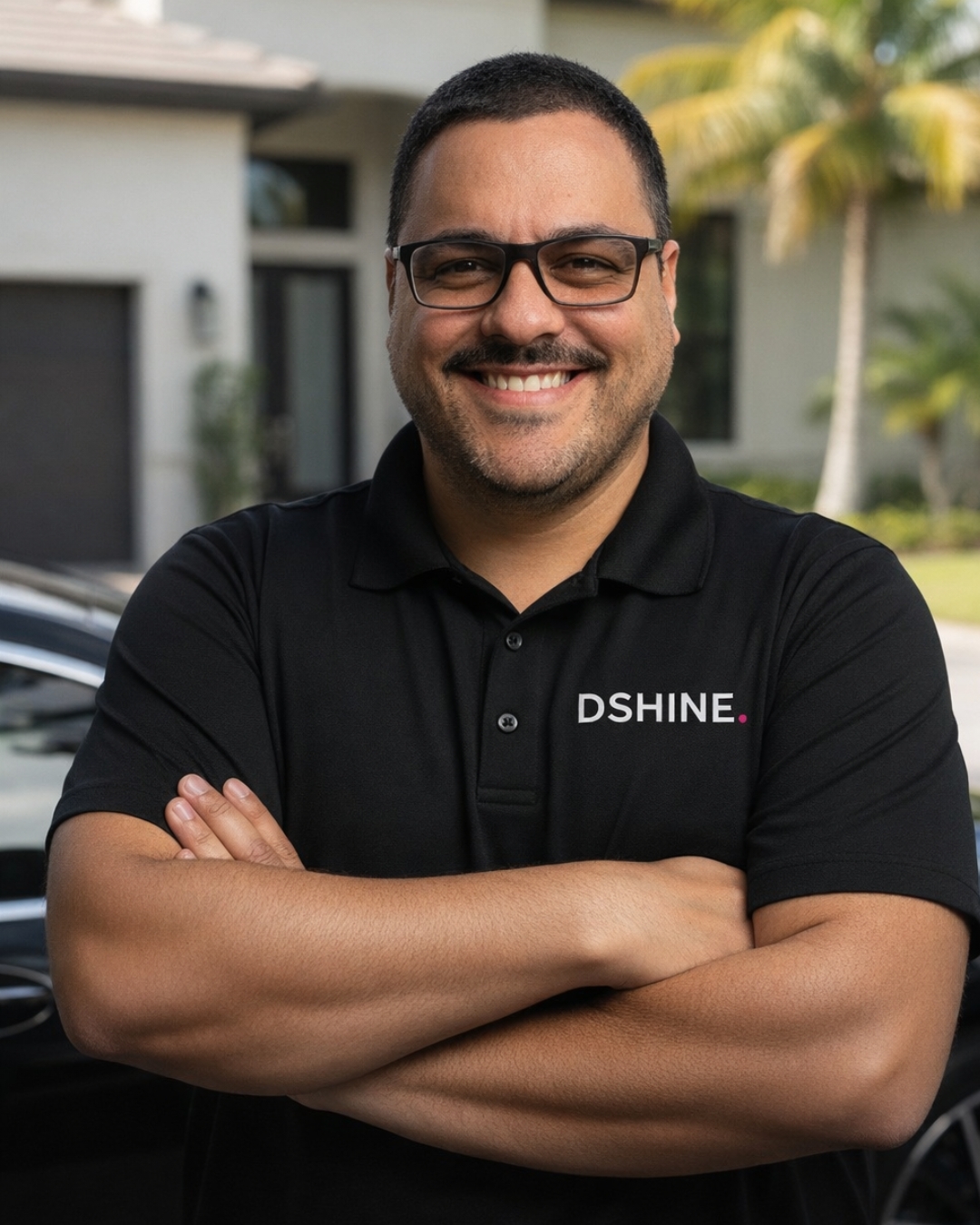
With more than 20 years of hands-on experience in the automotive care industry, Evelio launched DShine Details in August 2018 with one van and zero shortcuts. For the first six months he slept in the van to keep costs down and standards up. Today DShine runs 7 certified vans across Miami-Dade, Broward, and Palm Beach, and the commitment hasn't changed. Every vehicle is treated as if it were his own.
What clients say
in their own words.
Before & After: Mold Removal We've Actually Done
No stock photos. These are real DShine mold removal jobs across South Florida, the same 11-step process and chemistry used on every Aventura appointment.
 Before
 After
Porsche Cayenne — Door Panel & Armrest
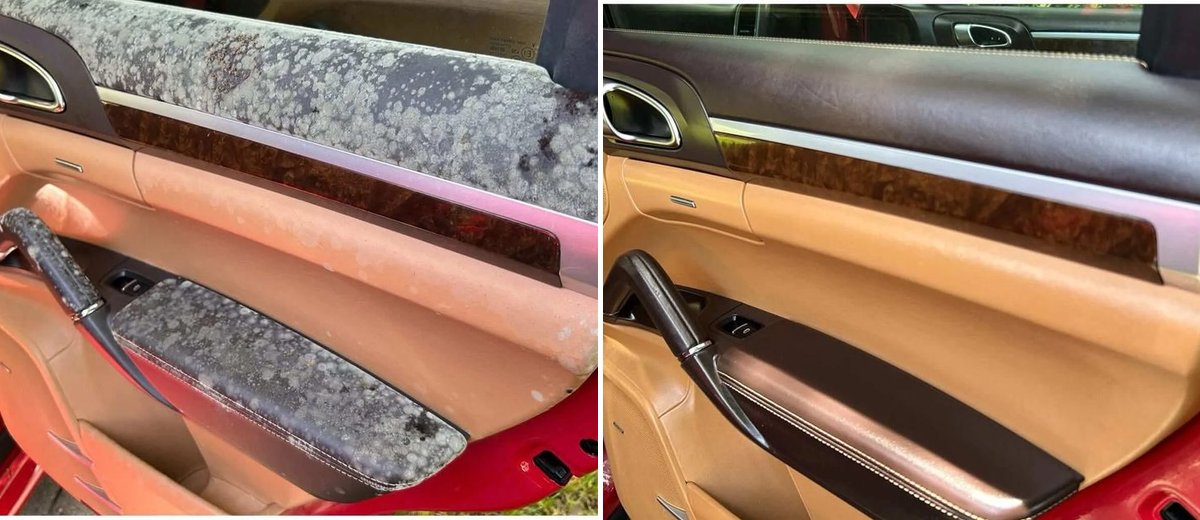
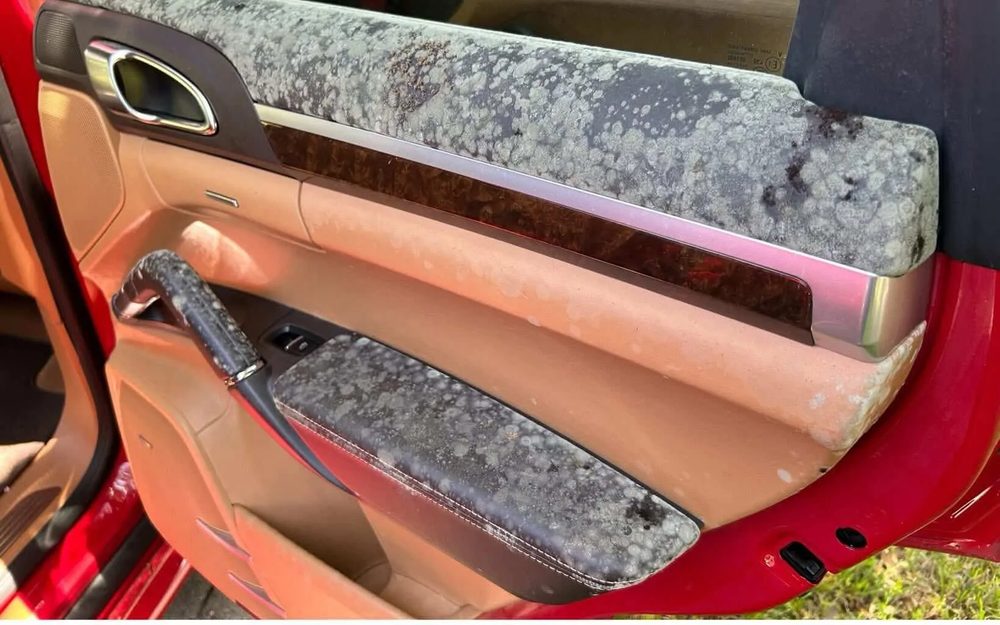
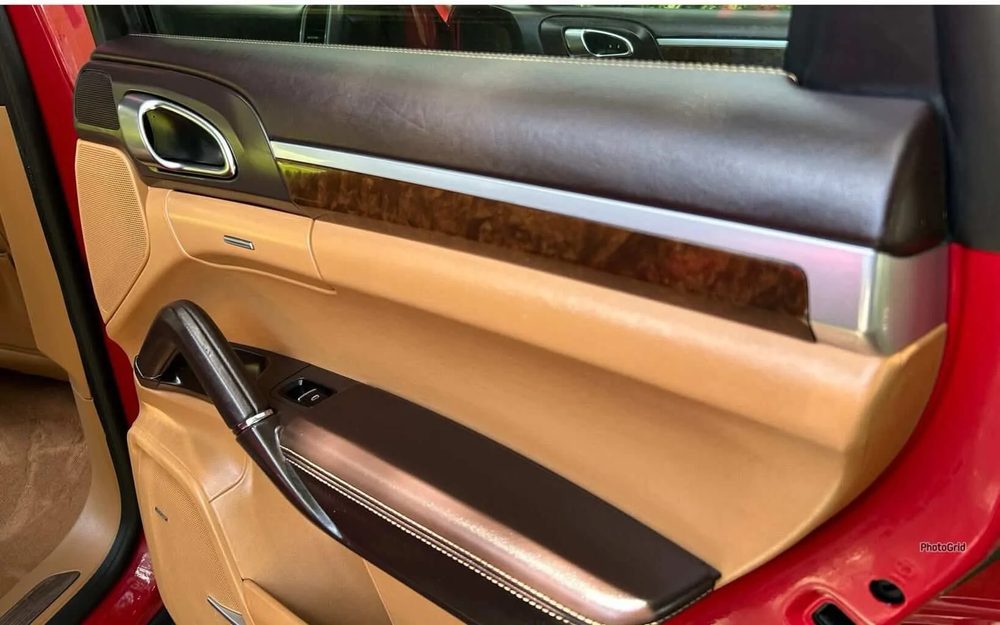
Mold spread across the tan leather door panel and armrest of a red Porsche Cayenne, reaching up onto the wood trim. Leather like this cannot be scrubbed hard, so we use the leather-safe protocol, steam and extraction around the trim, Concrobium and then the sealed ozone cycle. In a city of closed tower garages, door panels are often where moisture settles first, along the seals and the lowest panel edges.
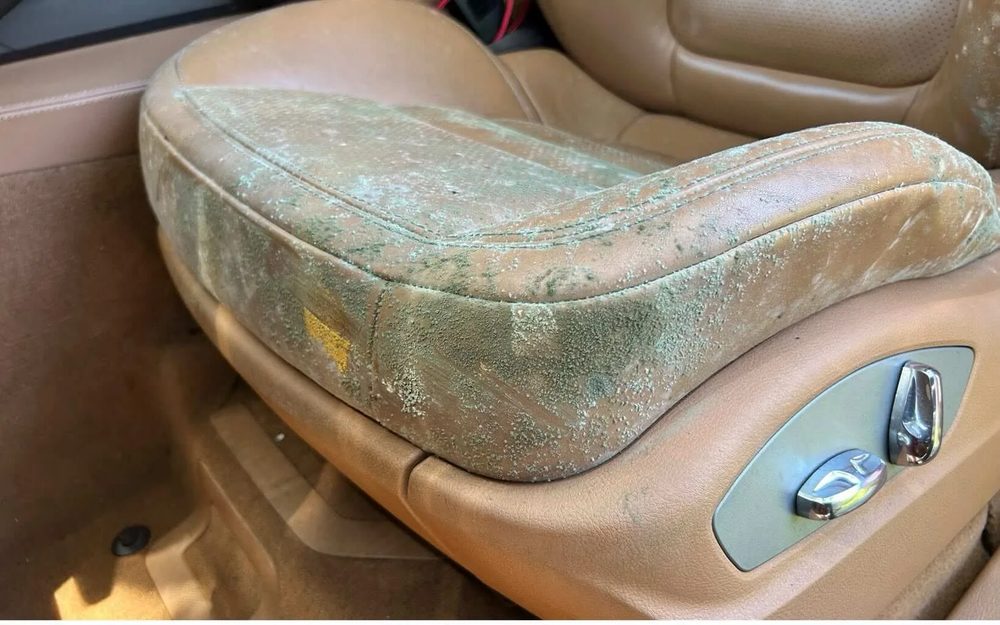 Before
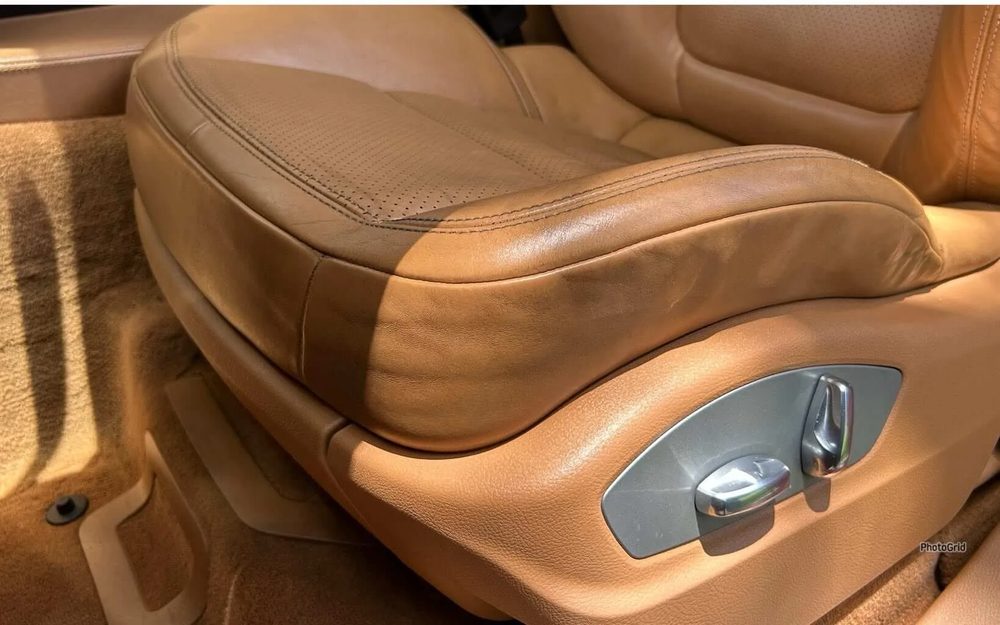 After
Leather Seat — Green Mold on the Bolster
Green-blue mold growing along the bolster of a tan leather front seat, the spot where the seat flexes and traps damp air against the hide. We treat leather with a leather-safe antimicrobial and avoid saturating the cushion, then let ozone reach the spores in the air and in the stitching. A car shut for months in a humid garage, as is common in Aventura, sets up exactly this kind of growth.
 Before
 After
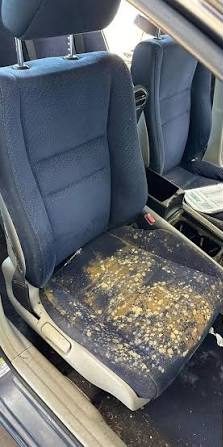
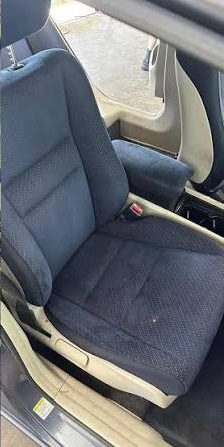
Cloth Bench Seat — Mold Stain Underneath
A dark blue cloth sedan bench seat with the cushion lifted, showing tan and yellow mold-stain residue on the underside of the seat bottom. This is what a quick surface wipe misses: the growth lives in the foam and the base, not on top. We extract the cushion, treat it with Benefect and Concrobium, and dry it fully. In an Aventura garage, a damp seat that is never aired out is how this pattern develops.
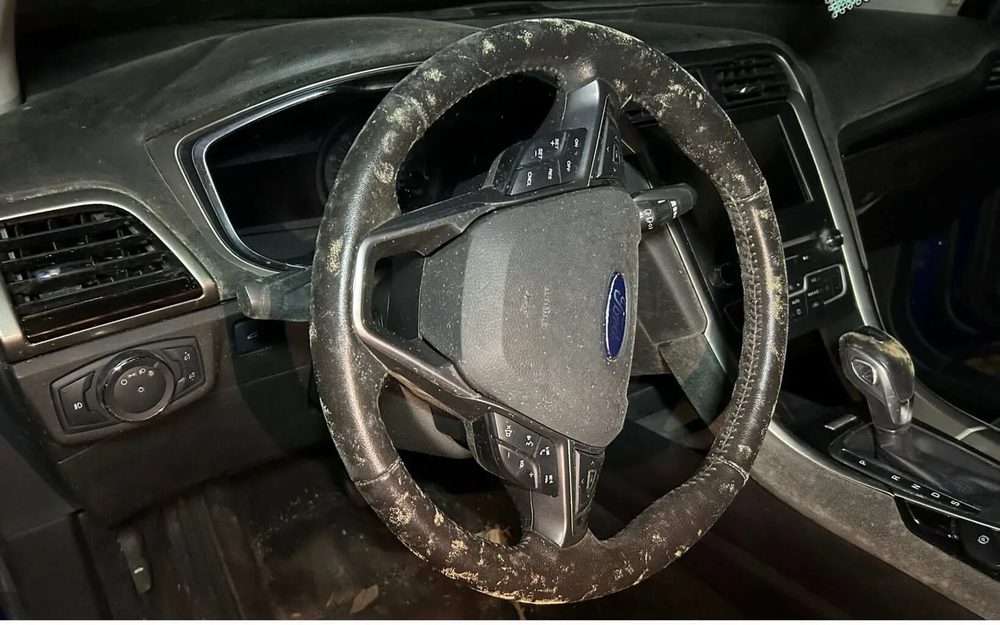 Before
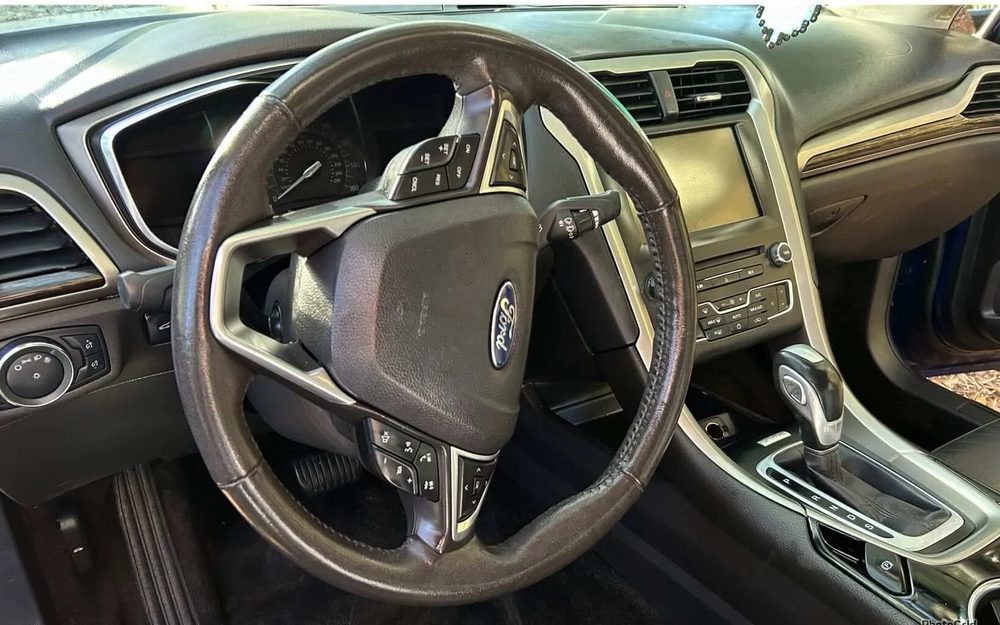 After
Ford Sedan — Steering Wheel, Dash & Vents
Grey-white mold bloom across the steering wheel, dashboard and air vents of a Ford sedan, the surfaces everyone touches. We vacuum the spores with HEPA filtration, clean and decontaminate each surface by hand, and treat the vent path, since the A/C pulls from the same cabin. A car that sat sealed through a wet season in Aventura often shows this kind of bloom on the dash and vents first.
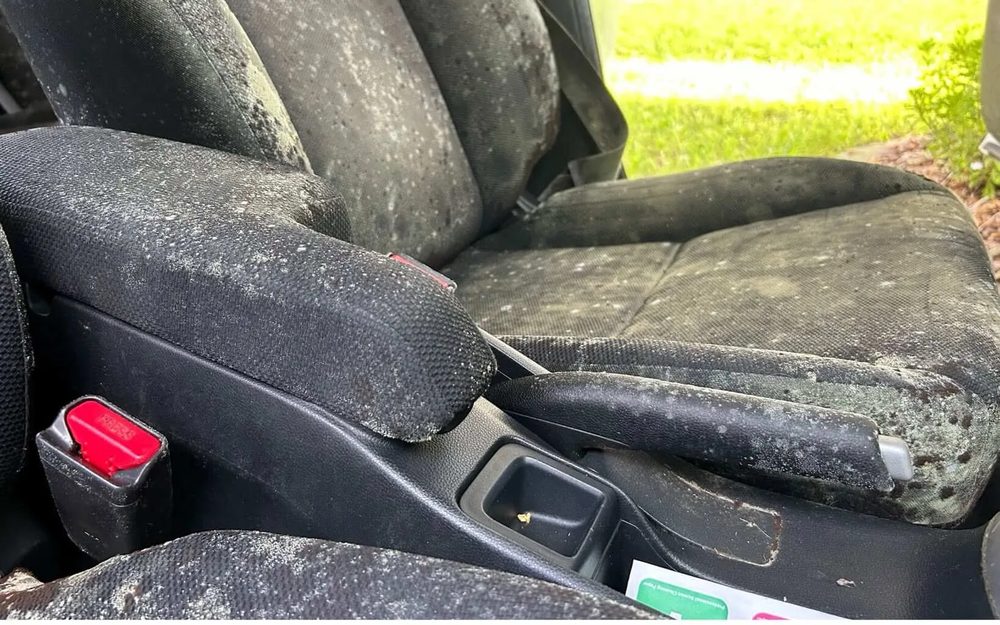 Before
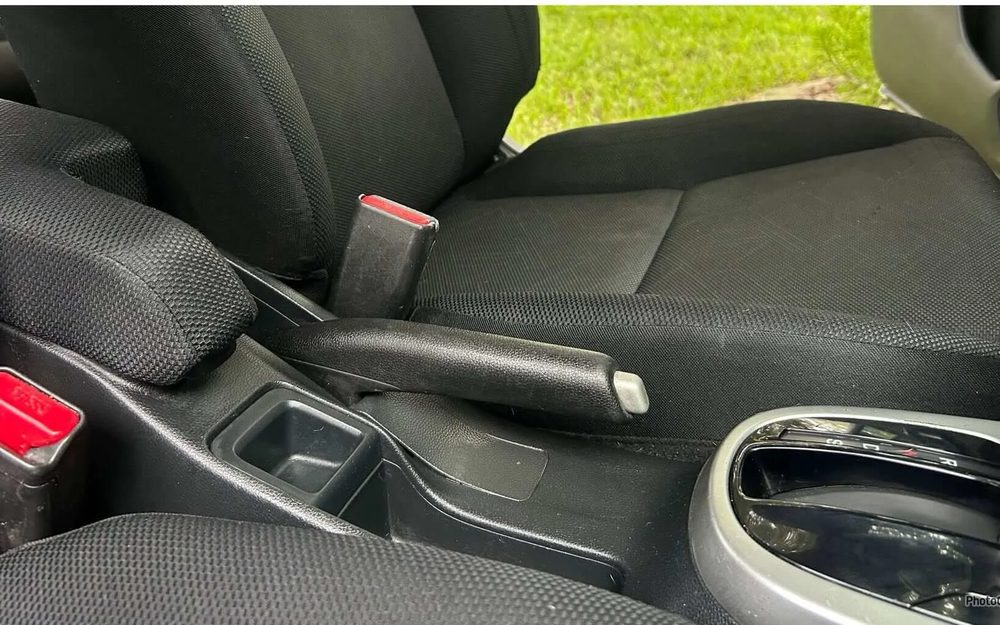 After
Black Cloth Seat & Console — Grey-White Bloom
Grey-white mold on a black cloth driver seat, with more along the armrest and the console beside it, and green lawn visible outside the window. Dark fabric hides early growth until a powdery bloom shows against it. We steam, extract and treat the fabric, then run ozone through the sealed cabin. Here the cause is typically a car that sits closed in humid conditions, which is the story in many Aventura garages.
 Before
 After
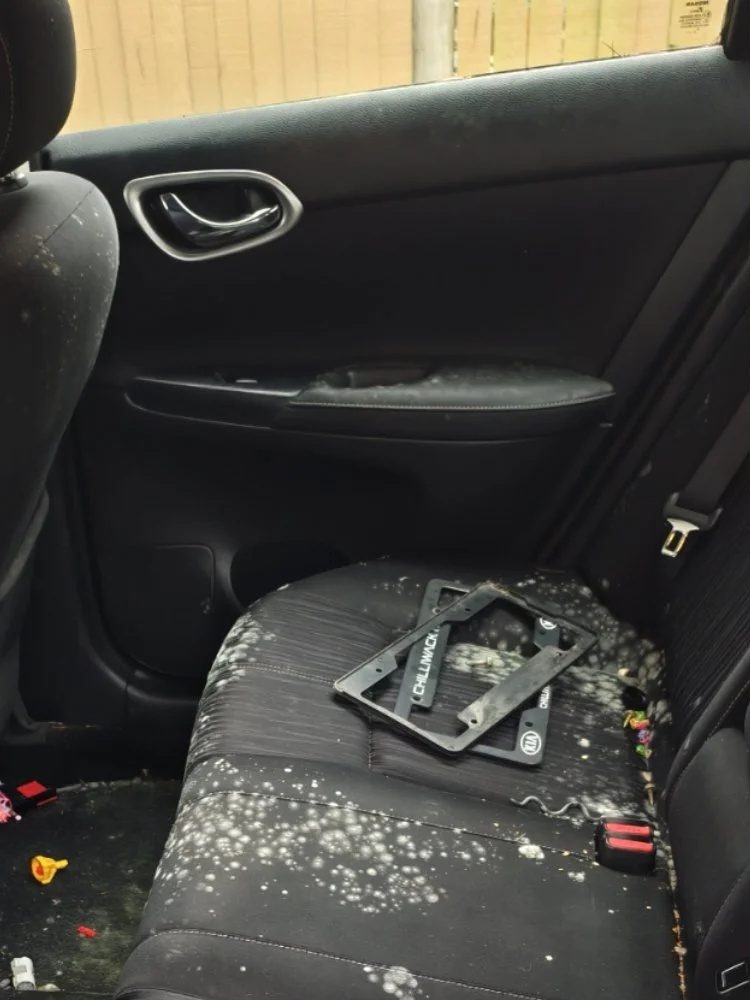
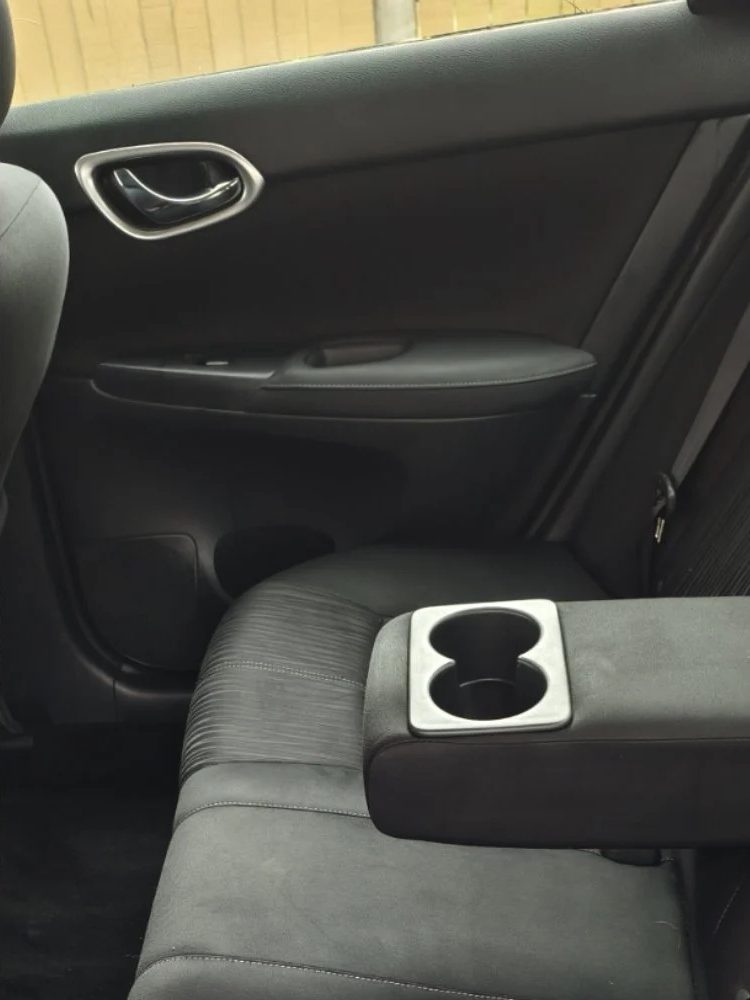
Rear Seat & Door Panel — White Mold Spots
White mold spots across the rear cushion and door panel of a black sedan, with loose debris and a license plate frame left on the seat. Rear seats collect the most forgotten items, which hold moisture against the fabric. We clear the debris first, vacuum with HEPA, then steam and extract the fabric and treat the door panel. In a closed Aventura garage, the rear seat is often the part nobody checks.
 Before
 After
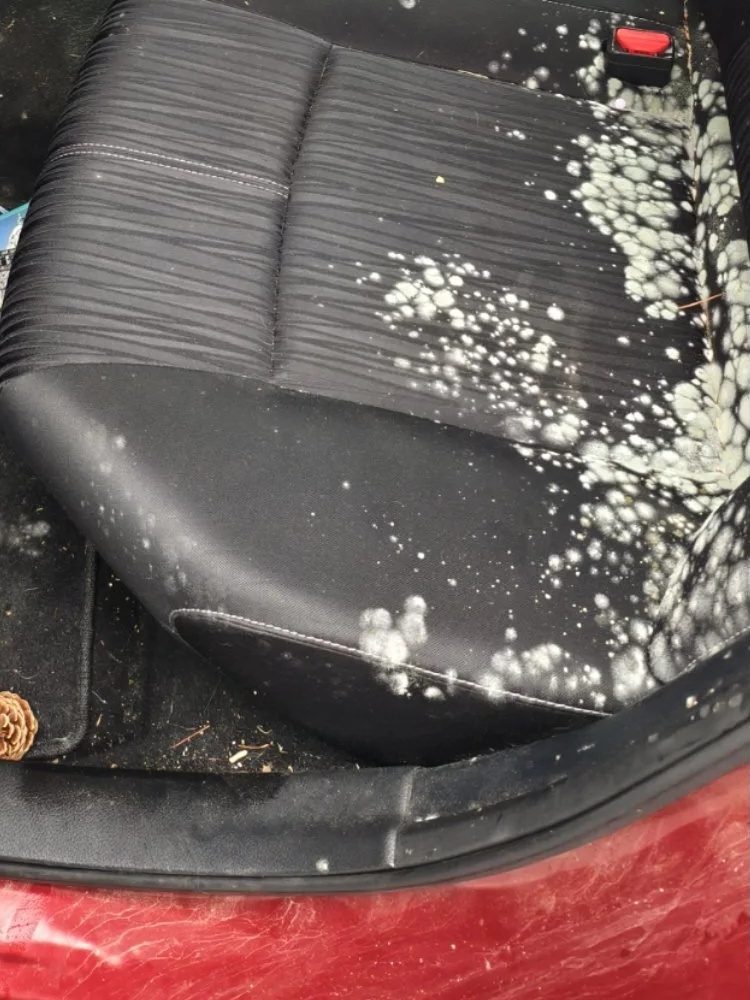
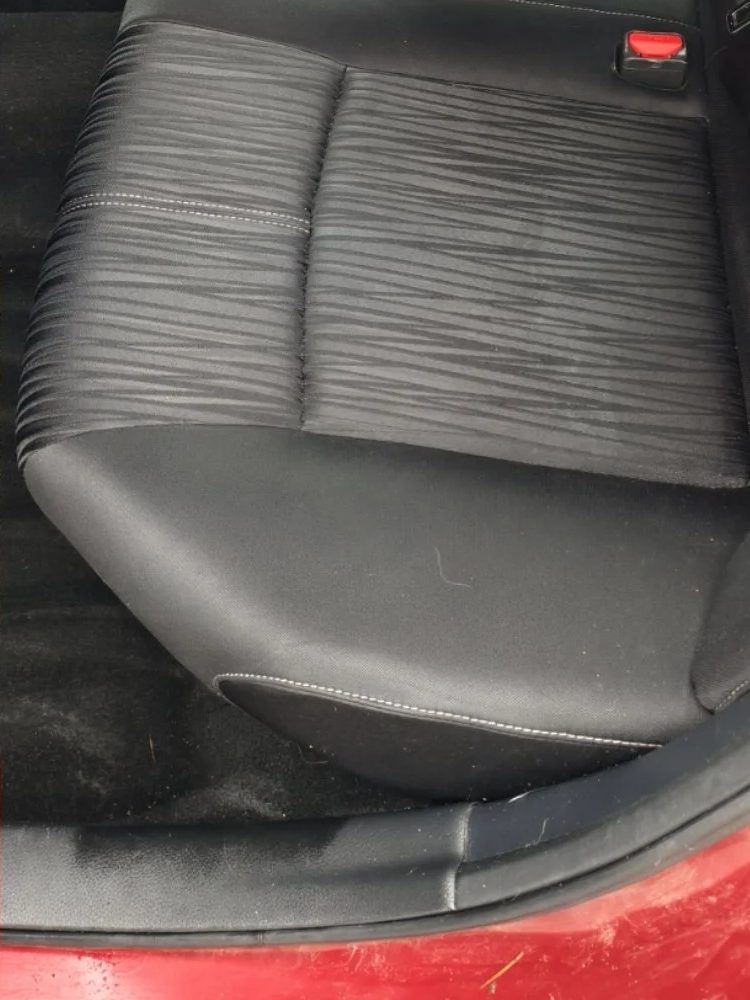
Black Cloth Seat — White Speckled Mold
White mold speckles scattered across a black cloth seat, with a red car body visible below the window. Speckled growth like this is early or moderate, and it responds well to HEPA vacuuming, steam and extraction followed by Concrobium. Catching it at this stage is what keeps the job to one area at $549 instead of the whole cabin. In Aventura, it often starts when a car is shut after a wet trip.
 Before
 After
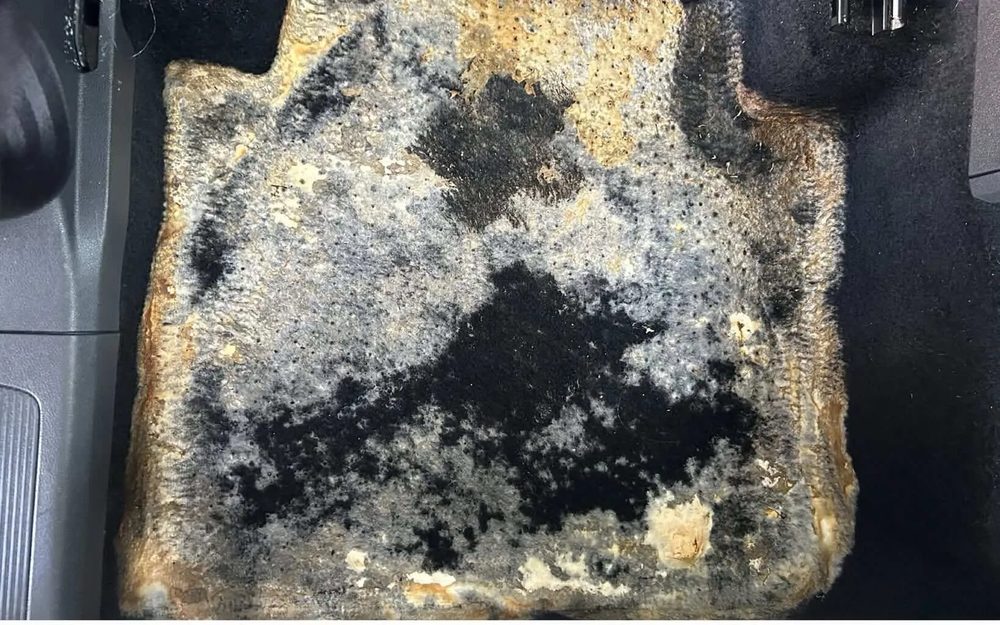
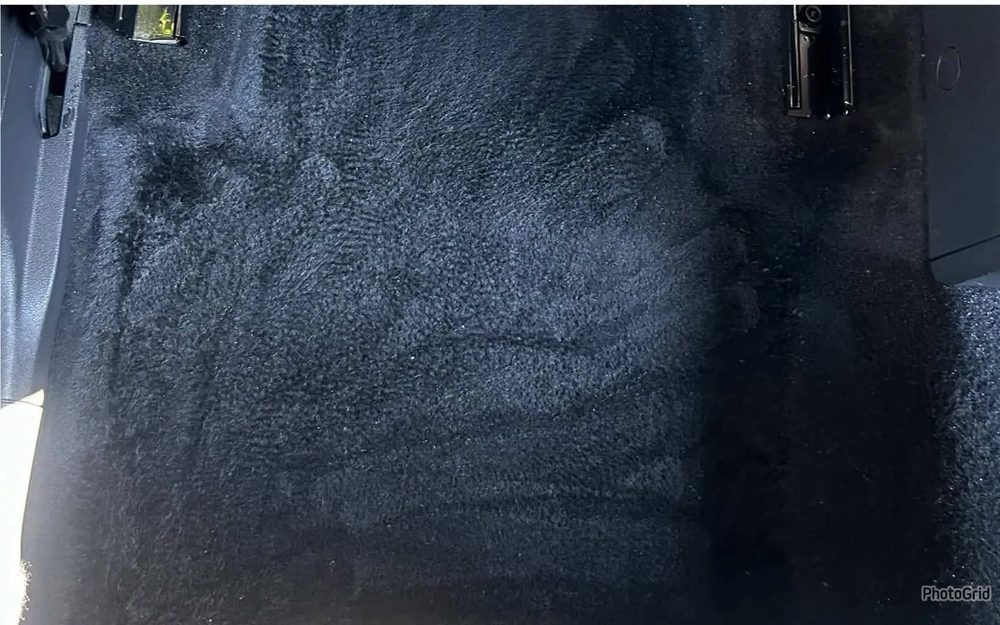
Floor Mat — Heavy Colony Growth
A carpeted floor mat covered with heavy black, brown and white mold colonies, the result of long exposure to dampness. We remove the mat, vacuum it with HEPA filtration, and treat it and the carpet beneath, since moisture usually runs into the padding. A wet mat in a closed Aventura garage, under a car that is rarely driven, can stay damp for weeks and produce exactly this.
100% Satisfaction.
Written. No exceptions.
If the result doesn’t meet our standard, or yours, we come back and redo it at no charge. No forms to fill out, no arguing over what “counts.” The guarantee is in writing before we ever touch your vehicle.
Request Mold Removal in Aventura · From $549
Fill this in once and send it. We get your address, vehicle, and the situation all in one message, no phone tag.
Rating
Detailed
Response
Three steps from a closed-up garage to a clean cabin,
and we handle everything in between.
No drop-off. No waiting. We come to Aventura.
We come to you in Aventura,
from Williams Island towers to Waterways townhomes.
Mobile service: home, office, condo, or marina. No drop-off, no travel fee.
Not seeing your city? Ask us — we likely cover it.
Still garages and Intracoastal air
are hard on a car left alone in Aventura.
Aventura sits about 7 feet above sea level with the Intracoastal and Dumfoundling Bay along its eastern edge, and its concrete tower garages hold humid air long after the rain has stopped. Left untreated, what starts as a musty smell becomes a real health issue for the next person who drives the car. DShine's Concrobium Mold Control and ozone process address the cause, not just the symptom, backed by $2M insurance and a written guarantee. Mold doesn't need much to get started, any trapped moisture inside a closed cabin is enough given South Florida's humidity. The source is almost always one of four things: a clogged AC condensation drain letting water pool silently on the floor pan, a failed door or window seal letting rain in, a clogged sunroof drain, or the car simply sitting unused for two or more weeks without the AC running. In Aventura the cause we meet most is a car shut in a condo tower garage for months while its owner is away, where a slightly damp cabin never gets the chance to dry and mold takes hold.
Aventura neighborhoods we serve,
from Williams Island to Dumfoundling Bay.
From the towers of Williams Island to the Waterways and Dumfoundling Bay, parking and moisture change from building to building in Aventura.
Williams Island — Williams Island has nine condominium towers, built between 1985 and 2013, on 84 acres, plus a full-service marina. Cars here live in tower garages, and boaters bring wet gear aboard. Give us the tower address, level and a contact name, and we coordinate with the building or the valet desk before we arrive.
Turnberry & Country Club Drive — Country Club Drive circles the Turnberry golf course, with a three-mile walking promenade, and the JW Marriott Miami Turnberry Resort & Spa sits at 19999 West Country Club Drive. High-rises and lakes surround the loop. Cars here often sit in covered garages, and we plan around building rules and guest lists.
Aventura Mall & Biscayne Boulevard — Aventura Mall, at 19501 Biscayne Boulevard, has garages with about 9,800 spaces and is among the largest malls in the country. Visitors park for hours, so the risk is a wet event, such as a window left cracked. We work at your home or office address, not in the mall's decks.
The Waterways — The Waterways is a waterfront residential community of condos and townhomes, with Waterways Park, a dog park and the Shoppes at the Waterways nearby. Marina access and canal air mean boat gear in the car. Townhome garages that double as storage often block airflow, and we come to your driveway or garage.
Founders Park — Founders Park, a 12-acre city park just south of the Lehman Causeway and east of West Country Club Drive, has a SplashPad and tennis and pickleball courts, and a bayside section overlooks the Intracoastal. Cars come back from park days with wet towels and swim bags, and a damp cabin left closed is the usual cause.
Lehman Causeway Corridor — The William H. Lehman Causeway is Aventura's main east-west road, linking the Biscayne Boulevard side of the city with the Intracoastal. Apartments and condominiums near it mix open lots and garages. Cars that sit in open lots take rain directly, so worn seals and cracked windows are the usual starting points.
Dumfoundling Bay & the Intracoastal — The Intracoastal Waterway and Dumfoundling Bay form Aventura's eastern border, and Maule Lake marks its southern edge. Waterfront buildings along them see damp air year-round, and owners with boats bring wet equipment aboard. We come to your building and coordinate with the front desk before we work.
Don't see your area? Ask us — we likely cover it.
Aventura car mold,
answers for people who spend months away.
Tap any topic to read the full breakdown.
Aventura sits about 7 feet above sea level on 2.65 square miles of land, with the Atlantic Intracoastal Waterway and Dumfoundling Bay along its eastern border and Maule Lake at its southern edge. Water covers another 0.87 square miles, roughly a quarter of the city's total area, so almost every address is a short walk from a canal, lake or bay.
Aventura does not publish its own rainfall, so the number on this page is Miami International Airport's: about 67 inches a year across the 1991 to 2020 normals, falling mostly between mid-May and October. That is a regional number, not an Aventura gauge, but it sets the rhythm for a car sitting still, a long damp stretch that overlaps with the months many owners are away.
What makes Aventura different is what sits on top of that climate. The 2020 Census counted 26,469 housing units here and 28.7 percent of them were vacant, a category that includes homes used only part of the year. The large majority of the housing is in multi-family buildings, so a big share of the city's cars live in concrete garages that nobody checks for weeks at a time.
Luxury sedans and SUVs lead the list, which fits a city of tower garages and valet stands. Leather, wood trim and soft-touch dashboards show trouble early: a powdery film along a seat bolster or armrest, or a fuzzy bloom on a steering wheel, usually appears well before anyone smells anything.
Second cars come next. The convertible, the sports coupe or the older sedan that lives in an assigned space and gets driven on weekends, if that. These are the cars that sit longest, and the ones where growth turns up most in the headliner, in the seat seams and in the carpet under the mats.
We also see cars that belong to part-year residents and were left behind for the summer, leased vehicles that come back to a garage between trips, and the occasional family minivan from the townhome side of town. Whatever the badge, the mold is rarely only where the owner first looked, so we inspect the whole cabin before we confirm a price tier.
Assigned space in a tower garage: the most common setup in the city and the riskiest when a car goes unused. Concrete decks hold moisture, air drifts slowly between levels, and a car in a corner stall can sit shut for months. If the cabin carried even a little dampness when it was parked, nothing in that space will dry it out.
Valet-run garage or porte-cochere: in buildings with a valet desk, a car may be rotated, stacked behind others or left in a back tier. That helps when someone starts it now and then and hurts when it is forgotten for weeks. Know who holds your keys and how often the car is actually moved, because a car nobody drives is a car nobody airs out.
Mall and shopping-center decks: Aventura Mall has garages holding about 9,800 cars, and shoppers leave theirs for hours, not months. Trouble here is a one-off soaking, such as an umbrella dripping on the mat or a window left open a crack ahead of a storm, then a sealed cabin heating up in the sun.
Open lot, carport or townhome garage: at lower-rise condos the car takes rain and sprinkler spray head-on, and mold starts at a tired door seal or sunroof drain, usually along the sill carpet. In townhome garages, including around the Waterways, shelves and stored boxes crowd the car and choke off air, and an uncooled space swings with every storm.
Late spring through summer, April to September: owners close up and leave as the wet season starts in mid-May. The car goes into the garage after months of dry-season driving, which feels safe, then spends the wettest stretch of the year shut in with whatever dampness it already held, while afternoon storms keep the garage air heavy.
Peak hurricane weeks, mid-August through September: the Atlantic season runs June 1 to November 30, and the peak for the Miami area falls in these weeks. Cars are moved, windows are checked, doors stay shut and everything is sealed tight, which is sensible for the storm and unhelpful for any moisture already in the cabin.
October and November returns: residents come back to a car that has been closed for four or five months, and our phones fill with the same sentence: it smelled fine when I left. This is the busiest window for our work in Aventura, and the owners who book in the first week usually have the smaller job.
December to April: the air is drier, cars are driven, and the A/C runs. Risk drops, but short trips do not fully dry a cabin that took on water in the fall, and a wet beach bag or a spilled drink can still start a problem that shows up in the spring.
Most of our Aventura visits involve a building, not just a driveway. We come to your address, so the first step is a name on the vendor or guest list, plus the level and stall. If your building wants a certificate of insurance before an outside service enters, we carry $2M in liability coverage and can send the paperwork ahead of time.
Every association has its own rules. Some want a notice at the front desk, some limit working hours, and some restrict where equipment can be set up or where a vehicle can be taken. Tell us what yours requires when you book, and we plan the visit around it instead of finding out in the lobby with a van full of gear.
At larger properties, such as Williams Island with its nine towers on 84 acres, the harder part is often finding the right garage rather than getting in. Give us the tower address, the level and a contact name, and tell us if the car has to be brought out by a valet. Where your keys sit is the detail that most often delays a start.
If you are away, a building manager, a family member or a trusted friend can meet us at the car, and we send before-and-after photos to your WhatsApp. You get a firm price before any product touches the vehicle, so you never approve work you cannot see, and the car is handed back to whoever holds its keys.
1. A car left shut in a tower garage for months: the clear leader. The cabin was closed with a little moisture in it, the garage air is humid and still, and nobody opens a door to let it out. By the time the owner returns, the mold is in the seat foam and the headliner, and the smell is the least of it.
2. A/C condensation that never gets a chance to dry: an evaporator drain that clogs, or an A/C that is switched off at the end of every short trip, leaves the box behind the dash wet. A sour smell in the first half minute after you start the car is the usual sign, and we often find growth inside the vents.
3. Wet items and boat gear left aboard: a beach towel, a pool bag, a grocery tote, a soaked umbrella, or the damp life jackets and dock lines that come home from Aventura's marinas. In a closed cabin they hold water against fabric and carpet for days, and the pad underneath stays damp long after the surface feels dry.
5. Worn seals, sunroof drains and cracked windows: a heavy summer downpour needs only a small opening to soak a seat bolster or a headliner. Aging door seals let in rain and sprinkler spray slowly, and a long absence is when the damage finally becomes visible.
We arrive in the window we agreed on and check in with the front desk or garage office if your building requires it. Then we walk the car with you, or with your contact, and decide where to set up: a corner of the garage with room to open all four doors, a shaded stretch of driveway or a spot the building has assigned for work.
The first stretch is dry work: inspection and a HEPA vacuum. Then comes the wet side, Benefect decontamination, a deep clean, steam and extraction, with a drying stage afterward. The finish is Concrobium Mold Control, the sealed ozone cycle, a Meguiar's odor bomb and a final check. Three to four hours is typical, longer when mold is throughout and the headliner needs patience.
WhatsApp carries the before and after pictures, so waiting around a parking structure is optional. When the car has aired out, we confirm that it is ready and return the keys to wherever we collected them, whether that is you, the valet desk or the front desk.
The first question is almost always whether we can work inside the building's garage. The answer is usually yes with a little coordination: a vendor registration, a space number and a time that suits the property. We have no need to take the car anywhere, because the whole job happens at your address.
Next is cost. Two tiers apply, $549 or $749, depending on whether mold sits in one area or runs through the whole car. Travel is included, and your tier comes back in under 2 minutes from photos or a description. The final number is set after we look at what you sent, and before any work begins.
After that come the practical questions: how long it takes, whether the smell will really be gone, whether I have to be there if the car is in a valet garage, and what happens if it comes back. The short answers are three to four hours, yes, no, and a free re-treatment within 30 days under our written guarantee.
Odor Removal is the pairing we hear about most for cars with a musty smell and no visible growth. We confirm during inspection whether a car needs full mold treatment or only the odor service, and if the lighter job is enough, that is what we say, since a bigger service than the car needs helps nobody.
Ceramic Coating gets added for cars that live outdoors in open lots or carports, where sun and afternoon storms wear on the paint every day. Paint Correction is a natural pairing for a car that spent months in a deck and has dull spots or swirls, and the owner would rather have both jobs done in one visit than book twice.
Engine Bay Cleaning shows up for cars that sat long enough to collect dust and moisture under the hood. Because we are already at your building or driveway for the day, adding a service is easier than arranging a second vendor visit with your garage office.
A friend or a building manager checking on a car that has been parked for weeks does not have to open every door. Windows that fog from the inside on a parked car, carpet that feels faintly cool and soft, or a stale breath from the vents in the first seconds of A/C deserve a message early.
Look low and look at seams. Pale flecks along leather stitching, a tacky film on a steering wheel or a shifter, and a dark ring on a seat bottom usually appear well before a strong odor. Door pockets and the trunk floor collect water from a failing seal first.
A key fob that smells different, a cabin that feels clammy even with the A/C on, or a dust-like bloom on dark plastic are subtler cues that moisture has been sitting for a while. If you see any of them, send us a photo before the problem spreads into the headliner.
Start with the cabin. Take out every towel, bag, umbrella, receipt and cup, vacuum the floor mats, and give the carpet a full day of daylight to dry before the car goes into the garage. A cabin that goes into storage dry gives mold nothing to work with, even in a humid deck.
Then think about air. If the building allows it and someone trustworthy has access, a short drive every two or three weeks with the A/C running resets the cabin air and dries the evaporator. A moisture absorber helps in a small closed space, but it does not replace airflow and it will not fix a cabin that was already damp.
Finally, tell someone where the keys are. A manager, a family member or the valet who knows the car can start it, run the A/C and check for fogged glass or a musty smell. A five-minute check in July is far cheaper than a visit in November, when the car comes out of months of closed-up air.
Households in Aventura often have two or three cars in a building garage, and the second or third is the one that sat. If more than one needs treatment, we can plan them as a single appointment at your address, so the property signs off a single vendor visit instead of several.
Each vehicle is priced on its own, $549 when mold is in one area and $749 when it is throughout, since a car driven all summer rarely needs the same job as one that was parked. We inspect them all and confirm each price before work starts, and the 30-day written guarantee covers every car we treat.
When cars are on different levels or in different buildings, tell us at booking. We plan the order so the car in the worst shape goes first, and we confirm timing with whoever holds the keys, so the day is smooth even when several vehicles are involved.
The promise is a 100 percent written satisfaction guarantee lasting 30 days from the treatment. Should mold, or the musty smell, reappear inside that window, we come back and redo the work free. The terms are in writing before the job starts, so you know exactly what is covered before you agree to anything.
A fair question in a closed-garage city is what happens if the car goes straight back into a damp space. We treat the cabin, the seats, the headliner and the vent path, and we will tell you plainly if a leak, a clogged drain or a worn seal is likely to bring the problem back. Fixing that source is the best way to protect the result.
You do not have to prove anything complicated. If visible growth or the smell is back inside the 30 days, message us with a photo and we schedule the re-treatment. The guarantee is about the result, mold or mold odor returning, and that is the part we stand behind. It is also in writing, so you are not relying on a handshake.
A leather-and-wood interior in a luxury sedan or a classic coupe cannot be scrubbed like a rubber mat. Leather gets the leather-safe protocol instead: a gentle antimicrobial, controlled steam and as little moisture as possible, which lifts the growth without drying out or marking the hide. Wood trim and soft-touch plastics get the same restrained approach.
Older cars have quirks of their own, such as hardened seals, original carpet and headliners that sag if soaked. We keep wet work to what the material can take, and we are open about it if an area is too fragile for aggressive extraction. In a classic, a slow and careful job is better than a fast one that leaves a stain.
Work vans, rideshare cars and delivery vehicles are simpler to plan. They have hard-wearing surfaces and a clear need to be back on the road, so they get the same 11 steps, and we aim to finish within the usual three to four hours.
Empty the cabin completely: towels, gym bags, umbrellas, takeout cups, reusable grocery bags and any mats that still feel damp. Vacuum the carpet and leave the doors open in daylight for a while if the car has been wet recently, so the padding underneath can dry.
Check the windows, the sunroof and the door seals, and confirm that none is cracked open. Run the A/C on a dry setting for the last few minutes of your final drive so the evaporator dries before the car is parked, and do not park it right after a wet trip.
Leave a note with the building or a friend: where the car is, where the keys are, and a request for a quick check and a short drive every few weeks. Add our number if you like, so the first sign of a musty smell becomes a short message instead of a long surprise in the fall.
Mold does not stay on the surface. In the first few days it lives on fabric and hard trim, and a clean-up is simple. Given weeks of humid air, it moves into foam, padding and the headliner, and the job grows from one area to the whole cabin, which is the difference between the $549 and $749 tiers.
Leather is the clearest example. Growth left on a bolster can leave a permanent stain or etch the finish, and a smell that has worked into foam is much harder to reach. Active mold also rides the airflow each time the A/C starts, so passengers pay part of the price.
There is a practical side too. A car with visible mold is harder to sell, trade in or hand back at the end of a lease, and the smell follows you on every errand. A prompt call is the cheapest option, and a photo is all we need to start.
Aventura has water along its eastern and southern edges, and boating is part of life for many residents, including those at Williams Island, whose full-service marina connects to Dumfoundling Bay. Boaters carry damp life jackets, dock lines, cushions and wet footwear in the cabin, and the car then goes into a garage where none of it dries.
The pattern is easy to spot: a smell that is strongest in the rear, a damp trunk liner, and mold along the carpet edges and under the mats. If you dock your boat and then leave for the summer, take every wet item out of the car, not just off the boat, before you park it for months. We treat what is already established, and we can meet you at your building or near the marina when access allows.
If you keep a boat at a marina and the car at a tower, the two are connected more than owners think. A short habit helps: dry the shoes and bags on the dock or at home, let the cushions air before they go in the trunk, and leave a window cracked only while you are standing next to the car.
Photos or a short description are all we need to start. Mold in one area is $549, mold throughout the vehicle is $749, and travel is built into both. Your tier comes back in under 2 minutes, so you know where you stand before anyone drives to your building.
We set the final number after looking at what you sent, and always before we begin. If an in-person look shows the job belongs in the other tier, we say so first and you decide. A number that moves after product is on the seats is the thing we avoid.
Most Aventura requests arrive with a photo of the worst spot and a line about where the car is parked. If you can add the building, the garage level and who holds the keys, we can also line up access with your garage office, and the visit begins without any waiting at the desk.
Aventura pairs Intracoastal and bay humidity with a wet season from mid-May into October and a housing stock of mostly multi-family buildings, many of them used only part of the year. The pattern we meet most is a car shut in a tower garage for months with a slightly damp cabin.
The visit takes place at your building or driveway, follows our 11-step process (Benefect, steam, Concrobium, sealed ozone) and runs roughly three to four hours. It carries a 30-day written guarantee, IDA certification and a price fixed before we begin: $549 or $749.
If you are leaving for the summer, empty the cabin and ask someone to start the car every few weeks. If you are back and the car smells wrong, call early, because the first week is the cheapest one, and a single photo is all we need to give you a price tier.
After steam, extraction and the Concrobium application, we seal the car and run an ozone generator inside the cabin. It reaches airborne spores, the vent path and the places no surface treatment can touch. No one sits inside the car while the generator runs, and people and pets stay clear until the cycle is done.
In a shared garage we let the front desk or garage office know that the car is off-limits for that period, and we choose a spot with room to open the doors afterward. Then we ventilate the cabin fully before anyone gets back in. We confirm when the car is actually ready, not only when the cycle ends.
A Meguiar's odor bomb follows the ozone, and the final check covers the vents, seams, headliner and trunk. You get after photos by WhatsApp, and we tell you if anything needs another look. Owners are often surprised that the car smells of nothing, rather than of a cover-up, and that is the aim.
Before you book,
a few answers for Aventura drivers.
Add-ons Aventura clients book
Still deciding? Read: the complete mold removal guide · does insurance cover it? · why DIY mold removal fails.
Mold in your Aventura car? Get your price in under 2 minutes.
Serving Aventura and all of Miami-Dade County. Fixed pricing, no travel fee. We confirm in under 2 minutes.
It Might Just Be an Odor Problem
If there's no visible mold growth yet, the smell alone is usually an Odor Removal Detailing case ($349 flat) — faster than full mold remediation ($549–$749). See which one matches what you're dealing with: