What a Lighthouse Point Mold Job Includes
This is not a car wash. Car Mold Removal uses Concrobium Mold Control treatment, pH-balanced products, and machine assistance, the same process used in pre-sale preparations for luxury dealerships.
Why it matters for your health: Mold in a vehicle is a different exposure than mold on a wall at home. With the AC recirculating, everyone inside is breathing concentrated spores for the length of the drive. The EPA and CDC both link mold exposure to respiratory irritation, allergic reactions, headaches, and worsened asthma symptoms. Children, older passengers, and anyone with a compromised immune system typically react faster and more severely than a healthy adult would. By the time the smell is noticeable, spores have usually already spread through the HVAC system into every vent in the cabin.
Curious what actually happens during the visit? Tap through our real 11-step process below to see what we do at each stage and why it matters.
What every Lighthouse Point mold job gets you, dock to driveway
Most detailers in Lighthouse Point charge less. Here’s exactly what you gain — and what you risk — with each choice.
| DShine DetailsFrom $549 · travel included | Avg Lighthouse Point Detailer$149 – $199 | |
|---|---|---|
| Industry certificationsIDA, Koch Chemie, Meguiar’s, 3M, Symplex, XPEL | ✓6 verified | —0 credentials |
| $2M liability insuranceWe cover any damage — in writing | ✓ | —Often uninsured |
| Deionized water systemZero mineral residue, no water spots | ✓ | —Tap water, water spots |
| Fresh microfibers per vehicleNo cross-contamination between jobs | ✓ | —Shared towels, swirl risk |
| Mold-specific chemistry onlyConcrobium, Benefect & Meguiar’s, no harsh acids | ✓ | —Industrial degreasers |
| Before & after photosSent via WhatsApp on completion | ✓ | —No documentation |
| 100% written satisfaction guaranteeReturn & redo at no cost if unsatisfied | ✓ | —No written guarantee |
| Travel to your address — $0Home, office, condo — no drop-off | ✓ | Sometimes adds fee |
DShine vs. any other detailer
in Lighthouse Point, Broward County
Three things most detailers won't tell you. We put them in writing.
 Since 2018
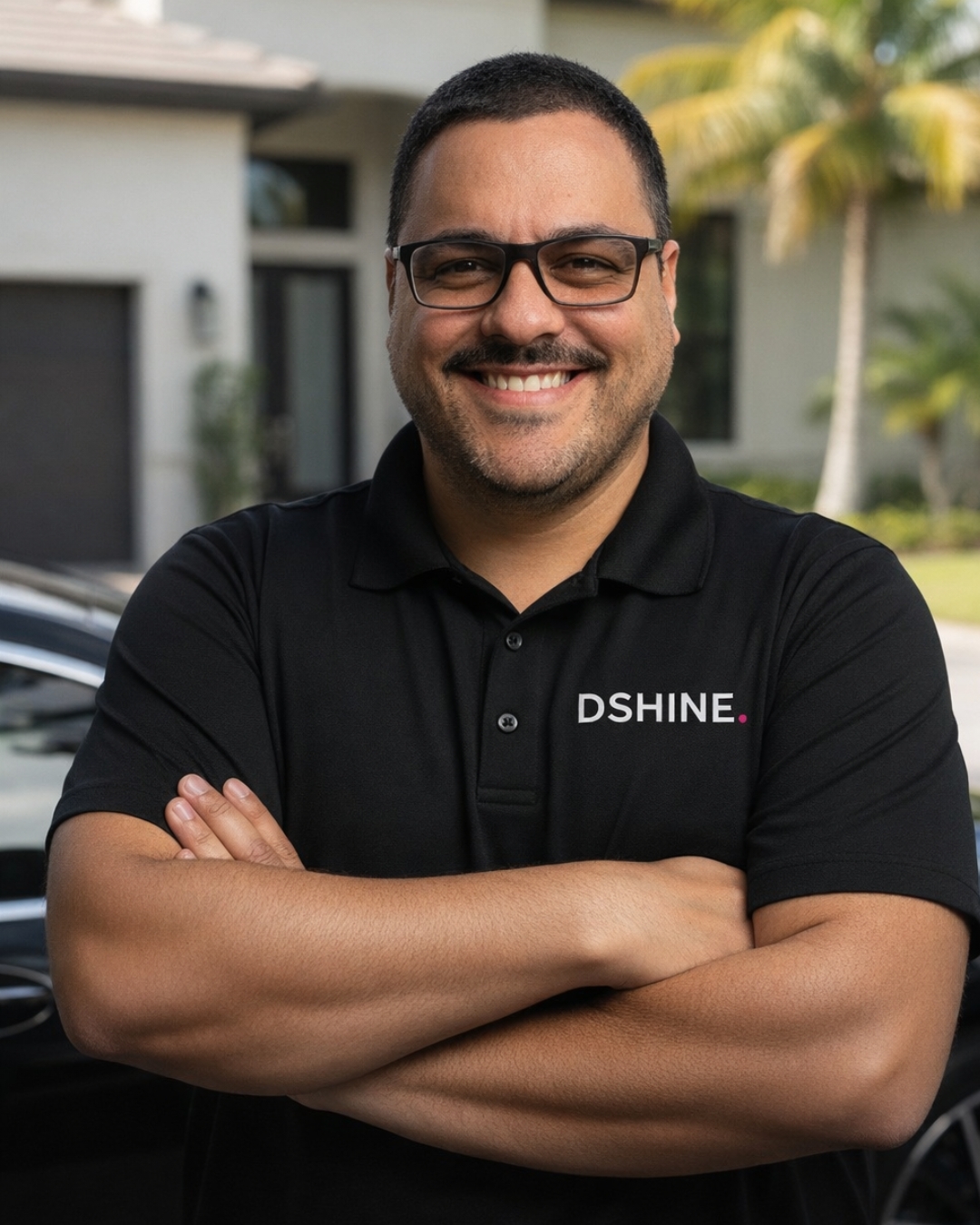
With more than 20 years of hands-on experience in the automotive care industry, Evelio launched DShine Details in August 2018 with one van and zero shortcuts. For the first six months he slept in the van to keep costs down and standards up. Today DShine runs 7 certified vans across Miami-Dade, Broward, and Palm Beach, and the commitment hasn't changed. Every vehicle is treated as if it were his own.
What clients say
in their own words.
Before & After: Mold Removal We've Actually Done
No stock photos. These are real DShine mold removal jobs across South Florida, the same 11-step process and chemistry used on every Lighthouse Point appointment.
 Before
 After
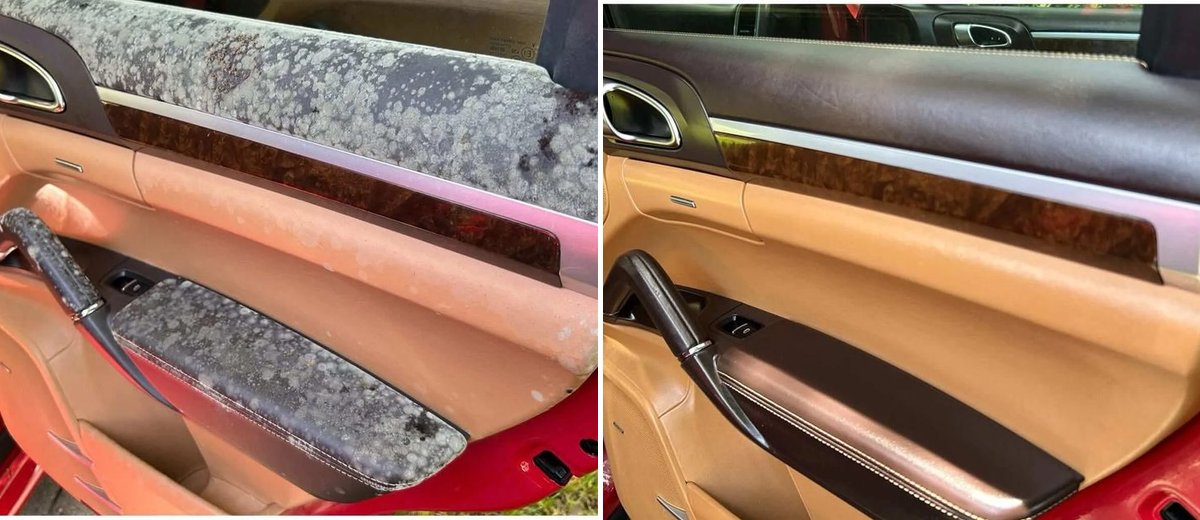
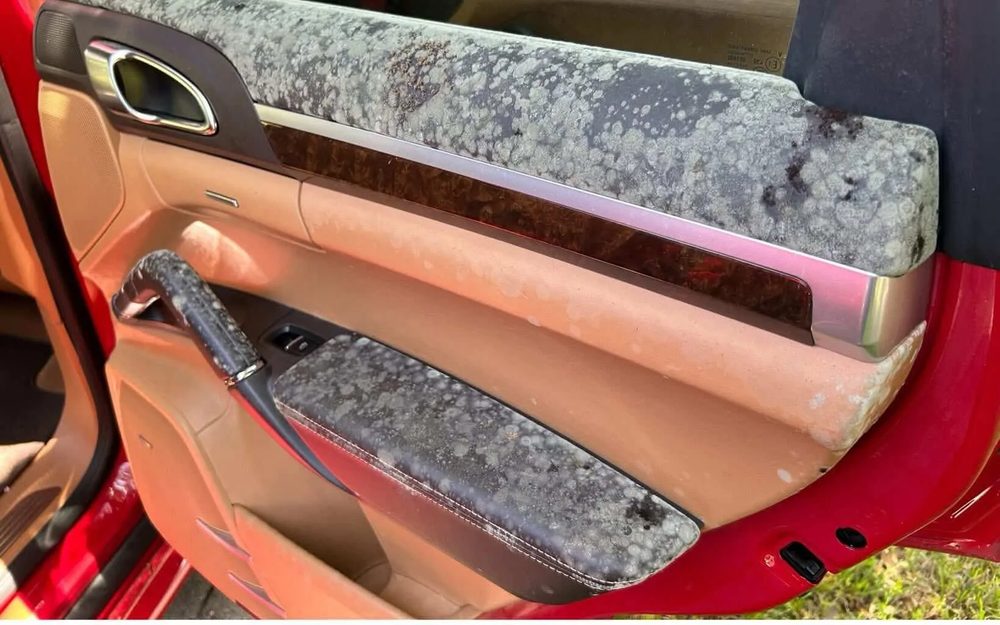
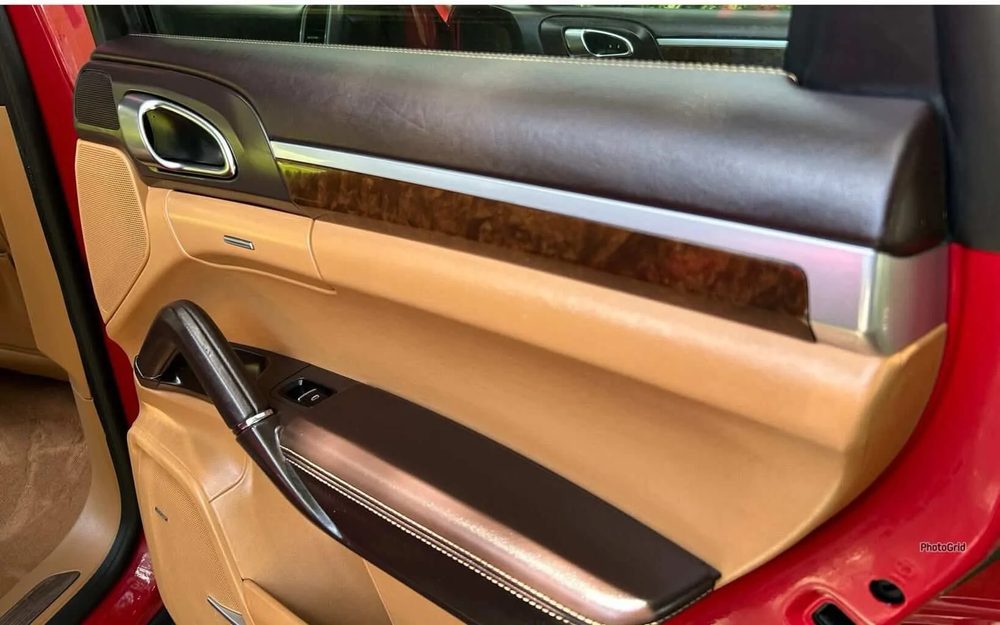
Porsche Cayenne — Door Panel & Armrest
Mold across the tan leather door panel and armrest, running up to the wood trim. Leather like this gets the leather-safe protocol: controlled steam and extraction, Concrobium on the surface, then the ozone cycle for the cabin air, so the finish is not stripped. In a canal city, a premium car parked for weeks beside a damp garage wall is a pattern we see often.
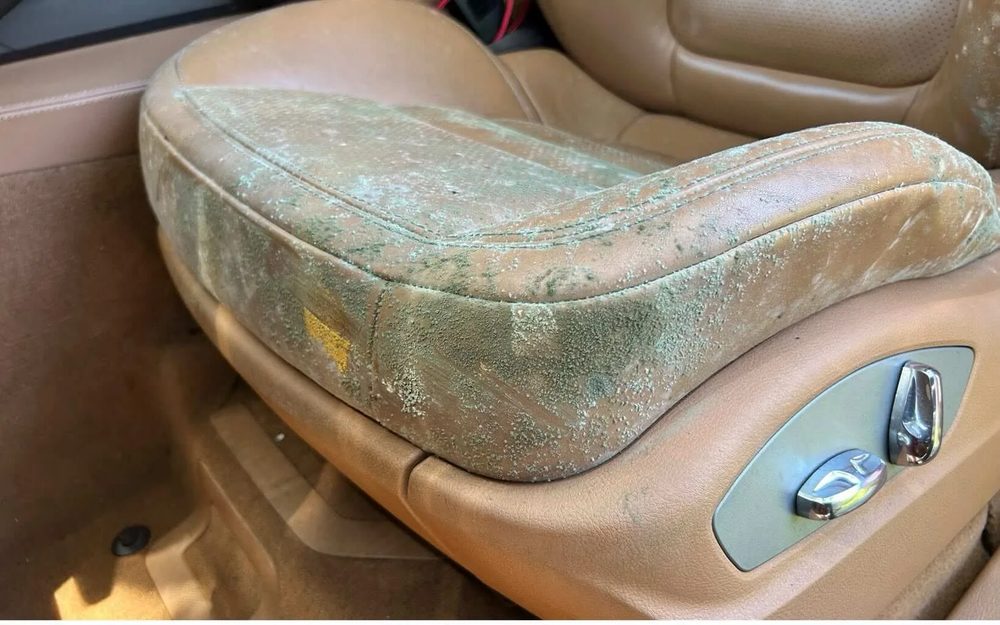 Before
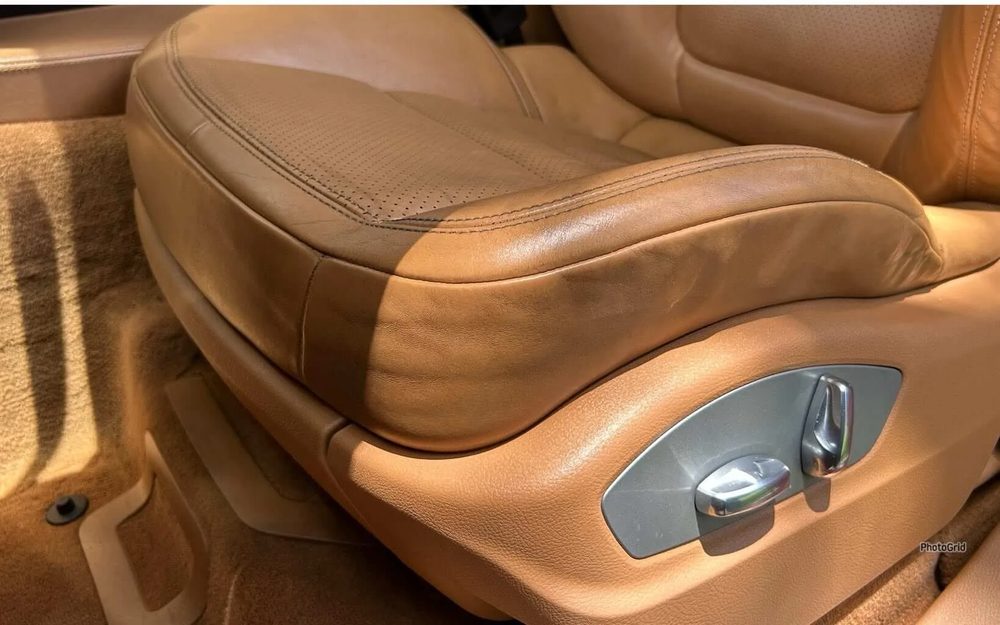 After
Leather Seat Bolster — Green-Blue Mold
A tan leather front seat bolster covered in green-blue mold. Leather is porous, so it is treated more gently than cloth: steam, extraction, Concrobium and the ozone step, always with the leather-safe protocol. Bolsters like this are where a damp jacket, a wet towel or a life vest leaned against the seat leaves moisture behind, which is common for cars that run back and forth to the water.
 Before
 After
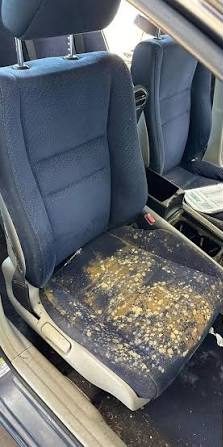
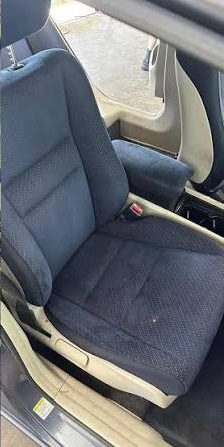
Cloth Bench Seat — Mold-Stain Residue
A dark blue cloth sedan bench seat with the cushion lifted, showing tan and yellow mold-stain residue on the seat bottom. Stains like this mean moisture sat in the foam for a long time, so surface cleaning is not enough: we steam, extract, dry and treat with Concrobium before ozone. Hidden damp under a cushion is a typical result of wet clothing and gear sitting on the seat for days in a humid climate.
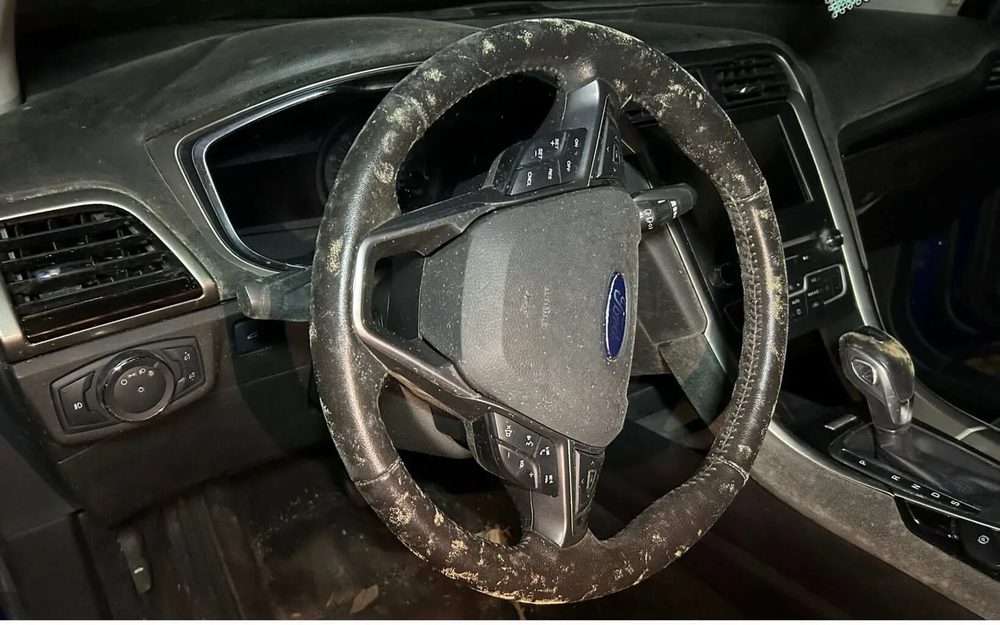 Before
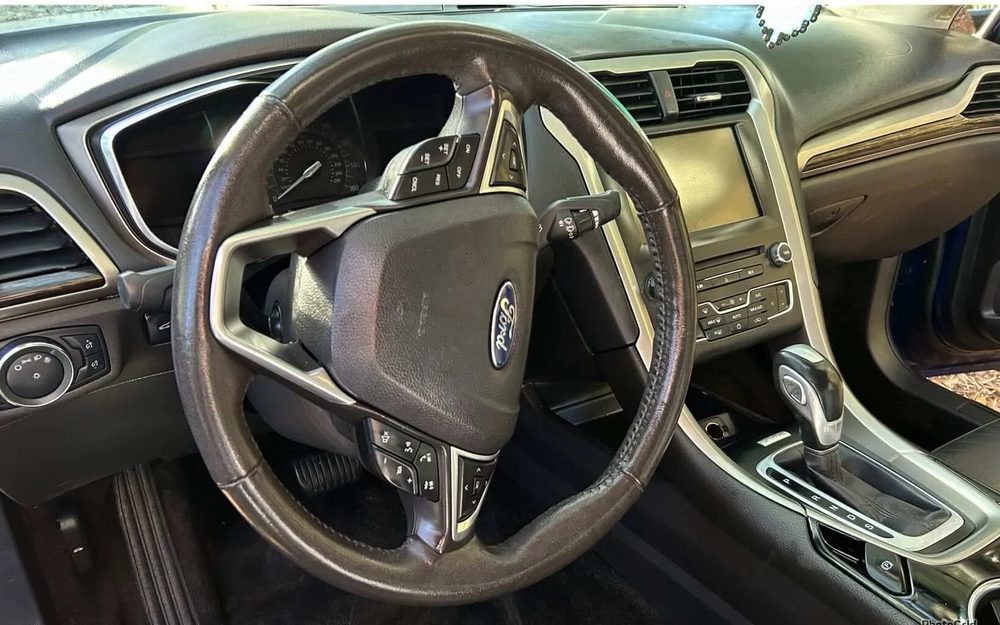 After
Ford Interior — Steering Wheel, Dash & Vents
Grey-white mold bloom on the steering wheel, dash and air vents of a Ford sedan. Hard surfaces and vents get steam cleaning, Benefect and Concrobium, and the ozone cycle reaches inside the vent housing, where growth often begins. A cabin that was closed up with the A/C off during a damp stretch will show this pattern, and short-hop driving in a compact city can leave the vents wet.
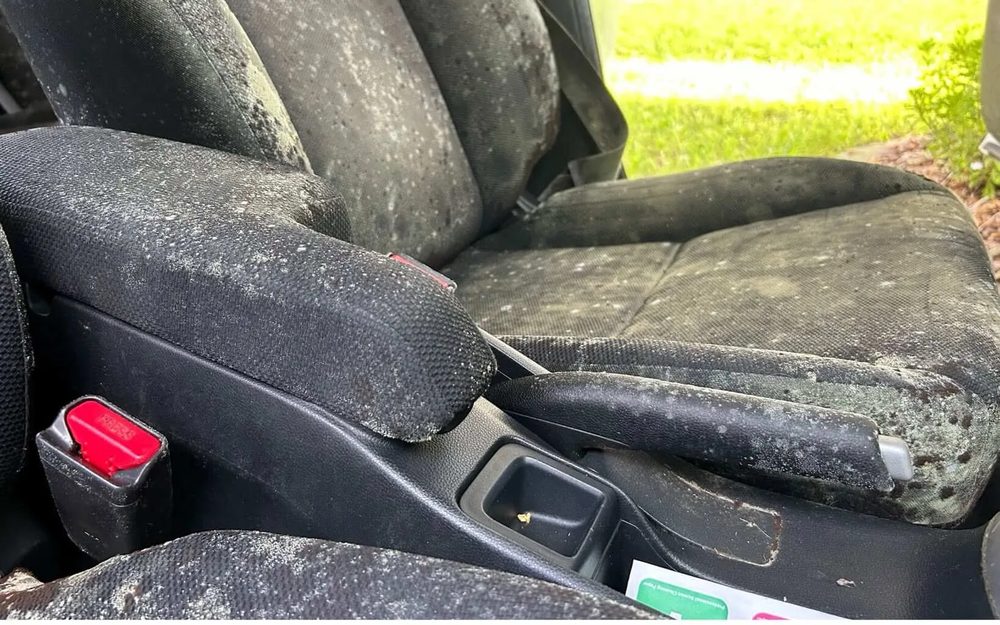 Before
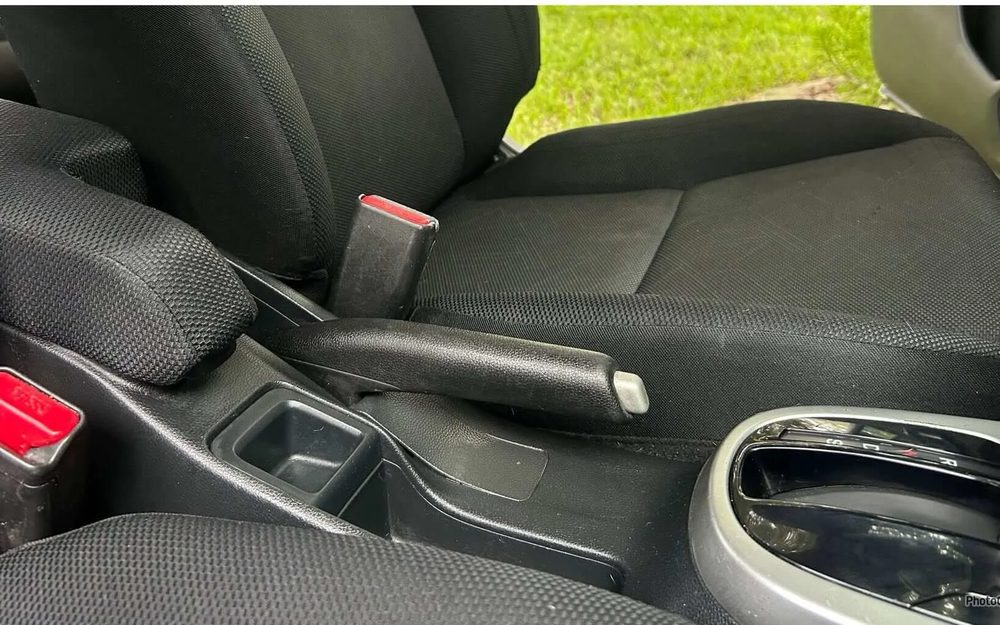 After
Black Cloth Seat & Console — Grey-White Bloom
A black cloth driver seat, armrest and console covered in grey-white mold bloom, with a green lawn visible outside the window. On dark cloth the film shows up clearly, but the growth reaches into the weave and foam, so we use steam, extraction and Concrobium. In a city of tree-lined yards and sprinklers, a car left a few days with a window slightly open can collect exactly this.
 Before
 After
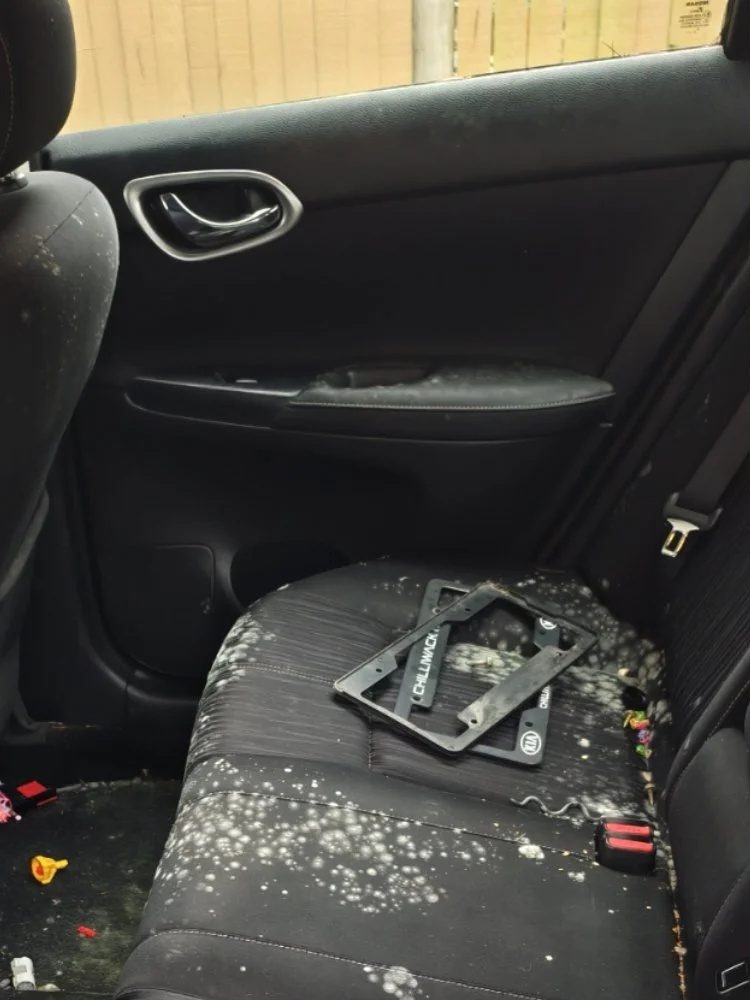
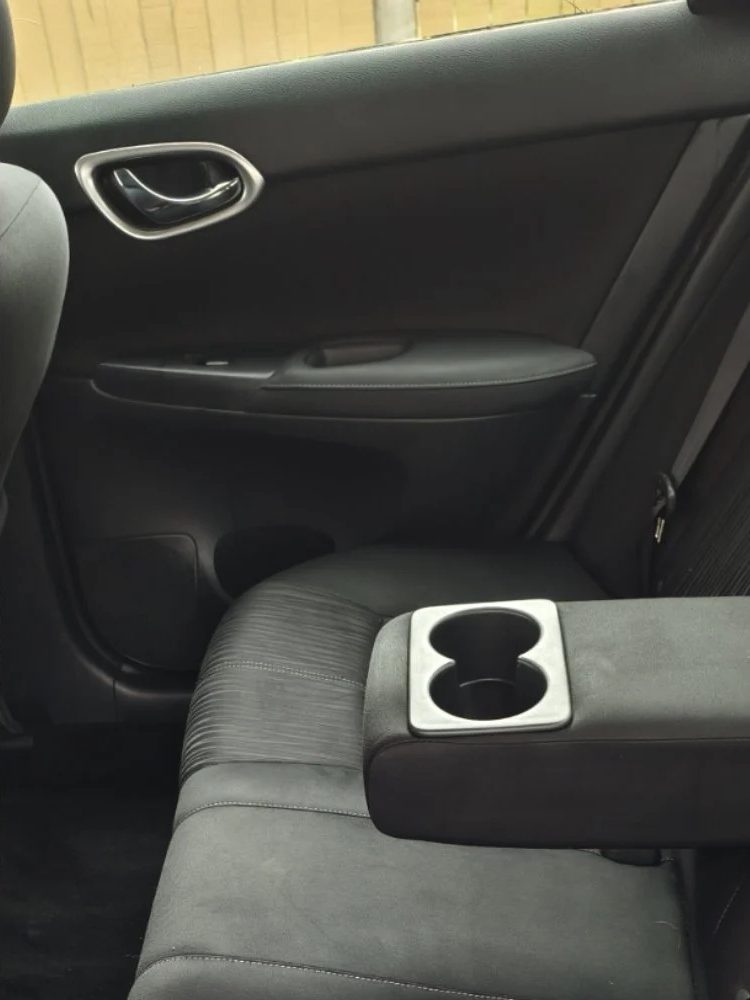
Black Sedan Rear Seat — White Mold Spots
A black sedan rear seat and door panel with white mold spots on the cushion, plus loose debris and a license plate frame left on the seat. Rear seats are where bags, gear and damp items usually ride, and debris holds moisture against the fabric. We clear the seat, vacuum with HEPA, then steam, extract and treat. Rear-seat growth is common wherever the back seat doubles as cargo space.
 Before
 After
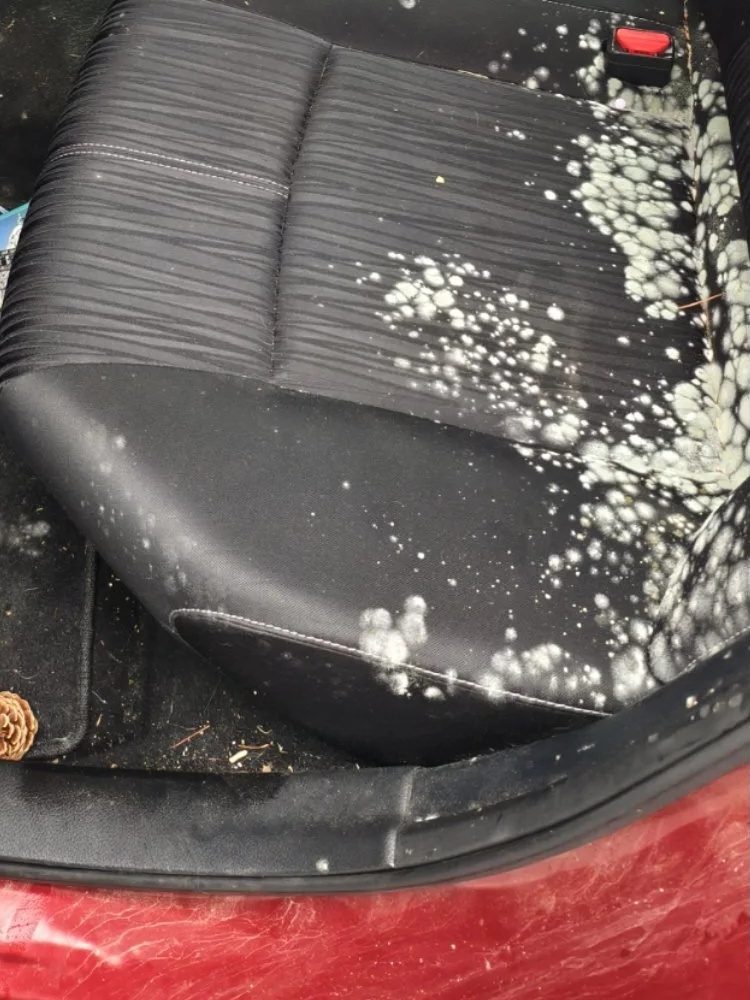
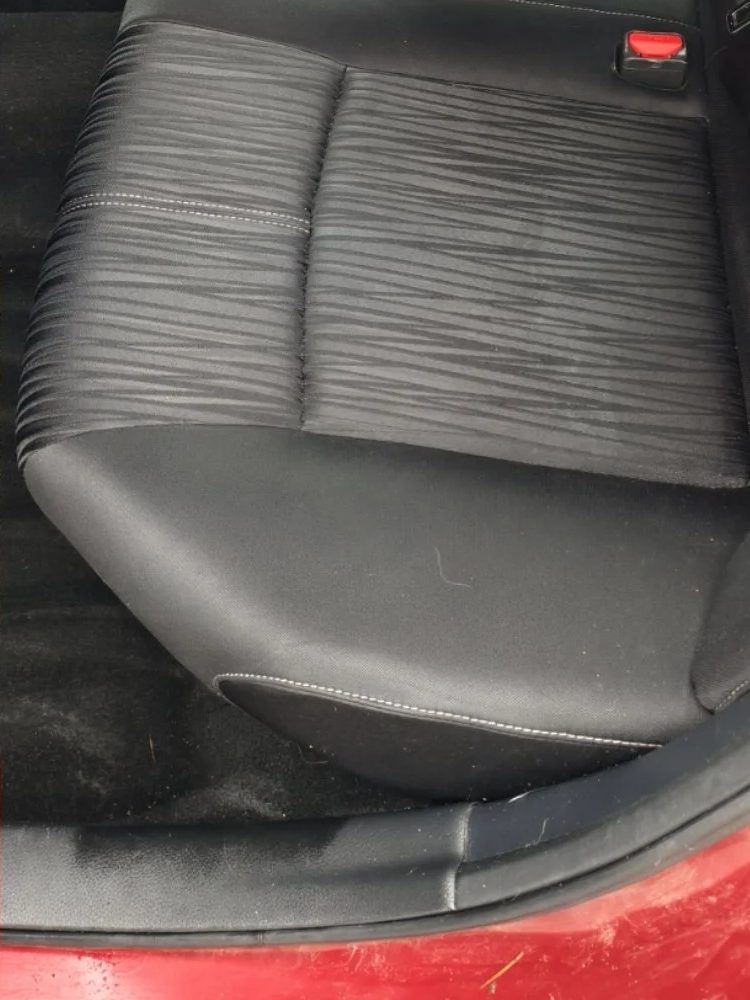
Black Cloth Seat — White Mold Speckles
A black cloth seat covered in white mold speckles, with a red car body visible below the window. Early speckling like this is the stage where treatment is most contained, often one area and the $549 tier. Steam, extraction, Concrobium and ozone clear it, and the sooner it is caught the less it spreads into the foam. Humid, still air around a parked car is all it takes in this climate.
 Before
 After
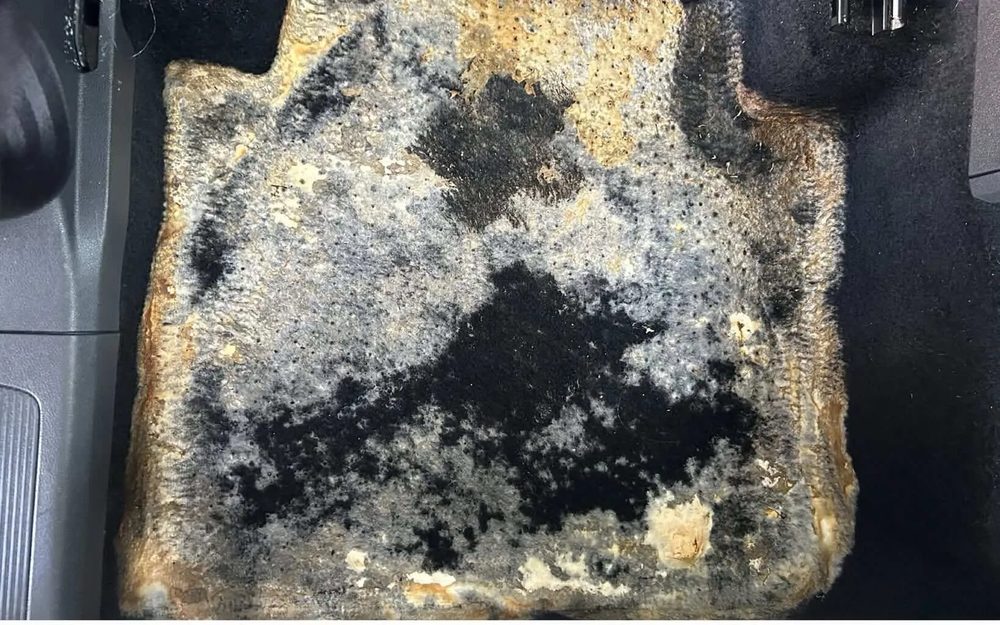
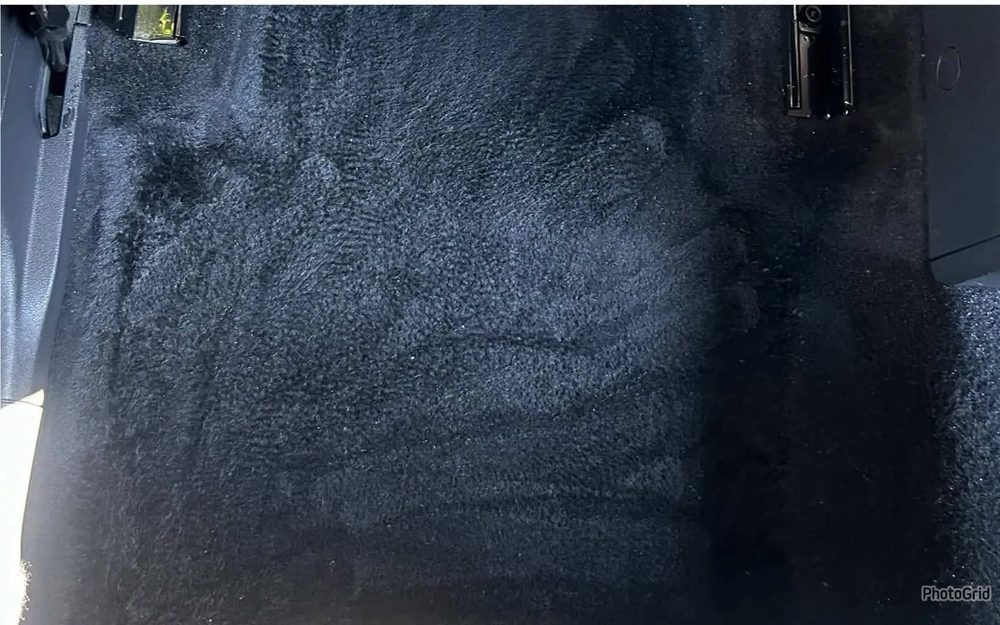
Floor Mat — Heavy Colony Growth
A carpeted floor mat with heavy black, brown and white mold colonies. This is what happens when the carpet underneath stays wet: the mat is only the visible part, and we check the padding and floor pan below. We extract, dry, treat with Concrobium and run ozone. Wet footwells are a recurring pattern when damp shoes, towels or gear are left on the floor for days after time on the water.
100% Satisfaction.
Written. No exceptions.
If the result doesn’t meet our standard, or yours, we come back and redo it at no charge. No forms to fill out, no arguing over what “counts.” The guarantee is in writing before we ever touch your vehicle.
Request Mold Removal in Lighthouse Point · From $549
Fill this in once and send it. We get your address, vehicle, and the situation all in one message, no phone tag.
Rating
Detailed
Response
Three steps from wet gear to a dry, clean cabin,
and we handle everything past the gate.
No drop-off. No waiting. We come to Lighthouse Point.
We come to you in Lighthouse Point,
from canal-side driveways to the marina on Marina Circle.
Mobile service: home, office, condo, or marina. No drop-off, no travel fee.
Not seeing your city? Ask us — we likely cover it.
Canal-front humidity, wet boat gear and garages that double as dock lockers
set the pace for mold in Lighthouse Point.
Most of Lighthouse Point was built on canals dug in the 1950s and 1960s, so water is never far from a driveway, and a car that rides to the dock and back keeps some of that dampness inside. Left untreated, what starts as a musty smell becomes a real health issue for the next person who drives the car. DShine's Concrobium Mold Control and ozone process address the cause, not just the symptom, backed by $2M insurance and a written guarantee. Mold doesn't need much to get started, any trapped moisture inside a closed cabin is enough given South Florida's humidity. The source is almost always one of four things: a clogged AC condensation drain letting water pool silently on the floor pan, a failed door or window seal letting rain in, a clogged sunroof drain, or the car simply sitting unused for two or more weeks without the AC running. In Lighthouse Point the cause we meet most is wet boating gear carried in the cabin or trunk, and a closed garage that doubles as a dock locker makes that moisture last.
Lighthouse Point neighborhoods we serve,
from the Yacht & Racquet Club to Exchange Club Park.
Canal-side driveways, a gated yacht club, a marina and the city's parks: how each part of Lighthouse Point shapes mold risk and how we work there.
Lighthouse Point Yacht & Racquet Club — A gated, members-only community on NE 42nd Street with a marina of fixed docks, dating from the early 1960s. Cars here sit while boats are out, and access is controlled, so we ask for a guest-list name or code in advance and work in the owner's driveway or garage.
Lighthouse Point Marina — On Marina Circle along the Intracoastal Waterway, less than half a nautical mile from Hillsboro Inlet, with 102 wet slips. Cars parked here for a day of fishing return with wet gear in the cabin; we work with the dockmaster on where a van may stand and for how long.
Cap's Place — A historic seafood restaurant at 2980 NE 31st Avenue, reached only by boat shuttle, with no parking on site. Diners leave their cars and take the shuttle, so cars here are parked for an evening, not weeks; we treat them at the owner's home or lot, not at the restaurant.
Exchange Club Park — A waterway park with a small sandy beach, mangroves and a kayak and paddleboard launch, at 2800 NE 24th Street. Paddlers load wet boards, vests and towels into hatchbacks and SUVs, and the cargo area and rear footwells are where we see growth first on those cars.
Frank McDonough Park — A six-acre city park at 3500 NE 27th Avenue that hosts the Lighthouse Point Tennis Center and its clay courts. Players often leave a bag of damp clothes in the car after a match, and a few days in a closed cabin is enough; we usually treat these cars at the owner's home.
Dan Witt Park — A sports park at 4521 NE 22nd Avenue with tennis, pickleball and basketball courts. Cars here are parked for an hour or two while players run, so mold risk comes from the gym bag and wet towels left on the seat, and from a window left cracked in an afternoon storm.
Ibis Waterway — A canal-side corridor crossed by the Lighthouse Drive bridge at NE 30th Street. Homes along a waterway like this often have canal-facing driveways and garages, so the damp tends to come from wind off the water, sprinklers and gear carried up from the dock.
Don't see your area? Ask us — we likely cover it.
Lighthouse Point car mold,
the dock, garage and boat-gear questions we hear most.
Tap any topic to read the full breakdown.
Lighthouse Point covers 2.39 square miles at an elevation of roughly seven feet, and the vast majority of it was built on canals dug in the 1950s and 1960s. Almost every street ends at a waterway, which keeps humidity close to a parked car for much of the year. Nearby Pompano Beach logs about 56 inches of rain annually, and according to the National Weather Service most of it falls between May 15 and October 15.
Water here rarely means flooding. Broward County's sea level rise study found no land in the city at or below projected sea level under its one-foot scenario, and only 0.86 acres under the two-foot scenario. So the mold we treat is seldom about a rising canal. It comes from damp air, wet gear carried from the dock, and cabins closed up before they had dried.
Once moisture is inside a vehicle, mold needs only 24 to 48 hours to begin germinating. A cabin that stays shut through a warm, damp week gives it everything required: moisture in the carpet and foam, no airflow, and a temperature it likes.
A car in this city is often the supply truck for a boat. Life jackets, dock lines, fenders, a cooler, a cast net, a fuel can and a bag of damp towels all ride in the trunk or the back seat, then get carried back out only some of the time. Mold usually starts where that gear sat: the cargo liner, the spare-tire well and the rear footwells, then it spreads forward along the carpet.
Next come the quiet, well-kept cars of two-person households. Census figures show 1.97 people per household and 29.3 percent of residents aged 65 or older, so a second car that rarely leaves the garage is common. Those cars show the powdery film on a leather bolster or a sour smell from the vents long before anyone sees a spot.
Pickups and SUVs that tow boat trailers, and the cars of people who work at the marinas and fishing charters nearby, round out the list. Wet rope and bait residue find their way into those cabins, so each one gets a walk through every row and the cargo area before we name a price tier.
Driveway on a canal street: open air is a plus, but a driveway a few steps from a seawall catches morning dew, spray from lawn heads and damp wind off the water. A car parked there for a week with a door seal that no longer grips will take in moisture, and the weather-side window and seat edge usually show it first.
Garage that doubles as a dock locker: the riskiest spot we see here. Wet lines, fenders and rinsed-off gear hang or sit a few feet from the car, and the door stays down. Every day the garage air gets a little more humid, and the cabin of the car in the middle of it breathes that air in whenever a door is opened.
Carport, covered bay or curb: where a home has a carport instead of a closed garage, rain stays off the roof, but wind-driven showers still reach the glass, the seals and an open window. Airflow is better than in a shut garage, so the problem is usually water that got in, not air that never moved. A car at the curb overnight wakes up beaded with dew, and a bag left on the floor mat keeps that moisture supplied.
Yacht club, marina or shared dock lot: a car left in a lot for a long weekend while the boat is out takes the full effect of a closed cabin in the heat of the day. A gate or dockmaster controls access, so we coordinate before arriving, and the same applies to a trailer-and-tow rig stored away from the house.
Wet season, mid-May to mid-October: forecasters count May 15 to October 15 as South Florida's rainy stretch, which delivers roughly 60 to 70 percent of a year's rain. Afternoon storms cut outings short, so soaked gear goes into the trunk to be sorted out later, and later often means three days.
Core of the storm season, mid-August to mid-October: the Atlantic basin is officially active June 1 through November 30, and its statistical high point falls in the second week of September. Owners double their dock lines, pull canvas and clear the yard, and cars get packed into garages beside all of it. A garage shut for days with damp gear inside is the setup we see most from this stretch.
Passage weather, any time a good window opens: Hillsboro Inlet leads straight to open water, with Bimini roughly 40 miles away and Grand Bahama about 60. A crossing with a few days at the other end leaves the car parked at the marina or the driveway with the windows up and the air off, and the cabin has no way to dry.
Winter and spring, once the rains ease: outdoor air feels comfortable, which fools people. Boats are out more often, and wet gear travels back to the car more often too. A car that smelled fine in October can carry a faint musty note by February, because moisture trapped in padding during the rains has been sitting ever since.
Most of our visits start in a driveway or a garage, and in a city this size that is rarely more than a few minutes from the next one. The Lighthouse Point Yacht & Racquet Club on NE 42nd Street is a gated, members-only community, so please send a guest-list name or entry code before we arrive, and nobody waits at the entrance.
For a car kept at Lighthouse Point Marina on Marina Circle, or at another dock or storage lot, we need the permission of whoever manages it. Tell us the lot, the slip area or the section, and a contact name. Working on a marina lot is not the same as a driveway, and a short call to the dockmaster usually settles where the van can stand and how long it can stay.
We set up away from the seawall edge and the water. Nothing in the process requires being next to a dock, and steam and extraction pull the moisture out of the cabin rather than adding more to the property. If you want us to coordinate with a housekeeper, boat captain or neighbor who has your garage code, give us their name and we will keep them in the loop.
1. Wet boating gear carried in the cabin or trunk: life jackets, towels, fenders, a damp cast net, a bait bag. Individually they seem harmless, but a lined trunk or a rear carpet that stays wet through a few humid nights is where most Lighthouse Point jobs begin. The padding under the carpet holds water long after the surface feels dry, and mold grows underneath where nobody looks.
2. A garage that is also a dock locker: when the same shut room holds the car and the wet lines, rinsed rods and dripping canvas, humidity builds from several sources at once. Add a few weeks away on a boat trip with no A/C running, and a cabin that was only slightly damp when parked becomes a mold incubator.
3. A/C that never gets time to dry out: the city is small, and many trips are short hops to the marina, the market or the club. An evaporator that runs for five minutes and is shut off stays wet, and the first sour breath from the vents is usually the first warning. Growth inside the vent housing is a frequent find.
4. Worn seals and open windows near salt air: the inlet and the Intracoastal Waterway put salt-laden air over the whole city, and rubber seals that have aged in it let in rain and mist from the lawn. A window cracked for a quick airing, or a sunroof that did not seat, turns a normal afternoon storm into a wet seat and a damp headliner.
Booking is a text away. Send a few photos of the seats, carpet or vents and we reply with the tier it looks like, usually inside two minutes, wherever you happen to be, including the cockpit of a boat. We then meet the car at the driveway, the garage or a club or marina lot where the manager has approved a visit.
The first ten minutes go to looking: headliner, vents, trunk, seats and floors. Then you get the firm price, and only then do we start. The job itself fills 3 to 4 hours and runs through all eleven steps, with the sealed ozone cycle toward the end and a last walk-around once the car has aired out.
Staying home is not required. Photos from before and after reach your WhatsApp, along with a note when the car is dry and ready for the road. A neighbor, captain or property contact who holds the garage code is welcome to join the same chat.
First thing people want to know is whether we can work at a canal-side driveway or a marina lot. We can, with the permission of whoever controls the space. We bring what we need, and we do not need to be at the dock, near the seawall or anywhere close to the water to do the job properly.
Owners who carry fuel cans, bait or marine cleaners ask whether we can take out that smell. Mold and its musty smell are our job. A fuel spill that soaked into the carpet is a different problem, and we will tell you plainly what we see during the inspection so you do not pay for the wrong thing.
And people with leather seats ask whether our chemistry is safe on them. It is: leather gets a gentler method of its own, and the ozone cycle reaches the airborne spores so nobody has to scrub the surface hard. If the finish has already cracked from sitting under mold, we will tell you during the inspection.
Most add-on requests come from owners who park near the water. Salt in the air and steady humidity wear on paint, trim and seals, so a Ceramic Coating booked with the interior work is a common answer once the cabin is clean and the question becomes how to keep the outside protected.
Cars that live under a tree canopy or beside a seawall pick up dew, overspray and bird droppings, which is where Paint Correction enters. Engine Bay Cleaning suits cars that have idled through a long stretch. And when the complaint is a lingering smell with no visible growth, the $349 Odor Removal service can be the better match; the inspection settles which one applies.
A light, powdery film on a leather bolster, seat-belt webbing or the stitching of a seat is often the first visual sign, and it can look like dust. Wipe it with a finger. If it comes away as a fine smear or returns within days, treat it as mold and not as pollen.
A windshield that clouds from inside after a cool night points to moisture in the cabin that has not left. A faint sour smell for the first half-minute after the A/C starts points to something growing at the evaporator box. And a damp corner under a floor mat, or a trunk liner that feels cool and clammy, tells you where the water sat.
One more clue is the gear itself. If a stored life jacket or a towel in the back has gone fuzzy or spotted, the cabin air has been humid enough to do the same to the car. Catching it at this stage is the difference between one area and the whole vehicle.
Before you leave, carry out anything damp: towels, jackets, wet mats and bags from the dock. Let them dry indoors. A cabin with nothing wet inside has little to work with, even if the car then sits for two weeks.
On the way home, drive about twenty minutes with the air conditioning set cold, then move the fan to outside air for the final stretch, so the coil and ducts are dry at parking time. For a crossing or longer stay, ask a neighbor or the captain to start the car now and then; a car that moves is a car that breathes.
Use the garage vent or fan if there is one, and keep the car clear of the wall where lines and canvas hang to dry. Leave tarps and sail bags out of the cabin as well. A moisture absorber in the footwell does little against a real leak, so put the effort into finding the water.
The average Lighthouse Point household has close to two people, yet plenty of addresses park two cars, one doing the daily running and the other waiting for guests or boat weeks. That waiting car is frequently the one with mold, because nothing ever dries it out. Each car is priced separately.
When both need work we can line the visits up at the same address, same day or back to back, so you are interrupted once. Updates and photos arrive per vehicle on WhatsApp. If a trailer-towing truck is in the mix, tell us, since its cargo area and extra rows usually need more attention than a sedan's trunk. Heading out for a week on the boat is a good moment to book the second car for the same visit, so both are clean and dry before the garage door closes.
The written guarantee covers 30 days. Should mold or its odor reappear within that stretch, our crew returns and treats the vehicle again at no charge, whatever tier it was priced at. The return trip costs you nothing.
In this city the usual culprit behind a repeat is water that kept arriving: a trunk liner that went right back to holding a damp bag, a drain still plugged, a door seal that lets rain by. When we spot one on the day, we point at it, because one frank conversation beats a second visit with the same cause underneath.
Should anything come back, send a photo on WhatsApp and we set up the re-treatment. A small spot reported at day ten is far easier to handle than the same car at day sixty, and the sooner we hear, the sooner we can work out what let the moisture back in.
The Census puts the median owner-occupied home in Lighthouse Point at about $688,400, and a lot of garages here hold cars that are well kept and expensive to refinish. On leather and wood trim we work gently, using the leather-safe method and low-moisture steam passes, since the finish is what the owner wants to preserve.
Older cars with original seals and upholstery get a longer inspection, because hidden moisture behind door panels and in seat foam is where they fail first. Work trucks, tow vehicles and cars used by marine trades often carry hoses, rope and tools in the cargo area, and we treat that space as part of the interior and not an afterthought.
Empty it: every towel, life jacket, rope and bag that is wet or might be. Take them inside to dry, and keep them off the garage shelf beside the car, since that shelf is how damp air finds its way back in.
Dry the floor: lift the mats and press the carpet underneath. If it feels cool or damp, run the heat or a fan before you go, and leave the mats to air on the driveway in the sun instead of folding them back into the footwell.
Finish on fresh air: the closing minutes of the drive home belong on outside air with the fan turned up, so the evaporator and the vents are dry when you park and the cabin is not carrying yesterday's humidity.
Close up properly: windows and sunroof fully shut, trunk latched, and a neighbor or boat captain named as the person who can start and run the car if the trip stretches longer than planned.
Mold in a car does not stay put. A patch in a trunk liner or on one seat, caught early, is typically a $549 job. The same growth left through a wet season can reach carpet, seat foam and the vents, which is what pushes a vehicle into the $749 tier, used when mold has spread across the interior.
Health matters too. Spores in a closed cabin with recirculating A/C are inhaled with every breath, and children, older passengers and anyone with allergies feel it first. A small spot noticed early is not an emergency, but waiting out a stretch of wet weather rarely makes the work smaller.
Then there is the car itself. Leather, wood trim and door-panel fabric that mold has sat on for months can end up permanently marked, and treatment can stop the growth without always erasing the damage. Early action protects how the car looks and what it is worth, not just how it smells.
Tow vehicles pick up their own kind of damp. The cargo area collects salt residue, wet rope and tie-down straps, and the rear seat often holds dripping bags from the ramp. We look at the bed liner, the third row and the rear vents as well as the front seats, and under the cargo floor, where water likes to collect.
People who work at nearby marinas, fishing charters and boatyards park for long shifts with the windows up, and bait, fuel and fish-cleaning residue end up on the floor. We tell you whether what we find is mold, which we treat, or a smell source that must be cleaned out first.
For both groups the advice is the same: build the dry-out into every day on the water. Gear out of the cabin, mats lifted, windows cracked for a short while on a dry afternoon, and a dry towel on the seat when the next stop is a wet one.
Pricing has two levels. One affected area, such as a single seat, one row of carpet or one panel, costs $549. Once it has reached the whole cabin, the price is $749. Travel to a canal-side driveway or a club lot in Lighthouse Point is included at both prices.
Share photos or a short description and the first read on the tier comes back fast. We review everything, settle the exact number and tell you before work begins, so the amount you approve is the amount you pay and nothing shifts once a technician has started.
If the mold turns out wider or narrower than the photos showed, we explain why and adjust the tier before starting. At no point are you asked to approve a different price with the work already underway.
Mold in cars here is mostly a moisture-handling problem: wet gear in the cabin, garages that double as dock lockers, A/C that never dries out on short trips and tired seals near salt air. With canals everywhere and humid air a part of daily life, mold needs only 24 to 48 hours to start.
We come to you, inspect, settle on $549 or $749, and finish in 3 to 4 hours with photos before and after on WhatsApp. IDA certified, insured for $2M, and backed by a 100 percent written guarantee: should mold or its odor return within 30 days, the re-treatment is free.
The fix that lasts is the one that deals with the source. If we see what is letting moisture in, a seal, a drain or a habit, we say so during the visit, and that is usually worth as much as the treatment itself.
After the cleaning and the Concrobium application, the cabin is closed up and a commercial-grade ozone generator is started inside it. The gas drifts into the vent paths and settles on airborne spores, places a cloth never touches. No one remains in the vehicle while the cycle runs, and pets and houseplants should stay away from the driveway or garage spot.
When the cycle ends, the doors open and the car airs out before anyone sits in it. A shut garage with little airflow can need extra time compared with a driveway that catches a breeze off the water. We say when the car is ready, then finish with our odor bomb and a last check. Closing it back up too early would only trap what we just cleared out.
Before you head out on the water,
answers for Lighthouse Point drivers.
Add-ons Lighthouse Point clients book
Still deciding? Read: the complete mold removal guide · does insurance cover it? · why DIY mold removal fails.
Mold in your Lighthouse Point car? Get a price in 2 minutes.
Serving Lighthouse Point and all of Broward County. Fixed pricing, no travel fee. We confirm in under 2 minutes.
It Might Just Be an Odor Problem
If there's no visible mold growth yet, the smell alone is usually an Odor Removal Detailing case ($349 flat) — faster than full mold remediation ($549–$749). See which one matches what you're dealing with: