What a Key Biscayne Mold Job Includes
This is not a car wash. Car Mold Removal uses Concrobium Mold Control treatment, pH-balanced products, and machine assistance, the same process used in pre-sale preparations for luxury dealerships.
Why it matters for your health: Mold in a vehicle is a different exposure than mold on a wall at home. With the AC recirculating, everyone inside is breathing concentrated spores for the length of the drive. The EPA and CDC both link mold exposure to respiratory irritation, allergic reactions, headaches, and worsened asthma symptoms. Children, older passengers, and anyone with a compromised immune system typically react faster and more severely than a healthy adult would. By the time the smell is noticeable, spores have usually already spread through the HVAC system into every vent in the cabin.
Curious what actually happens during the visit? Tap through our real 11-step process below to see what we do at each stage and why it matters.
What every Key Biscayne mold job gets you
Most detailers in Key Biscayne charge less. Here’s exactly what you gain — and what you risk — with each choice.
| DShine DetailsFrom $549 · travel included | Avg Key Biscayne Detailer$149 – $199 | |
|---|---|---|
| Industry certificationsIDA, Koch Chemie, Meguiar’s, 3M, Symplex, XPEL | ✓6 verified | —0 credentials |
| $2M liability insuranceWe cover any damage — in writing | ✓ | —Often uninsured |
| Deionized water systemZero mineral residue, no water spots | ✓ | —Tap water, water spots |
| Fresh microfibers per vehicleNo cross-contamination between jobs | ✓ | —Shared towels, swirl risk |
| Mold-specific chemistry onlyConcrobium, Benefect & Meguiar’s, no harsh acids | ✓ | —Industrial degreasers |
| Before & after photosSent via WhatsApp on completion | ✓ | —No documentation |
| 100% written satisfaction guaranteeReturn & redo at no cost if unsatisfied | ✓ | —No written guarantee |
| Travel to your address — $0Home, office, condo — no drop-off | ✓ | Sometimes adds fee |
DShine vs. any other detailer
in Key Biscayne, Miami-Dade County
Three things most detailers won't tell you. We put them in writing.
 Since 2018
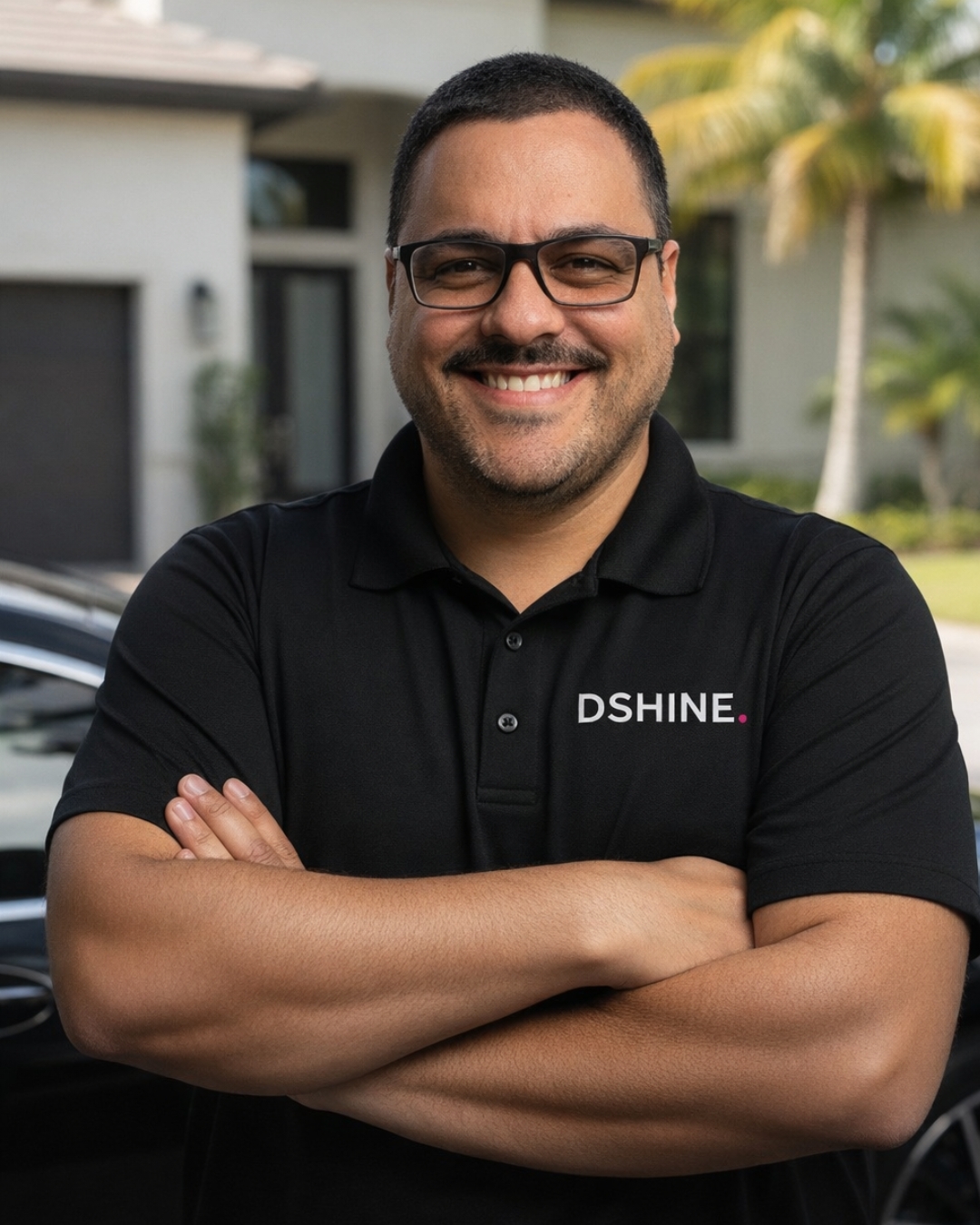
With more than 20 years of hands-on experience in the automotive care industry, Evelio launched DShine Details in August 2018 with one van and zero shortcuts. For the first six months he slept in the van to keep costs down and standards up. Today DShine runs 7 certified vans across Miami-Dade, Broward, and Palm Beach, and the commitment hasn't changed. Every vehicle is treated as if it were his own.
What clients say
in their own words.
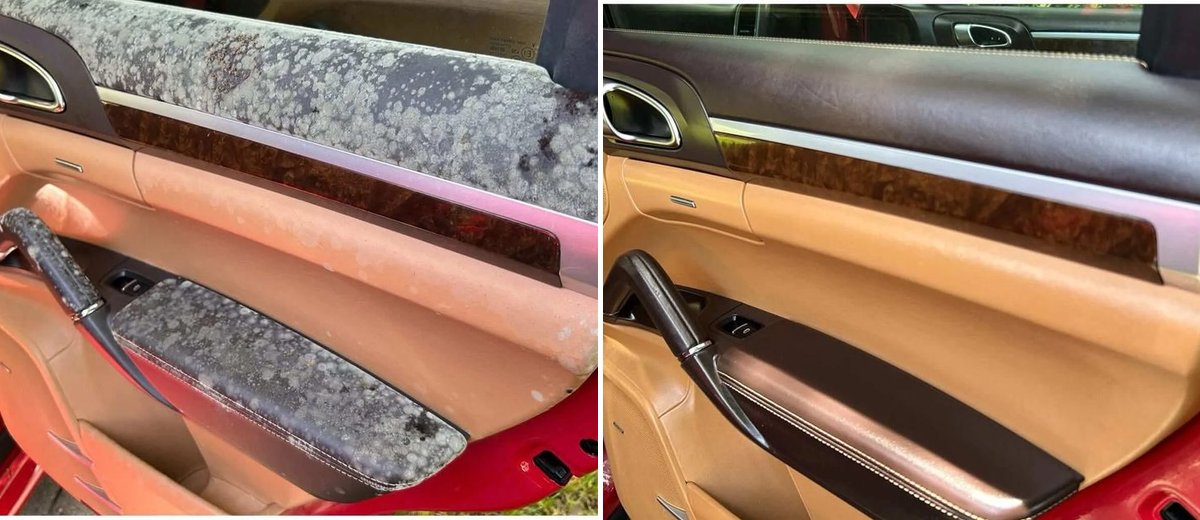
Before & After: Mold Removal We've Actually Done
No stock photos. These are real DShine mold removal jobs across South Florida, the same 11-step process and chemistry used on every Key Biscayne appointment.
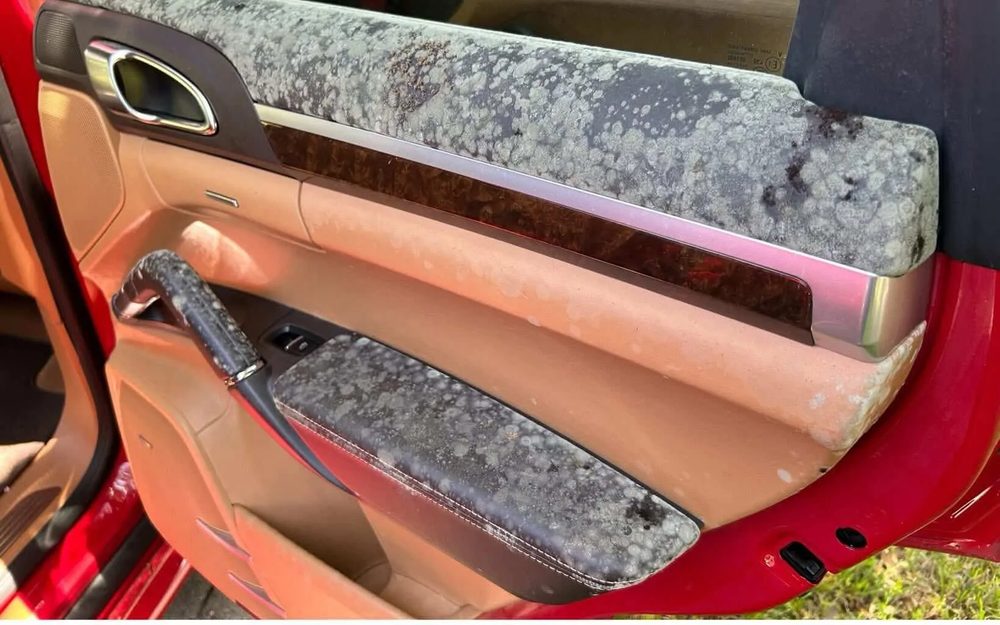 Before
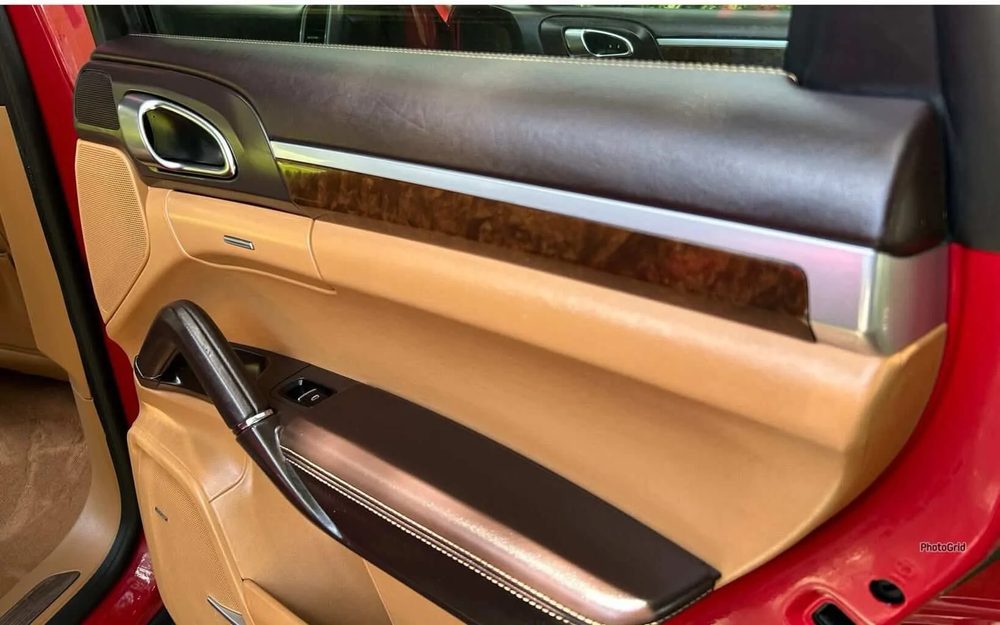 After
Porsche Cayenne — Door Panel & Armrest
Mold spread across the tan leather door panel and armrest of a red Porsche Cayenne, reaching up onto the wood trim. Leather like this cannot be scrubbed hard, so it gets the leather-safe protocol, careful steam and extraction around the trim, Concrobium and then the ozone cycle. In a place with salt-damp air, door panels are a common spot, since moisture settles along the seals and the lowest panel edges.
 Before
 After
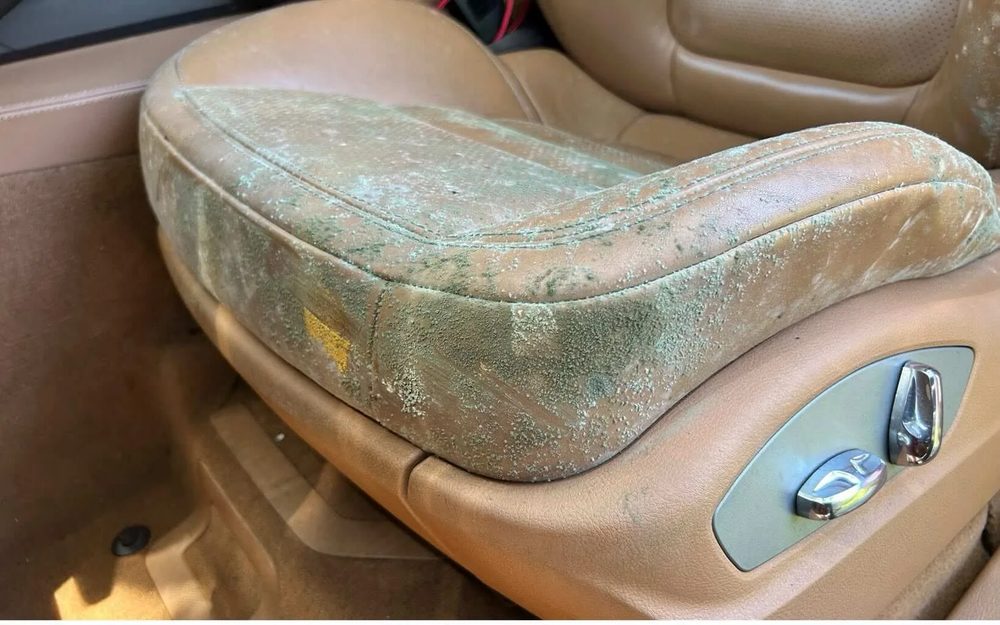
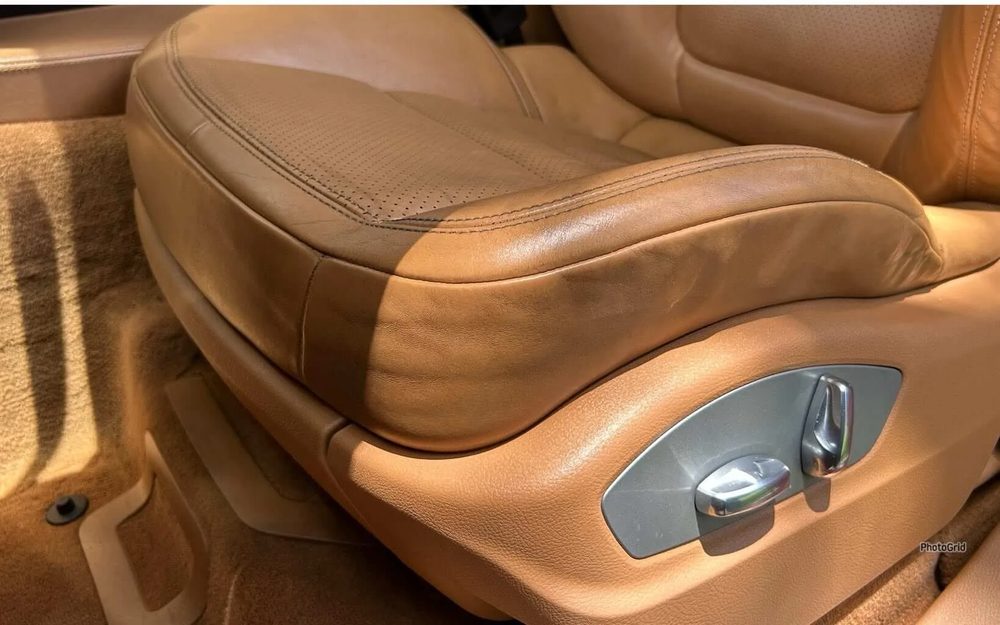
Leather Seat — Green-Blue Mold on the Bolster
Green-blue mold growing along the bolster of a tan leather front seat, where the seat flexes and traps damp air against the hide. We treat leather with a leather-safe antimicrobial, avoid saturating the cushion, and let ozone reach spores in the air and in the stitching. Wet swimwear or a damp towel set on a seat after the beach, as happens often in Key Biscayne, sets up this kind of growth.
 Before
 After
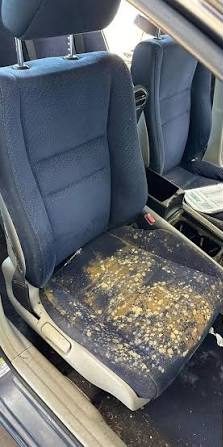
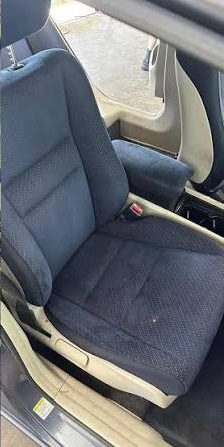
Cloth Bench Seat — Stain Residue Under the Cushion
A dark blue cloth sedan bench seat with the cushion lifted, showing tan and yellow mold-stain residue on the underside. This is the kind of growth you cannot see from the top, because moisture works down into the foam. We steam and extract the fabric, treat the foam with Concrobium, then run the ozone cycle. Damp from a beach towel or a leaky seal can soak through a cloth seat and stay there when the A/C is rarely run for long.
 Before
 After
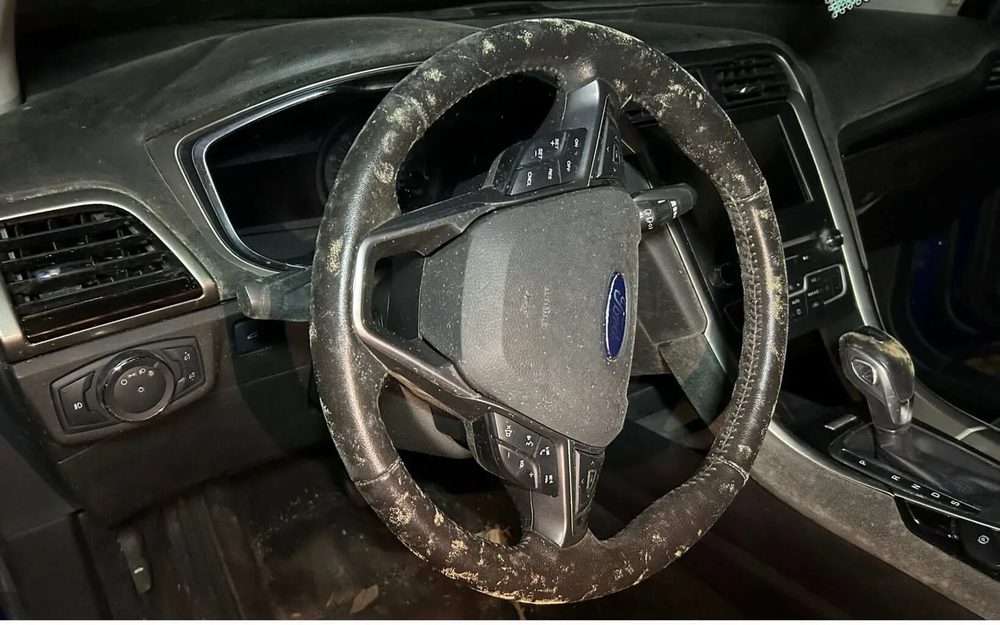
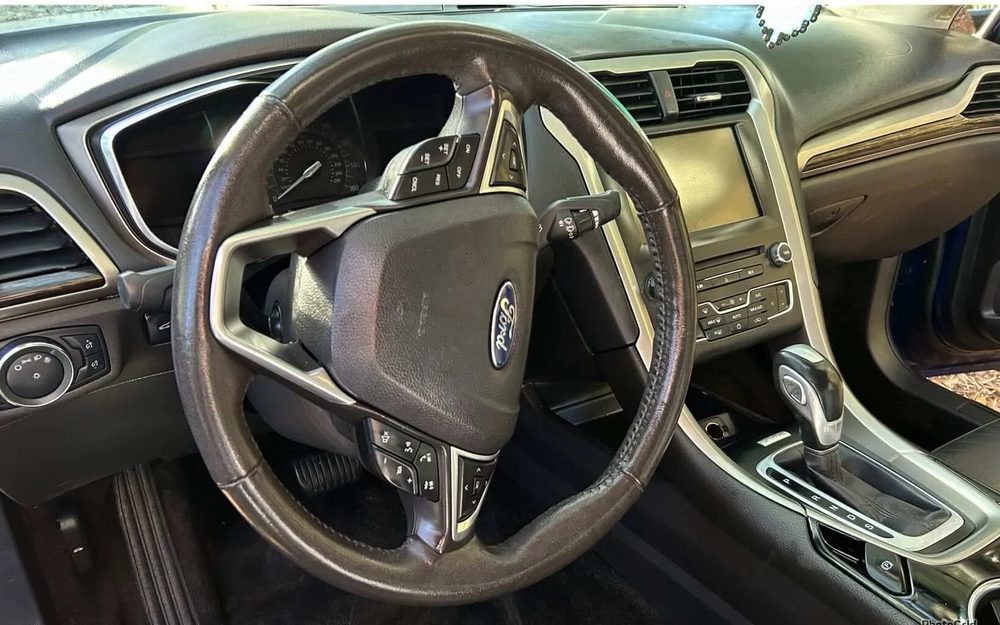
Ford Interior — Mold Bloom on Wheel, Dash & Vents
A Ford sedan interior with a grey-white mold bloom across the steering wheel, dash and vents. Hard surfaces like these respond to steam and Benefect, and the vents get focused attention, since air moving through them spreads spores to the rest of the cabin. Short drives that never dry the A/C box leave moisture behind the dash, and that pattern is common wherever a car makes a lot of brief trips near the water.
 Before
 After
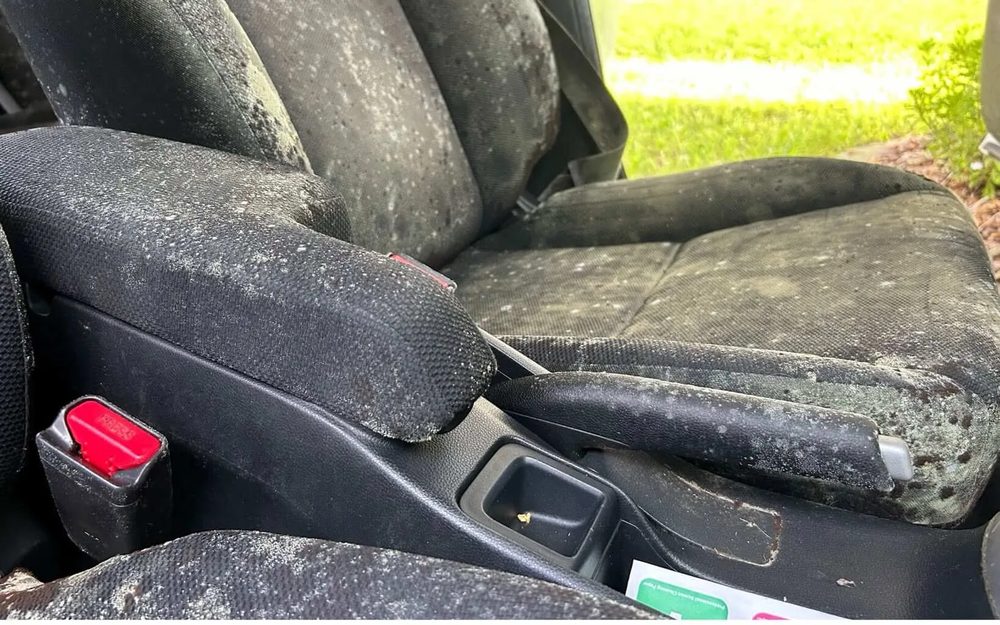
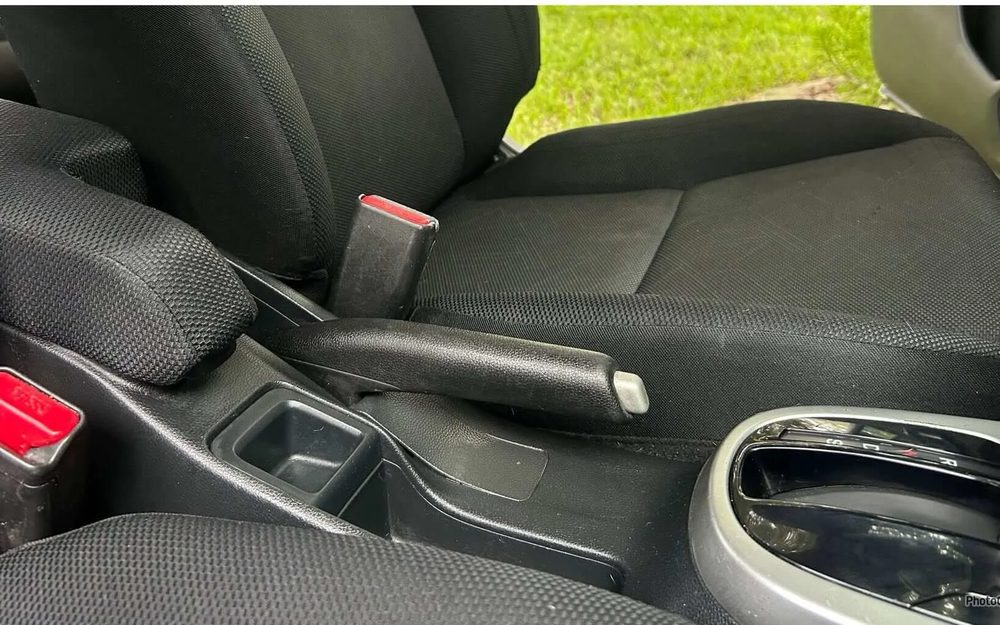
Black Cloth Driver Seat — Armrest & Console
Grey-white mold bloom on a black cloth driver seat and the armrest and console beside it, with green lawn visible outside the window. White growth shows up well against dark fabric, but what you see is only the surface. We vacuum with HEPA, steam and extract, apply Concrobium and run ozone. Cars parked beside lawns and shaded planting, with sprinklers close by, often stay damp longer, which fits plenty of Key Biscayne driveways.
 Before
 After
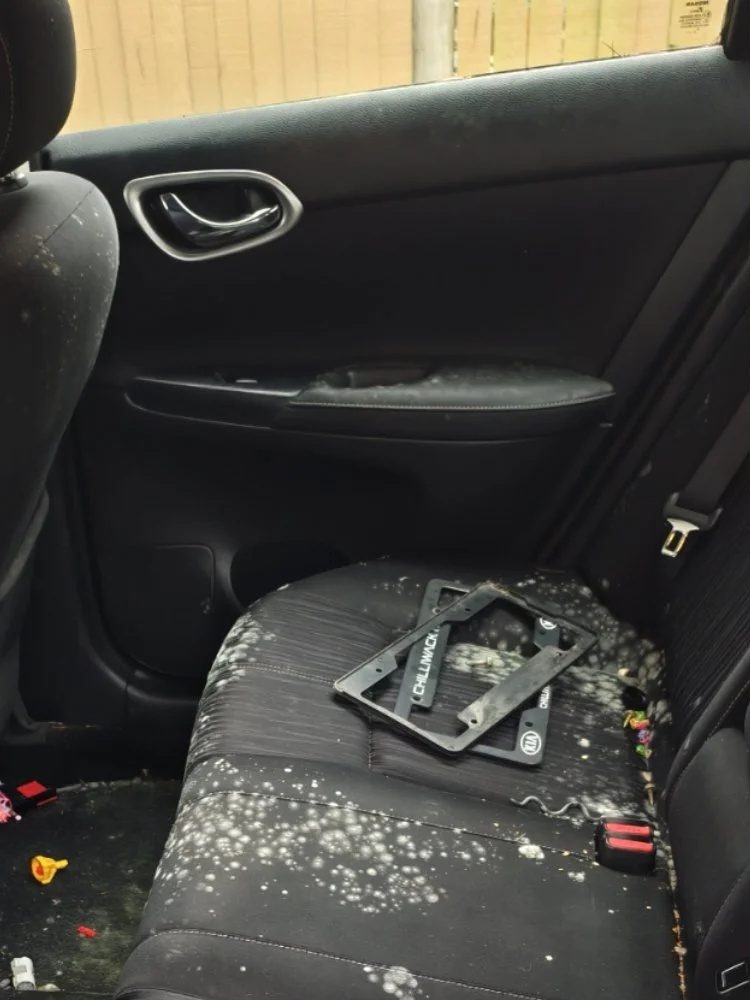
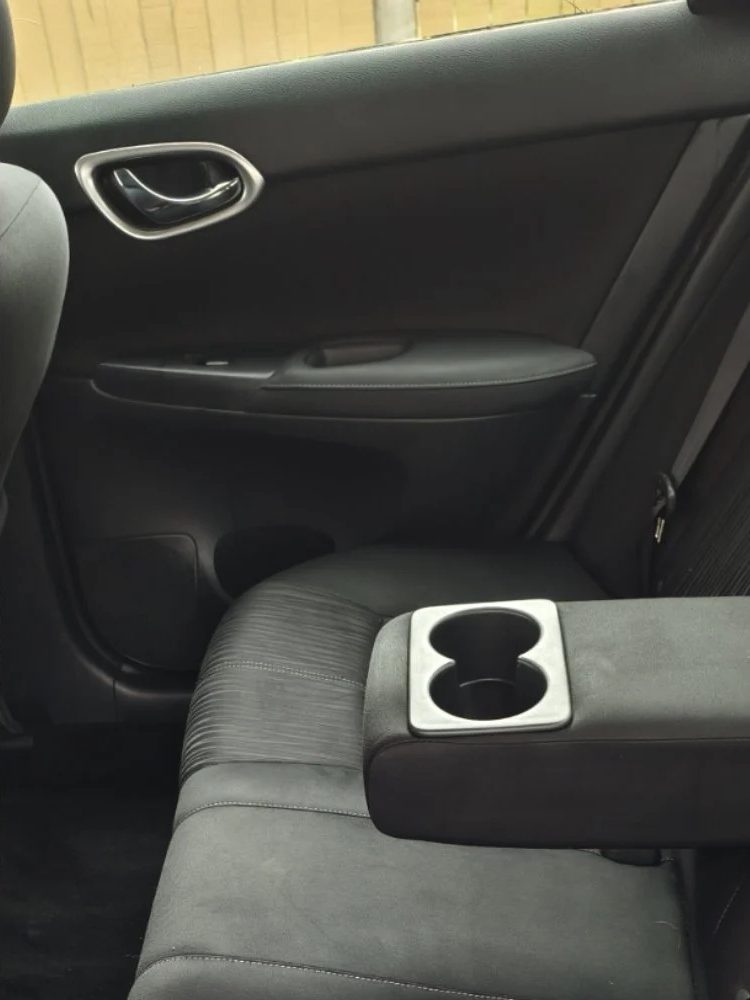
Rear Seat & Door Panel — White Mold Spots
A black sedan's rear seat and door panel with white mold spots across the rear cushion, plus loose debris and a license plate frame lying on the seat. The back seat is where wet gear and damp towels end up, and debris on the cushion traps moisture against the fabric. We clear it, HEPA vacuum, then steam and extract, treat with Concrobium and use ozone for the cabin air. After beach days, rear seats are a classic spot for this.
 Before
 After
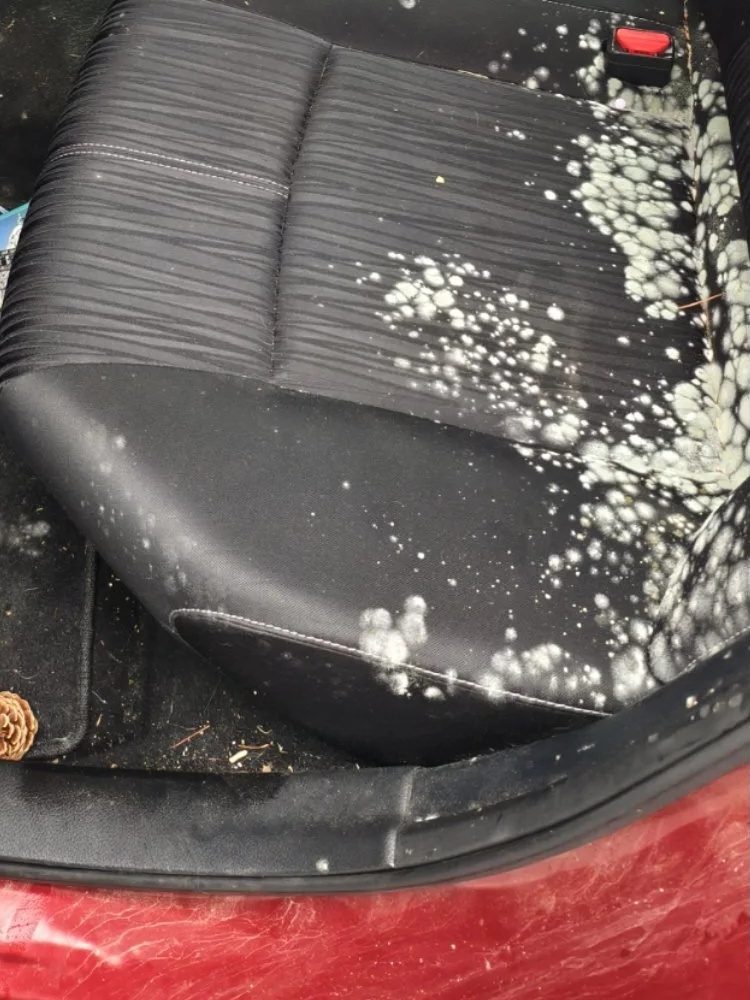
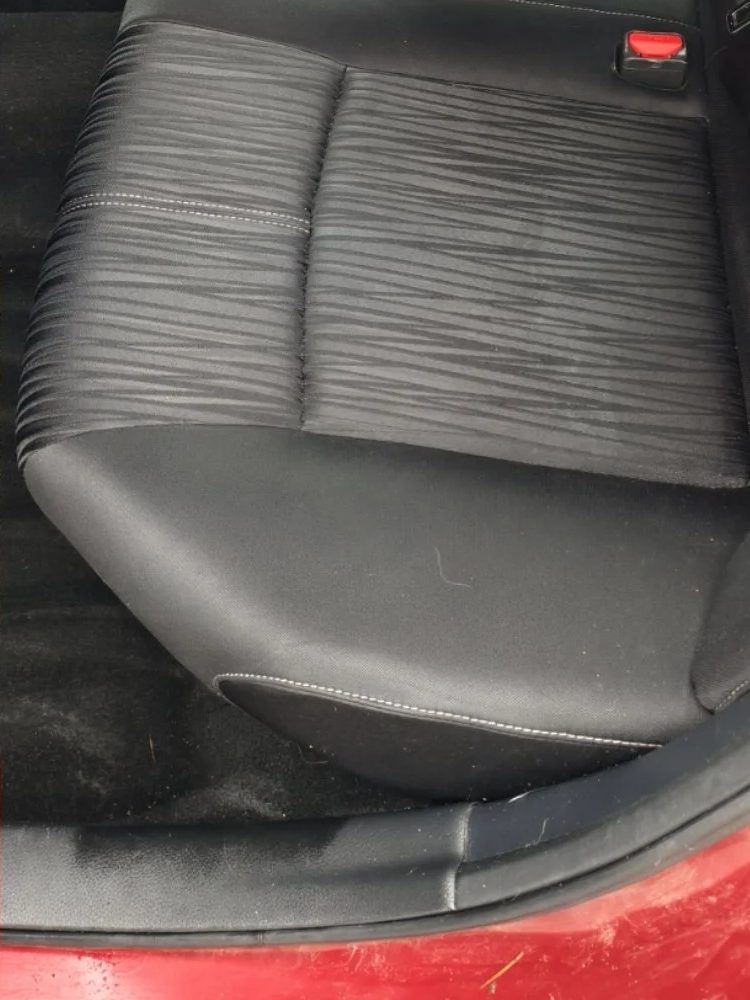
Black Cloth Seat — White Speckles
A black cloth seat covered in fine white mold speckles, with a red car body visible below the window. Speckled growth like this is often the early stage, before it spreads into a mat of colonies, which makes it the cheapest moment to treat. Fabric gets steam and extraction, Concrobium goes on the surface, and ozone treats the air. In Key Biscayne's humid, salty air a cabin that stays closed for a while can reach this stage quietly.
 Before
 After
Floor Mat — Heavy Colony Growth
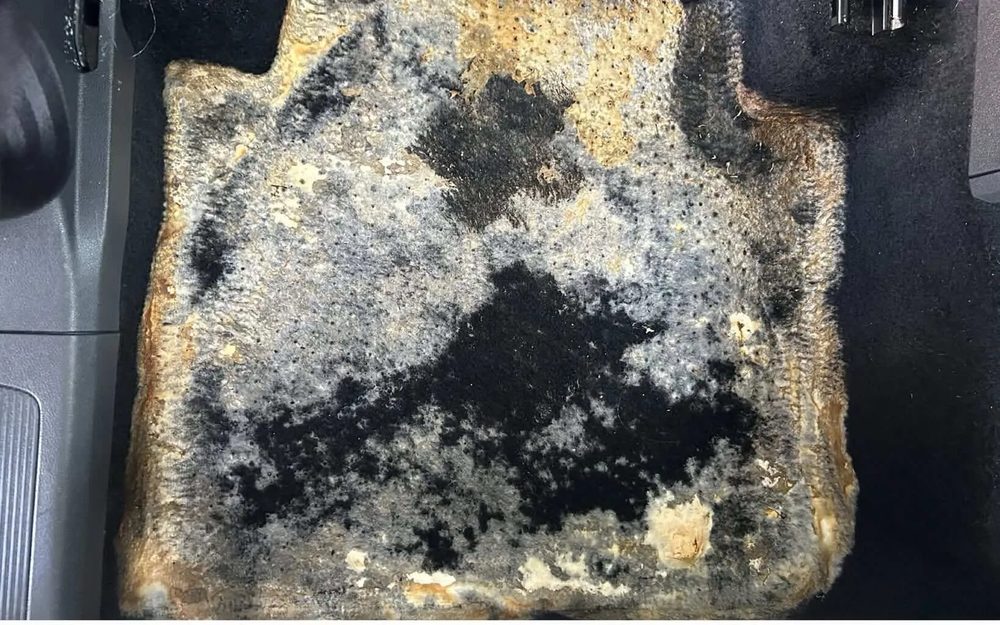
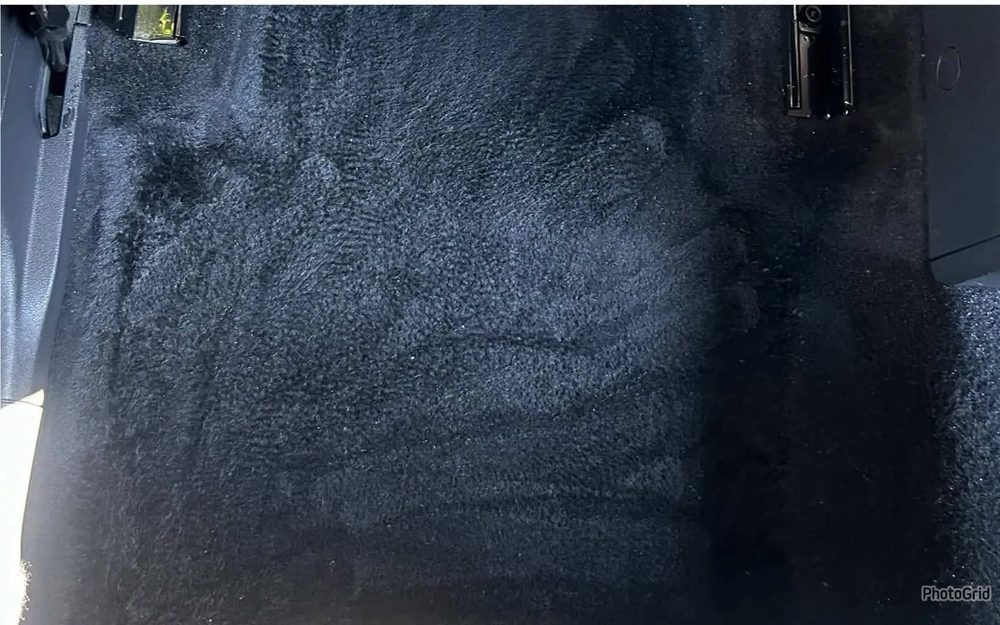
A carpeted floor mat with heavy black, brown and white mold colonies. Floor mats hold water against the carpet under them, which is why this surface turns up so often. Mats are lifted and treated and the carpet and padding underneath are extracted and checked, since the problem rarely stays in the mat. Sand, wet swim gear and damp feet all end up on car floors in Key Biscayne, and the mat is where that moisture waits.
100% Satisfaction.
Written. No exceptions.
If the result doesn’t meet our standard, or yours, we come back and redo it at no charge. No forms to fill out, no arguing over what “counts.” The guarantee is in writing before we ever touch your vehicle.
Request Mold Removal in Key Biscayne · From $549
Fill this in once and send it. We get your address, vehicle, and the situation all in one message, no phone tag.
Rating
Detailed
Response
Three steps from a sandy, salt-damp cabin to a clean one,
and we handle the rest.
No drop-off. No waiting. We come to Key Biscayne.
We come to you in Key Biscayne,
across the causeway to Crandon Boulevard and the bay side.
Mobile service: home, office, condo, or marina. No drop-off, no travel fee.
Not seeing your city? Ask us — we likely cover it.
Salt breeze, wet beach gear and 3 feet of elevation
are hard on a closed-up car in Key Biscayne.
Key Biscayne sits about 3 feet above sea level with Biscayne Bay on one side and the Atlantic on the other, so a parked car is never far from salt moisture, and a cabin kept closed holds it. Left untreated, what starts as a musty smell becomes a real health issue for the next person who drives the car. DShine's Concrobium Mold Control and ozone process address the cause, not just the symptom, backed by $2M insurance and a written guarantee. Mold doesn't need much to get started, any trapped moisture inside a closed cabin is enough given South Florida's humidity. The source is almost always one of four things: a clogged AC condensation drain letting water pool silently on the floor pan, a failed door or window seal letting rain in, a clogged sunroof drain, or the car simply sitting unused for two or more weeks without the AC running. In Key Biscayne the cause we meet most is wet beach gear: a damp towel, swim bag or sandy floor mat left in a sealed car, where the moisture soaks into carpet and foam and has nowhere to go.
Key Biscayne neighborhoods we serve,
from Crandon Park to Cape Florida.
From Crandon Park to Cape Florida, Key Biscayne's parking, access and moisture change from beach lot to tower garage to bayside driveway.
Crandon Park — Crandon Park covers 808.8 acres across the northern part of the Key, with 2 miles of Atlantic beach, parking for more than 3,000 vehicles, a marina and the Tennis Center. Cars come home from here with sand and damp gear, and the risk starts on the drive back. We work at your address, not in the park's lots.
Bill Baggs Cape Florida State Park — The 400-acre state park at the southern tip, opened in 1967, has a lighthouse and more than a mile of beach. Cars that visit leave with sandy floors, wet towels and coolers. We do not work inside the park, but for residents near the southern tip we come to the driveway or garage.
Village Green Park — Village Green Park is a 9.5-acre park with multi-use fields and a half-mile jogging course, and Village Hall is at 88 West McIntyre Street. Residents and visitors park for short stops. For nearby homes and offices we plan around street parking, shade and short-term access.
Crandon Boulevard Corridor — Crandon Boulevard is the main road through the village and the commercial spine, with The Square, the Key Biscayne Shopping Center, 700 Crandon Shops and condo towers. Cars here sit in covered garages and open lots alike. We coordinate with the front desk or valet and ask for a level and stall number.
Harbor Drive — Harbor Drive branches off Crandon Boulevard about 1.3 miles from Bill Baggs Cape Florida State Park. Streets toward the bay bring salt breeze and, for boat owners, dock gear in the car. We come to driveways, carports and small parking areas, and plan the work in shade where we can.
Mashta Island & Mashta Drive — Mashta Island and Mashta Drive are waterfront residential areas, tied to the Mashta House that William J. Matheson built in 1917. Larger waterfront properties mean salt spray and dock gear reach cars. If there is a gate, give us the details and a contact in advance so access is smooth.
Grand Bay Drive & the Ritz-Carlton — Grand Bay Drive is the address of the Ritz-Carlton Key Biscayne, 455 Grand Bay Drive, with condo residences nearby. Cars here live in covered garages with valet and front-desk procedures. Share the building name, level and stall, and we coordinate access and any insurance paperwork beforehand.
Don't see your area? Ask us — we likely cover it.
Key Biscayne car mold,
the questions we hear most after beach days.
Tap any topic to read the full breakdown.
Start with the map. Key Biscayne is 1.25 square miles of land and 0.46 of water, with Biscayne Bay to the west, the Atlantic to the east, Crandon Park to the north and Bill Baggs Cape Florida State Park at the southern tip. Elevation is roughly 3 feet. Nowhere in the village is far from salt water, and the breeze carries it everywhere.
Weather numbers come from Miami International Airport, the closest long-record station: 67.41 inches of rain a year (1991 to 2020 normals), 10.51 inches in June, 10.22 in September, and relative humidity averaging 73.2 percent. They are regional readings, not a village gauge, but they show a place where rain and damp are the norm for about half the year.
People matter too. The 2020 Census counted 14,809 residents and 7,215 housing units, 26.6 percent of them vacant, a share that includes seasonal-use homes. A 2017 study projected partial flooding by 2045, and a $100 million protection bond was approved in November 2020. Cars that sit shut for weeks are a fact of life here.
Family SUVs and crossovers lead the list. They run the daily loop between the beach, the K-8 school, tennis courts and the grocery store, and the floor is where it shows: sand worked into carpet, a damp towel that spent a night on the third row, a swim bag that never fully dried. Mold starts under the mats and creeps into the padding before anyone sees it.
Convertibles and weekend sports cars come second. Their risk is the open-top habit: a quick shower while the roof is down, a soft top that stays wet in its folds, leather sitting in salty air with the windows cracked. We also treat commuter sedans that cross the causeway every day, and cars belonging to owners who spend long stretches elsewhere.
Badge aside, the spot an owner reports is seldom the whole story. A smell that seems to come from the back seat can trace to the A/C box or the trunk carpet, which is why the inspection runs from headliner to spare-tire well before a tier is confirmed.
Add the cyclists. Crandon Boulevard and the causeway are part of a popular bicycling route, and plenty of cars carry roof or hitch racks. Riders return with sweat-soaked kit and wet shoes tossed into the cargo area, and paddlers and snorkelers do the same with fins, masks and dry bags. Small, wet items in a closed hatch are an easy source of trouble to miss.
Tower garage or covered condo stall: many residents live in multi-story buildings along Crandon Boulevard and the oceanfront. Covered parking keeps the rain off but also keeps the sun off, so a cabin that went in damp stays damp. Concrete decks near the ocean hold moist, salty air, and a car in a back corner can go weeks without a door being opened. Valet-run buildings add a wrinkle: the car may be moved or stacked, and nobody checks the cabin.
Driveway or carport at a single-family home: here the car takes the full breeze. Salt in the air settles on glass, seals and metal, sprinkler spray reaches door gaskets, and shade trees keep the car from drying after rain. At a house, trouble tends to begin at a perished door gasket, a plugged sunroof drain or a window cracked ahead of a squall, and the first sign is a damp strip beside the seat rails.
Beach lots and marina spaces: Crandon Park alone has parking for more than 3,000 vehicles, plus its own marina. The sun is not the problem. Trouble comes on the drive home, when wet towels, swimsuits, dock lines and a cooler of melted ice go into a sealed car and the A/C has barely begun to pull moisture out. The damp collects in the trunk liner and the spare-tire well, where nobody looks.
Parked off the Key before a storm: Key Biscayne is in hurricane Evacuation Zone A, so owners often move cars to a mainland garage or a relative's driveway for several days. A car shut tight in an unfamiliar garage with sandy, damp carpet is a quiet setup for mold, and it rarely gets checked until the owner is back, the power is on and the weather has passed.
May to October, the long wet stretch. Miami's rainy months overlap with beach season, so afternoon squalls meet cars with cracked windows, and wet gear rides in back seats day after day. Under those conditions carpet can stay damp for months, and small wet episodes pile up without anyone noticing a single one.
Storm weeks, from the end of summer into autumn. The hurricane calendar officially runs June 1 to November 30, yet Miami's heaviest exposure clusters in the later part of that stretch. For Zone A residents that means moving cars off the Key and sealing cabins for days, sometimes while the building's power is out and no A/C runs at all.
Return weeks, after the summer. Doors come open on cars shut since summer or since a storm. The usual remark: nothing seemed wrong on the way out the door. Owners who phone within a week or two typically have a one-area job, while those who wait a season more often face the whole cabin.
December through April, the reprieve. Drier air, a steady breeze, windows down. Risk eases. Still, a damp towel from a winter beach day or a tipped cup can plant something that only shows in spring, particularly in a second car that rarely gets a long drive.
Key Biscayne has one road on and off. From the mainland it is the Rickenbacker Causeway, over Virginia Key and Bear Cut, which then becomes Crandon Boulevard. The causeway toll is collected electronically, with no cash accepted, and crossing it is part of how we get to you. Travel is already in your price, so no separate travel or toll line appears on your quote.
Because there is a single route, we plan our arrival window around traffic instead of hoping for the best. Beach weekends and big events at the Tennis Center at Crandon Park load Crandon Boulevard, so for weekend visits we usually ask for a flexible window and confirm timing by message once the van is on its way. Weekday mornings are usually the easiest.
Once on the Key, access depends on where the car lives. A single-family driveway is simple. A tower garage may need a vendor name on the guest list downstairs, a level and stall number, or a valet's help to bring the car out. Should your building ask for proof of insurance, a $2M liability certificate can reach the lobby before we arrive.
If you are not on the Key that day, a spouse, a property manager or a neighbor you trust can be there when the van arrives. Photos from before and after go to your WhatsApp, the price is firm before product touches fabric, and the keys return to whoever handed them over: owner, valet desk or relative.
1. Wet beach, marina and bike gear left in a closed car: by far the leading cause. A damp towel, a swimsuit in a tote, a wet paddle-board bag, dock lines or a cooler with melted ice goes in after the day and stays overnight. Moisture wicks into carpet and seat foam, and sand under the mats keeps it pressed in place. By the time someone smells it, growth is usually in the padding.
2. A cabin that never dries between trips: Key Biscayne drives are short. A car that goes from garage to beach to school to home may never run the A/C long enough to dry the evaporator box, so water sits in the dash and a sour smell arrives with the fan. Growth often appears around the vent outlets, and the smell is strongest in the first minute.
3. A long closed-up stretch: an owner away for weeks or months, or a car moved off the Key before a storm and left shut. Salt-laden air and a small amount of moisture inside the cabin are all mold needs. This is rarely the first cause an owner suspects, but it explains many of the whole-car jobs, where growth has had time to reach headliner and seat foam.
4. Water getting in through seals and drains: worn door and window gaskets, a clogged sunroof drain, a trunk seal that no longer closes tight. Squalls and car-wash spray drive water in, and salt residue on rubber speeds the wear. Look for a damp patch under one door, a wet spare-tire well or a ceiling stain, since these point to a leak rather than a habit.
Hour one: van in your driveway, a tower's guest bay or a garage level. Flashlight lap of the car: seams, mats, trunk floor, vent outlets. Photos shot. The quote you got by message is confirmed or corrected, $549 or $749, before a single bottle opens.
Hours two and three: grit out first, because sand scratches and pins moisture against carpet. Next the HEPA pass, Benefect, scrubbing, steam, extraction and fans pushing air through to dry the cabin. Cloth is extracted. Leather gets its own gentle protocol, protecting grain and dye.
Final stretch: Concrobium, ozone, odor bomb, closing check. Expect an afternoon, close to four hours at the outside. Then your WhatsApp buzzes with before-and-after photos and two or three lines naming the culprit: a soggy tote, a tired seal, a trunk that never dries.
"Is the Rickenbacker toll on me?" No. Travel is in the price, and the crossing counts as travel. "My building is on Crandon Boulevard; can the car stay in its stall?" That depends on the association, so we read its rules before the van leaves the mainland.
"One area or the whole car?" Photos of carpet, seats and spots usually settle $549 against $749, with the exact price locked before work. "A wet towel from Sunday, enough to start trouble?" Close the windows, let Crandon's warm afternoon sun do its part, and by Thursday it can be.
"Safe for the kids?" Ozone keeps everybody out of the cabin while it runs, and a written 30-day guarantee covers a return of mold or mold odor. "How long without the car?" Budget an afternoon. "Do I need to be there?" Not for the whole visit; a neighbor or the building can hand over the keys.
Beach-car refresh: Ceramic Coating added to the mold job. Breeze off Biscayne Bay and the Atlantic salts paint, glass and trim, so owners who just reclaimed the cabin often want the shell protected as well. One visit, one blocked parking stall, one conversation with the building.
Glare fix: Paint Correction, aimed at salt film, water spots and the swirls that shout in noon sun on Crandon Boulevard. Long-sit special: Engine Bay Cleaning, for cars that spent a summer parked. Every add-on gets your yes before we start, never after.
Not sure it is mold? Odor Removal Detailing ($349) fits smells without visible growth; Flooded Car Detailing ($349) fits water caught early. Send photos and we will name the right one, even when it is the cheaper one and we earn less on the visit. Honest triage is part of the service.
Sight: inside-windshield fog that needs minutes of defroster after a night near the bay. A greasy film across the inner glass. Dots of white or green at door seals. Leather with a tacky sheen along the bolster. Any of these deserves a closer look within the week.
Touch: lift the mats and press the carpet below. Cold, gritty sand is the telltale, since Crandon Park sand pins water against fibers, and that is where first specks usually form. Try the same under the dash, along the sills and in the trunk well.
Smell: an A/C breath like a damp basement in the first half minute is the last alarm before spots show on seats. If it returns each time you start the car, treat it as a one-week deadline, not a quirk, because by then the A/C box is usually holding some of it too.
Summer away: a cabin sealed for weeks in warm, humid air needs three things beforehand: nothing wet inside, mats lifted and dry, A/C on fresh air for the last minutes of the final drive. A friend or building contact starting the car every week or two, fan on, on a dry day, does the rest.
Evacuation week: Zone A residents get little notice, so keep a routine ready. Towels out, mats up, trunk emptied: a few minutes. On return, open every door, air the cabin out, and look beneath the mats before driving off, since that is where days of shut-in damp collect.
The spare car that rarely moves: a weekend car in a tower stall is the quiet risk, because nobody notices it. Set a recurring reminder to drive it twenty minutes with the A/C running, rather than a block and back, so the cabin and the A/C box both get a chance to dry.
Two or three cars per household is normal on Key Biscayne: the school-run SUV, an errand car, a weekend convertible. Beach and tennis gear tends to ride in one of them, so one car carries the problem. Shared garages and shared habits still make a quick check of the rest worthwhile.
One booking, one crossing of the causeway, one conversation with the building. Every car carries its own price, either $549 or $749, with its own inspection, its own photos and its own written guarantee, so a clean car costs you nothing extra just because its neighbor was not.
Tell us the count and where each car lives: separate tower levels, a second address near Village Green, a spare driveway. We sequence the visit so nothing waits longer than needed, and all the photo sets land in one WhatsApp thread you can scroll back through later.
Covered: mold or a mold smell that comes back within 30 days of the visit. Remedy: re-treatment, free, in writing, no debate. Your move: message us that spots or odor returned, and a return visit goes on the calendar, whether the car sits in a tower stall or a bayside driveway.
The typical reason for a repeat is a cause left standing: a gasket still seeping, a drain still plugged, or a car that went straight back to hauling soaked paddle-board bags. If we see the likely culprit on site, we point it out so you can fix it before the 30 days run down.
Not covered: a fresh soaking, such as a window left open through a squall. We still talk it through fairly, and often the answer is simple. Within those 30 days, though, the growth we removed is our responsibility, not yours. Ask us if you are unsure which side a case falls on.
Picture three Key Biscayne cars: a 1990s convertible with a cloth top, an SUV with wood trim, a white-leather coupe that lives near the water. Each wants a lighter hand. Hide is never scrubbed hard. It receives our gentle leather method, with measured moisture, so dye and finish hold, while wood and rubberized plastics are steamed lightly, not drenched.
Soft tops get extra attention at folds and tracks, where fabric traps water. Older cars often wear tired rubber, so seals are checked too; a failing gasket would hand the problem straight back to you. Original seat foam is never saturated, which keeps vintage upholstery intact.
Work trucks and commuter sedans follow the same sequence. The variable is the clock: we agree a start time that returns the vehicle with drying time to spare, so it is ready when the next shift, school run or causeway commute begins. Tell us the deadline when you book.
Before a flight: one, strip out anything that holds water, the bag that touched the beach included. Two, lift each mat and knock out sand; a soaked mat lying on carpet is where colonies usually begin. Three, wipe down the trunk liner and prop the lid a few minutes.
On the final drive: switch the A/C to fresh air for the last stretch so the A/C box can dry out. Park where air moves, away from any wall that sweats, and leave the glove box and center console open a crack if they held anything damp. Small habits, large payoff.
While you are away: line up a friend to fire up the car every other week or so and run the fan on a dry afternoon with the windows slightly open. Had dampness before? Have the seals and sunroof drains checked first; that costs less than returning to a smell.
The gap between our two tiers is $200: $549 for mold in one area, $749 throughout. A spot found in spring and left through a Miami summer, with its rainy months from May to October, often travels from one to the other as growth spreads through carpet and foam.
Leather and high-value cars add a condition risk. Growth that reaches hide, stitching or wood trim can leave marks that professional work controls but cannot always reverse, and a classic's originality is hard to buy back. Acting early protects the finish, not just the smell.
Then the air: a daily driver with spores in its A/C path blows them into a small space whenever the fan runs, which is harder on sensitive people. A small spot caught early is no emergency. It just means that waiting seldom pays, and the clock runs through Miami's wet months.
A lot of the people who keep Key Biscayne running, from shop and restaurant staff to tradespeople and those who work in homes, drive in over the causeway and out again each day. Their cars live a different life: long drives, short stops, and parking in open lots near the water, where sea breeze and sun both work on the cabin.
The usual trouble is moisture that rides along. A wet umbrella, damp work gear, a lunch cooler or wet uniform items go into a closed car, and A/C is run in short bursts that never fully dry the evaporator. Mold gets into carpet and seat fabric, and a sour smell appears when the fan starts.
We can work at a home address on the mainland or on the Key, whichever suits you. Pick a day when the car is free, send photos, and your price is confirmed before we start. The same eleven steps, written 30-day guarantee and $549 or $749 pricing apply wherever the car is parked.
Mornings and evenings matter. A car that drives in on the causeway with the A/C blasting and parks in a lot by 7 a.m. may sit in warm, damp air all day with the windows shut. A short note to yourself to run the fan on its warm setting as the drive winds down, then crack a window if the lot is covered, helps more than people expect.
Three things shape the number, and photos answer most of them: which areas show mold, how deep it looks, and whether it has reached the vents. Text them over WhatsApp and a tier returns in under 2 minutes: $549 for one area, $749 throughout, travel to Key Biscayne included.
The exact price is confirmed after we review those photos, before any work starts. On arrival, a whole-cabin inspection checks it, because a back-seat smell can start in the A/C or the trunk. If it matches, the price stands. If not, we explain why before touching the car.
What decides the tier is the spread of the mold: how many seats are affected, whether the headliner or trunk is involved, and whether growth reaches the vents. Where the car is parked does not change the number, so a driveway on Mashta Drive and a stall in a Crandon Boulevard tower are quoted the same way.
The setting: 3 feet of elevation, bay on one side and ocean on the other, humidity that rarely lets go, and cars that spend days at Crandon Park, the marina or a closed garage. Top cause by far: wet gear in a sealed car. Runner-up: short drives that never dry the A/C.
The price: $549 for one area, $749 throughout, travel included either way, tier in under 2 minutes, exact price from your photos before work starts. The visit: about an afternoon at your Key Biscayne address, with photos by WhatsApp when it ends. Nothing else is added to the bill.
The protection: 11 steps built on Concrobium and ozone, leather on its own protocol, IDA certification, $2M liability coverage, and a written 30-day guarantee that re-treats returning mold or mold odor for free. Add-ons are approved by you first, and the price you confirm is the price you pay.
What is ozone doing in there? It is a gas that oxidizes odor molecules and airborne spores, and it reaches what a cloth cannot: vent ducts and gaps inside seat foam. It comes after the wet work, never instead of it, and it is the reason a cabin smells neutral rather than perfumed.
Why sealed? The gas needs a closed cabin, and nobody sits in the car for the cycle; people and pets keep clear. Shade is our preference. In a tower garage we tell building staff how long the car stays shut, and tag it so no door opens midway through the run.
Getting it back: every door opens, the cabin airs out until it is comfortable, the Meguiar's odor bomb goes in, and an inspection closes the visit. We call the car ready when it truly is, not when the machine stops, and photos follow on WhatsApp. Ask if you would like a call.
Before you book,
a few answers for Key Biscayne drivers.
Add-ons Key Biscayne clients book
Still deciding? Read: the complete mold removal guide · does insurance cover it? · why DIY mold removal fails.
Mold in your Key Biscayne car? Get your price in under 2 minutes.
Serving Key Biscayne and all of Miami-Dade County. Fixed pricing, no travel fee. We confirm in under 2 minutes.
It Might Just Be an Odor Problem
If there's no visible mold growth yet, the smell alone is usually an Odor Removal Detailing case ($349 flat) — faster than full mold remediation ($549–$749). See which one matches what you're dealing with: