What a Surfside Mold Job Includes
This is not a car wash. Car Mold Removal uses Concrobium Mold Control treatment, pH-balanced products, and machine assistance, the same process used in pre-sale preparations for luxury dealerships.
Why it matters for your health: Mold in a vehicle is a different exposure than mold on a wall at home. With the AC recirculating, everyone inside is breathing concentrated spores for the length of the drive. The EPA and CDC both link mold exposure to respiratory irritation, allergic reactions, headaches, and worsened asthma symptoms. Children, older passengers, and anyone with a compromised immune system typically react faster and more severely than a healthy adult would. By the time the smell is noticeable, spores have usually already spread through the HVAC system into every vent in the cabin.
Curious what actually happens during the visit? Tap through our real 11-step process below to see what we do at each stage and why it matters.
What every Surfside mold job gets you
Most detailers in Surfside charge less. Here’s exactly what you gain — and what you risk — with each choice.
| DShine DetailsFrom $549 · travel included | Avg Surfside Detailer$149 – $199 | |
|---|---|---|
| Industry certificationsIDA, Koch Chemie, Meguiar’s, 3M, Symplex, XPEL | ✓6 verified | —0 credentials |
| $2M liability insuranceWe cover any damage — in writing | ✓ | —Often uninsured |
| Deionized water systemZero mineral residue, no water spots | ✓ | —Tap water, water spots |
| Fresh microfibers per vehicleNo cross-contamination between jobs | ✓ | —Shared towels, swirl risk |
| Mold-specific chemistry onlyConcrobium, Benefect & Meguiar’s, no harsh acids | ✓ | —Industrial degreasers |
| Before & after photosSent via WhatsApp on completion | ✓ | —No documentation |
| 100% written satisfaction guaranteeReturn & redo at no cost if unsatisfied | ✓ | —No written guarantee |
| Travel to your address — $0Home, office, condo — no drop-off | ✓ | Sometimes adds fee |
DShine vs. any other detailer
in Surfside, Miami-Dade County
Three things most detailers won't tell you. We put them in writing.
 Since 2018
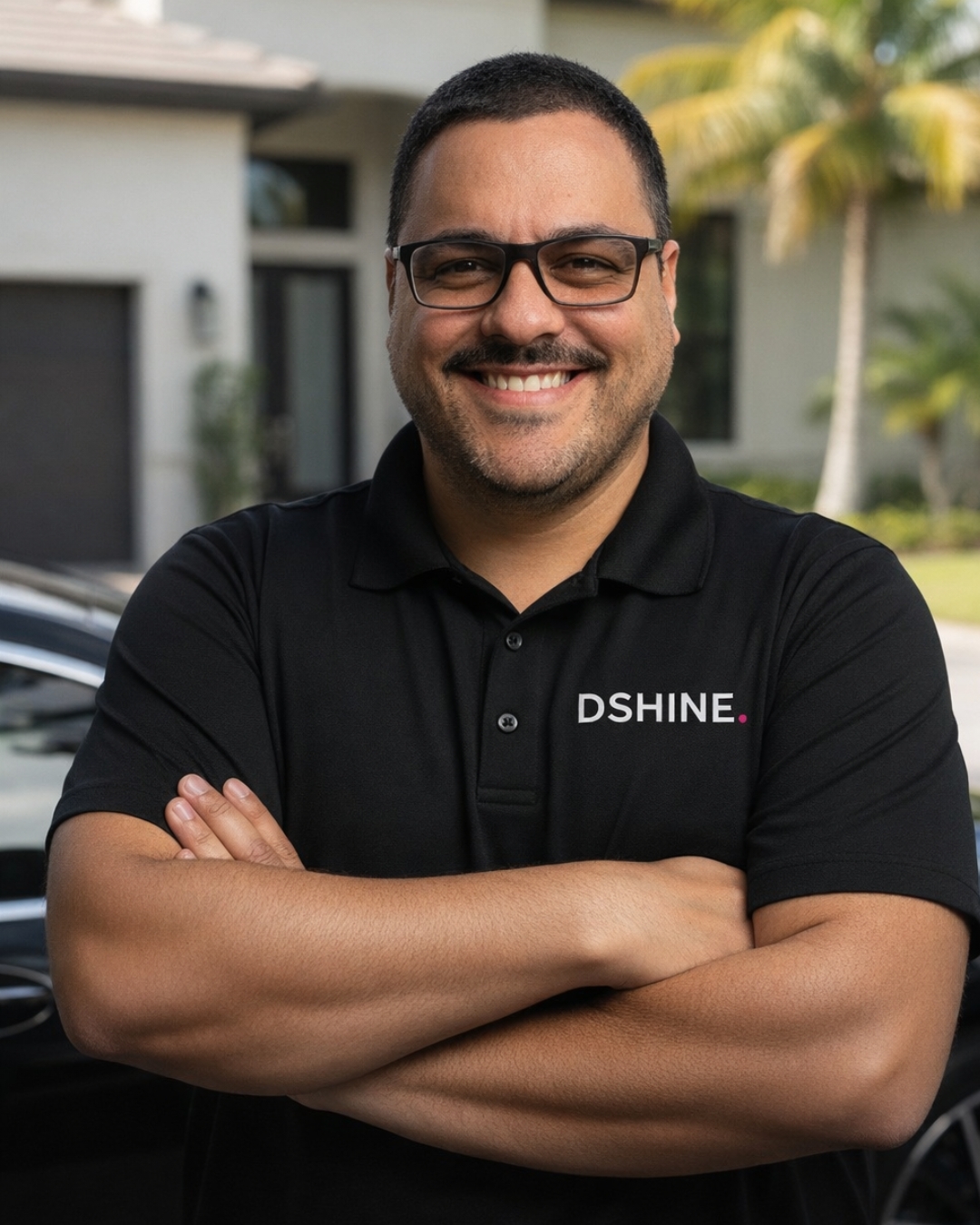
With more than 20 years of hands-on experience in the automotive care industry, Evelio launched DShine Details in August 2018 with one van and zero shortcuts. For the first six months he slept in the van to keep costs down and standards up. Today DShine runs 7 certified vans across Miami-Dade, Broward, and Palm Beach, and the commitment hasn't changed. Every vehicle is treated as if it were his own.
What clients say
in their own words.
Before & After: Mold Removal We've Actually Done
No stock photos. These are real DShine mold removal jobs across South Florida, the same 11-step process and chemistry used on every Surfside appointment.
 Before
 After
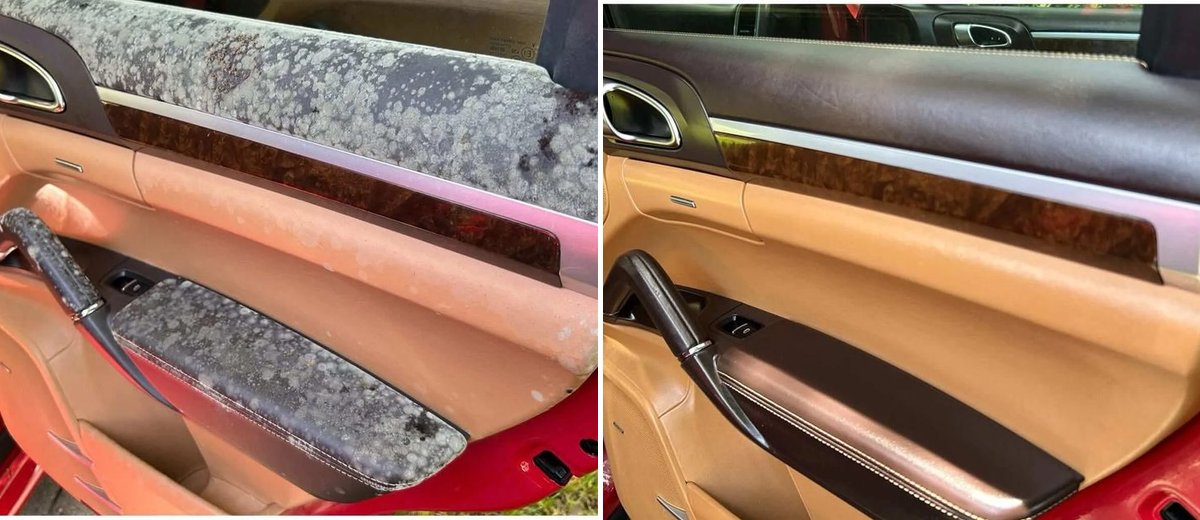
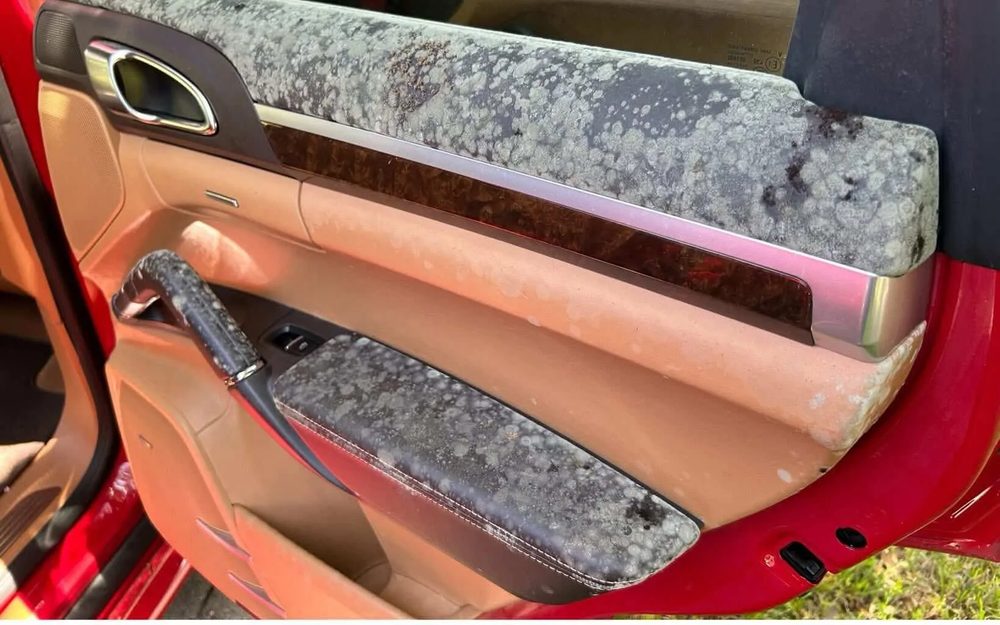
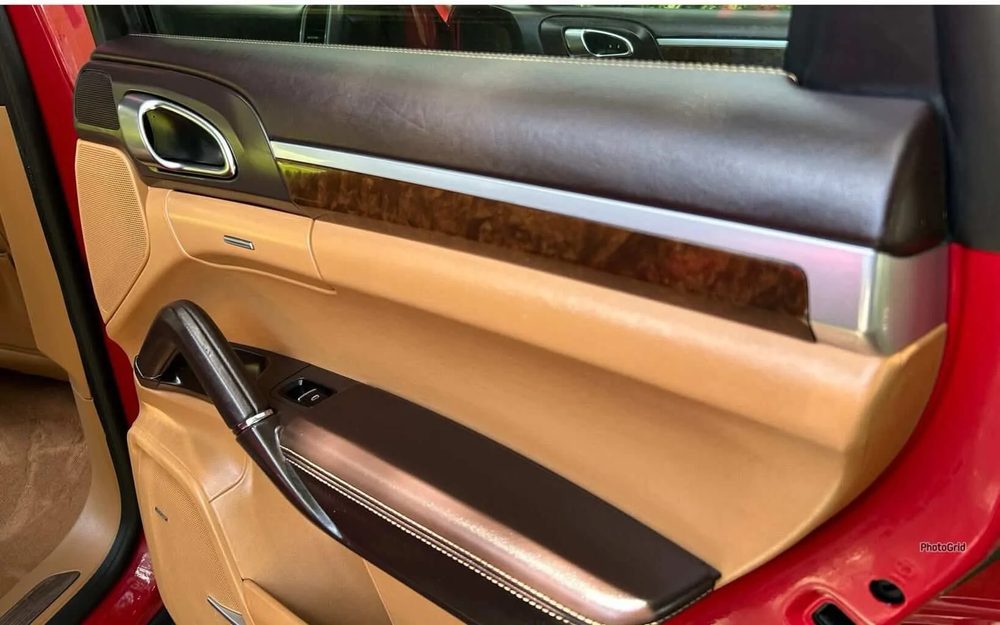
Porsche Cayenne — Door Panel & Armrest
Mold spread across the tan leather door panel and armrest of a red Porsche Cayenne, reaching up onto the wood trim. Leather like this cannot be scrubbed hard, so we use the leather-safe protocol, steam and extraction around the trim, Concrobium and then the sealed ozone cycle. In a coastal town, door panels are often where dampness settles first, along worn seals and the lowest edge of the panel.
 Before
 After
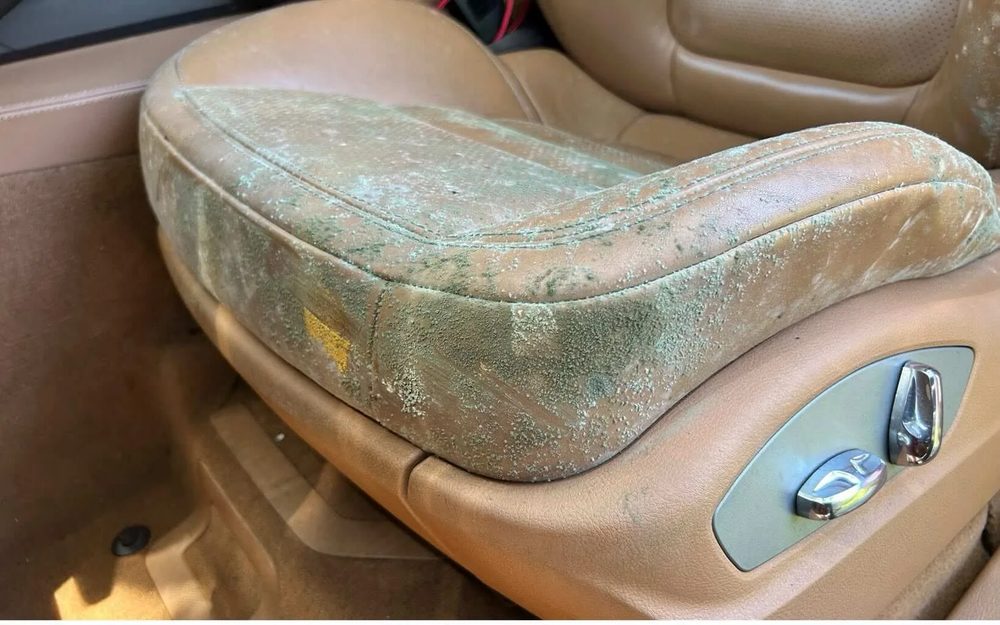
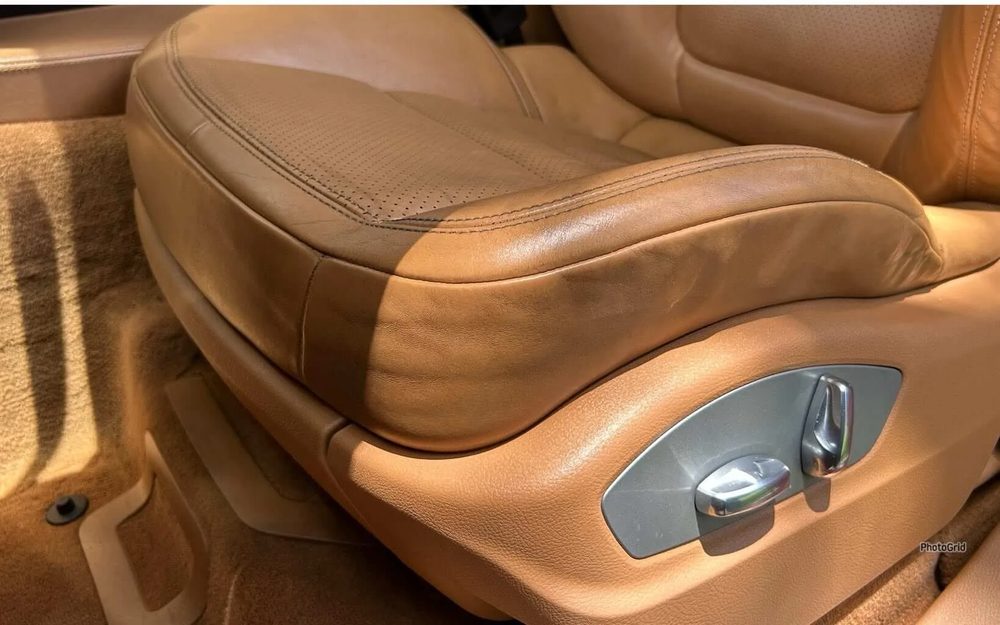
Tan Leather Seat Bolster — Green-Blue Growth
Green-blue mold covers the side bolster of a tan or camel leather front seat, the part that rubs against clothing and holds the most moisture. We lift growth with the leather-safe protocol, steam and extraction rather than hard scrubbing, then Concrobium and the ozone cycle. After a beach day, damp swimwear and a sealed cabin leave exactly this kind of pattern on the seat edge nearest the door.
 Before
 After
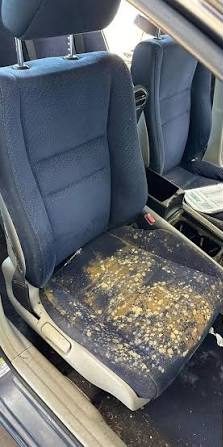
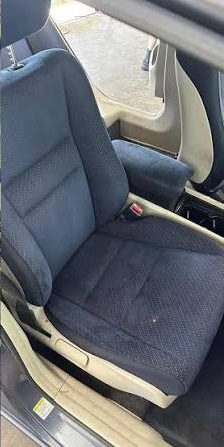
Cloth Bench Seat — Mold Stain Under the Cushion
With the cushion of a dark blue cloth sedan bench seat lifted, a tan and yellow mold stain shows on the seat bottom. This is the foam-layer problem: water or damp sat under the fabric where no cloth can reach, so we steam, extract, dry the cushion and treat it with Concrobium before ozone. Short beach-town trips that never dry a seat are a common reason this hidden staining builds up.
 Before
 After
Ford Sedan — Steering Wheel, Dash & Vents
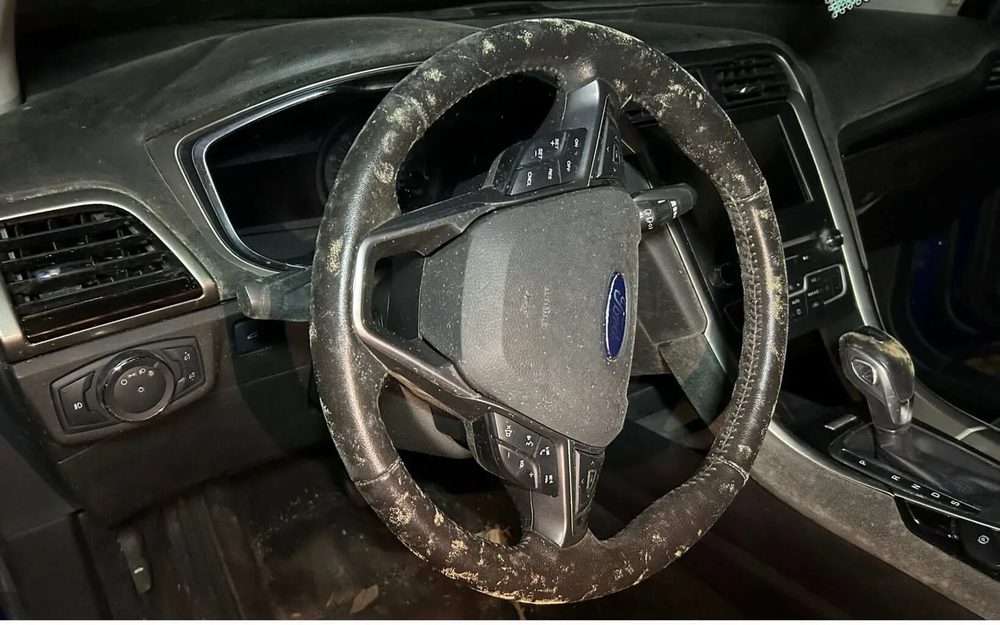
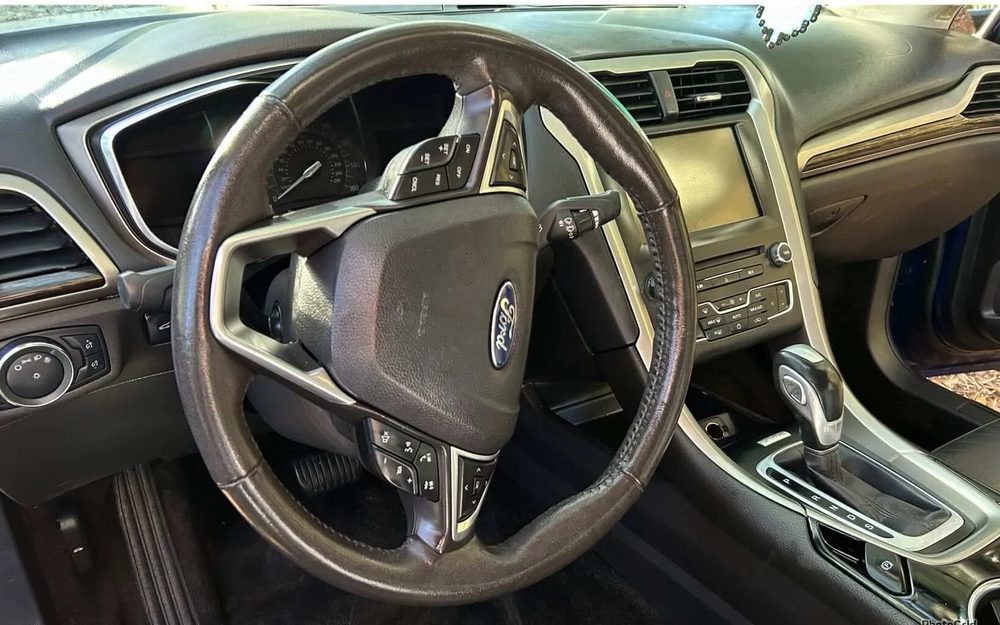
A grey-white mold bloom sits on the steering wheel, the dashboard and the vents of a Ford sedan interior. Hard plastics and a wheel rim collect growth when a cabin stays closed and humid, and vents matter because they feed air back into the cabin. We clean each surface, treat the vent path with Concrobium and the ozone cycle, and finish with an odor bomb. Cars that run the A/C only for minutes at a time often show this pattern.
 Before
 After
Black Cloth Seat & Console — Grey-White Bloom
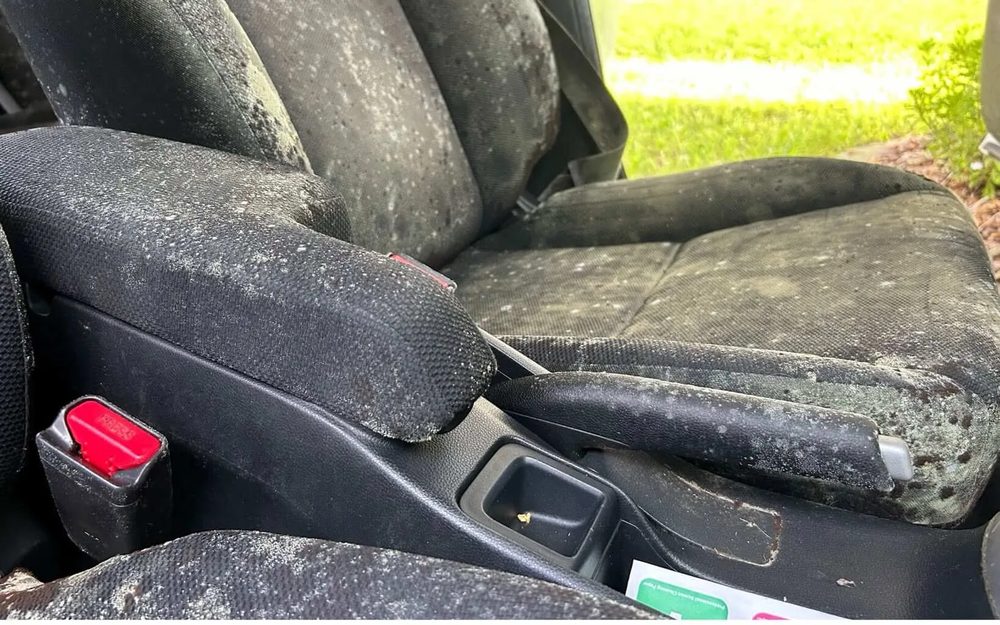
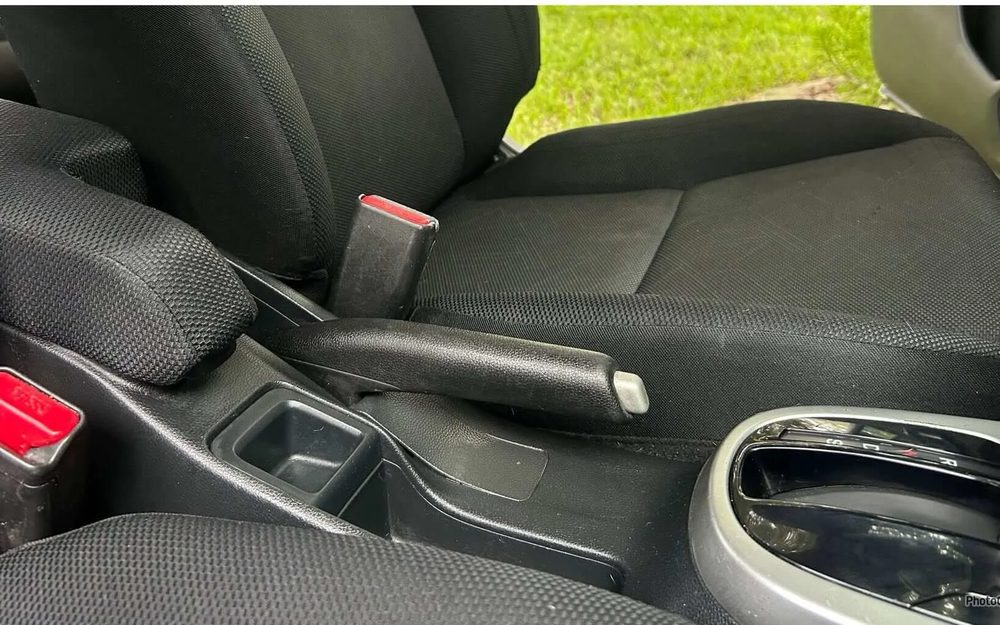
Grey-white mold bloom covers a black cloth driver seat and the armrest and console beside it, with a green lawn visible outside. Dark fabric hides early growth, so by the time it is visible the colony is usually well established. We vacuum with HEPA, steam and extract the fabric, treat it with Concrobium and then run the sealed ozone cycle. A closed car parked next to damp grass or irrigation is a typical setting.
 Before
 After
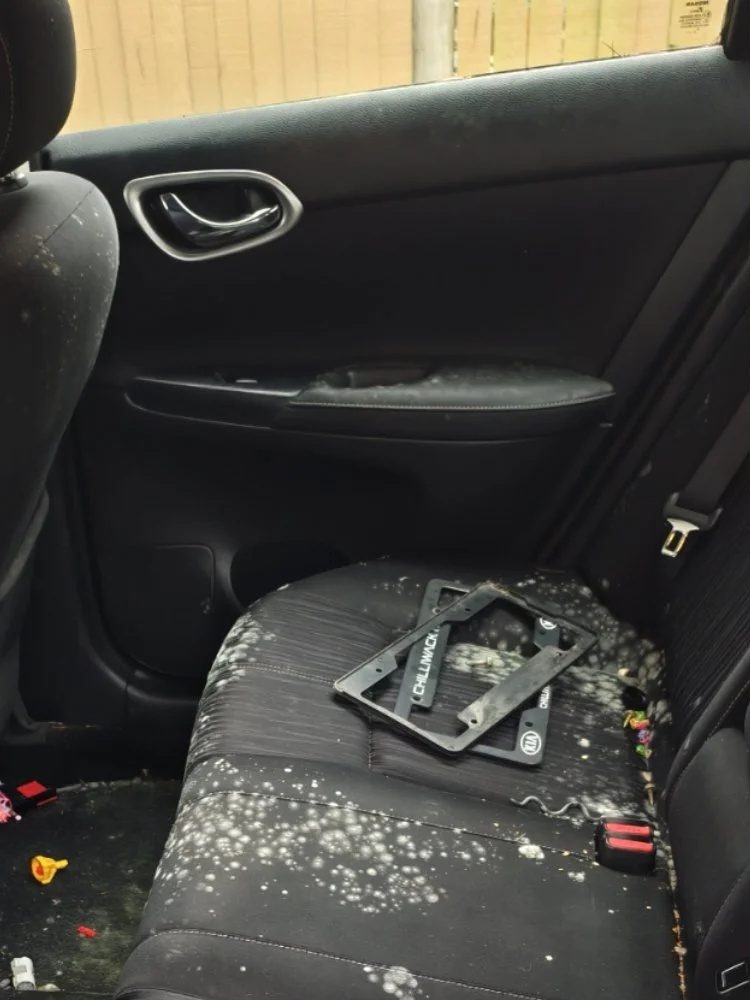
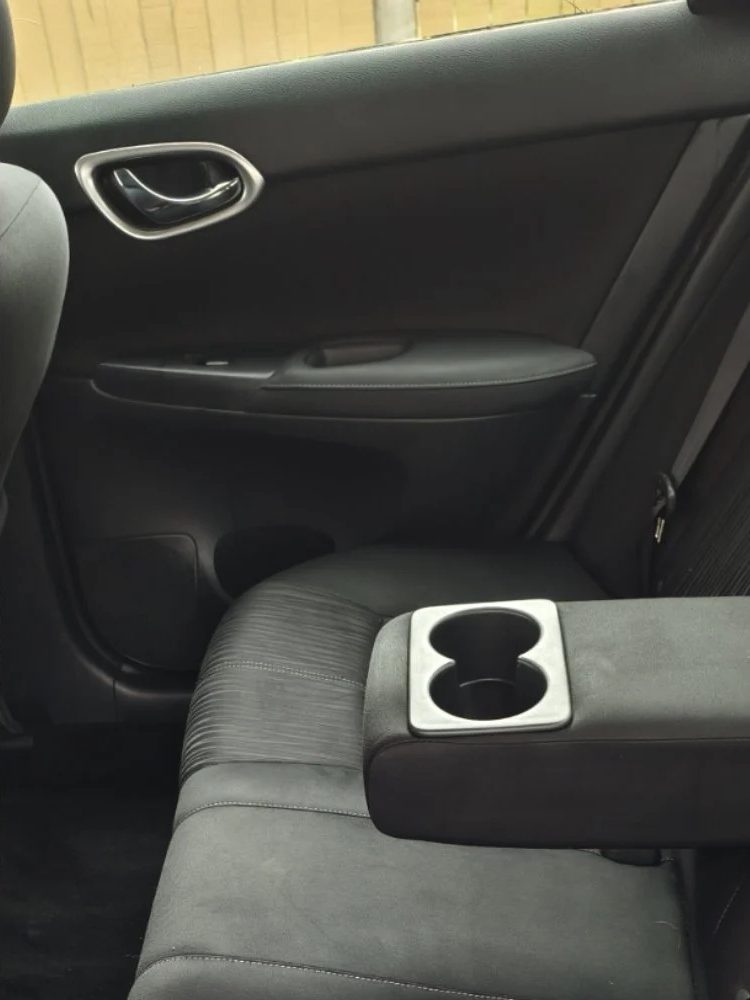
Black Sedan Rear Seat — White Mold Spots
White mold spots dot the rear cushion and door panel of a black sedan, with loose debris and a license plate frame lying on the seat. Back seats are often the least checked part of a car and they take spilled drinks, wet gear and bags. We remove the debris, HEPA vacuum, steam and extract the cushion and door panel, then apply Concrobium and ozone. A rear seat that rarely sees airflow is a pattern we see in beach-side cars.
 Before
 After
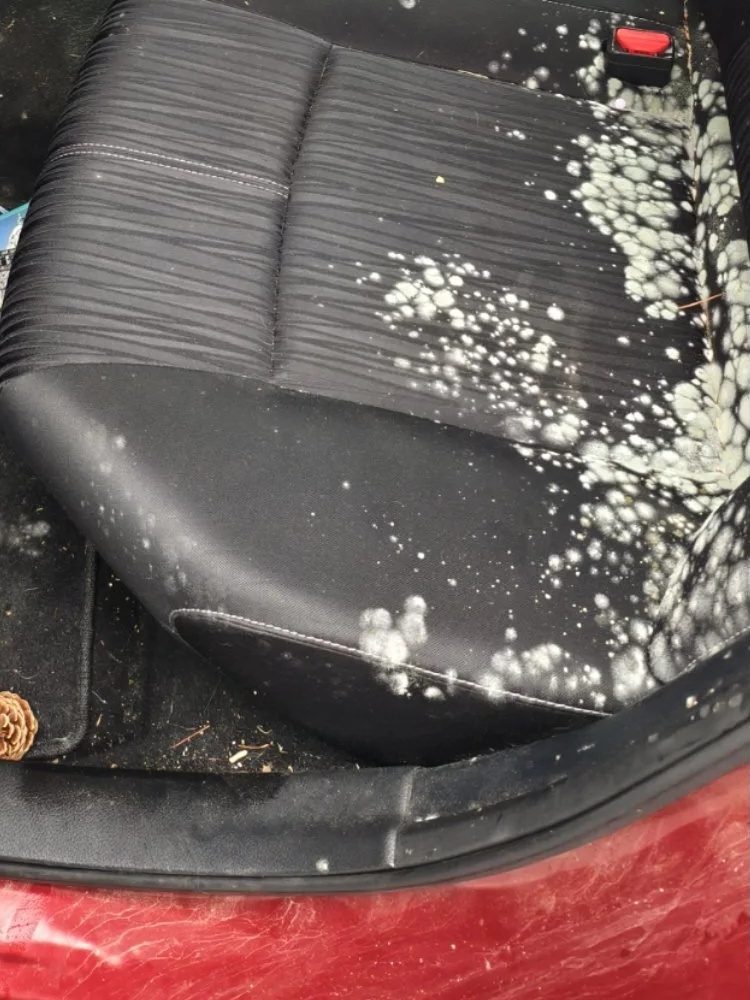
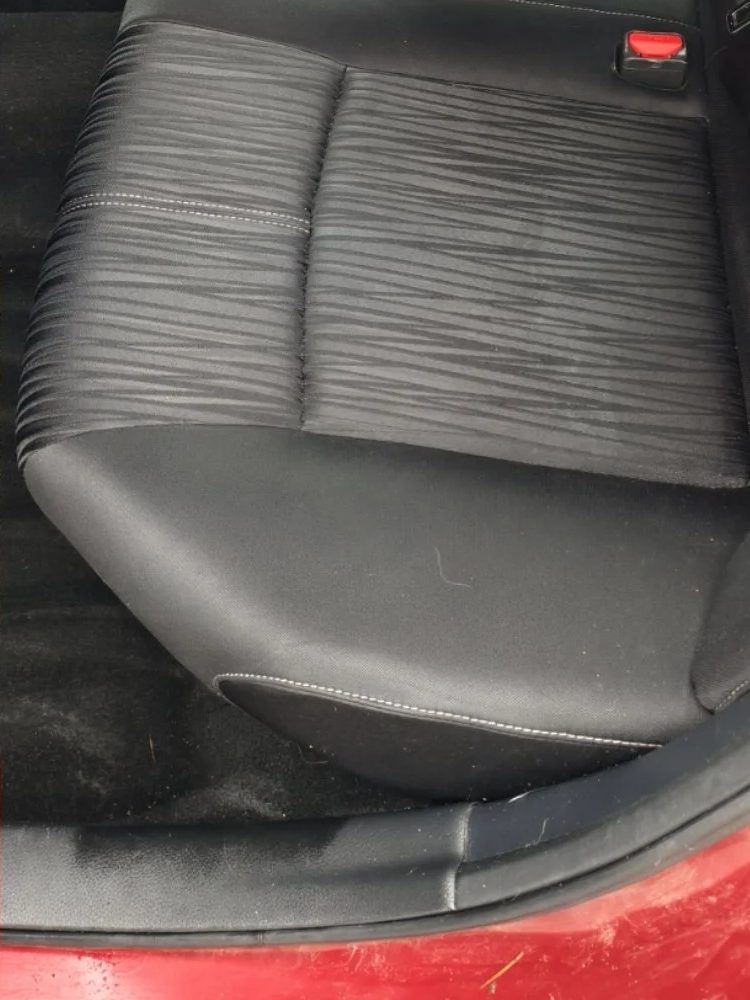
Black Cloth Seat — White Speckled Mold
White mold speckles dot a black cloth seat, with the red car body visible below the window. Speckled growth like this often points to a damp surface sealed in for days, and it can reach below the fabric into the foam. We steam and extract to pull moisture from the cushion, then dry, treat with Concrobium and finish with ozone. Cars that go from a wet beach day to a closed, sun-warmed space follow this pattern.
 Before
 After
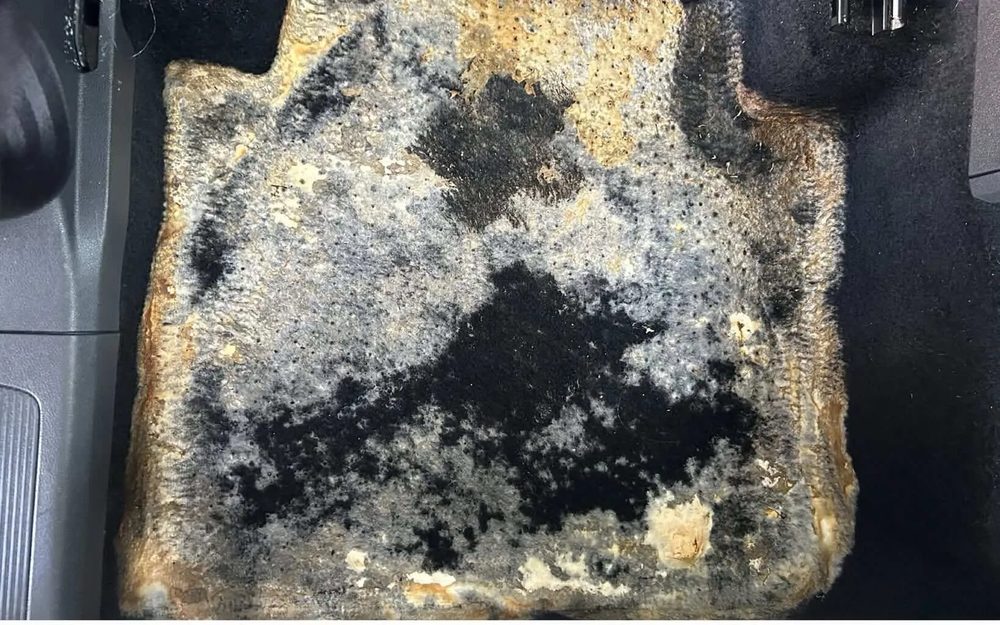
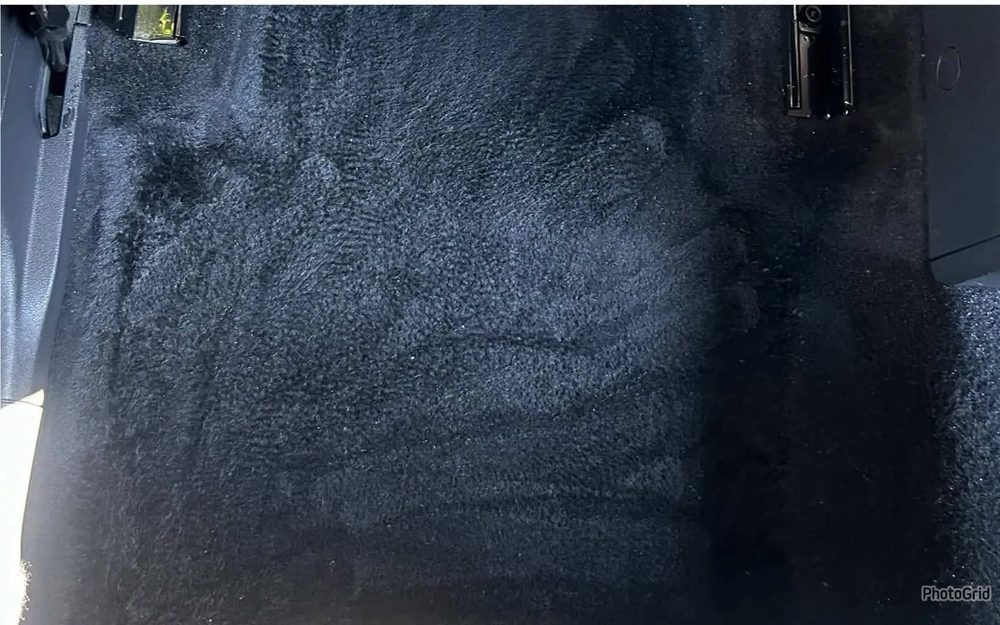
Floor Mat — Heavy Colony Growth
A carpeted floor mat carries heavy black, brown and white mold colonies, the sign of a mat that stayed wet for a long time. The carpet and padding beneath are usually affected too, so we remove the mat, extract the carpet, dry it thoroughly and treat it with Concrobium before ozone. Sand, salt and wet feet on the way back from the beach keep mats damp, and that is a very common starting point.
100% Satisfaction.
Written. No exceptions.
If the result doesn’t meet our standard, or yours, we come back and redo it at no charge. No forms to fill out, no arguing over what “counts.” The guarantee is in writing before we ever touch your vehicle.
Request Mold Removal in Surfside · From $549
Fill this in once and send it. We get your address, vehicle, and the situation all in one message, no phone tag.
Rating
Detailed
Response
Three steps from a damp beach-day cabin to a clean one,
and we handle everything in between.
No drop-off. No waiting. We come to Surfside.
We come to you in Surfside,
from Harding Avenue driveways to Collins Avenue buildings.
Mobile service: home, office, condo, or marina. No drop-off, no travel fee.
Not seeing your city? Ask us — we likely cover it.
Salt spray, short drives and a closed cabin
are hard on a car one block from the beach.
Surfside covers about half a square mile, roughly 3 feet above sea level, with the Atlantic on one side and Biscayne Bay on the other, and its damp salt air reaches almost every parking space in town. Left untreated, what starts as a musty smell becomes a real health issue for the next person who drives the car. DShine's Concrobium Mold Control and ozone process address the cause, not just the symptom, backed by $2M insurance and a written guarantee. Mold doesn't need much to get started, any trapped moisture inside a closed cabin is enough given South Florida's humidity. The source is almost always one of four things: a clogged AC condensation drain letting water pool silently on the floor pan, a failed door or window seal letting rain in, a clogged sunroof drain, or the car simply sitting unused for two or more weeks without the AC running. In Surfside, the cause we see most is short trips that never dry the cabin, then beach-day damp sealed in a closed car, so the mold starts in the carpet and seat seams long before you smell it.
Surfside neighborhoods we serve,
from 96th Street Park to Veterans Park.
From the Harding Avenue shops to Collins Avenue condos, Bay Drive and the beach streets, parking and moisture change block by block in Surfside.
Harding Avenue Shops — Harding Avenue holds the town's shopping and dining strip, with more than 20 boutiques, and there is no free parking along it. Cars here stop for an hour, not a season, so the risk is a wet event, such as an open window in a storm. For appointments we choose a driveway or a building space nearby, not the curb.
Collins Avenue Condos — Collins Avenue, part of A1A, runs along the beachfront, with multistory condominium buildings, hotels and apartments beside the sand. Cars live in covered or open-sided spaces and see salt spray and damp air. We ask for the space number and a building contact, and we choose a quiet corner away from walkways for the ozone cycle.
Community Center & Tennis Center — The Community Center and the Tennis Center share an address at 9293 Harding Avenue, with a pool, a snack bar and three tennis courts, and Town Hall sits at the same address. Cars here come and go with pool and tennis days, so wet bags and towels are the usual cause. We work at your home or building, not the town lots.
96th Street Park & Beach — 96th Street Park, at 9580 Bay Drive, sits at the northern edge of town, and a weekend farmers market runs on the sand at 96th Street. Cars here pick up sand, towels and picnic leftovers. A damp cabin sealed after a long beach morning is the common pattern, and we treat it at your address nearby.
Bay Drive & Biscayne Bay Side — Biscayne Bay forms the town's western edge, and Bay Drive runs along the quieter streets near it, with Hawthorne Tot Lot at 90th Street. The air stays damp and breezy, and sprinklers wet cars at the curb. Driveway and carport parking is common, and we plan the visit around where your car actually sits.
Central Residential Streets — West of Byron Avenue, the residential blocks have single-family homes with driveways and garages, near the Paws Up Dog Park at 93rd Street. A garage that also holds bikes and beach chairs blocks airflow, so a car can stay damp for weeks. We come to your driveway or garage and work wherever the car sits.
Veterans Park & 87th Terrace — Veterans Park, at 8750 Collins Avenue, marks the southern end of town, near the 87th Terrace boundary where the oceanfront path begins. Cars near the sand see sun, spray and sudden showers. A beach bag left on a seat or a window left open is the usual cause, and we meet you at your building or driveway.
Don't see your area? Ask us — we likely cover it.
Surfside car mold,
the questions we hear most from beach-town drivers.
Tap any topic to read the full breakdown.
Start with the footprint: Surfside is about 0.56 square miles of land, and its ground sits near 3 feet above sea level. The ocean lies on one side of town and Biscayne Bay on the other, so a parked car here lives in coastal air nearly every day of the year, whether or not it has rained.
For rainfall we have to borrow from the Miami airport station (MIA), since town has no gauge of its own. That record, covering 1991 to 2020, totals 67.41 inches a year, peaks at 10.51 inches in June and 10.22 in September, and shows humidity averaging 73.2 percent with rain on roughly 141 days. It describes the region, and it fits what the coast feels like.
Then the housing counts. The 2020 Census recorded 3,675 homes here and called 37.4 percent of them vacant, a label that includes part-year homes, while QuickFacts lists 74 percent as owner-occupied. A town planning document mentions roughly two cars per household, which is why a second car sitting idle is so ordinary.
Mid-size SUVs and sedans lead, usually the daily car of a resident who walks or bikes to most errands. With the beach, Harding Avenue and the Community Center inside a mile, these cars make hops of a few minutes, and a hop that short never lets the A/C dry the carpet. The first hint is a sour note in the first breath of cool air.
Second and third cars of two-car households follow: the coupe, the convertible or the older sedan that waits in its space between weekend outings. Leather seats and door panels give it away first, with a pale film along a bolster, an armrest or a seat seam, long before the smell reaches the driver.
We also meet cars of part-year owners, cars left behind when someone flew out for a month, and work vans serving the town's buildings and renovations. Whatever the badge, the visible patch is rarely all there is, so we inspect the whole cabin before we confirm the $549 or $749 tier.
Covered or open-sided building parking: many of the town's condo and apartment buildings park cars under or beside the building, in spaces that get some breeze but no sun. They are drier than a sealed garage, yet a car with a damp cabin still stays damp there, and wind-driven rain reaches the first row of spaces on a stormy afternoon.
Metered lots and street spaces: Surfside runs six metered municipal lots, free for residents with a valid permit, and there is no free parking along Harding Avenue. Cars on the street take rain, sprinklers and salt spray head-on, and the usual entry points are a worn door seal, a cracked window or a drain that no longer clears.
Driveways and carports at single-family homes: the central residential streets have houses with driveways, carports and one-car garages. A carport keeps off the sun but not the humidity, and a garage that also holds beach chairs, bikes and boxes lets very little air pass around the car, so the cabin stays as wet as the day it was parked.
Beach-block and hotel parking: cars close to the sand collect sand, towels and sunscreen, and the doors open and close all day in damp air. The risk is a one-time soaking, such as a wet bag on a seat or a window left cracked, followed by a sealed cabin warming up in the afternoon sun.
May and June, the first downpours: the Miami airport record shows about 6 inches in May and over 10 in June. A car parked in April with a faintly damp cabin enters the wet months already carrying that moisture, and the first stormy week brings the same remark on the phone: it smelled fine when I left.
July and August, steady damp: this is when cars of owners who travel sit longest and beach moisture is hardest to clear. Afternoon storms keep sills, floor mats and door pockets wet, even with windows shut and the car in a covered space.
Late August into September, the storm peak: the Atlantic season officially spans June 1 to November 30, and mid-August through September is its busiest stretch. Cars are shuffled under cover, glass is cranked up tight, and a cabin already clammy gets locked in for the duration.
October and November, the long tail: MIA still logs more than 7 inches in October, and returning residents open cars that have been shut for weeks. An early booking in this window usually means a smaller job. **December to April** is drier, with well under 3.5 inches a month, and the beach is full, so wet towels are the usual trigger.
Space is the scarce resource in a town of 0.56 square miles, so the first conversation is about where our van will sit. A driveway is easiest. An assigned space behind a building works if the manager knows we are coming. A metered street spot is the hardest, because the meter and the posted signs decide how long anything may stay there.
Six municipal lots charge by the meter, residents with a valid permit park free, and the town states plainly that there is no free parking on Harding Avenue. If your car lives on the street, say so at booking; usually we move the appointment to your own driveway or a guest space inside your building.
For condo and apartment buildings we ask for the space number, a name at the front desk or the management office, and any rule about vendors. Ozone runs with the car empty, so we choose a corner away from doors, walkways and pool areas, and we leave nothing in a shared aisle.
Because the town runs a free Freebee ride service and is served by Miami-Dade Metrobus, many residents leave the car parked for days at a time. That is good for traffic and bad for the cabin, and it is a big reason a car can look spotless outside while the interior has been quietly damp for weeks.
1. Short hops that never dry the cabin: in a town where the beach, the shops and the park are all minutes apart, the A/C may run for four minutes at a time. The evaporator makes water, the drain carries it out, and that is not enough time to dry carpets that picked up damp earlier. Over weeks the dampness lingers in the foam under the floor.
2. Beach-day moisture sealed in: wet towels, damp swimsuits, a sandy cooler or a soaked beach bag left on a seat is a classic starting point. The cabin then closes up in the heat, and within a day or two a pale film can show along the seat seams or on the fabric of the door panel.
3. A car idle for weeks: owners who travel, split the year or simply do not drive much leave a closed cabin for weeks, and the humid coastal air finds its way in around the seals. This is the cause behind the large patches, especially in the headliner and the carpet under the mats.
4. Tired seals, clogged drains and open windows: salt spray, sun and sprinklers wear down door and window seals, and sunroof or A/C drains clog with fine debris. A window or sunroof left open in a short afternoon downpour does the same job faster, but it is a single event owners usually notice, so the slow leaks account for more of our Surfside jobs and show up in places people rarely look, such as the floor pan and the base of the pillars.
An appointment starts with a WhatsApp exchange and a few photos, which fix the price tier before our van leaves. At your car, about ten minutes of looking either confirms the tier or changes it, and you get the final figure in words before any product comes out of its bottle.
Then the work runs in one stretch, usually three to four hours, from the first vacuum pass to the closing check. You can walk to Harding Avenue, go to the office or stay home. Afterward you get before and after pictures and a note on when the cabin is comfortable again.
Logistics matter in a town this tight. We confirm the exact space, where our vehicle can wait and who at the building, if anyone, needs to know. Beach-block and hotel-side addresses get extra thought, because a snug space leaves little room to set up.
Cost leads every call, as you would expect. The quick version is a lower price for one affected area, a higher one for growth through the vehicle, and no charge for the drive to your block. A few photos normally settle the tier, and we restate the figure after studying them, ahead of any work.
Next comes the question of where. Many Surfside callers live in buildings with a front desk, a shared lot or a meter at the curb, so they wonder if a visit is workable on their block. Almost always it is; the only sticking point is a sensible spot for the van.
After that people ask whether the smell truly leaves. If whatever let the damp in has been handled, it does, and the guarantee covers the rest. A few ask if mold is hazardous or if they should keep driving; open windows beat recirculated air until the car is done.
Paint Correction heads the list. A car kept near the ocean wears a film of salt and sun on its clear coat while the interior fights a different fight, so some owners prefer to book both together, with one trip to clear the driveway or building lot rather than two.
Behind it come Ceramic Coating, popular with people whose cars see sand and spray every week and who want paint that rinses clean, and Engine Bay Cleaning, a quieter regular. If you doubt it is mold at all, ask about the $349 options: Odor Removal Detailing for smells with no visible growth, and Flooded Car Detailing for water caught early.
We say plainly which service fits the car, even when it costs less than mold work, and extras are agreed with you before they begin.
Begin with the windshield. Glass that fogs more than it used to on a mild morning suggests extra moisture in the cabin. Another early hint is a stale, sour smell in the first minute after the A/C starts, one that fades once the fan has run for a while.
Inspect the slow-drying places: the carpet edge beneath the mats, seat seams, belt webbing and the lower part of the door panels. A cool, damp feel, a pale speckle or a gritty film there can mean growth hidden underneath, and it is worth a photo.
Then listen to your own body: sneezing, a scratchy throat or a headache that starts a few minutes into a drive and fades once you step out. If the same people feel fine elsewhere and rough in that one car, the cabin air is the likely reason, and an inspection costs less than guessing.
Here the resting car is usually a second vehicle, or one belonging to a part-year owner, left alone while the household travels. Before it goes still, pull out damp towels, beach bags and wet mats, then leave the doors open in the sun for an hour so the interior sheds its dampness.
Run the A/C on a dry setting before parking so the evaporator is not left wet, and then shut it up. If a neighbor, relative or building contact can take it for a twenty-minute drive every week or two, that beats anything sold in a bottle.
For months away, think of the car as a closed room in a damp climate. Open the glovebox and console, remove anything absorbent, raise a sunshade and, outdoors, choose a breathable cover rather than plastic, which holds humidity against the paint. On return, open the doors before touching the A/C.
A town planning document gives about two cars per household, and in practice that often means a daily driver plus a car that waits in its space. We can handle both on one trip. The daily driver tends to have the lighter problem, while the waiting car has the heavier one.
At booking, tell us how many vehicles are involved and where each is parked, especially if they are in different corners of one building. Every car is inspected on its own and priced on its own, with its own photos, and the written guarantee applies to each one we treat.
Cars at different addresses, such as a building and a house, can be handled too: mention it at booking and tell us which one worries you more, so we start there and finish with the easier check.
The promise is plain and in writing: should mold or its odor reappear inside 30 days, we return to your Surfside address and treat the car again without charging you. It holds for every vehicle we have worked on, whichever tier it fell into, and one WhatsApp message with a picture starts the process.
Why would anything come back? Nearly always because water kept entering. Along this coast the suspects are a door seal weathered by salt spray, a sunroof drain packed with grit, or a routine of shutting the car while the towels in it are still wet. During the visit we name the likeliest one, so you can deal with it once.
Thirty days is a fair test. In that time the car sees dozens of hot afternoons, cooler nights and at least a few storms, which is exactly when a hidden pocket of damp would reveal itself. If one does, the repeat treatment costs you nothing, and no one argues about whose fault it was.
Leather, wood trim and soft-touch plastic need a lighter hand than fabric. On those surfaces we use a leather-safe protocol, steam and extract around the trim rather than soaking it, and let the sealed ozone cycle deal with airborne spores in place of hard scrubbing. A convertible or collector car that rests in one space most of the year is a typical case.
Older cars have original upholstery and aged seals, so we pay closer attention to the places water gets in. Work vans and trucks that serve the town's buildings carry damp gear and muddy mats, so we look hard at the floor, the cargo area and the vents. In every case we explain what we see first.
Collector and weekend cars deserve a slower pace. We ask about original leather, headliner materials and recent repairs, work carefully around trim, and tell you honestly if part of the interior looks too far gone for surface treatment and may need a replacement panel or a foam repair.
Empty the back seat and trunk of anything that holds water: swim bags, wet umbrellas, snorkel gear, towels. Knock the sand out of the mats and dab up spilled soda or coffee at once, since a sugary patch stays tacky and damp for weeks, about as long as most trips last.
Pick the space with care. A roof helps, a sprinkler head or a dripping pipe overhead does not. Run the A/C on its dry setting for a couple of minutes before you switch off, so the cooling coil is not left wet, and confirm that every window and the sunroof are fully closed.
Recruit a friend, neighbor or relative to take the car for a short spin now and then, and mark a check-in for the week you return, ahead of the first weekend at the beach, when the car gets used hardest.
Once moisture is present, spores can begin to germinate within 24 to 48 hours. A patch limited to one seat in June may have reached the carpet and the headliner by autumn, and a job that began as a single area can slide into the whole-vehicle tier over the wet months.
A recirculating cabin also carries spores and odor past everyone aboard, which is the health and comfort side of waiting. A small spot caught early is no cause for alarm, yet sending a photo today costs less than watching to see whether the smell fades by itself.
Time rarely helps. It changes how far the growth has spread and therefore which tier fits, so the early picture is the cheapest step, and often the one that keeps a job in the lower tier.
Surfside gives public beach access at the end of every street and an oceanfront path along the sand, so cars here are often beach cars. Salt spray settles on door seals, window channels and drain openings. Salt attracts moisture, which is why a seal that looks sound can stay damp long after the sun is out.
The sequence is simple: a wet towel on a seat, a closed door, a few hours in a hot car, then a cool evening. The larger risk is not the salt itself but the damp it holds and the seal or drain it wears down, so we inspect those along with the fabric.
Rinse the car if waves or spray have splashed it, wipe the door jambs and window seals with a damp cloth, and leave the doors open for a few minutes after a beach day. That small routine does more for the cabin than any air freshener, which only covers an odor and does nothing for the damp behind it.
A last Surfside detail is the weekend crowd: with a beach on one side and a farmers market on the sand at 96th Street on Saturdays and Sundays, the town fills with visitors, and residents' cars sit more often than they run. The same damp towel can ride in a trunk for days.
Pictures and a line on where the growth is and what the car has been through are all we need to begin. A couple of minutes later you receive a tier, and there are only two: the smaller one for a single area, the larger for mold that has spread through the cabin.
That figure is confirmed once we have looked at the photos and before any work starts. The drive to your address is already in the price, and the amount does not move once product is on the seats. If the inspection finds more than the photos did, you hear it from us first.
Blurry pictures happen, and it is no trouble to ask for another: the headliner, the edge of the carpet under the mat or a close shot of a seat seam usually tells us what we need. A minute spent on the right photo beats quoting a tier that has to be retracted on arrival.
Surfside is a one-mile beach town where drives are brief, parking is tight and many homes are used for only part of the year. Put those together and you get cabins that seldom dry out. Growth begins quietly along seams, carpet edges and the A/C path, and what you can see is seldom everything.
Our van comes to your driveway, your building or your curb space. One area costs $549, the whole vehicle $749, fixed before work begins, with a written promise of a free re-treat if the problem returns inside 30 days. Pictures land on your phone by WhatsApp afterward.
As a rule of thumb, a smell that comes back whenever the car heats up, a film on fabric or leather, or fog on the glass that will not clear is reason enough to send us a photo. It costs nothing, and the answer arrives quickly, usually while you are still deciding.
The big final stage happens behind closed doors. Once every surface has been scrubbed, steamed, extracted and sealed with Concrobium, we shut the car and a professional ozone generator fills the cabin. The gas works its way into ducts, seat foam and seams no brush can reach, with nobody inside.
We park the car where that stage will bother no one: far from a lobby door, a pool deck or a pedestrian path. Afterwards we open it and let fresh air move through until the sharp, electrical smell of ozone has faded, which takes a while longer on a still, muggy day.
The Meguiar's odor bomb and a final walk around the car come last. We tell you when the doors can open and the car is ready, whether you spent the day at the beach or the office, and a message with the finished photos follows.
Before you book,
a few answers for Surfside drivers.
Add-ons Surfside clients book
Still deciding? Read: the complete mold removal guide · does insurance cover it? · why DIY mold removal fails.
Mold in your Surfside car? Get your price in under 2 minutes.
Serving Surfside and all of Miami-Dade County. Fixed pricing, no travel fee. We confirm in under 2 minutes.
It Might Just Be an Odor Problem
If there's no visible mold growth yet, the smell alone is usually an Odor Removal Detailing case ($349 flat) — faster than full mold remediation ($549–$749). See which one matches what you're dealing with: