What a Cutler Bay Mold Job Includes
This is not a car wash. Car Mold Removal uses Concrobium Mold Control treatment, pH-balanced products, and machine assistance, the same process used in pre-sale preparations for luxury dealerships.
Why it matters for your health: Mold in a vehicle is a different exposure than mold on a wall at home. With the AC recirculating, everyone inside is breathing concentrated spores for the length of the drive. The EPA and CDC both link mold exposure to respiratory irritation, allergic reactions, headaches, and worsened asthma symptoms. Children, older passengers, and anyone with a compromised immune system typically react faster and more severely than a healthy adult would. By the time the smell is noticeable, spores have usually already spread through the HVAC system into every vent in the cabin.
Curious what actually happens during the visit? Tap through our real 11-step process below to see what we do at each stage and why it matters.
What every Cutler Bay mold job gets you
Most detailers in Cutler Bay charge less. Here’s exactly what you gain — and what you risk — with each choice.
| DShine DetailsFrom $549 · travel included | Avg Cutler Bay Detailer$149 – $199 | |
|---|---|---|
| Industry certificationsIDA, Koch Chemie, Meguiar’s, 3M, Symplex, XPEL | ✓6 verified | —0 credentials |
| $2M liability insuranceWe cover any damage — in writing | ✓ | —Often uninsured |
| Deionized water systemZero mineral residue, no water spots | ✓ | —Tap water, water spots |
| Fresh microfibers per vehicleNo cross-contamination between jobs | ✓ | —Shared towels, swirl risk |
| Mold-specific chemistry onlyConcrobium, Benefect & Meguiar’s, no harsh acids | ✓ | —Industrial degreasers |
| Before & after photosSent via WhatsApp on completion | ✓ | —No documentation |
| 100% written satisfaction guaranteeReturn & redo at no cost if unsatisfied | ✓ | —No written guarantee |
| Travel to your address — $0Home, office, condo — no drop-off | ✓ | Sometimes adds fee |
DShine vs. any other detailer
in Cutler Bay, Miami-Dade County
Three things most detailers won't tell you. We put them in writing.
 Since 2018
With more than 20 years of hands-on experience in the automotive care industry, Evelio launched DShine Details in August 2018 with one van and zero shortcuts. For the first six months he slept in the van to keep costs down and standards up. Today DShine runs 7 certified vans across Miami-Dade, Broward, and Palm Beach, and the commitment hasn't changed. Every vehicle is treated as if it were his own.
What clients say
in their own words.
Before & After: Mold Removal We've Actually Done
No stock photos. These are real DShine mold removal jobs across South Florida, the same 11-step process and chemistry used on every Cutler Bay appointment.
 Before
 After
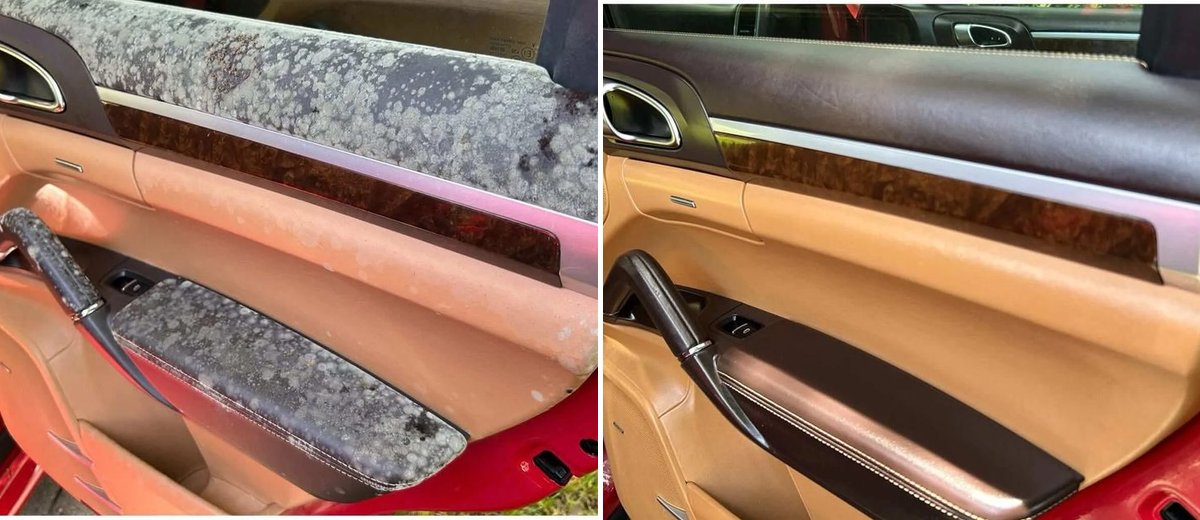
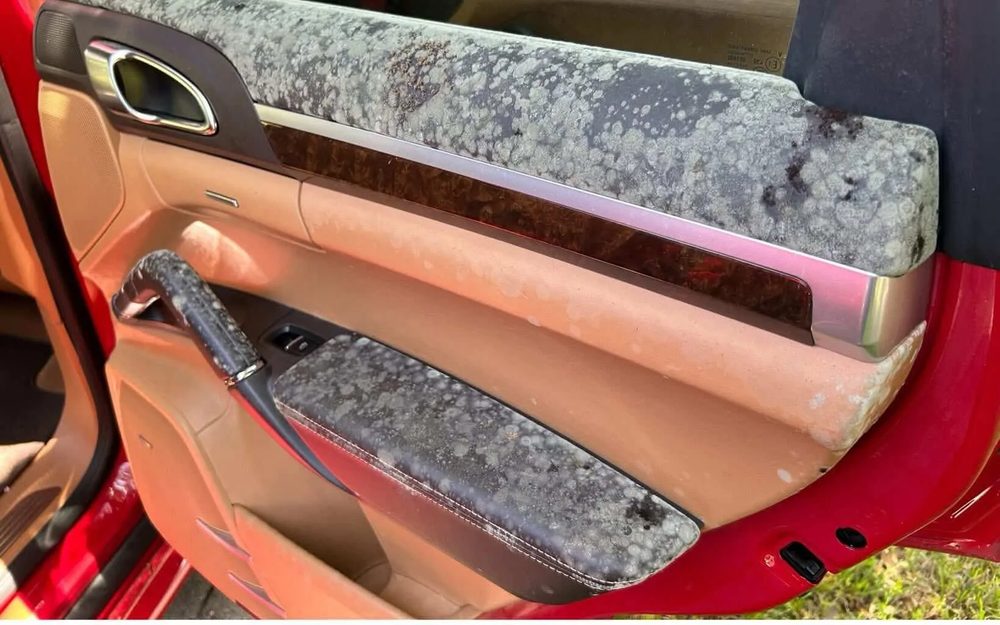
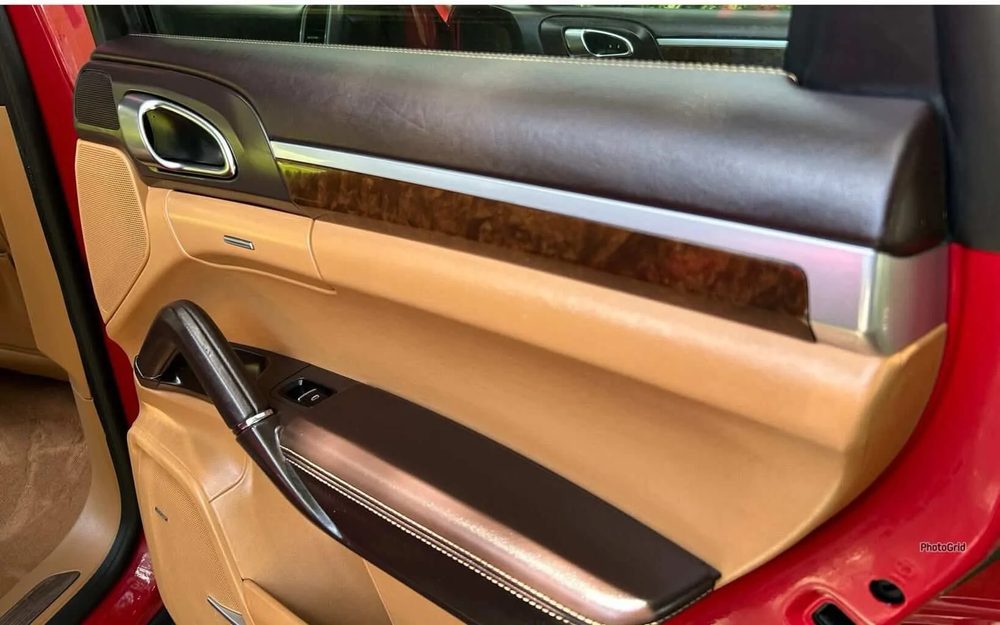
Porsche Cayenne — Leather Door Panel & Armrest
Mold across the tan leather door panel and armrest of a red Porsche Cayenne, climbing onto the wood trim. Leather cannot take hard scrubbing, so we use the leather-safe protocol, steam and extraction around the trim, Concrobium and the sealed ozone cycle. In a low, flat town like Cutler Bay, door panels are a common first spot, because water from a flooded curb or a leaking seal settles along the lowest edges.
 Before
 After
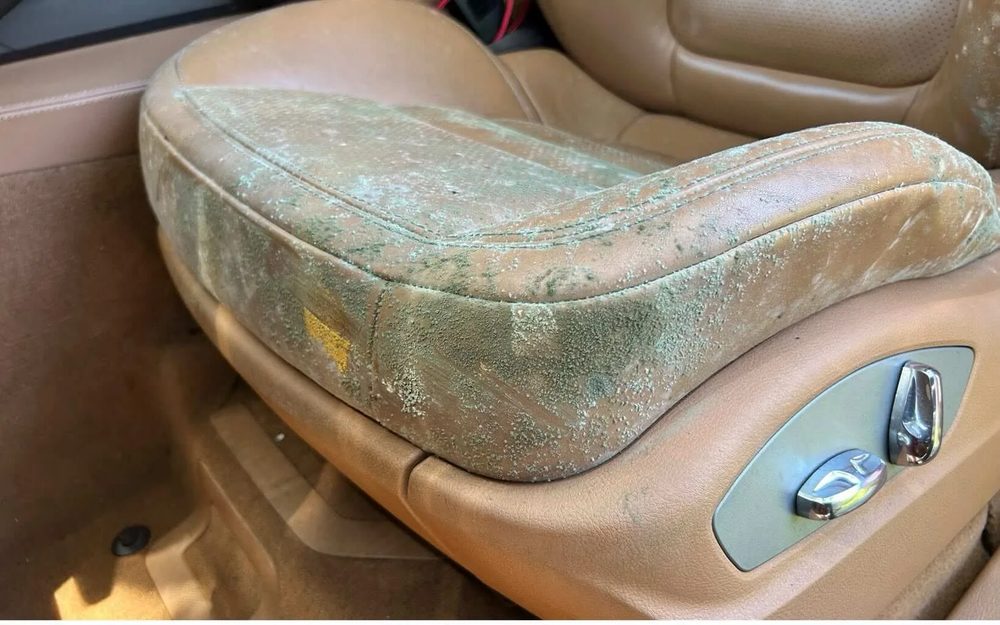
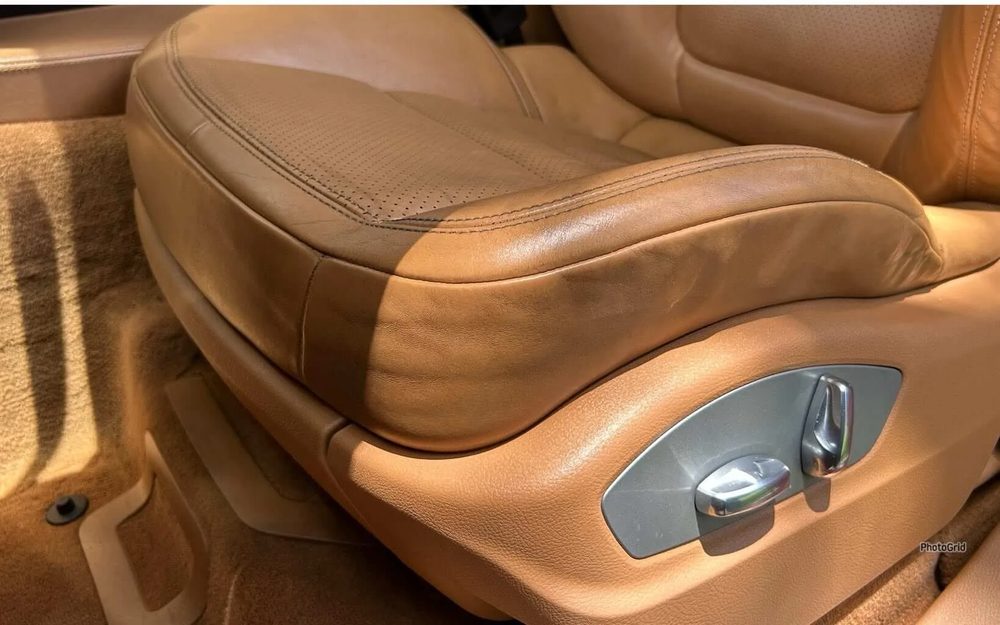
Tan Leather Seat Bolster — Green-Blue Growth
A tan, camel leather front seat bolster covered in green-blue mold. The bolster is where legs and wet clothes rub, so it often stays damp when the rest of the seat dries. We treat leather with the leather-safe protocol and avoid aggressive scrubbing, then run Concrobium and ozone. In Cutler Bay, wet swimwear and rain-soaked clothes on the way to a car are a typical way this pattern begins.
 Before
 After
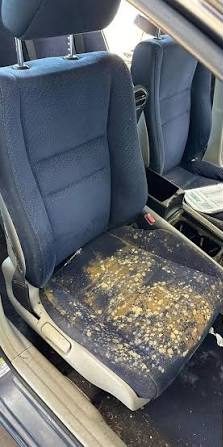
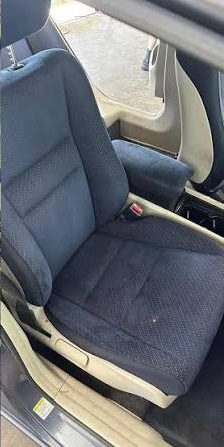
Cloth Bench Seat — Mold Stain Residue
A dark blue cloth sedan bench seat with the seat cushion lifted, showing tan and yellow mold-stain residue on the seat bottom. Stains like this mean moisture reached the foam beneath the fabric, so we HEPA vacuum, deep clean, steam and extract through the cushion, then treat with Concrobium and ozone. In a flat, canal-side town, water that comes up from the floor and wicks into the seat base is a familiar route.
 Before
 After
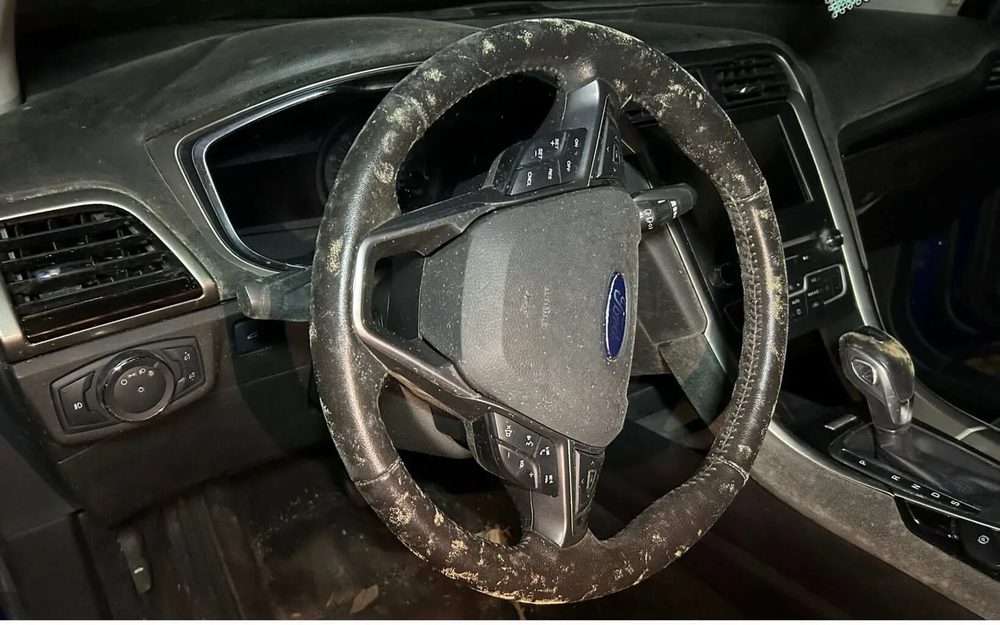
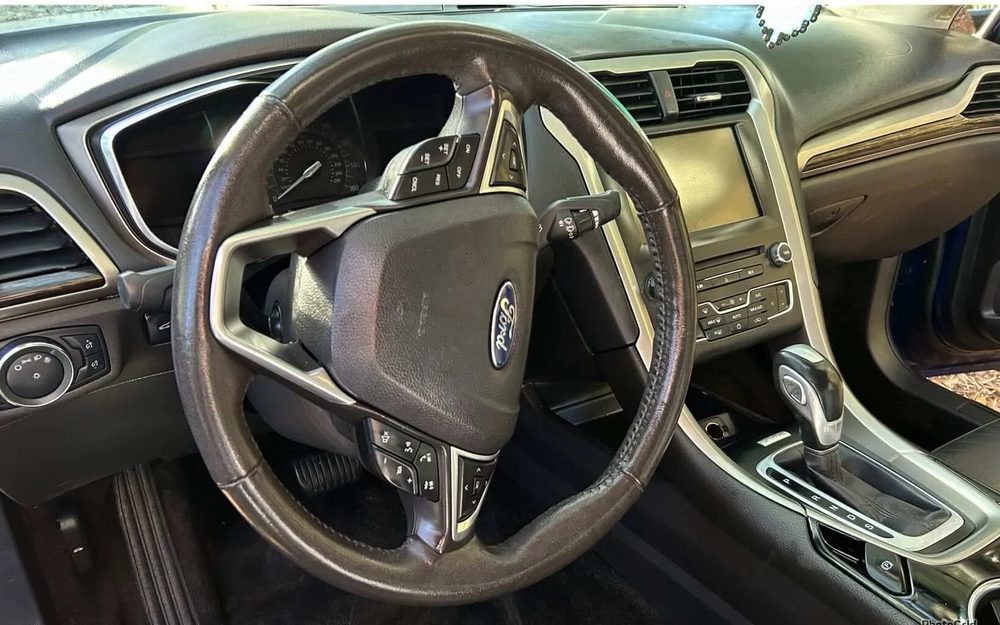
Steering Wheel, Dash & Vents — Grey-White Bloom
Grey-white mold bloom on the steering wheel, dash and vents of a Ford sedan interior. Growth on the parts you touch daily, and around the vents, suggests the cabin air itself has been damp, often from a drain or a recirculating A/C. We clean every surface, steam where it is safe, treat with Concrobium and run ozone to reach the vent path. Long, humid commutes with the A/C working hard make this a pattern to watch in Cutler Bay.
 Before
 After
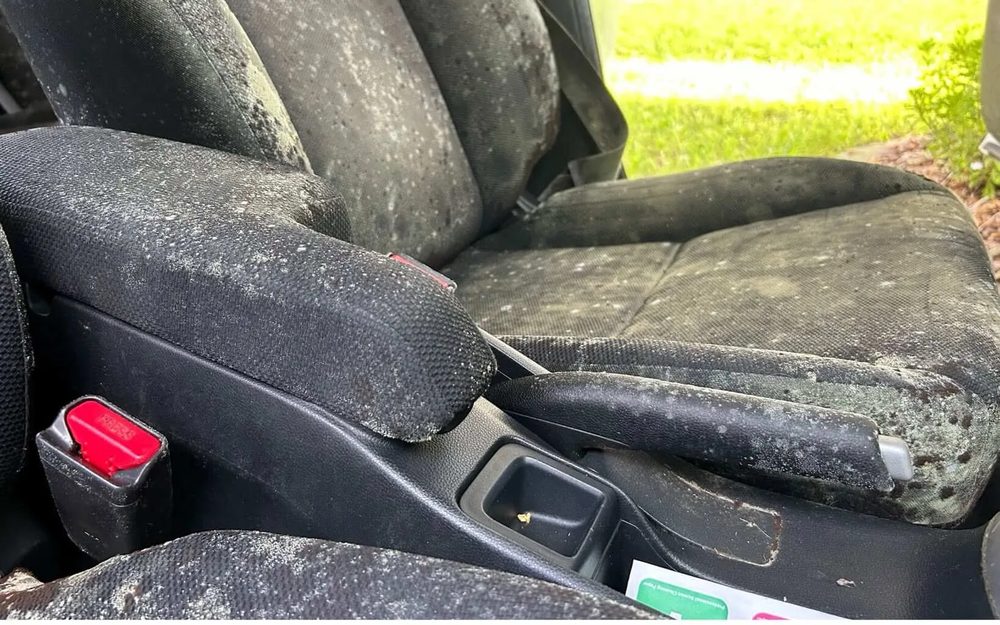
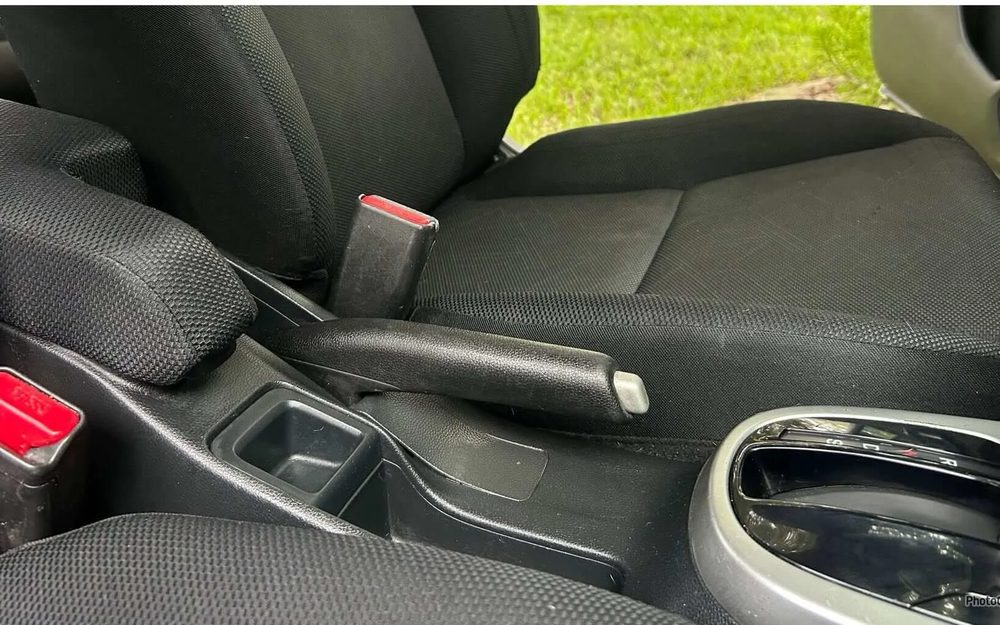
Driver Seat & Console — Mold Bloom Beside a Lawn
A black cloth driver seat and the armrest and console with grey-white mold bloom, with a green lawn visible outside the window. Dark cloth hides early growth until it blooms, so we check the seams and the console edges. We extract, treat with Concrobium and run ozone. In a town where yards sit beside canals and lakes, sprinkler spray and damp grass carried in on shoes can keep the driver's footwell wet without anyone noticing.
 Before
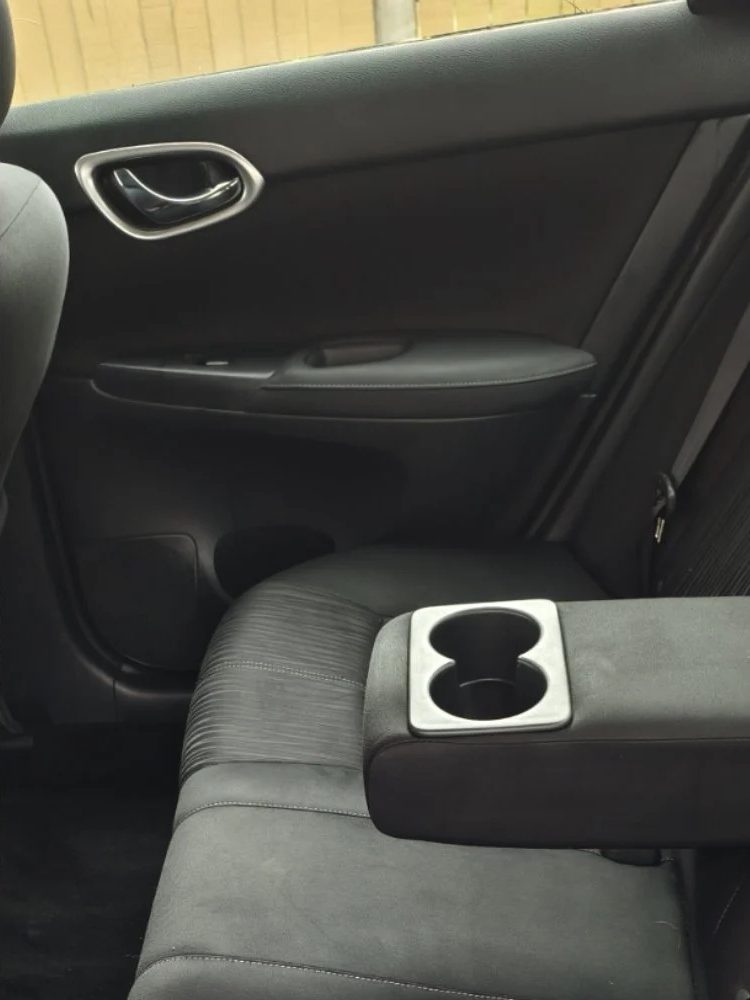 After
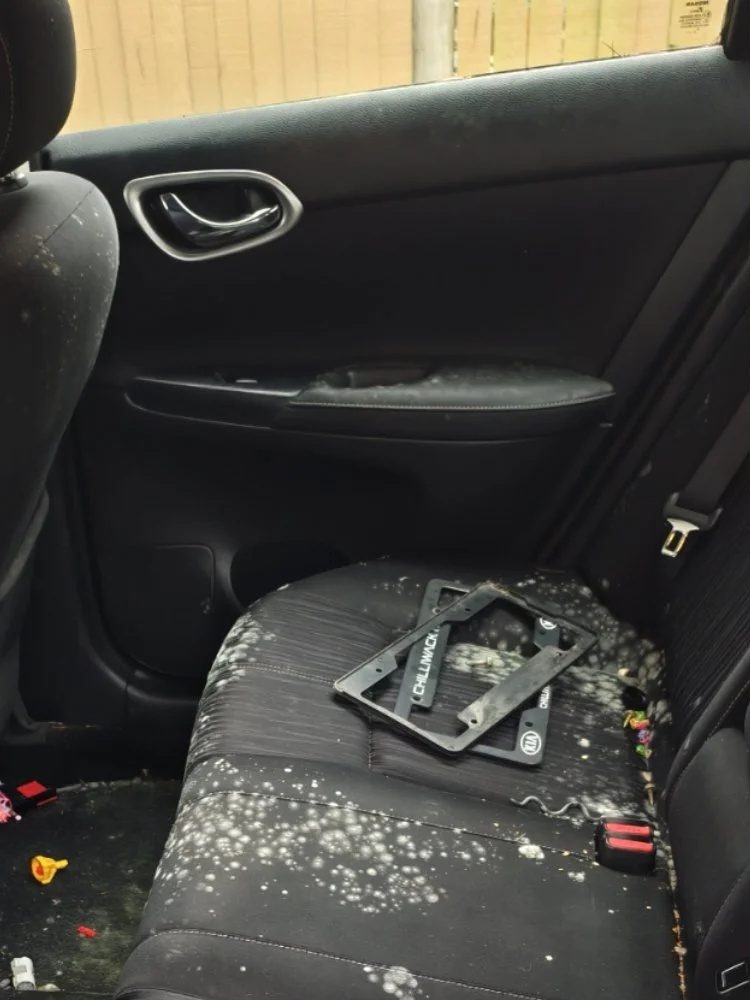
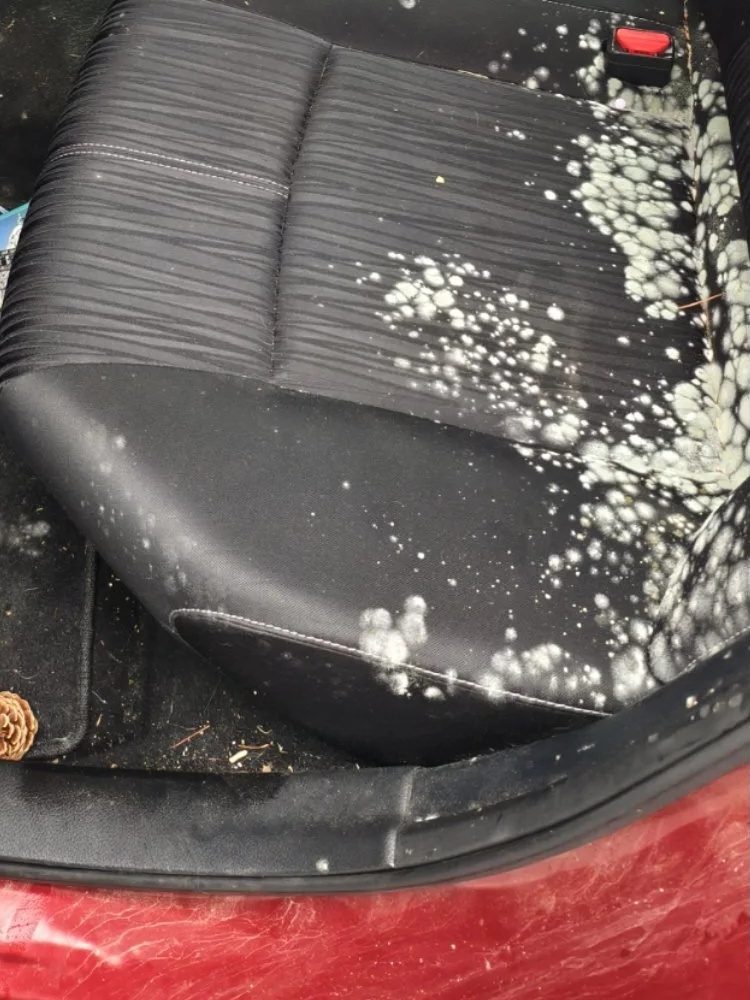
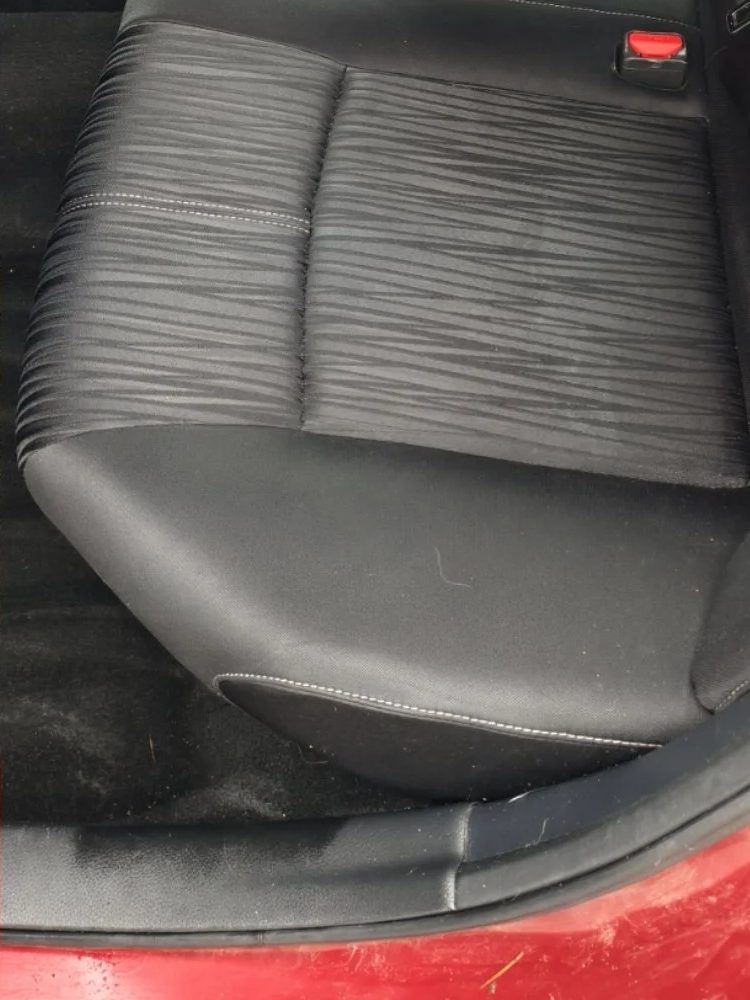
Rear Seat & Door Panel — White Mold Spots
The rear seat and door panel of a black sedan with white mold spots on the cushion, plus loose debris and a license plate frame left on the seat. The back seat is easy to forget, and it takes the wet bags and kids' gear. We clear the debris, HEPA vacuum, steam and extract, treat with Concrobium and run ozone. Family cars on flooded school and commute routes in Cutler Bay see this pattern often.
 Before
 After
Black Cloth Seat — White Speckled Mold
A black cloth seat with white mold speckles, with the red car body visible below the window. Speckled growth like this is usually in its early stage, which is when treatment is simplest and often stays in the single-area tier. We vacuum, deep clean, steam and extract, then use Concrobium and ozone. After a Cutler Bay downpour, a window left open a crack is enough to start it.
 Before
 After
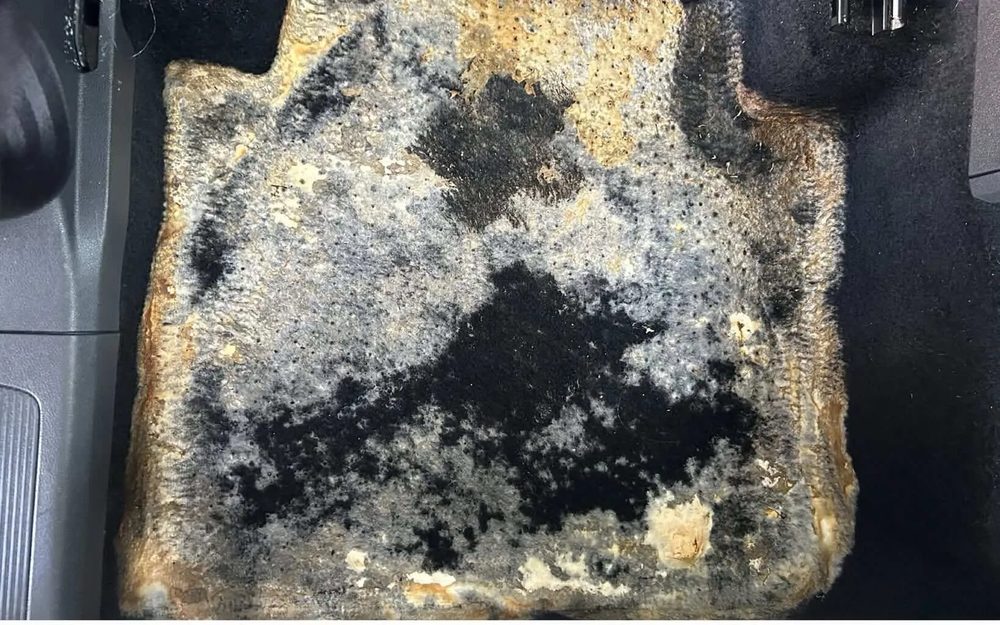
Floor Mat — Heavy Colony Growth
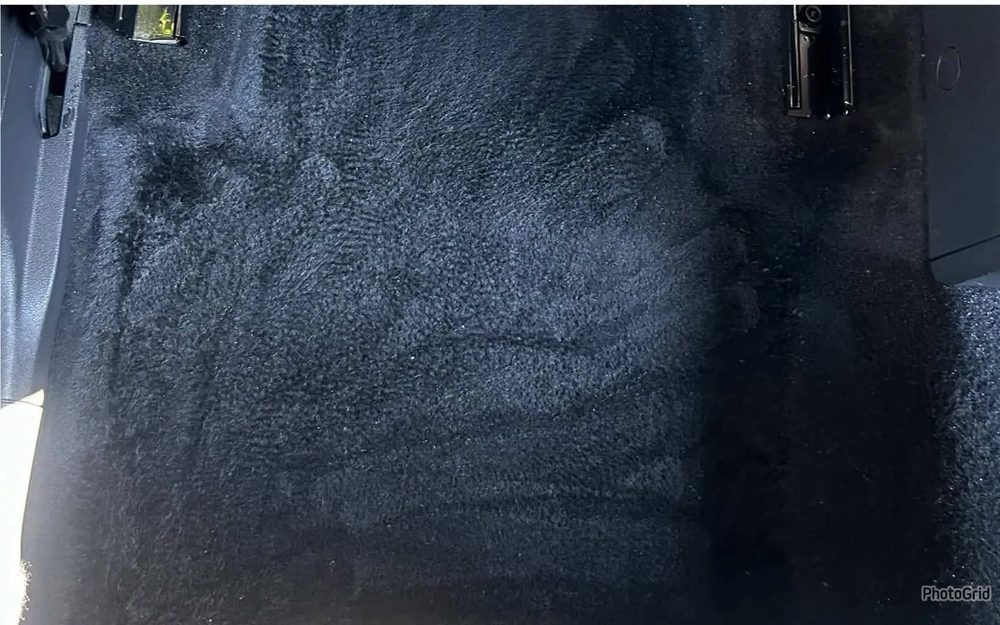
A carpeted floor mat with heavy black, brown and white mold colonies. Mats collect water from shoes, umbrellas and street spray, and the carpet underneath rarely dries without help. We vacuum with HEPA, deep clean, steam and extract the carpet and padding below, then treat with Concrobium and run ozone. In Cutler Bay, driving through a flooded street and sealing the car up afterwards is a classic start to this kind of growth.
100% Satisfaction.
Written. No exceptions.
If the result doesn’t meet our standard, or yours, we come back and redo it at no charge. No forms to fill out, no arguing over what “counts.” The guarantee is in writing before we ever touch your vehicle.
Request Mold Removal in Cutler Bay · From $549
Fill this in once and send it. We get your address, vehicle, and the situation all in one message, no phone tag.
Rating
Detailed
Response
Three steps from a soaked footwell to a dry, clean cabin,
and we handle everything in between.
No drop-off. No waiting. We come to Cutler Bay.
We come to you in Cutler Bay,
from Saga Bay driveways to Black Point.
Mobile service: home, office, condo, or marina. No drop-off, no travel fee.
Not seeing your city? Ask us — we likely cover it.
Low ground, canals and flooded curbs
send water into a Cutler Bay footwell.
Cutler Bay sits about 7 feet above sea level on flat ground just west of Biscayne Bay, with canals, channels and lakes that run full in the rainy season, so water reaches a car from below as easily as from above. Left untreated, what starts as a musty smell becomes a real health issue for the next person who drives the car. DShine's Concrobium Mold Control and ozone process address the cause, not just the symptom, backed by $2M insurance and a written guarantee. Mold doesn't need much to get started, any trapped moisture inside a closed cabin is enough given South Florida's humidity. The source is almost always one of four things: a clogged AC condensation drain letting water pool silently on the floor pan, a failed door or window seal letting rain in, a clogged sunroof drain, or the car simply sitting unused for two or more weeks without the AC running. Here, the cause we meet most is water that came up from the street, a flooded curb or a soaked parking spot that wets the carpet and padding, followed by a cabin that is shut up before it ever dries.
Cutler Bay neighborhoods we serve,
from Black Point to Old Cutler Road.
From Black Point on Biscayne Bay to Old Cutler Road, how a car in Cutler Bay gets wet depends on the street, the canal and the driveway.
Black Point Park & Marina — Black Point Park & Marina, at 24775 SW 87th Avenue, has boat ramps, wet slips, a fuel dock and a mangrove preserve on Biscayne Bay. Cars here come home with wet ropes, coolers and sandy mats. We work at your home, office or marina address, so tell us where the car lives and send any gate details.
Lakes by the Bay — Lakes by the Bay is a lakeside community with a town park at 8551 SW 216 Street that has a canoe and kayak launch. Cars come home with wet paddles and towels, and garages beside the water stay damp after storms. Give us the gate code or the name at the front, and we work in your driveway.
Saga Bay — Saga Bay is a residential area around SW 205th Street, with Saga Bay Park at 8000 SW 205th Street and Saga Lake Park at SW 198th Street and SW 83rd Avenue. Lakes and low driveways mean wet footwells after heavy rain. We come to your driveway or garage, and tell you in advance how long the car will be sealed.
Cutler Ridge — Cutler Ridge is named for the ancient coral ridge that rises to about 14 feet through the area, and Cutler Ridge Park sits at 10100 SW 200th Street. Land here is higher than the bayside streets, but it still sees flooded curbs and wet mats. We plan around your driveway, a short slab or a shared drive.
Bel-Aire — Bel-Aire is in the north of town, with Bel-Aire Park at 18500 SW 97 Avenue and Whispering Pines Park at 8800 Ridgeland Drive nearby. Commuter cars and family vehicles share driveways here, and a wet car often dampens the next one in the garage. Tell us how many cars are affected and we plan the visits together.
Southland Mall & the US-1 Corridor — Southland Mall, at 20505 South Dixie Highway, sits on US-1, beside the South Dade TransitWay, a 20-mile corridor from Dadeland South to Florida City. Commuters who park all day return to cabins that heated up shut. We do not work in public lots, but we come to your home or workplace address.
Old Cutler Road & Coastal Ridge Preserve — Old Cutler Road runs along the bayside edge of town, past Coastal Ridge Preserve at 18551 Old Cutler Road and Veterans Park at 20002 Old Cutler Road. Streets near the preserve and the bay are low, and cars parked beneath the trees stay damp and shaded. We come to your driveway and plan around its shade.
Don't see your area? Ask us — we likely cover it.
Cutler Bay car mold,
what drivers on low ground ask first.
Tap any topic to read the full breakdown.
Cutler Bay sits about 7 feet above sea level on 10.29 square miles, of which 0.40 square miles is water, just west of Biscayne Bay. Wikipedia describes the town as a flat, low-lying coastal wetland area, and notes that during the rainy season its many canals, channels and lakes are frequently full. For a parked car, that means water is rarely far from the curb.
The town has no published rain gauge of its own, so the rainfall on this page is Miami International Airport's: about 67 inches a year in the 1991 to 2020 normals, with measurable rain on roughly 141 days and June, August and September the wettest months. It is a regional figure, not a Cutler Bay measurement, but it shows how often a south Miami-Dade car climbs in with wet shoes and shuts the doors.
The ground matters as much as the rain. Cutler Ridge, an ancient coral formation, rises to about 14 feet through the Cutler Bay area, and the hurricane emergency plans treat land east of it as subject to storm surge while land west of it is generally protected. Where your car sleeps relative to that ridge changes how likely water is to reach it from below.
Cutler Bay is a town of commuters. The Census Bureau puts the mean trip to work at 38.2 minutes (2020 to 2024 estimates), and with 3.08 people per household, many driveways hold a family vehicle next to a commuter sedan. Only 3.7 percent of homes were vacant in the 2020 Census, so the cars we see are driven, not shelved.
That changes the pattern. Mold here is rarely a car abandoned for months. It is a car driven through a flooded street on Tuesday, parked with wet carpet, and driven again on Wednesday with the A/C pulling damp air through a cabin that never dried. The musty smell creeps in over a few weeks, and most owners blame the A/C first.
The mix is broad: compact commuter sedans, SUVs and minivans with kids' gear on the floor, work trucks and vans used for trades, and older second cars kept for short errands. About 70 percent of homes here are owner-occupied, so most cars have a driveway or garage we can work from.
Driveway or garage near a canal or lake: many streets in the town sit beside water, and the canals, channels and lakes run full in the rainy season. A garage there can stay damp for days after a storm, and a car pulled in with wet mats sits in that air with the doors shut. Opening the doors for an hour after a soaking does more than most people expect.
Street or swale parking: a car at the curb sits at the lowest point of the lot when a downpour hits, because the street is where rainwater collects first. Stepping out into ankle-deep water, or rolling through it on the way home, puts water over the sills and into the carpet and the padding below, where it is hard to see and slow to dry.
Townhome and shared-lot stalls: with an assigned space you cannot choose higher ground, and some stalls hold water longer than others. If yours ponds after rain, tell us when you book so we plan around it. A covered stall keeps rain off the roof, but a car still collects damp carpet whenever wet shoes and umbrellas ride inside.
Transit, shopping-center and marina lots: commuters who park near the South Dade TransitWay or a shopping-center lot for a full shift come home to a cabin baked shut all day. Anglers and boaters who use the ramps at Black Point Park & Marina carry wet gear back to the car. None of this is neglect, but a daily dose of damp is enough for growth to start.
Late May to early June, the wet season switches on: Miami's wet season is defined by dew points above 70 °F, and in the records it has started anywhere from mid-April to early June, with a median start of May 21. In Cutler Bay that is when floor mats begin to stay damp and afternoon storms turn into a daily habit.
June to September, downpours and flooded curbs: Miami International Airport logs roughly 10.5 inches in June, 9.6 in August and 10.2 in September. In a flat town these are the months when low driveways and curbs hold water, and a car that steps through it brings the water inside. The official Atlantic hurricane window is June 1 through November 30.
Late summer to early autumn, the storm-surge window: land east of Cutler Ridge is the part of town the county plans treat as exposed to surge. Cars moved in a hurry ahead of a storm often go into a garage wet and stay closed up for days, so mold tends to follow the storm by a week or two, not by a few hours.
December to April, drier air but the same shut cabin: rain falls less often and the A/C works less, but windows stay up and a single wet evening can still soak a car. The cars we are called about in these months are usually the ones that went into winter still damp from the autumn storms and never got dried properly.
We work at the address you give us. For most Cutler Bay clients that is a driveway or garage at home, and for commuters it can be a workplace lot with a manager's okay. If your community has a gate or a guest list, send us the code or the name at the front when you book, and we plan our arrival around it.
Streets here wind around canals, lakes and cul-de-sacs, and some driveways are short. We need room to open every door and set our equipment beside the car, so tell us if the car sits on a tight slab, a shared drive or a garage lined with stored boxes. In most cases we can work in the driveway, and if it is blocked, we adjust the plan with you first.
If the car lives at a boat-storage or marina address, send us the gate details and the best time so we can coordinate before we arrive. Service happens at your home, office, condo or marina address, so whichever of those the car is parked at, that is where we come, and travel is included.
1. Water that came up from the street: driving through standing water, or stepping out of a car into a flooded curb, pushes water over the door sills and into the carpet. In a flat, low-lying town this is the cause we expect first, and the damage hides in the padding beneath the carpet, not on the surface where you can see it.
2. Rain through a window, sunroof or worn seal: a window left an inch down before a storm, or a sunroof drain gone sluggish, soaks the seats, the headliner and the door cards. A tropical downpour dumps rain faster than a cabin can shed it, and the sealed car then heats up in the sun, which turns the wet fabric into a humid box.
3. Wet gear and wet people: anglers, kayakers and parents with soaked ball uniforms bring moisture inside daily. Lakes By the Bay Park has a canoe and kayak launch, Black Point Park & Marina has boat ramps and a bait shop, and the town runs lighted baseball fields. Towels, life jackets and cleats left on the floor feed the carpet.
4. A blocked A/C drain or a damp cabin filter: with the A/C working hard through long commutes, condensate has to leave the car. When the drain clogs, water collects under the dash or in the passenger footwell and growth starts in the vent path. It is the quietest cause, and behind many of the musty smells that return after a quick clean.
First half hour, the walk-around: you point out the smell or the stain, and we go looking for what you have not noticed: carpet edges under the seat rails, the trunk well, the hem of the headliner, the cavity behind the glove box. The point is to learn how far the damp travelled from the spot that made you call.
Hours one to two, dry work first: the HEPA vacuum comes before anything wet, so loose spores are captured and not smeared, followed by Benefect decontamination and the deep clean. Steam and extraction come next, pulling water out of foam and padding. In a canal-side driveway we keep the doors open for airflow while we work.
Hours two to four, treat, seal, ozone: once the carpet and seats are drying, Concrobium Mold Control goes on, then the ozone cycle runs with the cabin sealed and nobody inside. The Meguiar's odor bomb and a last look over the car close the visit. Expect the whole visit to take 3 to 4 hours, with before-and-after photos landing on your WhatsApp.
Last ten minutes, the handover: we walk you through what we found, where the water probably got in, and what to watch over the next 30 days. If a door gasket or a sunroof drain looks suspect, you hear about it then, while the car is still in front of you and the next storm is still days away.
The street flooded and the carpet is wet, is it mold yet? Not necessarily. Standing water that came in over the last few days can still be dealt with as a flood problem. A smell like a damp basement, or fuzz at the seat rails, means it has moved on. People usually describe it in terms of how many days the carpet has been wet, and that is the number that matters most.
Can you come to my office lot? Yes, if you can arrange access and nobody objects to us working there for a few hours. A lot of callers here drive long distances for work, so the car is parked at the office all day. We would rather meet you at a driveway, but a quiet corner of a work lot is workable.
What is it going to cost? A single affected spot is $549, and a car with growth throughout is $749, travel included. Callers expect a long estimate process, and are surprised that photos get them an answer in two minutes. The final figure is locked after we review them, before we open a door.
Will the car smell like chemicals afterwards? After the ozone cycle we air the cabin out and finish with the odor bomb, so what you smell is a clean cabin. Callers with kids ask about this most, and the answer is that nobody sits inside during the ozone phase.
After a bad rain the question is usually about Flooded Car Detailing, meant for a car that took on water within the past three days and has not grown anything yet. We sort out at the inspection whether yours calls for that, for mold removal, or for both, which stops you paying for the wrong job.
Odor Removal suits cars with a smell and no growth: an old fishing cooler, a gym bag, a spilled drink. Paint Correction and Ceramic Coating get added by owners whose cars live in an open driveway and take the sun and the afternoon storms, since the technician is already there with the car out of the way.
Engine Bay Cleaning is quieter, but it gets booked by drivers who splash through low streets often and want the mud and road spray dealt with. Because the visit is at your address, stacking a second service saves you from coordinating a separate vendor.
Start with the glass. If the inside of the windshield takes ages to clear on a damp morning, the cabin is holding more water than it should. Then lift a floor mat and press a palm into the carpet underneath. Cold, springy or dark carpet is carrying water, and that is often a full week before any smell.
Look at places nobody touches: the underside of seat cushions, the carpet where the seat rails bolt down, the bottom edge of the door cards, and the pocket in the trunk where the spare tire sits. White dust, black freckles or a rusty-looking tide line mean growth, or water that has moved through and left minerals behind.
A smell that appears only when the A/C kicks on implicates the evaporator and its drain. A small puddle under the car on the passenger side is normal when the A/C runs, but a damp passenger-side carpet with no puddle outside means the drain is backing up into the cabin, a fix that belongs with the treatment.
Idle cars are the exception here, since only 3.7 percent of homes were counted vacant in the 2020 Census. Still, cars sit for a week when the family travels or a work shift changes. Before a stretch like that, clear out damp towels and lift the mats so the carpet underneath can air out.
After a soaking, open all four doors and the trunk for an hour once the sun is out. On the next drive, set the A/C to pull outside air, not recirculate, for the first few minutes, which flushes the stale air out and dries the vents. This one habit does more than a bag of moisture absorber.
Twice a year, probe the sunroof drains with a thin, flexible line, and check the rubber seals around each door for cracks. In this town, with downpours that can run for an hour, a seal that merely looks tired is one that will leak, usually on the first heavy afternoon of the season.
The Census Bureau counts 3.08 people per household here, and homes with teenage drivers or a second earner often park two or three cars on one slab. A wet car pulled into a shared garage shares its humid air with the car beside it, and we sometimes find the second car just starting to smell.
When two or more cars are affected, say so while booking. Visits can be lined up back to back on your slab, each car handled in turn, and photos of each vehicle let us quote each one on its own, so the driver of the commuter sedan does not pay for what the minivan needs.
Rotation helps. Use the car that sits idle for a short drive a couple of times a week, and park the least-used one on the driest part of the slab, away from the sprinkler heads and out of the line where runoff from the street tends to run toward the garage door.
Mold or a mold smell coming back inside 30 days is on us. We return and treat the car again at no charge, whichever price tier you paid. The promise is in writing, so there is no argument over who said what, and it covers the whole cabin we worked on.
What usually causes a callback in a low-lying town is a wet source nobody found: a gasket that weeps in every downpour, a drain that has not cleared, or a car pulled straight back into a damp garage. We point out suspects during the visit so you can act on them before the next rainy week.
The guarantee is for the same problem returning. A fresh soaking, such as a second flooded curb or a window left open in the next storm, is new water and would be treated as a new job. During those 30 days, keep the interior dry and message us at the first sign of a smell.
An older car has older rubber. Door gaskets harden, sunroof drains clog and floor plugs go missing, so the mold we find is often the second or third round of a wet problem. At the inspection we note where the car has been wet before, and tell you which parts of the carpet are probably past saving.
Leather gets a leather-safe approach with no hard scrubbing, and the ozone cycle does the work on airborne spores. Cloth seats and carpet get steam and extraction. Etched or cracked leather will not heal itself, and we say so before the work begins, so nobody expects a miracle from a seat that mold has already marked.
Work trucks and vans carry wet tools, muddy boots and damp uniforms, and their carpet often takes a beating that ordinary cars never see. We spend longer on extraction, and check the load area, because moisture settles into the cargo floor of a vehicle that is on the road every day.
Pull out everything that soaks up water: beach towels, swim bags, umbrellas, takeout bags and the half-empty bottle in the door pocket. Press your palm into the carpet under each mat. If it feels cool or soft, pull the mat and let the carpet dry in open air before you go, even if it takes the afternoon.
Park on the highest, driest spot you have, and air out the garage for an hour first if that is where the car goes. Keep the windows shut: a window cracked for ventilation invites rain, and a dry sealed cabin does better than a wet open one. If a storm is forecast while you are away, arrange for someone to check on the car afterwards.
On your return, open every door before sitting down, start the A/C with outside air and take a drive. A musty smell or a hazy windshield after that is your cue to photograph the carpet and seats, because growth caught early often fits within the smaller of the two prices.
The 24 to 48 hours mold needs to start growing in a warm, wet cabin pass quickly in Cutler Bay's wet months. A floor that is treated inside a few days may only need flood detailing. Left a few weeks, the same floor can turn into growth in the foam, the vents and the headliner.
Cost follows spread. Mold limited to one spot is $549, and mold that has crossed into several areas is $749. One spot on a seat edge that stays wet through a rainy month can reach the carpet, the door cards and the vent path, and that is the point at which the larger figure becomes realistic.
There is a daily cost too. An average commute in town is about 38 minutes each way, which is a long time to breathe recirculated air from a cabin that smells of mildew. Kids and allergy sufferers often feel it first, and nobody enjoys it. Treating the car early is simply the cheaper and more pleasant route.
Black Point Park & Marina, at 24775 SW 87th Avenue, offers boat ramps, wet slips, a fuel dock, a bait and tackle shop and kayak rentals, and it is an access point to Biscayne National Park. A car or truck that makes that trip brings home wet ropes, coolers, towels and fishing gear, over and over.
Lakes By the Bay Park, at 8551 SW 216 Street, has a canoe and kayak launch, so paddlers carry wet gear home as well. The pattern is not one dramatic soaking but many small ones: a damp dry-bag on the cargo floor, wet feet on the mats, a cabin closed up in the sun until the next weekend.
If you tow, we also check the load floor and the rear footwell, since water runs to the lowest part of the vehicle. Mention whether the car carries bait or fish coolers when you book, so the visit allows for the extra cleaning, and keep any bait or fish scraps out of the cabin until we are done.
Pricing starts with a handful of photos: the worst spot, the carpet under the dash and any patch that looks fuzzy or stained, plus a sentence on how the car got wet, whether from a flooded curb, an open window or a long damp commute. Your tier is back to you inside 2 minutes.
Mold confined to a single spot, such as one seat, one door panel or one stretch of carpet, is $549. Once it has spread through the vehicle, the figure is $749. Travel to your Cutler Bay driveway or workplace is included, and we lock in the exact price once we have looked at your photos and description, ahead of any work.
Once confirmed, the figure holds. If the car turns out worse in person than in the pictures, we explain why and settle any change with you before continuing. Street water that sat for a week usually pushes a car toward $749, whereas a soaking caught the same afternoon more often stays at $549.
Cutler Bay is low, flat and close to Biscayne Bay, with canals and lakes that run full in the rainy season. Water reaches cars from the street, through windows and seals, and on wet gear, and a cabin shut afterwards is where mold begins within 24 to 48 hours.
Treatment is $549 for one area and $749 for mold throughout, with travel included, and a visit of about 3 to 4 hours at your address. Every job brings eleven steps, IDA certification, $2M in liability cover and a guarantee in writing that lasts 30 days.
If mold or its smell returns in that window, we re-treat free. Photos get you a tier in under 2 minutes, and we plan the visit around your driveway, your office lot or your marina address, and travel to any of them is already included in the price you were quoted.
Once the Concrobium is on and the carpet is drying, we shut every door and window and set the ozone generator running inside the cabin. Ozone is a gas, so it reaches what steam and cloth cannot: vent ducts, foam voids, the seams of the seats. Nobody is allowed inside during that cycle, and anyone with pets should keep them away from the area.
On a Cutler Bay driveway we tell you how long the car will be shut up before we start, and where possible we move it into shade so the cabin does not cook. A note goes on the car so nobody opens a door mid-cycle, which matters in a house where kids and teen drivers share the keys.
At the end of the cycle every door goes open and the cabin airs out before anyone sits inside. A Meguiar's odor bomb and a closing check-over end the visit. You hear from us once the car is safe to drive, not the moment the machine stops, and we check the cabin one last time before we hand over the keys.
Wet floor mats?
Answers for Cutler Bay drivers before you book.
Add-ons Cutler Bay clients book
Still deciding? Read: the complete mold removal guide · does insurance cover it? · why DIY mold removal fails.
Water got into your Cutler Bay car? Get your price in under 2 minutes.
Serving Cutler Bay and all of Miami-Dade County. Fixed pricing, no travel fee. We confirm in under 2 minutes.
It Might Just Be an Odor Problem
If there's no visible mold growth yet, the smell alone is usually an Odor Removal Detailing case ($349 flat) — faster than full mold remediation ($549–$749). See which one matches what you're dealing with: