What a Sunrise Mold Job Includes
This is not a car wash. Car Mold Removal uses Concrobium Mold Control treatment, pH-balanced products, and machine assistance, the same process used in pre-sale preparations for luxury dealerships.
Why it matters for your health: Mold in a vehicle is a different exposure than mold on a wall at home. With the AC recirculating, everyone inside is breathing concentrated spores for the length of the drive. The EPA and CDC both link mold exposure to respiratory irritation, allergic reactions, headaches, and worsened asthma symptoms. Children, older passengers, and anyone with a compromised immune system typically react faster and more severely than a healthy adult would. By the time the smell is noticeable, spores have usually already spread through the HVAC system into every vent in the cabin.
Curious what actually happens during the visit? Tap through our real 11-step process below to see what we do at each stage and why it matters.
What every Sunrise mold job gets you
Most detailers in Sunrise charge less. Here’s exactly what you gain — and what you risk — with each choice.
| DShine DetailsFrom $549 · travel included | Avg Sunrise Detailer$149 – $199 | |
|---|---|---|
| Industry certificationsIDA, Koch Chemie, Meguiar’s, 3M, Symplex, XPEL | ✓6 verified | —0 credentials |
| $2M liability insuranceWe cover any damage — in writing | ✓ | —Often uninsured |
| Deionized water systemZero mineral residue, no water spots | ✓ | —Tap water, water spots |
| Fresh microfibers per vehicleNo cross-contamination between jobs | ✓ | —Shared towels, swirl risk |
| Mold-specific chemistry onlyConcrobium, Benefect & Meguiar’s, no harsh acids | ✓ | —Industrial degreasers |
| Before & after photosSent via WhatsApp on completion | ✓ | —No documentation |
| 100% written satisfaction guaranteeReturn & redo at no cost if unsatisfied | ✓ | —No written guarantee |
| Travel to your address — $0Home, office, condo — no drop-off | ✓ | Sometimes adds fee |
DShine vs. any other detailer
in Sunrise, Broward County
Three things most detailers won't tell you. We put them in writing.
 Since 2018
With more than 20 years of hands-on experience in the automotive care industry, Evelio launched DShine Details in August 2018 with one van and zero shortcuts. For the first six months he slept in the van to keep costs down and standards up. Today DShine runs 7 certified vans across Miami-Dade, Broward, and Palm Beach, and the commitment hasn't changed. Every vehicle is treated as if it were his own.
What clients say
in their own words.
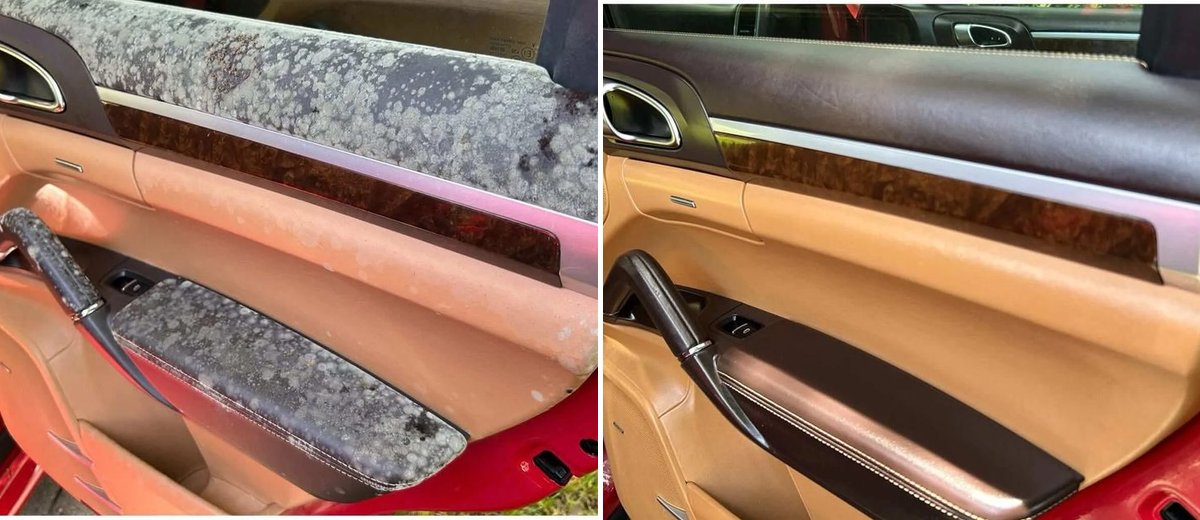
Before & After: Mold Removal We've Actually Done
No stock photos. These are real DShine mold removal jobs across South Florida, the same 11-step process and chemistry used on every Sunrise appointment.
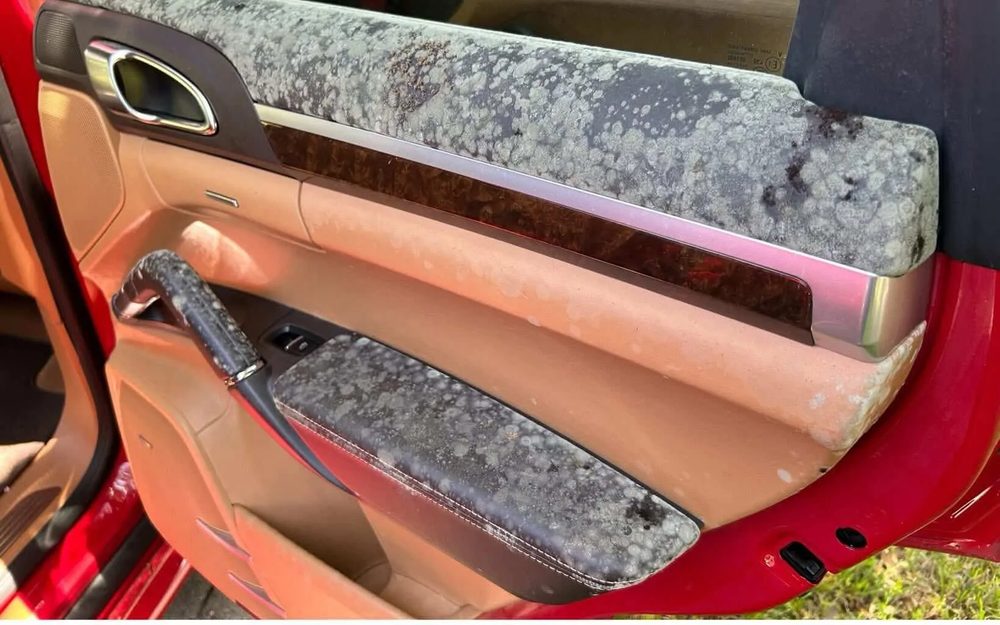 Before
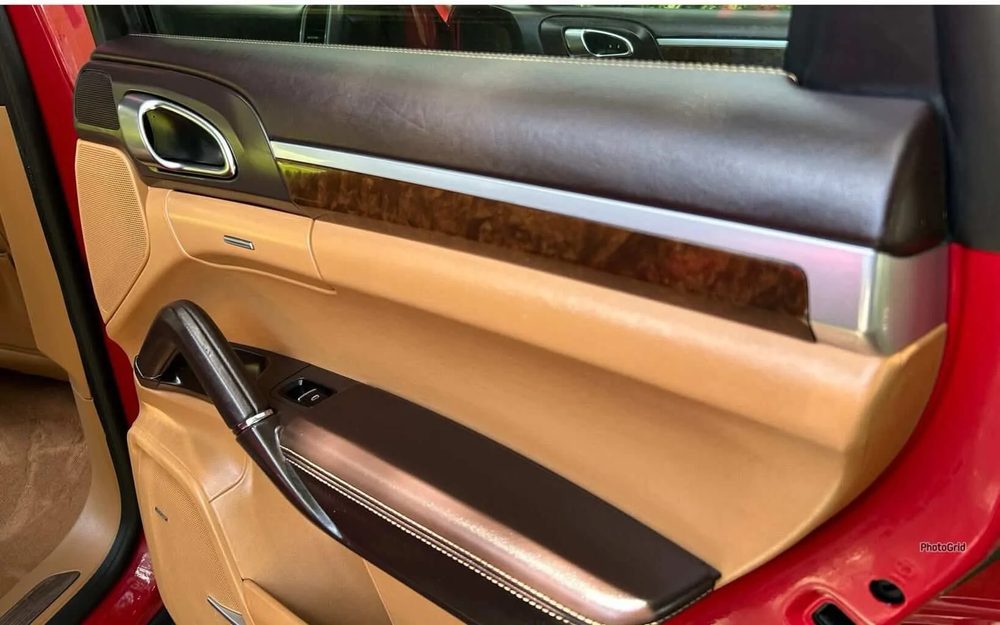 After
Porsche Cayenne — Door Panel & Armrest
Mold spreading across a tan leather door panel and armrest, with wood trim beside it. Leather like this gets our leather-safe protocol: controlled steam, extraction and an antimicrobial treatment that kills growth without drying the finish. In a city of long hours in sun-baked lots and quick A/C cool-downs, damp door pockets and armrests are a pattern we expect to see.
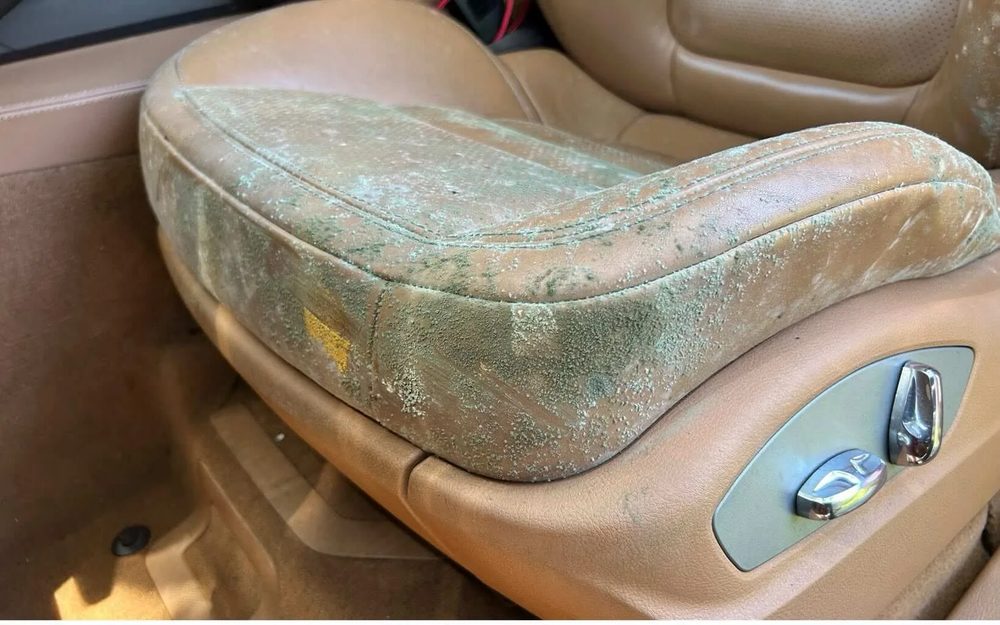 Before
 After
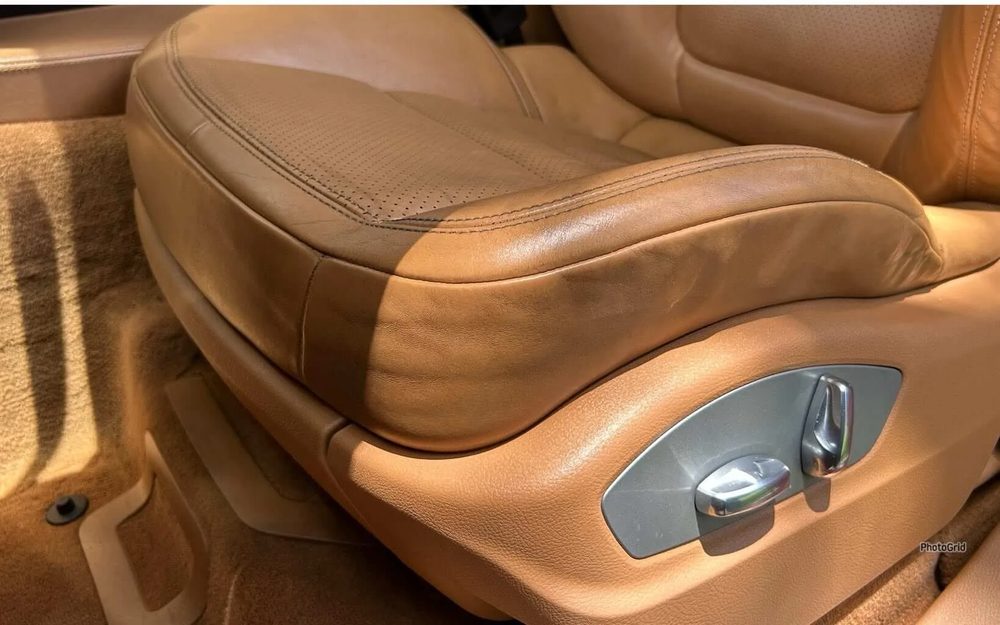
Leather Seat Bolster — Green-Blue Mold
A camel leather front seat bolster covered in green-blue mold. Leather holds growth in the grain and the seams, so it gets the leather-safe protocol: gentle steam, extraction and Concrobium, then ozone for the cabin air. A cabin that is shut hot and cooled fast every weekend, a common routine around Sunrise's big lots, keeps the leather slightly damp and gives growth a place to start.
 Before
 After
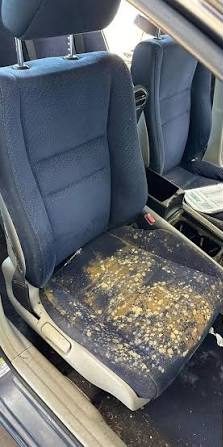
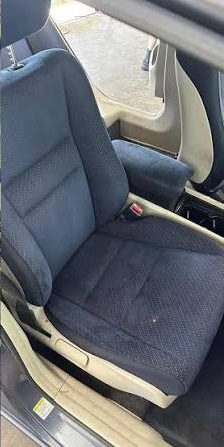
Cloth Bench Seat — Mold Stain Residue
A dark blue cloth sedan bench seat with the cushion lifted, showing tan and yellow mold-stain residue on the seat bottom. This is a hidden-area pattern: the top looks fine while the underside holds the damp. We lift, steam and extract the cushion, then treat with Concrobium. Spills and wet clothes soaking through to the cushion are an easy way for this to start in a busy commuter car.
 Before
 After
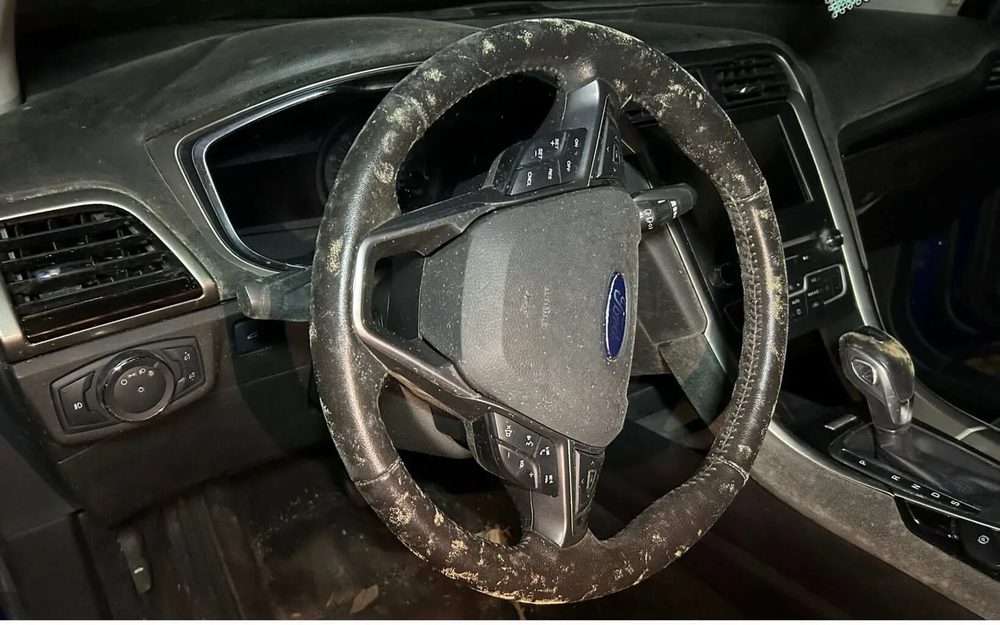
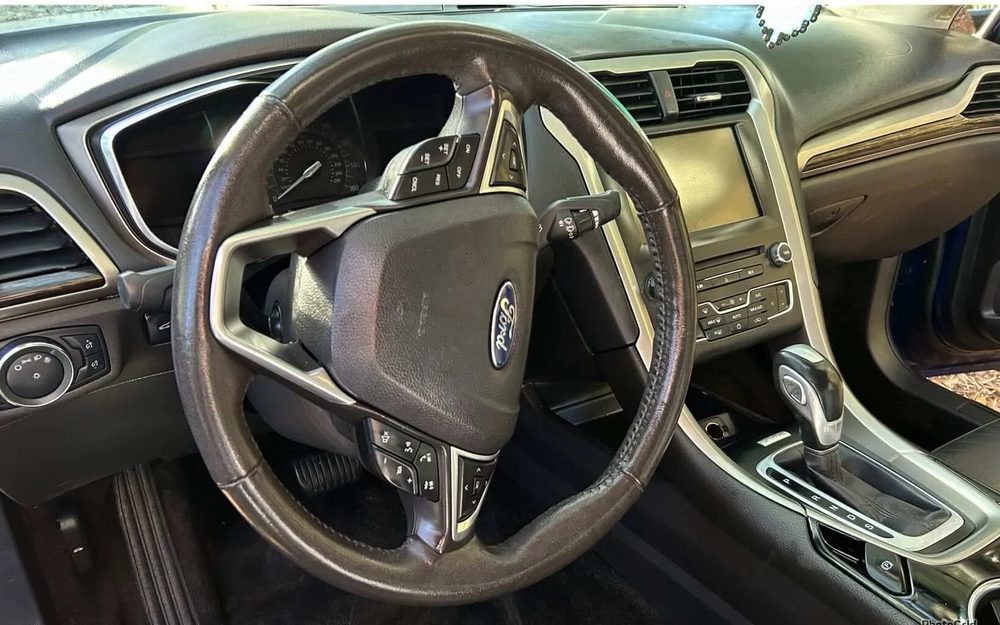
Steering Wheel, Dash & Vents — Grey-White Bloom
A Ford sedan interior with grey-white mold bloom on the steering wheel, dashboard and vents. Mold on hard surfaces near the vents often points to a damp A/C system, so we steam the plastics, clean into the vent housings and run the ozone cycle through the cabin. In a city where the A/C runs hard and recirculates much of the year, vent-area growth is a pattern worth watching.
 Before
 After
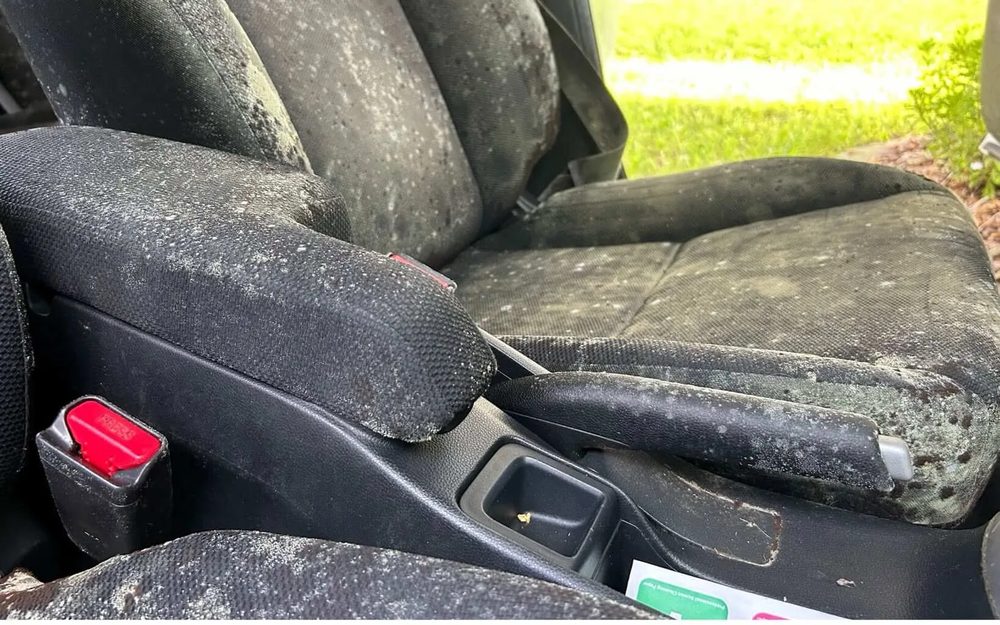
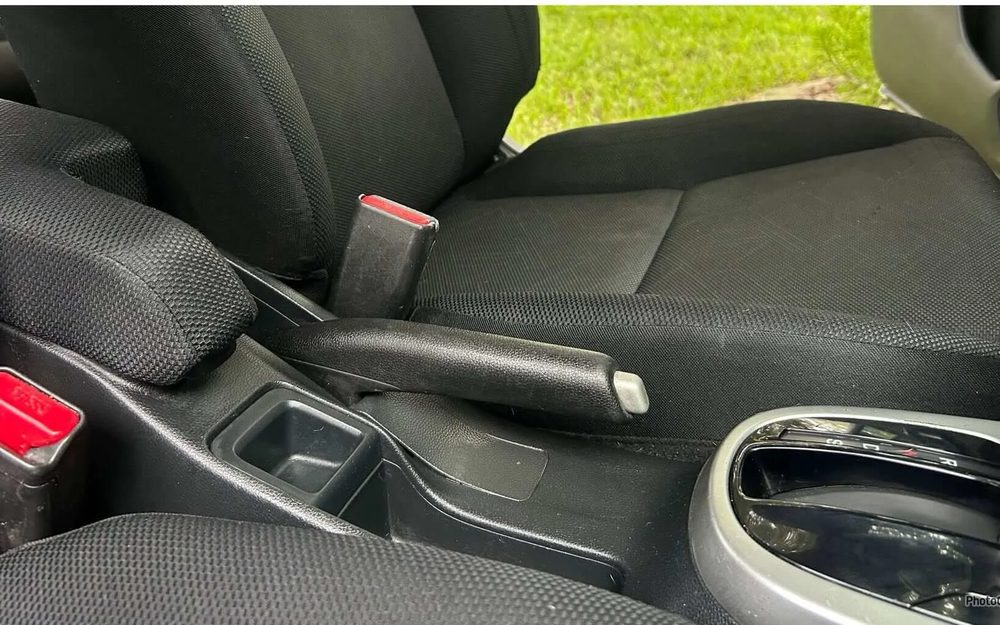
Driver Seat & Console — Grey-White Mold Bloom
A black cloth driver seat and armrest or console with grey-white mold bloom, and green lawn visible through the window. We HEPA vacuum the loose spores first, then steam and extract the cloth and treat with Concrobium. A seat that is in constant daily use, with a sweaty back or a damp jacket, can hold enough moisture to grow bloom, especially when windows stay up through the wet months.
 Before
 After
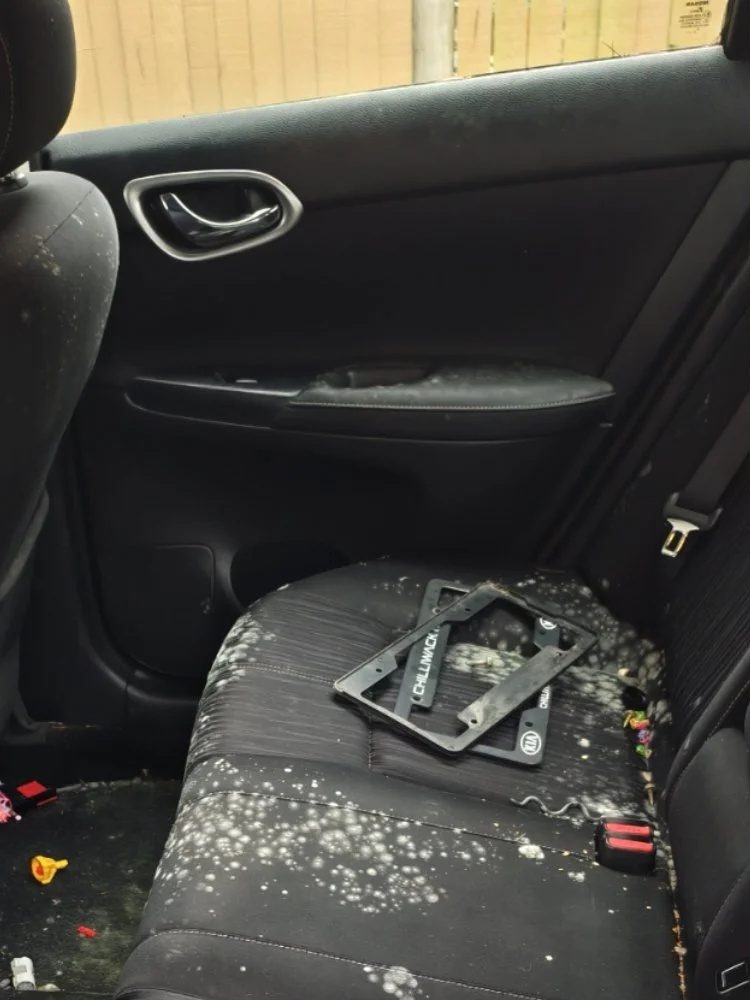
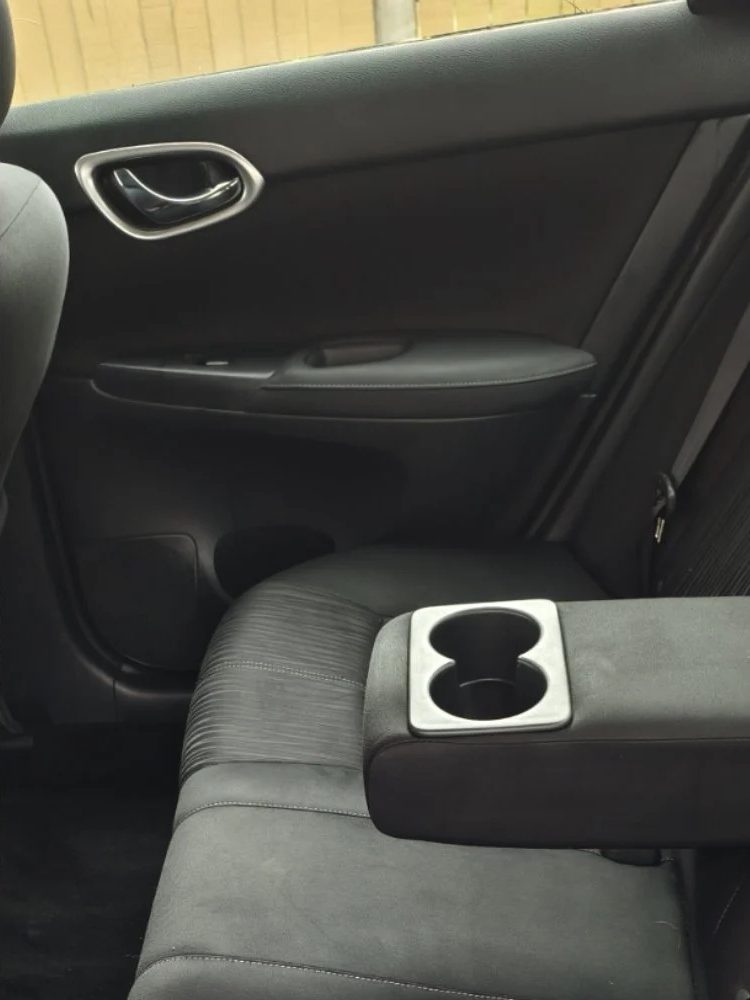
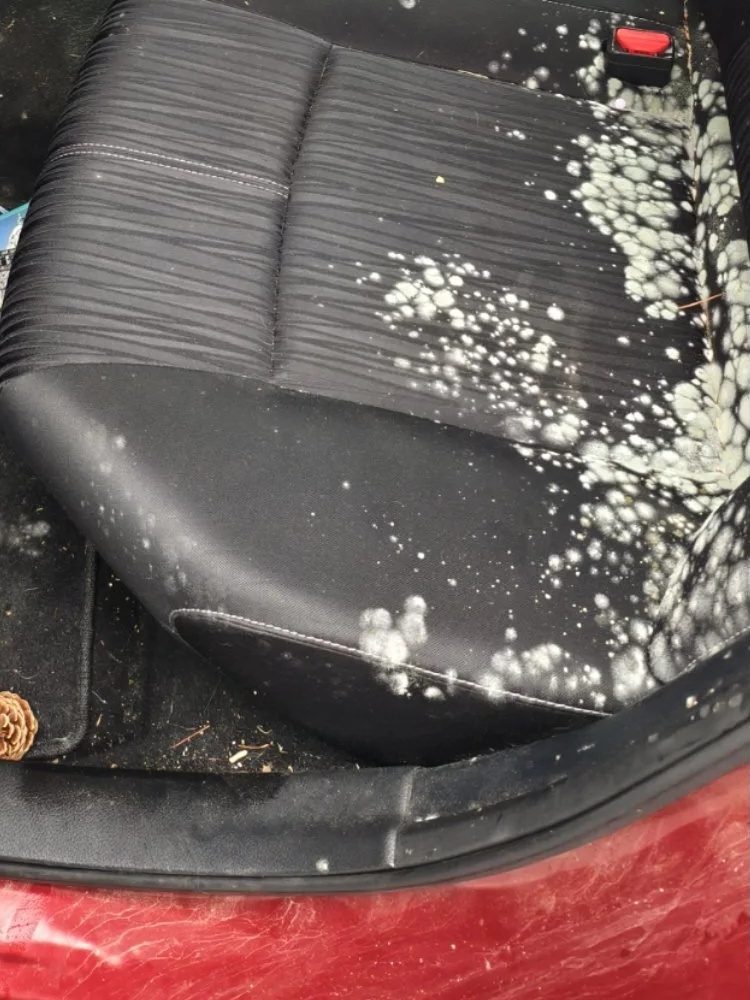
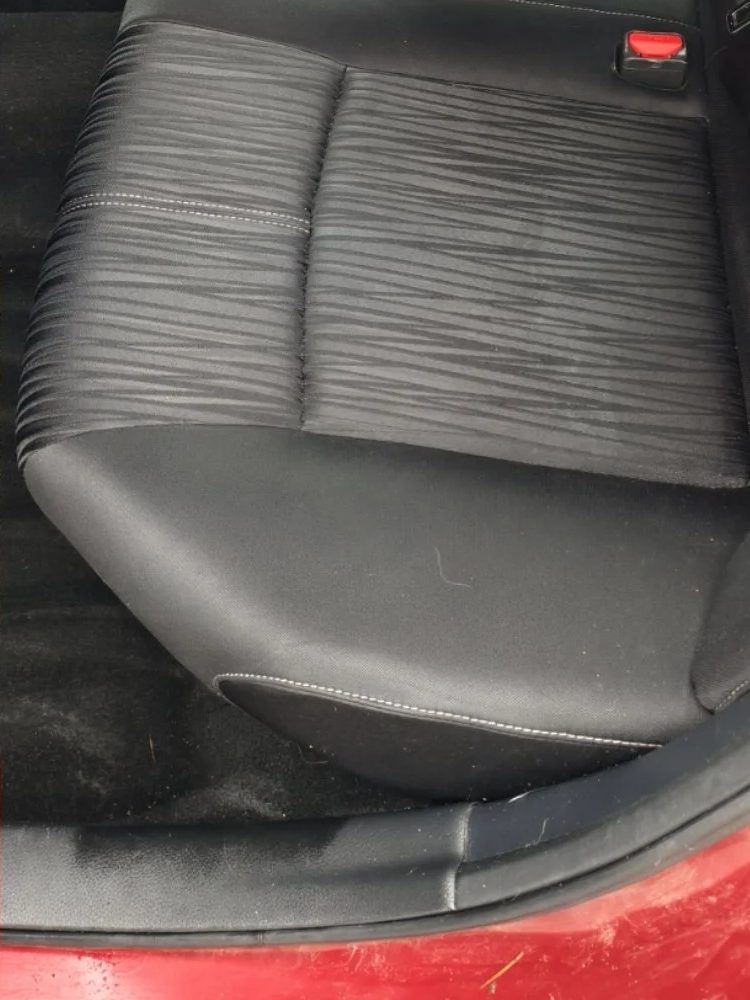
Rear Seat & Door Panel — White Mold Spots
A black sedan rear seat and door panel, Nissan-style, with white mold spots on the rear cushion and loose debris and a license plate frame on the seat. Rear seats get overlooked because nobody sits there, so wet bags or spills can sit unnoticed. We clear the debris, vacuum, steam and extract, then treat the cushion and the panel. A back seat used as storage for wet gear is a common route into this pattern.
 Before
 After
Black Cloth Seat — White Mold Speckles
A black cloth seat with white mold speckles, with a red car body visible below the window. White speckling on dark fabric shows early, which helps, because it is easier to treat before it spreads into the foam. Steam, extraction and Concrobium handle it, and the ozone cycle follows. Short outings in the rain with the windows closed and a damp cabin afterward are the usual start for this look.
 Before
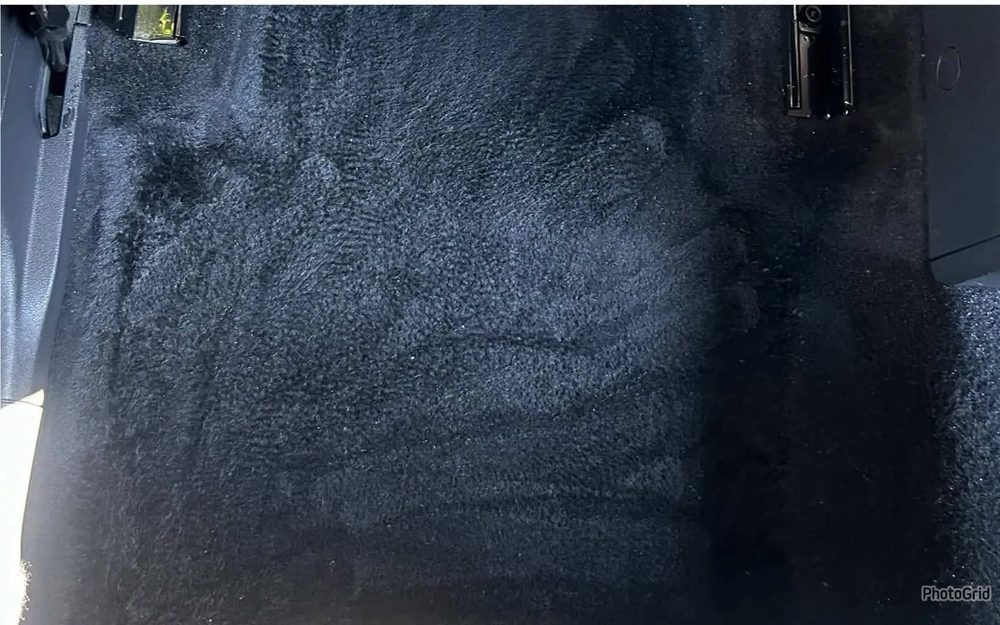 After
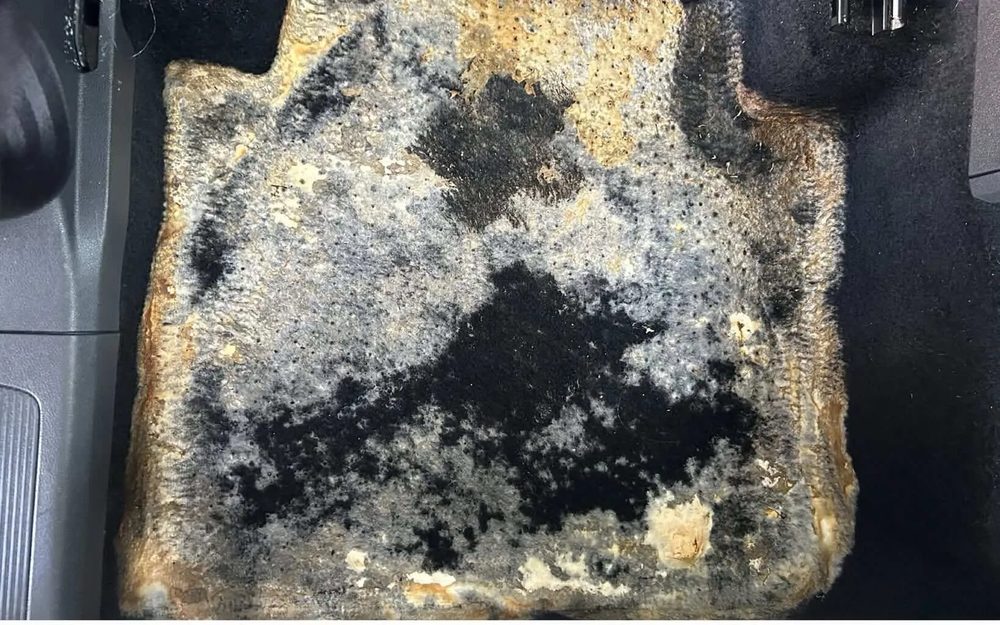
Floor Mat — Heavy Colony Growth
A carpeted floor mat with heavy black, brown and white mold colonies. This is the advanced stage: the mat and the carpet below have held water for a long time. We lift the mat, HEPA vacuum, steam, extract and treat the carpet and the pad beneath, then run the ozone cycle. Wet shoes and umbrellas, and a floor that never fully dries in a humid climate, are the usual cause.
100% Satisfaction.
Written. No exceptions.
If the result doesn’t meet our standard, or yours, we come back and redo it at no charge. No forms to fill out, no arguing over what “counts.” The guarantee is in writing before we ever touch your vehicle.
Request Mold Removal in Sunrise · From $549
Fill this in once and send it. We get your address, vehicle, and the situation all in one message, no phone tag.
Rating
Detailed
Response
Three steps, whatever lot your car lives in.
We handle everything else.
No drop-off. No waiting. We come to Sunrise.
We come to you in Sunrise,
from Sawgrass Mills to Welleby and Original Sunrise.
Mobile service: home, office, condo, or marina. No drop-off, no travel fee.
Not seeing your city? Ask us — we likely cover it.
Hot lot, cold A/C, wet umbrella,
the cycle that fills Sunrise cabins with moisture.
In Sunrise, with about 62 inches of rain a year and cars parked for hours in open lots, damp cabins are common, and one wet outing with the windows up can start mold within a day or two. Left untreated, what starts as a musty smell becomes a real health issue for the next person who drives the car. DShine's Concrobium Mold Control and ozone process address the cause, not just the symptom, backed by $2M insurance and a written guarantee. Mold doesn't need much to get started, any trapped moisture inside a closed cabin is enough given South Florida's humidity. The source is almost always one of four things: a clogged AC condensation drain letting water pool silently on the floor pan, a failed door or window seal letting rain in, a clogged sunroof drain, or the car simply sitting unused for two or more weeks without the AC running. Here the most common cause is trapped moisture in a sun-heated cabin: wet umbrellas, damp bags and an A/C that cools fast on recirculate and leaves the vents wet, repeated across long mall, arena or office days.
Sunrise neighborhoods we serve,
from Sawgrass Mills to Original Sunrise
From the Sawgrass Mills lots to Original Sunrise, here is how each area's parking and housing shape car mold risk.
Sawgrass Mills — The mall at 12801 W Sunrise Blvd opened on October 4, 1990 and has free surface lots plus parking garages. Cars left for long shopping days bake in the sun, then cool fast, which feeds condensation in the A/C. We treat the car at your own address, not in the mall's lots.
The Oasis at Sawgrass Mills — The outdoor entertainment section opened in 1999 and draws longer visits, with dinners and movies stretching a stop into several hours. Cars stay parked and closed up, then get cooled quickly afterward. Wet umbrellas and spilled drinks from an evening out are a common start for mold.
The Colonnade Outlets — The luxury outdoor plaza opened in 2006 beside the mall, and its visitors often arrive in premium cars with leather interiors. Those cabins need the leather-safe protocol, not harsh chemistry. A car that is valeted, parked and closed up wet is the pattern to watch.
Amerant Bank Arena — The arena at 1 Panther Parkway opened in 1998, is owned by Broward County and has 7,045 parking spaces in lots and a garage. Hockey and concert nights park thousands of cars for hours. A damp jacket or a spilled drink left inside afterward is how event traffic brings mold to a car.
Sawgrass International Corporate Park — A 612-acre corporate park, described as the largest in South Florida, where employees park in outdoor lots all day. A sun-baked cabin cooled by A/C on recirculate is the routine here. We can treat the car at the workplace if the property allows, or at home if it does not.
Welleby — A residential area of Sunrise with homes, townhouses and condos. Condo and townhouse residents often use assigned spaces or small garages, and cars sit still between errands. Window cracks left open for air and wet items inside are the usual routes for water. Gate codes ahead of time keep visits smooth.
Original Sunrise — The city began as Sunrise Golf Village, incorporated in 1961 and renamed in 1971, and the area around Village Art Plaza is now called Original Sunrise. Older homes there often have older garages and seals. Cars parked in driveways or carports under wind-driven rain are the typical pattern we see.
Don't see your area? Ask us — we likely cover it.
Sunrise car mold,
the questions we hear most.
Tap any topic to read the full breakdown.
Sunrise sits about 6.6 feet above sea level, roughly six miles west of Fort Lauderdale and up against the Everglades side of Broward County. It collects close to 62 inches of rain a year, and about a tenth of the city's total area is water, so the air stays wet long after a storm has passed. For a car, that means a cabin that never dries out unless somebody makes it.
What sets the city apart from a typical residential suburb is how many cars spend long, irregular hours parked in the open. Sawgrass Mills, the arena, the corporate park and the big apartment and condo lots all leave vehicles under a summer sun for hours, then ask the A/C to pull a baked cabin down to a cool one in minutes. That swing puts condensation on the evaporator and vents, and condensation feeds mold.
None of this needs a flood or a leaking roof. A few wet outings with the windows closed and the A/C recirculating are enough to keep the carpet padding damp, and the clock on growth starts within a day or two. That is how a car smells fine on Friday and unmistakable by Tuesday.
A big share of what we look at here is the everyday commuter sedan or compact SUV that gets driven to an office park, parked outside for nine hours, and driven home again. Nothing dramatic happened to those cars. A damp gym bag, a leaking drink or a wet umbrella went in on a rainy afternoon, the windows stayed up, and the carpet and seat base never got a dry day to reset.
The second group is visitor and event traffic: cars that sit through a long afternoon at the mall, a hockey night or a concert, then get closed up wet again afterward. Sawgrass Mills is described as South Florida's top visitor destination, so out-of-town drivers and rental cars are part of the mix too, and they often have no idea how a tropical cabin behaves.
We also see rideshare cars that run the A/C nonstop and idle between fares, work vans, and family minivans where a dropped smoothie or a soaked beach towel has been under a seat for a week or two. The common thread is moisture that got trapped, not neglect.
Open surface lots at the mall or arena: the cabin heats up hard, then cools hard when you return. That repeated cycle puts moisture on the A/C evaporator and the vents, and a driver who runs cool air on recirculate all the way home can leave those parts damp for days. Risk is modest for one trip and climbs when it happens every weekend.
Parking garages: shade helps, because the cabin never bakes. The tradeoff is weak airflow on the lower levels and a floor that stays wet after rain, so damp tires and shoes carry moisture in. A car that lives on one garage level all week without a proper airing tends to develop a stale, musty smell before it shows visible growth.
Condo and apartment lots: assigned spots under a carport or in a covered row protect from direct rain, not from wind-driven wet, and the car often sits untouched for days between errands. A window left cracked for a little air is the usual way water gets in during an afternoon storm.
Private garage or valet: a garage at a house or townhome is lowest risk when used daily, and it rises when it doubles as storage with damp boxes and a second refrigerator. A valet-parked car returns with a history you cannot see, so a wet seat or spilled drink can go unnoticed until the smell shows up.
June through September, the wet stretch: daily afternoon storms soak lots, garages and sidewalks, and everything people carry into a car comes in damp. Open windows and tired door seals do the most damage in this window, and hurricane season, which officially spans June 1 through November 30, adds the occasional multi-day soaking on top.
Late August into October, the storm peak: the National Hurricane Center puts the climatological peak at September 10. Cars parked in a hurry ahead of a storm, windows cracked or a sunroof not quite shut, are the ones we hear about once the rain has passed and the smell shows up a few days later.
November through March, the busy retail and hockey months: the weather is drier, but the mall and arena are busy and people spend longer hours in lots. Moisture in this stretch comes from A/C cycling, a wet jacket after a passing cold-front shower, and spilled food and drink, rather than from storms.
April and May, before the rains settle in: heat climbs, cabins get very hot, then cool fast. Cars that sat quiet through the winter rush often get their first real look now, and it is a good moment to catch a faint smell before the wet months make it worse.
We come to the car, so the first question is where it can sit for three to four hours. At a house or townhome that is the driveway or garage. At a condo or apartment community it is usually the owner's assigned space, and a heads-up about guest rules or gate codes keeps a visitor pass or a call to the gate from slowing the day.
For people who work in an office park such as the Sawgrass International Corporate Park area, the car can be treated at the workplace when the property and your employer allow it. That is a conversation with the building, not something we assume, and when the lot rules say no, we simply book the visit at your home instead.
The service happens at the customer's address, not at a venue lot, so a mall or arena day does not need to be rearranged. What we need is a spot where the car can stay put, with the doors reachable and everyone kept out of the cabin once the ozone cycle starts.
1. A damp cabin closed up after a wet day out: wet umbrellas, soaked shoes, a damp towel, shopping bags with melted ice. Cars that cycle between baking lots and cold A/C are the most prone, because the carpet never gets a dry stretch. This is the pattern we expect most in a city of long parking sessions.
2. A wet A/C system: condensation collects on the evaporator, the drain line clogs or runs slowly, and the vents blow a faint musty smell on startup. When a driver runs cool air on recirculate for every trip, that smell can show up within weeks and settle into the dash and carpet beneath.
3. Spills that never fully dried: milk, juice, boba, coffee. A wipe-down gets the surface and leaves the foam underneath wet. Family cars and rideshare vehicles show this one most often, usually along the seat tracks and in the rear footwells.
4. Water through a sunroof, window or seal; then long idles: a window left down in an afternoon storm, a backed-up sunroof drain or a shrunken seal sends water to the carpet. A stay of a few weeks in a garage or lot with the doors closed also happens here, but it ranks behind the first three in what local conditions produce.
A weekday suits office-park and shift-work schedules: you leave the car where it is, and we begin with a flashlight inspection of the carpet edges, seat bases, headliner, door pockets, trunk and vents. That shows whether the job is one area or the whole cabin, and the quote from your photos either holds or we explain what changed before anything is applied.
From there the work moves through all 11 steps, opening with a HEPA vacuum so spores are captured instead of blown around, and closing with ozone, an odor bomb and a last inspection. Expect three to four hours, during which you can be at work, at the mall or at home.
When we finish, a before-and-after photo set lands on your WhatsApp, and we tell you when the cabin has aired out enough to drive. Everyone stays out of the vehicle while the ozone runs, which is why a quiet driveway or a shaded spot in the lot works best.
The first thing people want to know is whether it is really mold. A musty, earthy smell that gets sharper when the A/C starts, or worse after rain, almost always is. A sour, milky smell that never changes with the weather usually points to a spill. One photo of the carpet edge or a seat seam often settles it.
Then comes price. It is $549 when the mold sits in one area and $749 when it spreads through the vehicle, travel included, and we answer in under 2 minutes once we see your photos or description. People also ask whether they can keep driving meanwhile. Our answer is yes, but park it dry with a window open a half inch and skip the recirculate button.
The last common question is about being home. You do not have to be. We work at your address, whether you are at your desk, in a seat at the arena or running errands, and we message you the moment the car is done and aired out.
Odor Removal Detailing is the natural pairing when a spill or a long-damp cabin left a smell that runs deeper than mold alone. Interior detailing and a careful steam of the vents come next, especially for cars that carry kids, pets or rideshare passengers every day, where the same moisture keeps coming back through the door.
Ceramic Coating and Paint Correction show up for cars that spend their days in open lots under the sun, since clear coat takes a beating from UV and heat while the owner is shopping or at work. Engine Bay Cleaning comes up less often, mostly for vehicles that sat unused for a few weeks. Add-ons are quoted separately, never folded into the mold price.
If you are unsure what belongs on the list, raise it at booking. We would rather say a service can wait than sell something you do not need, and the mold quote is settled first so nothing else clouds it.
Watch the windshield first. A thin film on the inside glass that returns right after you wipe it means the cabin is holding moisture. Next come a clammy puff from the dash vents as soon as you start the car, a seat that feels cool or clammy on a dry day, and a cloudy patch on the leather near the seams.
Tiny white or grey specks on a seatbelt, a dark spot on the carpet edge, or a dusty bloom on the console mean growth has already begun. Pull the floor mats and lift the carpet corner where the door sill meets the floor. That is where wet hides first, and two minutes there can save you a bigger job.
Fogging that comes back every morning, even after the car has sat dry, suggests moisture coming from inside the cabin, not from the weather. Visible mold is usually the last stage, so any of these earlier signs deserves action. A short drive on a wet day is often when it becomes obvious, because the windshield fogs and refuses to clear.
Idle stretches in Sunrise rarely look like a long vacation. They look like a car parked in a work lot all week, a second vehicle that barely moves between weekend errands, or a driveway car left during a week-long trip. The fix is a small habit more than a product, and it costs nothing.
Switch the A/C to fresh air and leave the fan running for the last two minutes of the drive so the cooling coil can dry out before you park. Pull out wet umbrellas, towels and bags. If the car sits under cover on a dry day, crack a window about a half inch. Drive it every few days, even ten minutes, so the cabin air changes.
For a car that will sit longer, a small moisture absorber in the footwell helps, but it only slows a damp cabin. If the carpet is already wet when you park, deal with that first, because an absorber cannot dry what is soaked into padding. A wet vacuum pass over the carpet and a few hours of open doors in the sun beat any gadget.
Households here often run two or three vehicles, and rideshare drivers or contractors may have a work vehicle plus a personal one. If more than one car shows the same problem, which often happens when the same wet routine or the same shared garage is behind both, mention it at booking so the visit can be planned around each car.
Shift workers and event staff keep unusual hours, so say what window suits you when you reach out and timing is confirmed after the price is agreed. Each vehicle takes about three to four hours and then needs time to air out. A morning window usually leaves the afternoon for the cabin to finish airing, and it helps to say early if you need the car for a commute or game night.
Each job is covered by a written, 100% satisfaction guarantee lasting 30 days. If the growth or its odor reappears in that window, the re-treatment is free. In this city a return almost always traces to a source nobody fixed: a clogged A/C drain, a failing seal, or a daily habit like leaving a wet umbrella in the footwell every afternoon.
If we spot a likely cause while we work, we say so before leaving so you can fix it or change the routine. A guarantee only means something when the cause is handled, and we would rather mention a leaky seal once than meet the same car again a month later. Fixing the cause is usually cheaper than another treatment.
Keep the written guarantee with the photos we send. If anything seems off inside the 30 days, message us a photo and we take it from there.
Premium cars with leather seats and wood or soft-touch trim call for a gentler method than a bare-floor work vehicle. Leather is handled with our leather-safe protocol, using measured steam and a product that kills growth without stripping the finish, since harsh chemistry dries and cracks the hide. Stitching and perforations get extra time because growth hides there first.
Older vehicles with worn seals or a cracked dash may need a conversation about causes before treatment, because new mold finds the same path in. Work vans and fleet cars with vinyl and rubber floors are simpler on the surface but can hide heavy buildup in the seams and under the seat rails, and we plan time accordingly.
High-mileage commuters also tend to have the oldest A/C drains. If the vents have smelled for a long time, mention it at booking so we look at the likely cause as well as the cabin. A drain that has run slowly for years is a common culprit, and a quick check by a shop can save a repeat visit.
Clear the footwells and trunk of gym bags and shopping bags, then check under the seats for spills. Let the cabin dry fully, fans on and windows down for a few minutes, before you close it up. For the last stretch of the drive, run the A/C on fresh air so the ducts dry out.
If the car will sit in a garage, leave some airflow where the space allows and put a moisture absorber inside. For a long trip, ask someone to start the car and run the A/C for ten minutes once a week. Skip air fresheners that cover a smell, since they hide a problem you would rather spot early.
Take a quick photo of the carpet and seat bases before you go. If something looks different when you return, you know when it started, and you can send us the images to price the job fast.
Growth begins within about 24 to 48 hours in a humid, closed cabin. Once it moves from the carpet surface into padding or foam, a one-area problem becomes a whole-interior one, which is the difference between a $549 job and a $749 job. Waiting is the most common way a small problem becomes a large one.
In a city with long wet months and constantly cycling A/C, a musty smell you wait out for a few weeks rarely clears by itself. The cost is personal too: spores travel through the vents every time you start the car, and anyone with allergies or asthma will notice before everyone else does.
Resale and rental return matter as well. A car with visible growth or a lingering smell loses value fast, and many people only learn about it when a buyer or an inspector sits inside and reacts. Treating it early is almost always cheaper than discounting the car later.
A rideshare or delivery vehicle may run ten hours with passengers and food coming in and out, wet shoes, spilled drinks, and the A/C on cool all day. That combination suits mold in the carpet seams, the seat tracks and the vents, and a driver can rarely afford to take the car off the road for long.
Tell us about your schedule when you reach out, and we confirm a clear price after reviewing your photos before work begins. We also say how long the car needs to air out afterward so you can plan the next shift. If you run more than one vehicle, ask us how to handle them.
A clean, dry cabin also matters for ratings and tips. Passengers notice a musty smell right away, and an air freshener cannot fix it, because the smell comes from growth in the carpet and vents rather than from the seat surface. That is worth knowing before you spend money on scented products that only cover it.
Pictures of the problem, plus a line about what happened, can go through WhatsApp or the form. Within 2 minutes you hear whether it reads as a one-area job at $549 or a throughout-the-vehicle job at $749, with travel included. The firm number is settled once we have looked at what you sent, and before any work begins, so the figure you agree to is the figure you pay.
On site, the inspection either backs up the quote or, if hidden growth turns up under the carpet or behind a panel, we tell you what we found and what it changes before any product touches the car. If photos are unclear we ask for another angle of the carpet edge or seat base instead of guessing.
Sunrise is a city of lots, garages, malls and event nights, with about 62 inches of rain a year and a long hurricane season. Mold in cars here usually comes from moisture that gets trapped in a cabin that spends long hours in the sun and then cools fast, not from a car that sat untouched for months.
We come to your address for three to four hours and work through our 11-step process, from HEPA vacuuming and Benefect through steam, extraction, Concrobium Mold Control and ozone. The exact price is confirmed first: $549 for one area or $749 for the whole vehicle, travel included.
IDA certification, $2 million in liability insurance and a 30-day written guarantee stand behind the work, and photos of the result come to your phone. If the mold or its odor returns in that window, we come back and treat it again for free.
Once steam, extraction and Concrobium are done, we close up the car and switch on a professional ozone generator sealed in with the seats. Ozone reaches vent housings, headliner and foam that surface work cannot, and it breaks down remaining odor molecules and airborne spores. No one stays in the vehicle during the cycle, and the doors stay shut until it ends.
Afterward we open the car and let it air out before anyone sits down. A condo lot or a covered row with weak airflow can add a little time compared with an open driveway. The odor bomb and the final check follow, and we confirm when the car is ready to drive, not only when the cycle has finished.
Before you book,
answers for Sunrise drivers.
Add-ons Sunrise clients book
Still deciding? Read: the complete mold removal guide · does insurance cover it? · why DIY mold removal fails.
Book car mold removal in Sunrise
Serving Sunrise and all of Broward County. Fixed pricing, no travel fee. We confirm in under 2 minutes.
It Might Just Be an Odor Problem
If there's no visible mold growth yet, the smell alone is usually an Odor Removal Detailing case ($349 flat) — faster than full mold remediation ($549–$749). See which one matches what you're dealing with: