What a Pinecrest Mold Job Includes
This is not a car wash. Car Mold Removal uses Concrobium Mold Control treatment, pH-balanced products, and machine assistance, the same process used in pre-sale preparations for luxury dealerships.
Why it matters for your health: Mold in a vehicle is a different exposure than mold on a wall at home. With the AC recirculating, everyone inside is breathing concentrated spores for the length of the drive. The EPA and CDC both link mold exposure to respiratory irritation, allergic reactions, headaches, and worsened asthma symptoms. Children, older passengers, and anyone with a compromised immune system typically react faster and more severely than a healthy adult would. By the time the smell is noticeable, spores have usually already spread through the HVAC system into every vent in the cabin.
Curious what actually happens during the visit? Tap through our real 11-step process below to see what we do at each stage and why it matters.
What every Pinecrest mold job gets you
Most detailers in Pinecrest charge less. Here’s exactly what you gain — and what you risk — with each choice.
| DShine DetailsFrom $549 · travel included | Avg Pinecrest Detailer$149 – $199 | |
|---|---|---|
| Industry certificationsIDA, Koch Chemie, Meguiar’s, 3M, Symplex, XPEL | ✓6 verified | —0 credentials |
| $2M liability insuranceWe cover any damage — in writing | ✓ | —Often uninsured |
| Deionized water systemZero mineral residue, no water spots | ✓ | —Tap water, water spots |
| Fresh microfibers per vehicleNo cross-contamination between jobs | ✓ | —Shared towels, swirl risk |
| Mold-specific chemistry onlyConcrobium, Benefect & Meguiar’s, no harsh acids | ✓ | —Industrial degreasers |
| Before & after photosSent via WhatsApp on completion | ✓ | —No documentation |
| 100% written satisfaction guaranteeReturn & redo at no cost if unsatisfied | ✓ | —No written guarantee |
| Travel to your address — $0Home, office, condo — no drop-off | ✓ | Sometimes adds fee |
DShine vs. any other detailer
in Pinecrest, Miami-Dade County
Three things most detailers won't tell you. We put them in writing.
 Since 2018
With more than 20 years of hands-on experience in the automotive care industry, Evelio launched DShine Details in August 2018 with one van and zero shortcuts. For the first six months he slept in the van to keep costs down and standards up. Today DShine runs 7 certified vans across Miami-Dade, Broward, and Palm Beach, and the commitment hasn't changed. Every vehicle is treated as if it were his own.
What clients say
in their own words.
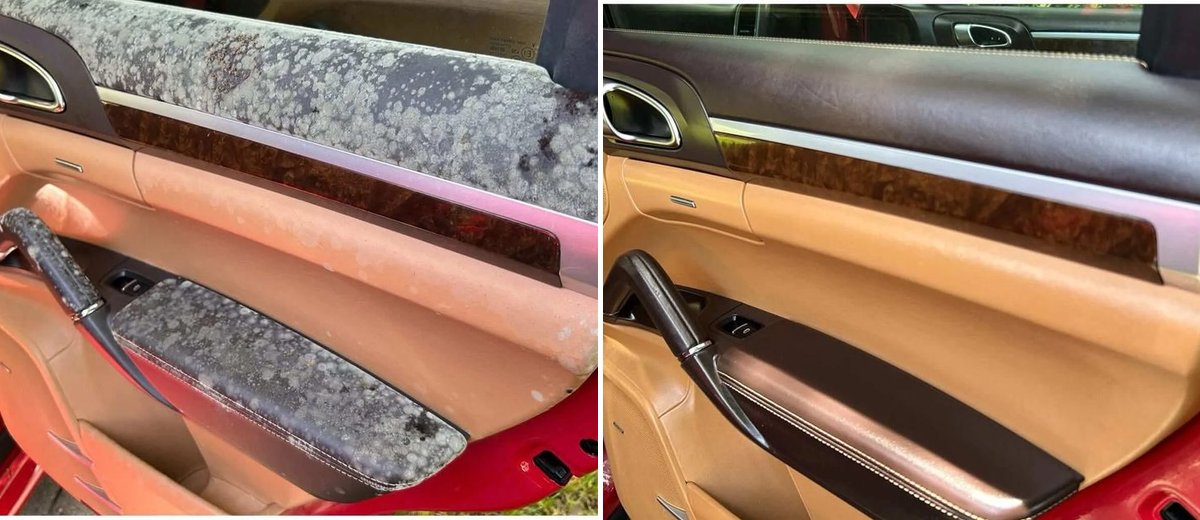
Before & After: Mold Removal We've Actually Done
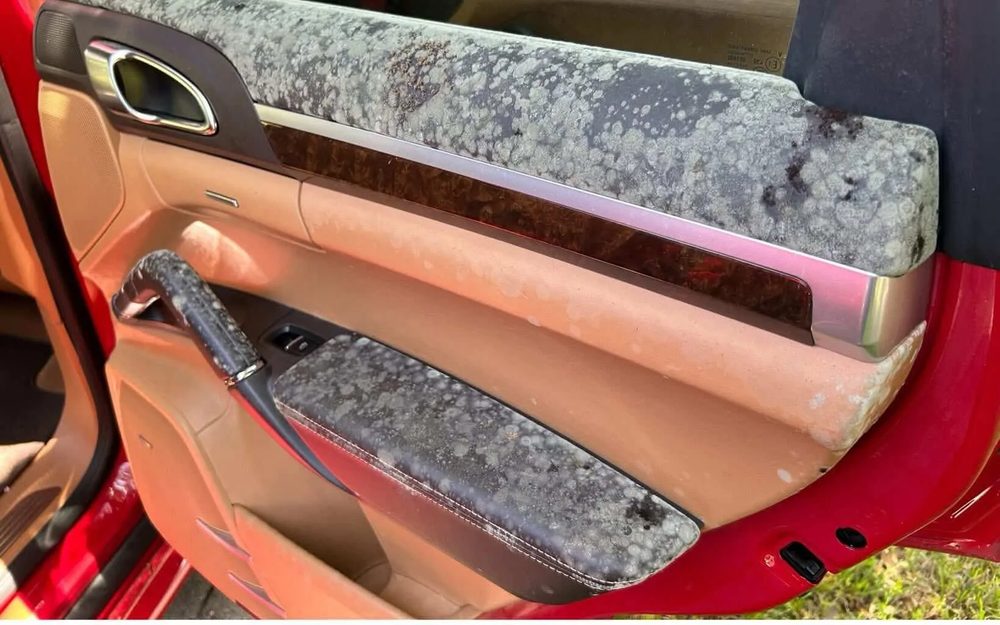
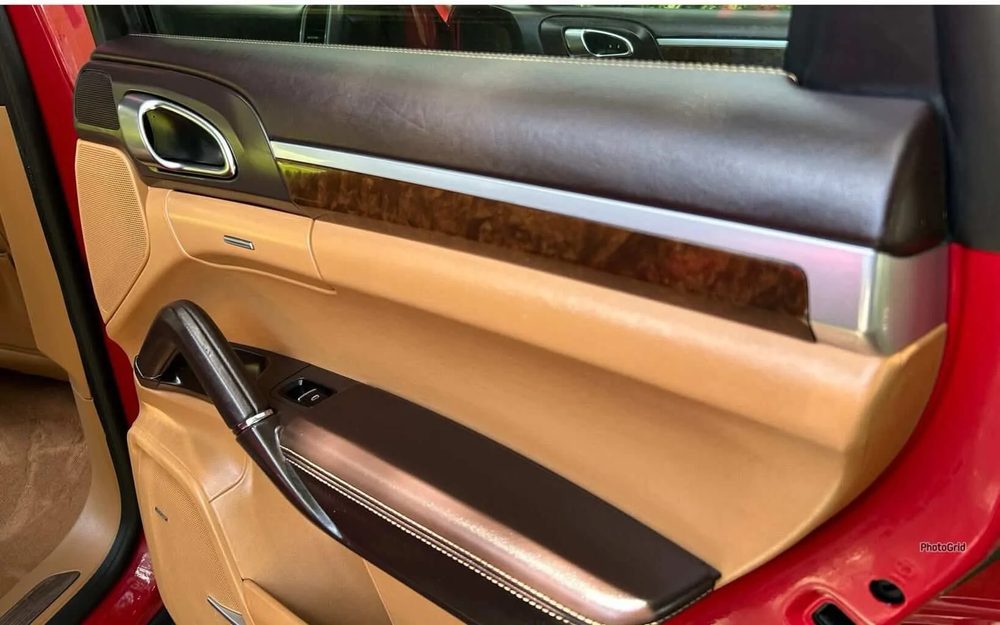
No stock photos. These are real DShine mold removal jobs across South Florida, the same 11-step process and chemistry used on every Pinecrest appointment.
 Before
 After
Porsche Cayenne — Door Panel & Armrest
Mold across the tan leather door panel and armrest of a red Porsche Cayenne, reaching into the wood trim. Leather like this should never be scrubbed hard, so it gets the leather-safe protocol, steam and extraction around the trim, Concrobium and then the sealed ozone cycle. A door panel collects moisture at the seal first, and a premium SUV parked beside a watered lawn is a common setup for that.
 Before
 After
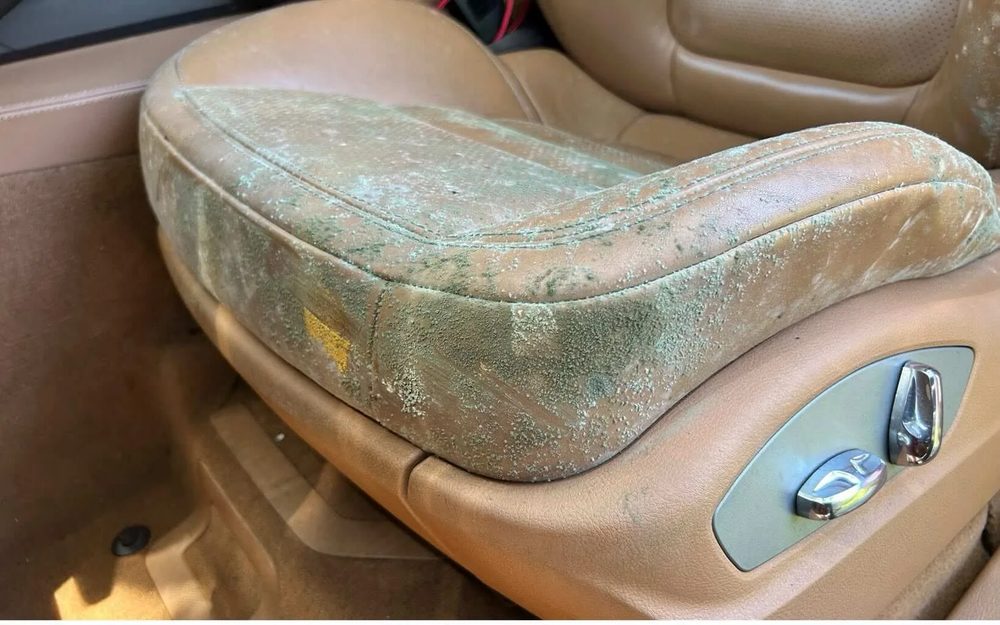
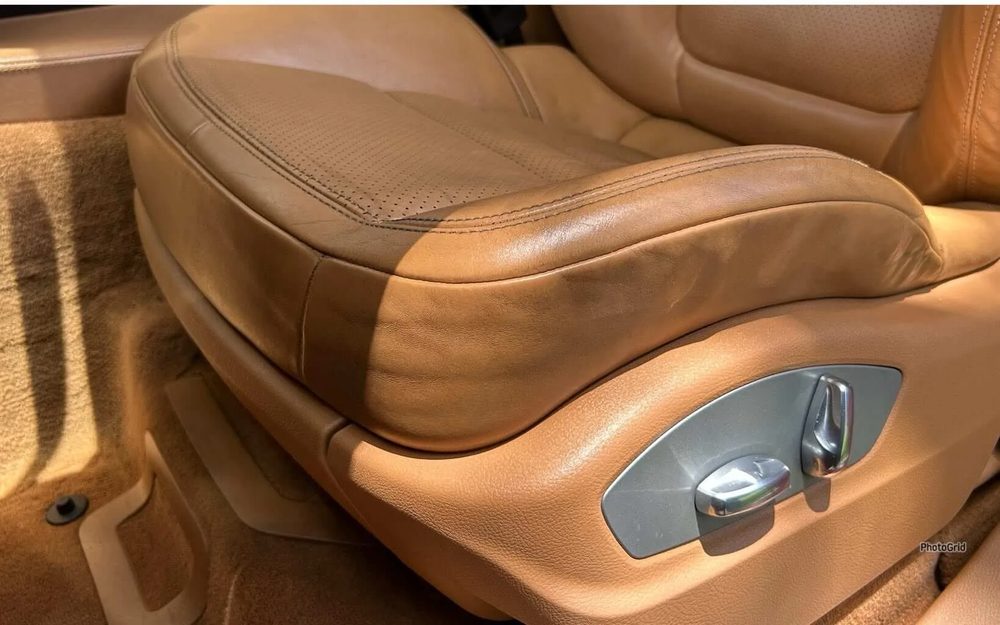
Tan Leather Seat Bolster — Green-Blue Mold
A camel-colored leather front seat bolster covered in green-blue growth. The bolster is the part of the seat that rubs the door and traps damp, and leather cannot take harsh scrubbing, so we use controlled steam, careful extraction and Concrobium, then let the ozone cycle handle the cabin air. A shaded driveway where a car rarely gets a baked afternoon lets this pattern take hold.
 Before
 After
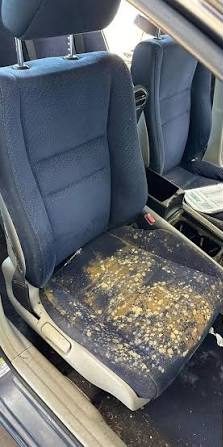
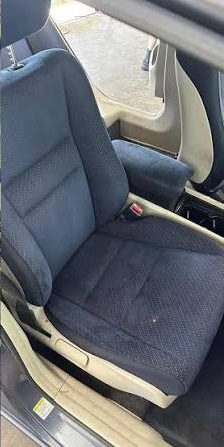
Cloth Bench Seat — Staining Under the Cushion
A dark blue cloth sedan bench seat with the cushion lifted, showing tan and yellow mold-stain residue on the underside. Growth like this lives in the foam, where surface wiping never reaches, so the cushion is steamed and extracted from both sides, treated with Concrobium and dried before ozone. Cars that wait weeks in a driveway with the windows up are a typical source of this hidden staining.
 Before
 After
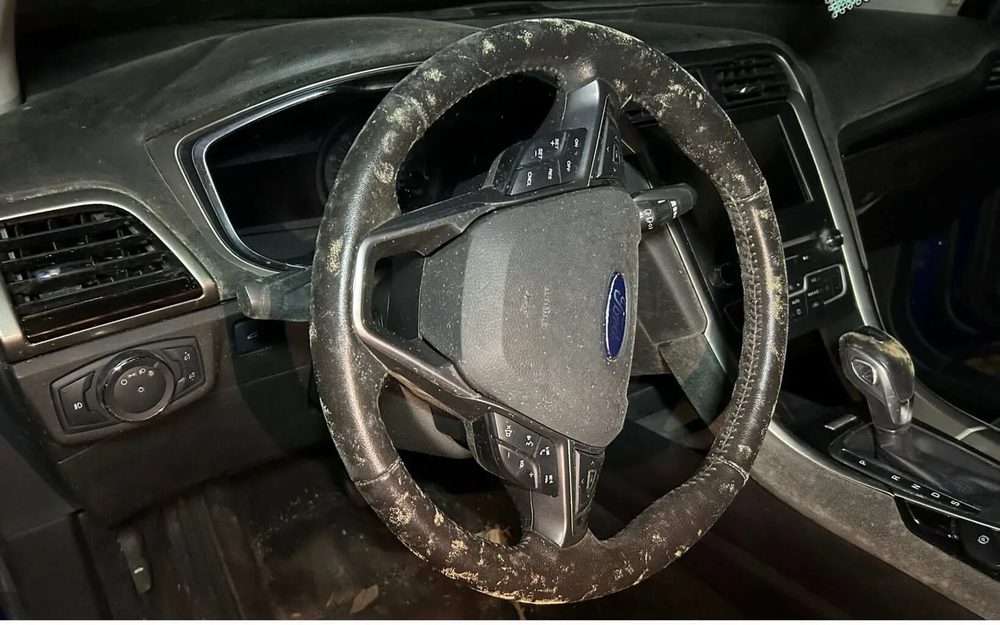
Ford Sedan — Steering Wheel, Dash & Vents
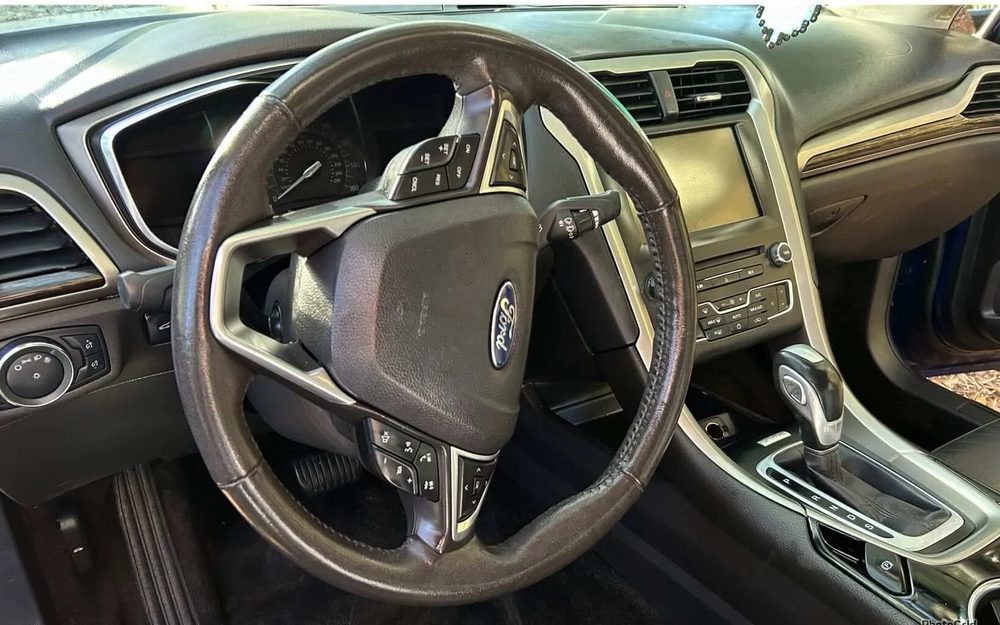
Grey-white mold bloom across the steering wheel, dash and vents of a Ford sedan. Hard surfaces get a HEPA vacuum, Benefect decontamination and a hand clean, and the vents are treated with Concrobium and the ozone cycle because spores sit in the duct path. This pattern is common in a car that spends weeks closed up in the damp air a wet summer brings to Pinecrest.
 Before
 After
Black Cloth Seat & Console — White Mold Bloom
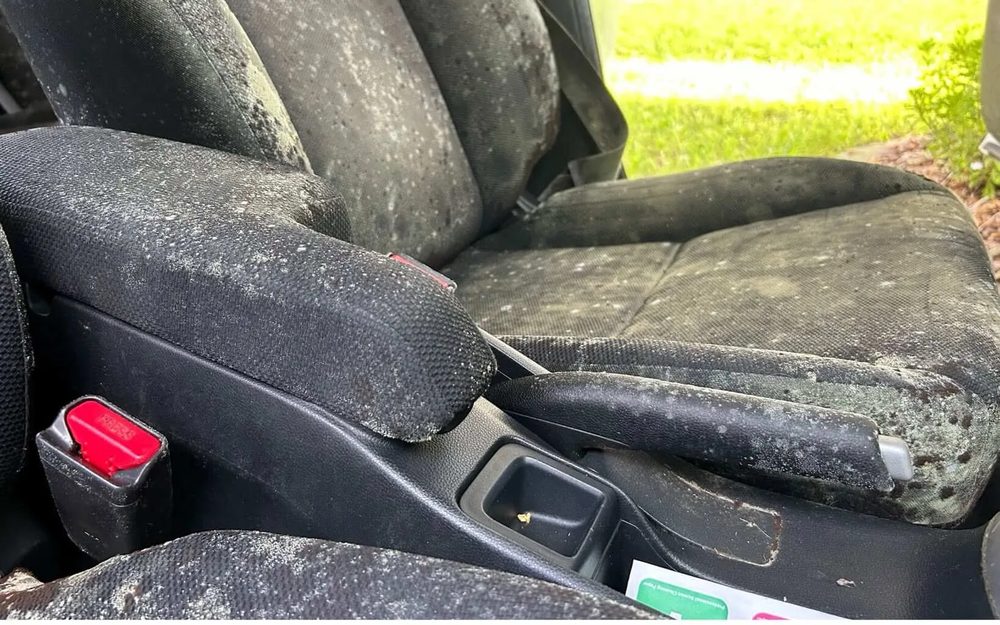
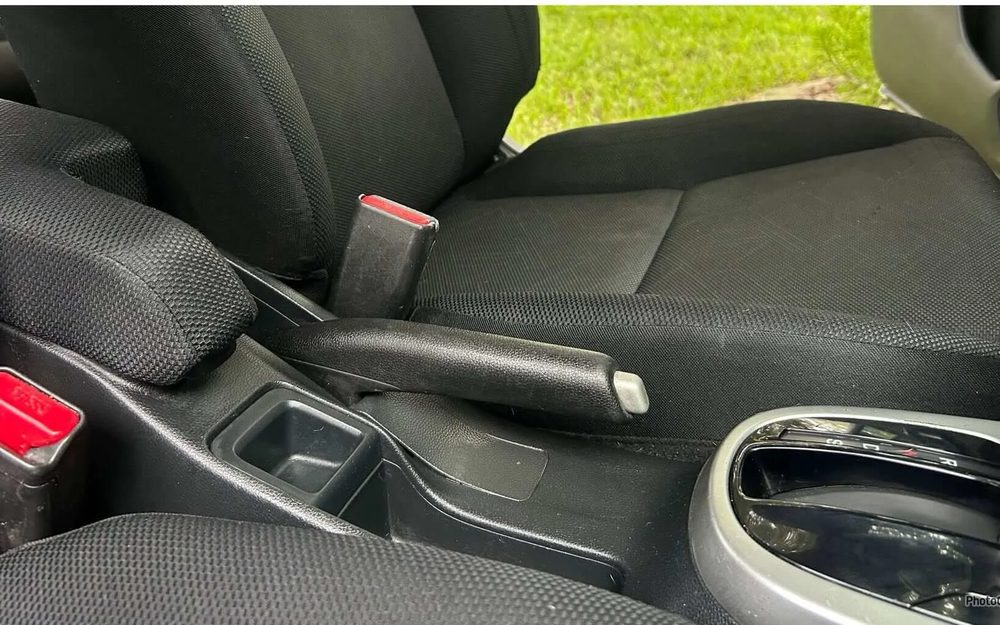
A black cloth driver seat and the armrest and console, covered in grey-white mold bloom, with a green lawn visible outside the window. Dark cloth hides early growth until it blooms, so treatment is steam, extraction, Concrobium and ozone, with the console seams and cup holders cleaned by hand. A lawn beside the car is a good reminder of how much moisture sits around parked vehicles here.
 Before
 After
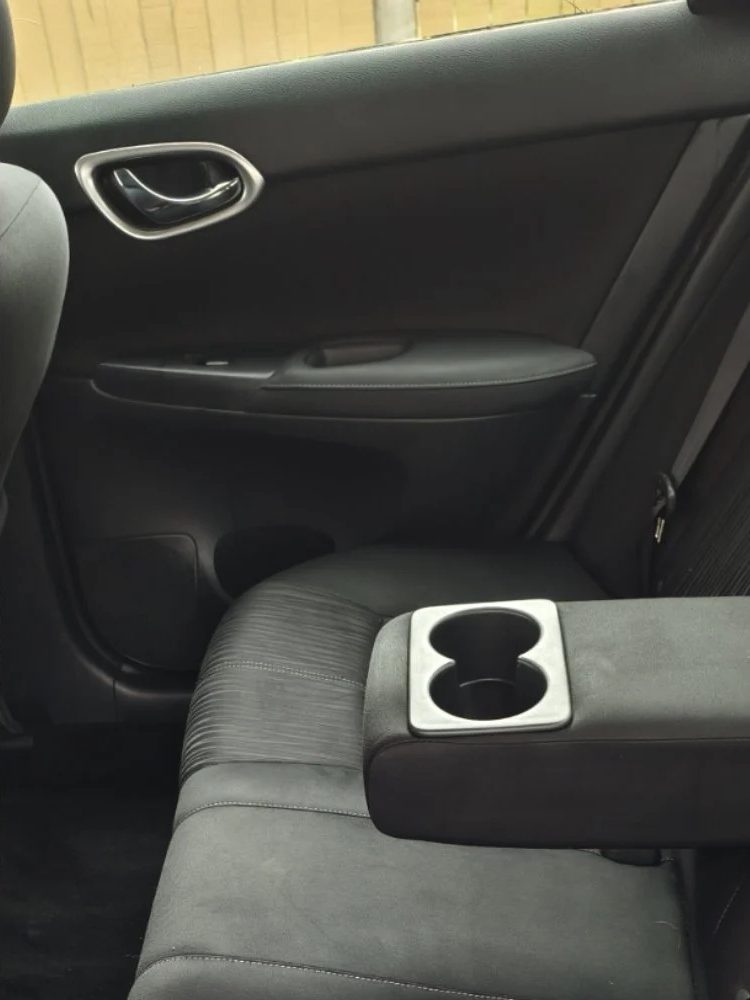
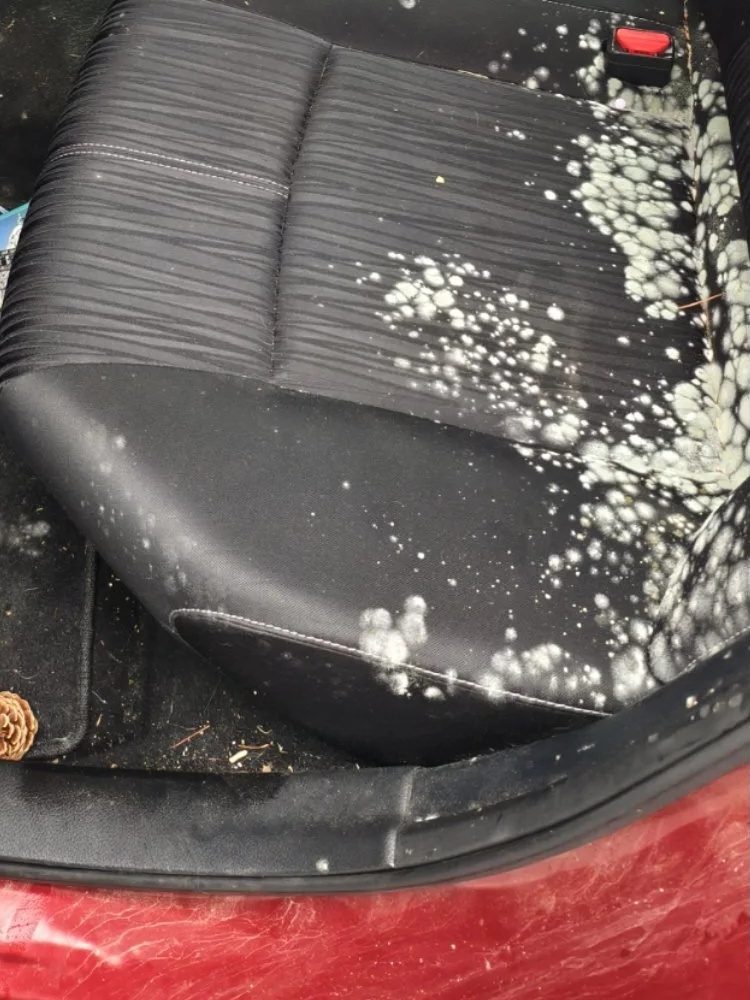
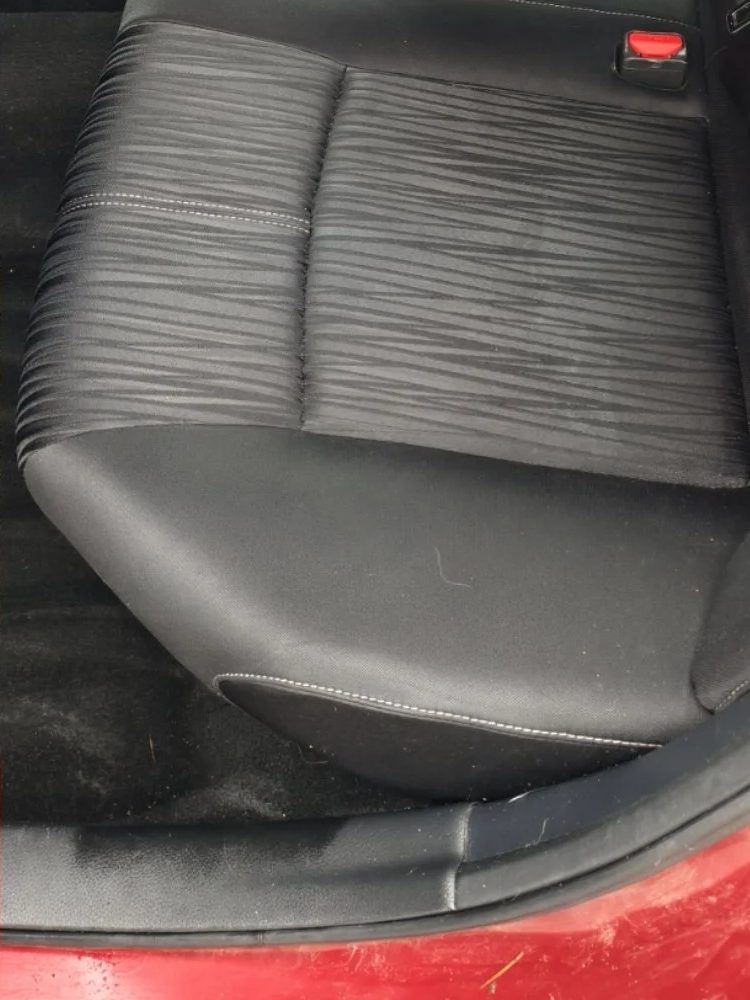
Black Sedan Rear Seat — White Spotting
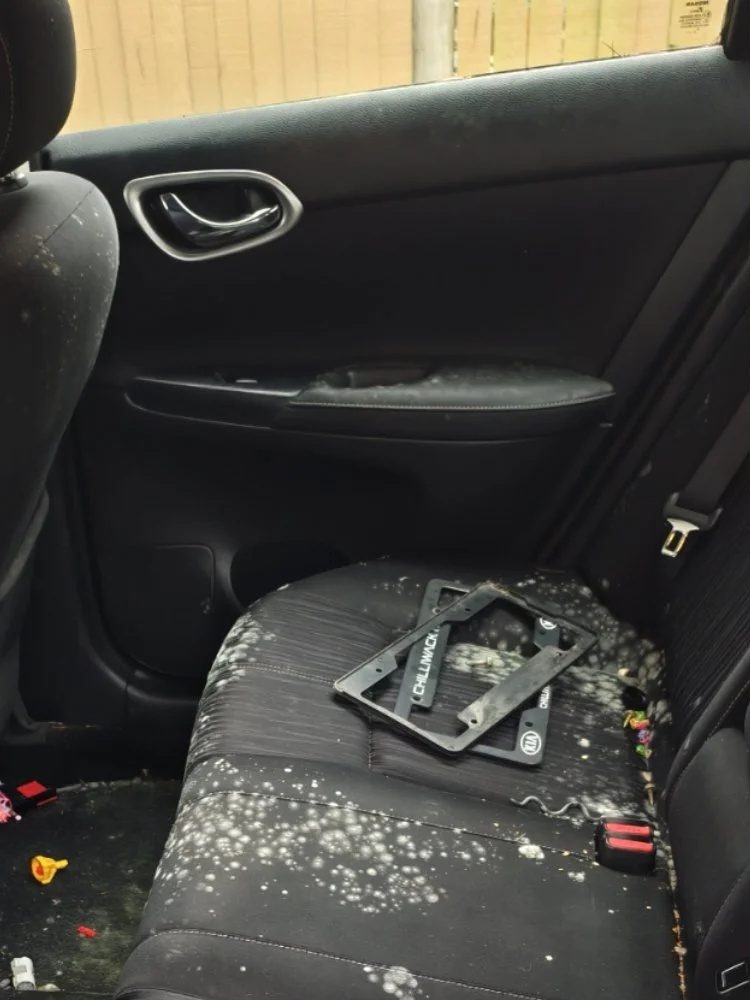
The rear seat and door panel of a black sedan with white mold spots on the cushion, plus loose debris and a license plate frame left on the seat. Loose items hold moisture against fabric, so we clear them first, then vacuum, steam and extract the cushion and treat the panel with Concrobium before ozone. A rear seat that nobody opens for weeks is a quiet spot for this growth.
 Before
 After
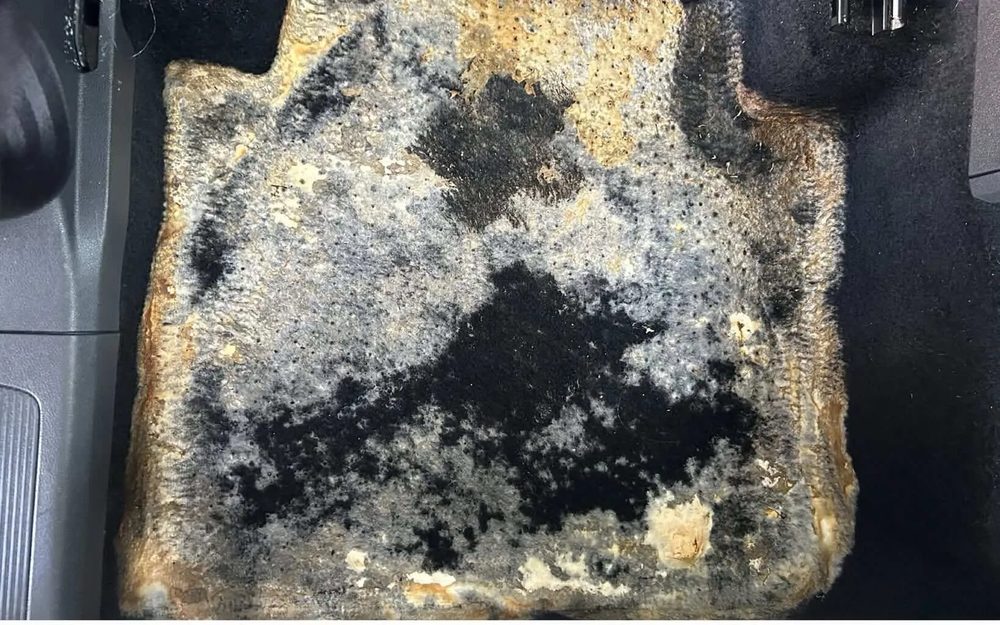
Black Cloth Seat — White Mold Speckles
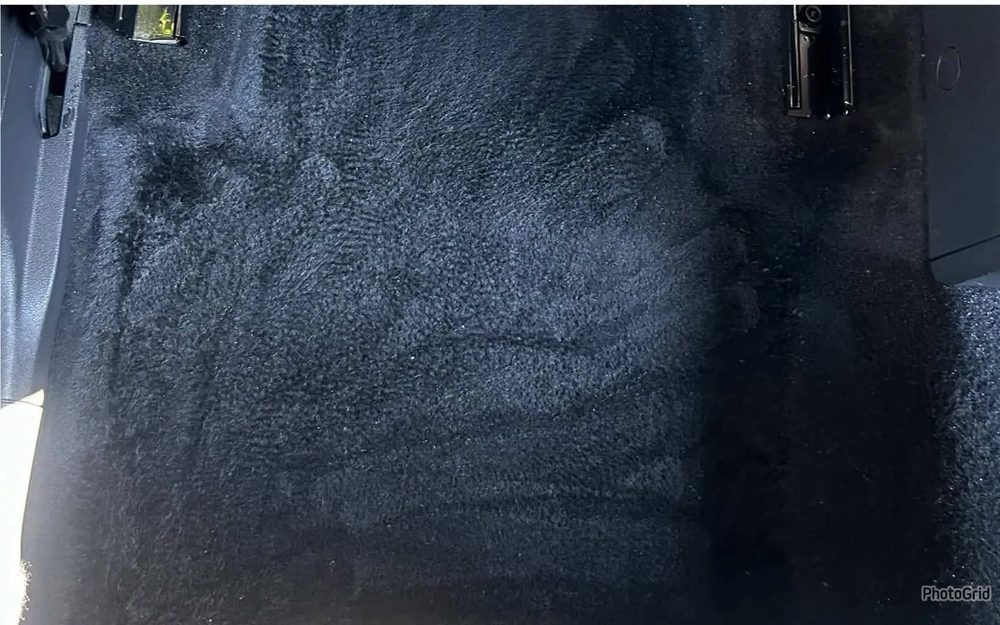
A black cloth seat with fine white mold speckles, a red car body visible below the window. Speckling is early growth: it is easier to treat than a full bloom, but it often signals moisture deeper in the foam. We steam and extract the seat, apply Concrobium and run ozone. A car that is driven rarely beside shade and irrigated turf is a common candidate for this early stage.
 Before
 After
Floor Mat — Heavy Colony Growth
A carpeted floor mat with heavy black, brown and white mold colonies. Mats trap water from shoes, umbrellas and wet towels, and the carpet beneath rarely dries without help. We HEPA vacuum, deep clean, steam and extract the carpet and padding below, then treat with Concrobium and ozone. After a week of Pinecrest afternoon storms, a damp mat in a closed car is a classic starting point for the whole footwell.
100% Satisfaction.
Written. No exceptions.
If the result doesn’t meet our standard, or yours, we come back and redo it at no charge. No forms to fill out, no arguing over what “counts.” The guarantee is in writing before we ever touch your vehicle.
Request Mold Removal in Pinecrest · From $549
Fill this in once and send it. We get your address, vehicle, and the situation all in one message, no phone tag.
Rating
Detailed
Response
Three steps from a musty cabin to a clean one,
whatever the sprinklers and the shade did. We handle the rest.
No drop-off. No waiting. We come to Pinecrest.
We come to you in Pinecrest,
from Old Cutler Road drives to Killian Drive.
Mobile service: home, office, condo, or marina. No drop-off, no travel fee.
Not seeing your city? Ask us — we likely cover it.
Sprinkler cycles, deep shade and long driveways
keep a parked Pinecrest car damp.
Most of Pinecrest is zoned for one home per acre or per 2.5 acres, with more than 10,000 street trees planted since 1997, so driveways are long and shaded, lawns stay wet and a car left sitting for even a few weeks is already at risk. Left untreated, what starts as a musty smell becomes a real health issue for the next person who drives the car. DShine's Concrobium Mold Control and ozone process address the cause, not just the symptom, backed by $2M insurance and a written guarantee. Mold doesn't need much to get started, any trapped moisture inside a closed cabin is enough given South Florida's humidity. The source is almost always one of four things: a clogged AC condensation drain letting water pool silently on the floor pan, a failed door or window seal letting rain in, a clogged sunroof drain, or the car simply sitting unused for two or more weeks without the AC running. In Pinecrest, that last one is the cause we meet most: the household's extra car at the end of a long driveway, closed up beside wet turf and under shade, never given the chance to air out.
Pinecrest neighborhoods we serve,
from Snapper Creek Canal to Old Cutler Road.
From Pinecrest Gardens to Suniland, and from Old Cutler Road to Snapper Creek Canal, driveway length and shade decide how a car dries.
Pinecrest Gardens — Pinecrest Gardens sits at 11000 Red Road on the former Parrot Jungle site, which the village bought in 2002. A farmers market fills its south parking lot every Sunday morning, so cars from around here often carry produce, flowers and coolers home. A leak left in a closed cabin on a hot day is a classic start for mold. We work at your home or office, not in the lot.
Old Cutler Road — Old Cutler Road is a 14.9-mile route that began as a trail along the coastal ridge and became a state historic highway in 1974. It enters the village at SW 128th Street. Homes along it often sit behind hedges and gates on long drives under mature shade, so we confirm gate codes and the van's staging spot first, and we choose shade for the ozone cycle.
Killian Drive — Killian Drive is SW 112th Street, also SR 990, and it ends at US 1. Past SW 97th Avenue it is described as tree-lined with soft shoulders and an almost rural feel. Side streets here mix long driveways and heavy shade, which keep parked cars damp. We ask for a photo of the drive and where the sprinkler heads sit, so we can plan the setup.
Suniland — Suniland is the shopping area on S Dixie Highway (US 1), and Suniland Park, a 10-acre village park with ball fields and batting cages, carries the same name. Cars here collect sports bags, wet gear and the weekly shopping, and those wet items are a common starting point for mold in a closed cabin. We come to your house or office, and send photos so you do not have to wait around.
Pinecrest Parkway (US 1) — Pinecrest Parkway is the village's name for US 1 along its western edge, where more than 750 businesses are located and the Municipal Center stands at 12645 Pinecrest Parkway. Cars used for work sit in open lots or garages for hours at a time. We can work at an office or building with the manager's permission, and we confirm the parking spot in advance.
Snapper Creek Canal — Snapper Creek Canal (C-2) marks the northern edge of the village. Homes near the canal have open grass and water close by, so cars parked there can pick up extra humidity. Mold in such cars often starts in the footwells and lower door seals. We ask where the car is parked and whether a sprinkler zone covers the driveway, then plan around the watering days.
Evelyn Greer Park — Evelyn Greer Park is a 10-acre village park with athletic fields, batting cages and a recreation center. Families who use it arrive in SUVs and sedans carrying wet uniforms, water bottles and cleats, and those cars often wait shut afterward. We treat the car at home, with the driveway and gate details agreed in advance, and send photos when the job is done.
Don't see your area? Ask us — we likely cover it.
Pinecrest car mold,
the sprinkler, shade and driveway questions answered.
Tap any topic to read the full breakdown.
Pinecrest is too small to keep its own gauge, so the numbers come from the nearest NOAA site with a long record, the airport in Miami. Its 1991-2020 normals give about 67.4 inches of precipitation a year over roughly 141 wet days, and an average relative humidity of 73 percent. June, August and September each pass nine inches. The village sits near 7 feet above sea level.
Irrigation adds to the rain. Miami-Dade permits lawn watering on two days a week, before 10 a.m. or after 4 p.m., and enforces that all year, so the grass beside a parked car still gets sprayed in a dry February. Pinecrest has also planted over 10,000 street trees since 1997, and private yards bring their own shade.
The result is rarely one flood. It is many small wettings: a Monday shower, a Wednesday sprinkler run, a Thursday storm, and a canopy that denies the afternoon sun its drying job. A day or two of that with still air is plenty for mold to start.
Most Pinecrest calls involve a late-model SUV or premium sedan from a household with several cars and more driveway than it needs. The village is zoned mostly for one home per acre or per 2.5 acres, so there is room to park a whole family's vehicles in a row, and not every one of them is driven each day.
The car that ends up needing us is seldom the one doing the school run. It is the second car that mostly stays home, the car bought for a college student who is away, a convertible pulled out only for sunny weekends, or a vehicle parked until someone found time to deal with it. Moisture builds slowly in these cars, and the first sign is often a musty gust the first time the A/C is switched on.
A smaller group comes from ordinary weekend routines: a wet towel from the backyard pool, a team bag from the village ball fields, a cooler that leaked behind the seat on the way home from Sunday's market. None of it is dramatic on its own. One forgotten item in a closed car over a hot long weekend can be enough.
Pinecrest is also a village of long-term households, so the vehicle in question is often a car the family loves and intends to keep. They want it treated carefully, not replaced, and they usually want to know exactly what will touch the leather and the electronics before any product comes out of the van.
Long driveway beside irrigated turf: Cars here often sit well back from the street with lawn on both sides. When the nearest zone runs, overspray lands on doors and glass, and evaporation off the wet grass keeps the air humid right at the car. Wet paint is not the problem by itself. It becomes one when a window is cracked, a door seal is worn or a sunroof drain runs slowly.
Under a mature crown: Shade protects paint and defeats drying. Beneath a dense tree the car stays cool, drips long after rain and never gets the baked afternoon that would drive moisture out of the cabin. Fallen fronds, leaves and seed pods also pile up where the hood meets the glass, and they hold water against the body.
Closed garage, rarely opened: A full two-car garage often doubles as storage for bikes, pool gear and a spare refrigerator. The car that gets the bay stays out of the rain, but if the door stays down for weeks, still unconditioned air lets humidity settle into carpet and seat foam with nothing to move it.
Carport, covered drive-through or open lot: A roof stops rain, not humidity. Damp lawn air drifts under open-sided cover and wind-driven rain still reaches the lower doors, so mold in these cars tends to show at the lower seals and in the footwells before the seats. On the open lots along US 1 the opposite happens: cars bake instead of rot, but a wet bag in a hot, shut cabin can still seed a colony in a couple of days.
Mid-May to mid-October, the wet season: Rain and irrigation overlap. The county caps watering at two days a week, but the sky has no such rule, so a lawn can be soaked by a thunderstorm and a sprinkler cycle in the same week. Cars on turf-lined drives sit in a humid pocket for months, and a leaking seal that stays quiet in winter starts showing now.
June 1 to November 30, hurricane season: Before a forecast storm, households pull vehicles into garages and shut the doors. If the system veers off, the car can sit closed up for days with damp towels, wet umbrellas or storm-prep supplies inside. Visible growth on cloth in that setup can start within a couple of days.
Summer break and holiday travel: Many families are away in June and July, and again around year-end. The cars left behind are the ones most likely to pick up a musty smell by the time everyone returns, particularly when the household has an extra vehicle nobody thought to start.
November to April: Drier air and cooler nights lower the pressure, but they do not remove it. Irrigation restrictions run year-round, shade stays shade, and a car that never leaves its spot can still hold dampness. Cars driven on dry days recover quickly, which makes this the cheapest time to catch a small problem.
Pinecrest homes often sit behind hedges, walls or driveway gates, so ahead of the visit we settle three points: where the van can stop, whether a code or a person will open the gate, and where on the property the car can wait during the ozone cycle. A short text with a photo of the driveway usually settles all three the day before.
The irrigation schedule matters more here than in most places. In Miami-Dade, odd-numbered addresses water Wednesday and Saturday and even-numbered addresses Thursday and Sunday, before 10 a.m. or after 4 p.m. If a zone beside the parking spot is due while we are working, tell us. We will arrive after the cycle or ask that the zone be paused, so no door is open next to a spraying head.
If the lawn crew is due the same morning, tell us that too. Mowers and blowers throw grass and dust that we would rather not have settling on an open cabin, so we choose the day with you. Where the driveway is long, the car can wait in shade at the back of the house instead of at the street.
Most visits are straightforward once those details are in hand. Long drives here usually leave space to open every door and set up the gear, and a car parked far back from the road can be worked on without blocking anyone. We confirm the arrival window the day before, so the gate, the sprinkler timer and the lawn crew are all sorted out in one short message.
1. A spare that rarely moves: The third or fourth vehicle at the end of a long drive is the one we meet most. Glass up, A/C off, a bit of leftover humidity, and nobody opening a door. Nothing dramatic happened. It simply waited, and carpet and seat foam held the moisture longest.
2. Slow drying by wet turf and under shade: A vehicle parked beside regularly watered grass and under a heavy tree seldom dries completely. Seals, channels and the trunk gasket stay damp, and leaf litter at the cowl keeps adding water. Over one wet season, that routine alone can produce white growth on carpet and cloth.
3. Water entering at a seal, window or sunroof: A window left slightly open as a zone switches on, a door seal worn flat, or a roof opening that rain or overspray reaches. The water runs behind trim and settles in the headliner or footwell, so the smell usually comes before any visible stain.
4. Items that arrived wet: Pool towels, team bags, a leaking cooler from the market, a forgotten umbrella. Each is minor, yet each makes a good starting point once the car is shut for a few hot days. It is the easiest cause to prevent and the one that surprises owners most.
You get a time window, we get through the gate and settle the van so the drive stays clear. Then a slow lap of the car, with you if you are home. We photograph every patch of growth, compare the pictures and your notes with the quote, and name the final price before opening a single bottle.
Most of the next three hours is hands-on. Seats, carpet, headliner, panels and vents are vacuumed and decontaminated, then steamed so moisture can be pulled out of the foam instead of just wiped from the top. After a complete drying pass, Concrobium goes on. Leather has its own gentler routine.
Sealed ozone, a Meguiar's odor bomb and a last look finish the job, so plan for three to four hours overall. Photos arrive by WhatsApp, taken before and after, and a short message follows with anything outside the car that needs a fix, from a worn seal to a sprinkler head aimed at a door.
Because Pinecrest lots are large, there is rarely a rush to move the van or clear the drive for anyone else. We keep the work close to the house when we can, in a shaded spot we have agreed with you, and we tidy the area before leaving, so a long visit does not leave a mess on the lawn.
Access is first. Callers ask whether the van fits past the gate, whether the drive is wide enough, and whether anybody must be home. Any spot where the car sits works if we can reach it. Plenty of owners leave a code, or have a relative open up while they are at work.
The second worry is blame: did the sprinklers do this? Seldom alone. Water on the outside matters when a window or sunroof was open, a seal is tired, or the car is in the spray all the time. We find how moisture got inside and say it, so the repair goes after the source, not only the smell.
Price comes third. A handful of photos of the carpet, seats and visible spots usually shows whether it is a $549 or a $749 case. Households with two or three cars ask about doing several together, which works, each one priced on its own photos. A leased or older car is still worth treating when the smell returns with the A/C.
One last question comes from households near the village parks, where cars carry wet uniforms and team bags to practice and back. They ask how soon to call after a damp bag has sat in the car for a weekend. The honest answer is the same everywhere: the sooner you send photos, the smaller the job is likely to be.
Add-ons tend to follow where the car lives. Paint that spends years near sprinkler heads and old trees gathers overspray marks, sap and stains from fallen leaves, so Paint Correction is the most common request, handled on the same day so the drive is occupied once.
Ceramic Coating suits people after a finish that lets that residue rinse off more readily. Engine Bay Cleaning completes the usual trio, since debris that gathers under the hood edge also drifts toward the motor. Whatever you add is agreed with you first.
Two services stand apart. Odor Removal Detailing, $349, suits a second family car that smells stale with no visible growth. Flooded Car Detailing, also $549, suits a vehicle that took in storm water within the past 72 hours. Visible spots or a musty A/C call for mold removal, which the photo review confirms.
Some owners ask us to stack the work to suit the calendar: mold removal this week, a coating after the next school break, paint work when the car is next free. We are happy to plan it that way, and the price for each service is confirmed before it starts, so the whole thing stays predictable.
Glass tells you first. If the inside of the glass stays cloudy long after you switched on the defroster, or the side windows mist on a humid morning for no clear reason, the cabin is carrying more water than the A/C can clear. This appears days ahead of any smell, and noticing it is free.
Then use your palms. Push on the carpet beneath the dash and along the sills, then slide a hand under each mat. Cold, spongy or darker spots point to a leak. Check seat seams and belts for a faint dusting, and raise the trunk floor, where water gathers around the spare unseen.
After that, pay attention to the car's behavior. A damp, earthy odor that appears only when the fan starts, a stuffiness that takes a minute to fade, or a sneeze every time you climb in all deserve a photo. With several cars at home, sniff each one at the door before starting it.
A last tip for Pinecrest drives: the morning after a watering day, glance at the door that faces the nearest head. A damp sill, a wet seal or fresh droplets inside the glass tell you spray is finding a way in, and that is far easier to correct today than after a month of repeat soakings.
Outdoors first: spend two minutes on the driveway and note where each sprinkler head points. If spray hits a door, window or roof opening, ask the landscaper to rotate the head or move the car by a few feet. On watering days, Wednesday and Saturday for odd addresses and Thursday and Sunday for even ones, shut every window and the sunroof beforehand.
Indoors, remove whatever can hold water, from towels and umbrellas to bags, cups and wrappers, and lift the mats so the carpet can breathe. On the way home from your last drive, pick the fresh-air A/C setting for a few minutes and let the evaporator dry before you park.
If a vehicle will rest for a month or more, arrange for someone to run it about twenty minutes every week or two, on a dry day. Air moving through a cabin with the A/C on beats any sachet or spray, and it is the single habit that cuts the odds most.
Pools and lanais deserve a mention. Wet swimwear and towels are the most common thing a household forgets in a shut car after a weekend, and with several cars and several swimmers, it is easy to lose track. A bin by the back door for damp items, emptied each evening, solves it more reliably than any reminder.
A typical Pinecrest household lines up several cars along one drive, and those cars share damp air, shade and sometimes a sprinkler zone. When one smells, take a look at its neighbors. The car that complained is often just the one furthest along, with a neighbor a few weeks behind.
We can handle more than one in a single visit. Each vehicle gets its own price from its own photos, because one might need the $549 treatment for one area while the next needs the $749 one for the whole interior. We never assume the second car matches the first.
Ozone seals one car at a time, so the work is queued and each car's closed-up time is given to you in advance. We settle the order with you, and also which cars wait in the garage and which stay on the drive while the van is set up, so keys are not shuffled twice.
Some households ask whether to treat every car at once or only the one that smells. If photos show growth in more than one, we usually advise doing them together, since the visit, the setup and the travel are the same, and no car is left sitting in the damp air that caused the trouble in its neighbor.
The promise is short. Should spots or a musty odor reappear within 30 days of our visit, we return and treat the vehicle again at no charge. It is written down, with no deposit and no shop trip. Message us when you spot it and a return is booked.
What we avoid is repeating the same treatment without asking what changed. In Pinecrest, a comeback usually follows a new circumstance: a window cracked during a sprinkler cycle, a sunroof drain still slow, a spare car rolled back into the same wet corner, or a damp bag left on a seat.
When we can see the probable culprit during the visit, we say so on the spot, in plain words, so the repair or a new parking place comes before the treatment has anything to fight. The WhatsApp photos give you a record of how the cabin looked when we drove away.
None of this requires special handling from you. You do not need to keep receipts for a shop, collect the car or sit through a callback script. A message with a photo and a short line about what you noticed is enough, and the return visit is scheduled around when the car is next at home.
A good share of Pinecrest drives hold a premium SUV or sedan: pale hides, wood inlays, screens and sensors everywhere. Those surfaces reward patience over force. Each product is tried on a concealed patch, leather gets our leather-safe method, and steam stays away from displays, switches and seams.
An older car or weekend classic brings period stitching, vintage fabric and trim that is hard to replace. Extraction draws water from the foam, Concrobium goes only where growth is found, and ozone cleans the air and ducts. We name each surface and why we treat it, so the walk-around holds no surprises.
A lease turn-in or a planned sale is one more reason for care. A clean cabin with before and after pictures reads better than an unexplained musty odor, and perfume only buries the issue for a few days, because the cause stays inside the foam.
Owners of one-off or low-mileage vehicles sometimes worry that a treatment will change the feel of the cabin. The aim is the opposite: to leave the interior as it was, minus the growth and odor. If a particular surface is rare or fragile, tell us, and we will talk through what we plan to do before we begin.
Two weeks out: Ask the landscaper to point sprinkler heads away from the doors, then pull towels, umbrellas, cups and bags from the car and lift each floor mat. A wet mat pressed against carpet is how most colonies begin, and it is what people forget in the airport rush.
The day before: Clear debris from under the hood edge and the sunroof drain slots, and confirm glass and roof are shut. Park with the doors turned from the heads and open air around the car, not pushed against a hedge or wall.
On the final drive: Run the A/C on fresh air for several minutes. If the trip runs past a few weeks, ask a neighbor, house manager or relative to start the car now and then, and leave a note with the watering days so a guest does not park a spare beside a head.
For households with a vacation home or an extended family trip, a short written list on the fridge, with the watering days, the gate code and a phone number, helps whoever is looking after the house. It costs nothing, and it keeps the cars, the sprinklers and the visitors from working against each other.
Week one to three: A small patch sits on the surface of a seat or mat. This is the cheap stage, and the fix is a one-area job at $549. Many owners notice only a faint smell now and decide to wait for a cooler month, which is the usual mistake.
Week four to eight: The growth reaches the foam and padding, spreads to neighboring carpet and the roof lining, and the A/C starts to circulate it. What began as a problem in one area becomes a whole-vehicle problem at $749, and the odor is no longer limited to the seat.
After that: Mold now lives deep in cushions, door cavities and the dash ducts, and every drive pushes air across it. On a premium interior, growth that reaches leather or headliner cloth can leave staining that treatment stops but may not erase. A small spot found early calls for no alarm. It does mean waiting rarely pays.
In practical terms, the first three weeks are when most Pinecrest owners should call. After a storm, a trip or a long weekend with a damp item inside, a photo and a short message cost nothing, and they tell you whether it is a quick problem or one that needs the full process. Cheap information beats a delayed repair.
A village of large lots keeps a lot of work vehicles busy: landscapers, pool and irrigation crews, tree services and contractors. Commercial landscapers and tree trimmers have to register with the village, which gives some idea of how many pass through. Their trucks spend all day around wet grass and wet equipment.
Mold here follows the work. A wet tarp, a leaking cooler or wet boots behind the seat can start a colony in a closed cab over a weekend. Owners often call from the job site, so we send photos and a price before they leave for the next stop, and we can work at the shop or yard where the truck is parked.
Trucks that overnight at a yard or in a crew member's driveway behave like any idle car: still air, damp upholstery and nothing to dry them out. We can treat them wherever they are parked, and the 30-day guarantee applies in the same way as for a family car.
Many crews also keep a pickup parked at a client's property between visits, in the same shade and the same sprinkler spray as everything else. If a truck belongs to a company that serves several Pinecrest addresses, we can treat it wherever it is kept overnight, and we confirm the address and access with whoever manages the vehicles.
Photos start it. Send shots of the seat that looks worst, the floor under the dash, the roof lining and anything fuzzy, stained or powdery, plus a sentence on how long the vehicle sat and where. Under 2 minutes later you learn which price applies, and travel to your Pinecrest address is built into it.
Only two numbers exist. Mold in a single place, a seat, a strip of carpet or one door panel, is $549. Mold spread through the cabin is $749. We study your pictures and notes, then state the exact amount before any product touches the vehicle.
If the pictures leave a gap, like whether the roof lining is affected, we ask for another picture or a few words instead of guessing. The aim is that the number you hear is the one you pay, with no new line appearing after the work begins.
Travel is part of the price for every Pinecrest address, whether the car is at a house behind a gate, an office along Pinecrest Parkway or a space at a building. You never see a separate trip charge, and the number we give you before work is the one on the invoice.
Why here: Pinecrest cars sit on long, shaded drives beside lawns watered two days a week, in a county that gets roughly 67 inches of rain a year at the airport station, with a long wet season and hurricane season on top. The car nobody drives grows the mold.
Price: $549 for mold in one area, $749 for mold throughout, with travel to your address always included and the tier confirmed in under 2 minutes. Plan on three to four hours, a WhatsApp photo set before and after, and a written 30-day guarantee.
What to do: Check every vehicle in the house, fix the moisture source, and aim the sprinklers away from doors and glass. Your exact price comes from your photos ahead of any work, so there is never a reason to guess or to wait and see.
A final note for new customers: the first message costs nothing and commits you to nothing. Send two or three photos, a line about where the car lives, and you hear back with a tier. Whether you book is up to you, and the answer comes while you are still standing next to the car.
Once the wet work is finished, the car is shut and a professional-grade ozone unit runs in the cabin. Wiping reaches only what a cloth can touch, but ozone drifts along the vent ducts and into the hollows in the seat cushions. Nobody stays inside while it runs, and pets and children should keep clear.
On a Pinecrest lot with a big yard, we pick a shaded spot away from sprinkler heads and tag the car so no door is opened mid-cycle. If the lawn crew or pool service is coming that day, say so, so a sealed car is not left beside a running blower.
Afterward the cabin is opened and aired before anyone sits down, and we tell you when it is ready, not simply when the generator shuts off. Ozone works on air and what it can reach, so it follows the cleaning and Concrobium stages and never stands in for them.
Timing is simple to plan around. The sealed period is part of the three to four hours already quoted, so you will not find extra waiting at the end. If you are home, you can watch from a window. If you are not, the WhatsApp photos show the car closed, then opened, then finished.
Worth asking first,
straight answers for Pinecrest households.
Add-ons Pinecrest clients book
Still deciding? Read: the complete mold removal guide · does insurance cover it? · why DIY mold removal fails.
Musty car in Pinecrest? Send photos, get your price in under 2 minutes.
Serving Pinecrest and all of Miami-Dade County. Fixed pricing, no travel fee. We confirm in under 2 minutes.
It Might Just Be an Odor Problem
If there's no visible mold growth yet, the smell alone is usually an Odor Removal Detailing case ($349 flat) — faster than full mold remediation ($549–$749). See which one matches what you're dealing with: