What a Coconut Creek Mold Job Includes
This is not a car wash. Car Mold Removal uses Concrobium Mold Control treatment, pH-balanced products, and machine assistance, the same process used in pre-sale preparations for luxury dealerships.
Why it matters for your health: Mold in a vehicle is a different exposure than mold on a wall at home. With the AC recirculating, everyone inside is breathing concentrated spores for the length of the drive. The EPA and CDC both link mold exposure to respiratory irritation, allergic reactions, headaches, and worsened asthma symptoms. Children, older passengers, and anyone with a compromised immune system typically react faster and more severely than a healthy adult would. By the time the smell is noticeable, spores have usually already spread through the HVAC system into every vent in the cabin.
Curious what actually happens during the visit? Tap through our real 11-step process below to see what we do at each stage and why it matters.
What every Coconut Creek mold job gets you
Most detailers in Coconut Creek charge less. Here’s exactly what you gain — and what you risk — with each choice.
| DShine DetailsFrom $549 · travel included | Avg Coconut Creek Detailer$149 – $199 | |
|---|---|---|
| Industry certificationsIDA, Koch Chemie, Meguiar’s, 3M, Symplex, XPEL | ✓6 verified | —0 credentials |
| $2M liability insuranceWe cover any damage — in writing | ✓ | —Often uninsured |
| Deionized water systemZero mineral residue, no water spots | ✓ | —Tap water, water spots |
| Fresh microfibers per vehicleNo cross-contamination between jobs | ✓ | —Shared towels, swirl risk |
| Mold-specific chemistry onlyConcrobium, Benefect & Meguiar’s, no harsh acids | ✓ | —Industrial degreasers |
| Before & after photosSent via WhatsApp on completion | ✓ | —No documentation |
| 100% written satisfaction guaranteeReturn & redo at no cost if unsatisfied | ✓ | —No written guarantee |
| Travel to your address — $0Home, office, condo — no drop-off | ✓ | Sometimes adds fee |
DShine vs. any other detailer
in Coconut Creek, Broward County
Three things most detailers won't tell you. We put them in writing.
 Since 2018
With more than 20 years of hands-on experience in the automotive care industry, Evelio launched DShine Details in August 2018 with one van and zero shortcuts. For the first six months he slept in the van to keep costs down and standards up. Today DShine runs 7 certified vans across Miami-Dade, Broward, and Palm Beach, and the commitment hasn't changed. Every vehicle is treated as if it were his own.
What clients say
in their own words.
Before & After: Mold Removal We've Actually Done
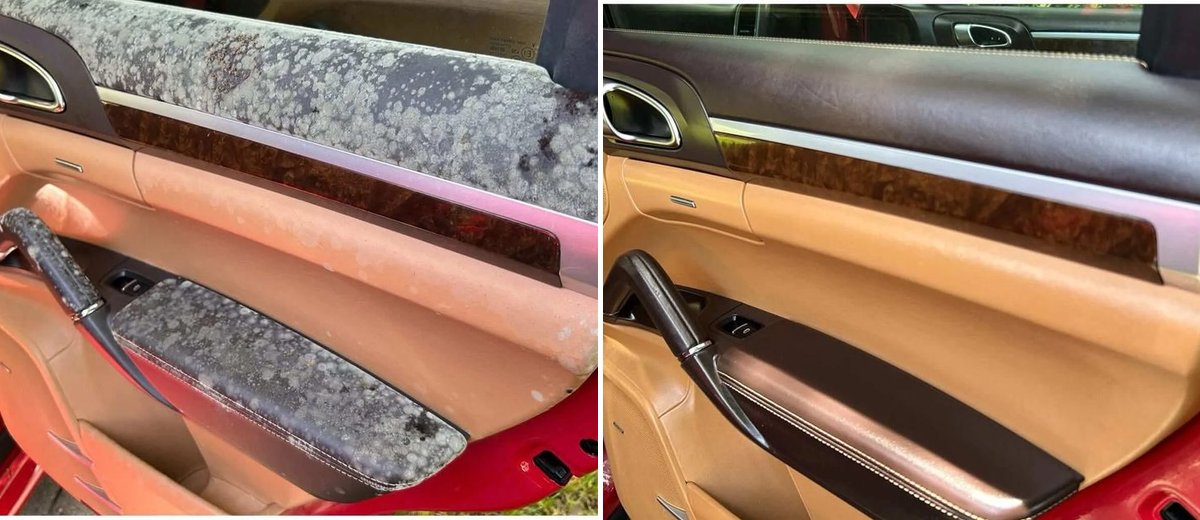
No stock photos. These are real DShine mold removal jobs across South Florida, the same 11-step process and chemistry used on every Coconut Creek appointment.
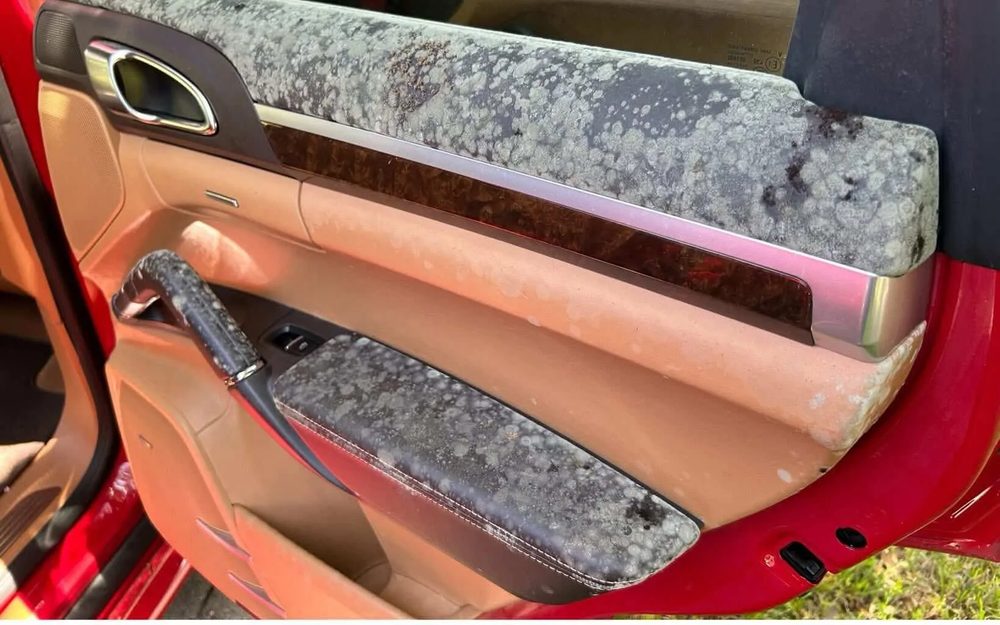 Before
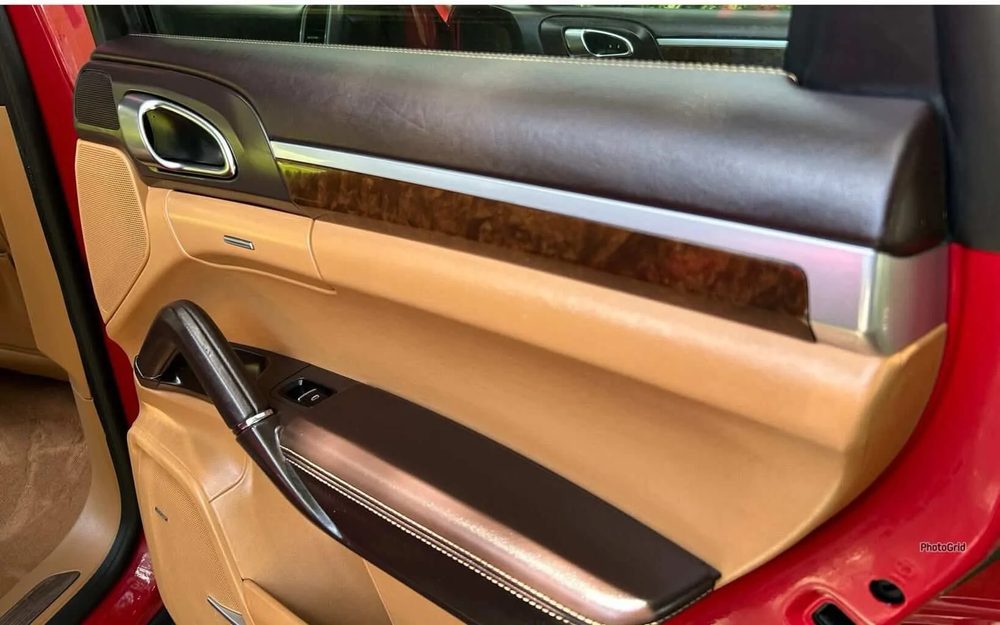 After
Porsche Cayenne — Door Panel & Armrest
Mold has spread across the tan leather door panel and armrest of this red Porsche Cayenne, reaching up along the wood trim. Leather like this gets the leather-safe protocol rather than hard scrubbing, followed by Concrobium and a sealed ozone cycle. Door panels tend to collect moisture when seals age or windows are left slightly open before a storm, a pattern that fits Coconut Creek's wet summers.
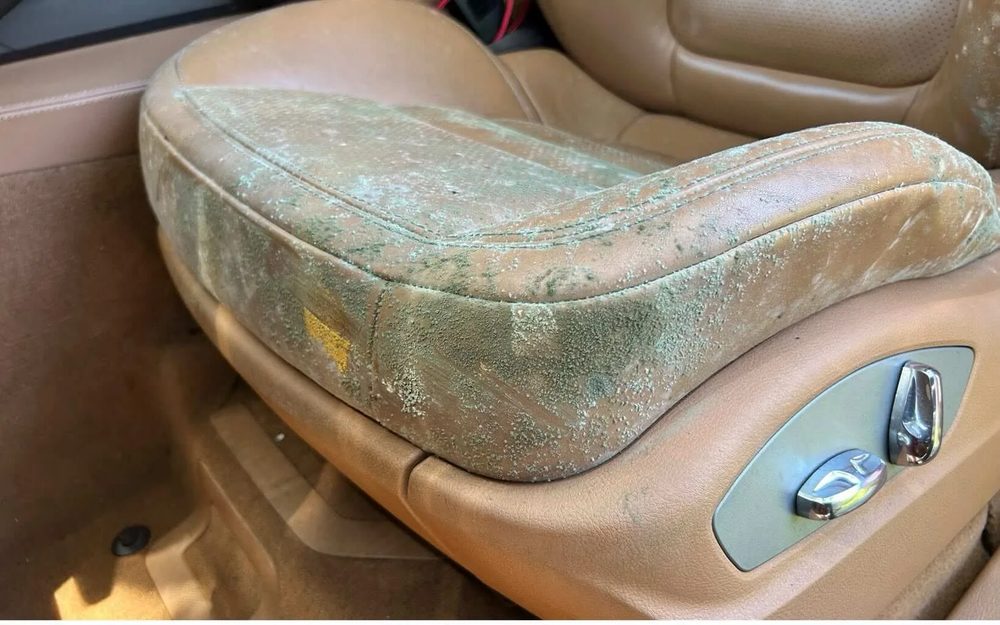 Before
 After
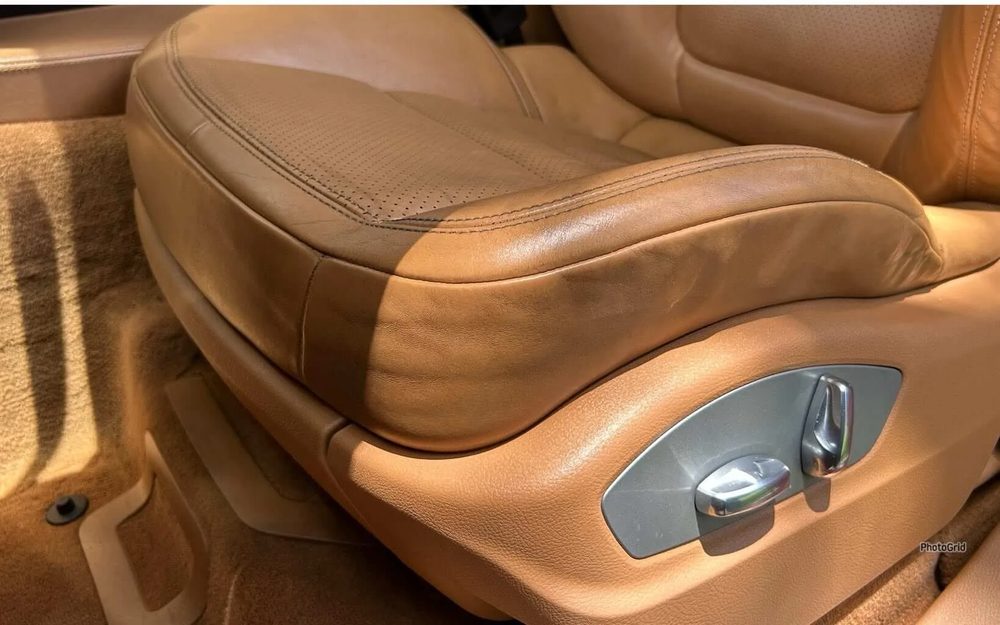
Leather Seat Bolster — Green-Blue Growth
The side bolster of a tan leather front seat is covered in a green-blue mold colony. Leather gets a leather-safe antimicrobial application, careful extraction and a sealed ozone cycle, because scrubbing can strip the finish and leave it cracked. A seat that spends weeks closed up in humid weather, as often happens in Coconut Creek's rainy months, is a typical place for this to start.
 Before
 After
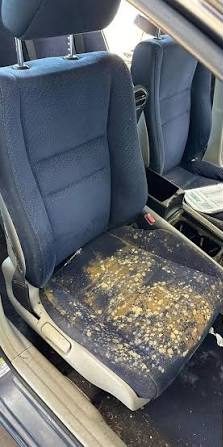
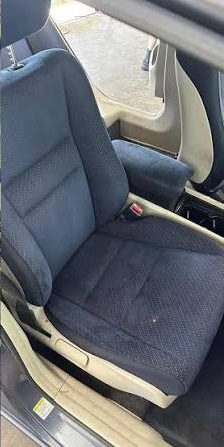
Cloth Bench Seat — Mold Stain Residue
With the seat cushion lifted, the underside of this dark blue cloth bench seat shows tan and yellow stain residue left by mold. Cloth like this is treated with steam, hot-water extraction and Concrobium so the moisture and residue come out of the foam rather than being pushed deeper. Foam holds water long after the surface looks dry, which is why this pattern is common in a humid climate like Coconut Creek.
 Before
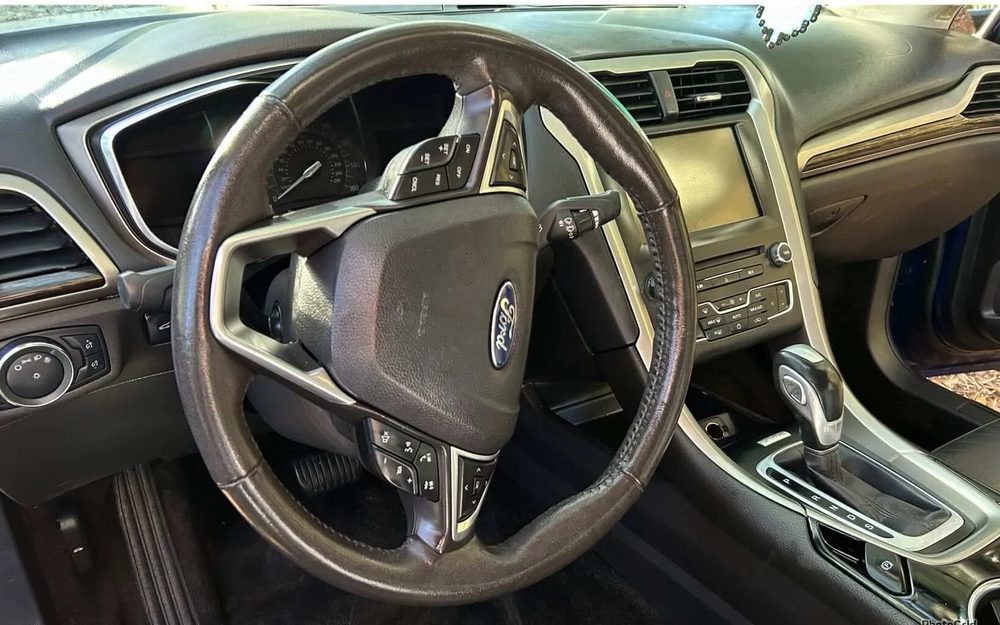 After
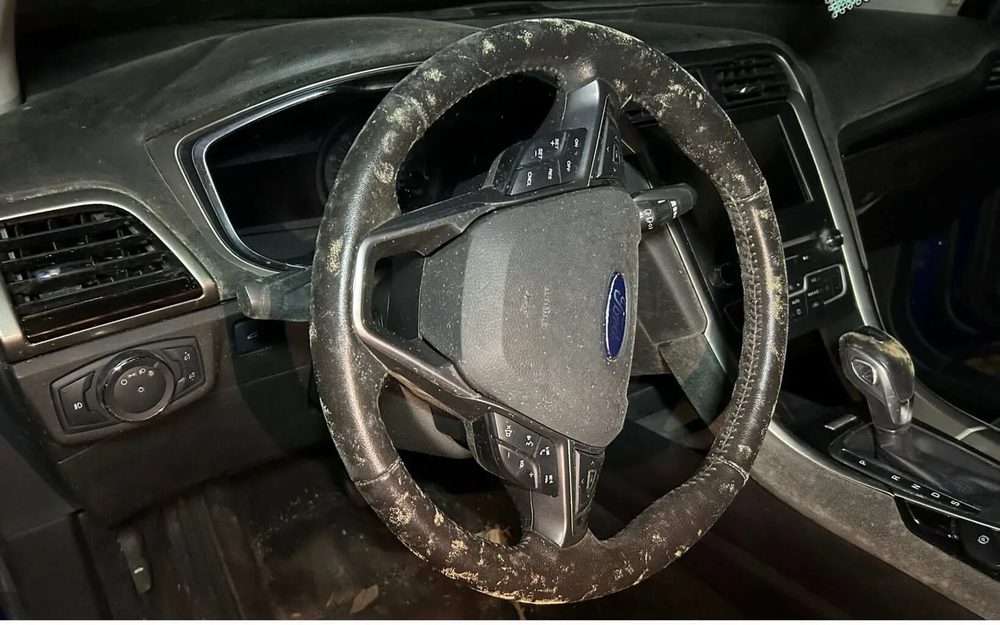
Ford Sedan — Steering Wheel & Dash Bloom
A grey-white mold bloom covers the steering wheel, dashboard and air vents of this Ford sedan interior. Hard surfaces get steam and Concrobium, and the vents are treated at the housing as well, since growth inside the ducts keeps releasing spores. A cabin that stays closed in damp weather without the AC drying it is a common reason for this look, which fits cars that sit a lot in Coconut Creek.
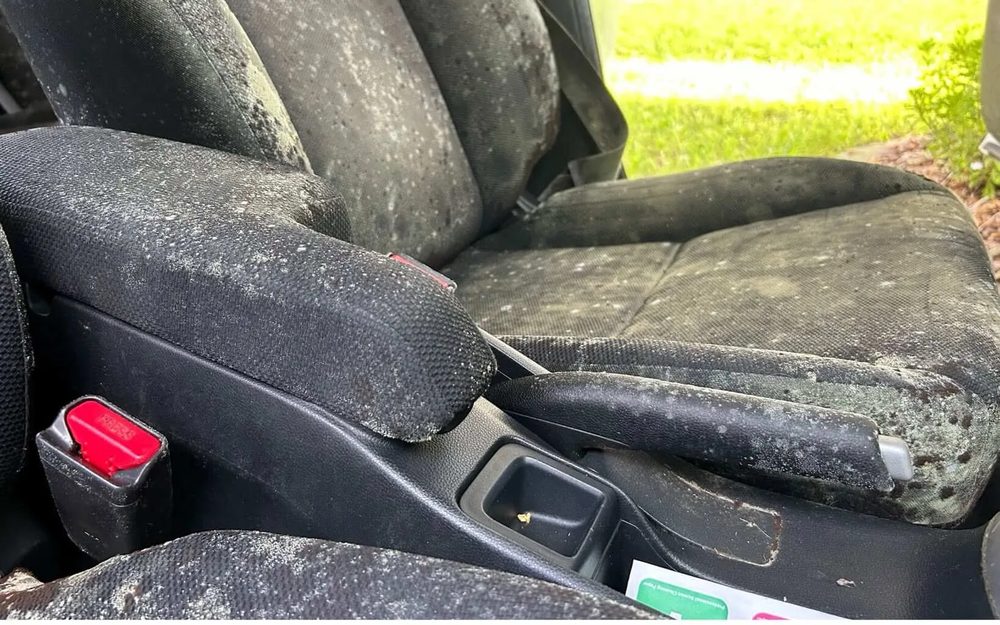 Before
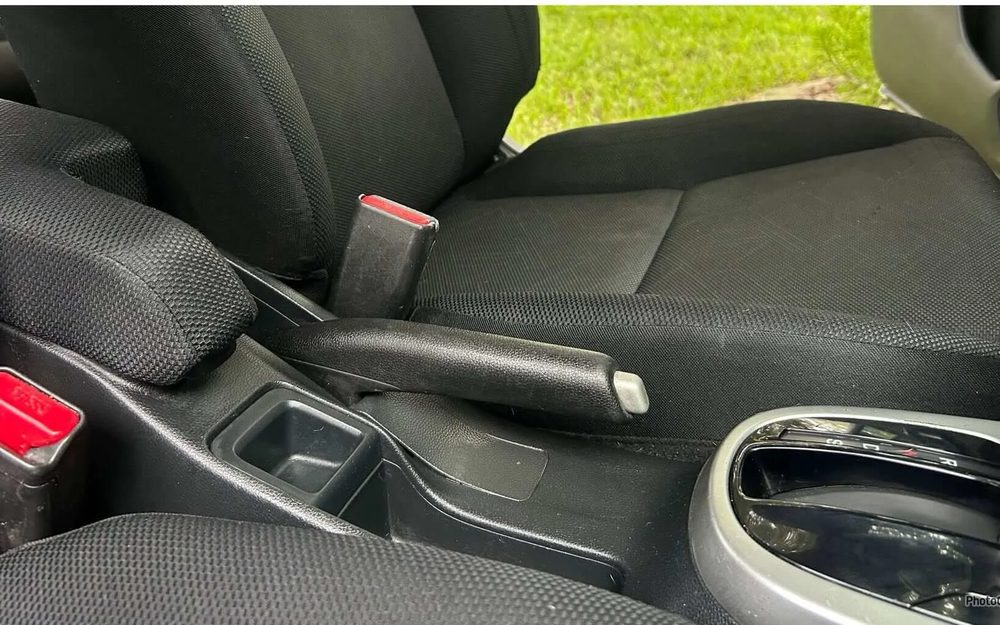 After
Black Cloth Seat & Console — Grey-White Bloom
A black cloth driver seat, armrest and console carry a grey-white mold bloom, with green lawn visible outside the window. Cloth and console plastics are steamed, extracted and treated with Concrobium, and the sealed ozone cycle reaches the air and the vent paths. Cars parked beside landscaped, regularly watered grass, as in many Coconut Creek neighborhoods, can take on more moisture than the owner realizes.
 Before
 After
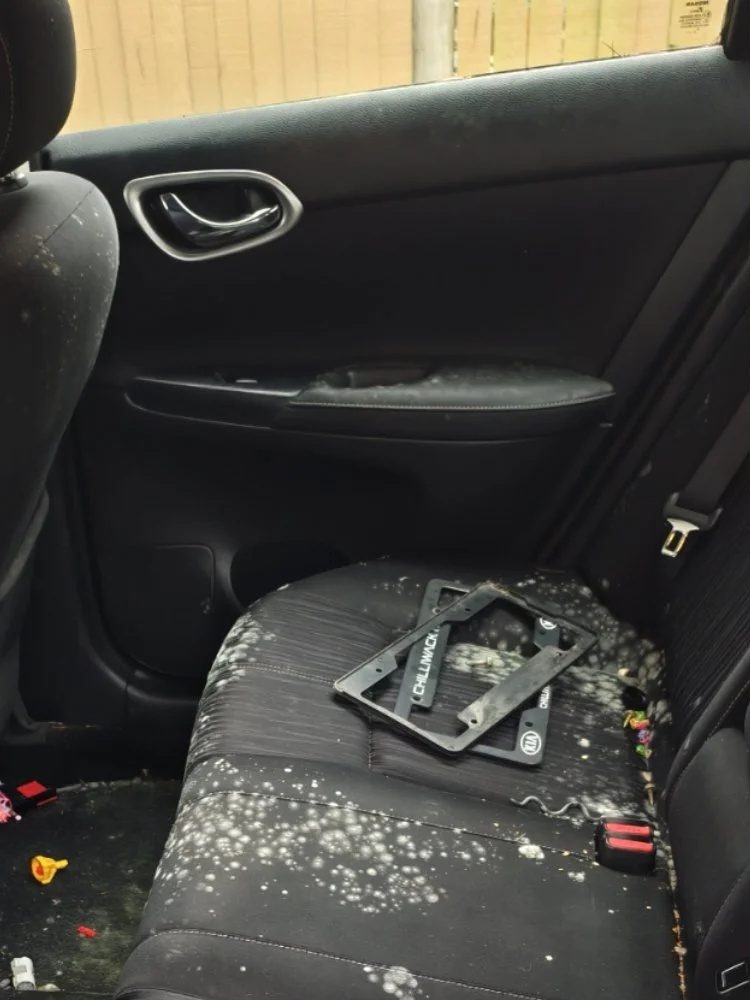
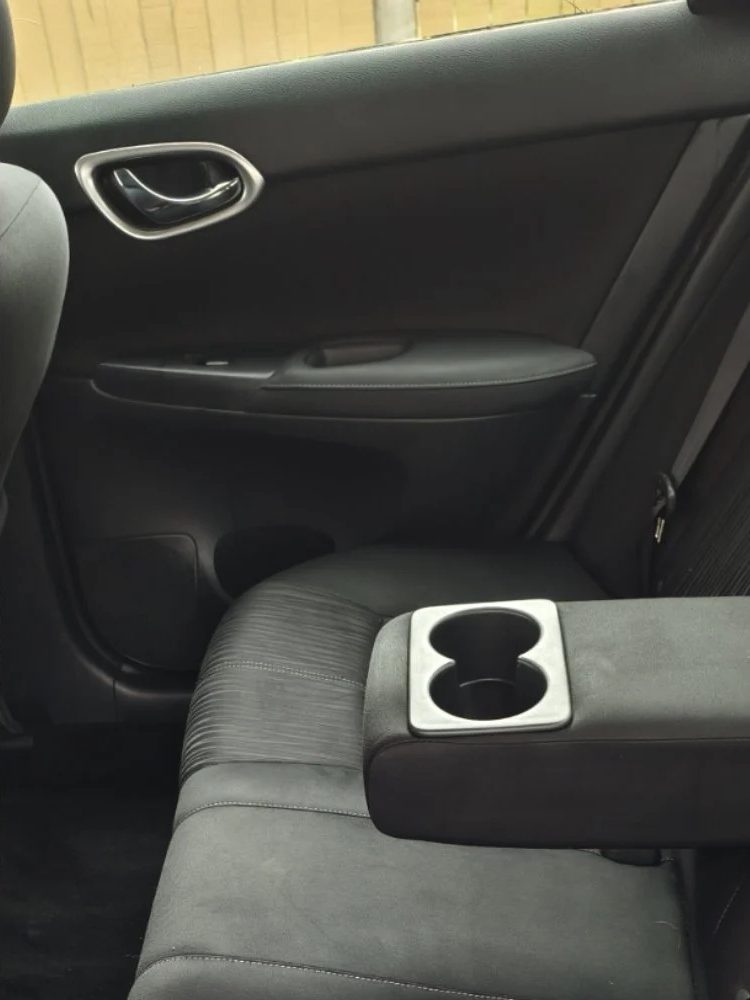
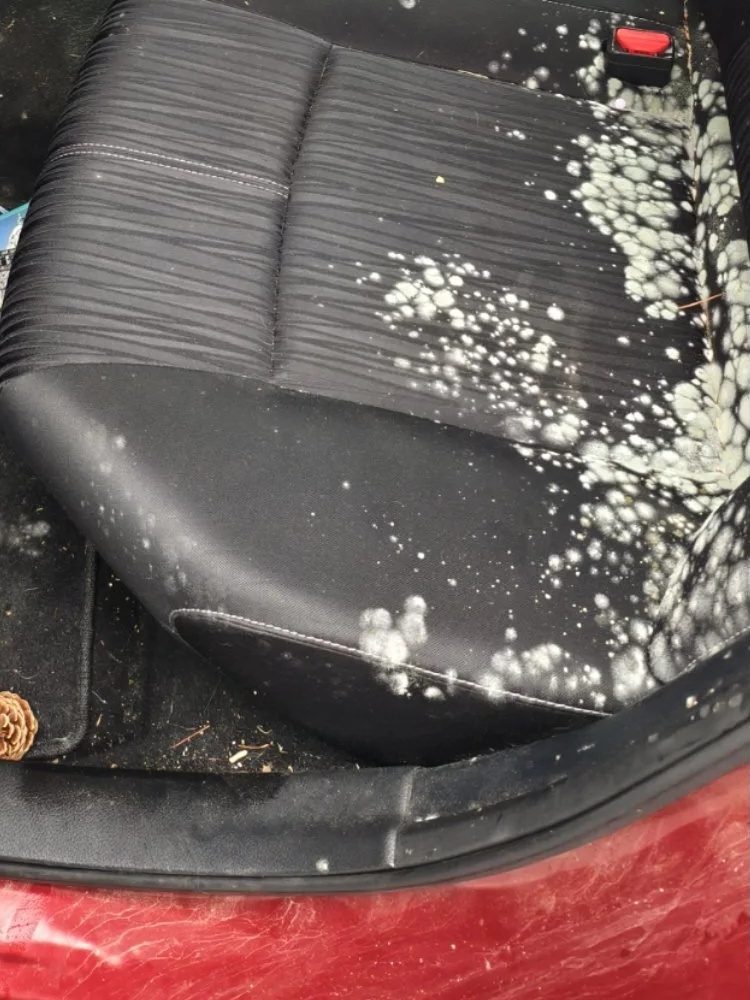
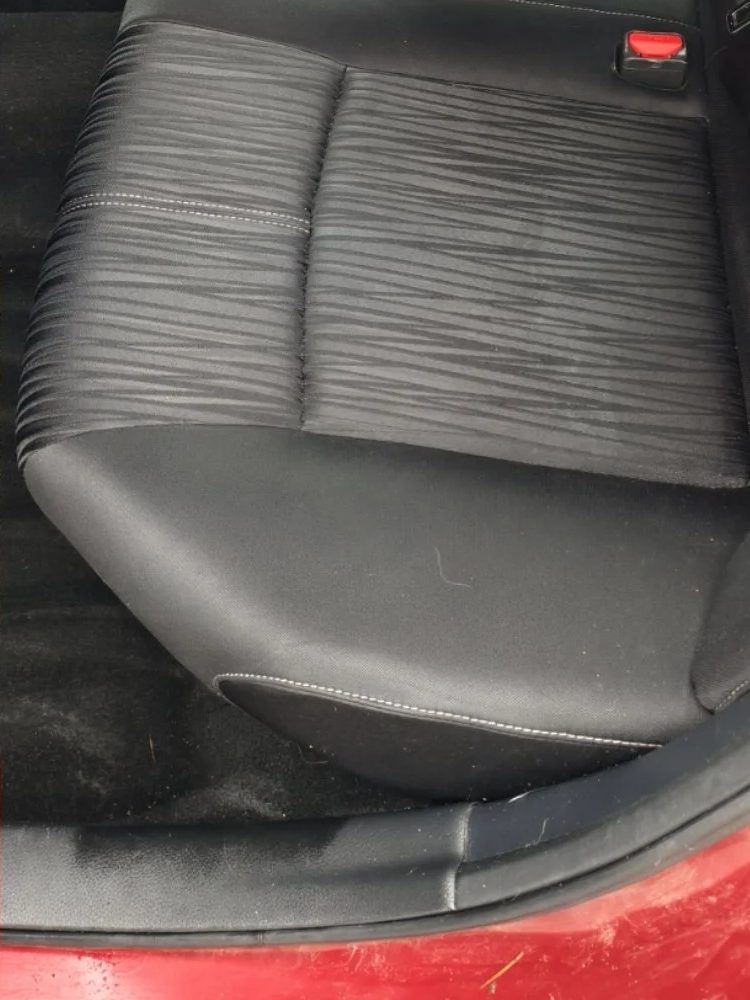
Rear Seat & Door Panel — White Mold Spots
White mold spots speckle the rear cushion and door panel of this black sedan, with loose debris and a license plate frame sitting on the seat. We remove loose items, HEPA vacuum, then steam, extract and treat the cushion and panel, and finish with the ozone cycle. Rear seats are overlooked in daily use, and a closed car in a humid, rainy spell, typical here, gives spots like these room to grow.
 Before
 After
Black Cloth Seat — White Speckling
A black cloth seat is dotted with white mold speckles, with the red car body visible below the window. Early speckling like this is the best time to treat it, since steam, extraction and Concrobium can reach it before it moves deeper into the foam. Light, scattered mold is a classic result of a few damp, closed-up weeks, a pattern that shows up across Coconut Creek's rainy season.
 Before
 After
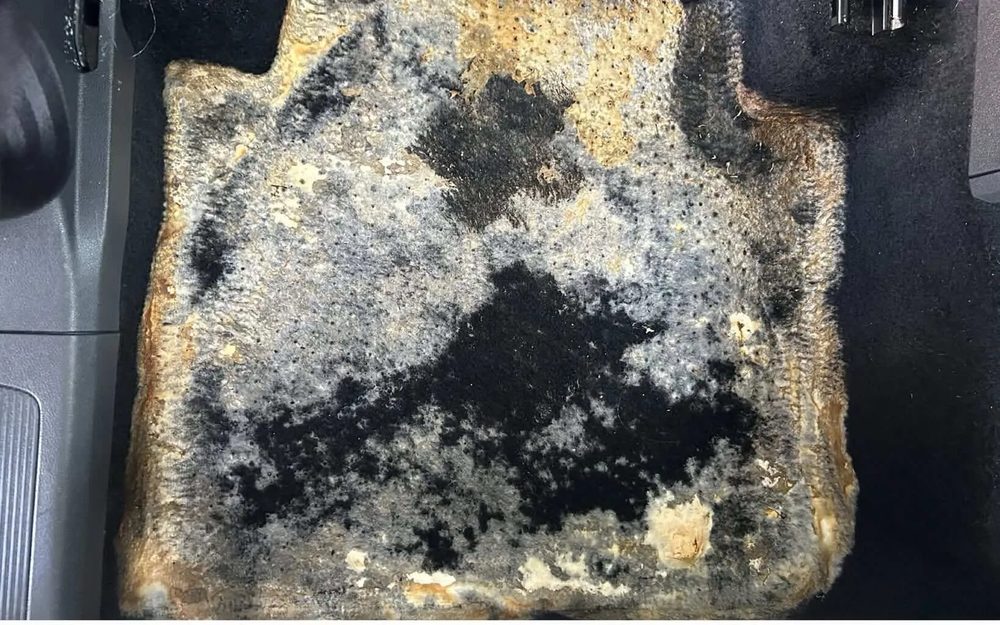
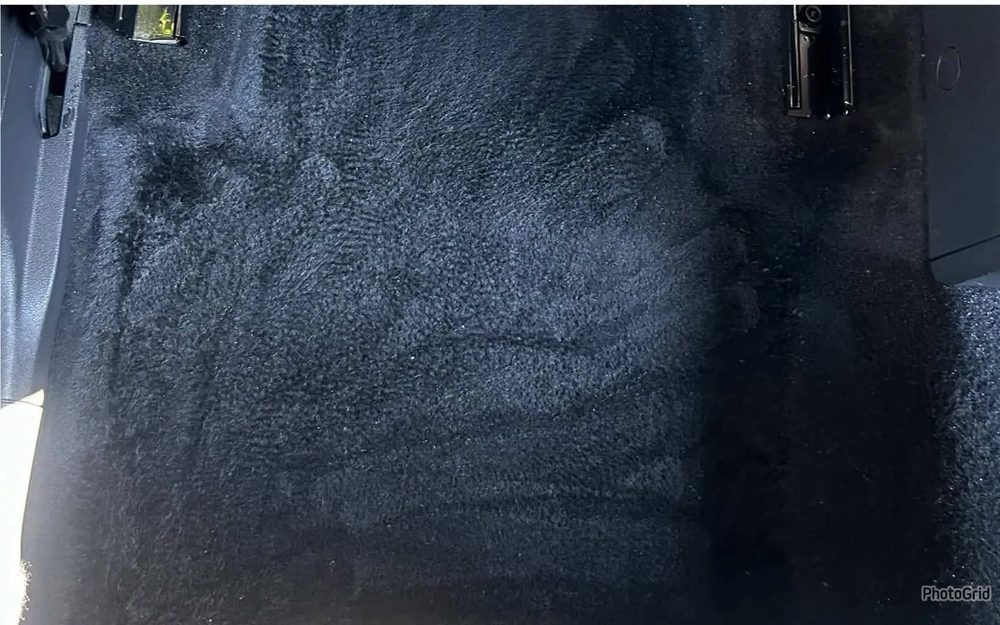
Floor Mat — Heavy Colony Growth
A carpeted floor mat shows heavy black, brown and white mold colonies, the kind that grows when carpet stays wet for a long time. Mats and the carpet beneath them are steamed and extracted, treated with Concrobium and dried completely, and the ozone cycle handles the airborne spores. Wet cleats, towels and spilled drinks left on the floor in a humid climate like Coconut Creek's can lead to this.
100% Satisfaction.
Written. No exceptions.
If the result doesn’t meet our standard, or yours, we come back and redo it at no charge. No forms to fill out, no arguing over what “counts.” The guarantee is in writing before we ever touch your vehicle.
Request Mold Removal in Coconut Creek · From $549
Fill this in once and send it. We get your address, vehicle, and the situation all in one message, no phone tag.
Rating
Detailed
Response
Three steps, from photo to a dry, fresh cabin.
We handle the gate, the parking space and the rest.
No drop-off. No waiting. We come to Coconut Creek.
We come to you in Coconut Creek,
from Wynmoor's gates to Lyons Road and Sample Road.
Mobile service: home, office, condo, or marina. No drop-off, no travel fee.
Not seeing your city? Ask us — we likely cover it.
Lakes, canals, 57 inches of rain a year.
A closed cabin in Coconut Creek rarely dries on its own.
Coconut Creek sits about 10 feet above sea level, collects close to 57 inches of rain a year, and has lakes and canals woven between its neighborhoods, so a closed cabin rarely gets a chance to dry out. Left untreated, what starts as a musty smell becomes a real health issue for the next person who drives the car. DShine's Concrobium Mold Control and ozone process address the cause, not just the symptom, backed by $2M insurance and a written guarantee. Mold doesn't need much to get started, any trapped moisture inside a closed cabin is enough given South Florida's humidity. The source is almost always one of four things: a clogged AC condensation drain letting water pool silently on the floor pan, a failed door or window seal letting rain in, a clogged sunroof drain, or the car simply sitting unused for two or more weeks without the AC running. In Coconut Creek that usually comes down to two things: a lightly driven car sealed up through the wet months, or a family vehicle where damp gear and spills were never fully dried out.
Coconut Creek neighborhoods we serve,
from Wynmoor Village to Sabal Pines Park and Regency Lakes.
From the gated condos of Wynmoor to the parks and shopping corridors of Lyons Road, Sample Road and NW 40th Street, we come to your Coconut Creek address.
Wynmoor Village — The city's large gated 55+ condo community, with an address on Avenue of the Stars in ZIP 33066. Parking layouts vary building to building, so we ask where the car sits, take the guard-gate and association details in advance, and work from a space where the car can stay put for the whole visit.
Butterfly World and Tradewinds Park — Butterfly World sits at 3600 W. Sample Road, inside Tradewinds Park. The Sample Road corridor draws commuters and park staff whose cars sit in open lots all day, so we see sun-baked, rain-exposed vehicles here whose door and windshield seals have taken years of heat and storms.
The Promenade at Coconut Creek — An open-air shopping center at 4443 Lyons Road with office space above retail. Cars that spend long workdays in a lot, then run the AC on the drive home after rain, are a pattern we see around this corridor, because condensation builds in the evaporator and vents when the cabin is cooled quickly.
NW 40th Street corridor — Home to Seminole Casino Coconut Creek at 5550 NW 40th Street, in ZIP 33073. We serve the homes and workplaces around this corridor rather than the property itself, and the usual problem is a car that spends long, irregular hours parked outdoors and picks up humidity through the seals.
Sabal Pines Park — At 5005 NW 39 Avenue, the park has soccer, football and baseball fields, tennis courts and a hockey rink. Families in this part of town carry wet cleats, towels and drinks in the car, so the mold we treat nearby tends to start with something damp left on the carpet overnight.
Winston Park — Winston Park and its nature trail sit at 5201 NW 49 Avenue, with lake and canal views and a nature preserve. Nearby driveways often have mature shade trees, and leaf litter can clog the drains around the windshield and sunroof, so we check these channels when we trace where moisture entered the cabin.
Lakeside Park and Regency Lakes Blvd — Lakeside Park is at 5555 Regency Lakes Boulevard, in one of the city's newer residential areas. Newer attached garages are built tighter, so a car left inside a closed garage for a few weeks can hold damp air, and we look for wet items and spills left in the cabin.
Don't see your area? Ask us — we likely cover it.
Coconut Creek car mold,
the questions we hear most, from Wynmoor to Winston Park.
Tap any topic to read the full breakdown.
Coconut Creek sits about 10 feet above sea level and collects roughly 57 inches of rain in a typical year, with June the wettest month at around 7.3 inches. About 0.8 of the city's 12 square miles is water, so lakes and canals sit close to a lot of driveways. This is a low, wet, inland-suburban setting, not a salt-air one.
The mold calendar here is driven by rain and heat. August highs average close to 92°F, so a car baking in a parking space and then drenched by a late-afternoon downpour pulls damp air through every door and window seal. Damp upholstery in a closed cabin only needs about a day or two before spores start colonizing, and the humidity outside rarely falls far enough to help it dry.
One is the lightly driven sedan or small SUV that belongs to a household in the city's big gated 55+ community. It makes a few short trips a week to the store or the clinic and spends the rest of the time shut up with whatever humidity was inside when the door last closed. The other is the busy family vehicle from a newer subdivision: crossover, minivan or three-row SUV that is in and out of the driveway every day.
The mold looks different in each. The lightly used car tends to show a musty smell the moment the AC starts, a film on the dash vents, or white speckling along seat seams. The family car shows it where life happens: a wet towel under a seat, a juice spill in the rear footwell, a cleat bag left on the carpet for a weekend after a rain-soaked game.
What the two share is that the owner rarely sees it coming. A car that gets driven every day feels fine until one humid week. A car that barely moves feels fine until someone opens the door after a long wet spell. Both are routine jobs for us. Both are routine jobs for us.
A third group worth mentioning is the second or third car in a larger household, which is often a teenager's first car or a spare that gets used on weekends. Those vehicles get the least attention and the most unexpected moisture, from open windows to forgotten gym clothes.
Attached garage, newer home: Newer garages tend to be built tighter, which keeps rain out and keeps damp air in when the door stays shut for weeks. A wet umbrella, a damp cooler bag or a soggy floor mat inside a sealed car, inside a sealed garage, is all the moisture mold needs to get started on the carpet.
Driveway under trees: This is a city that plants for shade and wildlife, and the upside is real, but leaves, pollen and drip collect at the base of the windshield and around the sunroof. When those drain channels clog, rain has nowhere to go but into the cabin, and a car under heavy canopy stays wet longer after every storm.
Assigned condo space, open air: Condo communities of every age often rely on assigned open or covered spaces rather than private garages, though layouts vary building by building and we never assume. Out in the open, seals take every downpour head-on, so a tired door or windshield seal shows up as damp carpet sooner than it would in a garage.
Carport, or a retail and office lot: A covered carport is the lowest-risk spot for a car that sits, because shade and cross-breeze help the cabin air out, though wind-driven storm rain still angles in. A car left in a lot from morning to evening bakes, then gets the AC cranked on the drive home, which pushes condensation into the evaporator and vents.
June through September, hot and soaked: June is the wettest month here and August the hottest, so this stretch is when a closed car goes from fine to musty fastest. Daily afternoon storms mean the cabin only partly dries between rains, and any cracked window or sunroof pays for it.
Mid-August to mid-October, storm peak: NOAA puts the peak of the Atlantic hurricane season around September 10, with most activity between mid-August and mid-October. Storm prep means cars pulled into garages, windows sealed, sometimes a week of rain and power loss. A car shut up that way, still holding wet air, is a classic call for us in the weeks after.
School's out, families away: Summer break lines up with the wettest months. A household that flies out for two or three weeks leaves a closed car in a humid garage or driveway for most of that time, and many of the family-vehicle calls we get land right after those trips.
December through April, drier and cooler: January lows average near 58°F, rain drops off, and the AC runs less. Risk is lowest, but not zero. A car that was damp going into the cool months can stay musty, and a stale smell that shows up in spring usually started in autumn. In any window, a closed car that stays wet for more than a couple of days deserves a look.
Gate logistics decide more of a Coconut Creek schedule than the car does. Guard houses, resident-only entrances and visitor lists mean a vehicle can be ready and we can still sit at the entrance if nobody told security. A text with the community name, the unit or house number and the name on the guest list takes care of it ahead of time.
Some associations also set rules about what a service van may do on common property, from where we may park to whether work in a shared lot is allowed at all. Ask your manager if you are unsure. If the answer is no, we move to your own assigned space, your driveway or a workplace spot you control.
What we actually need is modest: level ground, room to open every door fully, and a car that does not have to move for several hours. If a spouse, neighbor or property manager will be there in your place, give us their number and we will text them on arrival and again at the end.
1. Damp air sealed into a car that barely moves: In lightly driven vehicles this is the most common story. Windows shut, no airflow, a stretch of wet weather, and moisture settles into carpet and seat foam. Nothing leaked and nothing spilled; the car simply stayed humid.
2. Wet things left in the cabin: In busy family cars it is a towel, a bag of wet sports gear, a half-finished drink or a damp umbrella. After a hot day or a long weekend, one small wet item has grown a patch that creeps outward into the carpet.
3. AC drain and cabin filter trouble: A condensation drain that does not clear leaves water on the floor pan, and a cabin filter packed with pollen holds moisture against the evaporator. The first clue is a musty burst from the vents when the AC comes on.
4. Clogged cowl and sunroof drains, then tired seals: Leaf litter and pollen from a well-planted city plug the small channels that route rain away, and after a heavy storm the water takes a different route, often down a pillar and into the headliner. Seals hardened by years of sun add to it, especially in open parking and on older cars.
It starts with a message, not a visit. You send photos of the worst spots by WhatsApp or text, tell us the community or street, and within two minutes you have a price tier. Then you pick a time and tell us whether the car will be in a driveway, a garage or an assigned space, so we know what we are walking into.
On arrival the first thing is a slow look at every fabric and plastic surface: headliner, seat seams, carpet edges, trunk floor, vent louvers. That look settles whether the job is $549 or $749 and which areas need more than surface work. After that come roughly three to four hours of hands-on work, most of it in the dry-down and the ozone cycle.
Afterwards you get photos, a short note on anything that looked like a moisture source, and a go-ahead once the cabin has aired out. Nothing about it requires you to drop the car at a shop or sit around waiting for a call, and you can be at work or home the whole time.
"What does it cost?" Nearly everyone starts here. It is $549 when the mold is in one area and $749 when it is throughout the vehicle, with travel included. Photos or a short description are enough for us to give you the tier, and the exact figure is confirmed before any work begins.
"Will you come inside my gate?" Yes, once we have the entrance details. Wynmoor-style guard gates, resident-only entrances and condo lots are routine for us. We just need a name or unit number for the guest list, and a space where the car can stay put for the visit.
"Will the smell just fade?" Not if we do the job properly. We aim at the source, the mold in the foam, carpet and vents, rather than the scent, and an ozone cycle at the end handles what is left in the air. People with kids or allergies often ask this first, and it is the reason we do not rely on air fresheners.
Ceramic Coating is the pairing we hear about most for cars that live in open parking. A vehicle that spends years in sun and storms outdoors tends to have tired paint as well as a damp interior, and owners often prefer to handle both in one visit rather than book twice. Owners of cars that live in open parking tend to ask about it most.
Paint Correction comes up for the same reason, and Engine Bay Cleaning is a smaller add-on for older cars that have sat a long time, since a vehicle that has been idle usually deserves a look beyond the cabin. We can add any of these to the same appointment.
Owners of cars that live in open parking also ask about sun damage to the dash and trim, which is a separate issue from mold but one we are glad to look at while we are already inspecting the interior. If you want a second service added, mention it when you book so we can plan the time.
What you see: Windows that fog on the inside and stay foggy after the AC has run mean the cabin is holding too much moisture. White freckles or darker spots in seat seams, stitching and the base of the seat belt webbing are early mold, well before a smell appears.
What you feel: Carpet that feels cool and a little damp near the door sill, with nothing spilled, is another early warning. So is a slightly tacky texture on dash or door surfaces that you wipe and that comes back within days. It tends to show up first where hands and knees touch, or in the footwell closest to the door you use most.
What you smell, and what your body says: A musty burst from the vents in the first minute of the AC is often the first sign anyone gets. If you sneeze or get itchy eyes in the car but not outside it, treat that as a signal too, and send us a photo.
The weekly drive: Take the car out for 20 minutes or more with the AC running and finish with the fan on fresh air for the last few minutes, so the evaporator dries before you park. For a car that sits through the wet months, this one habit does more than anything else on this list. Skip it for a week and the cabin keeps whatever moisture came in on your last trip.
The cabin sweep: Remove anything damp before parking: towels, umbrellas, gym bags, cups. Make sure the floor mats are dry and the windows and sunroof are fully closed. A small moisture absorber is a fair supplement, but it will not fix a source.
The outside check: In a tree-heavy neighborhood, clear leaves from the cowl area at the base of the windshield now and then, and wipe the door seals with a dry cloth after big storms. Those two small habits close off the most common ways rain gets in and lingers.
The classic household here has a daily driver that does the school run and a second car that mostly waits in the garage. The second one is usually the one that needs us, and it is also the one the owner is least likely to notice. We inspect each vehicle on its own, price each by how much of it is affected, and can usually handle both in one visit.
If one car has mold, it is worth a quick look at the other, especially when they share a garage or driveway and the same damp air. For couples who share a vehicle, or families with a teenager's first car, we can work around whoever needs the keys first. Send photos of each car and we will lay out a plan.
If you manage a property or a community and a resident wants a car treated, it is simplest for the resident to book directly, so the price, the access instructions and the photos all come through one thread. That keeps the paperwork simple and avoids confusion about who approved what.
What it promises: For 30 days after the visit, a return of mold or of the mold smell brings us back to re-treat the car free of charge. The guarantee is in writing, so nobody has to remember what was said on the driveway. That puts the terms on paper and keeps the conversation simple if you ever need us back.
What usually triggers a return: A moisture source that was left alone. Around here that is most often a sunroof or cowl drain full of leaves, a door seal hardened by years of sun, or a car sealed back up in the same damp spot after we leave.
What we do about it: If we notice a likely source during the visit, we say so then, with a simple note on where to look, so you can have it fixed and the guarantee never needs to be used. If something does come back, text us photos and the date, and we schedule the second visit.
Older cars often have tired seals and softer interior materials, so we adapt the process rather than apply the same pressure everywhere. Leather gets a leather-safe protocol with no aggressive scrubbing, and delicate trim is handled with gentler steam and extraction settings.
Newer and higher-value cars have their own concern: sensors, electronics and carefully finished surfaces. We inspect first, explain what we find, and are straightforward when something like cracked leather or a deeply soaked seat foam goes beyond what treatment can fully reverse.
Collector and weekend cars deserve the same approach with extra restraint. A car that is driven a handful of times a year can hold humidity for months, and its original interior materials may be hard to replace, so we inspect carefully and tell you what can and cannot be restored before we begin.
Last drive: Finish with the AC off and the fan on fresh air for a few minutes so the evaporator dries out. Clear out anything damp or edible, from towels and umbrellas to drink cups and snack wrappers. Also pull the cabin filter question forward: if the vents smelled musty before the last trip, deal with that first.
Cabin check: Look at the floor mats and the carpet under them, make sure windows and sunroof are fully shut, and check that nothing is leaking from a cooler or a sports bottle. A dry cabin going in is the best protection you can give it. Do the same for the trunk, where a leaking seal or a damp spare-tire well can hide until you need it.
Parking spot: Pick the driest, airiest place you have. A carport or an open driveway with some breeze usually beats a sealed garage for a car that will sit. Avoid parking it against dripping plants or sprinklers. If the only option is a closed garage, leave a little space around the car so air can move.
Someone to check on it: If you will be away for weeks in the wet months, ask a neighbor or relative to run the AC for 20 minutes now and then. If that is not possible, call us when you get back and we will look before a small problem grows.
First week: A damp patch is still on the surface, and extraction plus an antimicrobial treatment can usually reach all of it. In the hot, wet months, a smell that is faint on Monday can be unmistakable by the weekend. In the first few days, the foam has barely started to absorb anything, and the smell is easy to trace to one spot.
By week three: Growth has moved into the foam under the fabric, and spores are circulating through the vents each time the AC runs. The job covers more of the car, which is where the $749 tier comes in. That is also when the cheaper-looking fix, a quick cleaner, tends to fail because the mold is below the surface.
After two months: Leather can stain and dull, headliners can sag, and some seat cushions or panels may be past saving. We will tell you honestly what treatment can fix, and what it cannot, but an early call keeps more options open. Waiting for a car to smell worse before calling is rarely a saving; the work grows with the delay.
The city lists 18 parks, and Sabal Pines Park alone has soccer, football and baseball fields, tennis courts, a hockey rink and a lake with an annual fishing derby. A car that carries kids from field to field collects wet cleats, damp towels, muddy bags and cooler water.
Those items rarely get unpacked right away. A damp bag left overnight in a closed car is enough to start a mold patch on the carpet, and by mid-week it can reach the seat. If that sounds like your vehicle, a quick check before it spreads is worth it.
We treat every one of these surfaces with a protocol that fits the material: steam and extraction for carpet and cloth, a leather-safe approach for leather, and Concrobium plus an ozone cycle to reach spores in the air. The result is a cabin you can use for the next practice without worrying about what is under the seat.
One area, $549: One seat, one stretch of carpet, the dash and vents, or a trunk corner. The rest of the cabin looks clean and smells normal. Travel is included, and the price covers all 11 steps. Travel to your Coconut Creek address is included in both, and nothing is added for gate or condo access.
Throughout, $749: Growth across several surfaces, such as seats, carpet and headliner, or a smell that fills the whole cabin. The process is the same, but with more surface to treat. There is no sliding scale beyond these two tiers, so the price you hear is the price for that tier.
From photo to price: You send photos or a short description, and we confirm the tier in under 2 minutes. The exact price is confirmed after we review them, before any work begins. If the inspection changes the picture, we tell you before we go on, and you approve the number first.
Coconut Creek is low, rainy and humid, with lakes and canals woven through it and a hurricane season that runs June 1 to November 30. Its cars fall into two broad groups: lightly driven vehicles that sit shut up, and busy family vehicles that carry wet gear and spills.
Whichever group yours belongs to, the plan is the same: inspect, treat every surface, deal with the air, and leave you with a dry cabin and photos to prove it. It is $549 for one area or $749 for the whole vehicle, we come to your address, and an IDA-certified technician with $2M in liability coverage does the work.
Behind it all is a written 30-day guarantee. If mold or the smell returns in that window, we re-treat free. The fastest way to start is a few photos and your street or community name. Send two or three photos and we take it from there.
Sealing up: Once steam, extraction and the Concrobium application are finished and the surfaces are dry enough, we close every window and door and set an ozone generator inside. Ozone (O3) circulates through the cabin and the vents, working on spores in the air and on odor molecules that a wipe-down never touches.
Keeping clear: Nobody stays inside the vehicle during the cycle, and we ask that nobody lingers near it. In a shared garage or a gated condo lot, we tell whoever controls access to keep people away from the car until we say it is done. That keeps the cycle clean and avoids any surprise.
Airing out: When the cycle ends, we open the doors and let the cabin ventilate fully. A driveway with a breeze clears faster than a shut garage. Then comes the odor treatment and a final check, and we message you when the car is ready, not simply when the generator stops.
Quick answers
for Coconut Creek drivers before you book.
Add-ons Coconut Creek clients book
Still deciding? Read: the complete mold removal guide · does insurance cover it? · why DIY mold removal fails.
Mold in your car? We come to you in Coconut Creek.
Serving Coconut Creek and all of Broward County. Fixed pricing, no travel fee. We confirm in under 2 minutes.
It Might Just Be an Odor Problem
If there's no visible mold growth yet, the smell alone is usually an Odor Removal Detailing case ($349 flat) — faster than full mold remediation ($549–$749). See which one matches what you're dealing with: