What a Pompano Beach Mold Job Includes
This is not a car wash. Car Mold Removal uses Concrobium Mold Control treatment, pH-balanced products, and machine assistance, the same process used in pre-sale preparations for luxury dealerships.
Why it matters for your health: Mold in a vehicle is a different exposure than mold on a wall at home. With the AC recirculating, everyone inside is breathing concentrated spores for the length of the drive. The EPA and CDC both link mold exposure to respiratory irritation, allergic reactions, headaches, and worsened asthma symptoms. Children, older passengers, and anyone with a compromised immune system typically react faster and more severely than a healthy adult would. By the time the smell is noticeable, spores have usually already spread through the HVAC system into every vent in the cabin.
Curious what actually happens during the visit? Tap through our real 11-step process below to see what we do at each stage and why it matters.
What every Pompano Beach mold job gets you
Most detailers in Pompano Beach charge less. Here’s exactly what you gain — and what you risk — with each choice.
| DShine DetailsFrom $549 · travel included | Avg Pompano Beach Detailer$149 – $199 | |
|---|---|---|
| Industry certificationsIDA, Koch Chemie, Meguiar’s, 3M, Symplex, XPEL | ✓6 verified | —0 credentials |
| $2M liability insuranceWe cover any damage — in writing | ✓ | —Often uninsured |
| Deionized water systemZero mineral residue, no water spots | ✓ | —Tap water, water spots |
| Fresh microfibers per vehicleNo cross-contamination between jobs | ✓ | —Shared towels, swirl risk |
| Mold-specific chemistry onlyConcrobium, Benefect & Meguiar’s, no harsh acids | ✓ | —Industrial degreasers |
| Before & after photosSent via WhatsApp on completion | ✓ | —No documentation |
| 100% written satisfaction guaranteeReturn & redo at no cost if unsatisfied | ✓ | —No written guarantee |
| Travel to your address — $0Home, office, condo — no drop-off | ✓ | Sometimes adds fee |
DShine vs. any other detailer
in Pompano Beach, Broward County
Three things most detailers won't tell you. We put them in writing.
 Since 2018
With more than 20 years of hands-on experience in the automotive care industry, Evelio launched DShine Details in August 2018 with one van and zero shortcuts. For the first six months he slept in the van to keep costs down and standards up. Today DShine runs 7 certified vans across Miami-Dade, Broward, and Palm Beach, and the commitment hasn't changed. Every vehicle is treated as if it were his own.
What clients say
in their own words.
Before & After: Mold Removal We've Actually Done
No stock photos. These are real DShine mold removal jobs across South Florida, the same 11-step process and chemistry used on every Pompano Beach appointment.
 Before
 After
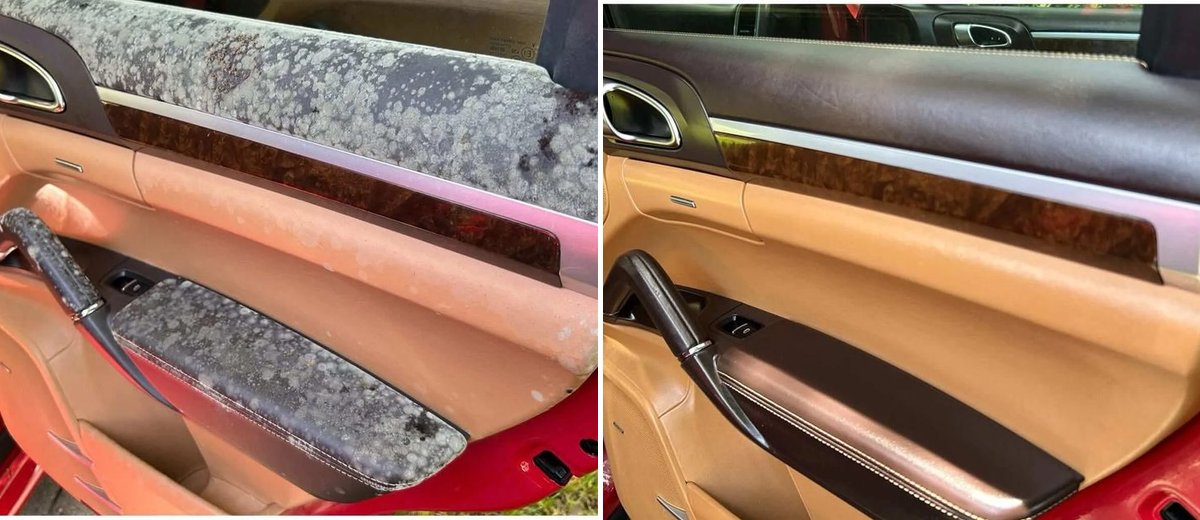
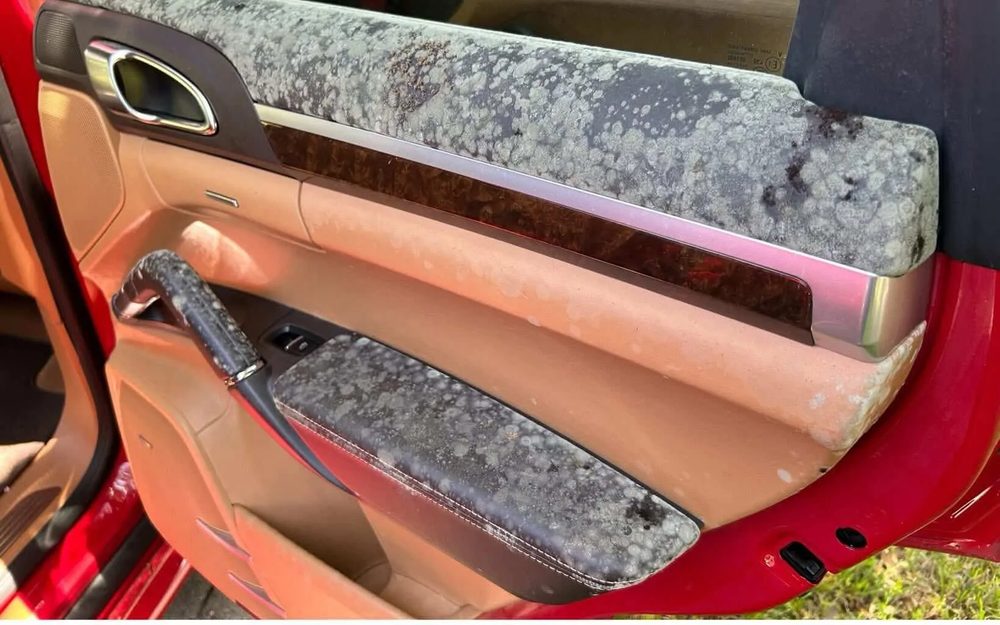
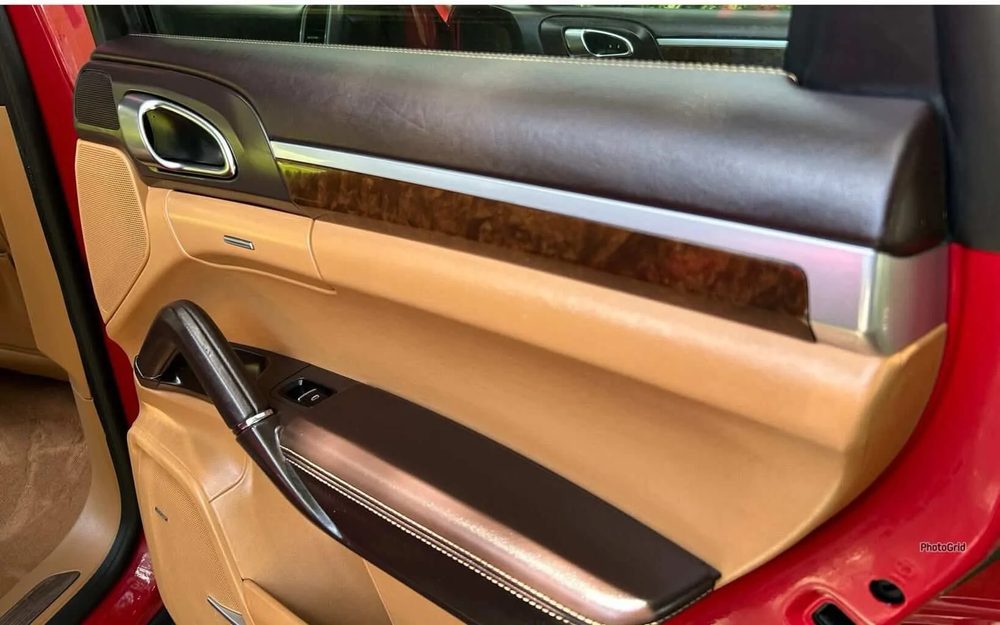
Porsche Cayenne — Door Panel & Armrest
Mold spread across the tan leather door panel and armrest, right up to the wood trim. Leather like this gets the leather-safe protocol: controlled steam and extraction, Concrobium on the surface, then ozone for the cabin air, so the finish is not stripped. In Pompano Beach this pattern often starts with damp beach clothes or a wet towel resting against a door panel in a closed cabin.
 Before
 After
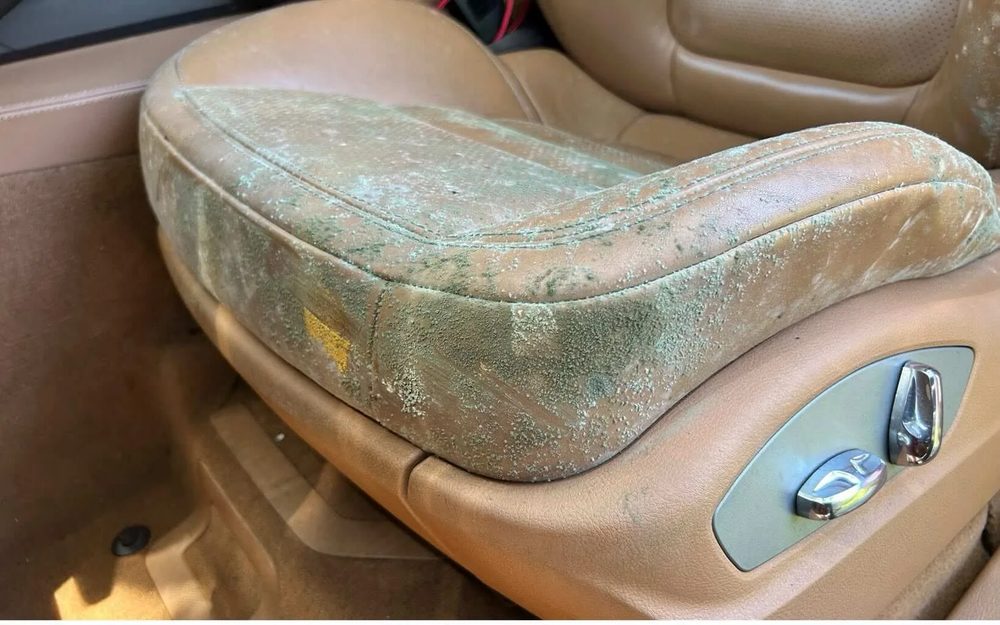
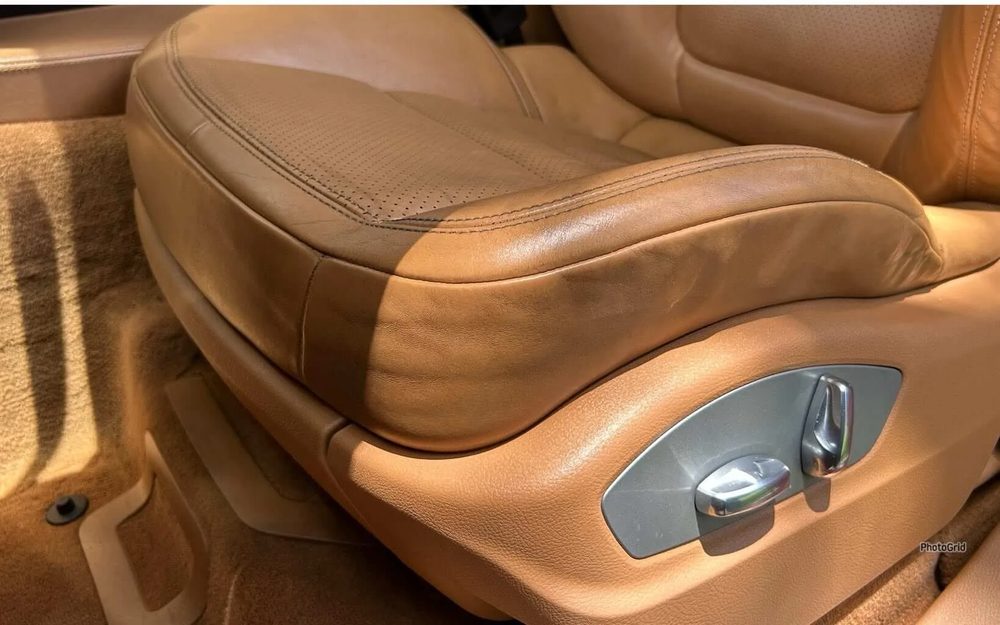
Leather Seat — Green-Blue Mold
A tan leather front seat bolster covered in a green-blue growth. The bolster is where legs and wet shorts rub, so it is a common starting point. We lift the growth with steam and gentle extraction, treat the surface with Concrobium, and finish with ozone. Salt-damp swimwear pressed against leather, then a closed car in afternoon heat, is a typical way this develops near the coast.
 Before
 After
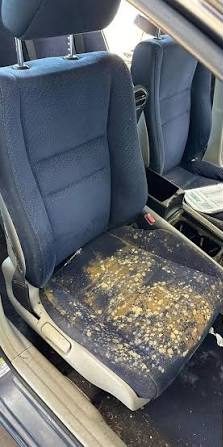
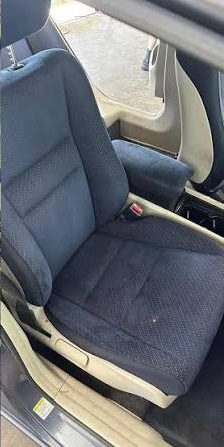
Cloth Bench Seat — Stain Residue Underneath
A dark blue cloth sedan bench seat with the cushion lifted, showing tan and yellow mold-stain residue on the underside. Moisture sinks into the foam and the staining shows underneath long before it surfaces. We steam and extract through the foam, treat with Concrobium and ozone the cabin air. A wet fishing bag set on the seat and left for days is the kind of pattern that can cause this in a coastal fishing city.
 Before
 After
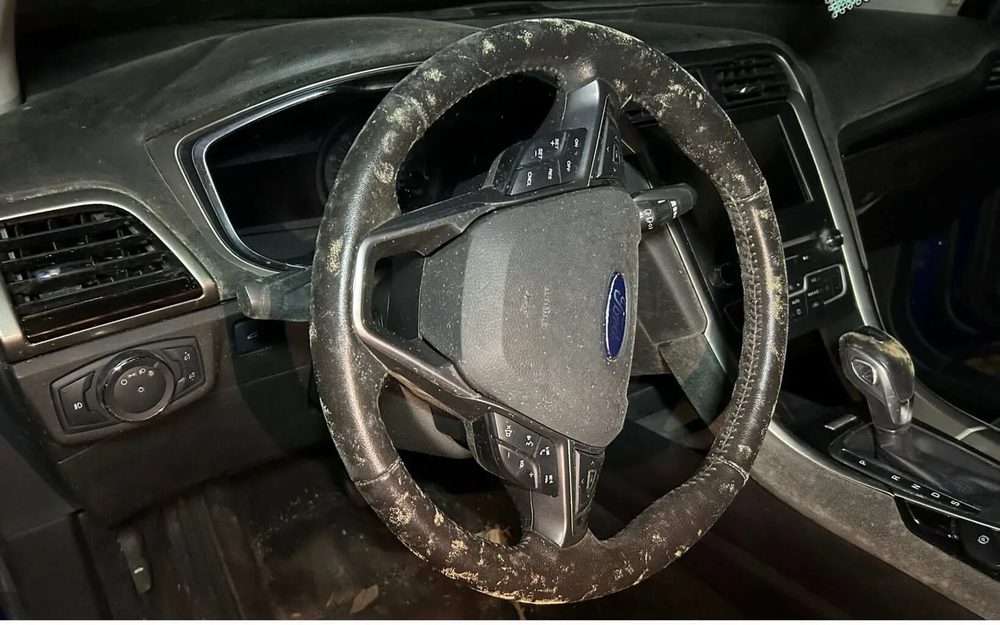
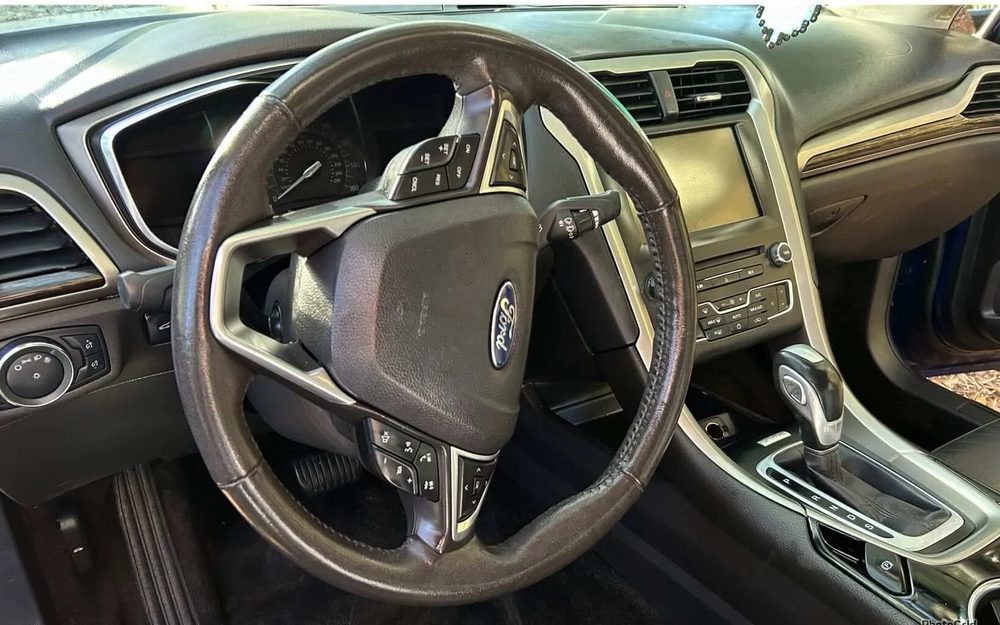
Steering Wheel, Dash & Vents — Grey-White Bloom
A Ford sedan interior with a grey-white mold bloom across the steering wheel, dashboard and vents. Growth on the wheel and dash means moisture has been in the air of the cabin and not only in the carpet, so the A/C system matters here. We vacuum with HEPA, decontaminate with Benefect, clean by hand and finish with ozone. Condensation from a blocked A/C drain in a humid garage is a pattern that leads to this look.
 Before
 After
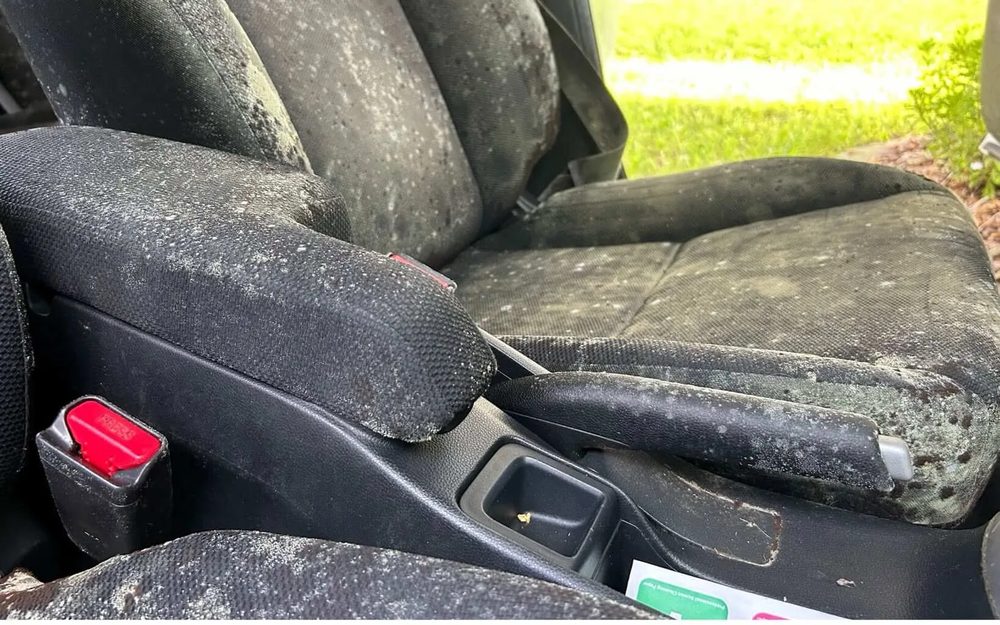
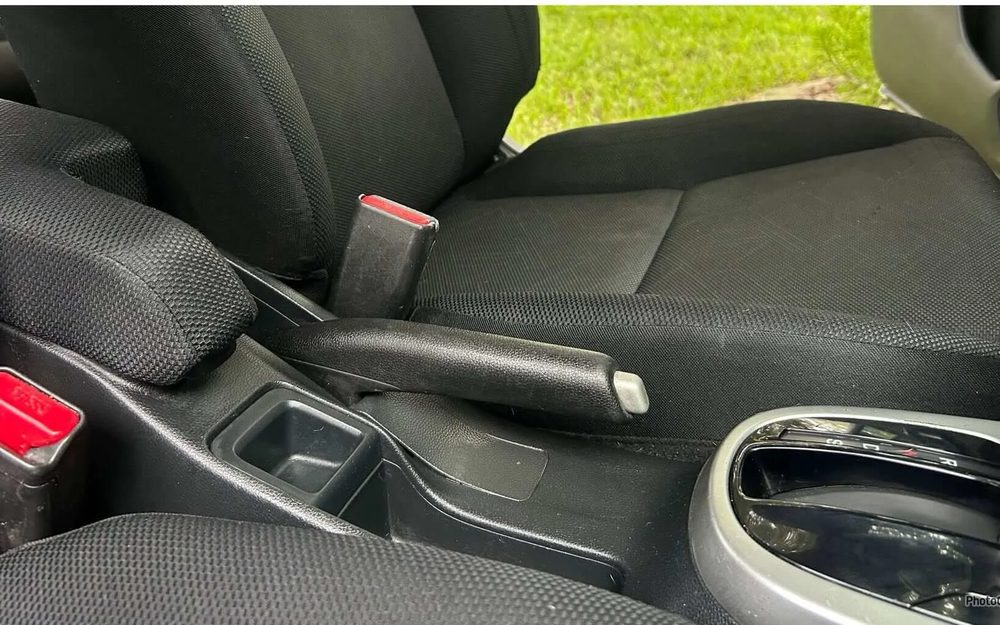
Cloth Driver Seat & Console — Mold Bloom
A black cloth driver seat and armrest-console with grey-white mold bloom, with a green lawn visible outside the window. Dark fabric shows white growth clearly, and the console and armrest are touched constantly, so we treat them carefully. Steam, extraction and Concrobium go on first, then ozone clears the air. A car parked on grass or beside a lawn with sprinklers can hold dampness in the cabin, a pattern common in humid, rainy coastal cities.
 Before
 After
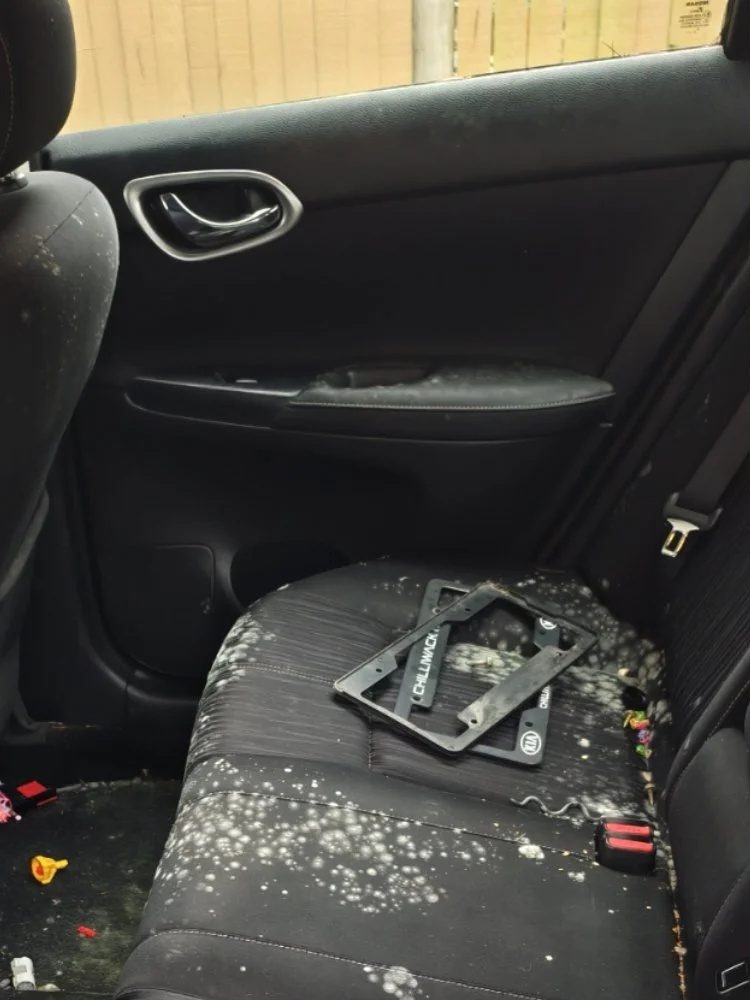
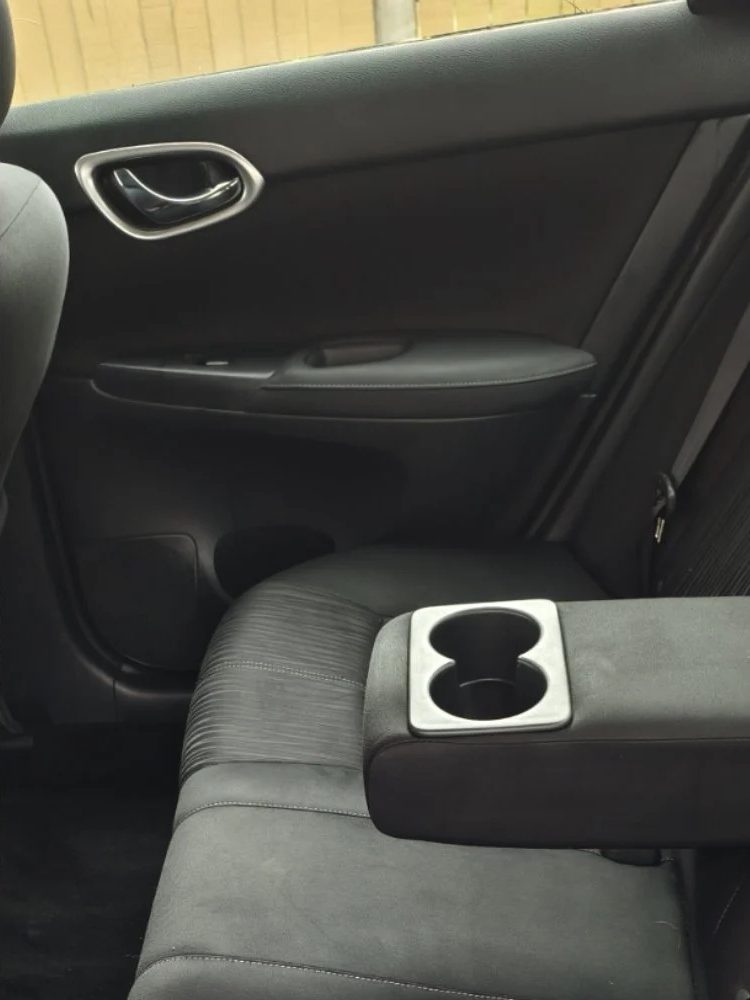
Rear Seat & Door Panel — White Mold Spots
A black sedan's rear seat and door panel with white mold spots on the rear cushion, plus loose debris and a license plate frame left on the seat. Loose items trap damp against the fabric and make it hard for the seat to dry. We remove the debris, then vacuum, steam, extract and apply Concrobium before the ozone cycle. Rear seats that are rarely used are a common place for this near the beach, where towels and gear get thrown in the back.
 Before
 After
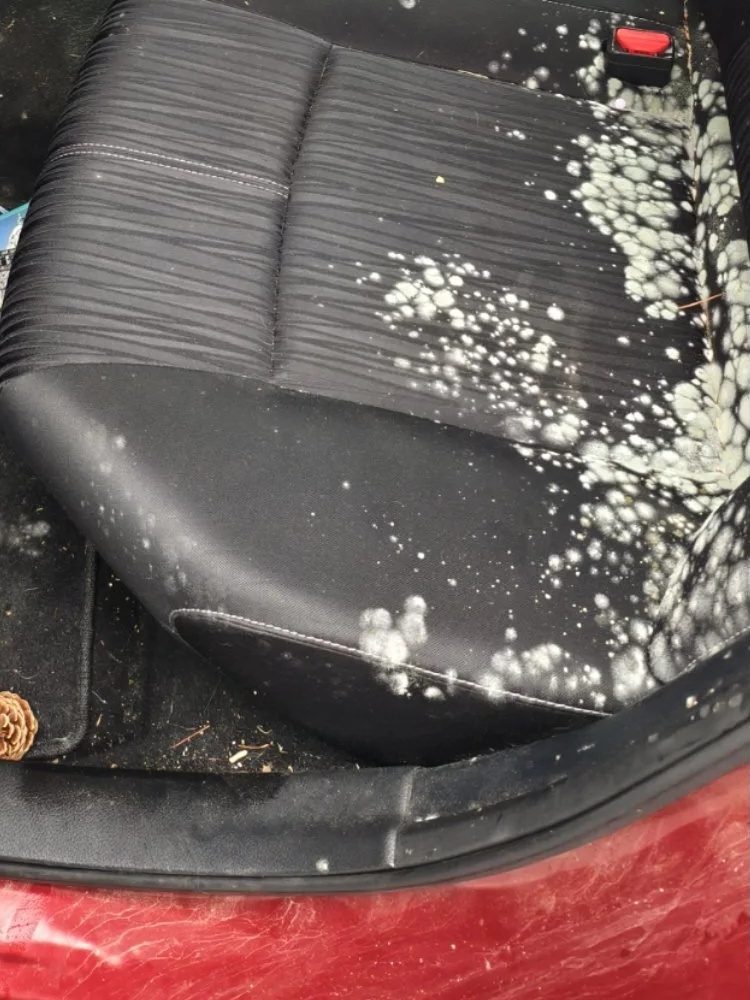
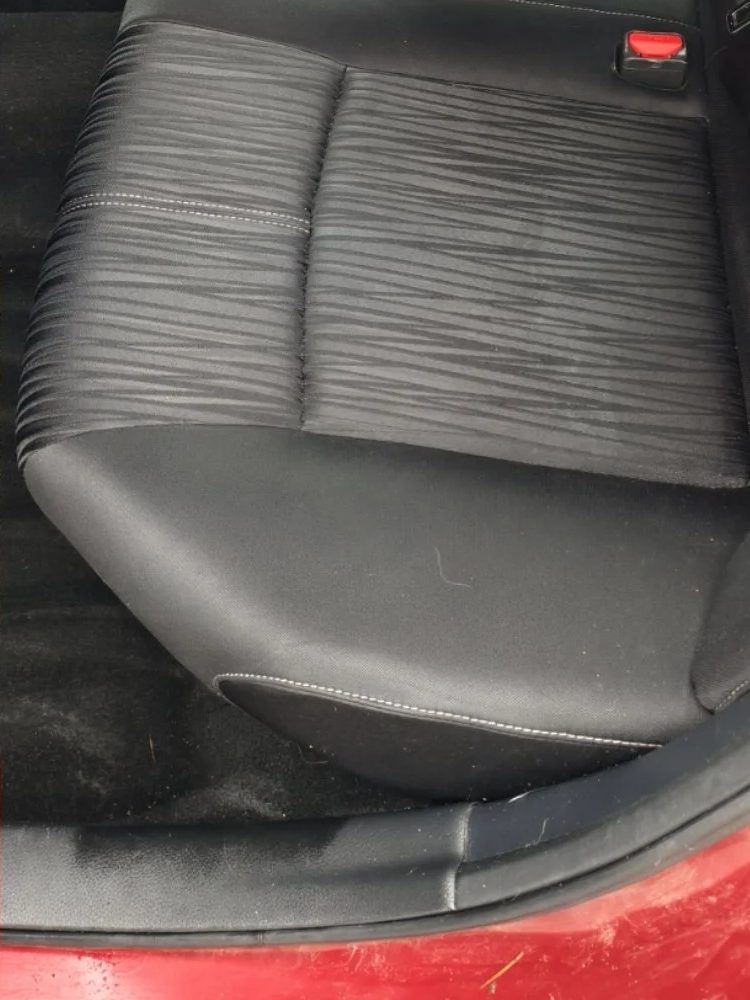
Black Cloth Seat — White Speckled Mold
A black cloth seat covered in fine white mold speckles, with the red car body visible below the window. Speckled growth like this is often the early stage, when the fabric is still holding on to moisture but has not yet developed a heavy smell. We treat it with HEPA vacuuming, steam, extraction and Concrobium, then ozone. In Pompano Beach this tends to follow a stretch of humid, rainy weather with the car mostly closed up.
 Before
 After
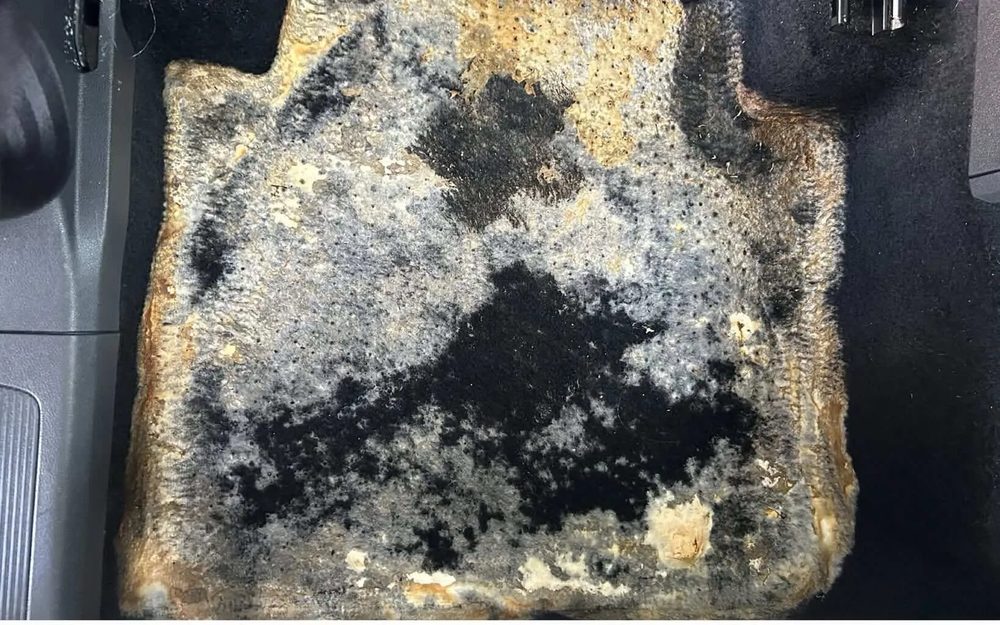
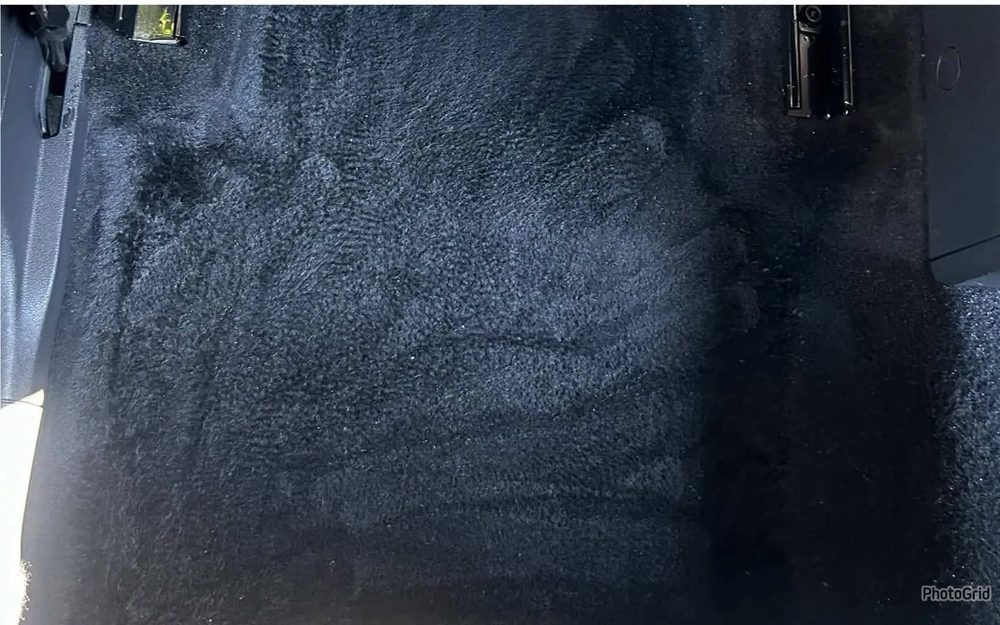
Floor Mat — Heavy Colony Growth
A carpeted floor mat covered in heavy black, brown and white mold colonies. Mats collect water, sand and dirt, and they are often the first thing in a car to turn. We vacuum with HEPA, decontaminate, steam and extract the mat, and inspect the carpet and padding underneath, since growth in the mat often means growth beneath it. Sand and salt carried in from the beach or the ramp are the usual reasons mats stay damp here.
100% Satisfaction.
Written. No exceptions.
If the result doesn’t meet our standard, or yours, we come back and redo it at no charge. No forms to fill out, no arguing over what “counts.” The guarantee is in writing before we ever touch your vehicle.
Request Mold Removal in Pompano Beach · From $549
Fill this in once and send it. We get your address, vehicle, and the situation all in one message, no phone tag.
Rating
Detailed
Response
Three steps from tackle-bag musty to clean,
and we handle the rest.
No drop-off. No waiting. We come to Pompano Beach.
We come to you in Pompano Beach,
from the Fishing Village to Palm Aire.
Mobile service: home, office, condo, or marina. No drop-off, no travel fee.
Not seeing your city? Ask us — we likely cover it.
Rain, salt and wet gear,
the Pompano Beach mix that keeps a cabin damp.
Pompano Beach sits about 13 feet above sea level with roughly 3 miles of Atlantic beach and about 55 inches of rain a year, so a car that comes home wet rarely dries on its own. Left untreated, what starts as a musty smell becomes a real health issue for the next person who drives the car. DShine's Concrobium Mold Control and ozone process address the cause, not just the symptom, backed by $2M insurance and a written guarantee. Mold doesn't need much to get started, any trapped moisture inside a closed cabin is enough given South Florida's humidity. The source is almost always one of four things: a clogged AC condensation drain letting water pool silently on the floor pan, a failed door or window seal letting rain in, a clogged sunroof drain, or the car simply sitting unused for two or more weeks without the AC running. Around the pier and the inlet, the cause we meet most is wet gear shut in the cabin or trunk after a day on the water, where bait-bucket moisture, sand and salt keep the carpet and seats damp.
Pompano Beach neighborhoods we serve,
from Hillsboro Inlet to Leisureville.
From the Fishing Village to Leisureville: how each part of Pompano Beach shapes mold risk and how we work there.
Pompano Beach Fishing Village & Pier — A six-acre beachfront district of dining, retail, a hotel and a parking garage, beside a pier of more than 900 feet that was renovated and dedicated in April 2022. Cars here come from a day on the sand or the pier, so wet gear is the usual cause, and we meet owners at home or a condo space instead of the public lot.
Hillsboro Inlet Park — A park on A1A at the north gateway to the city, with a boardwalk, a playground and a fishing pier, next to boat slips with access to the Intracoastal and the Atlantic. Trucks that haul boats and bait come from here, and the risk is wet lines, coolers and life jackets going into a closed cab.
Downtown Pompano Beach — The historic grid around City Hall on West Atlantic Boulevard, where the city's New Downtown redevelopment is under way. Older homes, apartments and surface lots mean many cars live on the street or in open spaces, so mold usually comes from seals, sunroofs and clogged drains, not from long storage.
Pompano Beach Airpark — A city-owned airfield about a mile northeast of downtown, with three runways and a Goodyear blimp base, bordered on the west by Copans Road. Cars here may belong to pilots, hangar tenants or staff and often sit in open lots, so we agree on where the car can stand undisturbed while the ozone cycle runs.
Collier Manor-Cresthaven — A dense neighborhood of about 1.2 square miles developed by George J. Collier Inc., with more than 3,300 housing units at the 2000 census. Driveways and carports are the norm, so cars take the rain directly, and worn seals and blocked A/C drains are the common causes. Parking is tight, so we confirm the spot first.
Palm Aire — A large golf community with condominiums, villas, estate homes and four golf courses, split between Pompano Beach and Fort Lauderdale. Garages here often sit closed for weeks, and condo associations may ask for access details, so a car left in one without the A/C running is the usual story.
Leisureville — A 55-plus community of single-family homes, condos and townhomes along Golf Boulevard, with a golf course, a clubhouse and a pool. Many cars are driven a few short trips a week, so garage moisture and clogged A/C drains are typical causes, and we coordinate with the gate and the office before arriving.
Don't see your area? Ask us — we likely cover it.
Pompano Beach car mold,
the questions anglers and homeowners ask us.
Tap any topic to read the full breakdown.
Pompano Beach sits about 13 feet above sea level and runs along roughly 3 miles of Atlantic beachfront, with Hillsboro Inlet forming part of the Intracoastal Waterway on its northern edge. The city averages about 55.6 inches of precipitation a year across roughly 131 rainy days, and June is the wettest month at about 8 inches.
Monthly mean temperatures run from about 68 degrees in January to about 84 degrees in August, so there is no month when a damp cabin is too cool for mold. Spores need three things: moisture, something organic to feed on, and time. Cloth, carpet foam, leather and headliner board supply the food. A wet day on the water or a week of storms supplies the moisture.
The weather is the background, not the trigger. The trigger is a cabin that does not get a chance to dry in the first day or two. A car that is wet in the morning, shut in a garage by evening and left until the weekend gives mold a head start of 24 to 48 hours, and nothing in the outdoor air is going to reverse that for you.
Two details set Pompano Beach apart from inland cities. The beach side carries salt in the air, which wears rubber seals faster, and the western neighborhoods sit among golf courses where garages stay closed for weeks. Neither is a cause alone, but each makes the 24-to-48-hour window easier for moisture to win.
Pickups and SUVs set up for fishing lead the list. Rod holders, a cooler behind the seat, a tackle bag on the rear floor and a bait bucket that did not quite get emptied are all normal in a coastal fishing city. The mold in these usually begins at floor level, in the carpet under the cooler or the mat under the passenger's boots, and works outward from there.
Next are sedans and crossovers that spend their days near the water: cars used for beach runs, with towels and swimsuits tossed in the back and sand ground into the carpet. After those come low-mileage cars driven a few short trips a week, and commuter cars from the denser residential streets inland, where a clogged A/C drain is the usual culprit.
Marine-trade work trucks and vans turn up as well, with wet lines, fenders and rain gear riding in the bed or the back seat. Whichever vehicle it is, we inspect the whole interior rather than only the spot you noticed, because the smell and the mold are often in two different places.
Cars owned in the golf and 55-plus communities, such as Palm Aire and Leisureville, stand out for a different reason. They are rarely abused, but they spend weeks closed up between errands, and the seat bottoms and the rear footwells are where we usually find the first growth.
Beachside condo space or garage: a shared structure near the water keeps rain off the car, but the concrete holds moisture and the air barely moves. If an owner brings in a damp towel or wet shoes and the car then sits through a week of work days, the cabin stays humid with nobody around to notice. Rubber seals also age faster with salt in the air.
Driveway or carport on an older residential street: these cars take every afternoon downpour and every sideways storm day. A door seal that has hardened or a sunroof drain nobody has cleared in years is how water gets in, and the carpet along the door sills is usually the first place the damage shows.
Closed garage in a golf or retirement community: this is where cars sit longest between drives. With no A/C in the garage the air stagnates, and a car driven once a week for errands never gets the sustained airflow that dries a cabin. The growth tends to start in the vents and the rear footwells.
Boat-ramp and beach-lot returns: a truck that tows a boat comes home with wet ropes, fenders, bait and life jackets, and a beachgoer climbs back in with sand and a damp towel. Parking at the water is not the risk. Shutting those things in the cab and backing into a garage is.
Rodeo weekend, third weekend of May: the Pompano Beach Fishing Rodeo has run for more than 50 years and sends crowds to the water for a long, wet weekend. Cars come home with live-well splash, melted ice and soggy clothes, just as the first serious heat of the year settles in.
Wet-season afternoons: June is the wettest month, at roughly 8 inches, and that is when hardened door seals and clogged sunroof drains meet their first real test. A car driven daily dries between storms. One parked with the windows up for days is where we find carpet nobody knew was soaked.
Storm peak: NOAA puts the top of the hurricane season at September 10, with most activity from mid-August into mid-October. Rain driven sideways finds the seal gaps an ordinary shower misses, and a car shut up ahead of a warning often stays shut for days.
Cooler months: the monthly mean temperature never falls below the high 60s, so mold takes no winter break. With anglers on the pier most weekends, wet gear and sand outrank storm water as the cause, and a car left alone through a short winter trip faces the same closed-air problem as in July.
Most of our Pompano Beach visits happen in a driveway, a condo parking space, an office lot or a marina parking area. A public beach or pier lot is not the right place for the work, because the car has to sit sealed during the ozone step with nobody in or beside it. We agree on a private spot with you and keep the visit there.
For beachside condos and buildings with a gated garage, we ask for the access method ahead of time: a fob, a guest code, or a name left at the front desk. If the car is on a crowded level, a quick photo of the space helps us confirm that we can open the doors fully and work without blocking a neighbor.
Marina and dock lots work the same way. If the lot belongs to a marina, a boat club or an association, we need your permission and the contact who can let us in. We bring our own equipment, so all we need from the site is room to work and a safe place to let the cabin ventilate afterward.
Palm Aire and Leisureville add a gate and an office to the sequence. Many communities of that kind keep guest and vendor lists, so we ask for the name of the contact, share our arrival time in advance and, as a rule, settle access in a single message before the day.
1. Wet fishing and beach gear shut inside: this is the cause we meet most here. A tackle bag, a net, a bait bucket, a cooler that drained into the carpet or a pile of damp towels goes in after a day on the water and stays for days. Salt and sand ground into mats and carpet tend to hold moisture, so the fibers stay wet far longer than they would with fresh water alone.
2. A blocked A/C condensate drain: the system pulls water out of humid air and sends it out under the car. When the drain clogs, that water pools in the floor pan beneath the front carpet, and the musty smell arrives the moment the fan switches on. It happens in every kind of car and every part of the city.
3. Tired rubber at the doors and sunroof: sun, heat and salty air break seals down over the years. In a Pompano Beach summer, one afternoon of heavy rain is enough for a failing seal to soak a carpet or a headliner, and the water usually travels somewhere hidden before anything shows.
4. Weeks of closed-garage idling: an owner who drives a few times a week is usually fine. An owner who leaves a car for a month or two with the doors shut and the A/C off, especially with a damp mat or towel inside, is not, and the damage usually starts where nobody looks.
We ask for three small things: a spot where the car can stay put and every door can swing open, a way in (gate code, fob or a name at the front desk), and personal items out of the cabin. If you have a short note on what happened, such as a window left down or a bag left in the trunk, send it too. The more we know before arrival, the less time we spend hunting.
On arrival the first job is a slow walk through the interior with a light, lifting mats, cushions and trunk trim, and anything beyond what you reported is shown to you before we continue. The visit runs about three to four hours, mostly drying, extraction and airing out. Afterward the photos reach you on WhatsApp. Anything we find that you did not mention, we show you first.
The first question is nearly always about wet gear: can a bag, a bucket or damp towels left in the car after a day on the water really cause mold, and is a fishy smell the same thing? Gear can absolutely start mold, the two smells can sit side by side, and we check for both.
The second question is price. People want to know whether it will be $549 or $749 before they commit, and we answer from photos. The third is whether they have to be there. They do not, provided we can reach the car and have a suitable private spot to work.
Then come the practical ones: whether we can come to a condo, a marina lot or a garage, how long the visit lasts, and whether the mold will return. We answer all of it in the booking message, so the day itself holds no surprises and you are not repeating yourself at the car.
Residents of gated and age-restricted communities add one more: whether the front gate or the office needs a name, a plate number or a visitor pass ahead of time. We ask for the contact's name, share our arrival window, and handle the rest, so nothing holds up the start of the visit.
Odor Removal, $349: the usual companion for a bait or smoke smell that exists apart from the mold. A fish smell can outlive the spores in carpet fibers and door cards, so some owners book both at once rather than discover the lingering stink a week later, once the growth is gone. It is a separate job from mold removal, with its own price.
Flooded Car, $349: meant for the first 72 hours after water enters a cabin, ahead of any growth. Later than that, Car Mold Removal is the right call. Beachside owners sometimes add Paint Correction or Ceramic Coating for salt haze, and ramp users occasionally pick Engine Bay Cleaning. We say plainly which service fits when you send the date and the photos.
Try a two-minute test. Park in the sun, close the doors for a couple of minutes, then breathe in as you open one. A damp, earthy note stronger than the usual hot-car smell means something inside is wet. Then run the A/C on high and pay attention to the first ten seconds of air.
Use your hands next. Press the carpet beside the transmission tunnel and under the seats, lift the rear cushion by its front edge, and touch the belt webbing near the buckle. Cool, stiff or clammy means water. A tan or yellow stain beneath a cushion means it has been there a while, even if the top looks spotless.
Anglers and surfers should add the gear to the test. A smell that outlasts the bag, the net or the cooler by a day or two points at the carpet or the seat bottom, not at the gear itself, and that is where the growth is likely hiding.
Down here, a car seldom sits idle because its owner is abroad. More often a boat swallows every weekend, work travel eats a month, or a second car in a Palm Aire or Leisureville garage is started once in a blue moon. The risk in each case is the same: whatever damp thing is inside when the doors shut.
So empty it out. Towels, gear bags, cups and wet mats all go. Two minutes before you pull in, turn the A/C off and keep only the fan blowing, which lets the evaporator dry. Park with clean, dry seals, and where the garage air is dead, run the cabin fan every week or two.
Moisture-absorber tubs help a little in a small cabin, yet they do not replace removing the source. A car with no water inside outlasts the humidity. A car with a soaked mat and a tub on the dash does not, because the tub only postpones the problem. Do not rely on a closed garage alone to protect the car.
One truck, one sedan, one rarely used third car: that is a normal Pompano Beach driveway. If more than one has a problem, we line up the visits together so one trip handles every vehicle, and nobody has to find a second day in the calendar.
How to ask: send photos of each car in one message. We price them separately, because the mold in a pickup cab is a different job from the mold in a sedan, then pick a single time for the household and a spot where each car can be opened up and later sealed for ozone.
Order of work: if one car is more urgent, it goes first. Every vehicle gets its own before-and-after photos and its own 30-day written guarantee, and when two cars share a garage we treat them one after the other, never sealed side by side.
Thirty days, in writing. If mold or its odor shows up again inside that window, we treat the car a second time at no charge, with 100 percent satisfaction as the standard. The aim is a result you never think about again, and the paper is how we stand behind it. You will hold the written terms from the day we finish.
Whether the guarantee is ever used usually depends on the leak, not the cleaning. A bag of damp tackle, a plugged evaporator drain or a stiff door gasket can re-wet a cabin faster than any treatment can dry it, so we point out those culprits while we are still on site. It is a promise about our work holding for a month, not about a rain-soaked cabin staying clean forever.
A heavily used pickup and a cherished older sedan call for different handling, and so does a late-model leather interior. On leather we keep heat and chemicals gentle: steam at controlled settings, extraction, a Concrobium coat on the surface, then ozone for the air. A pale film or green-blue bloom on a bolster usually appears well before any smell does.
Cars with some years behind them have softer, thirstier foam and carpet, and decades of tiny leaks can leave moisture deeper than a glance reveals. We probe seams and seat rails, lift padding where it comes up, and now and then turn up a second, older source that the owner stopped noticing long ago. A thorough look is the only way to be sure the job is complete.
Tow rigs and small-business vans are another story. Rubber floors rinse clean easily, but the door pockets, seat bottoms and A/C ducts in the cab still collect damp. If a company keeps several vehicles at one yard, we can work through them in a single visit and flag anything a mechanic should see.
Before the weekend at the inlet, or the month away from a Palm Aire garage, walk the car once. Pull out the cooler, the bait bucket, the damp rash guard and the beach chair, and lift each floor mat. A mat that feels cool to the hand is still holding saltwater, and it will hold it for weeks if the doors stay shut. Check the trunk well too, where a drained cooler leaves its mark.
Give the cabin a head start on drying: park in sun with the doors wide open for a quarter hour, and make sure the sunroof and every window are fully seated, because Pompano Beach rain arrives sideways in the storm months. If the car will sit for weeks, ask a neighbor to run the fan now and then. Leave no open cups, wet receipts or gym bag behind, and look under the dash for a drip trail when you return.
Growth follows the path of least resistance. A spot on a mat reaches the carpet, then the padding below, then the seat foam, and once it settles into the vents and headliner a one-area job has become a whole-cabin one. That leap is what separates $549 from $749.
Each drive spreads it further. The blower pushes air across every contaminated surface straight at driver and passengers, so a commuter crossing the city on I-95 or Atlantic Boulevard breathes that cabin air for the whole trip, and the odor creeps deeper into the ducts as weeks pass.
Resale is the quiet third cost. A car that smells of mold sells for less, and growth left alone eats deeper into upholstery that could have been saved. The cheapest day to book is the day you first notice the smell, however faint.
Pompano Beach has a long fishing culture, from the pier to the charters that run out of Hillsboro Inlet, and many cars here work as the second half of a boat. What goes in is wet and often salty, and the carpet is the first place that water ends up.
The usual mistakes are putting a wet bag directly on the back seat, closing a cooler with ice melt still inside, and leaving a bait bucket in the trunk. We see all three, and each is easy to avoid with a plastic bin and a towel that gets shaken out at the ramp.
For regular anglers, a washable cargo liner, a lidded bin for gear and a quick fresh-air A/C run on the way home will save far more than the cost of an inspection. They also keep a fish smell from settling into the carpet and the trim.
The pier and the inlet are two different habits. Pier anglers tend to arrive with a bucket, a rod and a cooler, and leave with all three damp. Boaters coming off the water at the inlet bring ropes, fenders and life jackets, and those often end up on the seat or the cab floor.
Start with photos, or just describe what you see. In under two minutes you have a first read: $549 if the trouble is contained to a seat, a door or a stretch of carpet, $749 if it has run through the cabin. The drive to your Pompano Beach address is already built into either figure.
Once we have studied your pictures we pin down the exact price, and we do it before any equipment comes out. The figure you agree to is the figure you pay, with no revision halfway through the afternoon and nothing added at the end.
Extent, not odor, decides the tier. Colonies on carpet, seats, headliner and vents together mean $749, while a sharp smell from one soaked mat usually stays at $549. Where the photos leave doubt, we tell you so and recheck on site before a single product touches the car.
Pompano Beach is a coastal city roughly 13 feet above sea level, with about 3 miles of Atlantic beach and a bit over 55 inches of precipitation a year. A moldy car here almost always means moisture got trapped inside, and the weather only provides the backdrop.
The leading culprit is wet fishing or beach gear left in a shut cabin or trunk. Plugged A/C drains, tired seals and cars parked for weeks come right behind, and each one leaves early clues you can spot once you know where to check.
Our remedy is the 11-step process, which runs from inspection and HEPA vacuuming through Benefect, steam, extraction, Concrobium Mold Control and ozone to a final check. The cost is $549 for one area or $749 throughout, travel included, with a 30-day written guarantee.
What it is: a professional generator running inside the sealed cabin once steam, extraction and Concrobium are finished. The gas drifts through the headliner, the seat seams and the ductwork behind the dash, reaching floating spores and stale odor that no cloth or brush can touch. Nothing on the surface is skipped, because the gas goes wherever the air goes.
Who stays out, and for how long: everyone. Nobody sits in the vehicle during the cycle, and we pick a quiet spot at a condo structure or marina, away from stairwells and shared doors. Afterward we air the cabin out until the sharp scent fades, and we tell you when it is truly ready to sit in. The final check happens only after the air has cleared.
Quick answers
for Pompano Beach drivers before you book.
Add-ons Pompano Beach clients book
Still deciding? Read: the complete mold removal guide · does insurance cover it? · why DIY mold removal fails.
Mold in your Pompano Beach car? Get a price in 2 minutes.
Serving Pompano Beach and all of Broward County. Fixed pricing, no travel fee. We confirm in under 2 minutes.
It Might Just Be an Odor Problem
If there's no visible mold growth yet, the smell alone is usually an Odor Removal Detailing case ($349 flat) — faster than full mold remediation ($549–$749). See which one matches what you're dealing with: