What a Miami Gardens Mold Job Includes
This is not a car wash. Car Mold Removal uses Concrobium Mold Control treatment, pH-balanced products, and machine assistance, the same process used in pre-sale preparations for luxury dealerships.
Why it matters for your health: Mold in a vehicle is a different exposure than mold on a wall at home. With the AC recirculating, everyone inside is breathing concentrated spores for the length of the drive. The EPA and CDC both link mold exposure to respiratory irritation, allergic reactions, headaches, and worsened asthma symptoms. Children, older passengers, and anyone with a compromised immune system typically react faster and more severely than a healthy adult would. By the time the smell is noticeable, spores have usually already spread through the HVAC system into every vent in the cabin.
Curious what actually happens during the visit? Tap through our real 11-step process below to see what we do at each stage and why it matters.
What every Miami Gardens mold job gets you
Most detailers in Miami Gardens charge less. Here’s exactly what you gain — and what you risk — with each choice.
| DShine DetailsFrom $549 · travel included | Avg Miami Gardens Detailer$149 – $199 | |
|---|---|---|
| Industry certificationsIDA, Koch Chemie, Meguiar’s, 3M, Symplex, XPEL | ✓6 verified | —0 credentials |
| $2M liability insuranceWe cover any damage — in writing | ✓ | —Often uninsured |
| Deionized water systemZero mineral residue, no water spots | ✓ | —Tap water, water spots |
| Fresh microfibers per vehicleNo cross-contamination between jobs | ✓ | —Shared towels, swirl risk |
| Mold-specific chemistry onlyConcrobium, Benefect & Meguiar’s, no harsh acids | ✓ | —Industrial degreasers |
| Before & after photosSent via WhatsApp on completion | ✓ | —No documentation |
| 100% written satisfaction guaranteeReturn & redo at no cost if unsatisfied | ✓ | —No written guarantee |
| Travel to your address — $0Home, office, condo — no drop-off | ✓ | Sometimes adds fee |
DShine vs. any other detailer
in Miami Gardens, Miami-Dade County
Three things most detailers won't tell you. We put them in writing.
 Since 2018
With more than 20 years of hands-on experience in the automotive care industry, Evelio launched DShine Details in August 2018 with one van and zero shortcuts. For the first six months he slept in the van to keep costs down and standards up. Today DShine runs 7 certified vans across Miami-Dade, Broward, and Palm Beach, and the commitment hasn't changed. Every vehicle is treated as if it were his own.
What clients say
in their own words.
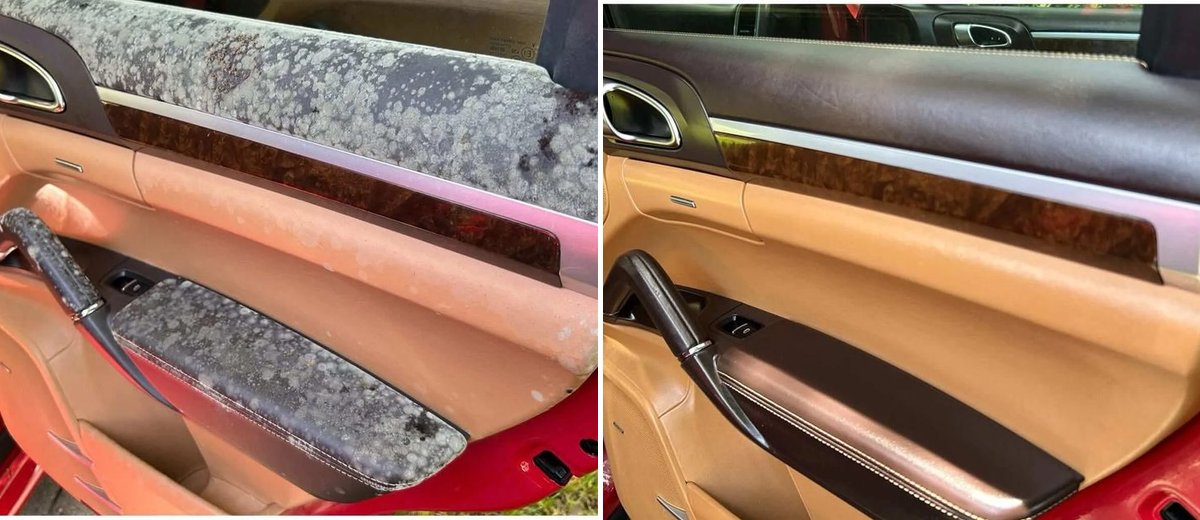
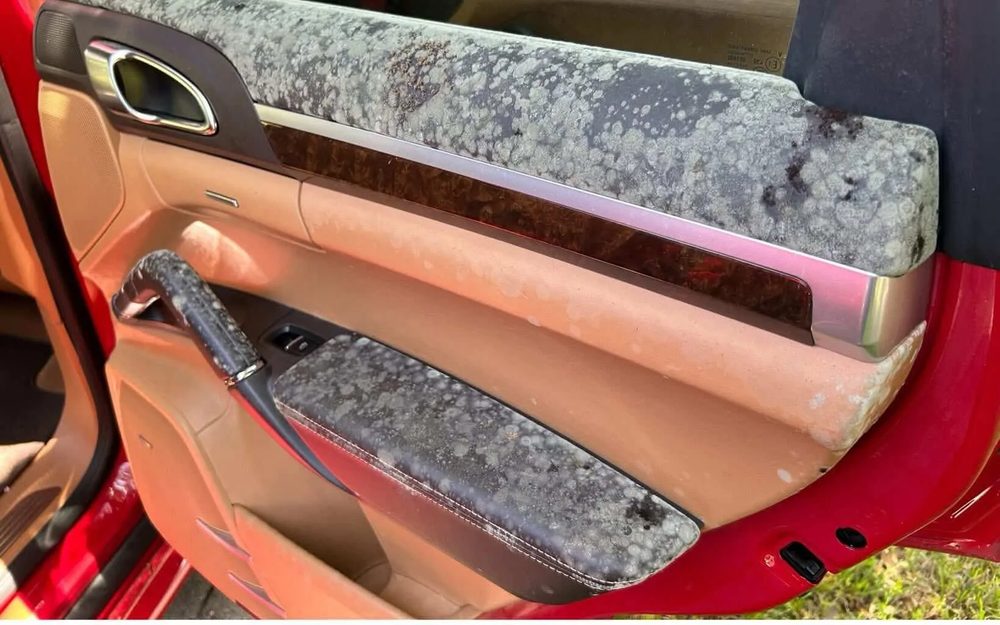
Before & After: Mold Removal We've Actually Done
No stock photos. These are real DShine mold removal jobs across South Florida, the same 11-step process and chemistry used on every Miami Gardens appointment.
 Before
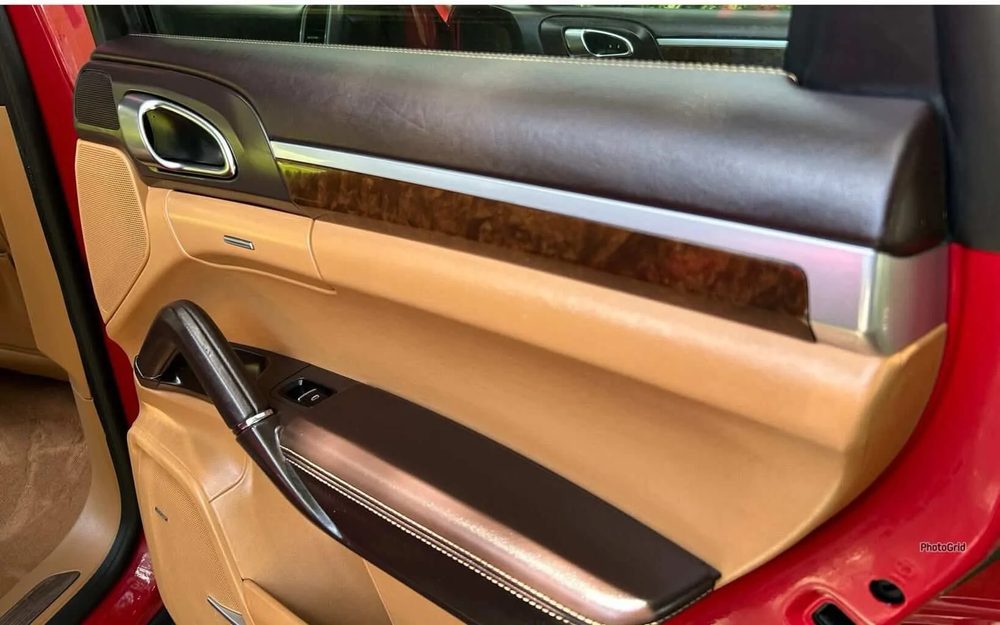 After
Porsche Cayenne — Door Panel & Armrest
Mold spread across the tan leather door panel, armrest and wood trim of a red Porsche Cayenne. Leather like this cannot be scrubbed hard, so we use the leather-safe protocol, steam and extraction around the trim, Concrobium and then the sealed ozone cycle. Door panels collect moisture first at the seals, a pattern that fits a driveway car in Miami Gardens that takes sideways summer rain with no cover.
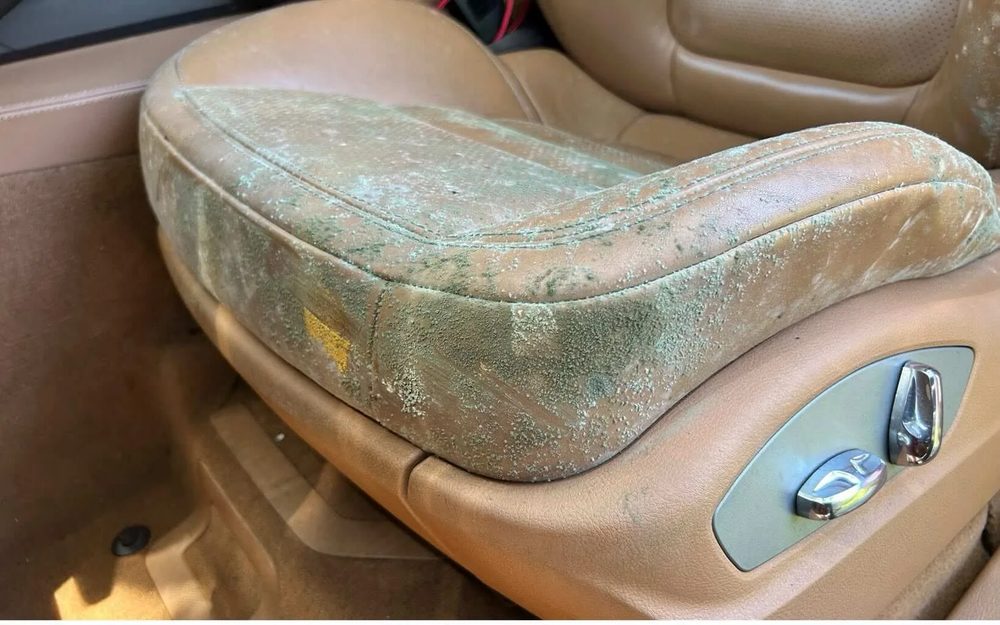 Before
 After
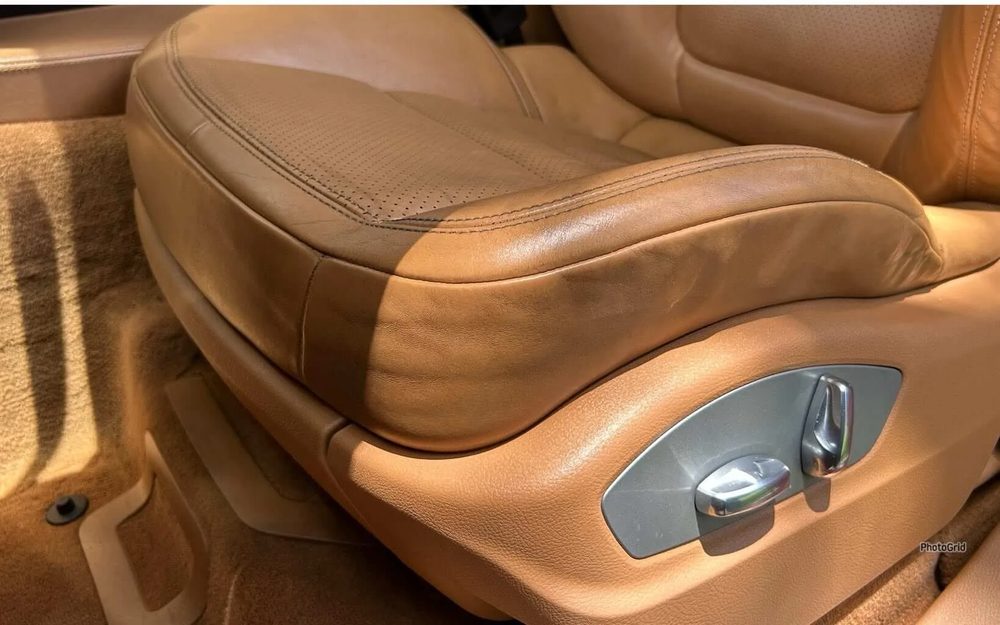
Tan Leather Seat Bolster — Green-Blue Mold
Green-blue mold covering the side bolster of a tan leather front seat, the part that rubs against clothes on every entry. Harsh scrubbing would strip the finish, so the bolster gets a leather-safe antimicrobial pass, gentle steam and extraction, then Concrobium and ozone to reach the foam beneath. Damp clothes, uniforms and rain gear pressed against that bolster are a typical source in a wet Miami Gardens summer.
 Before
 After
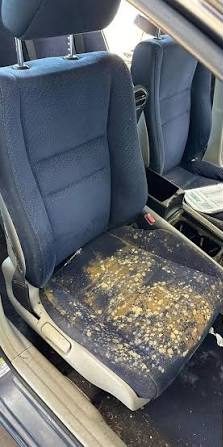
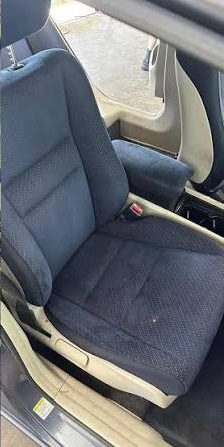
Dark Blue Cloth Bench Seat — Mold Stain Residue
With the seat cushion lifted, tan and yellow mold stain residue shows on the bottom of a dark blue cloth sedan bench. This is what hides under a seat that looks fine from above. We use HEPA vacuum, steam and extraction to pull moisture out of the foam, then Concrobium and ozone. Water that reaches the seat base from a wet floor or an open window is a common route after heavy rain around Miami Gardens.
 Before
 After
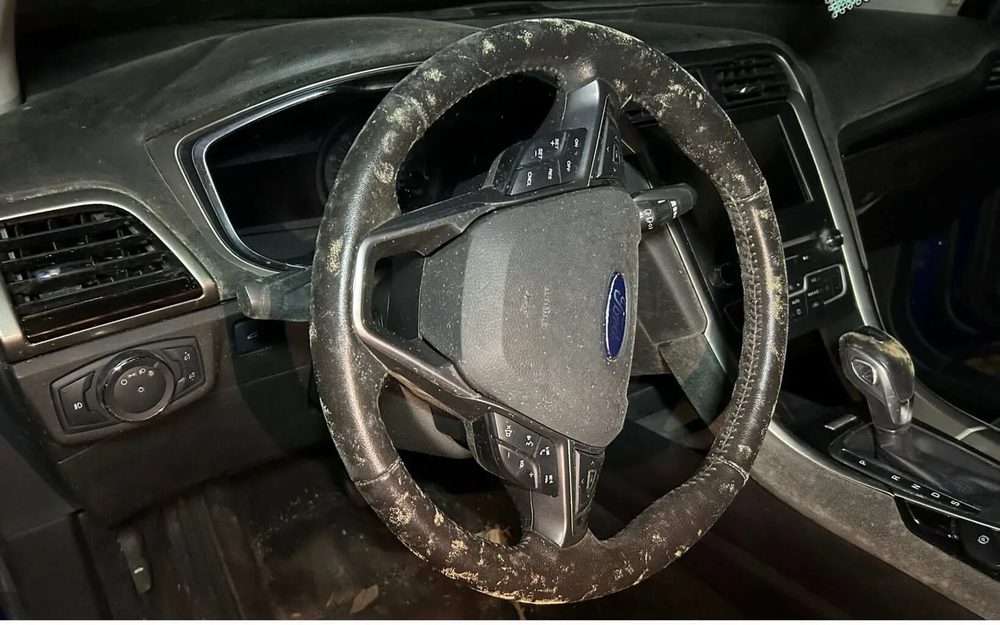
Ford Interior — Steering Wheel, Dash & Vents
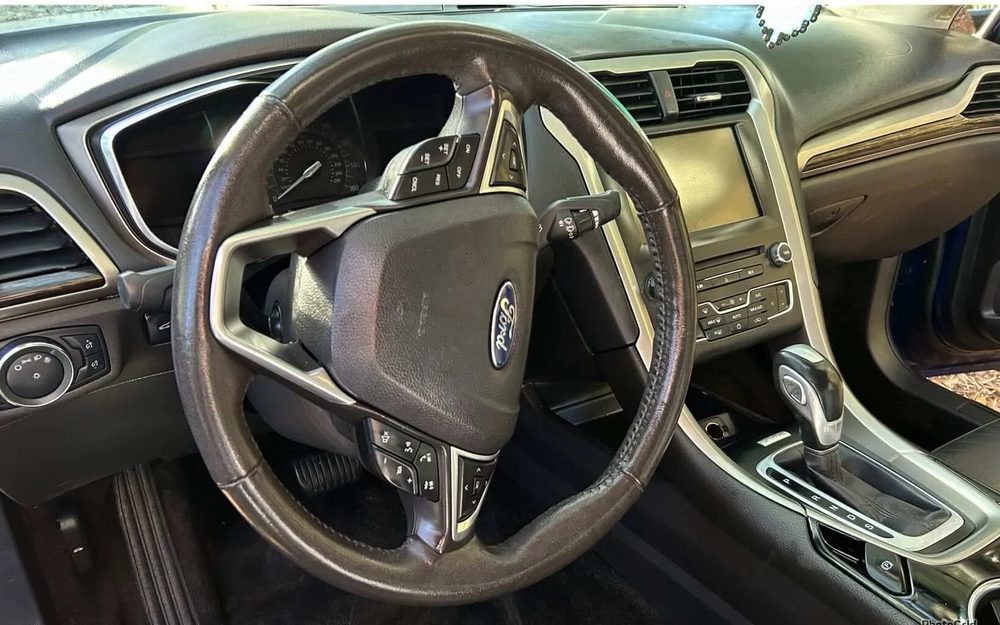
Grey-white mold bloom on the steering wheel, dashboard and vents of a Ford sedan. Hard surfaces like this get a careful wipe-down with Benefect and Concrobium rather than hard scrubbing, and the vents are covered by the ozone cycle. When the A/C runs on recirculate through long stop-and-go drives, moisture settles on exactly these surfaces, which fits the commutes drivers in Miami Gardens make every day.
 Before
 After
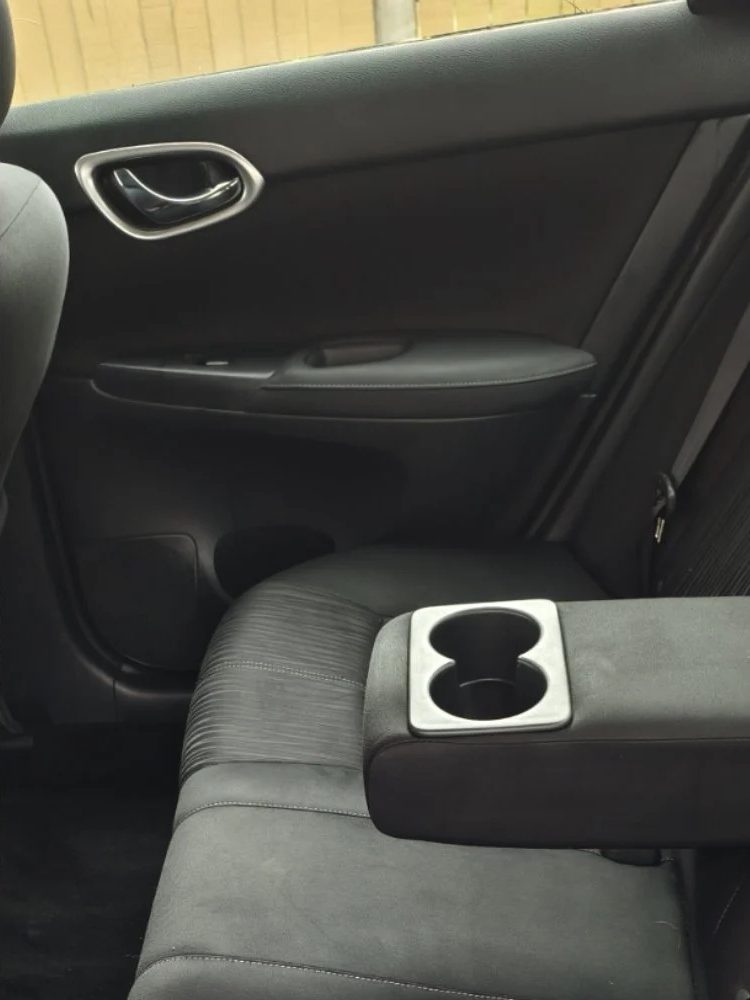
Black Cloth Driver Seat — Armrest & Console
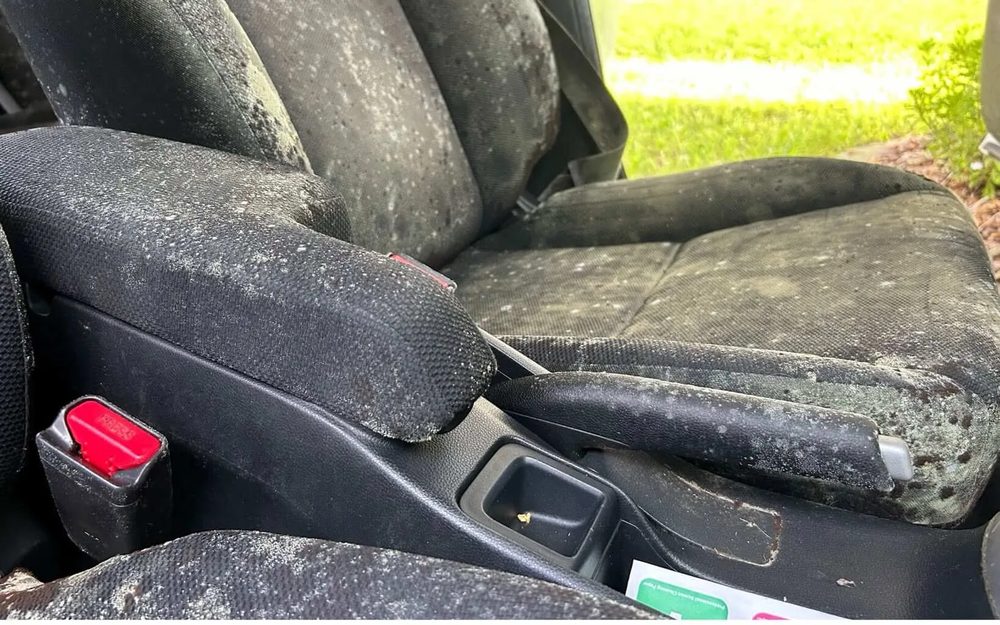
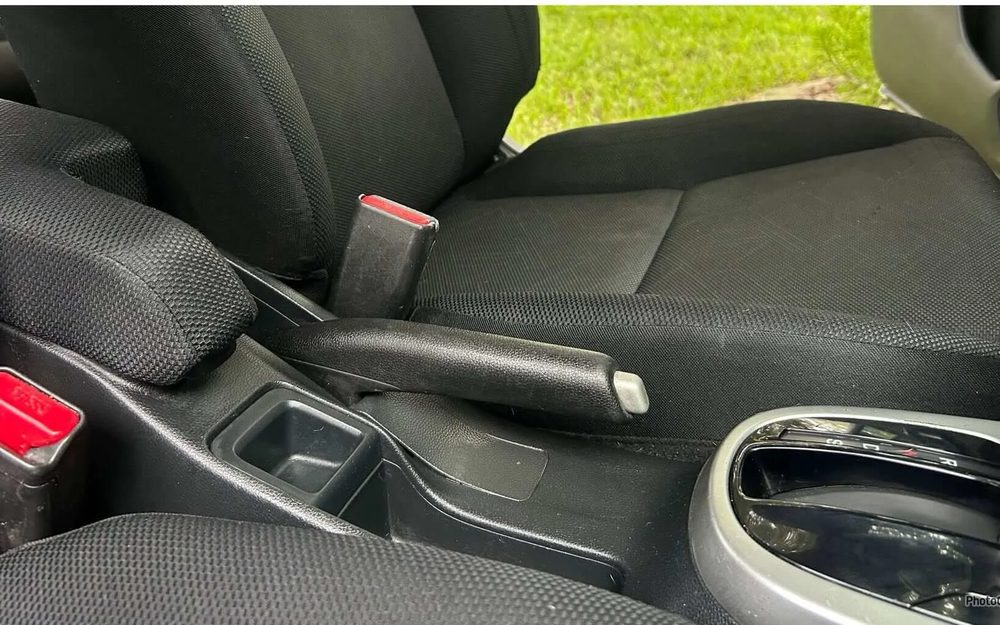
Grey-white mold bloom over a black cloth driver seat and the armrest and console beside it, with green lawn visible outside the window. Dark cloth shows pale growth clearly, but the spores sit deeper in the foam, so we vacuum with HEPA, steam, extract, treat with Concrobium and run ozone. Cars parked beside grass and landscaping, as in many Miami Gardens yards, tend to bring in more outside moisture.
 Before
 After
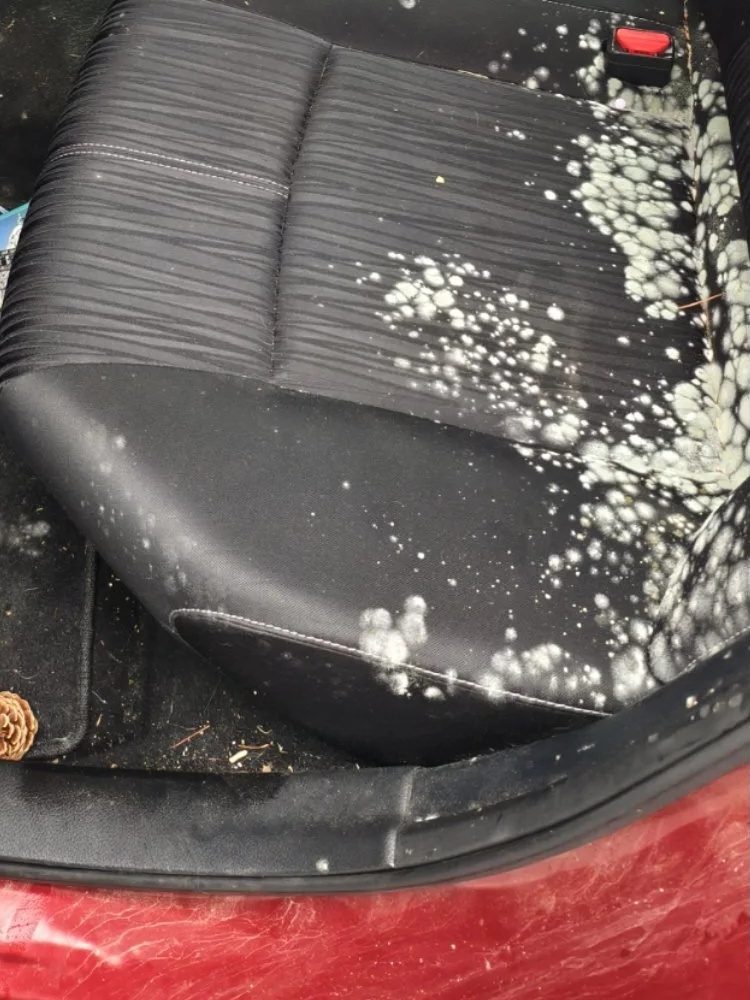
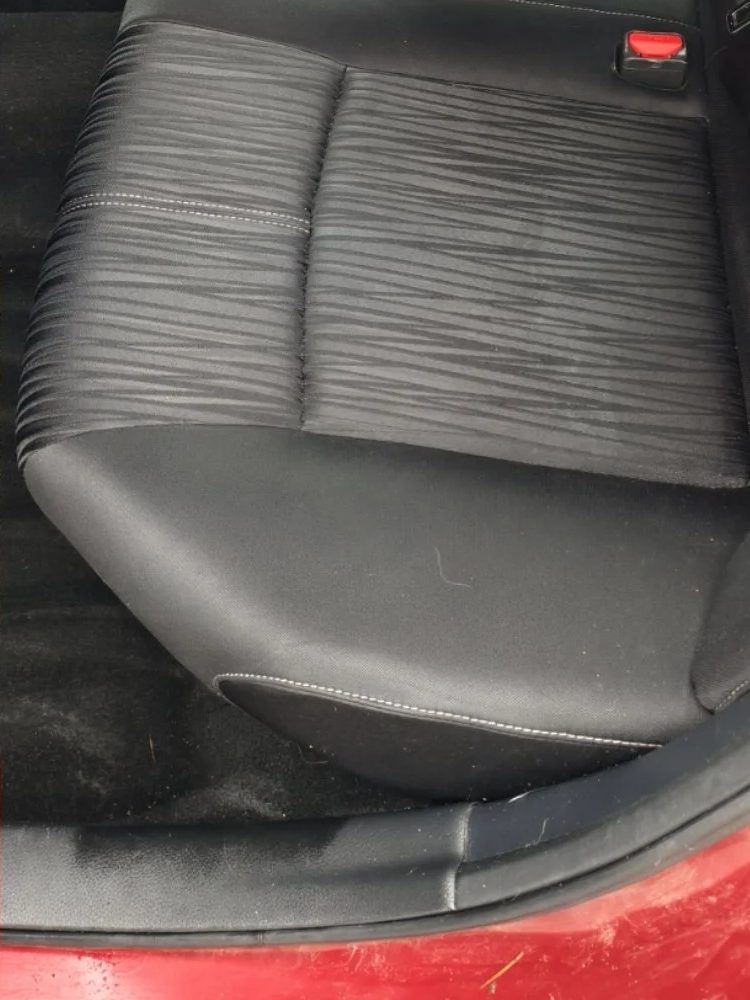
Black Sedan Rear Seat — White Spots on Cushion
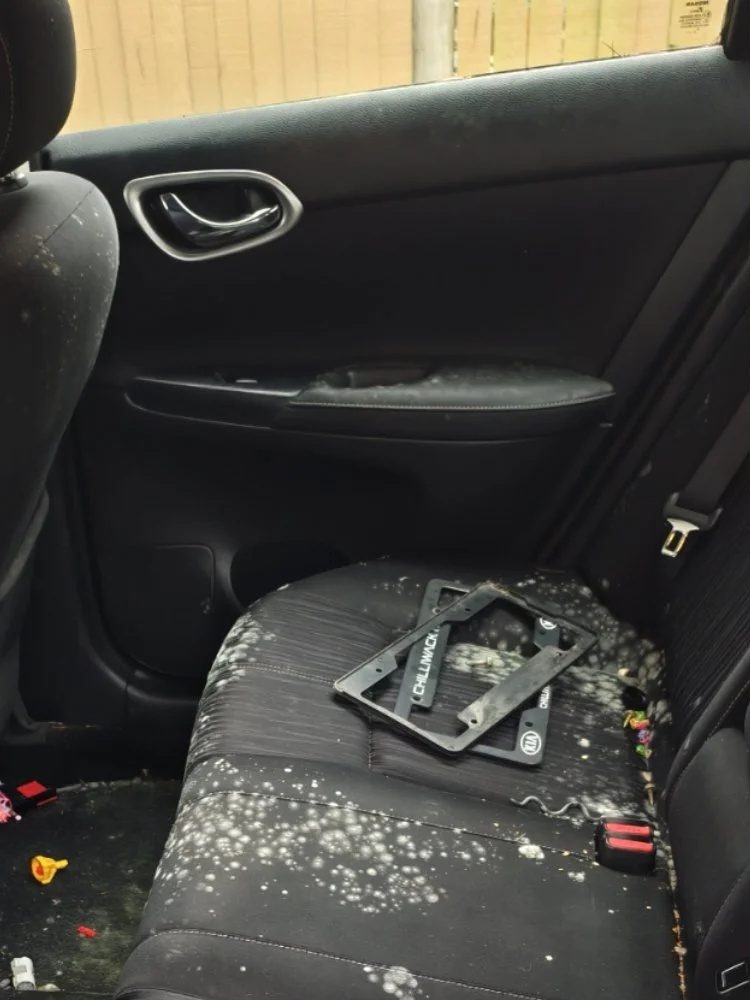
White mold spots across the rear cushion of a black sedan, plus the door panel, with loose debris and a license plate frame left on the seat. Back seats are often where wet items end up, so we clear the debris first, then HEPA vacuum, steam, extract, apply Concrobium and run ozone through the cabin. Gear tossed in the rear after a rainy day or a game is a familiar pattern in Miami Gardens.
 Before
 After
Black Cloth Seat — White Mold Speckles
White speckles scattered across a black cloth seat with the red car body visible below the window. Early speckling like this is the best moment to treat: the mold is still mostly on the surface, so extraction, Concrobium and ozone usually deal with it fully. After a few days of afternoon downpours, a car with a slightly damp cabin in Miami Gardens can reach this stage quickly.
 Before
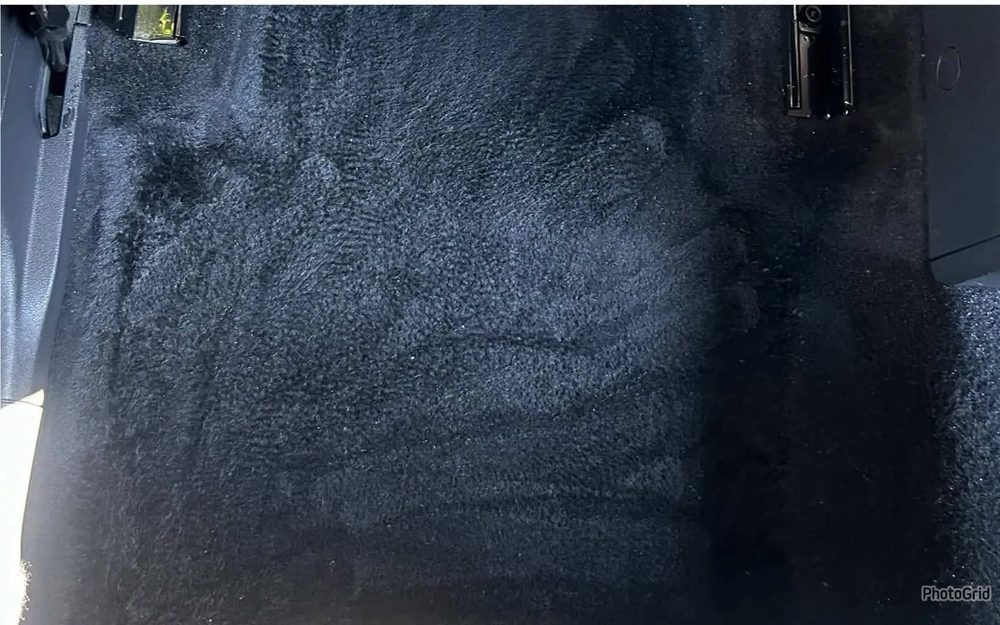 After
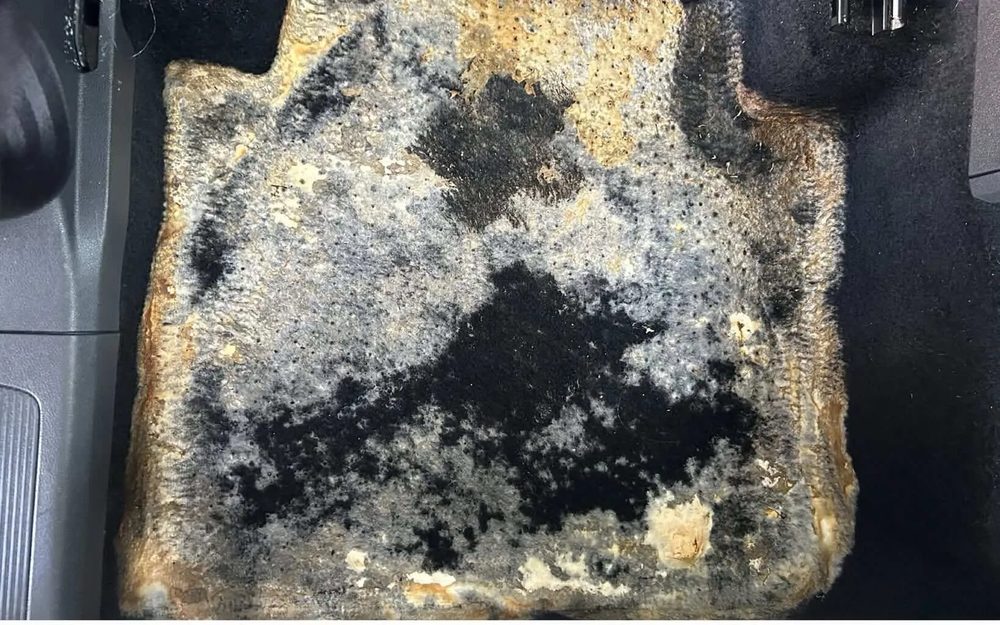
Floor Mat — Heavy Colony Growth
A carpeted floor mat with heavy black, brown and white mold colonies. This is advanced growth: the mat holds moisture against the carpet below, so we lift it out, HEPA vacuum, steam and extract the carpet and padding underneath, then apply Concrobium and ozone. Mats soaked by wet shoes, umbrellas or a leaking seal and left in place are a common cause in Miami Gardens during the rainy months.
100% Satisfaction.
Written. No exceptions.
If the result doesn’t meet our standard, or yours, we come back and redo it at no charge. No forms to fill out, no arguing over what “counts.” The guarantee is in writing before we ever touch your vehicle.
Request Mold Removal in Miami Gardens · From $549
Fill this in once and send it. We get your address, vehicle, and the situation all in one message, no phone tag.
Rating
Detailed
Response
Three steps from a rain-soaked cabin to a clean one,
whether it sat on a driveway or in a game-day lot. We handle the rest.
No drop-off. No waiting. We come to Miami Gardens.
We come to you in Miami Gardens,
from Carol City driveways to Andover apartment lots.
Mobile service: home, office, condo, or marina. No drop-off, no travel fee.
Not seeing your city? Ask us — we likely cover it.
Open driveways, summer downpours and wet game-day gear
keep a parked Miami Gardens car damp.
Miami Gardens sits about 10 feet above sea level, and a car left outside through a few afternoon storms, with a cracked window or a tired seal, can start growing mold within days. Left untreated, what starts as a musty smell becomes a real health issue for the next person who drives the car. DShine's Concrobium Mold Control and ozone process address the cause, not just the symptom, backed by $2M insurance and a written guarantee. Mold doesn't need much to get started, any trapped moisture inside a closed cabin is enough given South Florida's humidity. The source is almost always one of four things: a clogged AC condensation drain letting water pool silently on the floor pan, a failed door or window seal letting rain in, a clogged sunroof drain, or the car simply sitting unused for two or more weeks without the AC running. Around Miami Gardens, the cause we find most is rain that got in through an open window or sunroof, or wet gear shut inside, on a car parked outdoors, then closed up in the heat so the moisture has nowhere to go.
Miami Gardens neighborhoods we serve,
from Carol City to Norland and Bunche Park.
From Carol City driveways to the lots around Hard Rock Stadium, parking and rain exposure change across Miami Gardens.
Hard Rock Stadium & Don Shula Drive — Hard Rock Stadium, at 347 Don Shula Drive, opened in 1987 and holds 64,767 for football. Staff, vendors and fans park in open lots, then ride home with damp gear on the seats. We work at home or work addresses nearby and plan the visit around the event calendar, since game days, tennis and race weekend all back up local roads.
Calder Casino & NW 27th Avenue — Calder Casino, at 21001 NW 27th Avenue, opened as a race track in 1971 and added the casino in 2010. Employees and visitors here park in large open lots through a shift or an evening. We meet at the home, apartment lot or workplace where the car is, and we ask the lot manager for approval first when a lot is shared.
Carol City — Carol City grew from farmland into a residential area in the 1960s, with Carol City High School opening in 1963. Many cars here sit on open driveways or at the curb under the full weight of summer storms. We arrive at your driveway, confirm the spot, and work with the car where it is parked.
Bunche Park — Bunche Park is named after Dr. Ralph Bunche and sits next to Opa-locka in the east of the city, ZIP 33054. It is a compact neighborhood, so cars often share a short driveway or park along the street. We confirm where the car is before arriving, and if the space is tight we plan how to work around it.
Andover — Andover covers about 1.8 square miles in the northeast of the city, ZIPs 33169 and 33179, and includes Andover Park at NW 209th Street and NW 1st Avenue. Cars here park in driveways and in apartment lots. We ask about gate codes or visitor names in advance so the visit goes smoothly.
Norland (Norwood) — Norland, also known as Norwood, lies in ZIP 33169 in the northeast of the city and grew to roughly 23,000 residents by 2000. With so many households and cars per street, parking is often shared between a driveway and the curb. We inspect each car separately, since the damp one is rarely the family's main vehicle.
Florida Memorial University Area — Florida Memorial University moved to its 50-acre campus at 15800 NW 42nd Avenue in 1968 and has roughly 1,800 students. Student, staff and visitor cars sit in campus lots through classes and breaks. We meet cars at a home, an apartment or a work address, and we check with the lot owner first.
Don't see your area? Ask us — we likely cover it.
Miami Gardens car mold,
the questions we hear after rain and game days.
Tap any topic to read the full breakdown.
We do not use a weather station inside the city, so the standard stand-in is Miami International Airport. Its 1991 to 2020 normals show about 67 inches of rain a year over roughly 141 days with measurable precipitation, and average relative humidity near 73 percent, with no month averaging below about 71. June is the wettest month at about 10.5 inches, and September and August follow closely.
Miami Gardens itself covers 19 square miles at an elevation of about 10 feet, roughly 16 miles north of downtown Miami, and was incorporated in 2003. Low, flat ground at that height tends to shed a downpour slowly, and the Atlantic hurricane season runs June 1 to November 30. A car left outside through a wet week here is not drying out the way the afternoon sun suggests.
Family transport leads the list: sedans, crossovers, minivans and three-row SUVs that live on a driveway and handle school runs, church, errands and a long commute. The Census Bureau puts the average household in the city at 3.19 people and the mean commute at about 32 minutes, so these cars are driven hard, with wet umbrellas, sports bags and gym towels riding along.
A second group is tied to work around the big venues and campuses: stadium and casino staff, vendors, security guards and rideshare drivers whose car is also their income. These vehicles log long days, get entered in damp clothes with ice chests and uniforms, and often have no spare car to swap into, so a musty cabin is a daily problem, not a weekend one.
Then come the cars that barely move: an older family car parked behind a newer one, a relative's vehicle waiting on a repair, or a project car kept in the yard for years. Those are where we most often find mold well established by the time someone finally opens the door on a hot afternoon.
Open driveway, no cover: Much of the city's housing grew out of the 1960s onward, and in many neighborhoods the car lives on the driveway or beside the house. Nothing blocks a sideways summer downpour, so any weak spot in a door seal, sunroof drain or cowl panel lets water in. The sun then bakes the cabin shut and the water has nowhere to go but the carpet padding.
Curb and street parking: When the driveway is full, the second or third family car ends up at the curb. These cars get little airflow, and a window left cracked for the heat is the usual way a storm finds the seats. Because the car is not in front of the owner's door, a wet floor can sit for days before anyone looks.
Apartment, campus and work lots: Open surface lots at multifamily complexes, at Florida Memorial University and at employers give no roof, and short hops between them never run the A/C long enough to dry the cabin. One wet floor mat from a rainy errand can sit behind shut doors for a week, and in a shared lot nobody notices a car that has gone quiet.
Event and venue parking: Hard Rock Stadium lists parking for 26,718 cars across 140 acres, and Calder Casino and the nearby lots draw crowds too. A car out in the open all day is rarely the problem on its own; the damage comes from what goes back in the closed cabin afterward, such as wet chairs, towels and coolers.
Late March to May, tennis and Formula One: The Miami Open runs about 12 days at Hard Rock Stadium and drew over 386,000 people in 2023, in the drier part of the year (February is the airport's driest month at about 2 inches). The Miami Grand Prix circuit follows in May, built into the stadium's parking areas, just ahead of the wettest months.
June through September: These are the airport's four wettest months, with June near 10.5 inches, September about 10.2 and August about 9.6. Cars parked in open driveways, curbs and apartment lots take on water most often now, and this is the stretch when we see the most mold calls.
Mid-August to end of September: The peak of hurricane season. Owners close windows, move cars, shut garages and stay inside for days, which traps any dampness that was already in the cabin. A car that was only slightly damp on Monday can have visible spotting by the following weekend.
October through February: Football crowds keep the stadium busy in the fall, and December and February are the airport's two driest months. Risk drops, but a car that went through the wet season unnoticed is exactly the one whose smell shows up on the first cool morning with the heater on.
Most visits happen at a home driveway, and we ask for a few things up front: where the car is parked (driveway, curb, shared lot or garage), whether you will be there to hand over keys, and whether there is a gate code or visitor name to leave. Apartment and gated complexes often need that information a day ahead, so a short text or WhatsApp message saves time on arrival.
Event days are the other planning point. NW 27th Avenue leads straight to Hard Rock Stadium, and State Road 860, known locally as Miami Gardens Drive or NW 183rd Street, crosses it. Tennis, football, concerts and race weekend can back traffic up for hours, so if your address is near those corridors, tell us your preferred day and we will pick a window clear of the stadium calendar.
Workplace visits work too. If you are on a shift at an office, a campus lot or a venue's employee parking area, we need the lot manager's approval and a space where the car can sit 3 to 4 hours with nobody inside during the ozone stage. Many clients hand over the keys, carry on with the day, and follow the update photos on WhatsApp.
1. Rain through a cracked window or sunroof: On a car parked outside, a window left a few inches down or a sunroof not fully closed lets a summer downpour soak seat bases and carpet in minutes. With the sun heating the sealed cabin afterward, the water has no way out, and mold can start within 24 to 48 hours.
2. Tired seals and clogged drains on older cars: Many family cars on local driveways are older, and rubber that has baked in an open driveway hardens and shrinks. Door seals, windshield cowl drains and sunroof drains then let in small amounts of water with every storm, and the dampness collects in the footwell where nobody looks.
3. Wet gear shut inside the cabin: Towels, umbrellas, ice chests, folding chairs and work uniforms get tossed on seats and floor mats after a rainy day, a game or a long shift. The cabin is then closed up, and even without a leak, that moisture is enough to start spots in the fabric.
4. A/C habits and idle time: A long stop-and-go commute with the A/C on recirculate leaves the evaporator and ducts wet, and a partly clogged condensation drain lets that water back up onto the floor. The spare car at the curb or a vehicle waiting on parts adds the slowest case: the cabin simply stays humid, week after week, until the first spots appear.
Booking is a text exchange. You send photos of the worst spots, we tell you which of our two tiers they point to, and you choose a time that works around your shift, the school run or the stadium calendar. The final number is confirmed once we have seen what you sent.
At the car, the first ten minutes or so go to looking: lifting mats, pressing the carpet, checking under the seat cushions, the trunk floor and the vents. The work itself then runs three to four hours, ending with the ozone cycle and a ventilation period. Plan on the car being unavailable for that stretch, parked wherever it already was.
You are free to go. Photos from before and after come through WhatsApp, and we message when the cabin is ready. Plenty of clients come back to find the car in the same spot where they left it, with the musty smell gone from the vents and a clear idea of what caused it.
Price comes first, and right behind it, whether we can come to an apartment complex or a job site. We can, travel is in the quote, and the only requirement is a lot that lets the car stay put for the three to four hours the treatment takes.
Next is the puzzled one: how did it happen when the car sat in plain view? Usually a window left a crack open, a sunroof drain, or damp gear shut inside, and we say which after the inspection. Parents want to know the cabin will be fine for kids afterward; we ventilate fully after ozone and tell you when it is ready.
Fans and event workers ask the situational one: the car got drenched at an outdoor event, and it is still wet. We explain what to do before we arrive, such as propping the doors open and lifting the mats, and the FAQ below spells it out.
Odor Removal is the pairing people ask about most when a car smells stale but shows no visible growth. During inspection we tell you whether you need the full mold treatment or only the odor service, and if the lighter job covers it, that is what we recommend.
Ceramic Coating gets added for cars that spend every day in an open driveway or lot, where Florida sun and afternoon storms wear on the paint year after year. Paint Correction suits a car with dull patches or swirls that has just had its interior rescued, and owners prefer one visit over two.
Engine Bay Cleaning shows up for cars that sat long enough to gather dust and moisture under the hood. Because we are already at your address, adding a service is easier than arranging a second visit, and each extra is quoted separately before it begins.
Fog that lingers on the inside of the glass on a cool morning, even after the defrost has run, tells you the cabin is holding more moisture than it should. A carpet that feels slightly cool or spongy under a floor mat is the next clue, especially after a rainy week or a game day with wet shoes.
Check the seat belts and the lower door pockets: spots on a belt, a gritty film on the plastic, or a dusty gray bloom on the steering wheel and vents are early mold, not dirt. A musty burst for the first few seconds when the A/C starts is also a strong signal, because that is where the evaporator and ducts release what is growing.
Do not wait for a smell that you can no longer ignore. By then the growth has usually moved from the surface into the foam below, and the cleanup is bigger. A flashlight, two minutes with the mats lifted and a hand pressed against the carpet is often enough to tell whether a car needs a closer look.
Idle here rarely means a car locked in a garage for months. It means the spare car at the curb, a student's car through a school break, a vehicle waiting for a part, or a family car left while everyone travels for a few weeks. The exposure is outdoor and humid, so the basics matter more than anything fancy.
Start with a dry cabin: lift the mats, take out gym bags, towels and umbrellas, and make sure all windows and the sunroof are fully closed. Then run the car for 15 or 20 minutes every week or two with the A/C on fresh air, not recirculate, so the evaporator and the ducts dry out instead of staying wet.
If someone checks on the car while you are away, ask them to open it up and feel the carpet, not just look at it. A quick sniff at the vents and a glance at the lower door pockets takes a minute and catches the problem when it is still a one-area job.
With an average of 3.19 people per household, many families in the city run two or three vehicles, and the damp ones are rarely the same car. It is common for the family sedan to be fine and the spare, parked at the curb, to be the one with mold, so we inspect each vehicle before quoting it.
If more than one car needs work, we can schedule them one after another at the same address so you are not arranging separate trips. Each vehicle gets its own price, $549 for one area or $749 for mold throughout, confirmed in writing before we start, and its own set of before and after photos.
For neighbors, relatives or coworkers who want to bring a car on the same day, tell us when you book. We cannot promise a time slot we have not confirmed, but grouping two or three cars in one trip is something we are happy to plan together.
Thirty days, in writing: if mold or a mold smell comes back in that time, we return and re-treat the car free. The terms go on paper before work starts, so nobody has to argue about what was promised afterward, and the promise covers the result of the treatment, not an arbitrary list of surfaces.
In practice, repeats here trace back to the water, not the treatment. An unfixed sunroof drain, a door seal worn thin by years of driveway sun, or a car that returns to the same dripping curb spot will be damp again after the next storm. If we spot a suspect during the visit, we name it so you can deal with it before it rains.
To claim it, send a photo of whatever has reappeared. There is no contest over which storm did it and no paperwork to chase. We book the return visit and repeat the work at no charge, whether the car lives off NW 27th Avenue or in a lot at your office.
Many cars on local driveways are older, high-mileage daily drivers with faded upholstery and original rubber seals. We adjust our approach to them: lower steam pressure near worn fabric, a gentler hand on brittle plastic, and leather-safe protocol on any leather surfaces so we do not strip the finish while removing the mold.
Work and rideshare vehicles bring a different priority, which is time. A driver cannot lose a day, so we plan around your shift, tell you the 3 to 4 hour window before we start, and give you an exact moment when the cabin is aired out after ozone. A clear price beforehand also helps when the car is your income.
Whatever the car, we inspect first and say honestly if damage is already done. Treatment stops active mold and removes the odor, but it cannot restore fabric that has rotted or leather that has already cracked, and we would rather tell you that during the inspection than after the work.
Before you leave for a trip, a long work stretch or a hurricane warning, run through a few quick steps. Take every towel, bag, cooler and umbrella out of the cabin, lift the mats and let the carpet feel dry, and check that every window, the sunroof and the trunk are fully closed.
Then run the A/C on fresh air for a few minutes and, with the car off, leave the vents open rather than recirculating. If you park outside, choose a spot that does not collect runoff, and do not cover the car with a tarp or cover that traps moisture against the paint and seals.
When you return, open the doors before you start the car and give the cabin a minute to air out. If you smell a musty note or feel dampness, send us a photo that day; a spot caught early often falls into the $549 tier rather than the $749 one.
Think of the clock in two parts. Mold begins in a day or two, but it takes a few weeks to climb into the foam beneath a seat. A single bolster stain or one damp mat spotted this week is the $549 tier; the same car shrugged off until late September is far more likely to be $749.
The cost is not only money. A cabin growing mold pushes spores through the vents every time the fan runs, which bothers passengers with allergies or asthma, and a musty interior is the first thing a buyer, dealer or insurance appraiser notices on a trade-in.
A small spot found early is no cause for alarm. The point is that a damp car in July does not recover by itself, because the next afternoon downpour feeds the same weak seal, and the humid air outside never gets a chance to pull the moisture out of the carpet.
Hard Rock Stadium hosts the Miami Dolphins and Miami Hurricanes football games, the Miami Open tennis tournament and the Formula One Miami Grand Prix, and has hosted Super Bowls, the 2024 Copa América final and 2026 FIFA World Cup matches. Every one of those puts cars, coolers and rain gear in the same open-air setting.
Vendors, security and event staff face a different pattern. They arrive early, park in staff areas, get wet during setup and leave late, often tossing wet gear on the back seat and shutting the doors. Repeated across a busy season, that moisture builds up in the same carpet and seat base.
If you were soaked at an event and the car is still damp when you get home, open every door, pull the mats and let it air out in the shade before you send photos. If there is already a musty smell, we confirm the tier by photo and treat the car at your address.
We give a tier first, then a price. Photos of the affected seat, carpet or panel usually show whether the problem is local, which is $549, or has spread through the cabin, which is $749. Either way, travel to your Miami Gardens address is already built into that number.
A tier by message is a good guide, not the final word. Once we have looked at the pictures, or at the car itself, the exact price is confirmed before any product touches the vehicle, and if the photos were misleading we correct the number at that moment, not afterward.
What moves a car from one tier to the other is how far the mold has spread, not how large the vehicle is or how awkward the parking spot is. A one-seat problem on a minivan stays a one-area problem, and a whole-cabin problem on a compact sedan does not get cheaper for being small.
In this city, car mold mostly comes from ordinary habits meeting heavy rain: a window left a crack open, a sunroof drain that quietly clogs, towels or coolers shut inside, a spare car that rarely starts. About 67 inches of rain a year at the nearest airport station keeps the moisture coming.
We deal with it at your address, from one-area jobs at $549 to whole-cabin jobs at $749, travel included. The work uses steam, extraction, Concrobium and ozone, and it is backed by a 30-day written guarantee, so a return of the problem inside that month is ours to fix, not yours to pay for twice.
If you see spots, feel damp carpet or catch a musty burst from the vents, send us a photo. A reply with the likely tier comes quickly, and the exact number is confirmed before any work begins, whether the car is on a Carol City driveway or in an office lot.
Ozone comes last, once steam, extraction and Concrobium Mold Control have finished the hands-on part. We close the cabin and run a professional generator inside, and the gas travels where no towel can reach: the air itself, the headliner, and the vents and ducts behind the dash. Nobody stays inside the vehicle while the generator runs, and we keep the car parked clear of walkways.
Then the cabin has to breathe. We open the doors and let it air out fully before the odor bomb and the final check, and we message you when the car is truly ready, which is later than the moment the generator stops. On a hot afternoon that takes a little longer, because a baked car on a Miami Gardens driveway holds on to smells.
Quick answers,
before you book in Miami Gardens.
Add-ons Miami Gardens clients book
Still deciding? Read: the complete mold removal guide · does insurance cover it? · why DIY mold removal fails.
Rain got into your Miami Gardens car? Get your price in under 2 minutes.
Serving Miami Gardens and all of Miami-Dade County. Fixed pricing, no travel fee. We confirm in under 2 minutes.
It Might Just Be an Odor Problem
If there's no visible mold growth yet, the smell alone is usually an Odor Removal Detailing case ($349 flat) — faster than full mold remediation ($549–$749). See which one matches what you're dealing with: