What a Lake Worth Beach Mold Job Includes
This is not a car wash. Car Mold Removal uses Concrobium Mold Control treatment, pH-balanced products, and machine assistance, the same process used in pre-sale preparations for luxury dealerships.
Why it matters for your health: Mold in a vehicle is a different exposure than mold on a wall at home. With the AC recirculating, everyone inside is breathing concentrated spores for the length of the drive. The EPA and CDC both link mold exposure to respiratory irritation, allergic reactions, headaches, and worsened asthma symptoms. Children, older passengers, and anyone with a compromised immune system typically react faster and more severely than a healthy adult would. By the time the smell is noticeable, spores have usually already spread through the HVAC system into every vent in the cabin.
Curious what actually happens during the visit? Tap through our real 11-step process below to see what we do at each stage and why it matters.
What every Lake Worth Beach mold job gets you
Most detailers in Lake Worth Beach charge less. Here’s exactly what you gain — and what you risk — with each choice.
| DShine DetailsFrom $549 · travel included | Avg Lake Worth Beach Detailer$149 – $199 | |
|---|---|---|
| Industry certificationsIDA, Koch Chemie, Meguiar’s, 3M, Symplex, XPEL | ✓6 verified | —0 credentials |
| $2M liability insuranceWe cover any damage — in writing | ✓ | —Often uninsured |
| Deionized water systemZero mineral residue, no water spots | ✓ | —Tap water, water spots |
| Fresh microfibers per vehicleNo cross-contamination between jobs | ✓ | —Shared towels, swirl risk |
| Mold-specific chemistry onlyConcrobium, Benefect & Meguiar’s, no harsh acids | ✓ | —Industrial degreasers |
| Before & after photosSent via WhatsApp on completion | ✓ | —No documentation |
| 100% written satisfaction guaranteeReturn & redo at no cost if unsatisfied | ✓ | —No written guarantee |
| Travel to your address — $0Home, office, condo — no drop-off | ✓ | Sometimes adds fee |
DShine vs. any other detailer
in Lake Worth Beach, Palm Beach County
Three things most detailers won't tell you. We put them in writing.
 Since 2018
With more than 20 years of hands-on experience in the automotive care industry, Evelio launched DShine Details in August 2018 with one van and zero shortcuts. For the first six months he slept in the van to keep costs down and standards up. Today DShine runs 7 certified vans across Miami-Dade, Broward, and Palm Beach, and the commitment hasn't changed. Every vehicle is treated as if it were his own.
What clients say
in their own words.
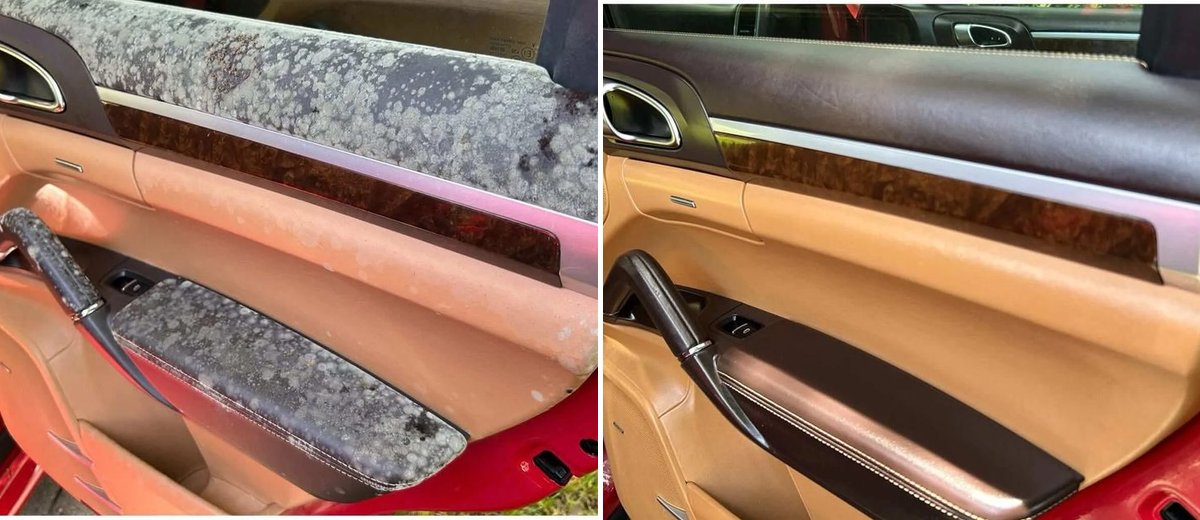
Before & After: Mold Removal We've Actually Done
No stock photos. These are real DShine mold removal jobs across South Florida, the same 11-step process and chemistry used on every Lake Worth Beach appointment.
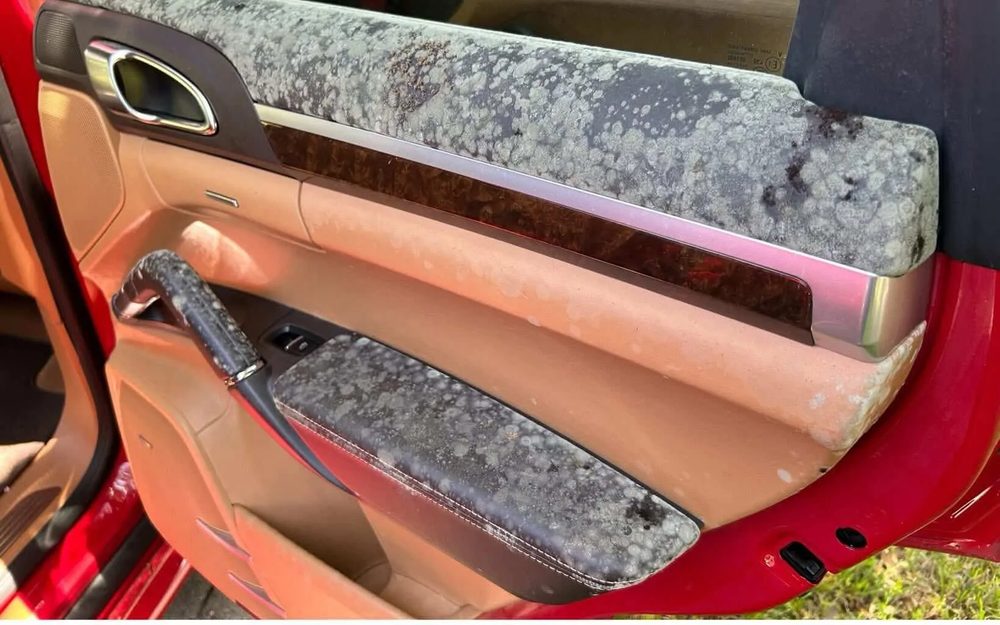 Before
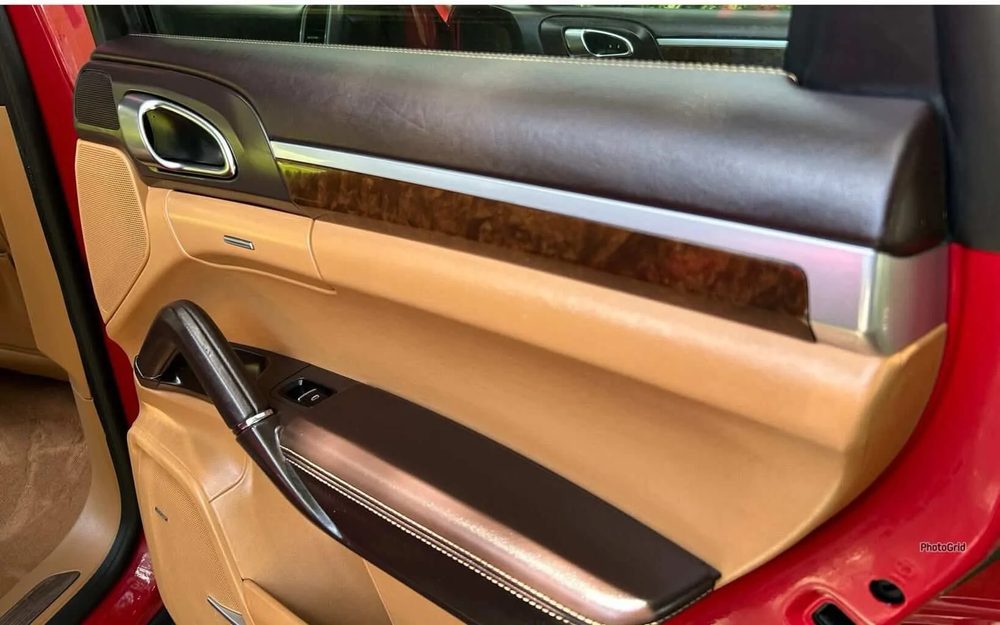 After
Porsche Cayenne — Door Panel & Armrest
Mold has spread across the tan leather door panel and armrest of a red Porsche Cayenne, reaching toward the wood trim. Leather needs the gentler path: a leather-safe antimicrobial protocol with controlled steam and extraction instead of hard scrubbing, then Concrobium and ozone for the airborne spores. Door panels are a typical settling point for moisture when seals take rain at the curb, a pattern we see across older Lake Worth Beach streets.
 Before
 After
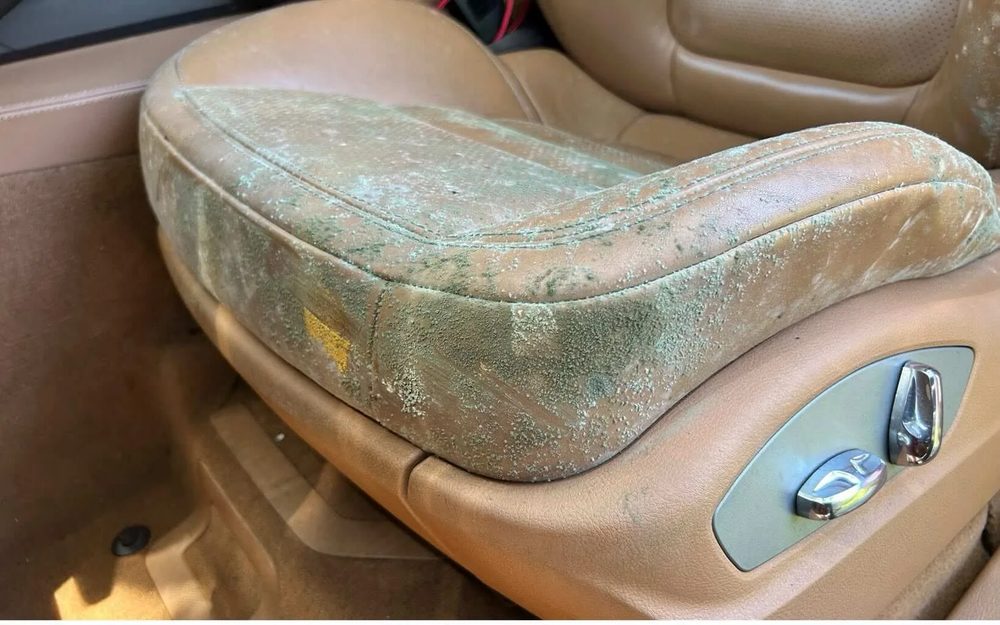
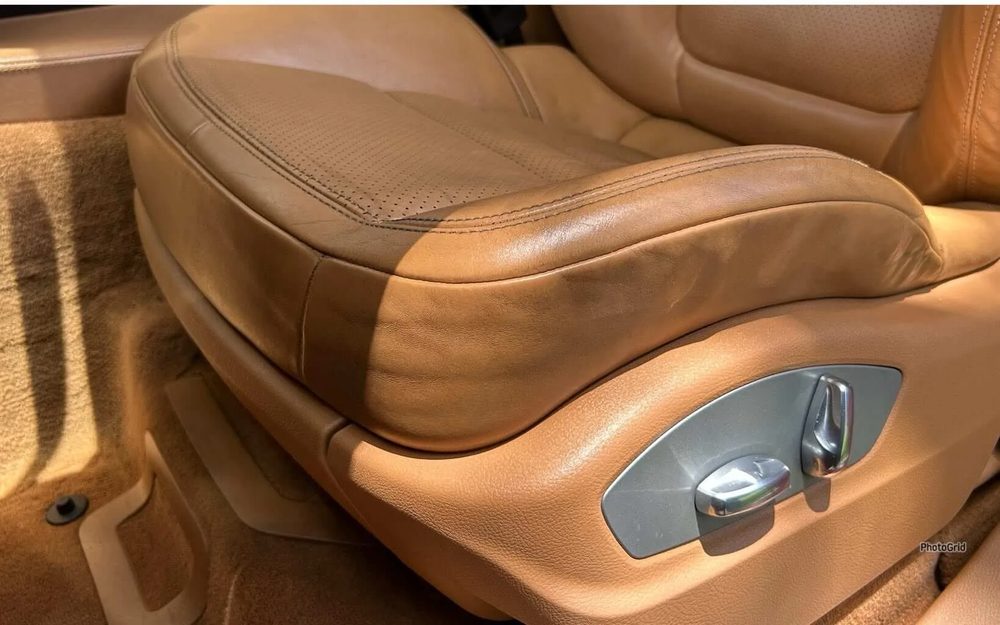
Leather Seat Bolster — Green-Blue Mold
A tan leather front seat bolster covered in green-blue mold. Leather like this is treated with a leather-safe antimicrobial application, with no aggressive scrubbing that could strip the finish, followed by the ozone cycle for spores in the surrounding air. Colored growth on leather often points to long, damp stretches, and in Lake Worth Beach a car under tree shade with a weak seal can keep its seats damp for weeks.
 Before
 After
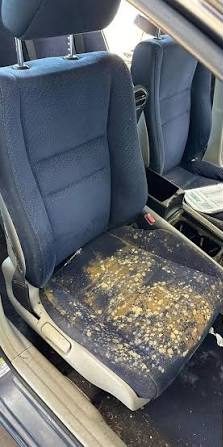
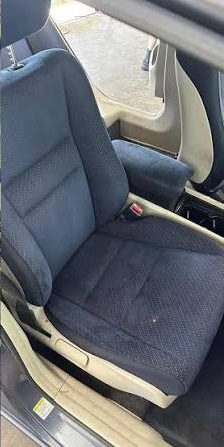
Cloth Bench Seat — Stain Residue Underneath
The cushion of a dark blue cloth sedan bench seat has been lifted to show tan and yellow mold-stain residue on the seat bottom. This kind of staining means moisture sat in the foam, not just on the fabric, so it needs steam, extraction and Concrobium on both the surface and the underside. Moisture reaching the seat base from a leak at the floor is a common pattern for cars parked outside through a wet summer.
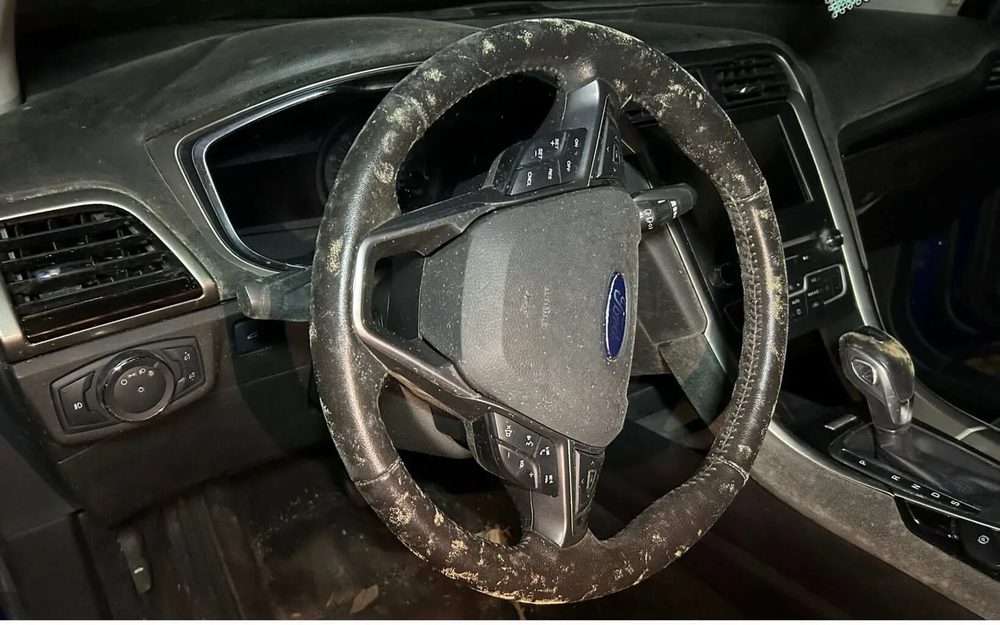 Before
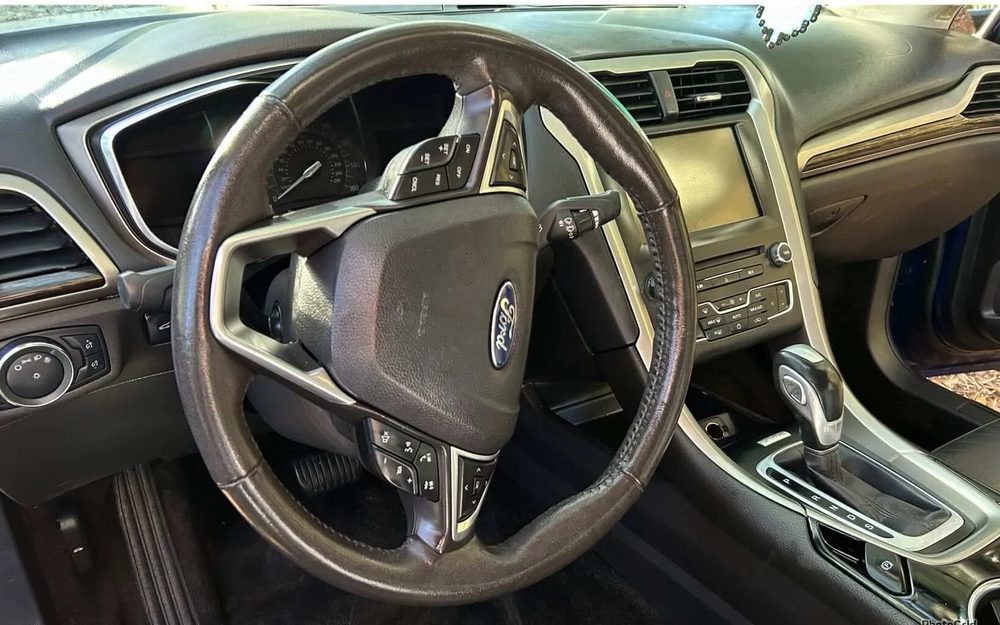 After
Steering Wheel, Dash & Vents — Grey-White Bloom
A Ford sedan interior with a grey-white mold bloom on the steering wheel, dashboard and air vents. Hard surfaces get steam and Concrobium, and the vents need special attention because mold grows inside the housing as well as on the visible slats. Cabin humidity after a car has been sealed up through humid weather is a common pattern here, especially when the AC drain has been blocked for a while.
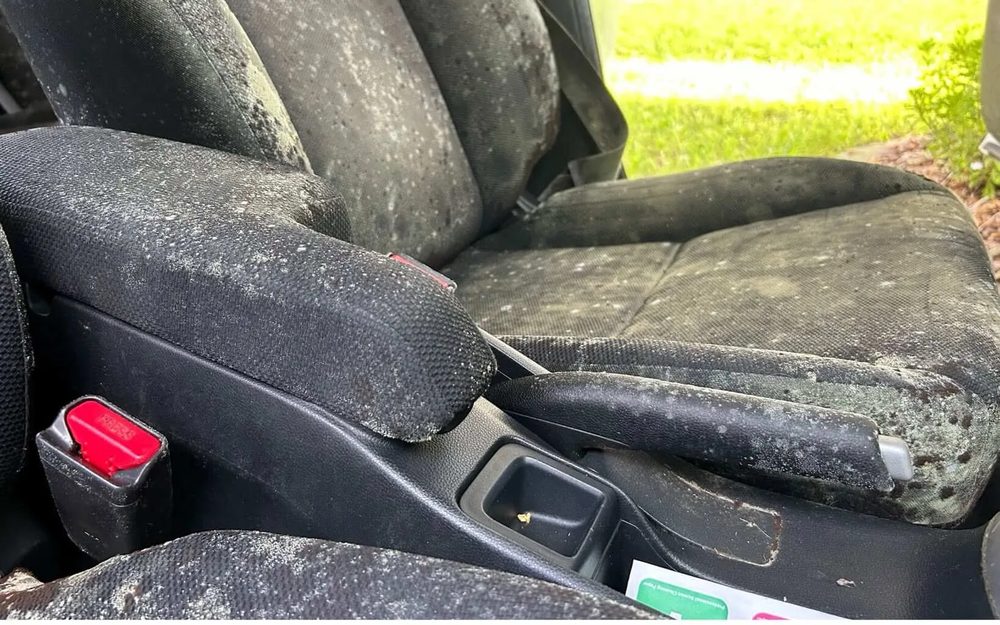 Before
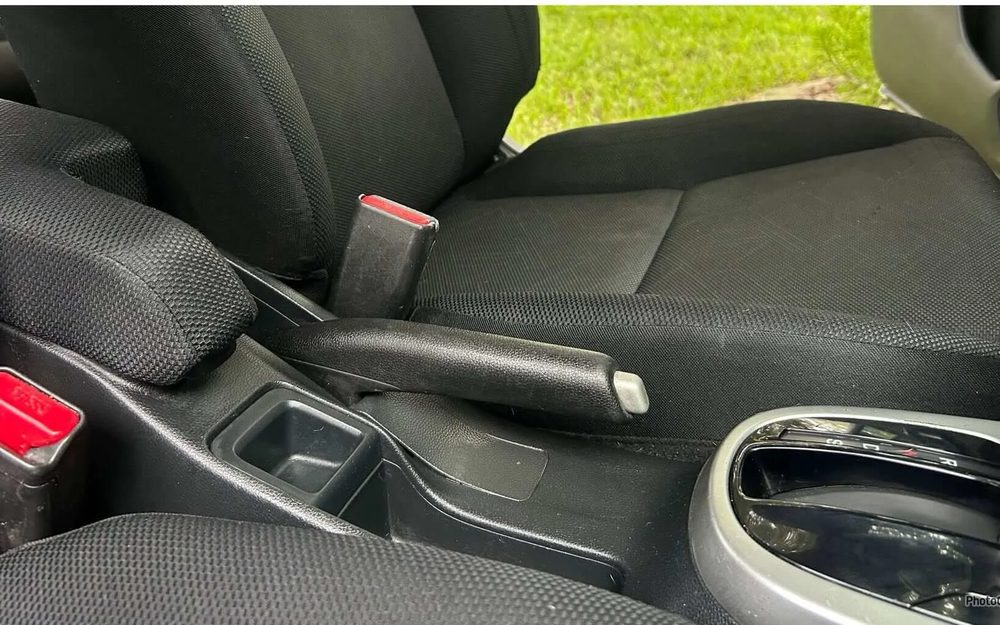 After
Cloth Driver Seat & Console — White-Grey Mold
A black cloth driver seat, armrest and console with a grey-white mold bloom, with green lawn visible outside the window. Cloth takes steam, extraction and Concrobium well, and the driver's area is worth treating thoroughly because it is where you spend the most time breathing the cabin air. Cars parked beside lawns and planting beds, where dew and sprinkler spray keep the air near the doors damp, often follow this pattern.
 Before
 After
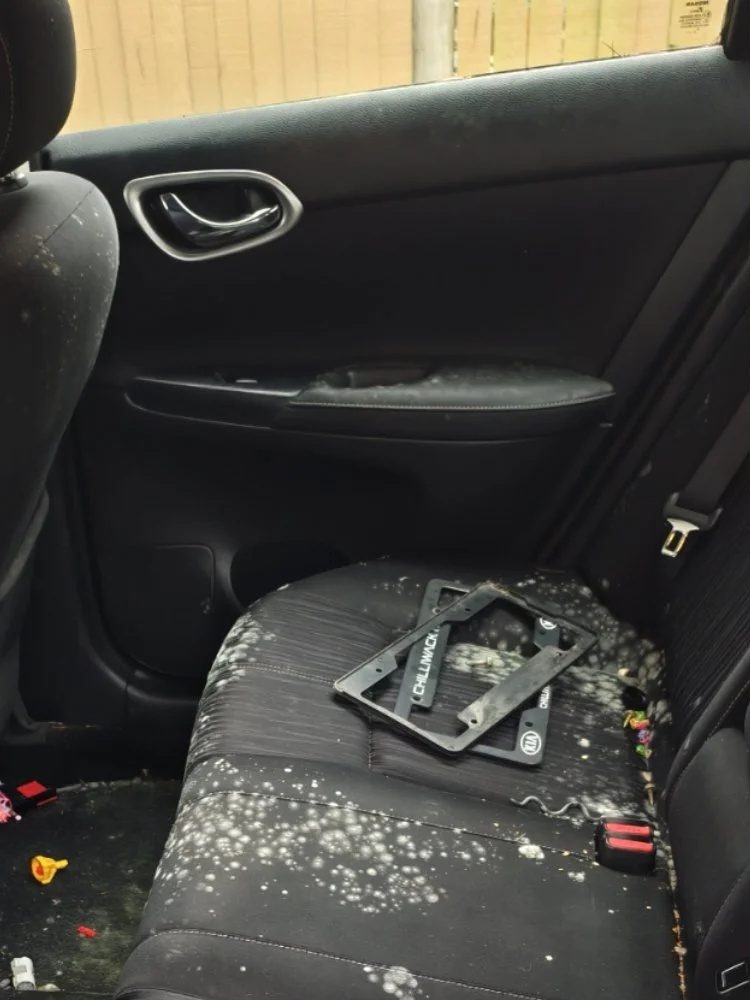
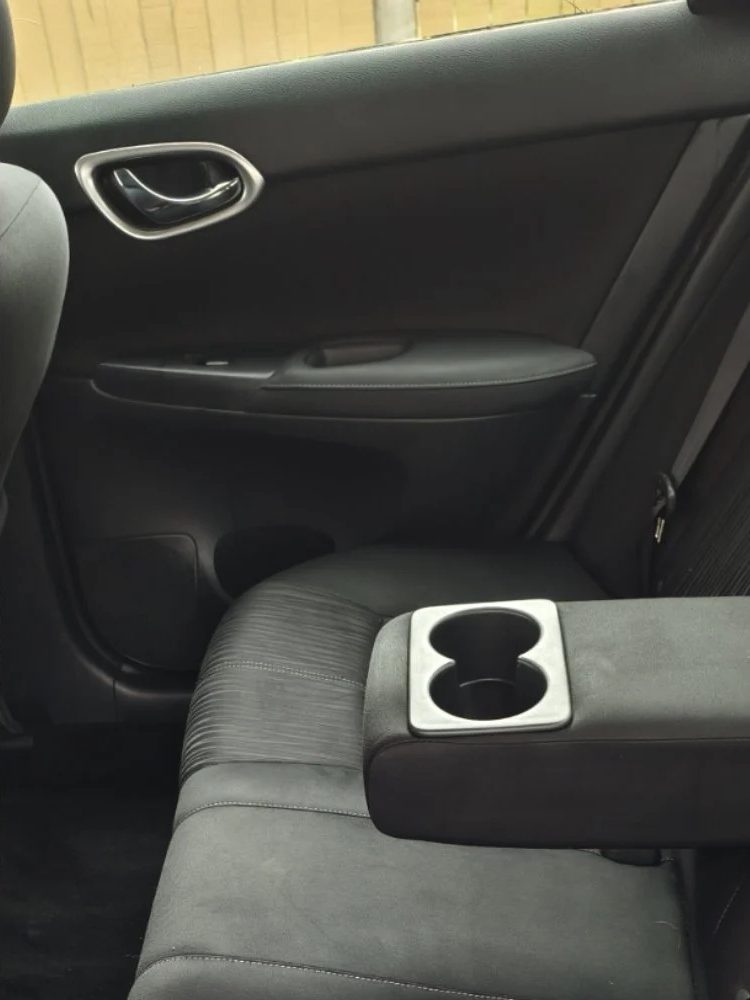
Rear Seat & Door Panel — White Spots
A black sedan's rear seat and door panel with white mold spots across the rear cushion, plus loose debris and a license plate frame left on the seat. Loose items hold moisture against fabric, so we clear them first, vacuum with HEPA, steam and extract the cushion, and treat with Concrobium. A back seat that rarely gets used or aired out is a typical place for mold to start unnoticed.
 Before
 After
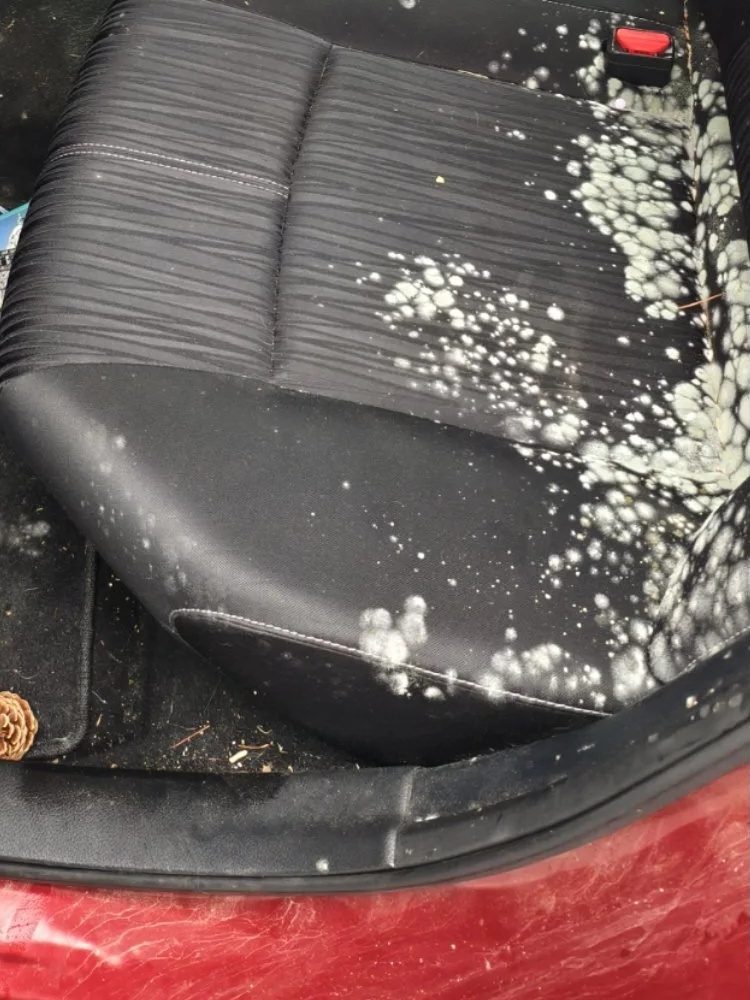
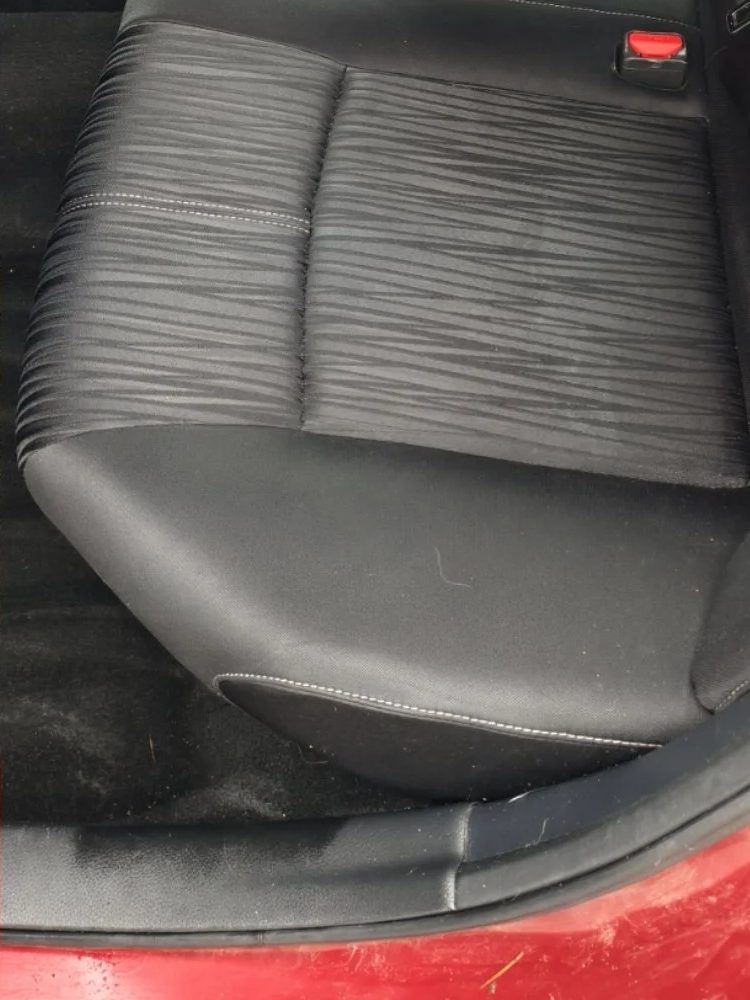
Cloth Seat — White Mold Speckles
A black cloth seat covered in fine white mold speckles, with the red car body visible below the window. Speckles like these are early or moderate growth on the fabric surface, and steam, extraction and Concrobium followed by ozone usually resolve it. In a city with heavy afternoon storms, light growth like this often begins after a few damp days in a car with worn window seals.
 Before
 After
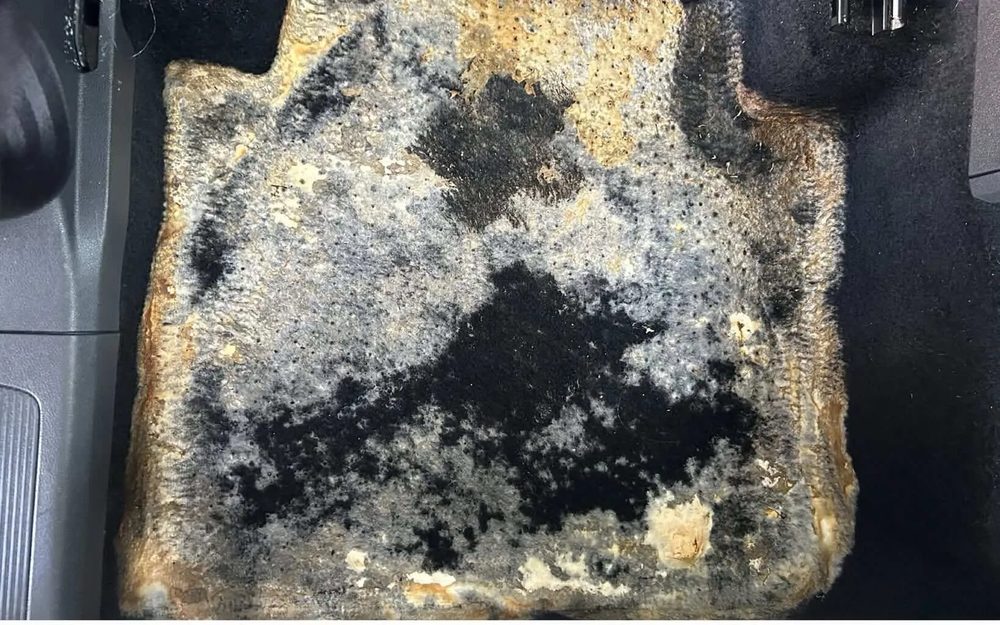
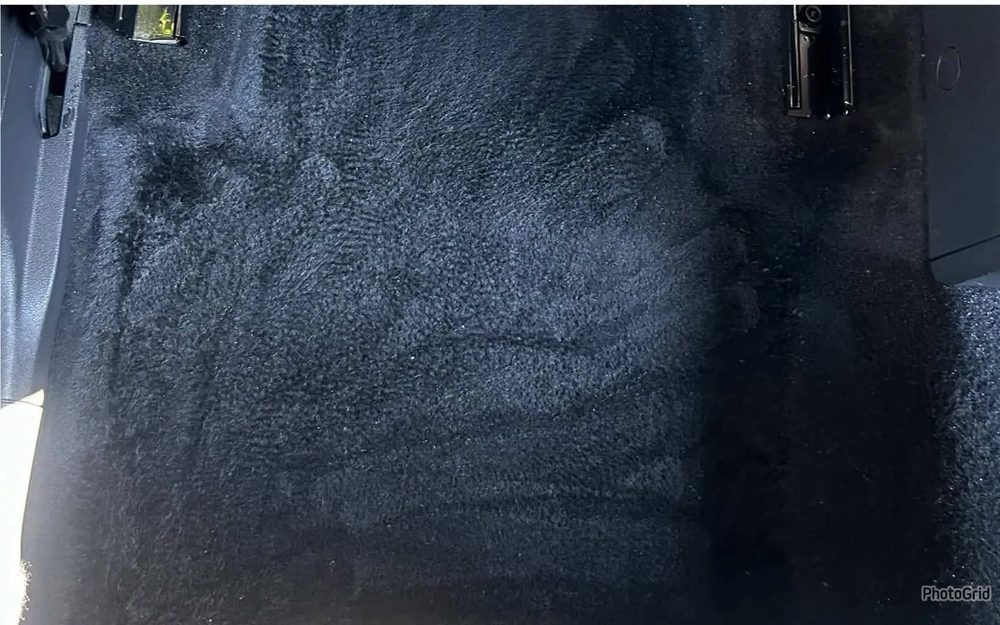
Floor Mat — Heavy Colony Growth
A carpeted floor mat with heavy black, brown and white mold colonies. This is the floor-level pattern, where water collects from leaks, wet shoes or a blocked AC drain, and it usually means the carpet and padding beneath are affected too. We lift the mat, extract moisture from the carpet and foam, treat with Concrobium and use ozone to finish. Floor mats are among the first places we find mold in cars that live outdoors.
100% Satisfaction.
Written. No exceptions.
If the result doesn’t meet our standard, or yours, we come back and redo it at no charge. No forms to fill out, no arguing over what “counts.” The guarantee is in writing before we ever touch your vehicle.
Request Mold Removal in Lake Worth Beach · From $549
Fill this in once and send it. We get your address, vehicle, and the situation all in one message, no phone tag.
Rating
Detailed
Response
Three steps at your curb or driveway.
We handle everything else.
No drop-off. No waiting. We come to Lake Worth Beach.
We come to you in Lake Worth Beach,
College Park to Bryant Park.
Mobile service: home, office, condo, or marina. No drop-off, no travel fee.
Not seeing your city? Ask us — we likely cover it.
Curbside parking under old trees
keeps a Lake Worth Beach car damp.
Lake Worth Beach still has about 1,000 cottages from 1913 to 1949, and many of them come with a narrow driveway, a carport or no garage at all, so cars here sit out in every summer storm and a closed cabin stays damp far longer than owners expect. Left untreated, what starts as a musty smell becomes a real health issue for the next person who drives the car. DShine's Concrobium Mold Control and ozone process address the cause, not just the symptom, backed by $2M insurance and a written guarantee. Mold doesn't need much to get started, any trapped moisture inside a closed cabin is enough given South Florida's humidity. The source is almost always one of four things: a clogged AC condensation drain letting water pool silently on the floor pan, a failed door or window seal letting rain in, a clogged sunroof drain, or the car simply sitting unused for two or more weeks without the AC running. In this city the most common cause is the open-air one: worn door and window seals, plus a drain choked with leaf litter, on a car that lives at the curb, so rain finds its way inside again and again until the carpet never fully dries.
Lake Worth Beach neighborhoods,
College Park to Old Lucerne
Historic districts, downtown and a park each park and age cars a little differently. These are the areas we serve most.
College Park — A historic district between North Federal Highway and North Dixie Highway, with single-family homes built mostly between the 1920s and 1960s. Many have driveways or carports, so cars take weather directly, and tree-lined streets can add leaf debris at the cowl. We check seals and drains first.
Old Lucerne — One of the city's oldest areas: the town was incorporated in 1913, and the district keeps that early-century character. Older homes here often have small driveways and narrow garages, so cars end up at the curb. We confirm where we can work and plan from a photo of the parking spot.
Old Town — The roughly 16-acre commercial core of downtown, with galleries, cafes and shops. Parking here is mostly on the street or in lots, and on busy weekends it is tight, so we agree on a time window and a spot in advance. Work vehicles and business cars are common here.
South Palm Park — A large residential and commercial historic district of roughly 60 blocks southeast of Old Town. Blocks nearer the water can carry a mild salt influence that ages door and window seals, so cars here deserve a careful seal inspection alongside the mold treatment.
Northeast Lucerne — A historic district whose period of significance runs from 1915 through 1952, with continued growth afterward. Homes vary in age, and so do the parking arrangements, from short driveways to carports to street parking. We work at the address and adapt to what the lot allows.
Southeast Lucerne — The other half of the Lucerne story, with early history similar to its northern counterpart. Older cottage lots usually mean tight driveways and shared parking, so we confirm access when booking and plan where the van can stop close to the car.
Bryant Park — A downtown park known for its Addison Mizner-designed 1930s bandshell. Visitors and nearby residents park around it, and cars left outdoors here face the same afternoon storms and tree litter as elsewhere in the city. We meet you at your address or workplace nearby.
Don't see your area? Ask us — we likely cover it.
Lake Worth Beach car mold,
straight answers.
Tap any topic to read the full breakdown.
The city sits on the west shore of the Lake Worth Lagoon at roughly 16 feet of elevation. The lagoon is an estuary now, no longer the freshwater lake it once was, because two man-made inlets let the Atlantic in. For anything parked nearby, that means soft, wet air most of the year with a faint salt edge, not only in the stormy months.
The calendar follows the usual South Florida rhythm. Summer brings near-daily thunderstorms, hurricane season stretches from June through November, and winter eases off without ever drying out. Mold asks for very little: a wet surface, something to eat such as carpet or seat foam, and still air. Once water has soaked in, spores can begin germinating within 24 to 48 hours.
What really separates this city from its neighbors is the housing. About 1,000 cottages from 1913 to 1949 still stand, the largest concentration of that type in Florida, and the cars beside them mostly live in short driveways, carports or at the curb instead of sealed modern garages. So the weak links are door seals, window seals and AC drains.
Most calls here do not involve a pampered weekend car. They involve the family sedan or crossover with a few owners behind it, sleeping in a driveway, a carport or at the curb outside a cottage. After years of sun and downpours, the rubber around its doors and windows is tired, and that is the usual way water gets in.
Next come the working vehicles: pickups, vans and small hatchbacks driven by people who paint, plumb, mow or clean for a living in older homes. Wet tools, soggy drop cloths and dirty boots ride along all day, and the cab stays closed overnight. The driver-side carpet and the mats are typically where the problem shows first.
A third group simply does not travel far. Downtown, the pier and the lagoon-side parks sit close together, so plenty of cars go days between drives. Toss in a damp beach towel or a wet swimsuit on a seat after an afternoon outing, and carpet can be growing colonies within days while the exterior still looks spotless.
Curb under a mature tree: the most exposed spot we see. Shade means the car never gets the sun-drying that would burn off a morning's dew, and leaves, seed pods and sap collect around the windshield cowl, where the AC drain and the cabin air intake sit. A clogged drain here sends water straight to the floor pan, and the owner usually notices the smell before the water.
Open driveway or carport beside the cottage: more airflow than a closed box, yet no defence against rain driven sideways. A carport roof keeps the glass dry while a slanting downpour still finds worn seals, and if the car backs up against a hedge or fence, that flank stays wet longer, which tends to be where the leak is.
Narrow original garage, or a garage that became storage: many 1910s to 1940s cottages have a one-car garage so tight the doors barely open, or one crowded with boxes while the car stays outside. Either way the damp air has no climate control, and a car pulled in ahead of a storm warning while still wet is how many of these cases begin.
Blocks nearer the water: streets closer to the lagoon, including parts of South Palm Park, can carry a salt-tinged breeze. Salt air does not create mold by itself, but it ages rubber seals faster, and a worn seal is the door the moisture walks through.
Wet season, June through September: this is when most leaks begin. Storms arrive most afternoons, and cars parked outside get soaked daily. Owners crack a window to let the heat out, or leave a sunroof tilted, and a single storm is enough to soak carpet and foam. If a seal is already weak, a week of this routine does the damage.
Hurricane season, June through November: people here take storm warnings seriously, and the mold risk comes from what happens around the storm: cars moved into tight garages while still damp, windows left cracked, and vehicles sealed up for days with wet floor mats inside. Cars that stay outdoors through a storm can also take on water through tired seals.
Cool season, December through March: drier air and cooler nights are easier on a car, but they are not a reset. Morning dew and temperature swings still fog glass, and a carpet that got wet in October may still be holding water underneath. This is when owners notice a musty smell the first time the heater or defroster runs.
October and November, the long tail: the final wet weeks are when a summer of small leaks finally announces itself. Cars barely driven in the heat come out smelling off, and owners discover the carpet has been damp for months. Dealing with it now costs less than letting the next rainy stretch feed it again.
Many Lake Worth Beach visits happen at the curb or in a short driveway, so the first thing we confirm is where the car will be and where our van can safely stop. A narrow cottage lot, a shared driveway or a tight corner in Old Lucerne or College Park changes how we set up, and a quick photo of the parking situation when you book saves everyone time.
If you rent your place, tell us when you book. A tenant can arrange the visit, and we are glad to coordinate timing with a landlord when needed. For cars that share a driveway, we confirm that nobody will be blocked in while we work. The ozone stage needs the vehicle sealed and left alone, so we choose a spot where nobody will walk up and open a door mid-cycle.
Downtown is a different setup. Around Lake Avenue and Old Town, street parking tightens on event weekends, and the annual Street Painting Festival draws large crowds, so tell us the time window that suits you and we will agree on a place the car can sit undisturbed for several hours. You do not need to be present the whole time.
1. Water getting past aging seals. Door, window, trunk and sunroof seals on older vehicles parked outside are the leading cause we find in Lake Worth Beach. Years of sun harden the rubber, afternoon storms push water into the gaps, and the moisture lands in carpet padding or door cavities where it never dries. The seal rarely looks bad, which is why owners miss it.
2. A clogged AC drain or a cowl full of leaves. Cars parked under old trees collect debris right where water is meant to drain away. When the drain blocks, condensation and rainwater pool on the floor pan, usually on the passenger side first. A soggy carpet corner and a musty smell the moment the AC starts is the classic sign.
3. A window or sunroof left open for the heat. Cracking a window feels harmless until a summer cloudburst turns up. One soaked seat can start growing within 48 hours, and a sunroof left tilted sends water down the pillars into places a towel cannot reach.
4. Wet gear, then a car that simply sits. Beach towels, swim gear, damp tools and muddy boots bring moisture into a cabin that is then shut up, and in a walkable city some cars go days between drives. Stagnant air and a mildly salty breeze from the lagoon do the rest, and the floor mat is usually where we find colonies first.
Before the van arrives: you send photos of the damp spot or stain and a line about when the smell started. For a Lake Worth Beach job we also like one wide shot of where the car is parked, because a shared cottage driveway or a curb under a canopy of branches decides where we place the steamer, the extraction gear and the ozone unit.
On site: first an inspection of the headliner, seats, carpet, door cards, trunk and vents, so nothing hidden slips by. Then the 11 steps run in sequence: HEPA vacuuming and Benefect decontamination, deep cleaning, steam, extraction and drying, Concrobium Mold Control, ozone, the Meguiar's odor step and a final check. Plan for 3 to 4 hours.
Afterward: the cabin vents while we pack up, and before-and-after photos arrive by WhatsApp. If we noticed a likely source, such as a weeping door seal or a drain full of leaf litter, we name it so you can book the repair. Travel is part of the price, and you can be at work while the car is treated.
"What will it cost?" Nearly every conversation opens here. Mold in one area is $549, mold throughout the vehicle is $749, and the drive to you is included. Send photos or a short description and you hear back in under two minutes, with the exact figure confirmed from what you sent before any work starts.
"I have no garage. Does that matter?" Not for booking. We treat the car wherever it lives, whether that is a cottage driveway, a carport, a curb or an office lot, and we simply ask for a photo of the spot so we can plan the setup.
"Is an older car worth treating?" Usually, when the growth is at surface and foam level. If it has gone deeper, we say so during the inspection rather than after the invoice. **"Do I have to be there?"** No. Plan on 3 to 4 hours without the car, and the treatment targets the source of the smell instead of masking it.
Sap, pollen and bird droppings land on any car parked under big old trees, so paint work is the pairing owners raise most often here, and Paint Correction is how we handle it. A few then add a Ceramic Coating so the finish sheds that residue at the next rinse instead of baking on in the sun.
Engine Bay Cleaning surfaces occasionally for older cars that have idled in one spot for long stretches. Nothing gets pushed. On a tight budget the mold work goes first, since it affects the air in your cabin, and the cosmetic jobs can wait until you are ready for them.
Thinking about paint? Say so when you request your quote. Our van is already parked at your door with travel covered, so bundling can save you a second appointment, and you will get our straight opinion on whether bundling suits your particular car.
Look at the glass first. If the windows fog from the inside on a clear morning with nobody breathing in the car, there is moisture in the cabin. Run a palm along the carpet near the door sills and under the mats too, especially on the passenger side, where AC condensate likes to collect.
Smaller clues come before the full musty odor: pale or grey specks on seat seams, a dusty film across the dashboard, a faint sour whiff that comes and goes, or a stuffy smell the first time the AC runs after the car has rested. Acting at this point is far easier than waiting.
Mold also hides where things feel dry. A seat base can be damp under a dry-feeling surface, and a mat can be black underneath while the top looks clean. Pull the mats, push your hand hard into the carpet by the pedals and beneath the seats, and peek under the trunk liner, where a bad seal tends to drip.
Long seasonal absences are uncommon in this city. Idle here means a week of no driving, a month between road trips, or a second car that comes out only on weekends. One habit does the most good: after a drive long enough to warm the cabin, switch the AC compressor off a minute or two before parking so the evaporator can dry.
Sweep leaves out of the cowl beneath the windshield. Squeeze the rubber around doors and windows, and if it feels hard or cracked, it is on its way out. Keep wet towels and shoes out of the car. A small moisture absorber on the floor can support all this, but it will never compensate for a leak.
Try the two-day test. Open the car after a short gap and breathe in. Fresh air means seals and drains are coping. A stuffy or sour-sweet smell after only two days means water is already inside, and a change of habits alone will not fix it.
Cottage households often squeeze two or three vehicles into one short driveway, with a roommate's or relative's car in the mix. If more than one is affected, say so when you book. The same shaded spot and similar worn seals tend to cause trouble on neighboring cars, so one smelly car is often a warning about the others.
We then lay out what fits into a single visit. Each vehicle needs its own sealed ozone cycle, so we line the cars up in an order that keeps them from blocking each other. If only one car has a problem, we can still look over the rest, so you know where each stands.
Cars with several drivers deserve a note as well. Wet gear and spills arrive from every direction and nobody feels responsible. Choose one person to report a smell or damp patch early, and send photos of every affected car so the price we confirm reflects the whole picture.
What is promised: a 100% written satisfaction guarantee lasting 30 days from your visit. If mold or a mold smell returns inside that window, we re-treat the car free of charge. It is on paper, so there is nothing to argue about later.
What you need to do: message us, ideally with a photo of the spot or a line about the smell. That is the whole process. You do not have to show what caused it, fill in forms or rebook anything else, and we set the return visit around your schedule.
Why it sometimes happens: around these streets the cause is usually a leak that stayed open, such as a seal that lets rain through, a drain jammed with leaves, or a car parked straight back under the same dripping branches. We name the suspect at the end of the first visit, and repairs made early in the 30 days give the clean cabin its best chance.
Age changes how we handle a car. Faded fabric, brittle trim and leather that has already lost its oils can all be marred by hard scrubbing, so we steam and extract gently and follow the leather-safe protocol on leather. Antimicrobial treatment and ozone halt active growth, but they cannot undo staining or cracking that has already happened.
We also tell you where the limits are. If growth has sunk deep into seat foam or behind a door card, a replacement part may be the sensible fix, and you hear that during the inspection, not afterward. On work vehicles we concentrate on floors, door pockets and seat bases, because that is where jobsite moisture settles.
Value is part of the conversation too. Many cars in older neighborhoods are paid off and relied on daily, so the question is rarely whether to make the car showroom-perfect. It is whether to make the cabin healthy and dry again at a fair, fixed price, and in most surface-level cases that is exactly what the treatment delivers.
Before parking the car for a stretch, empty it of anything damp: towels, swimsuits, soggy floor mats, umbrellas, boots. Vacuum up sand and crumbs, which hold water. Confirm every window is fully up and the sunroof is shut, then clear leaves and seed pods from the base of the windshield.
Where possible, choose a spot with some sun and moving air, and let the fan run for a minute before switching off. If the car will sit longer than a couple of weeks, ask a neighbor to start it now and then and let the AC run for a short while.
Old trees deserve a special mention. Sweep the cowl and the channel beneath the wipers. If the passenger footwell feels wet after rain, or you hear water sloshing as the car brakes, the drain is probably blocked and should be cleared before the next storm.
Mold does not stand still. A damp patch on one seat is a $549 job while it stays in a single area. Leave it through a wet season and it can creep into carpet, headliner and the HVAC system, at which point the job becomes the $749 whole-vehicle tier.
Your health is on the line too. A fan that pushes air across moldy surfaces puts spores right in front of your face, which matters for kids and anyone with allergies. And foam that stays wet for long enough may need replacing, a far bigger bill than any treatment.
Then there is lost use. A car with a smell is a car you start avoiding, windows cracked and parked more often, and a parked car grows even more mold. Treat it promptly and the vehicle is back in daily service after a single visit of 3 to 4 hours.
Old houses need constant upkeep, and the upkeep brings a steady flow of trades vehicles: painters, plumbers, roofers, landscapers, cleaners. Their cabs endure wet days, damp tarps, muddy boots and windows left open between stops, then spend the night outside.
For a working vehicle, every idle day costs money, so we fit the visit around the job. Because we come to wherever the truck is parked, there is no drop-off and no ride to arrange. Tell us whether the mold is in the cab, the crew seat or the floor, and after reviewing your photos we confirm a clear price.
Moisture is rarely the only ingredient. Work vehicles carry dust, drywall powder, wrappers and spilled drinks, and all of that feeds mold once the cabin turns damp. If the smell is a mix, tell us what the truck hauls so the inspection and the odor step are aimed at the right targets.
The sequence is simple. You send photos or a few lines, usually over WhatsApp, and within two minutes you have a figure: $549 for mold in one area, $749 for mold throughout the vehicle, with travel included either way. Nothing about the drive to your street is added on top.
Before work starts we review what you sent and lock the exact price, and it does not move once the job begins. Owners of older cars watching a budget tell us that this certainty is worth as much as the number itself, since no one wants a surprise halfway through.
You do not need to diagnose anything first. One clear photo of the worst spot and a sentence on how long it has smelled is enough to begin, and we would rather confirm a number you can rely on than quote low and revise it once the seats are already apart.
This is a city of cottages built before air conditioning was common, short driveways and cars that sleep outside. Put those together and you get worn seals, drains packed with leaf litter, damp carpet and a long wet season, which is how mold appears here without any garage in the story.
The service in one breath: we drive to you, inspect, and complete the 11 steps with Concrobium and ozone. It is $549 for one area or $749 for the whole vehicle, travel included, confirmed from your photos before we start. Plan on 3 to 4 hours, then 30 days of written guarantee.
Why the pattern holds: homes from 1913 to 1949 predate central air conditioning by decades, and the vehicles beside them take sun, storms and tree litter with little shelter. Most calls we get trace back to seals, drains and the place the car sleeps.
Think of the ozone stage as the part that reaches what you cannot. After the wet work, the doors and windows are sealed and a professional generator fills the cabin and the vent paths with ozone, which attacks spores and odor molecules floating in the air and sitting deep in fabric. Nobody stays in the car for the duration.
We choose a spot with room for the doors to swing open later and where people will not wander by, such as the far side of a driveway or a quiet stretch of curb. Ventilation follows, and until the cabin has aired fully nobody sits inside. You hear from us the moment the car is ready.
Why bother? Because smell survives. Padding under the carpet and foam in the seats can hold an odor long after the visible patch is gone, and so can the ducts behind the dash. Ozone covers those, then the Meguiar's odor step and a final check leave a neutral, clean car.
What callers here
ask before they book.
Add-ons Lake Worth Beach clients pick
Still deciding? Read: the complete mold removal guide · does insurance cover it? · why DIY mold removal fails.
Musty car in Lake Worth Beach? We come to the curb.
Serving Lake Worth Beach and all of Palm Beach County. Fixed pricing, no travel fee. We confirm in under 2 minutes.
It Might Just Be an Odor Problem
If there's no visible mold growth yet, the smell alone is usually an Odor Removal Detailing case ($349 flat) — faster than full mold remediation ($549–$749). See which one matches what you're dealing with: