What a Royal Palm Beach Mold Job Includes
This is not a car wash. Car Mold Removal uses Concrobium Mold Control treatment, pH-balanced products, and machine assistance, the same process used in pre-sale preparations for luxury dealerships.
Why it matters for your health: Mold in a vehicle is a different exposure than mold on a wall at home. With the AC recirculating, everyone inside is breathing concentrated spores for the length of the drive. The EPA and CDC both link mold exposure to respiratory irritation, allergic reactions, headaches, and worsened asthma symptoms. Children, older passengers, and anyone with a compromised immune system typically react faster and more severely than a healthy adult would. By the time the smell is noticeable, spores have usually already spread through the HVAC system into every vent in the cabin.
Curious what actually happens during the visit? Tap through our real 11-step process below to see what we do at each stage and why it matters.
What every Royal Palm Beach mold job gets you
Most detailers in Royal Palm Beach charge less. Here’s exactly what you gain — and what you risk — with each choice.
| DShine DetailsFrom $549 · travel included | Avg Royal Palm Beach Detailer$149 – $199 | |
|---|---|---|
| Industry certificationsIDA, Koch Chemie, Meguiar’s, 3M, Symplex, XPEL | ✓6 verified | —0 credentials |
| $2M liability insuranceWe cover any damage — in writing | ✓ | —Often uninsured |
| Deionized water systemZero mineral residue, no water spots | ✓ | —Tap water, water spots |
| Fresh microfibers per vehicleNo cross-contamination between jobs | ✓ | —Shared towels, swirl risk |
| Mold-specific chemistry onlyConcrobium, Benefect & Meguiar’s, no harsh acids | ✓ | —Industrial degreasers |
| Before & after photosSent via WhatsApp on completion | ✓ | —No documentation |
| 100% written satisfaction guaranteeReturn & redo at no cost if unsatisfied | ✓ | —No written guarantee |
| Travel to your address — $0Home, office, condo — no drop-off | ✓ | Sometimes adds fee |
DShine vs. any other detailer
in Royal Palm Beach, Palm Beach County
Three things most detailers won't tell you. We put them in writing.
 Since 2018
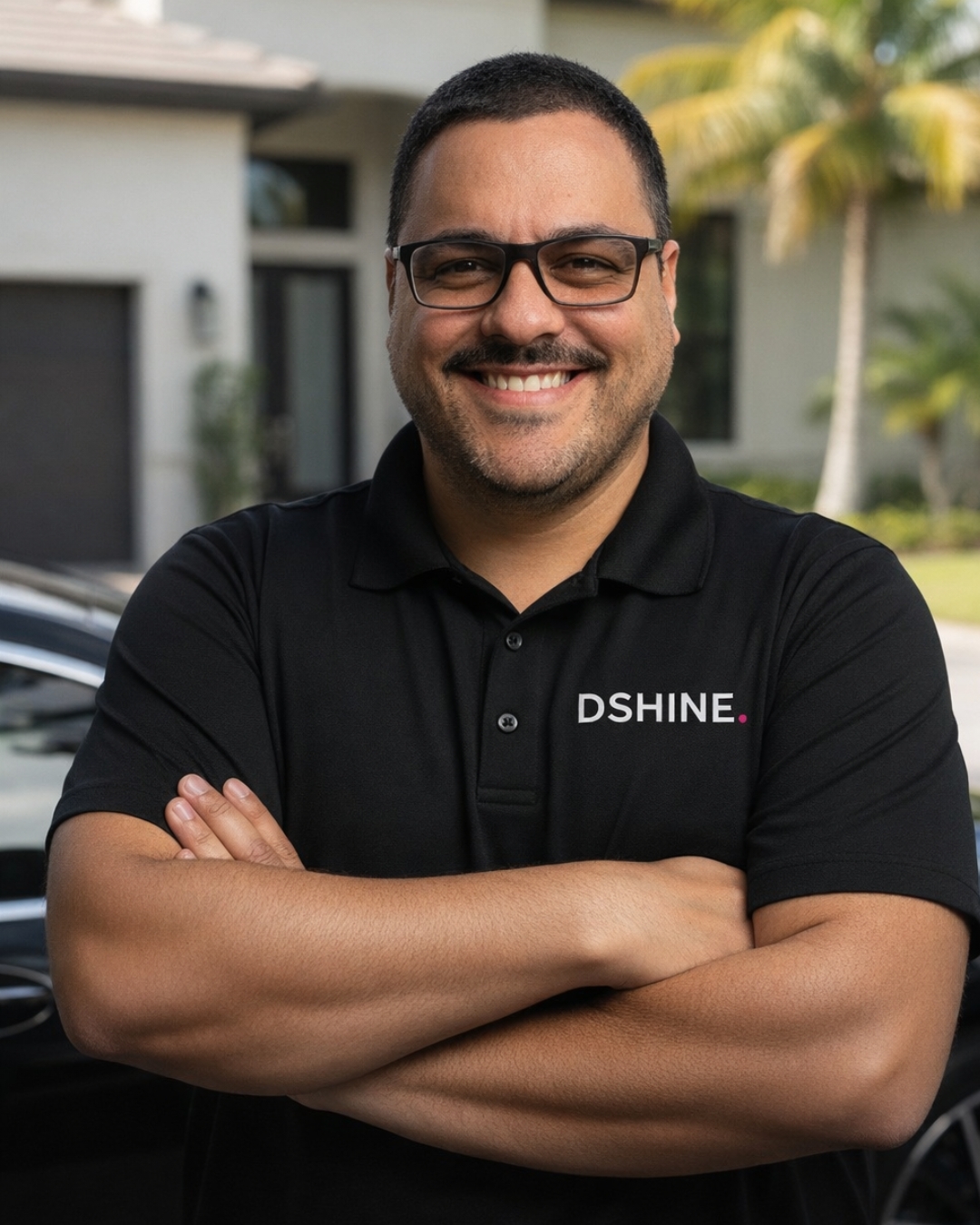
With more than 20 years of hands-on experience in the automotive care industry, Evelio launched DShine Details in August 2018 with one van and zero shortcuts. For the first six months he slept in the van to keep costs down and standards up. Today DShine runs 7 certified vans across Miami-Dade, Broward, and Palm Beach, and the commitment hasn't changed. Every vehicle is treated as if it were his own.
What clients say
in their own words.
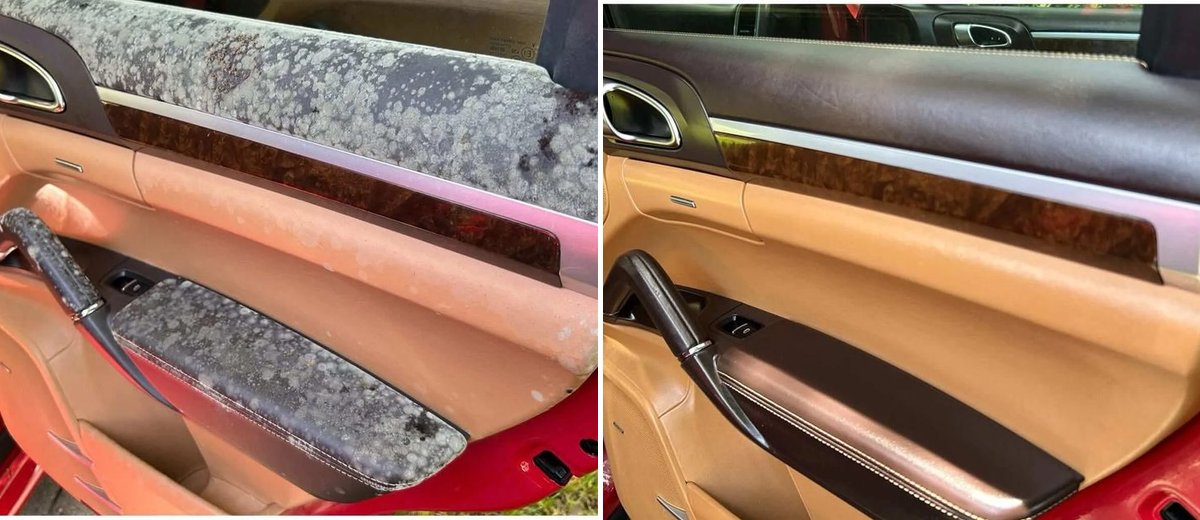
Before & After: Mold Removal We've Actually Done
No stock photos. These are real DShine mold removal jobs across South Florida, the same 11-step process and chemistry used on every Royal Palm Beach appointment.
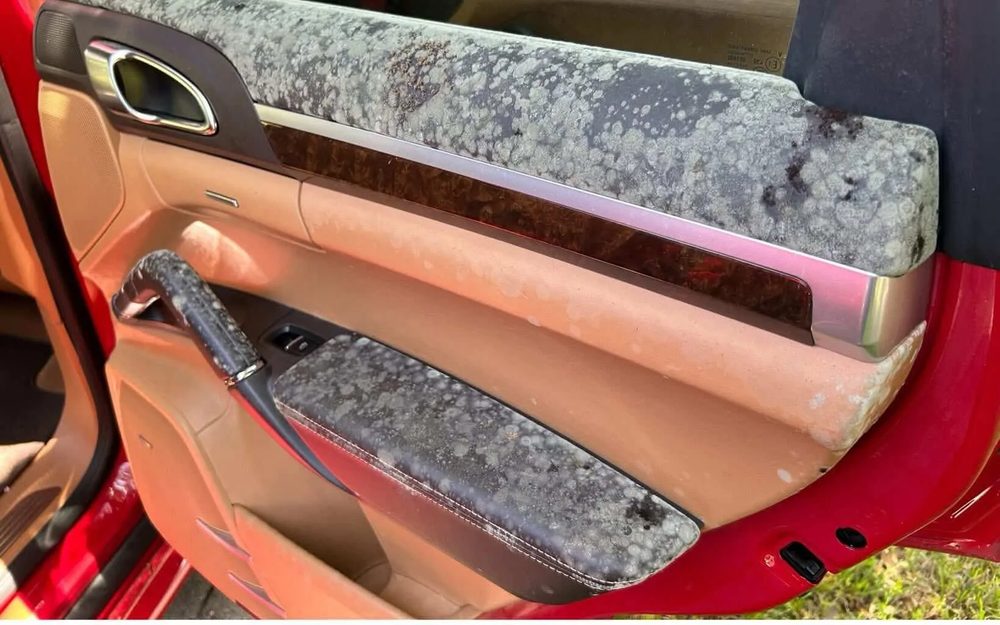 Before
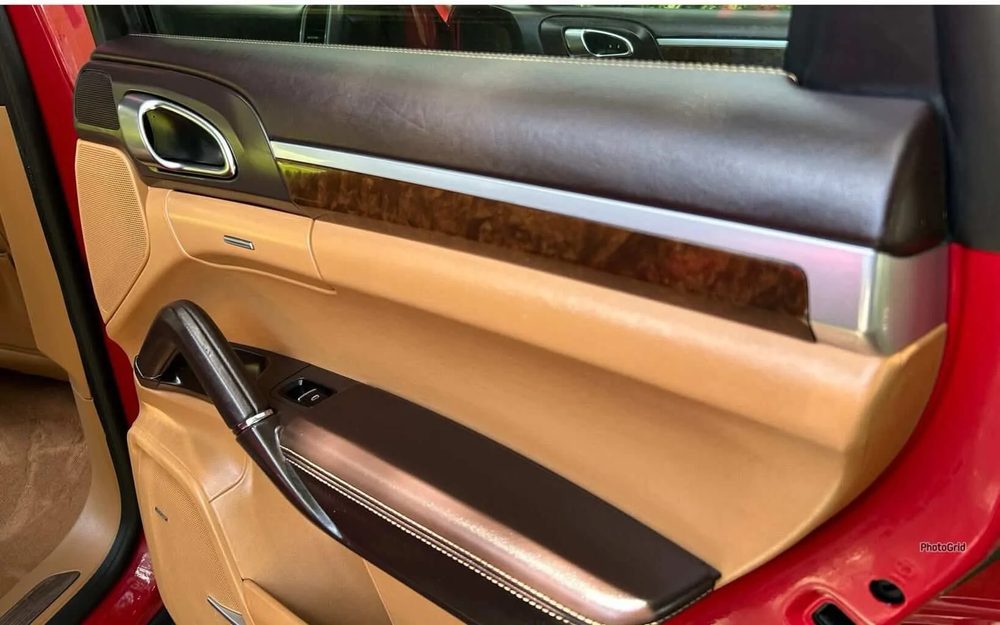 After
Porsche Cayenne — Door Panel & Armrest
Mold spreading across the tan leather door panel, armrest and wood trim of a red Porsche Cayenne. Leather like this is treated with a leather-safe antimicrobial application and steam extraction, not hard scrubbing, and the ozone cycle handles the spores in the cabin air. In a village of daily-driven SUVs, a door pocket that stays wet after an afternoon storm is a common starting point.
 Before
 After
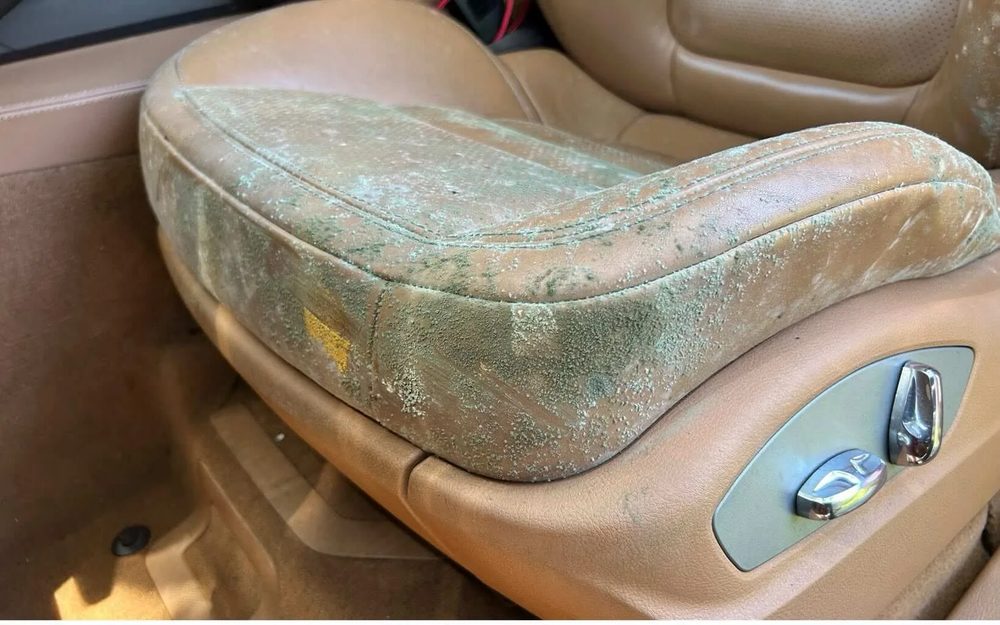
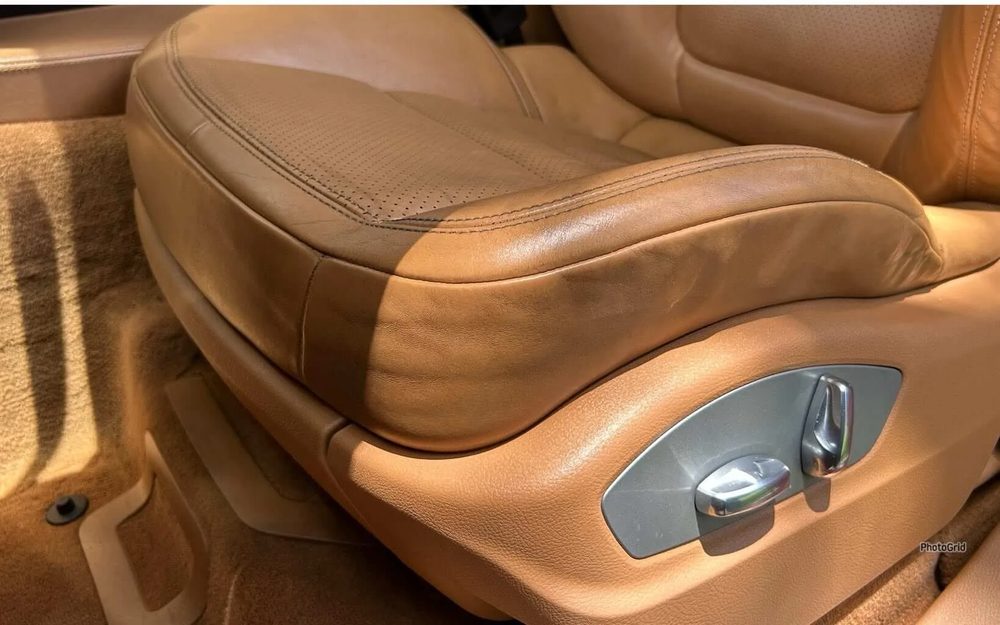
Leather Seat Bolster — Green-Blue Growth
A tan leather front seat bolster covered in green-blue mold, the part of the seat that gets the most contact. We lift the growth with steam and a leather-safe antimicrobial, check the stitching and the seat seams, then finish with Concrobium and the sealed ozone cycle. On busy family vehicles here, a bolster that stays damp from sweaty gym clothes is a common culprit.
 Before
 After
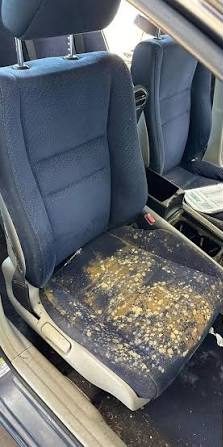
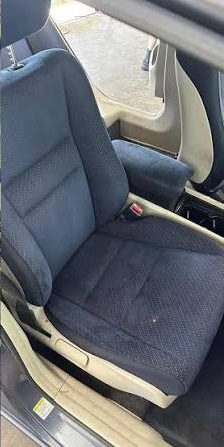
Cloth Bench Seat — Mold Stains Under the Cushion
A dark blue cloth sedan bench seat with the cushion lifted, showing tan and yellow mold-stain residue on the seat bottom. This is the kind of hidden damage a quick wipe misses. We steam and extract the fabric and foam, treat with Concrobium Mold Control, then dry it thoroughly. A spill that soaks down into the seat is a typical pattern in cars used for school runs.
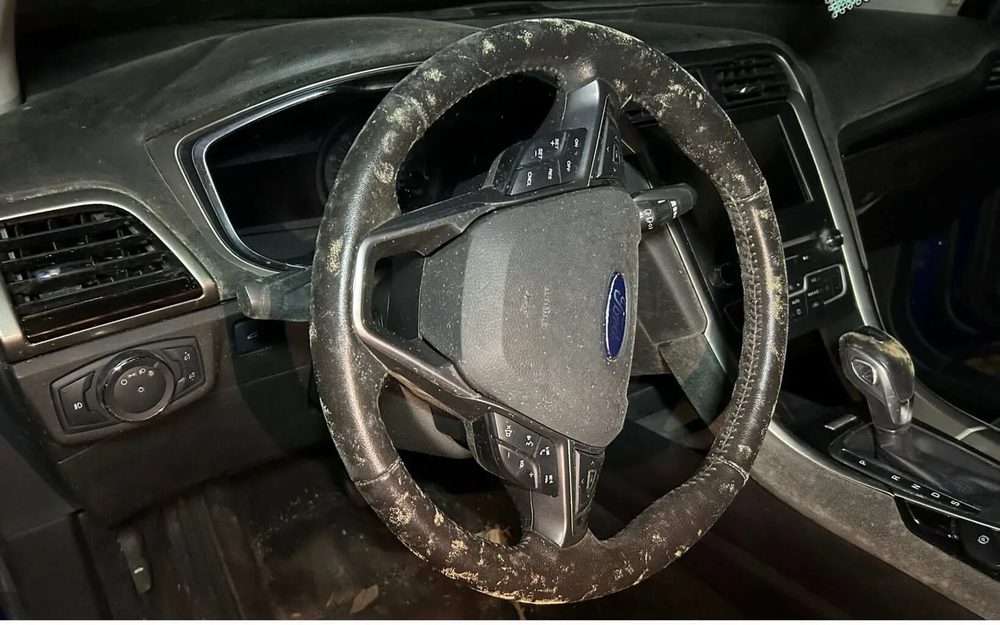 Before
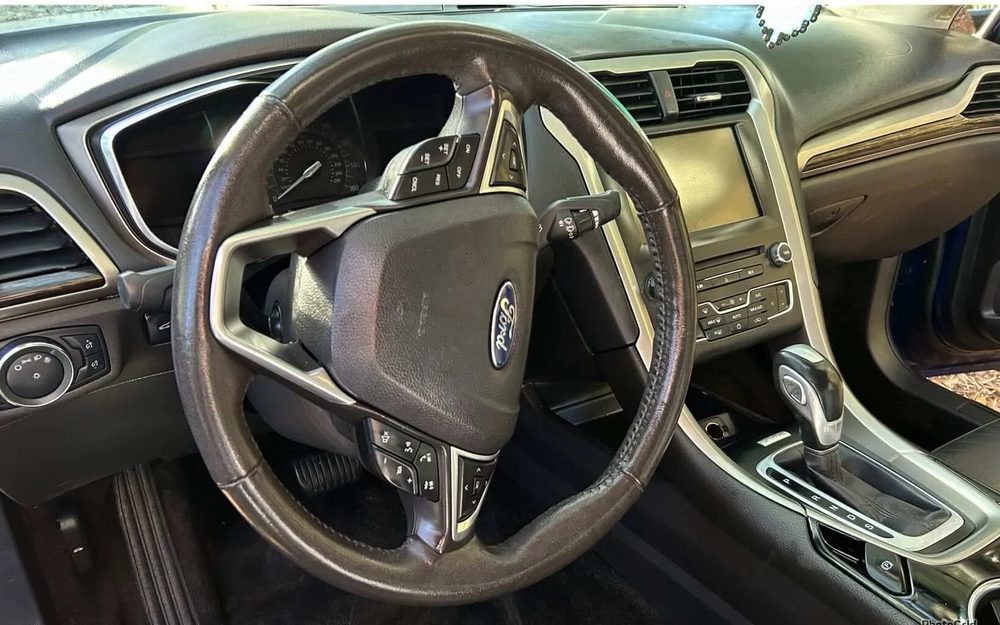 After
Ford Sedan — Steering Wheel, Dash & Vents
Grey-white mold bloom on the steering wheel, dashboard and vents of a Ford sedan interior. Hard surfaces like these are steam-cleaned and treated with Concrobium, and the vents get particular attention, since mold inside the housing is what sends spores into the cabin each time the AC starts. In a car driven daily and parked in the sun, trapped cabin humidity after a storm is a common cause.
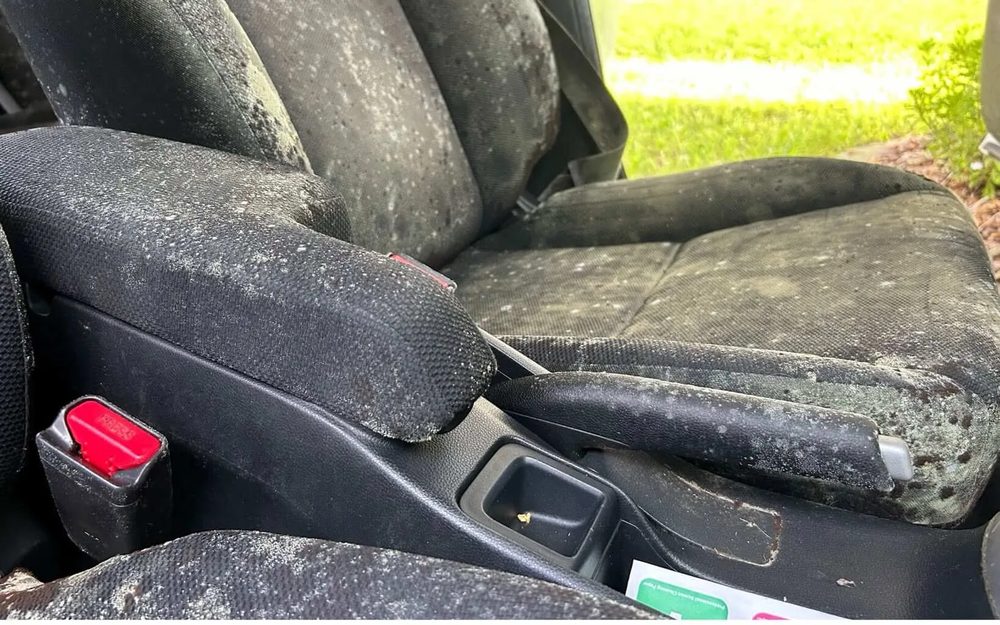 Before
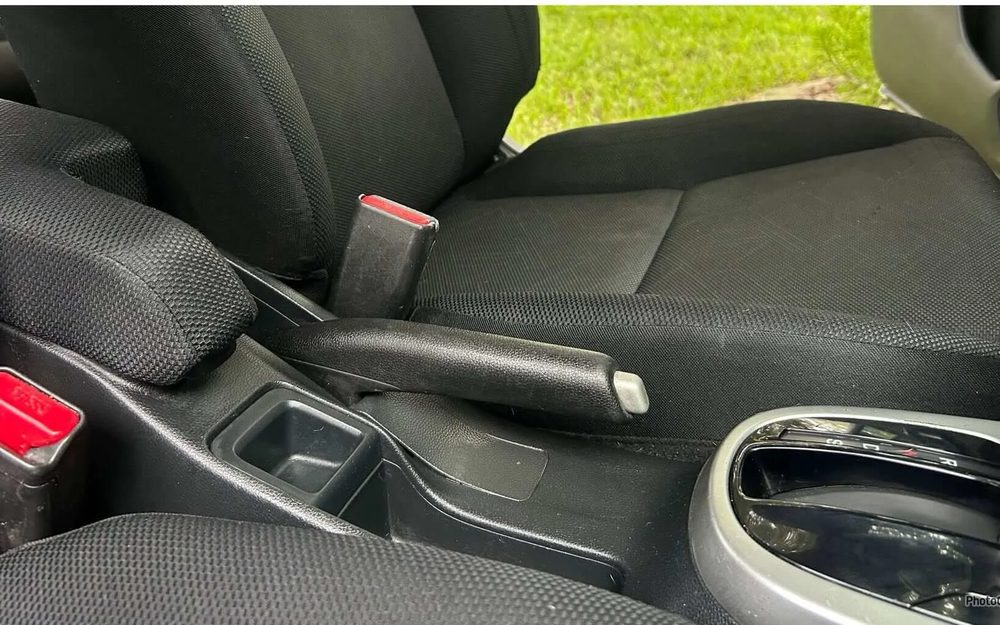 After
Driver Seat & Console — Grey-White Bloom
Mold across a black cloth driver seat, armrest and console, with a green lawn visible outside the window. Cloth seats hold moisture deep in the foam, so we extract, steam and apply Concrobium Mold Control, then finish with the ozone cycle. Under mature trees and lawn sprinklers, this kind of bloom tends to start when a car is parked damp and kept shut.
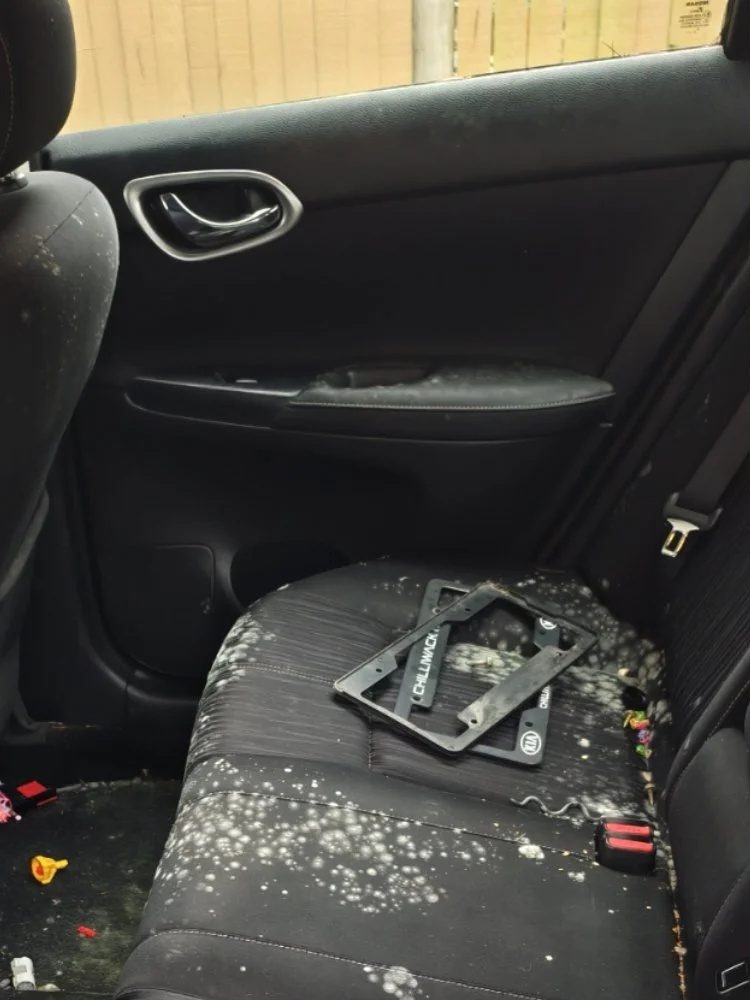 Before
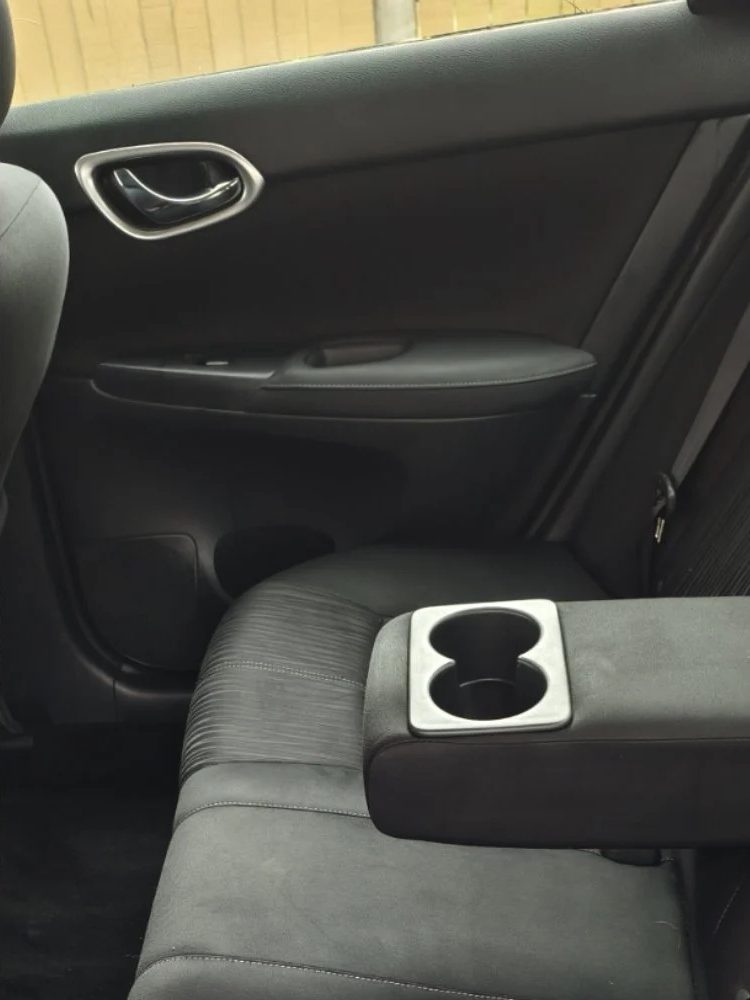 After
Rear Seat & Door Panel — White Mold Spots
White mold spots on the rear cushion and door panel of a black sedan, with loose debris and a license plate frame left on the seat. The back seat is where family cars collect the most spills and wet items, so we remove the debris, vacuum with HEPA, steam and extract the cushion, and treat the door panel. A back seat that stays damp between school days is a common pattern.
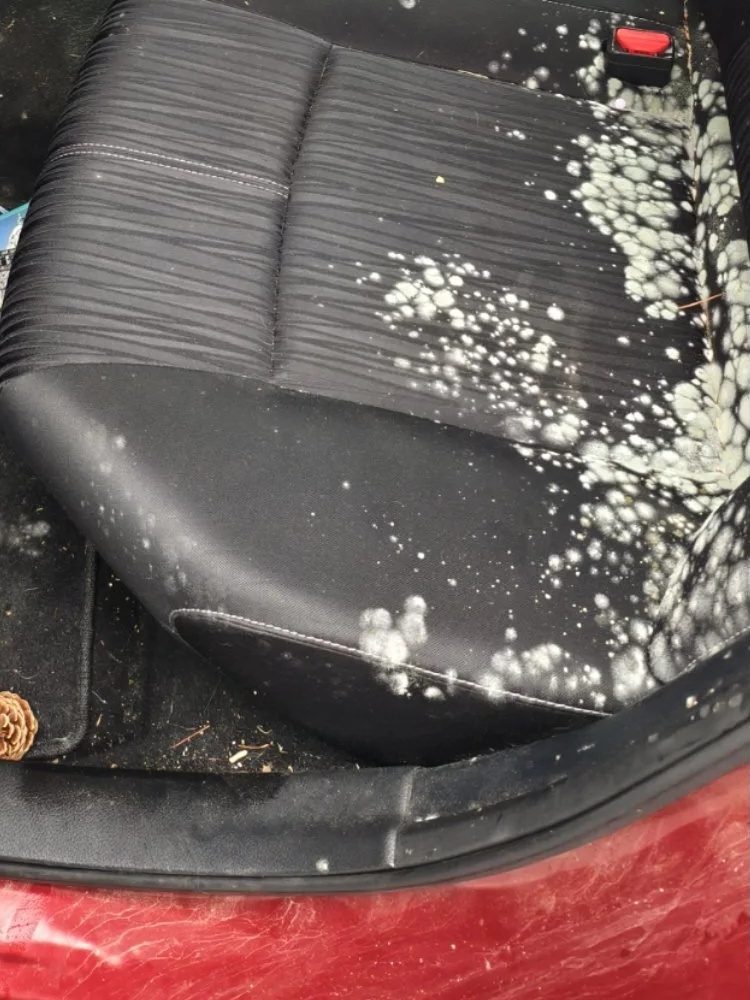 Before
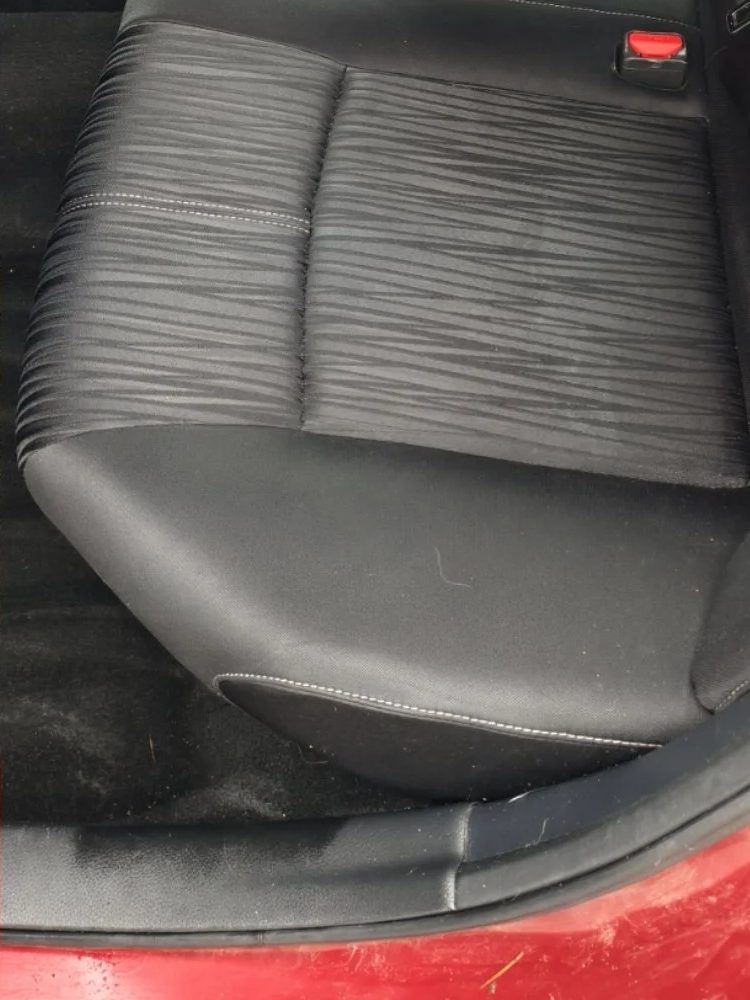 After
Black Cloth Seat — White Speckled Mold
White mold speckles on a black cloth seat in a car with a red body. Light speckling like this is the early stage and the best time to treat it: steam and extraction reach the fibers, Concrobium stops regrowth, and the ozone cycle clears the cabin air. Many families see it first after a rainy stretch, when a sunroof drain or door seal lets in a little water.
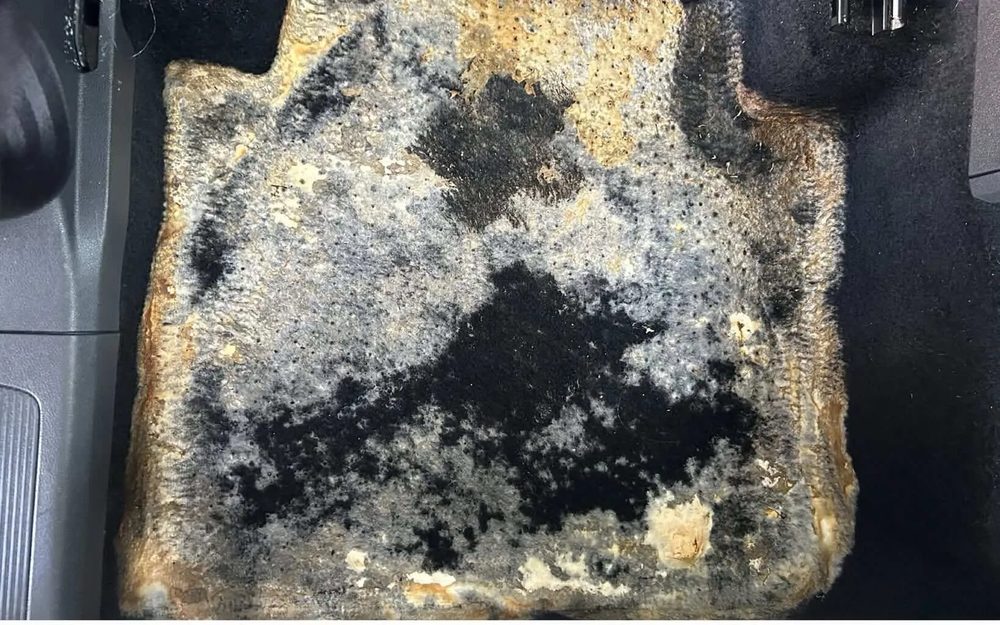 Before
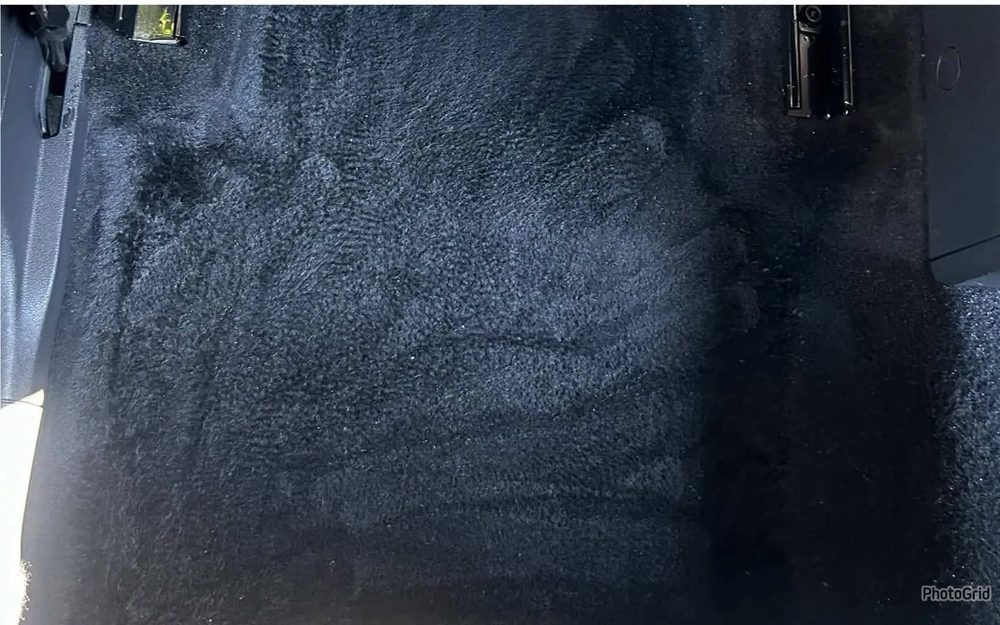 After
Carpeted Floor Mat — Heavy Colony Growth
A carpeted floor mat with heavy black, brown and white mold colonies, the result of moisture sitting under or on the mat for a long time. We take the mat out, extract and steam it, check the carpet and padding below, and treat both with Concrobium. Wet cleats, towels and drinks dropped on the floor make this a typical result in cars used for sports and park days.
100% Satisfaction.
Written. No exceptions.
If the result doesn’t meet our standard, or yours, we come back and redo it at no charge. No forms to fill out, no arguing over what “counts.” The guarantee is in writing before we ever touch your vehicle.
Request Mold Removal in Royal Palm Beach · From $549
Fill this in once and send it. We get your address, vehicle, and the situation all in one message, no phone tag.
Rating
Detailed
Response
Three steps around your family calendar.
We handle everything else.
No drop-off. No waiting. We come to Royal Palm Beach.
We come to you in Royal Palm Beach,
The Colony to Crestwood.
Mobile service: home, office, condo, or marina. No drop-off, no travel fee.
Not seeing your city? Ask us — we likely cover it.
Spills, wet cleats and a clogged sunroof drain
are how mold starts in a family car.
Royal Palm Beach is a village where almost every home is lived in year-round, so mold here rarely comes from a car left closed up; it grows from daily family use, from one wet spot in a seat or carpet that never fully dries. Left untreated, what starts as a musty smell becomes a real health issue for the next person who drives the car. DShine's Concrobium Mold Control and ozone process address the cause, not just the symptom, backed by $2M insurance and a written guarantee. Mold doesn't need much to get started, any trapped moisture inside a closed cabin is enough given South Florida's humidity. The source is almost always one of four things: a clogged AC condensation drain letting water pool silently on the floor pan, a failed door or window seal letting rain in, a clogged sunroof drain, or the car simply sitting unused for two or more weeks without the AC running. In this village the cause we diagnose most is the simplest one: a spill or a bag of wet gear that soaked into seat foam or carpet padding and was never fully extracted, because the cars are driven every day and rarely stored.
Royal Palm Beach neighborhoods,
The Colony to LaMancha
From the original Colony section to the Crestwood corridor and the village's big parks, here is how each area changes the mold risk and how we work there.
The Colony — The original section of the village, laid out when Royal Palm Beach Colony began developing the area. Older sections tend to have mature trees over driveways and older door and sunroof seals, so leaf litter in drains and tired rubber are the things we check first on cars parked here.
The Willows — An established single-family subdivision with driveways and garages. A garage packed with household storage holds humid air and stops a closed car from drying out, so we look at the cabin of a family car for spills, wet gear and a damp footwell, and we plan driveway access around the school-day routine.
LaMancha — One of the village's named residential subdivisions, with the same mix of family vehicles as the rest of town. We expect driveway and garage parking, so the usual cause is daily use: a spilled drink, a damp bag or a drain blocked with leaves. We confirm access and any association rules when you book.
Counterpoint Estates — Mostly single-family Mediterranean-style ranch homes, with a median build year around 1999 and two-car garages common. Cars here are usually driven daily, so the mold pattern is the family-use one. Townhouses nearby often have a one-car garage plus driveway space, which affects where we set up.
Crestwood — A mix of condos, townhouses and single-family homes along Crestwood Boulevard, near Crestwood Middle School and H.L. Johnson Elementary. School-day traffic means a lot of short drives with the AC cycling. Crestwood Park North and its fishing pier on the M-1 Canal also bring wet rods and sandals into trunks.
Royal Palm Beach Commons — The village's central park, with a 19-acre lake, three miles of trails, disc golf and an amphitheater. Park days send damp towels, wet shoes and snack spills back into the car. Lots here are open and the afternoon sun bakes a closed cabin, so we look for water and drink residue first.
Pines Natural Area — A 773-acre preserve of pine flatwoods and wet prairie with hiking and equestrian trails. Muddy shoes and wet gear after a trail day, plus pine needles and debris, are the issues for a car that follows a family here. We check carpet under the mats and any cowl or drain debris.
Don't see your area? Ask us — we likely cover it.
Royal Palm Beach car mold,
what parents ask first.
Tap any topic to read the full breakdown.
Royal Palm Beach sits roughly 15 miles from the Atlantic, at about 16 feet above sea level. Sea spray is simply not part of the story here. The moisture comes from above: a tropical monsoon climate (Koppen Am) with a long, soaking wet season that runs from late spring well into autumn, which keeps the air inside a parked cabin damp for months on end.
What really separates this village from much of Palm Beach County is the way people live in it. The 2020 census counted only 5.9% of housing units as vacant, and 38.6% of households include children under 18. Cars here are loaded, spilled in and parked while still wet, day after day. The mold we meet usually begins with something that got inside the cabin, not with a garage that stayed shut for a season.
Three-row SUVs and minivans lead the list, which fits a village where more than half of households are married couples and plenty have kids at home. These vehicles have the most places for a spill to hide: second- and third-row carpet, seat tracks, cupholders, and the gap between a booster seat and the cushion.
Crossovers used for school runs and commutes along Southern Boulevard and State Road 7 come next, then the sedan a teenager drives to and from Royal Palm Beach High School. Teen-driven cars collect gym bags, wet shoes and half-finished drinks, and nobody checks the footwell until the smell does the checking.
Pickups and work trucks show up too, often in households where one vehicle hauls tools or sports equipment. What nearly all of them share is daily use. A car that is driven every day is rarely forgotten, so a small leak or spill gets weeks to develop before anyone connects the smell to its source.
Attached garage: Many of the single-family subdivisions here have attached garages, which keep rain off the car but hold humid air when the door stays shut. A garage used as storage, with boxes against the walls and no airflow, runs damper than one that is opened and used every day.
Driveway under mature trees: The village has been a Tree City USA since 1990, and a car parked under a thick canopy collects leaf litter, pollen and sap. The shade also keeps the roof wet longer after an afternoon storm, and debris settling around the windshield cowl and sunroof frame is what eventually blocks a drain.
Townhome or condo space: Smaller developments often mean a one-car garage, shared guest spaces or an uncovered spot. An uncovered car swings from baking to cool each day, which draws condensation inside the cabin, and a spare vehicle parked in the open takes every summer downpour straight at the seals.
School, park and sports lots: A car parked at a field or in a pickup line with wet gear inside builds humidity fast once the doors are shut and the AC is off. It is not a storage problem, it is a daily wet-then-sealed pattern, repeated several times a week until a spot never really dries.
Late May into early June, the rains begin: The afternoon storms come back, and the first heavy ones usually find weak spots: a sunroof drain packed with winter debris, a hardened door seal, a window that was not shut all the way. Hurricane season opens on June 1, so wind-driven rain joins the mix.
June through August, summer break: With the kids home, the car fills with swim towels, camp bags, sticky seats and juice boxes. It is loaded and unloaded all day in the heat, and a drink tipped over in the third row can sit under a closed door for days before anyone notices.
September through November, storms and back to school: Hurricane season runs through November 30, and a cracked window or a rear hatch left ajar in a squall can drench a carpet fast. Meanwhile school routines resume, and the pickup line cycles the AC on and off in a sealed cabin twice a day.
December through April, the drier stretch: Humidity eases and the baseline risk drops, though it never reaches zero. Spring sports bring wet cleats and grass-stained bags, and winter-break trips leave a car shut for a couple of weeks. A problem that began in autumn often becomes obvious now, when someone finally smells the vents.
Almost every visit happens in a driveway or garage. We need room to open all the doors and run extraction gear, and a spot where the vehicle can stay sealed for the ozone step. A typical visit takes 3 to 4 hours, so most families book it around work or school hours, not around the pickup line.
Many neighborhoods here sit under a homeowners association with its own rules about service vehicles. Our process is contained: one van, a steam unit and extraction equipment, with nothing left outside the car. If your association asks for proof of coverage, we carry $2M liability insurance and can send the documentation.
Because families live here, we plan around who is home. Children and pets should stay away from the vehicle during the ozone cycle, and nobody stays inside it. Before and after photos go to you by WhatsApp, so a parent at the office can see exactly what was found without being on the driveway.
1. A spill that was never fully extracted. Milk, juice, formula and smoothies soak down into the foam under a rear seat, well below what a wipe can reach. The sour smell is bacteria first, and mold follows when the foam stays damp through a few humid days. This is the cause we see more than any other on family vehicles here.
2. Wet gear left in a closed car. Swim towels, soccer cleats, uniforms, fishing gear and gym bags are the usual culprits. One damp bag in a closed cabin on a summer afternoon can leave a ring on the carpet, and a repeat habit leaves growth in the same spot week after week.
3. A clogged sunroof or cowl drain. Leaves, pollen and fine debris from mature trees collect in the drain channels. When they block, water backs up and runs down the pillars and into headliner foam, where it is invisible until a stain or a smell shows up. Many owners never learn this drain exists.
4. The AC drain and tired seals. A clogged condensation drain lets water pool on the floor pan, and a hardened window or door seal lets in every downpour. A less common fifth cause, the car left shut for weeks, is still real here, but it is the exception in a village that is lived in year-round.
A booking usually opens with a photo on WhatsApp or a text: the stained seat, the carpet patch, a description of the smell. In roughly two minutes we can tell you which price tier it looks like, and we lock in the exact figure after reading through what you sent, before work is scheduled. Then we find a window that fits your school run and your workday, whether that is a weekday morning or a Saturday.
On arrival we spend about ten minutes with the cabin first: seats, carpet, headliner, door panels, trunk and vents. That walk-through tells us whether the problem sits in one spot ($549) or has spread through the vehicle ($749). The treatment that follows normally fills 3 to 4 hours, closing with the sealed ozone cycle, while the van and gear stay tidy in your driveway or garage bay.
You do not need to hover. As long as we can reach the vehicle, a spouse, a neighbor or an office front desk can hand over the keys. The finished work comes to you as before and after photos on WhatsApp, and we say precisely when the cabin has aired out enough for the kids to climb back in.
The first question is nearly always the same: is this mold, or is it just the smell of a spilled drink? If you can see fuzzy spots or staining, or the odor comes with a musty edge at the vents, it is likely mold. If it smells sour with no visible growth, we will tell you honestly if Odor Removal Detailing is the better fit.
The second is whether the car is safe for the kids in the meantime. We do not give medical advice, but mold spores can irritate sensitive people, so we suggest parking the vehicle and not putting small children or anyone with breathing problems in it until it has been treated and aired out.
The third is about timing: can this be done while we are at work or school? Usually yes. The service happens at your address, takes 3 to 4 hours, and does not need you inside the vehicle. Callers also ask whether it will damage the seats, and the answer is that cloth and leather get different protocols.
Most households book mold removal on its own, because that is the problem. The pairing we hear about most is Odor Removal Detailing at $349, either on a second vehicle that smells sour but shows no growth or on the same car if a food or drink smell is separate from the mold.
If the water came from a storm, a flooded floor or a window left down overnight in a downpour, a Flooded Car treatment may be the right first step, at $349 within 72 hours of the water getting in. Past that window, mold is likely already established and Car Mold Removal is the correct service.
Owners of newer family SUVs sometimes add a ceramic coating once the interior is sorted, since the car is already scheduled and out of the daily rotation. It is an extra, never a requirement, and we do not push it when the interior is the real problem.
Windows that fog from the inside on a humid morning, even with the AC running, mean the cabin is holding more moisture than it should. A carpet that feels cool and damp when you lift a floor mat, or a faint darkening along the seat tracks, usually means water is trapped below the surface.
Check the usual hiding places: the pocket behind a rear seat, the cupholders, the stitching on cloth seats and the seam where the carpet meets the door sill. White or grey specks, a dusty bloom, or a sticky stain that returns after cleaning are all reasons to book an inspection.
Pay attention to how the car smells at first start, too. A musty burst from the vents in the first thirty seconds of AC points to the evaporator or the drain. Also notice if a child or passenger starts sneezing in the car but not elsewhere, which is often how families first catch it.
Idle time in a lived-in village is short and scattered. It is a two-week family trip, a camp session, a spare sedan, or a teenager's car that barely moves between June and August. None of those gaps is long, but a cabin that goes into one slightly damp does not need much time to turn into a problem.
Before any gap, empty the car: towels, bags, cups, wrappers, and pull the floor mats out so they dry on their own. At the end of your last drive, shut the AC compressor off and let the fan run a few minutes so the evaporator dries out. If you have a garage, open the door now and then, and avoid parking on the lawn or beneath a branch that keeps dripping.
For a vehicle that will rest longer than a few weeks, ask a relative or neighbor to start it and run the climate control occasionally, and double-check that the sunroof is fully shut. When you return, take a minute at the vents and carpet, and send us a photo if anything smells musty; a short message is enough for us to say whether an inspection is worth booking.
Many households here run two or three vehicles: a commuter, a family hauler and perhaps a teen's car. Mold in one often means the others share the same habits, such as gym bags moved between them or the same towels thrown in the back, so it is worth checking all of them while we are there.
Scheduling is easier when we know which vehicle can be out of rotation for several hours. If the problem car is the only one that can take the kids to school, we suggest booking on a day when another vehicle can cover the morning, or the weekend, when the schedule is lighter.
If more than one vehicle needs work, tell us when you book so we can plan the visit. Each vehicle is inspected and priced on its own: $549 when mold is in one area, $749 when it is throughout, travel included. Having two cars looked at in one trip simply saves you a second appointment.
The guarantee is in writing and lasts 30 days. Should mold or a mold odor reappear in that window, we come back and re-treat the vehicle free. It protects the areas we treated during your visit. A brand-new spill, or water entering through a fresh leak, counts as a new event and falls outside it.
On a family car, regrowth almost always traces back to the same patch getting wet again: another juice box in the third row, a bag of damp cleats, a drain that never got cleared. If the inspection points to a likely source, we name it right there so you can handle it before it undoes our work.
A little cooperation keeps the coverage intact. Give the car time to air out after the ozone cycle, keep wet gear out of it for the first few weeks, and message us promptly if the smell comes back. One photo and a line of text starts the claim.
A newer family SUV or minivan often has leather or leatherette seats, where a gentler approach matters. We use a leather-safe antimicrobial application and rely on the ozone cycle for airborne spores, not on scrubbing, which can strip finish and lead to cracking later on.
An older hand-me-down sedan, often the teen's car, tends to have cloth seats and worn seals, so extraction is the key step and we pay close attention to the foam under the cushions. If the carpet padding is saturated, we say so during the inspection and explain what can be saved.
Work trucks and shared vehicles have their own pattern: heavy-use floors, tools and wet gear in the cab. The same 11-step process applies, but we spend more time on carpet and under-seat areas. If a surface is already cracked or discolored, we will tell you honestly what treatment can and cannot reverse.
Departure day is a good time to strip the cabin: cups, wrappers, snack bags, swim towels and sports gear all come out. Vacuum crumbs and any dried liquid, then pull up the floor mats and press the carpet below to confirm it is dry.
Check that the sunroof and every window are fully shut, and brush leaves away from the base of the windshield if the car lives under a tree. On your last drive, let the fan blow for a few minutes with the compressor off so the evaporator can dry out.
Choose a garage with some airflow if you have one, and tuck a moisture absorber in the cabin if you like. On return, open all the doors, run the AC on fresh air for a few minutes and sniff at the vents. A musty note is worth a photo to us.
One area costs $549; a whole cabin costs $749. Most of the distance between those figures is time and moisture. A damp seat bottom treated in the first week often stays contained, while the same seat left through several more rainy weeks tends to creep into the carpet, the pillars and the headliner.
Families pay in another way too: daily exposure. A recirculating cabin keeps airborne spores in the same small space where children sit on school runs and weekend drives. A tiny spot caught early is no reason to panic, but a smell that grows stronger each week is a good reason to stop putting the call off.
Resale is part of the math. A trade-in with a visible stain or a musty note loses value quickly, and seat foam soaked for months is hard to bring all the way back. Acting early protects the condition of the car as well as the air you breathe in it.
A village with 325 acres of parks and green space sends a lot of wet gear back into cars. Trail days at the Pines Natural Area, which holds pine flatwoods and wet prairie, bring muddy shoes and damp bags. Soccer and football fields at Preservation Park mean cleats and uniforms that do not get hung up.
The fishing pier at Crestwood Park North and the lake at Royal Palm Beach Commons add rods, buckets, wet hoodies and sandals that go straight into the trunk or footwell. On their own, none of it is a problem. Piled on one another and left in a closed car for the afternoon, they hold moisture.
A few simple habits go a long way: a dedicated bin for wet gear in the trunk, towels that come inside after every outing, and floor mats shaken out at the end of a weekend. When the damage has already started, it is usually in the carpet beneath the mat, and that is where we look first.
Send a few photos of the affected seats, carpet and any stains, with a line or two about what happened. In about two minutes we can usually say whether it looks like one area, $549, or mold throughout the vehicle, $749. Travel to your address is already included in either figure, and we confirm the exact price after reviewing your photos or description.
On site, our inspection either confirms that figure or adjusts it before a single product touches the vehicle. You see a firm number first, and you approve it. The price does not drift once work has started, and if the inspection shows the damage is smaller than the photos suggested, we tell you that too.
That is also when we explain what treatment can and cannot undo, for example leather that has already cracked or carpet backing that has started to rot, so the finished result matches what you were expecting.
Skimming? Mold in Royal Palm Beach cars is mostly a daily-use matter rather than a storage one. With just 5.9% of housing units vacant, the cause tends to be a spilled drink, wet gear, a sunroof or cowl drain choked with leaf litter, or an afternoon downpour, in a village about 15 miles from the Atlantic.
Prices are $549 for mold in one area and $749 for mold throughout the vehicle, travel included. We come to your driveway or garage, the visit takes around 3 to 4 hours, and before and after photos arrive on WhatsApp. Leather gets a leather-safe protocol, and every job ends with a sealed ozone cycle.
All of it follows the same 11 steps, inspection through final check. DShine Details is IDA certified with $2M in liability insurance, and the work carries a written 30-day guarantee: should mold or its odor return in that period, the re-treatment costs you nothing.
With the steam, extraction and Concrobium work done, we close every door and window and set a professional ozone generator running in the sealed cabin. Ozone is a gas, so it travels into places liquids never reach: the foam beneath cushions, the weave of the headliner and the ducts behind the dash. Nobody remains in the vehicle while it runs, and we ask kids and pets to stay away from the car and the garage.
Afterward the cabin is opened wide and left to ventilate until the sharp ozone smell has cleared, which can take a little longer in a closed garage than on an open driveway. Then the Meguiar's odor treatment goes in and we run the final check. You hear from us when the car is truly ready for the family to ride in, not merely when the generator shuts off.
The method works the same in a two-car garage in a single-family subdivision as in a townhome space off a shared lot. All we ask for is some room around the vehicle and a few quiet hours.
Quick answers
for Royal Palm Beach families.
Add-ons Royal Palm Beach families book
Still deciding? Read: the complete mold removal guide · does insurance cover it? · why DIY mold removal fails.
Mold in the family car? Book it in Royal Palm Beach.
Serving Royal Palm Beach and all of Palm Beach County. Fixed pricing, no travel fee. We confirm in under 2 minutes.
It Might Just Be an Odor Problem
If there's no visible mold growth yet, the smell alone is usually an Odor Removal Detailing case ($349 flat) — faster than full mold remediation ($549–$749). See which one matches what you're dealing with: