What a North Miami Beach Mold Job Includes
This is not a car wash. Car Mold Removal uses Concrobium Mold Control treatment, pH-balanced products, and machine assistance, the same process used in pre-sale preparations for luxury dealerships.
Why it matters for your health: Mold in a vehicle is a different exposure than mold on a wall at home. With the AC recirculating, everyone inside is breathing concentrated spores for the length of the drive. The EPA and CDC both link mold exposure to respiratory irritation, allergic reactions, headaches, and worsened asthma symptoms. Children, older passengers, and anyone with a compromised immune system typically react faster and more severely than a healthy adult would. By the time the smell is noticeable, spores have usually already spread through the HVAC system into every vent in the cabin.
Curious what actually happens during the visit? Tap through our real 11-step process below to see what we do at each stage and why it matters.
What every North Miami Beach mold job gets you
Most detailers in North Miami Beach charge less. Here’s exactly what you gain — and what you risk — with each choice.
| DShine DetailsFrom $549 · travel included | Avg North Miami Beach Detailer$149 – $199 | |
|---|---|---|
| Industry certificationsIDA, Koch Chemie, Meguiar’s, 3M, Symplex, XPEL | ✓6 verified | —0 credentials |
| $2M liability insuranceWe cover any damage — in writing | ✓ | —Often uninsured |
| Deionized water systemZero mineral residue, no water spots | ✓ | —Tap water, water spots |
| Fresh microfibers per vehicleNo cross-contamination between jobs | ✓ | —Shared towels, swirl risk |
| Mold-specific chemistry onlyConcrobium, Benefect & Meguiar’s, no harsh acids | ✓ | —Industrial degreasers |
| Before & after photosSent via WhatsApp on completion | ✓ | —No documentation |
| 100% written satisfaction guaranteeReturn & redo at no cost if unsatisfied | ✓ | —No written guarantee |
| Travel to your address — $0Home, office, condo — no drop-off | ✓ | Sometimes adds fee |
DShine vs. any other detailer
in North Miami Beach, Miami-Dade County
Three things most detailers won't tell you. We put them in writing.
 Since 2018
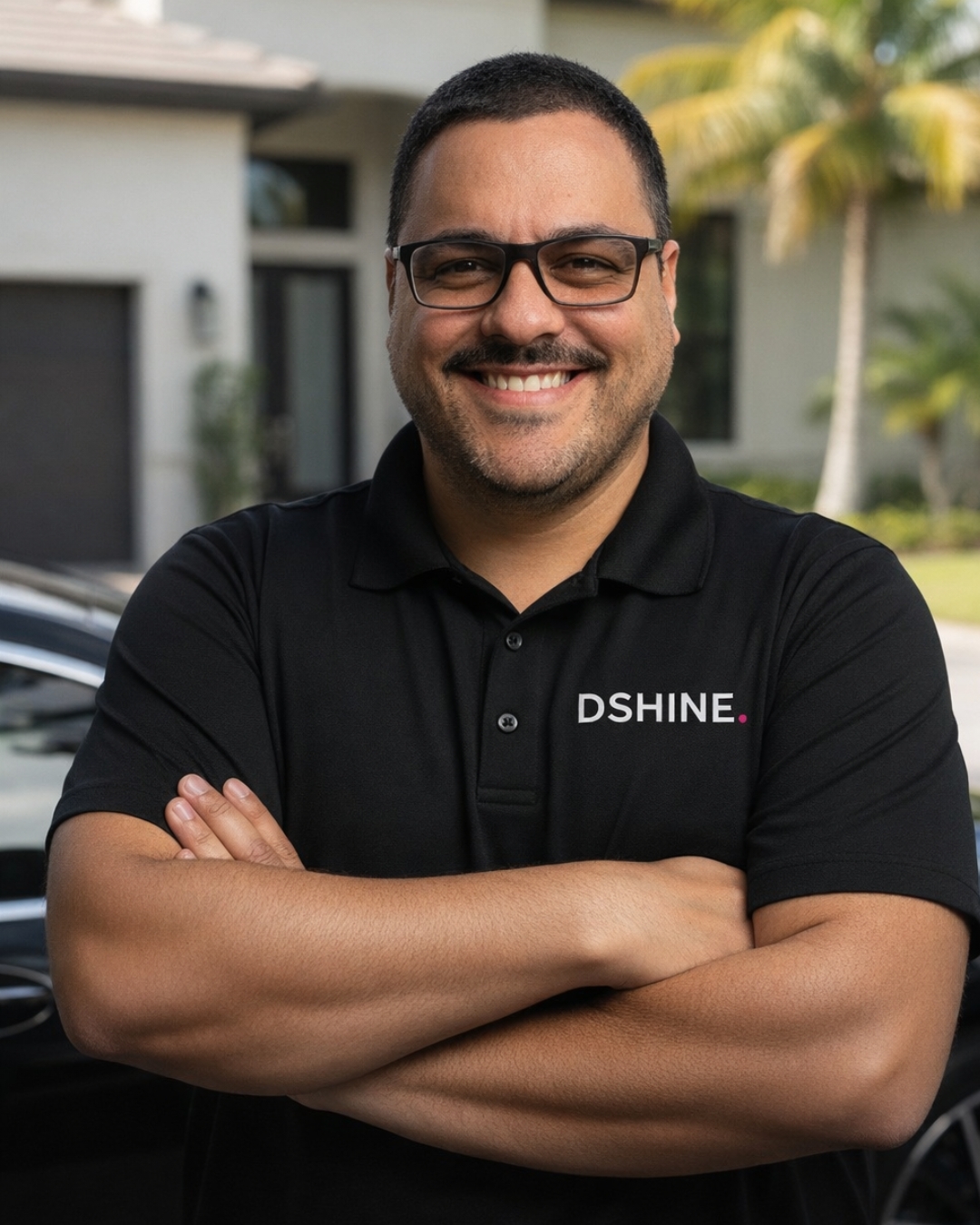
With more than 20 years of hands-on experience in the automotive care industry, Evelio launched DShine Details in August 2018 with one van and zero shortcuts. For the first six months he slept in the van to keep costs down and standards up. Today DShine runs 7 certified vans across Miami-Dade, Broward, and Palm Beach, and the commitment hasn't changed. Every vehicle is treated as if it were his own.
What clients say
in their own words.
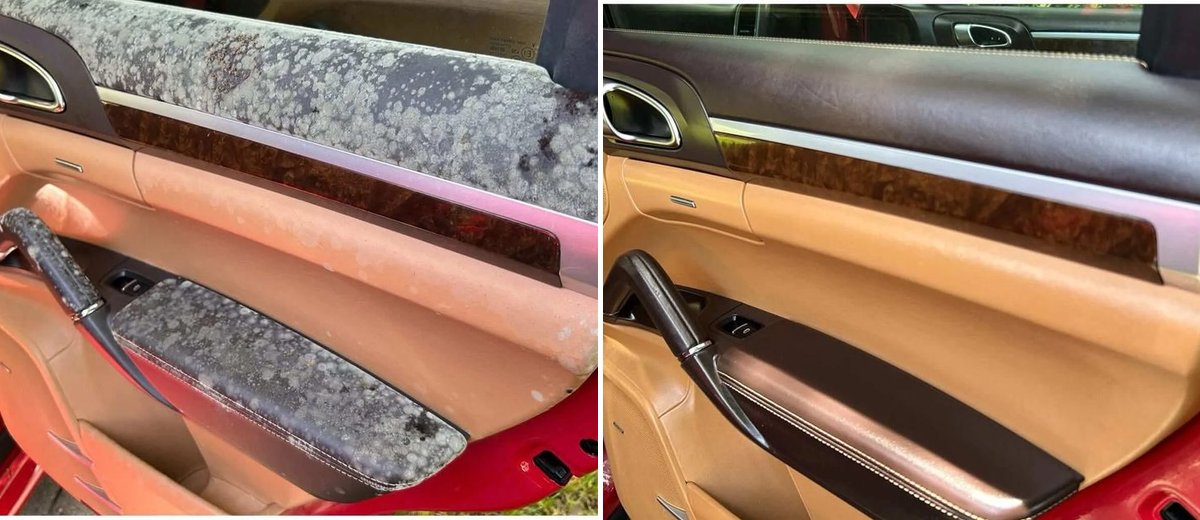
Before & After: Mold Removal We've Actually Done
No stock photos. These are real DShine mold removal jobs across South Florida, the same 11-step process and chemistry used on every North Miami Beach appointment.
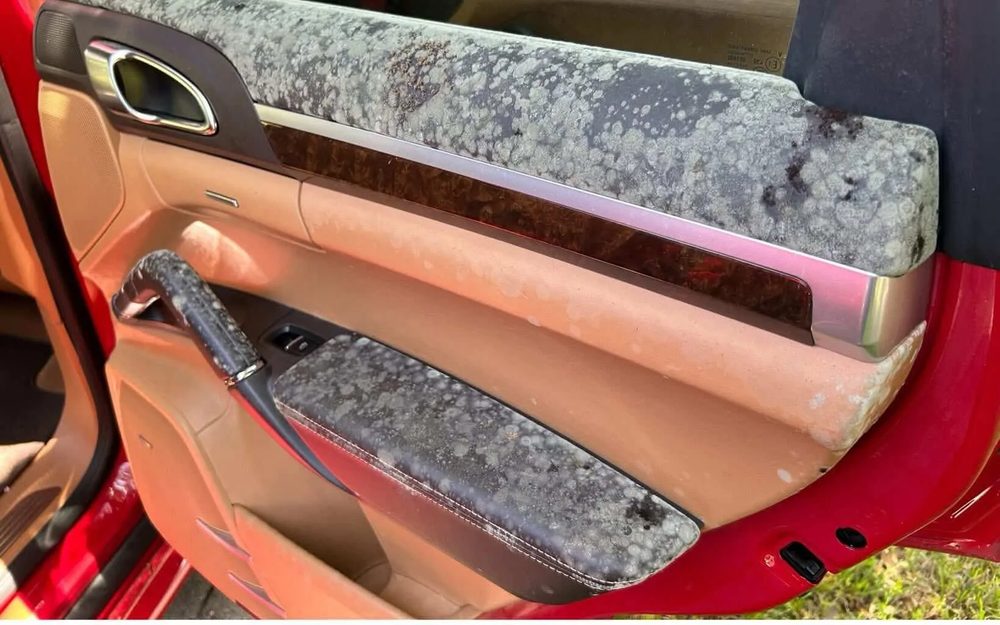 Before
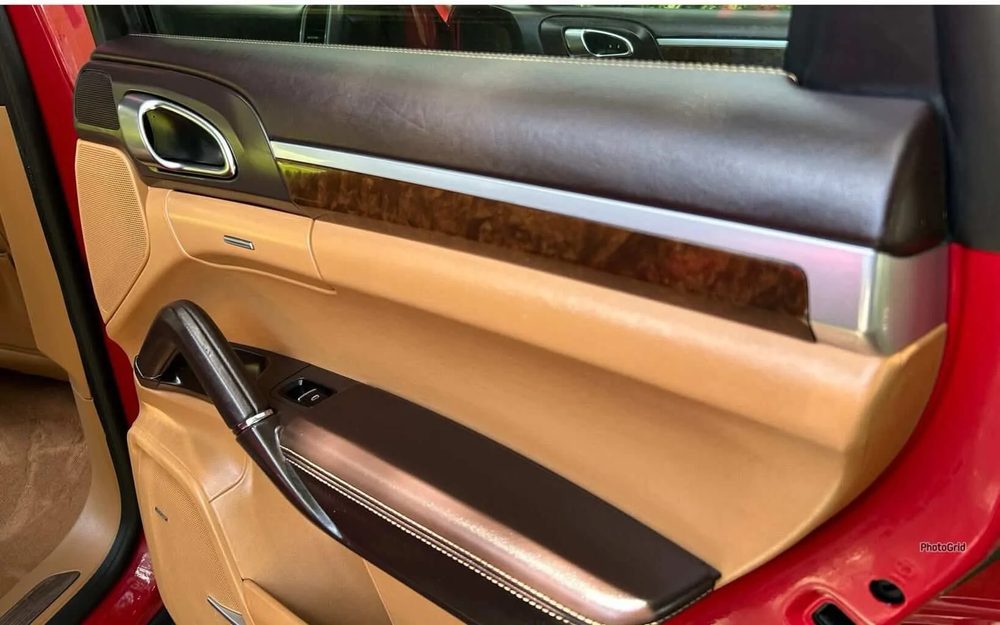 After
Porsche Cayenne — Door Panel & Armrest
Mold across the tan leather door panel and armrest of a red Porsche Cayenne, reaching onto the wood trim. Leather like this cannot be scrubbed hard, so we use the leather-safe protocol, steam and extraction around the trim, Concrobium and a sealed ozone cycle. In a city with rain on about 138 days a year, door seals that harden in open lots are a common way water gets in.
 Before
 After
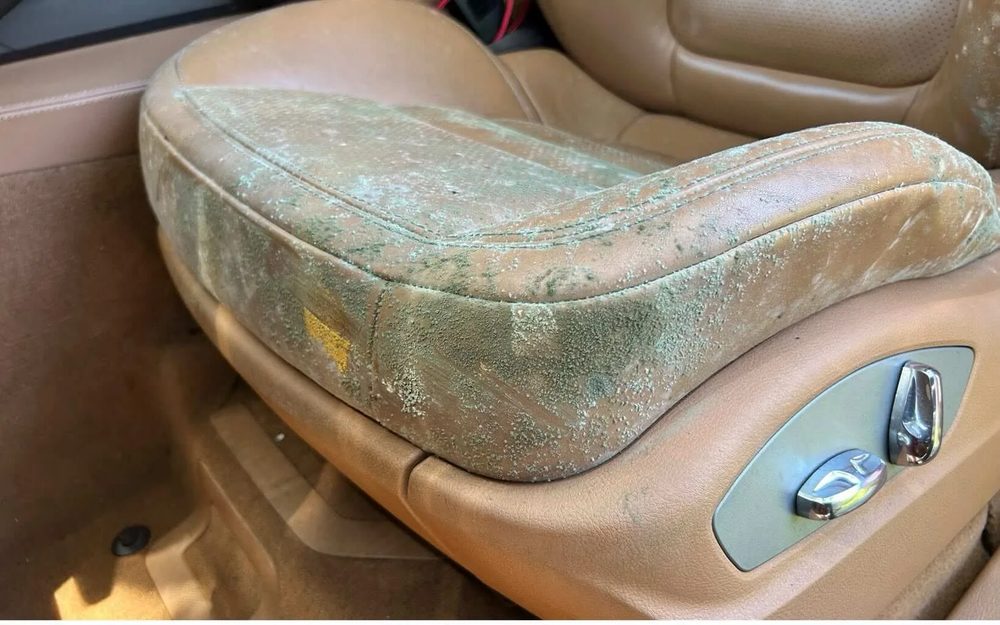
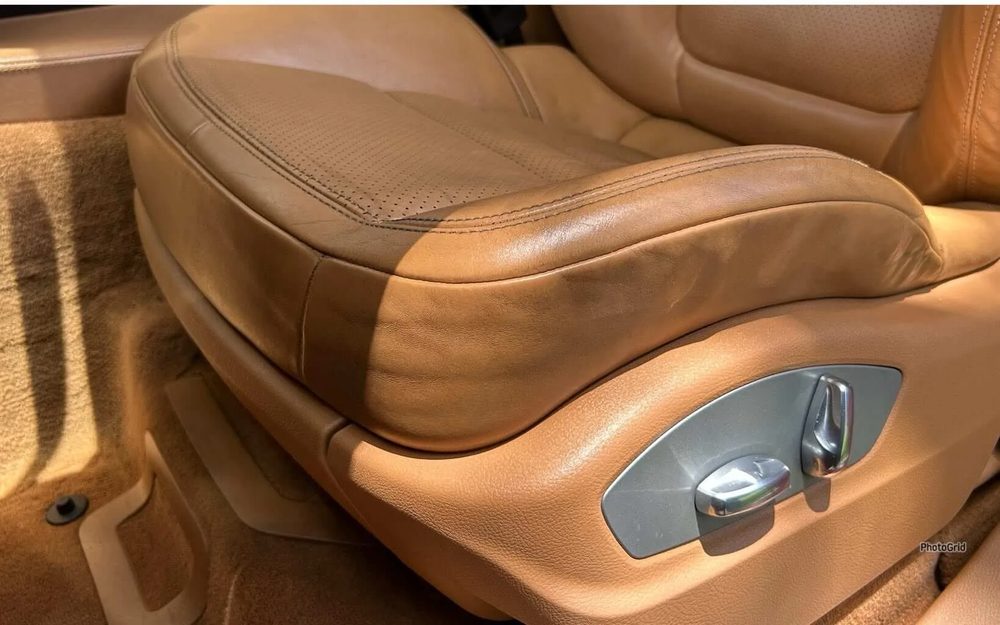
Tan Leather Seat — Bolster Mold
A tan leather front seat bolster covered in green-blue mold. The bolster takes the most contact and holds sweat and moisture in its seams, so growth shows up here first. We treat it with the leather-safe protocol: gentle steam, extraction, Concrobium and full drying, with no hard scrubbing of the hide. Humid parking, such as open apartment lots, is a pattern behind this kind of growth.
 Before
 After
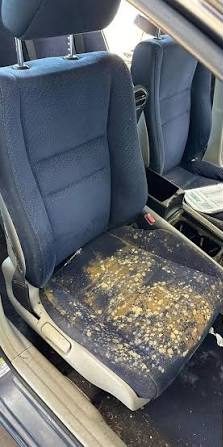
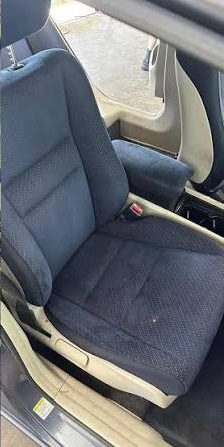
Blue Cloth Bench Seat — Cushion Stains
A dark blue cloth sedan bench seat with the cushion lifted, showing tan and yellow mold-stain residue on the seat bottom. Cloth holds water like a sponge, so what is visible on top is only part of it. We use HEPA vacuuming, steam and extraction to pull moisture out of the foam, then treat with Concrobium and ozone. A wet floor mat in a closed cabin is a pattern behind this.
 Before
 After
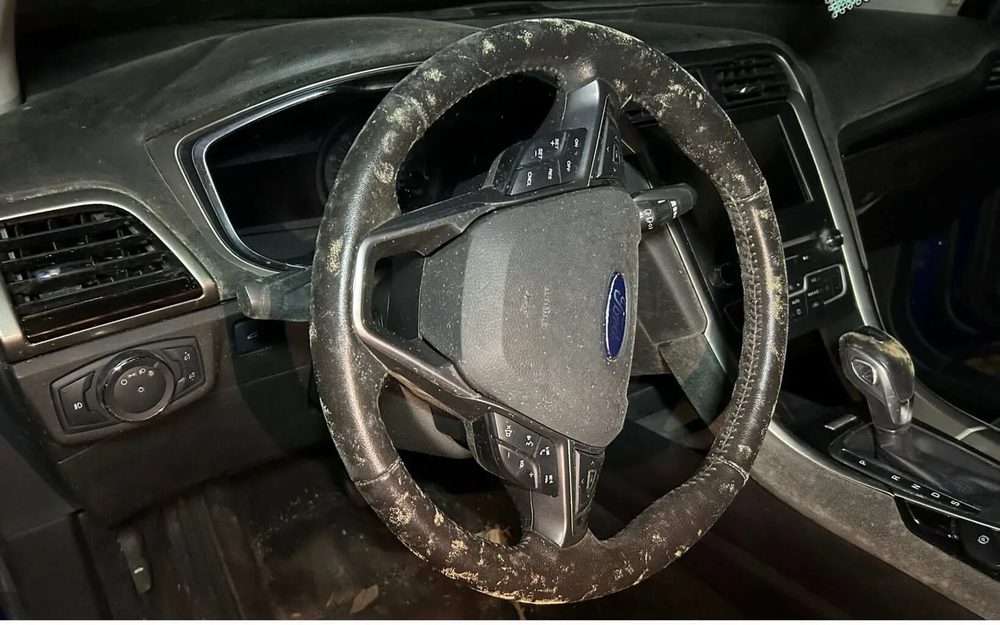
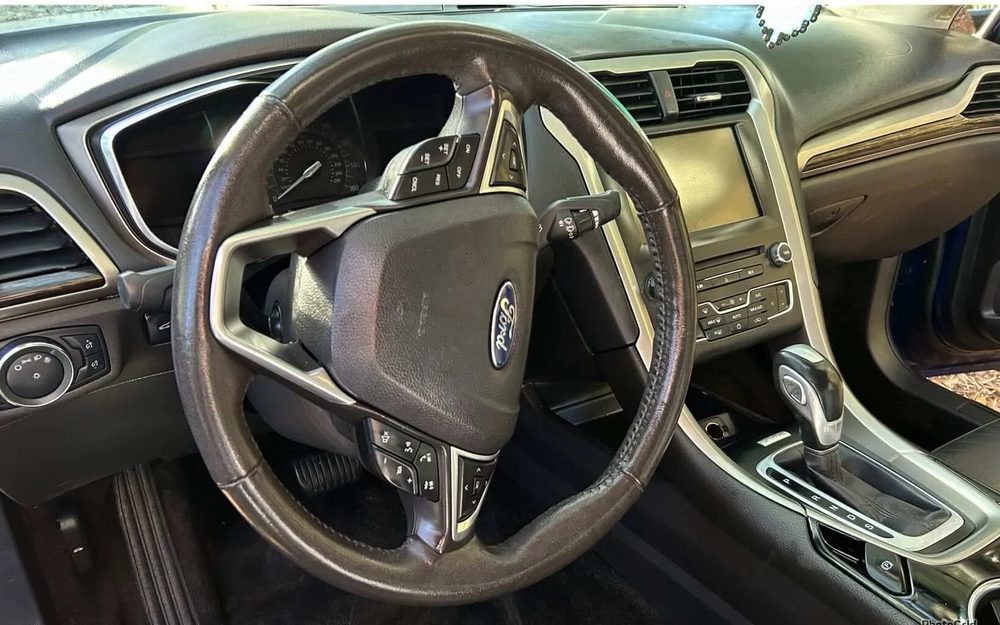
Ford Sedan — Steering Wheel, Dash & Vents
Grey-white mold bloom across the steering wheel, dashboard and vents of a Ford sedan. Hard surfaces and vents get steam, a dedicated treatment and a check of the vent path, since spores in the A/C system spread each time the fan runs. After that comes Concrobium and the sealed ozone cycle. An A/C that sweats in a damp summer and is switched off still wet is a pattern here.
 Before
 After
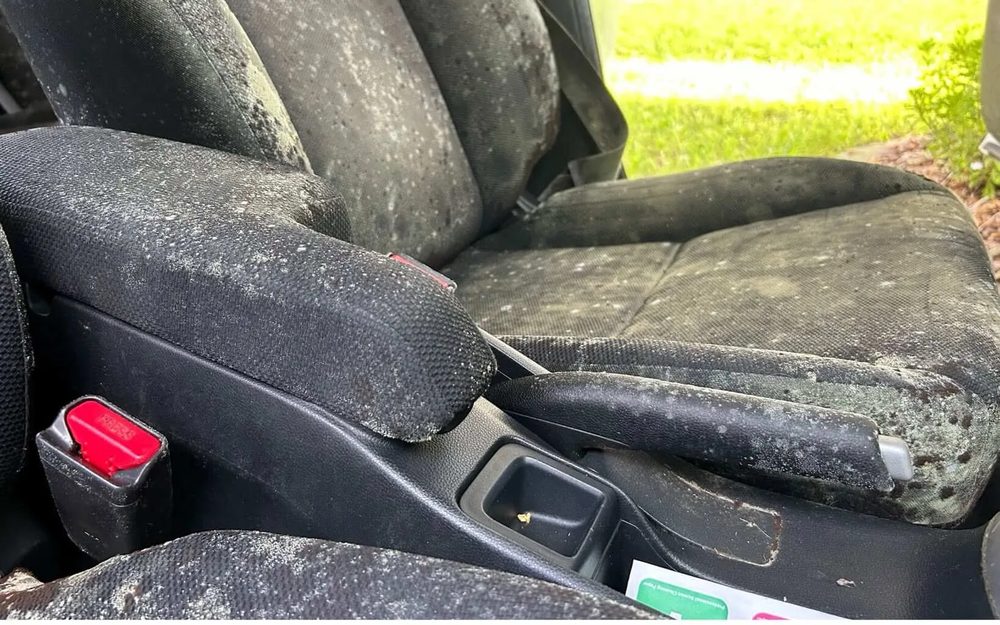
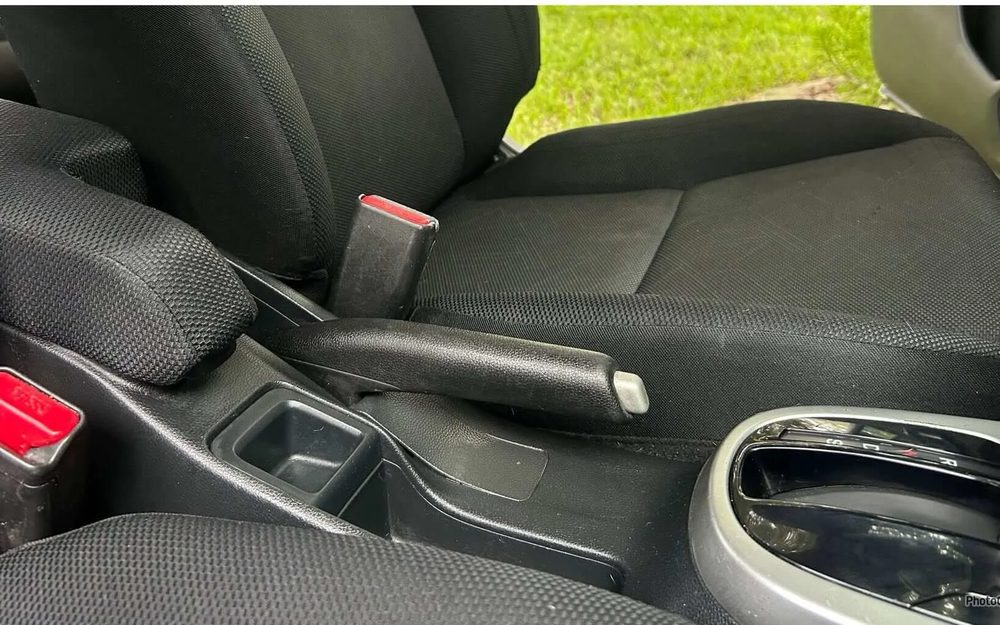
Black Cloth Seat & Console — Grey-White Bloom
A black cloth driver seat, armrest and console with grey-white mold bloom, with green lawn visible outside the window. Dark cloth makes the bloom show clearly, and the console and armrest are often where it builds. We vacuum with HEPA, steam and extract, then apply Concrobium and run the ozone cycle. Cars parked near lawns and sprinklers often pick up moisture through door seals.
 Before
 After
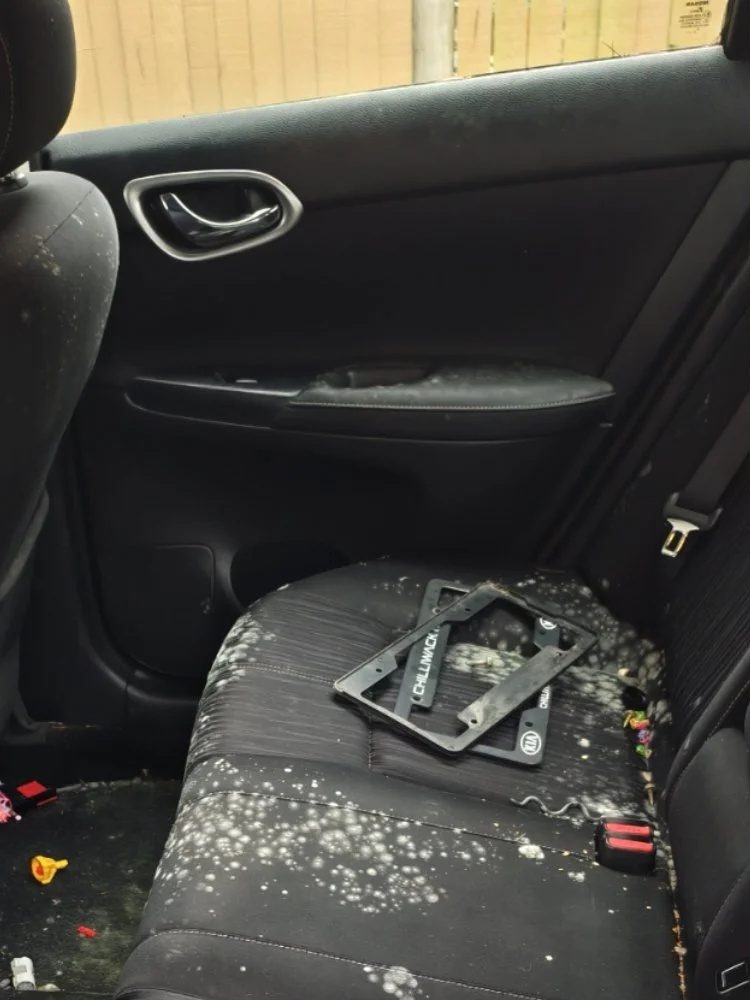
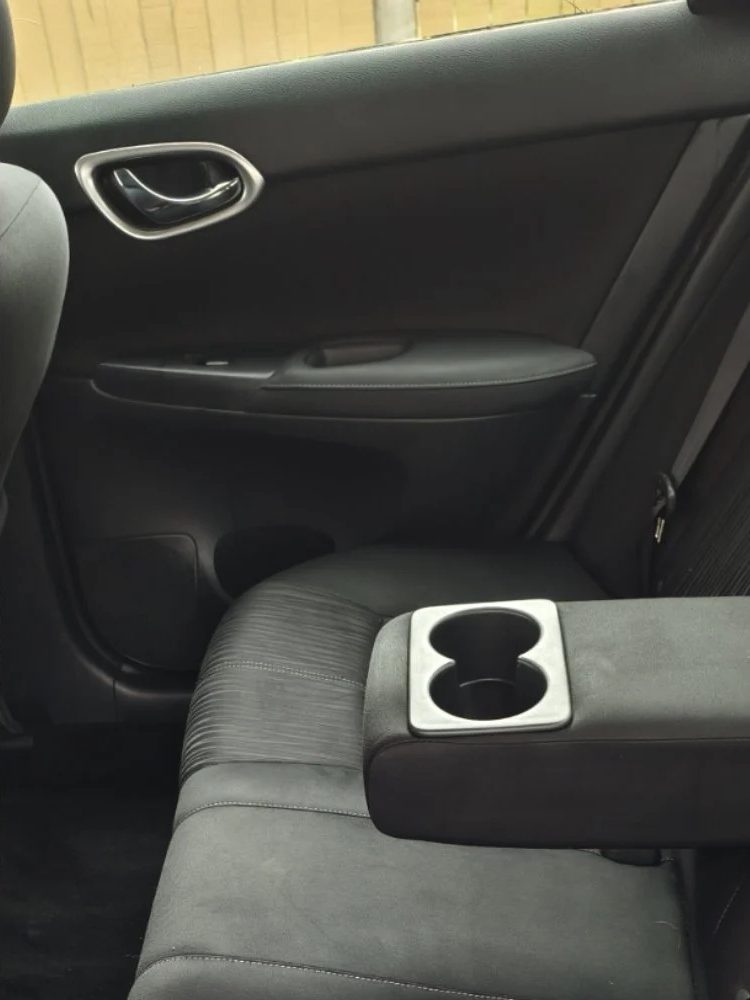
Black Sedan Rear Seat — White Mold Spots
A black sedan's rear seat and door panel with white mold spots on the rear cushion, loose debris and a license plate frame left on the seat. The rear cushion often holds the most trapped moisture because wet items get dropped there. We remove debris, then HEPA vacuum, steam, extract and treat. Rainy-season commutes with wet bags are a common pattern in a city of daily drivers.
 Before
 After
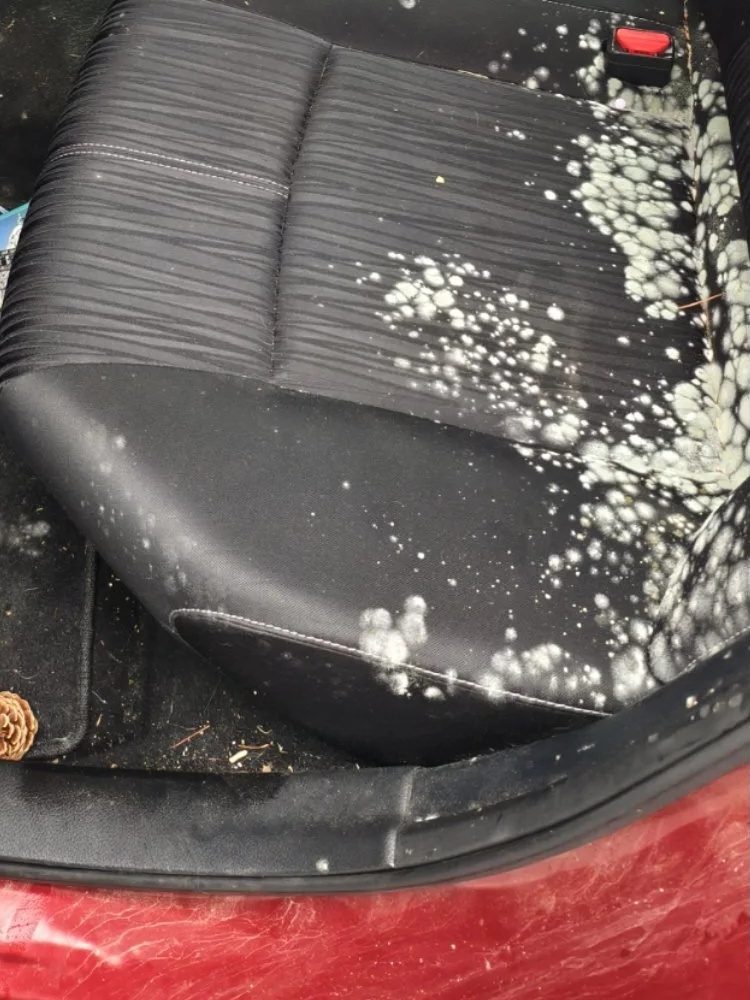
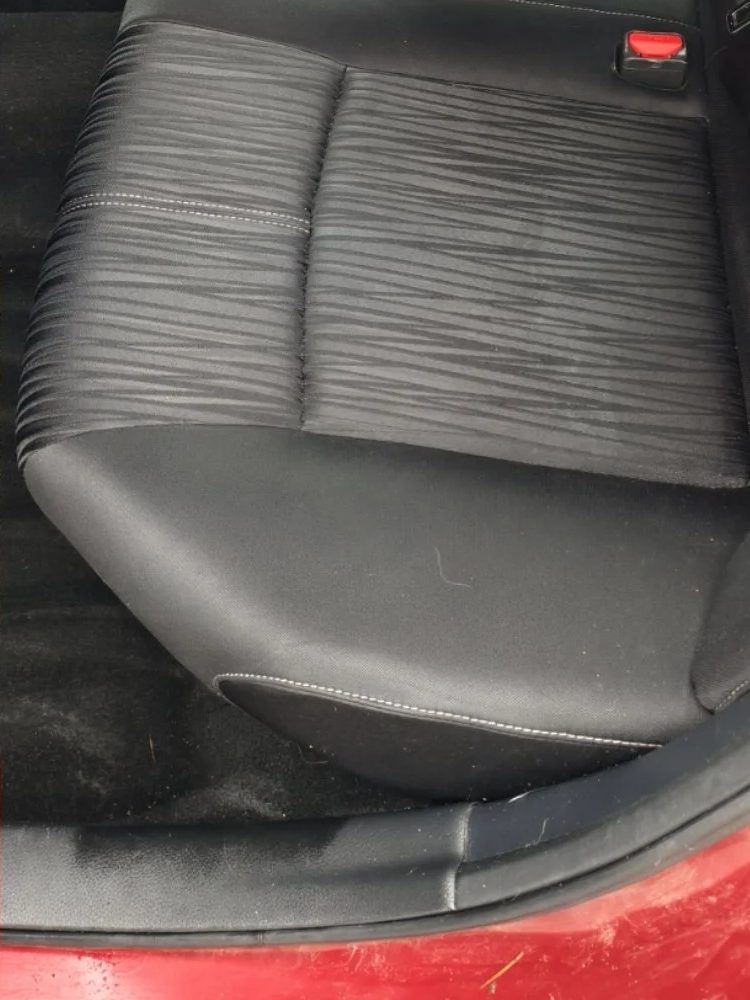
Black Cloth Seat — White Speckles
A black cloth seat with white mold speckles, with a red car body visible below the window. Early speckling like this is the easiest stage to treat, and catching it keeps a one-area job at $549. We HEPA vacuum, steam, extract and apply Concrobium, then run the ozone cycle. A small leak at a seal or a damp seat from one storm is a typical start.
 Before
 After
Floor Mat — Heavy Colony Growth
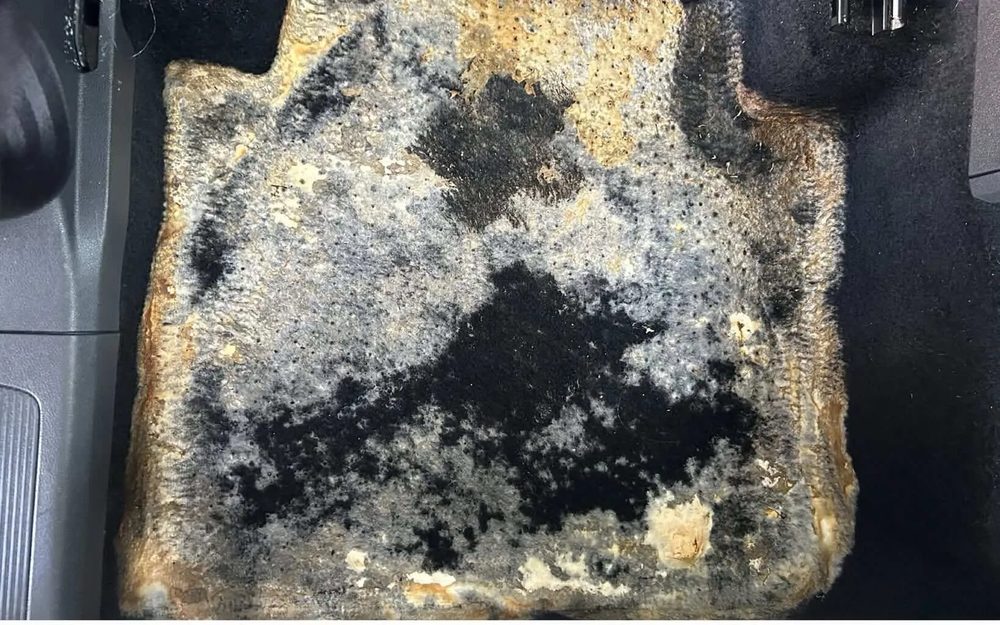
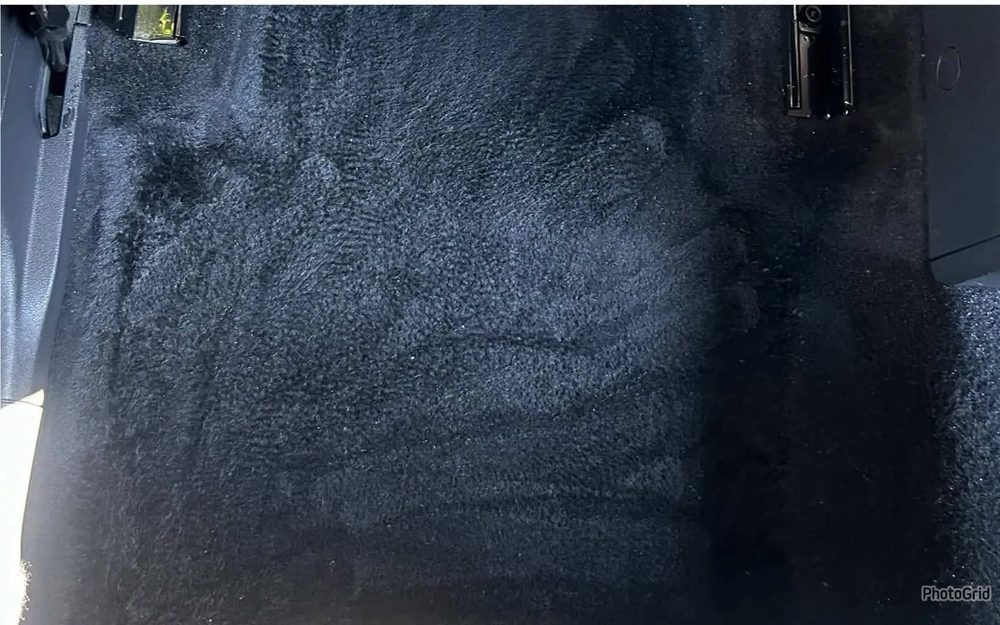
A carpeted floor mat with heavy black, brown and white mold colonies. This is what happens when a mat stays wet for weeks, and the foam and the carpet below are usually involved. We lift the mat, then vacuum, steam and extract, and treat the carpet and pad beneath with Concrobium before ozone. In rainy open-lot parking, wet mats are one of the most common causes.
100% Satisfaction.
Written. No exceptions.
If the result doesn’t meet our standard, or yours, we come back and redo it at no charge. No forms to fill out, no arguing over what “counts.” The guarantee is in writing before we ever touch your vehicle.
Request Mold Removal in North Miami Beach · From $549
Fill this in once and send it. We get your address, vehicle, and the situation all in one message, no phone tag.
Rating
Detailed
Response
Three steps from a damp lot to a clean cabin,
and we handle everything in between.
No drop-off. No waiting. We come to North Miami Beach.
We come to you in North Miami Beach,
from Eastern Shores to Ojus and the Snake Creek Canal.
Mobile service: home, office, condo, or marina. No drop-off, no travel fee.
Not seeing your city? Ask us — we likely cover it.
Rain on open lots and canal air
are hard on a car in North Miami Beach.
North Miami Beach sits about 10 feet above sea level, with rain on roughly 138 days a year and canals and the Intracoastal close by, so a car shut up for even a few weeks begins to hold moisture. Left untreated, what starts as a musty smell becomes a real health issue for the next person who drives the car. DShine's Concrobium Mold Control and ozone process address the cause, not just the symptom, backed by $2M insurance and a written guarantee. Mold doesn't need much to get started, any trapped moisture inside a closed cabin is enough given South Florida's humidity. The source is almost always one of four things: a clogged AC condensation drain letting water pool silently on the floor pan, a failed door or window seal letting rain in, a clogged sunroof drain, or the car simply sitting unused for two or more weeks without the AC running. Here the cause we meet most is a hardened door or window seal on a car parked in an open lot, where rain gets in and the carpet foam stays wet long after the surface feels dry.
North Miami Beach neighborhoods we serve,
from Fulford to Eastern Shores and Ojus.
From Fulford, where the city began, to Eastern Shores and the Snake Creek Canal, parking and moisture change from one block to the next.
Fulford — Fulford is where the city began: platted in 1881 as Fulford-By-The-Sea, incorporated as the Town of Fulford in 1926 and renamed North Miami Beach in 1931. It is still a neighborhood on the city's map. We plan around where the car sits, a driveway, a lot or a street space, and ask you at booking whether it is covered.
Eastern Shores — Eastern Shores is a gated peninsula between Maule Lake and the Intracoastal Waterway, with canals and a guardhouse and gates since 1997. The east side is full of condominiums and townhouses, so cars sit in garages and covered spots with canal air all around. Send us the guest details for the guard and we handle the rest.
Highland Village — Highland Village is one of the neighborhoods on the city's list, and rental apartments are advertised there. That usually means shared lots and assigned spaces, with the car uncovered through the afternoon storms. Give us the building, the space number and the property office contact, and we plan around the lot's parking rules before we arrive.
Ojus — Ojus is a census-designated place bordering Aventura to the east and North Miami Beach to the south, with I-95 as its western edge. Its name dates to 1897 and comes from a Seminole word meaning plenty. Ojus Elementary is at 18600 West Dixie Highway, so a family car here makes daily school runs. We come to your driveway or lot.
Greynolds Park — Greynolds Park is a 265-acre Miami-Dade County park in Ojus, donated in 1933, with a golf course, the Oleta River nature trail and weekend boat rentals. Cars come home from picnics and paddling with wet towels and gear, and a closed cabin left through an afternoon storm is a usual cause. We work at your address, not in the park.
Snake Creek Canal — The Snake Creek Canal runs through the area, and the 6.5-mile paved Snake Creek Trail follows it along North and South Glades Drive, from Snake Creek Park to NW 15th Avenue in Miami Gardens. Homes and apartments beside the water feel its damp air, and a car parked there dries slowly after rain. We come to your door.
NE 163rd Street — NE 163rd Street is the North Miami Beach stretch of State Road 826, running east across the Intracoastal Waterway to Collins Avenue in Sunny Isles Beach. It is a busy road of shops, offices and apartments, where cars wait in open lots in sun and rain. We work at your home or office address, not at the roadside.
Don't see your area? Ask us — we likely cover it.
North Miami Beach car mold,
the questions apartment and homeowners ask most.
Tap any topic to read the full breakdown.
North Miami Beach covers 5.37 square miles, 4.85 of them land, and sits about 10 feet above sea level. Maule Lake and the Intracoastal Waterway wrap the Eastern Shores peninsula on the east side, and the Snake Creek Canal runs through the area, so most addresses sit within a short drive of open water.
Wikipedia's North Miami Beach climate table, built from NOAA 1991 to 2020 normals, shows about 68 inches of rain a year (68.33 in) falling on roughly 138 days. That is more than one day in three with measurable rain, and the classification is tropical rainforest, so a car parked outside spends much of the year being soaked and then steamed by the sun.
The housing numbers explain who owns the cars. The 2020 Census counted 17,126 housing units here and only 9.4 percent vacant, which is a very different picture from a seasonal town. The Census Bureau's 2020 to 2024 estimates put owner-occupancy at 52.2 percent, so close to half of households rent. These are people living in their cars daily, and mold arrives through everyday moisture, not a long absence.
Most of the vehicles we hear about from North Miami Beach are not garage queens. They are family sedans, crossovers and minivans that make school runs, commutes up and down Biscayne Boulevard or I-95, and weekend trips to the park. The city averaged 2.85 people per household in the 2020 to 2024 estimates, which means back seats, snacks, wet shoes and sports bags.
That daily use changes what the mold looks like. Instead of a uniform bloom across a sealed cabin, we usually find it concentrated where moisture collects: under the floor mats, along the door sills, in the seat folds where a spilled drink soaked in, and around the vents after weeks of A/C that never fully dried out.
Work and delivery vehicles are part of the mix too, especially around commercial strips like West Dixie Highway, where the city has a West Dixie Industrial district. A van with a damp cargo area or a rideshare car with a wet floor behaves differently from a family SUV, and we adjust the treatment to the materials we find, not to the vehicle's badge.
Open apartment lot: the defining setup here. Rain hits the car directly, afternoon sun bakes the cabin, and the next downpour starts the cycle again. Mold rarely begins in the middle of the cabin. It starts at a worn door seal, a sunroof drain or a cracked window gasket and spreads along the carpet edge, where the foam holds water for days.
Covered carport or a numbered space under a roof: a real improvement against direct rain, but a roof does not stop humid air. Cars under carports still see damp mornings, and a wet mat tossed back in after a storm will stay wet in a closed cabin. These cars tend to show smaller, slower problems than the open-lot ones.
Driveway or garage at a house or townhome: the car is safer from rain, but garages in this area often double as storage, and boxes stacked against the car choke the airflow. A garage that nobody cools is a sealed box of warm, damp air, which is worse for a car that is driven only on weekends.
Street, shopping-center and gated waterfront parking: along NE 163rd Street and Biscayne Boulevard the risk is a one-time soaking, such as a window left cracked in a storm, followed by a hot sealed cabin. In gated areas like Eastern Shores, among canals, Maule Lake and the Intracoastal, the air is wetter and we coordinate with the guardhouse.
Mid-May through October: the wet stretch of the year, when roughly one day in three brings measurable rain and the open lots stay damp for hours after every storm. Door seals take the beating, and cabins that are shut tight between commutes never get the chance to breathe. This is when most small problems begin quietly.
The storm weeks: the Atlantic basin's official season spans June 1 to November 30, and NOAA's hurricane center dates its busiest point to about September 10. Preparing for a storm means sealed doors and shut windows, which keeps wind out and keeps whatever dampness is already in the carpet right where it is.
November through the winter months: the air dries out, but a cabin soaked in October can still be holding some of it in January. A musty smell often shows up on the first cold morning, when the heater or defrost pushes warm air through vents that have been damp for weeks.
Spring, March to May: the quiet window before the rains return. It is a good time to check the sills, the trunk and the spare-wheel well, fix a leaking seal and clear the sunroof drains, so the first heavy storm of the season finds a car that can shed water instead of storing it.
Many of our North Miami Beach visits happen in a shared parking lot, so a quick message to the property office makes the day easier. We need the car to stay in one spot for roughly 3 to 4 hours, with room to open all the doors fully and a place where the work will not block other residents. Tell us the building, the space number and any guest-parking rules.
Gated communities add one more step. Eastern Shores, for example, has had a guardhouse and gates since 1997, so we ask you for the guest name the guard needs and the address they will look for. Sharing that when you book means our technician is not waiting at the gate.
If you are a renter, check whether your lease or building rules restrict vehicle work in the lot. When they do, we can often work in a visitor space or at your workplace instead. We come to your address, whether that is a home, an office, an apartment complex or a business lot, and we plan the visit around what the property allows.
Offices and business lots work the same way. Tell us whether a receptionist, a security desk or a landlord decides who can park where, and we will agree a time that does not clash with deliveries or staff arrivals along NE 163rd Street, West Dixie Highway or Biscayne Boulevard.
1. A tired door or window seal on a car parked outside: with rain on more than a third of the year's days and many cars sitting in open lots, water gets in through gaskets that have hardened. Water pools under the carpet, out of sight, and the foam beneath stays soggy for days after the top layer seems fine.
2. Wet floor mats and carpet that never fully dried: a rainy week, a gym bag, a child's spilled juice, a pair of soaked shoes. In an apartment lot there is nowhere to air the car out, so the mat stays damp in a closed cabin, and by the time the smell appears the carpet and the pad below are involved.
3. A wet A/C evaporator, or a clogged sunroof drain: the A/C sweats all summer, and when its drain clogs or the system is shut off damp, mold takes hold in the vent path and shows up as a smell in the first minute of the fan. Sunroof and windshield leaks send water down the pillars to the headliner and the spare-tire well, far from where you look.
4. Wet gear brought home from the water: the parks around the area include Oleta River State Park on Biscayne Bay and Greynolds Park, where kayaks and paddleboats are rented. A damp towel or paddle bag in a closed trunk over a rainy weekend is enough to start a colony.
A few minutes of preparation make the visit smoother. Take out valuables, child seats and loose items, and let us know where the car is and who holds the keys. If the space is shared, a short message to the property office or a neighbor with the stall next door avoids a surprise on the day.
On arrival the technician looks over the space for door clearance, then photographs the carpet, seat seams and vents before anything is touched. Next come the dry stages, then steam and extraction, then drying, Concrobium, the ozone cycle, the Meguiar's odor bomb and a final check. The whole job runs 3 to 4 hours.
You do not have to supervise. Keys can be left by arrangement, and the before-and-after photos arrive on WhatsApp when the visit ends. The car goes back to its space and is ready to drive once it has aired out. The lot is left as we found it.
Where do you do it? At your place, which here usually means a numbered apartment space, a house driveway or an office lot. We ask for the building, the space and any gate rules. If your lease restricts vehicle work, a visitor spot or your workplace is the fallback.
What will it cost? $549 for one affected area, $749 for mold throughout, travel included. A picture of the worst spot plus a sentence about where the car sleeps is enough for us to name a tier within 2 minutes, and the firm price is stated before any work begins.
Is it the A/C? Sometimes. A cellar smell that rolls out in the first seconds of the fan points at the vent path, and the inspection covers that either way. People also ask if the car is safe to drive afterward: yes, once it has aired out and we tell you it is ready.
Will it smell of chemicals? The closing stages are an odor bomb and a long airing, and the aim is a cabin with no particular smell. We say how long to let the car air out and how to leave the doors in the meantime.
Odor Removal ($349) comes up when the nose says musty but the eye finds nothing. Our inspection settles which job fits, and if a car needs only that lighter service, we say so and quote that one, not the bigger one.
Ceramic Coating is the usual pairing for a car that sleeps outdoors in a lot or beside a canal, because the same sun and downpours that wear down door seals also dull the clear coat. Paint Correction ahead of it restores depth, and one visit covers both with the technician already on site.
Engine Bay Cleaning suits older cars that have leaked or sat for a while. And when a storm soaks a cabin and the clock is under 72 hours, Flooded Car ($549) is the service aimed at that window, before growth gets a foothold in the carpet.
The windshield and side glass: on a clear dry morning, a film of moisture on the inside means the cabin is holding water. It comes from damp carpet, a seal that lets rain through or a vent path that is not draining.
The seat seams and belt webbing: pale speckles in the stitching, dark dots on the belt where it rubs the door sill, or a dusty film on the steering wheel and dash are early surface signs. A flashlight under the seats shows the rails and the carpet edge.
The first half minute of the fan: a sour, cellar-like blast on start-up points to the vent path. A press of a paper towel into the carpet after a rainy week tells you the rest, because a cool, damp towel means wet foam below.
Any one of these is reason enough to take a photo, add a line about where the car is parked and send it. Within 2 minutes you have a tier, and a firm price follows our look.
Trips abroad: 56.5 percent of residents were born outside the U.S. (Census Bureau, 2020 to 2024), so a few weeks away visiting family is an ordinary reason for a car to sit untouched. Dry the mats before you go, run the fan for a minute at the curb and park under cover if you can.
A second car that gets driven once a week: short hops never fully dry a cabin, and the A/C is rarely run long enough to clear its drain. Take it on a 20-minute drive with the fan on high once a week, and the problem rarely starts.
A car left while someone is in the hospital or on a long work rotation: hand a neighbor a key and a note. A weekly start-up with the fan running does more for the cabin than any product, and costs nothing.
With 2.85 people per household in the 2020 to 2024 estimates, parking in North Miami Beach is often a negotiation. A tenant with two cars shares a lot with other tenants, and the property office decides who parks where. That is the reason we want to plan the visit, not just show up.
If more than one car in the household has a problem, send a photo of each and say where each one sits. Every car is priced on its own: one might be a one-area job at $549, another a $749 job throughout. Booking them in one go means a single conversation with the office.
The stall next door matters too. Opening both doors on one side takes room, so asking the neighbor to move ahead of time saves a wait. Time of day matters in a shared lot as well, since mid-afternoon sun and an evening rush both make the work harder.
In the guarantee: 100 percent satisfaction, in writing, for 30 days. If mold or mold odor returns in that period, we re-treat the car at no cost, at the same address. You do not need to argue your case. A photo or a message is enough to set a time.
What usually causes a return: a source of water that is still active. A seal that lets in rain from an open lot, a drain that never cleared, a mat that got wet again. During the inspection we show you what we find so you can fix it, because treating the car without stopping the leak is how problems repeat.
Outside the guarantee: a brand-new soaking after we leave, such as a window left down in a storm. That is a fresh event, and the answer is the Flooded Car service, or a new mold job if the 72-hour window has passed. We would rather say so now than at the door.
A ten-year-old sedan that has lived in a lot through many wet seasons has stiff trim, aging glue and foam that has absorbed ten years of humid air. On those cars we go gently: more extraction, less scrubbing, nothing soaked, and extra time to dry so the carpet is truly dry before the doors close.
Leather is handled with the leather-safe protocol every time. Mold on a tan or camel seat bolster looks alarming against the light color, but it tends to sit on the surface and in the stitching, and steam and extraction followed by a gentle treatment lifts it without stripping the finish.
Work vehicles are judged by what they are made of: vinyl and rubber floors respond well to steam, while cloth seats and headliners need drying time. The sequence changes with the materials, not with the logo on the door.
Dry it out: remove anything wet, such as pool towels, gym bags, soaked shoes or a damp umbrella, then lift the mats and check the carpet underneath. If it still feels cool, give it an afternoon of sun with the doors propped before you shut the car.
Run the A/C dry: switch off the compressor and run the fan on high for a few minutes before you park. The evaporator and the drain path dry out, which prevents the sour smell people notice on their return.
Check the rubber: door gaskets, trunk seal, sunroof track and the cowl at the base of the windshield, where leaves collect and block drains. Clear what you find, and never leave a window cracked in the wet months.
Pick the spot: a roof is best, an end-of-row space beats the middle, and a neighbor who starts the car weekly beats any gadget on the market.
The invoice is the smallest part. A one-area job at $549 can grow into a $749 job as colonies move through carpet, foam and vents, and in this climate germination starts in 24 to 48 hours. Every week adds more surface to treat, more drying time and more risk of a lasting mark on cloth or leather.
Then there is use: an apartment with one assigned space does not give you a spare car, and a cabin you cannot stand to sit in is a cabin you avoid. Families who drive the school run or the commute on I-95 feel it first, and a musty car also makes passengers think twice about riding with you.
And there is resale. A musty cabin turns away buyers and dealers, complicates a lease return, and an untreated headliner stain or damp seat counts against the car. Send a photo today and the price is confirmed before any work starts.
West Dixie Highway carries a district the city calls West Dixie Industrial, NE 163rd Street and Biscayne Boulevard line up shops and offices, and I-95 runs along the western edge. Vans, delivery cars and rideshare vehicles work that grid daily, and their cabins take wet boots, tool bags and endless door openings.
For a driver paid by the job, mold is a lost shift. A smell that a passenger notices turns into a rating, and a car off the road for the day is income that does not come back. We state the visit length up front, usually 3 to 4 hours, so a route or a delivery window can be planned around it.
We begin where a work vehicle hides water: beneath rubber liners, in the cargo area and in the footwell where wet boots land. Photos at the end show what was found and what was treated, which is handy when a fleet manager or a landlord wants proof.
If you drive for several apps or run a small crew with a few vans, tell us. Vehicles that share a lot or a depot can be lined up for one visit, each priced on its own photos.
You send a handful of photos and a note on where the car lives. We hold what we see against the two tiers, $549 for mold in one area and $749 for mold throughout, with travel built into both, and the tier is on its way back to you inside 2 minutes.
The firm price comes after we have studied your photos, and it is stated before step one, never after. If the inspection on site shows the car fits the other tier, you hear it before we start and the decision to continue is yours. Once product is on the seats the figure stays put.
Give us the building, the gate or guardhouse details and a good time window, and we arrange access with the property office ahead of time. That way the technician rolls up to an open space and a name on the list, not a closed gate and a phone call.
North Miami Beach sits about 10 feet above sea level and gets roughly 68 inches of rain on about 138 days a year. Only 9.4 percent of its homes were vacant in 2020, and about half of households rent, so the cars here are daily drivers on open lots and in driveways. Hardened seals, soaked mats, wet A/C drains and sunroof leaks are what we find most.
Mold in one area is $549 and mold throughout the vehicle is $749, travel included and confirmed before we begin. The visit is 11 steps and runs 3 to 4 hours, with photos on WhatsApp and a 30-day written guarantee. We are IDA certified and carry $2M in liability insurance.
We come to driveways, apartment lots, offices and business addresses from Eastern Shores to Ojus, and we arrange access with the property office or the guardhouse. Send photos and the tier comes back in under 2 minutes.
What happens? With steam, extraction and Concrobium finished, the cabin is closed and a professional ozone generator runs inside. Ozone drifts into places a cloth never reaches, the foam, the headliner and the vent path, and breaks apart spores and the odor molecules stuck to them.
Who stays clear? Nobody sits in the car while it runs, and people and pets stay away. In a shared lot we pick a corner out of traffic and tell you when the car should be left alone, so a curious child or a neighbor walking a dog does not open the door.
What comes next? A Meguiar's odor bomb, plenty of airing and one more pass over the vents, seams, headliner and trunk. The aim is a cabin with no scent at all, not a perfumed one, and we tell you when the car is ready to use, which is not the same as the timer stopping.
Before you book,
a few answers for North Miami Beach drivers.
Add-ons North Miami Beach clients book
Still deciding? Read: the complete mold removal guide · does insurance cover it? · why DIY mold removal fails.
Mold in your North Miami Beach car? Get your price in under 2 minutes.
Serving North Miami Beach and all of Miami-Dade County. Fixed pricing, no travel fee. We confirm in under 2 minutes.
It Might Just Be an Odor Problem
If there's no visible mold growth yet, the smell alone is usually an Odor Removal Detailing case ($349 flat) — faster than full mold remediation ($549–$749). See which one matches what you're dealing with: