What a Deerfield Beach Mold Job Includes
This is not a car wash. Car Mold Removal uses Concrobium Mold Control treatment, pH-balanced products, and machine assistance, the same process used in pre-sale preparations for luxury dealerships.
Why it matters for your health: Mold in a vehicle is a different exposure than mold on a wall at home. With the AC recirculating, everyone inside is breathing concentrated spores for the length of the drive. The EPA and CDC both link mold exposure to respiratory irritation, allergic reactions, headaches, and worsened asthma symptoms. Children, older passengers, and anyone with a compromised immune system typically react faster and more severely than a healthy adult would. By the time the smell is noticeable, spores have usually already spread through the HVAC system into every vent in the cabin.
Curious what actually happens during the visit? Tap through our real 11-step process below to see what we do at each stage and why it matters.
What every Deerfield Beach mold job gets you
Most detailers in Deerfield Beach charge less. Here’s exactly what you gain — and what you risk — with each choice.
| DShine DetailsFrom $549 · travel included | Avg Deerfield Beach Detailer$149 – $199 | |
|---|---|---|
| Industry certificationsIDA, Koch Chemie, Meguiar’s, 3M, Symplex, XPEL | ✓6 verified | —0 credentials |
| $2M liability insuranceWe cover any damage — in writing | ✓ | —Often uninsured |
| Deionized water systemZero mineral residue, no water spots | ✓ | —Tap water, water spots |
| Fresh microfibers per vehicleNo cross-contamination between jobs | ✓ | —Shared towels, swirl risk |
| Mold-specific chemistry onlyConcrobium, Benefect & Meguiar’s, no harsh acids | ✓ | —Industrial degreasers |
| Before & after photosSent via WhatsApp on completion | ✓ | —No documentation |
| 100% written satisfaction guaranteeReturn & redo at no cost if unsatisfied | ✓ | —No written guarantee |
| Travel to your address — $0Home, office, condo — no drop-off | ✓ | Sometimes adds fee |
DShine vs. any other detailer
in Deerfield Beach, Broward County
Three things most detailers won't tell you. We put them in writing.
 Since 2018
With more than 20 years of hands-on experience in the automotive care industry, Evelio launched DShine Details in August 2018 with one van and zero shortcuts. For the first six months he slept in the van to keep costs down and standards up. Today DShine runs 7 certified vans across Miami-Dade, Broward, and Palm Beach, and the commitment hasn't changed. Every vehicle is treated as if it were his own.
What clients say
in their own words.
Before & After: Mold Removal We've Actually Done
No stock photos. These are real DShine mold removal jobs across South Florida, the same 11-step process and chemistry used on every Deerfield Beach appointment.
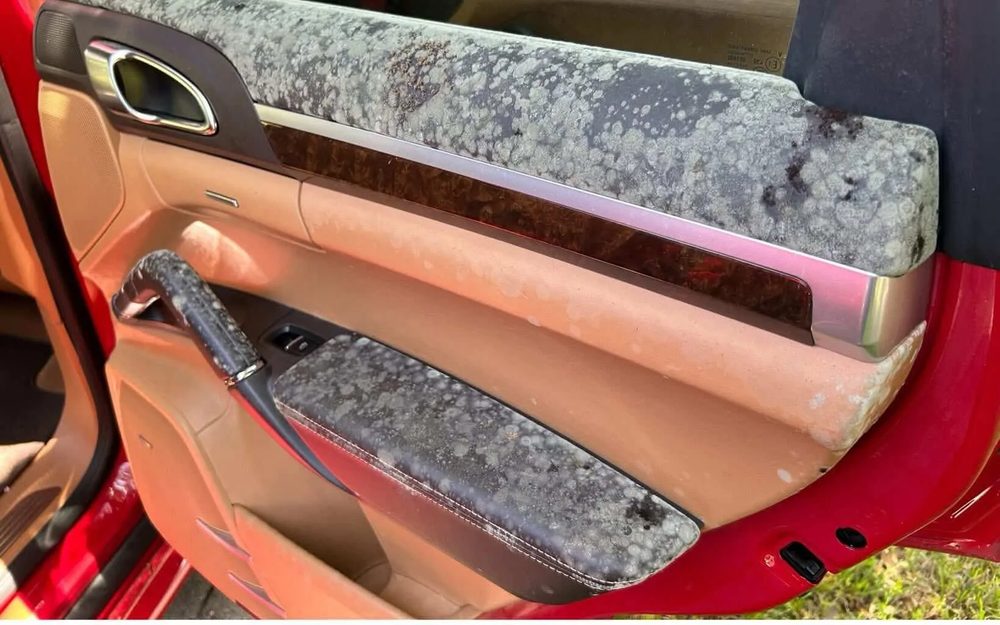 Before
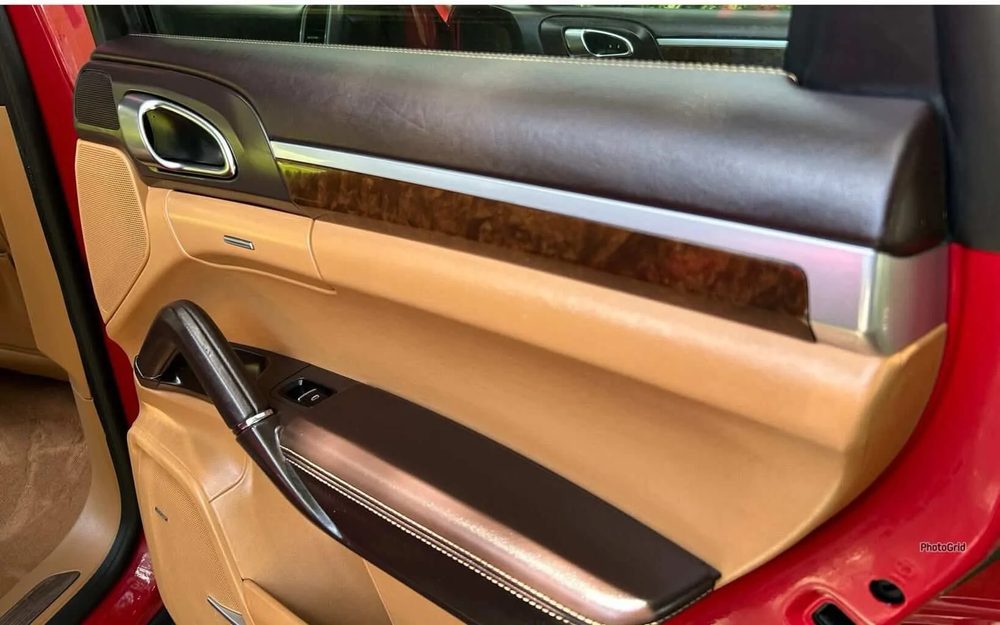 After
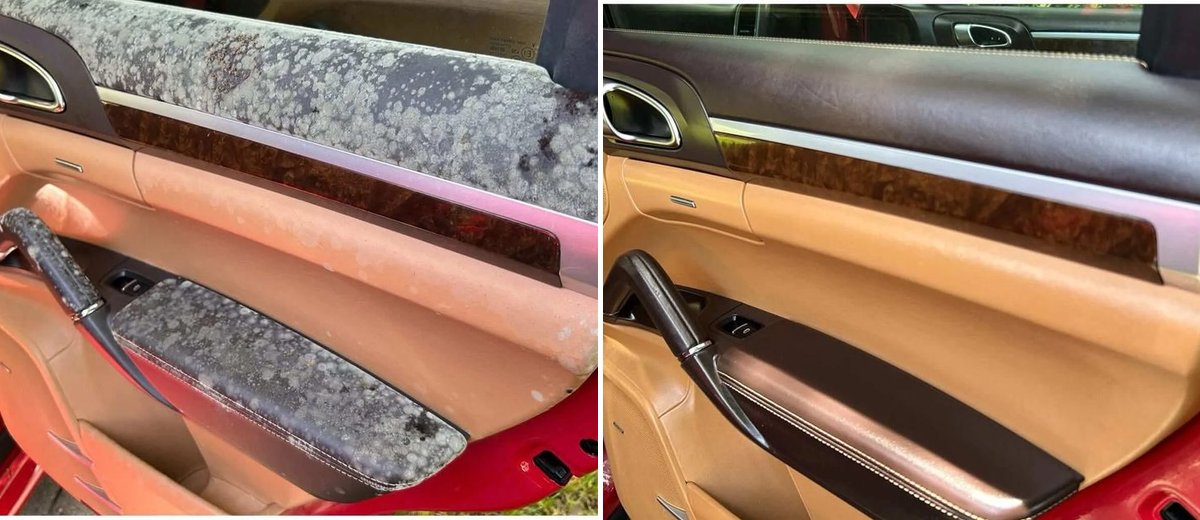
Porsche Cayenne — Door Panel & Armrest
Mold across the tan leather door panel and armrest of a red Porsche Cayenne, reaching the wood trim. Leather like this cannot be scrubbed hard, so we use the leather-safe protocol, steam and extraction around the trim, then Concrobium and the sealed ozone cycle. In a humid place like Deerfield Beach, door panels tend to collect moisture first at the seals and the lowest edges.
 Before
 After
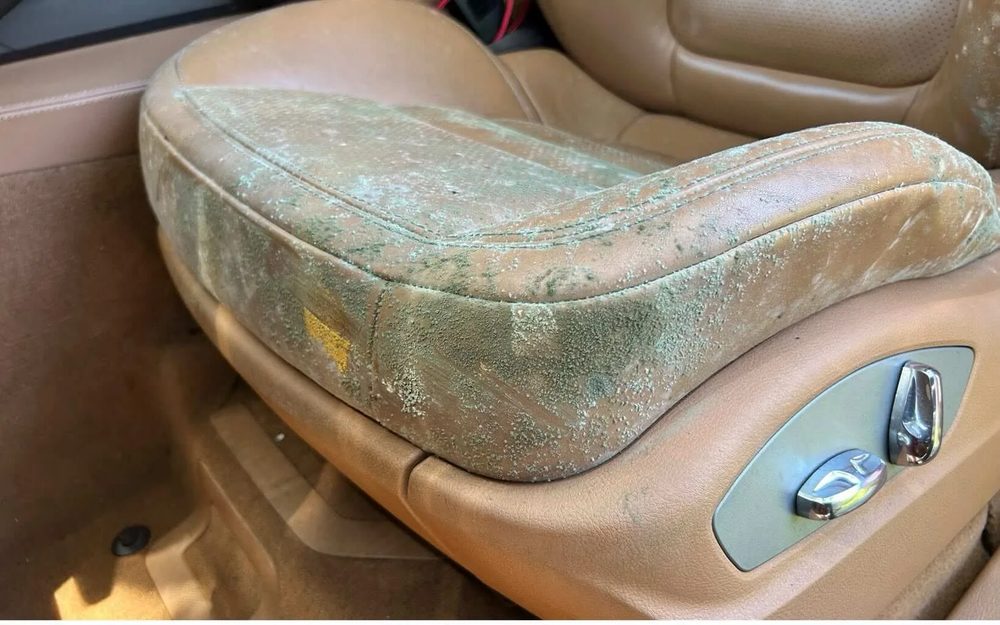
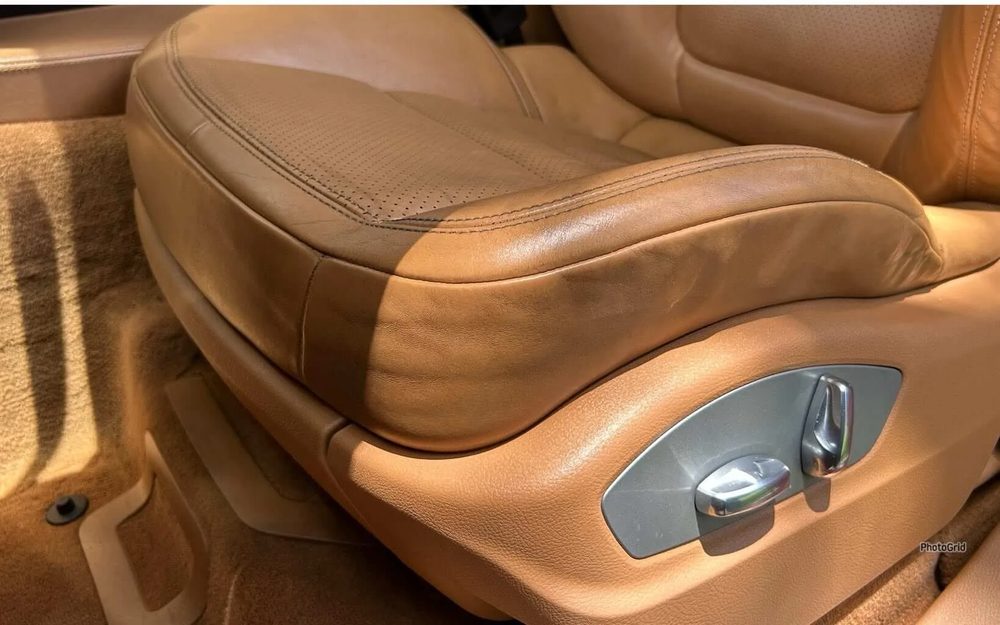
Leather Seat — Green-Blue Mold on the Bolster
Green-blue mold growing on the bolster of a tan leather front seat, the spot where the leather flexes and traps damp air. We use a leather-safe antimicrobial, avoid saturating the cushion, and let ozone reach the stitching and the air. A car that sits with its windows shut through a wet Deerfield Beach summer is a common setup for this pattern.
 Before
 After
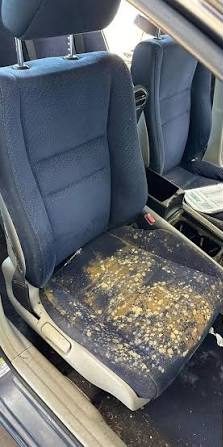
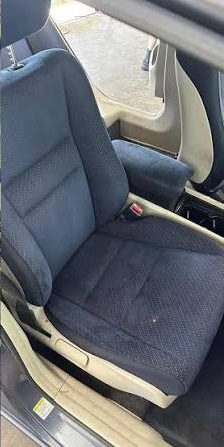
Cloth Bench Seat — Stain Residue Under the Cushion
A dark blue cloth bench seat with the cushion lifted, showing tan and yellow mold-stain residue on the underside. Stains like this mean the moisture was in the foam, not only on the surface, so we use steam, extraction and drying before Concrobium and ozone. In Deerfield Beach, a wet event followed by a closed-up car is the usual way foam ends up damp this long.
 Before
 After
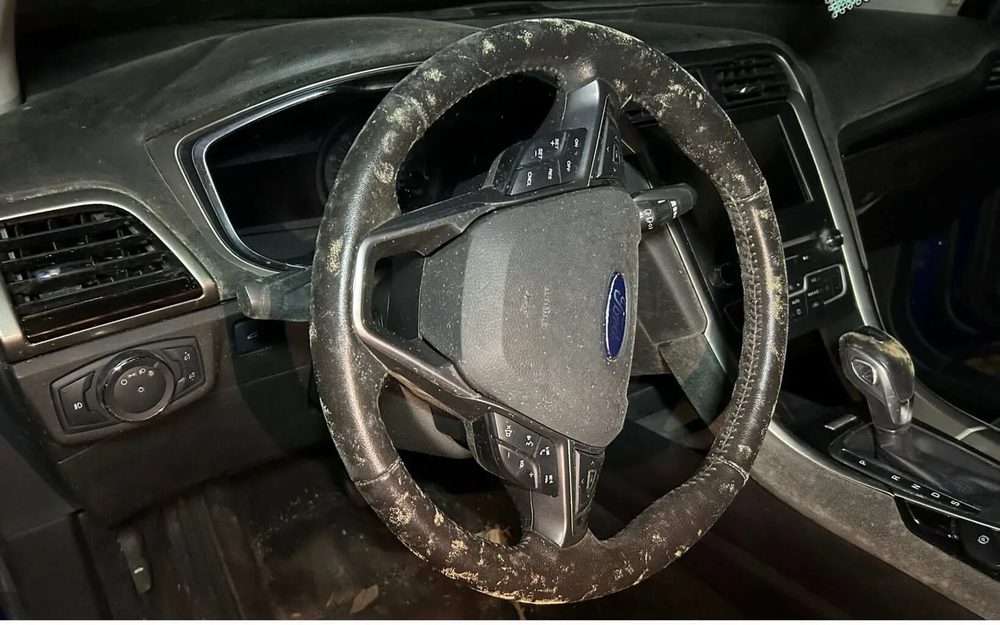
Steering Wheel & Dash — Grey-White Bloom
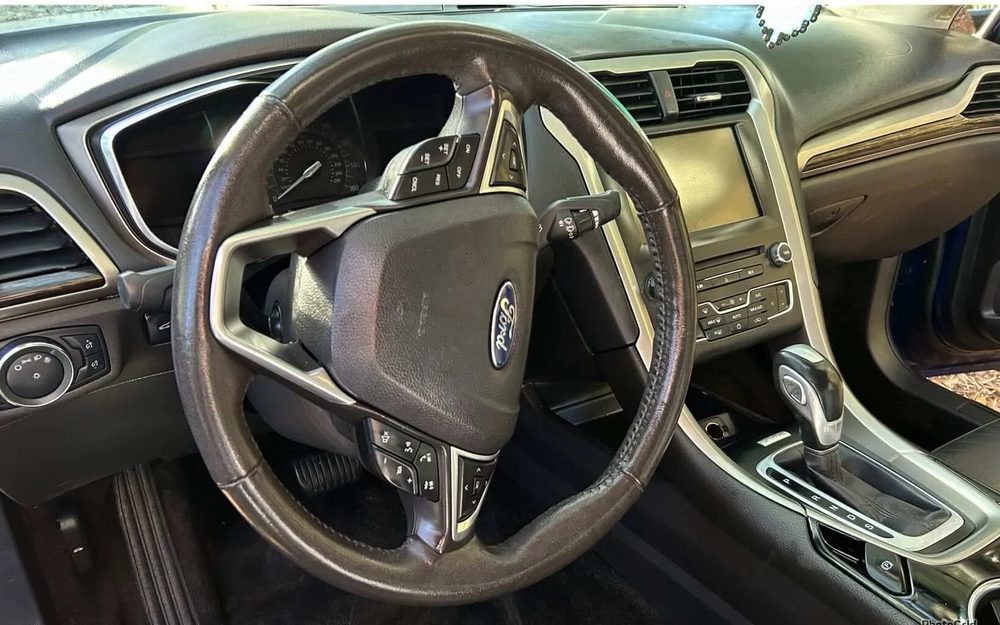
Grey-white mold bloom on the steering wheel, dash and vents of a Ford sedan. This is the pattern of a closed cabin with stale air, where the surfaces you touch most pick up a film first. We HEPA vacuum, steam and wipe each surface, treat the vents, and finish with ozone. Cars shut up for weeks in Deerfield Beach's humidity are the usual place we see it.
 Before
 After
Driver Seat & Console — Grey-White Mold
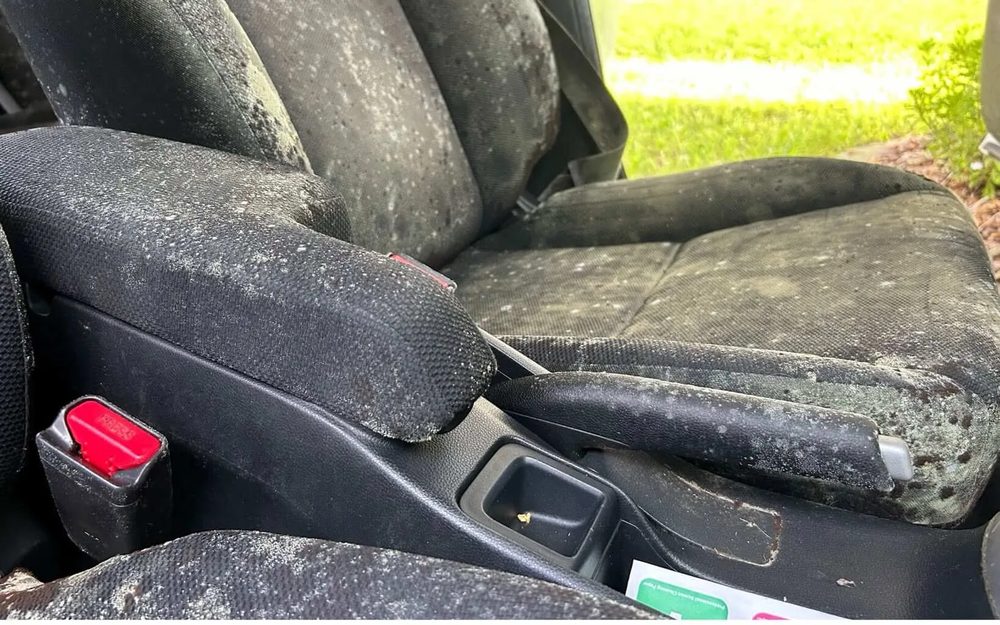
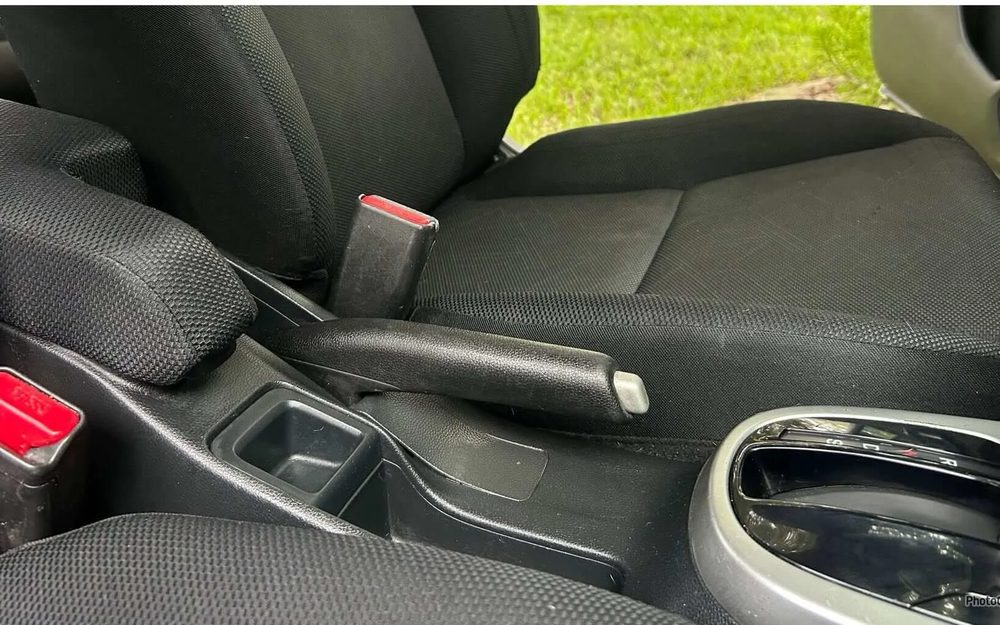
A black cloth driver seat, armrest and console covered in grey-white mold bloom, with a green lawn visible outside the window. Cloth holds moisture, so we use steam and extraction rather than just wiping, then Concrobium and the ozone cycle. Fabric seats in a car that is only opened occasionally are where this tends to start in a damp climate like Deerfield Beach.
 Before
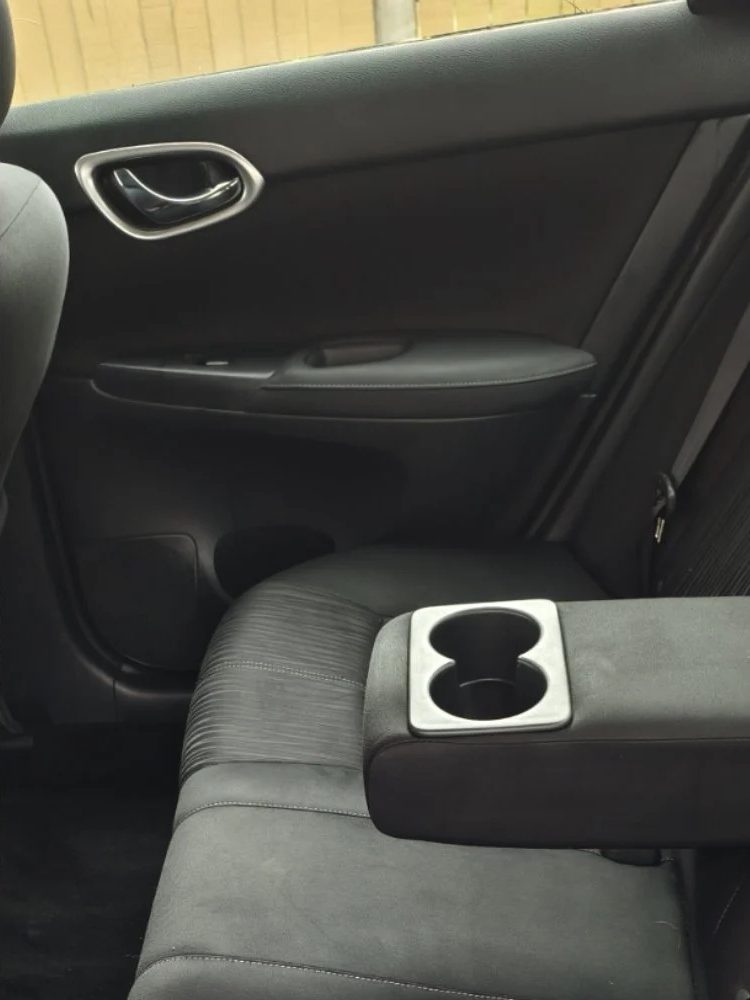 After
Rear Seat & Door Panel — White Spots
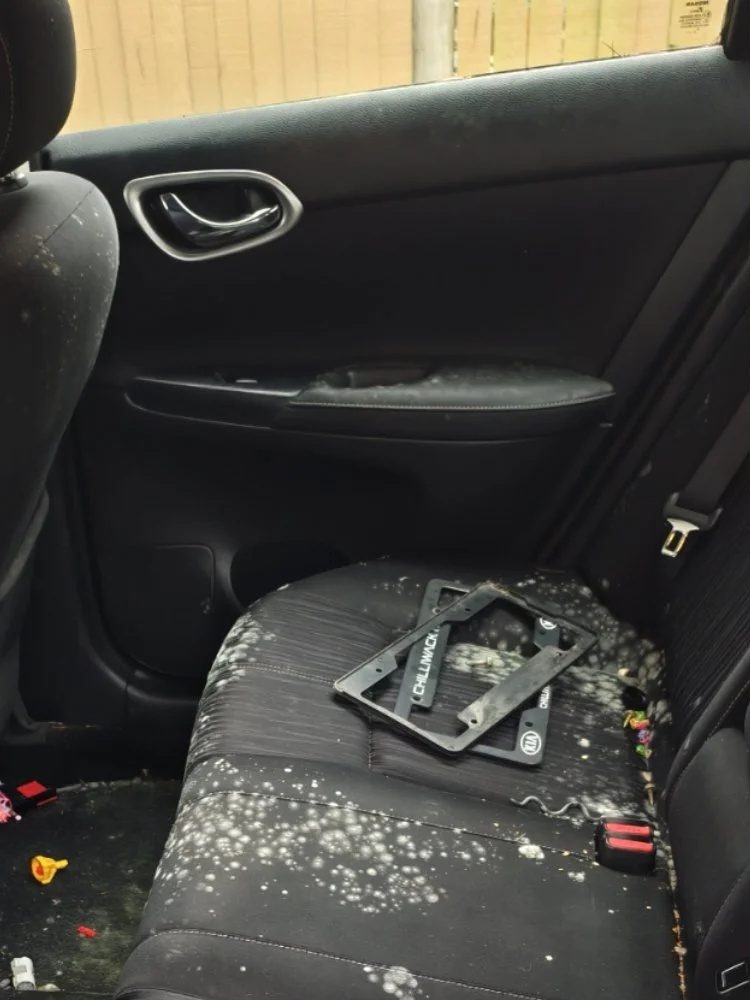
White mold spots on the rear cushion of a black sedan, next to the door panel, with loose debris and a license plate frame left on the seat. Loose items trap moisture against fabric and give mold a place to start, so we clear everything first, then vacuum, steam and extract. In Deerfield Beach, back seats of lightly used cars often show this first.
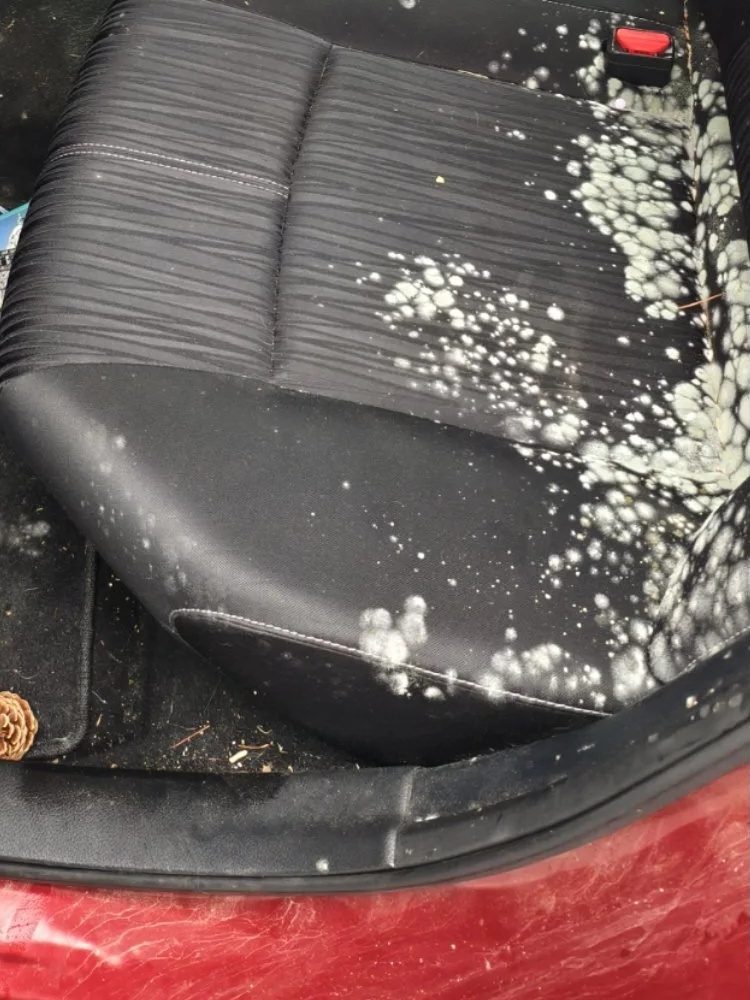 Before
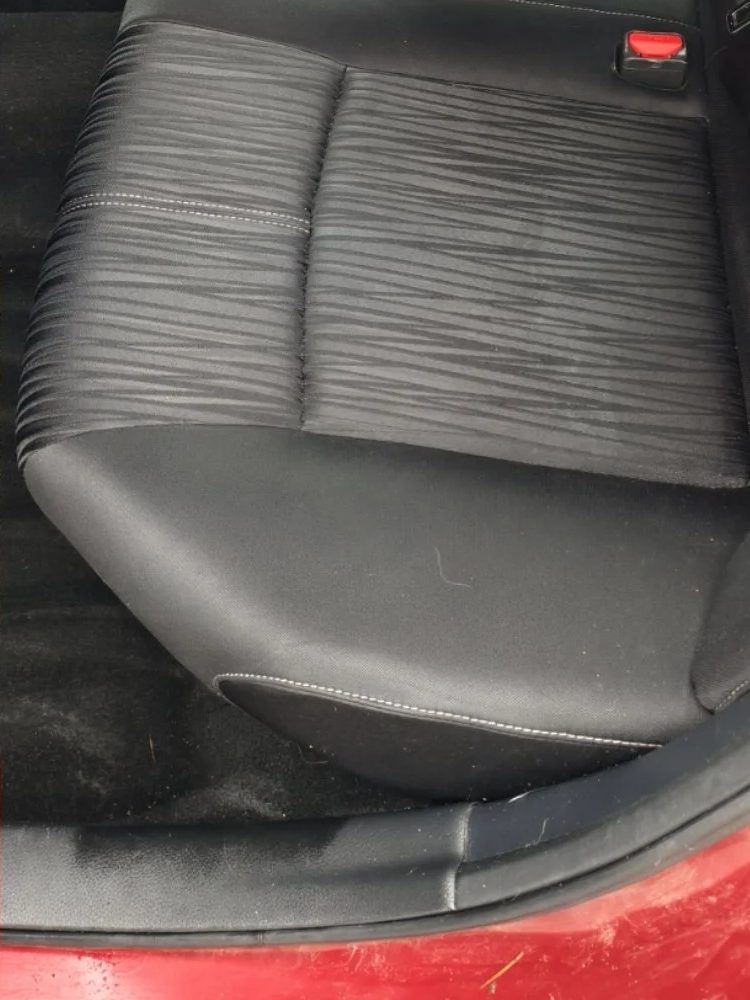 After
Black Cloth Seat — White Speckles
White mold speckles across a black cloth seat, with a red car body visible below the window. Speckled growth like this is usually early, and it tends to be caught before it spreads if the car is treated promptly. We HEPA vacuum, use Benefect and Concrobium, and run ozone. In Deerfield Beach, even a few humid days can be enough for this to start.
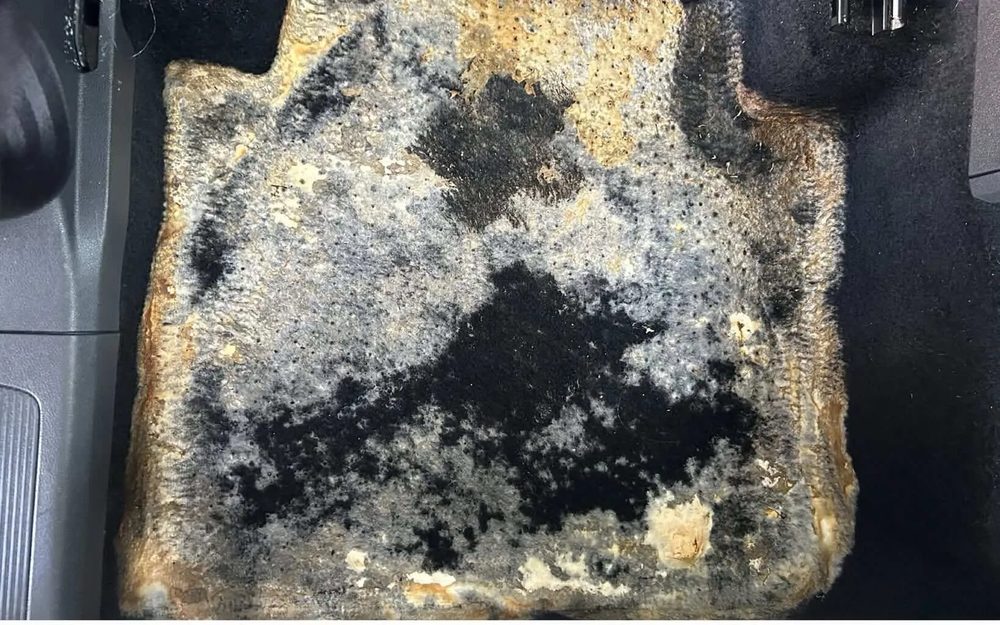 Before
 After
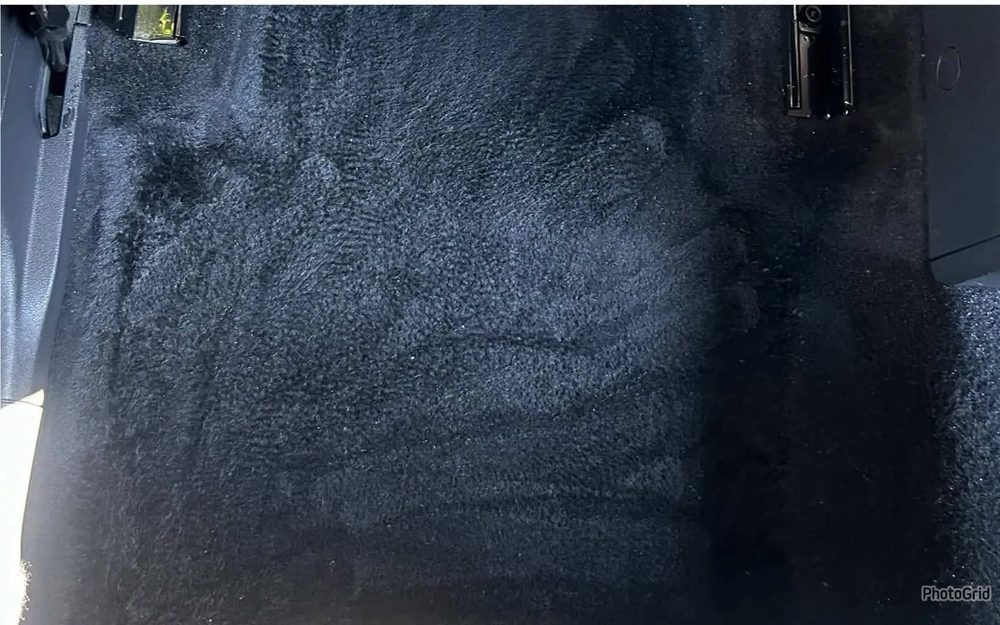
Floor Mat — Heavy Colony Growth
A carpeted floor mat with heavy black, brown and white mold colonies. The mat has been wet repeatedly and never dried, which is the situation after wet shoes, gear or a leak. We pull the mat, treat it and the carpet beneath it, and check the padding. In a place with as much wet gear and rain as Deerfield Beach, floor mats are the first thing worth checking.
100% Satisfaction.
Written. No exceptions.
If the result doesn’t meet our standard, or yours, we come back and redo it at no charge. No forms to fill out, no arguing over what “counts.” The guarantee is in writing before we ever touch your vehicle.
Request Mold Removal in Deerfield Beach · From $549
Fill this in once and send it. We get your address, vehicle, and the situation all in one message, no phone tag.
Rating
Detailed
Response
Three steps from musty cabin to clean one,
and we handle the gate, the lot and the cleanup.
No drop-off. No waiting. We come to Deerfield Beach.
We come to you in Deerfield Beach,
from the pier on NE 21st Avenue to Quiet Waters Park.
Mobile service: home, office, condo, or marina. No drop-off, no travel fee.
Not seeing your city? Ask us — we likely cover it.
Fish-bait coolers, wet park gear and closed-up condo cars,
the moisture mix Deerfield Beach drivers know.
Deerfield Beach sits about 13 feet above the Atlantic, gets roughly 57 inches of rain a year and has a large part-year and retired population, so a car left unused for a few weeks is already at risk. Left untreated, what starts as a musty smell becomes a real health issue for the next person who drives the car. DShine's Concrobium Mold Control and ozone process address the cause, not just the symptom, backed by $2M insurance and a written guarantee. Mold doesn't need much to get started, any trapped moisture inside a closed cabin is enough given South Florida's humidity. The source is almost always one of four things: a clogged AC condensation drain letting water pool silently on the floor pan, a failed door or window seal letting rain in, a clogged sunroof drain, or the car simply sitting unused for two or more weeks without the AC running. In Deerfield Beach that last one is the cause we diagnose most often, a car closed up for weeks or months in a condo lot or garage, though wet gear from the pier, the beach and the parks runs a close second.
Deerfield Beach areas we serve,
from the fishing pier to Century Village.
From the pier on NE 21st Avenue to Century Village and the Hillsboro River, parking and moisture vary a lot across Deerfield Beach.
Deerfield Beach International Fishing Pier — The pier stretches about 976 feet into the Atlantic from NE 21st Avenue, with a bait and tackle concession and rod rentals. Cars parked here carry coolers, buckets and damp clothes home. Bait residue feeds mold faster than plain water, so a same-week cleanup helps. We usually work at your home address, and can meet near the beach when parking allows.
Quiet Waters Park — Quiet Waters Park, about 430 acres off South Powerline Road, has a cable water-ski park, mountain bike trails, lakes and camping. Wet swimsuits, muddy shoes and soaked gear are what typically end up on the floor mats of cars used here. We come to your address, and a quick dry-out after each visit helps a lot.
Century Village — Century Village is a large age-restricted community, opened in the late 1970s on about 800 acres with more than 8,000 units. Cars are often used a few times a week and may sit for months when residents travel. We coordinate with the office or a neighbor for gate access, and can supply insurance details on request.
Constitution Park & the Arboretum — The Deerfield Beach Arboretum is a nine-acre garden at 2841 W. Hillsboro Blvd, inside Constitution Park. Cars parked under mature trees nearby pick up leaf litter and damp shade, and debris can clog the cowl and sunroof drains. Wet carpet from a blocked drain is the pattern to watch for around here, and we come to your address.
Pioneer Park & Historic Deerfield — Pioneer Park is described as the city's historic center, and early buildings such as the 1923 Butler House and the 1926 railway station reflect that history. Older areas tend toward street and small-lot parking, so cars sit outdoors through storms; a single wet event, like a cracked window, is the usual cause.
Broward Health North Area — Broward Health North is a 409-bed hospital in Deerfield Beach, and staff and visitors park around it on long shifts. Cars left in outdoor lots through a wet afternoon take rain, sun and heat cycles, and a cabin that is shut up hot and damp for hours is a common pattern. We can meet you at work or at home.
Hillsboro River & Intracoastal Marinas — The Hillsboro River forms the city's northern edge and the Intracoastal Waterway runs through town, with several marinas. Cars near boats take wet gear, lines and life jackets in the cabin, and the air stays damp. We come to your address and can work near the docks if the lot allows.
Don't see your area? Ask us — we likely cover it.
Deerfield Beach car mold,
the questions pier anglers and condo owners ask most.
Tap any topic to read the full breakdown.
Deerfield Beach stands only 13 feet or so above the ocean, at the north edge of Broward County, with the Hillsboro River as its northern boundary and the Intracoastal cutting through town. Rainfall averages roughly 57 inches a year, and the wettest stretch (June, August and September) each bring around 7 inches.
The dry stretch is shorter than most people think. December through February still deliver under 3 inches a month, but July highs average about 92 degrees and the air stays damp even when it is not raining. The EPA advises keeping indoor humidity below 60 percent, a target a closed car parked outdoors here misses for most of the year, and almost never in summer.
Two very different vehicles account for much of our Deerfield Beach mold work. One is the commuter or retiree sedan that goes unused for weeks at a time and ends up with a musty cabin and a pale film along the door seals. The other is the pickup, SUV or hatchback that carries wet fishing gear, coolers and sandy towels.
The first kind is usually a case of stagnant air: carpet that never fully dried, a cabin vent that has been sitting damp, a headliner that picked up condensation. The second is a case of repeated small wet events, a dripping bucket in the cargo area or soaked shoes on the floor mat, that add up over a couple of weeks.
Because Deerfield Beach has a large 65-plus population (about 21.6 percent at the 2020 census) as well as working residents who drive I-95 and Hillsboro Boulevard every day, we see low-mileage cars with lots of rubber and fabric wear alongside daily drivers with fresh spills. The treatment is the same 11 steps; the diagnosis of the source is what changes.
Shared condo or community lot, assigned space: Deerfield Beach has a lot of condominium living, from beachfront buildings to very large inland communities. A car in an assigned space gets rained on, heated, and often left for weeks. Seal wear and a clogged sunroof or cowl drain are the usual starting points, and the first signs show on the carpet beside the door sill.
Garage under a building or a closed home garage: Air in a shut garage sits motionless and the slab floor gives off damp. If a wet towel, a dripping umbrella or a leaking cooler is left in the car before it is closed up, the cabin turns into a small greenhouse. These are the cars most likely to land in our $749 tier because the growth reaches the headliner and the vents.
Driveway at a single-family home inland: Many houses west of the Intracoastal have a driveway and a one- or two-car garage that doubles as storage. A car in the driveway gets full sun and storm rain; the one in the garage gets stale air. Whichever one is the second car, driven only on weekends, usually shows the musty smell first.
Beach and pier parking: Cars left near the shore for a day get sun, humidity, sand and sometimes a damp trunk full of gear. The risk there is not long-term storage but what comes in with you: wet towels, fish-cleaning residue on shoes and soaked chairs that go back into a sealed cabin.
June through September: The rain gauge peaks here. June, August and September each pull in around 7 inches, and July afternoons top out near 92 degrees. One cracked window ahead of a downpour, or a roof drain packed with leaf litter, gives a parked cabin all the damp it needs. Most of our wet-event calls come from these four months.
June 1 through November 30, the tropical-storm window: NOAA treats late summer into early fall as the busiest stretch. Residents shutter up, garages get sealed and the power sometimes goes out for days. A cabin sitting hot and wet with the air conditioning off is about as good a mold incubator as exists.
December through February: Rain eases to a few inches a month and evenings cool down. This is also when part-year residents come back and unlock cars that have been closed since spring. If the first winter drive smells musty, the summer left something behind in the carpet or the vent box.
March through May: Heat returns, afternoon storms start up again and many owners begin planning their departure. That makes it the best window for a proper cabin clean or treatment before a car is sealed up for the wet months. A spring visit costs the same $549 or $749, and cars handled then tend to stay clean until fall.
Most Deerfield Beach work happens in a condo lot, a building garage or a driveway. In larger communities, including the age-restricted Century Village development of more than 8,000 units, we ask you to check whether the association needs a vendor name at the gate or the office, and we can supply the $2M liability insurance information when asked.
For beachfront buildings, parking is often a tight garage or a handful of assigned outdoor spots. A short message in advance about ceiling height and where the equipment can sit saves time. Our van carries the extraction and ozone equipment, and we need a place to stand and a bit of open air for ventilation, not a shop.
If you are at the pier, at the park or at work along Hillsboro Boulevard, we can meet you at the car there if the lot allows it. Otherwise it is easiest to do the job at the address where the car sleeps. Travel is included either way, and a neighbor or a manager can handle access if you are away.
1. A car sealed with air that never moves: In this city, that is the winner by a clear margin. Part-year households, condo garages and long trips away produce plenty of vehicles that sit shut for weeks or months. Moisture stuck in carpet padding or the vent box has nowhere to go, and colonies spread unseen until the next door opening.
2. Wet gear coming home with you: Cooler water, soaked sneakers, a sandy towel, swim trunks balled up in the cargo area. Anything that carries food residue, such as bait or fish scraps, feeds mold faster than plain water does. Park-day and pier-day gear is the second most common thing we trace a stain back to.
3. A window or sunroof left open ahead of rain: Summer cloudbursts form fast. Water runs down the door card or soaks the headliner, and if the car is closed up that night the damp stays. In July heat a short soak can bloom within days, usually first along the lower door card and the seat edge by the window.
4. Blocked A/C drain or worn seals: A cabin that smells fine with the air running and musty once it stops often has a partly blocked evaporator drain, with condensation backing up under the dash or onto the passenger floor. Door seals, trunk gaskets and windshield edges also wear in the sun and feed moisture into the carpet slowly, over months.
Booking starts with a text and a handful of photos of whatever is bothering you. We read them, tell you whether it looks like the $549 tier (mold in a single area) or the $749 tier (mold running through the vehicle), and the answer usually reaches you within 2 minutes. Before any tool comes out, the final price is confirmed from those photos or your description.
Then we drive to wherever the car sleeps in Deerfield Beach with the gear in the van. A first walk-around covers the doors, trunk, headliner and vent openings. From there the car goes through our eleven steps in order, finishing with the sealed ozone cycle and the Meguiar's odor bomb. Allow 3 to 4 hours from arrival to final check.
Staying with the car is optional. Photos taken before and after arrive on WhatsApp, and a manager, relative or neighbor who is handling the gate can be added to the same chat, which spares everyone the call asking whether it is done yet and keeps the whole job from depending on one person's phone.
Cost leads the conversation, then downtime. On cost: $549 for one affected area, $749 when the problem has spread, and the van ride to your door is on us. On downtime: roughly 3 to 4 hours, with the car staying exactly where it is parked, whether that is a condo lot, a garage bay or your own driveway.
After that the questions get local. People who fish ask if the bait-and-cooler smell leaves along with the mold. Residents of condo buildings and big communities wonder if we can work in a shared lot or garage. Owners flying back for winter ask how long a closed car is safe.
Almost every caller ends on the same worry, whether the mold returns. Our honest answer: not if the water source is dealt with, and if it reappears inside 30 days we treat the car again for free. When the real problem is a drain or a seal that our work cannot repair, we flag it before we begin.
Ceramic Coating is the add-on we hear about most, since owners who care enough about the cabin to book mold removal often want the paint and glass shielded from Florida sun too. Doing both in one visit means the car is out of service once, and one appointment is easier to fit around a building's rules.
Darker cars that show every swirl lead people to ask about Paint Correction, and vehicles that sat unused for ages prompt questions about Engine Bay Cleaning. Odor Removal Detailing is the separate service for smells without visible mold, like smoke or old food, and we say which one your car needs.
Extras are always confirmed with you before they start, and the mold work stays first in line. Anything cosmetic waits until the cabin has aired out and the ozone cycle has finished, so nothing gets polished over a surface that is still damp.
Cool, clammy carpet beside the doors on a day with no rain is among the first clues. Another is a powdery grey-white film creeping onto the lower edge of a leather seat, the wheel or the dash after a long weekend with the car shut and the air unmoving.
Watch too for windshield fog that takes ages to clear from inside, itchy eyes or sneezing that begin only when the air conditioning starts, and brown stains in the headliner above the back seat. Dark flecks in seat seams, or a floor mat still soggy a day after a storm, call for a look underneath.
Do not hold out for a smell. By the time it is strong, the growth has usually moved into the foam beneath the seat covers, which is far harder to treat than a surface film. A photo sent to us is enough to say whether it is one patch or the whole cabin.
Many Deerfield Beach owners leave the car untouched for weeks at a time, heading to family up north or off for a summer abroad. What works best is dull and simple: empty anything damp, vacuum the floors, and let the cabin dry out with the doors open before you lock up.
Placement helps too. A covered space with a bit of breeze beats a sealed garage ringed with boxes. If a friend can idle the engine with the air on recirculate for a quarter of an hour twice a month, the stale cabin air gets swapped out, and that alone does a lot.
Keep half-empty water bottles, wet umbrellas and damp bags out of it. A tub of desiccant is cheap and useful, though it never replaces a dry interior. Before a long trip, take a few interior photos so you have something to compare against when you return.
Plenty of households here have a second car that seldom leaves the driveway. That one often grows mold before the daily driver does, because the daily driver gets opened, aired and run. If both cars are affected, we can normally treat them the same day at the same address.
Each vehicle is inspected, photographed and priced on its own, $549 or $749 depending on how far its mold has spread. Both prices are agreed before we start, so nobody faces a surprise when we arrive, and the second car is neither discounted nor marked up for coming second.
In condo buildings and large communities, neighbors who want the same day can each book separately, and we stack the appointments back to back. One conversation with the office then covers several cars, which makes gate and garage access simpler for all of them.
Our written guarantee lasts 30 days and is a full satisfaction promise: if mold or the musty smell reappears in that window, we return and redo the treatment at no cost. Where the car lives in Deerfield Beach does not matter, whether it is a beachfront garage, a community lot or a driveway inland.
When we are called back, the cause is almost always something that was never repaired: an A/C drain still clogged, a door seal still leaking, or a car driven straight into a closed garage with a wet floor. If we notice any of those during the job, we say so on the spot, so the repair happens before the cleaning is wasted.
The promise covers the mold or odor in the areas we treated. Fresh trouble, such as a spill after we leave, a new leak or storm water in the cabin, is a separate matter that we will look at with you honestly. Since the document is on paper, you can hand it to a building manager, a relative or whoever minds the car while you are away.
Older cars here frequently have seats and door cards that have lived through years of sun and damp. We steam and extract instead of soaking, so moisture is not pushed deeper into the foam, and brittle trim and aged plastics get a lighter touch.
Leather gets our leather-safe method: no hard scrubbing, and a thorough dry afterward. Mold on leather tends to hide in stitching and along the bolsters where the surface flexes and holds damp air, so a gentle clean followed by Concrobium and ozone treats both the surface and the air above it.
Higher-value vehicles go through the same steps with extra care around wood trim, stitched panels and electronic controls. If a panel must come off, we tell you first and never force it. Owners of collectibles should say so when booking, so the visit can be planned around the car.
Remove anything wet or organic from the cabin and trunk: towels, bags, food wrappers, coolers, rods and tackle. Vacuum the carpets and the seat seams, since crumbs and sand hold moisture and give mold something to feed on. Let the car air out with the doors open for an hour before you close it.
Check the sunroof, the windows and the door seals for gaps, and look under the floor mats for any dampness. If a mat is wet, take it out and dry it fully. Park in a spot with some airflow rather than a tight corner, and avoid stacking items against the car.
If someone can look in on the car every couple of weeks and run the A/C for a few minutes, it makes a real difference. Tell them what to look for: a damp smell, fogged glass, or a floor mat that feels cool. A quick photo from them is enough for us to tell you whether it is worth a call.
EPA guidance says wet materials have to be dry within 24 to 48 hours if mold is to be avoided. With July highs near 92 degrees, a damp cabin that stays shut for a week can go from one small patch to colonies across a whole seat and into the carpet padding below it.
That gap is exactly what separates the $549 tier, with mold in one area, from the $749 tier, with mold throughout the vehicle. Early treatment keeps more cars in the lower tier. Once growth reaches the headliner, the vents and the foam under several seats, the job grows with it.
Health is part of the cost as well. Spores released in a small closed cabin are not something to shrug off if anyone has allergies, asthma or a weak immune system, and with about 21.6 percent of residents at 65 or older, many riders in local cars fit that description. A clean cabin is easier on them and on your budget.
Anglers on the Deerfield Beach International Fishing Pier have about 976 feet of deck to work with, plus a concession that sells bait and tackle and rents rods. Whatever they bring back in the car, a cooler, a bucket or a damp shirt, carries food residue and moisture, a combination mold likes.
Quiet Waters Park, a county park of roughly 430 acres, supplies another kind of load: cable water-ski and wakeboard gear, bike shoes caked in trail mud, camping equipment and wet swimsuits. The shared rule is that wet things belong in a bin in the trunk, not on the floor mat or the seat.
If something spills, blot it, open every door and let the cabin air out. Hosing out the cargo area and propping the tailgate up for an afternoon costs nothing and often saves a job. If a smell is still there after two days, send us a photo before it spreads.
Mold confined to a single area, such as a seat, a door panel or the driver-side carpet, is $549. Mold that runs through the vehicle is $749. The van ride to your Deerfield Beach address is already inside both figures, and nothing is billed by the hour.
Send photos or a few lines of description, and we name the tier in under 2 minutes. The final figure is then confirmed once we have looked at what you sent, ahead of any work. If the car turns out worse than the photos suggested, we explain it and agree on the next step with you first.
The estimate is free, and you do not need to be home. The car stays at your address, the job takes roughly 3 to 4 hours, and photos before and after reach you on WhatsApp. The 30-day written guarantee comes with the price, along with travel.
Deerfield Beach pairs about 57 inches of rain a year and a low-lying coastal setting with many cars that sit idle in condo lots and garages. The leading cause is a closed-up car with stale air; next in line is wet fishing, beach or park gear carried into the cabin.
Car Mold Removal starts at $549 for one area and reaches $749 when mold runs throughout, travel included and the price confirmed from your photos before work starts. The work is IDA certified, covered by $2M in liability insurance, and built on Benefect, Concrobium and ozone.
Plan on 3 to 4 hours at your address, with no shop drop-off. If mold or its odor reappears within 30 days, we re-treat free under a written guarantee. Send a photo or a short note and expect a tier back in under 2 minutes, with the final figure confirmed before anything starts.
When the steaming, extraction, drying and Concrobium work is done, we shut the doors and run an ozone generator in the sealed cabin. The gas drifts through vents, headliner and fabric weave, reaching places no cloth can, and breaks down spores and odor molecules along the way.
Keep everyone out of the car while the generator runs, children and pets included. When the timer stops we open the doors and air the cabin out completely, then apply the Meguiar's odor bomb and give each treated surface a last inspection before handing the car back.
In a condo lot or beachfront garage we choose a setup spot with good airflow for the airing-out. A driveway, an open garage door or a lot space all work. We tell you when it is safe to sit inside again, never before, and the cabin is ventilated well past the point where any ozone smell remains.
Quick answers
before you book in Deerfield Beach.
Add-ons Deerfield Beach clients book
Still deciding? Read: the complete mold removal guide · does insurance cover it? · why DIY mold removal fails.
Mold in your Deerfield Beach car? Get a price in 2 minutes.
Serving Deerfield Beach and all of Broward County. Fixed pricing, no travel fee. We confirm in under 2 minutes.
It Might Just Be an Odor Problem
If there's no visible mold growth yet, the smell alone is usually an Odor Removal Detailing case ($349 flat) — faster than full mold remediation ($549–$749). See which one matches what you're dealing with: