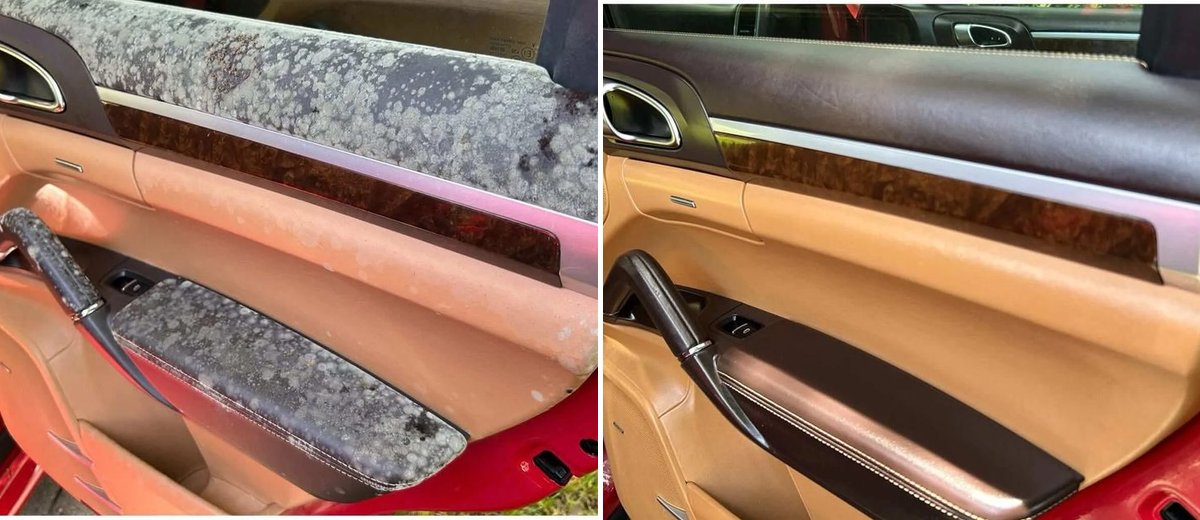
Inside a Dania Beach Car Mold Treatment
This is not a car wash. Car Mold Removal uses Concrobium Mold Control treatment, pH-balanced products, and machine assistance, the same process used in pre-sale preparations for luxury dealerships.
Why it matters for your health: Mold in a vehicle is a different exposure than mold on a wall at home. With the AC recirculating, everyone inside is breathing concentrated spores for the length of the drive. The EPA and CDC both link mold exposure to respiratory irritation, allergic reactions, headaches, and worsened asthma symptoms. Children, older passengers, and anyone with a compromised immune system typically react faster and more severely than a healthy adult would. By the time the smell is noticeable, spores have usually already spread through the HVAC system into every vent in the cabin.
Curious what actually happens during the visit? Tap through our real 11-step process below to see what we do at each stage and why it matters.
What each Dania Beach mold job leaves you with
Most detailers in Dania Beach charge less. Here’s exactly what you gain — and what you risk — with each choice.
| DShine DetailsFrom $549 · travel included | Avg Dania Beach Detailer$149 – $199 | |
|---|---|---|
| Industry certificationsIDA, Koch Chemie, Meguiar’s, 3M, Symplex, XPEL | ✓6 verified | —0 credentials |
| $2M liability insuranceWe cover any damage — in writing | ✓ | —Often uninsured |
| Deionized water systemZero mineral residue, no water spots | ✓ | —Tap water, water spots |
| Fresh microfibers per vehicleNo cross-contamination between jobs | ✓ | —Shared towels, swirl risk |
| Mold-specific chemistry onlyConcrobium, Benefect & Meguiar’s, no harsh acids | ✓ | —Industrial degreasers |
| Before & after photosSent via WhatsApp on completion | ✓ | —No documentation |
| 100% written satisfaction guaranteeReturn & redo at no cost if unsatisfied | ✓ | —No written guarantee |
| Travel to your address — $0Home, office, condo — no drop-off | ✓ | Sometimes adds fee |
DShine vs. any other detailer
in Dania Beach, Broward County
Three things most detailers won't tell you. We put them in writing.
 Since 2018
With more than 20 years of hands-on experience in the automotive care industry, Evelio launched DShine Details in August 2018 with one van and zero shortcuts. For the first six months he slept in the van to keep costs down and standards up. Today DShine runs 7 certified vans across Miami-Dade, Broward, and Palm Beach, and the commitment hasn't changed. Every vehicle is treated as if it were his own.
What clients say
in their own words.
Before & After: Mold Removal We've Actually Done
No stock photos. These are real DShine mold removal jobs across South Florida, the same 11-step process and chemistry used on every Dania Beach appointment.
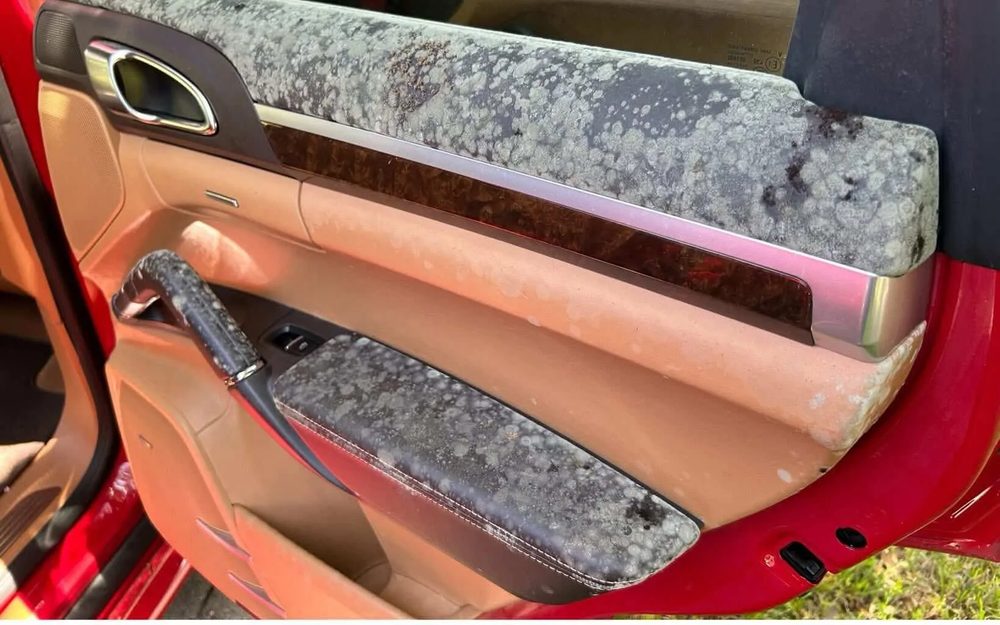 Before
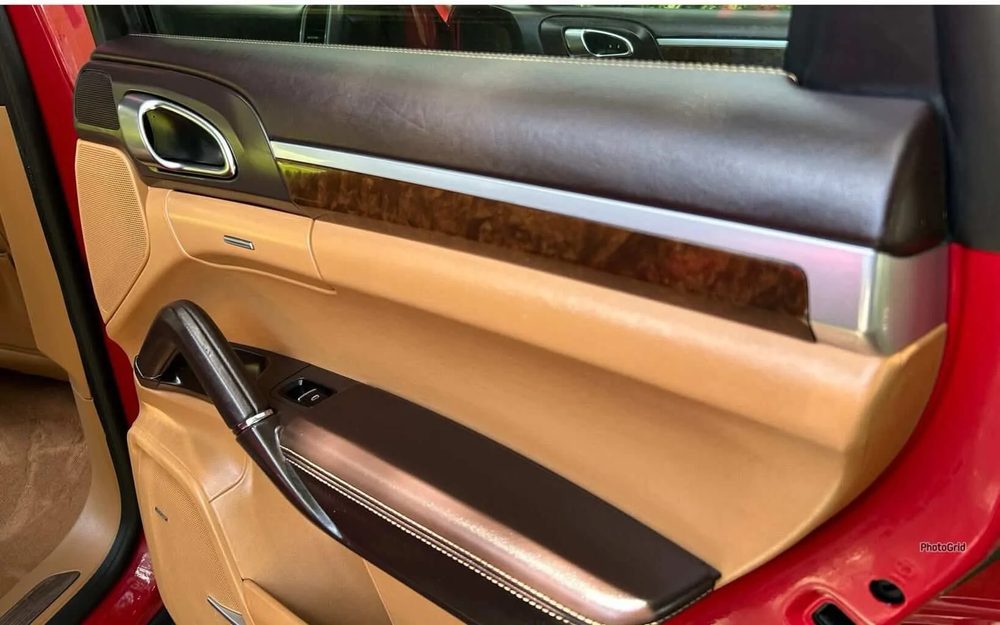 After
Porsche Cayenne — Door Panel & Armrest
Mold spread across the tan leather door panel and armrest, right up to the wood trim. On leather like this we use the leather-safe protocol: steam and extraction at controlled settings, Concrobium on the surface, then ozone for the cabin air, so the finish is not stripped. Growth like this is common in Dania Beach, where humid air and a closed cabin keep leather damp.
 Before
 After
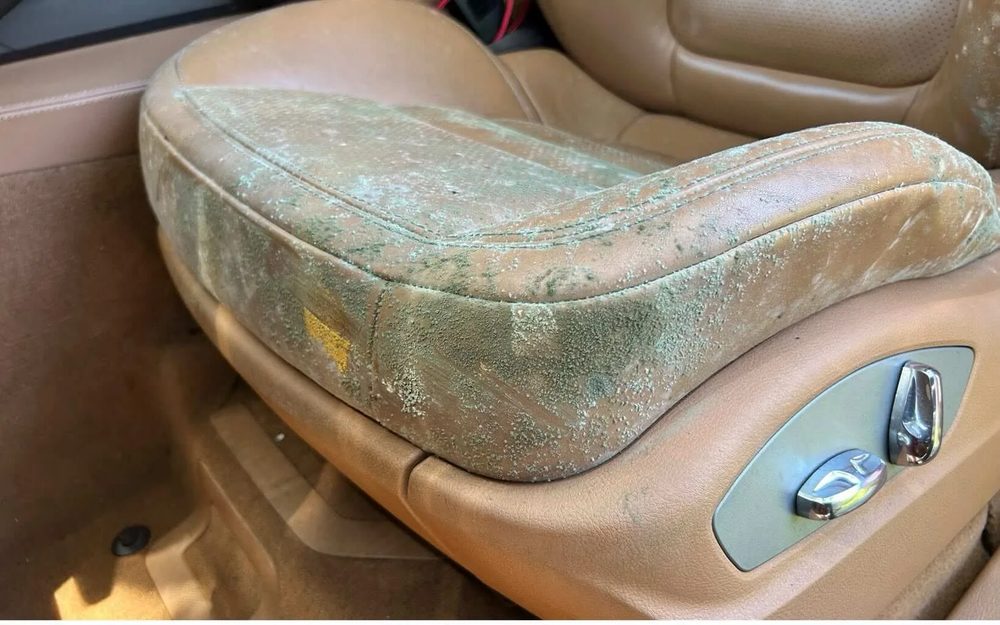
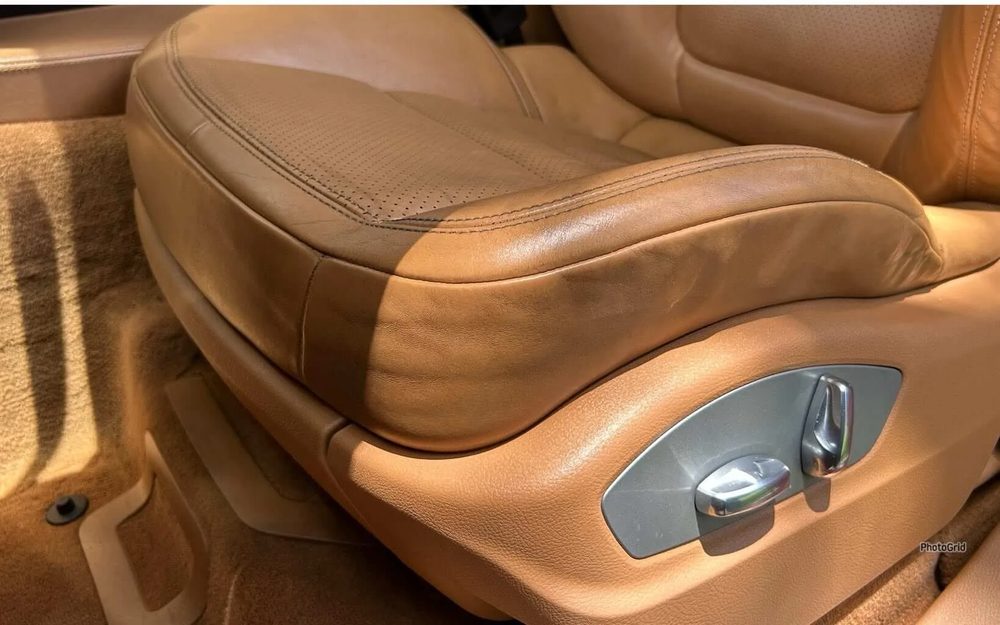
Leather Bolster — Green-Blue Mold
A tan leather front seat bolster covered in green-blue mold. Leather is porous, so it needs a gentler method than cloth: steam, extraction, a Concrobium application and the ozone step, with the leather-safe protocol throughout. This pattern shows up in Dania Beach when a driver gets in with wet clothes and the car is then shut up in the heat.
 Before
 After
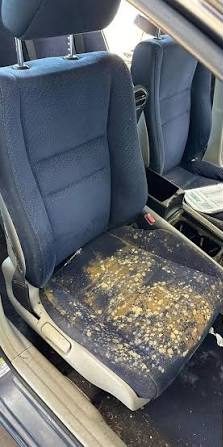
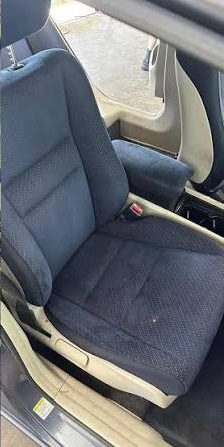
Cloth Bench Seat — Stained Cushion
A dark blue cloth sedan bench seat with the cushion lifted, showing tan and yellow mold-stain residue on the seat bottom. Stains like this mean moisture sat under the fabric, in the foam. We lift the cushion, vacuum with HEPA, steam, extract and dry it, then apply Concrobium. Hidden damp like this is a common pattern when summer storms meet a worn seal in Dania Beach.
 Before
 After
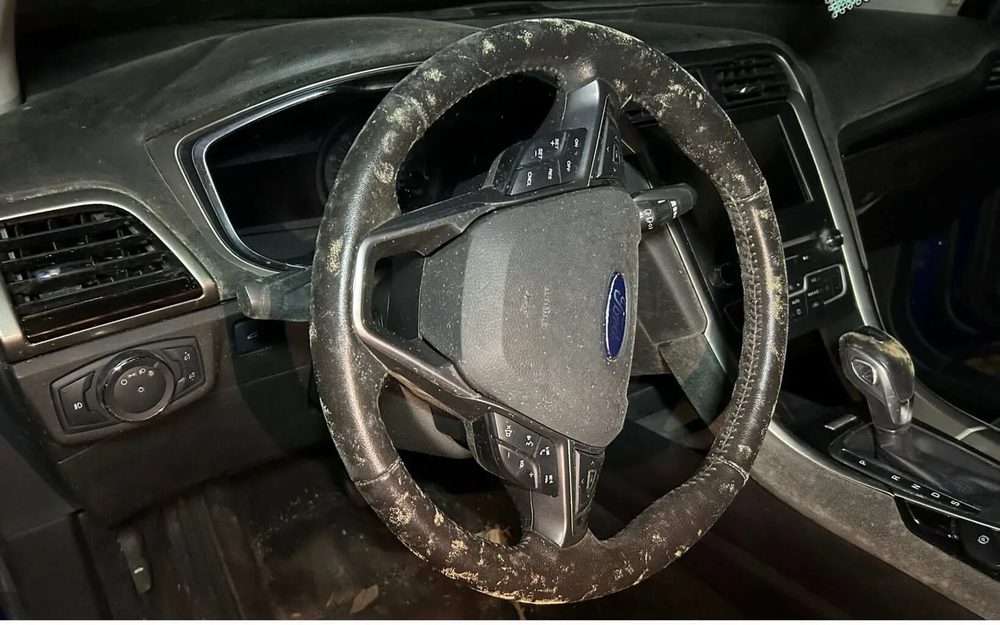
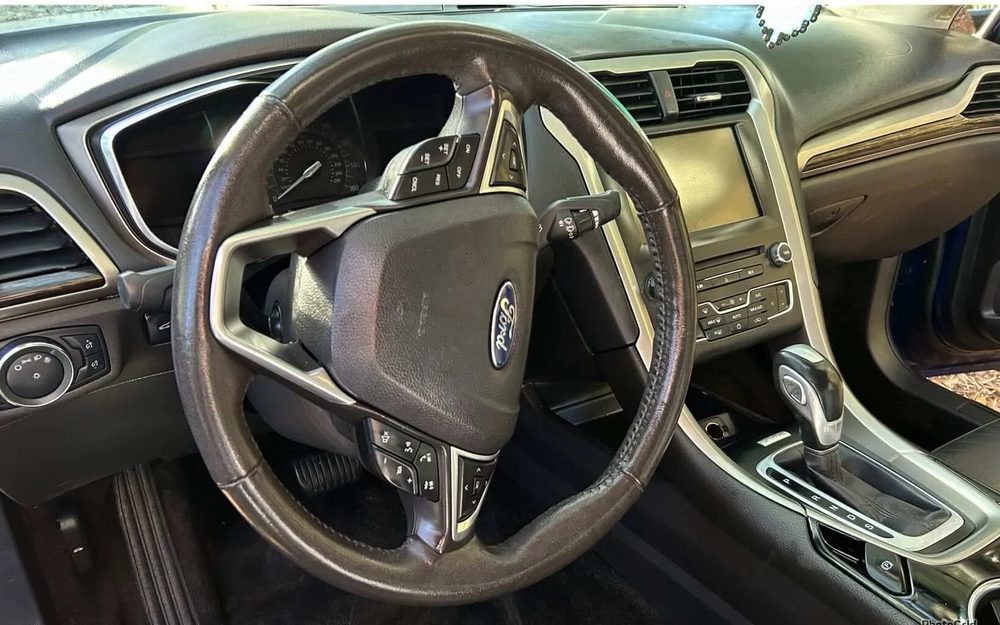
Ford Sedan — Steering Wheel, Dash & Vents
Grey-white mold bloom on the steering wheel, dash and vents of a Ford sedan. Growth on hard surfaces usually means the cabin air has been humid for a long time, and vents need attention too. We clean the surfaces, steam, apply Concrobium and run ozone to reach the ductwork. In Dania Beach, a car parked shut with the A/C off in the summer heat can develop this.
 Before
 After
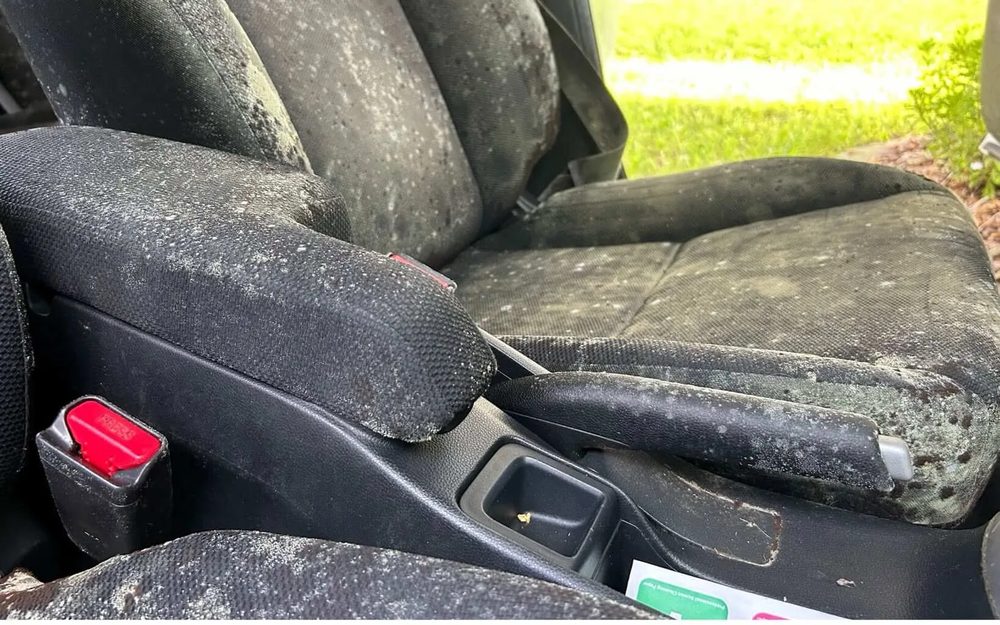
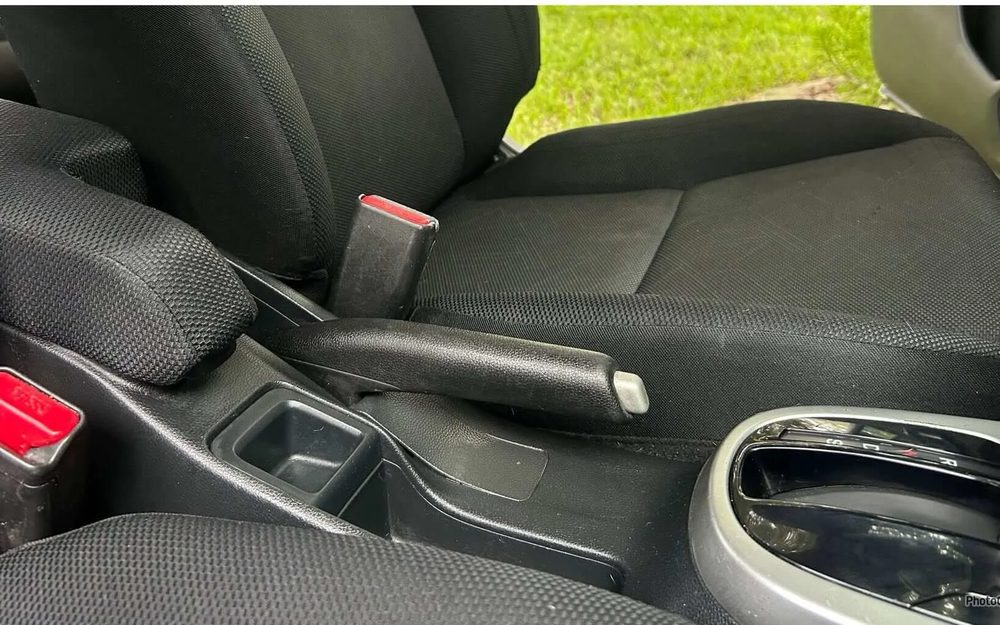
Black Cloth Seat — Armrest & Console
Black cloth driver seat and armrest or console with grey-white mold bloom, with a green lawn visible outside. Dark fabric hides growth until it is well established, so a close look under light matters. We HEPA vacuum, steam, extract, dry and treat with Concrobium. Cars that get in and out of damp, grassy spots and then close up can show this pattern here.
 Before
 After
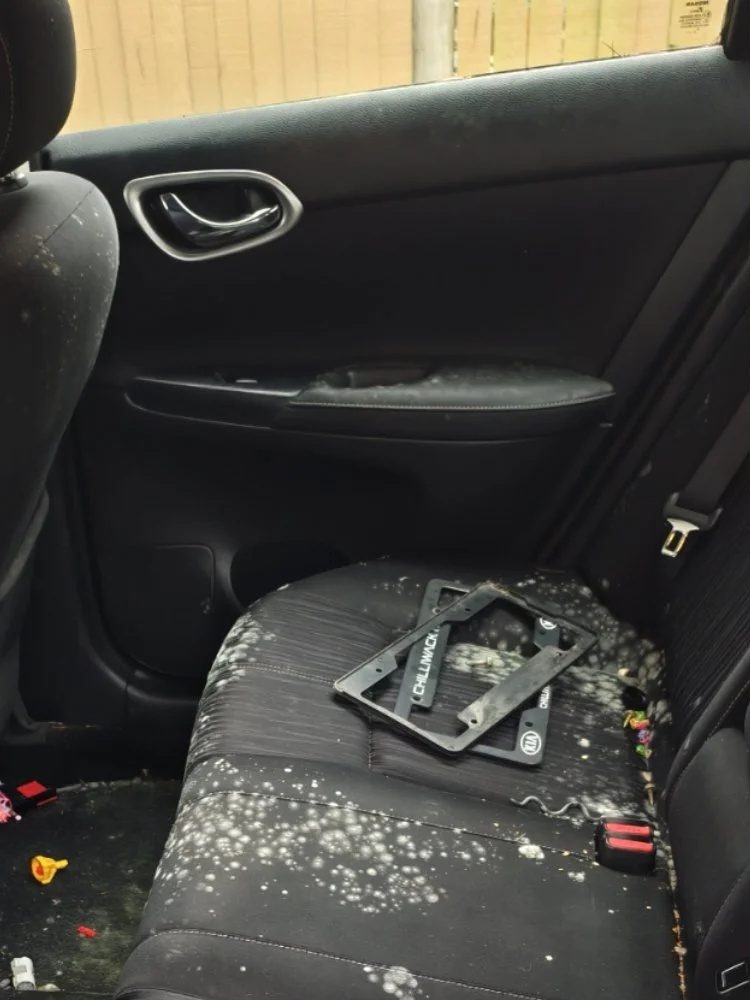
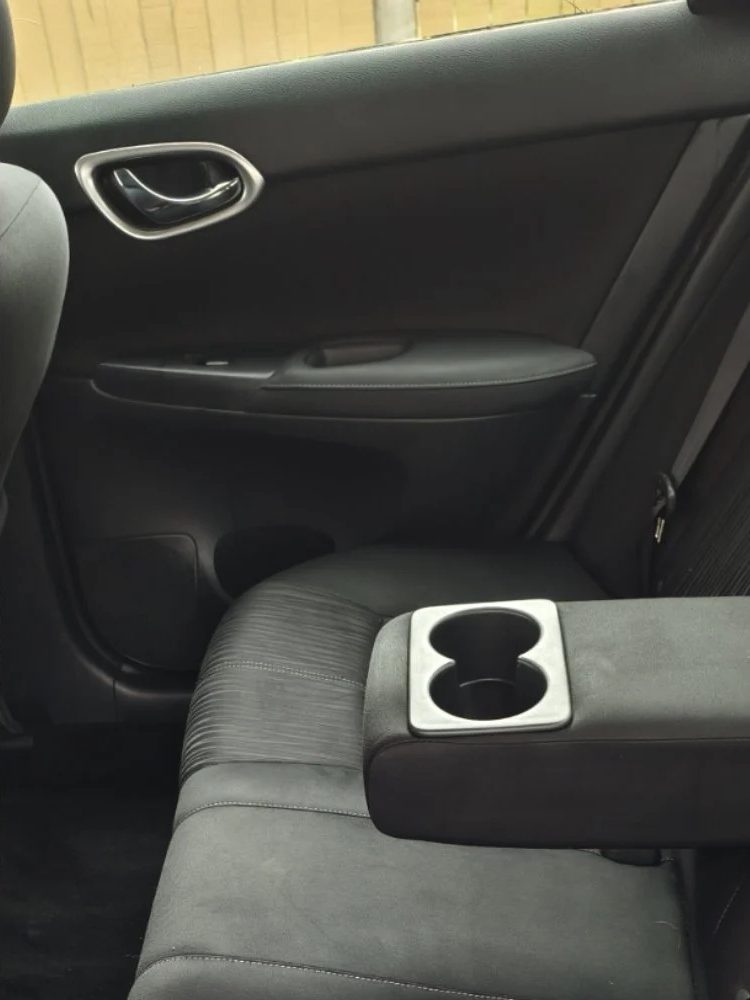
Black Sedan Rear Seat — Door Panel
A black sedan rear seat and door panel with white mold spots on the rear cushion, plus loose debris and a license plate frame on the seat. Back seats are a common hiding place because nobody sits there and nobody looks. We clear the debris, vacuum, steam, extract and treat. In Dania Beach, items left in the back during a wet week make this pattern more likely.
 Before
 After
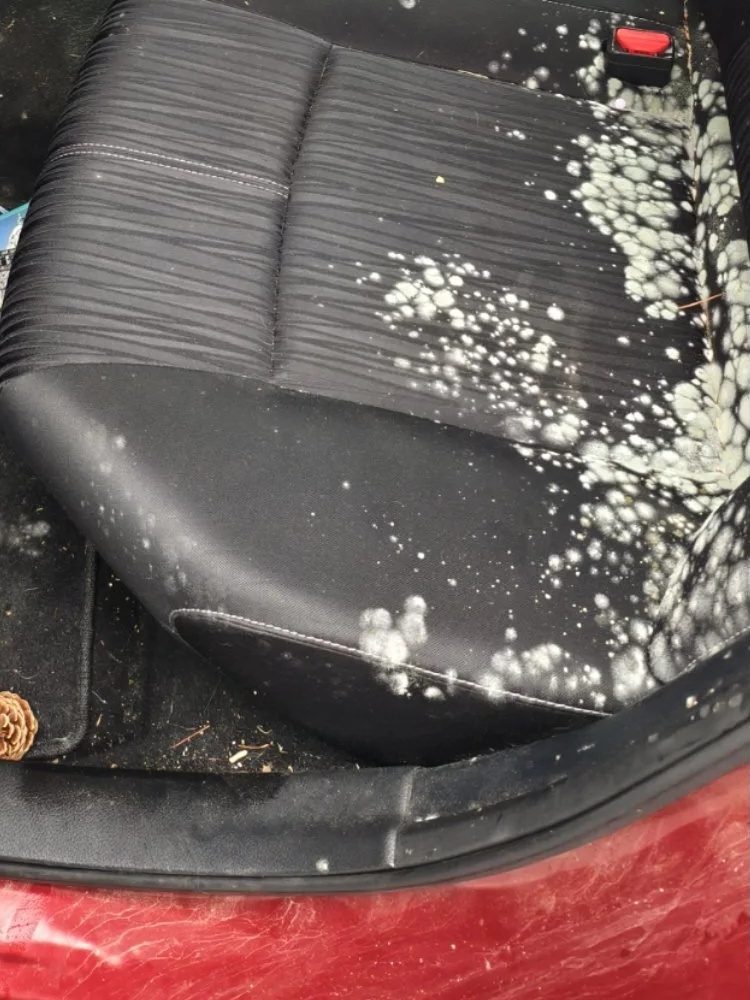
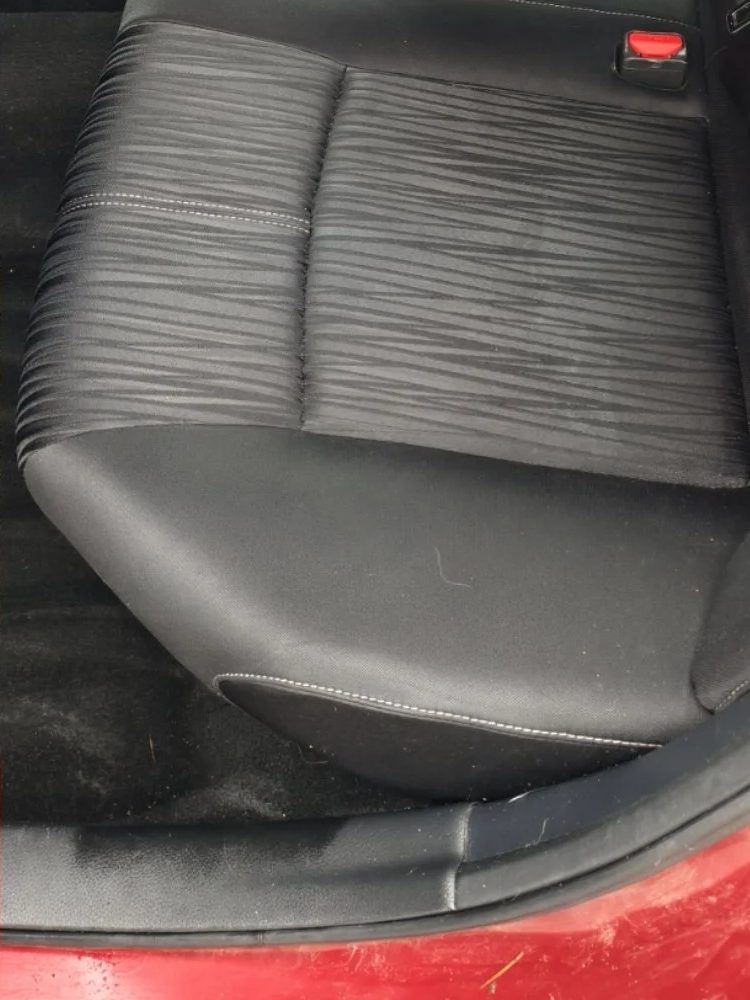
Black Cloth Seat — White Speckles
A black cloth seat with white mold speckles, with the red car body visible below the window. Speckles like this are early or moderate growth and are usually still on the surface, which is why they are a good time to act. We vacuum, steam, extract, apply Concrobium and finish with ozone. In Dania Beach's humid summers, a damp cabin can show this in a few days.
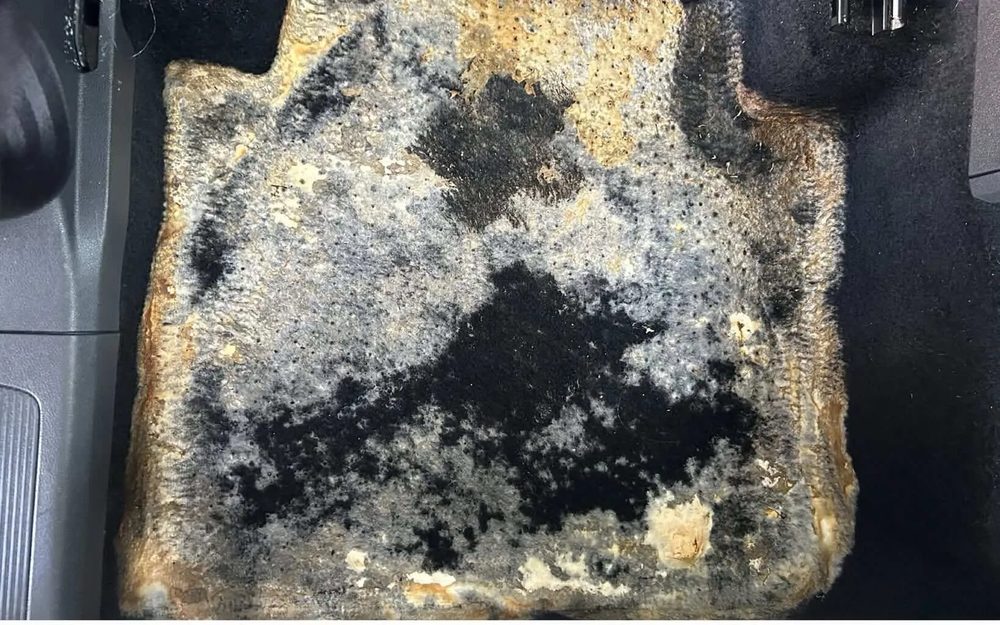 Before
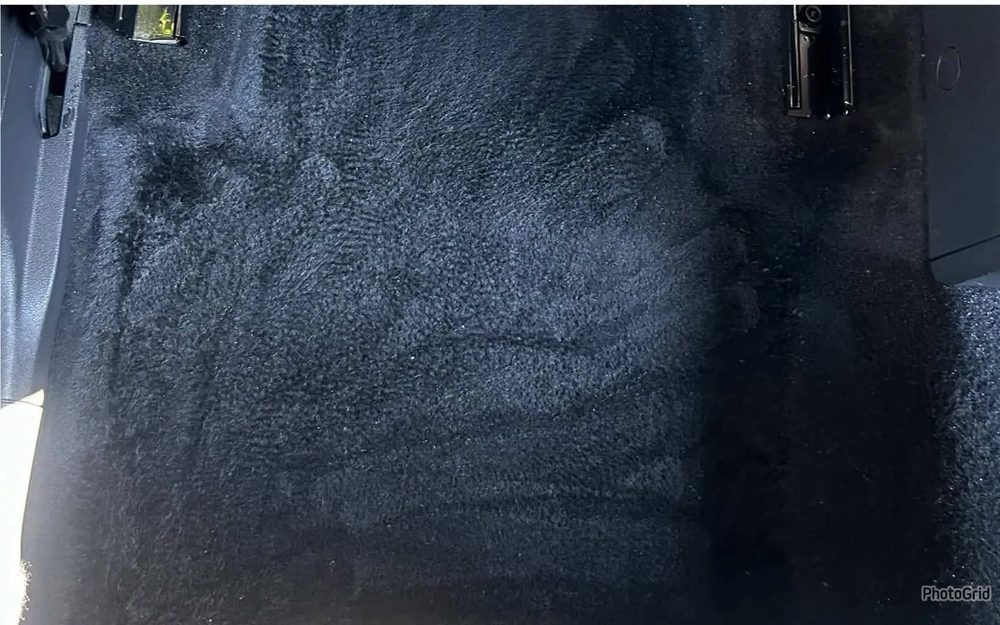 After
Floor Mat — Heavy Colony Growth
A carpeted floor mat with heavy black, brown and white mold colonies. Floor mats and the carpet under them take the wettest items, such as boots, towels and spills, and they stay wet the longest. We extract hard, dry the area, treat it with Concrobium and check the padding under it. This pattern is common in Dania Beach cars that carry wet work gear.
100% Satisfaction.
Written. No exceptions.
If the result doesn’t meet our standard, or yours, we come back and redo it at no charge. No forms to fill out, no arguing over what “counts.” The guarantee is in writing before we ever touch your vehicle.
Request Mold Removal in Dania Beach · From $549
Fill this in once and send it. We get your address, vehicle, and the situation all in one message, no phone tag.
Rating
Detailed
Response
Three steps from musty to fresh,
however long your shift ran.
No drop-off. No waiting. We come to Dania Beach.
We come to you in Dania Beach,
from Taylor Lane to the pier and Federal Highway.
Mobile service: home, office, condo, or marina. No drop-off, no travel fee.
Not seeing your city? Ask us — we likely cover it.
Canal air, wet work gear and shut cabins,
the mix behind most Dania Beach mold calls.
Dania Beach stands about ten feet above the sea between the Atlantic, the Dania Cut-Off Canal and the airport, so damp air is constant, and a car shut up for a few weeks is already at risk. Left untreated, what starts as a musty smell becomes a real health issue for the next person who drives the car. DShine's Concrobium Mold Control and ozone process address the cause, not just the symptom, backed by $2M insurance and a written guarantee. Mold doesn't need much to get started, any trapped moisture inside a closed cabin is enough given South Florida's humidity. The source is almost always one of four things: a clogged AC condensation drain letting water pool silently on the floor pan, a failed door or window seal letting rain in, a clogged sunroof drain, or the car simply sitting unused for two or more weeks without the AC running. Here the cause we meet most often is wet work gear and damp clothes left in a closed cabin, then a car parked shut in an apartment lot or driveway with no A/C running.
Dania Beach areas we serve,
from the Taylor Lane yards to the Dania Beach Pier.
From the Taylor Lane yards to the beachside pier and Federal Highway: how each Dania Beach area shapes mold risk and how we work there.
Taylor Lane Shipyards — Taylor Lane runs beside the Dania Cut-Off Canal, about a mile from Port Everglades by water, and holds refit yards and a do-it-yourself boat yard. Cars here sit through long workdays near hoses and pressure washers. We usually treat at your home, or at the yard when the site manager approves it.
Dania Beach Pier — The fishing pier on North Beach Road draws anglers early and late, with metered lots right by the sand. Wet gear, coolers and beach towels go straight into the cabin, and salt spray wears on door seals. We work at your home or office, not in the public beach lots.
Dania Beach Marina — The marina at 101 North Beach Road has 120 wet slips for boats up to 65 feet. Boat owners carry wet lines, fenders and towels in trunks and back seats. We can work at the marina only when management allows it, otherwise your home address is simpler.
Mizell-Eula Johnson State Park — The A1A park, formerly John U. Lloyd Beach State Park, has two boat ramps and a manatee sanctuary at Whiskey Creek. Trucks and trailers come home wet from the ramps. We do not work inside the park, so we treat the vehicle at your driveway or apartment lot.
Dania Pointe — This 102-acre mixed-use district along I-95 combines shops, restaurants, offices and apartments. Residents and workers park in shared lots and decks, with no garage door to shut. Cars sit idle on weekdays and collect condensation, so we coordinate with property management.
Antique Row on Federal Highway — Federal Highway, near Dania Beach Boulevard, is lined with antique shops and older storefronts, a trade that began in the 1940s. Shoppers and dealers load SUVs and vans with blanket-wrapped furniture and park on the street, so a damp load can leave a cabin musty.
Airport Edge near FLL — Fort Lauderdale-Hollywood International Airport covers 1,380 acres and is bounded by Fort Lauderdale, Hollywood and Dania Beach. Residents nearby often leave cars for days between trips and work shifts. A vehicle left shut with a damp bag is the classic case.
Don't see your area? Ask us — we likely cover it.
Dania Beach car mold,
answers for shift workers, boat people and everyone else.
Tap any topic to read the full breakdown.
Dania Beach covers 8.35 square miles, 0.52 of them water, and stands about ten feet above the sea, with the Atlantic on its east edge and Fort Lauderdale-Hollywood International Airport to the west. The Dania Cut-Off Canal, Whiskey Creek and the Intracoastal Waterway are all within a few miles of almost any driveway, so the air around a parked car is seldom dry.
The closest long-run rainfall record we could source is Fort Lauderdale's: close to 61 inches annually, spread over roughly 131 days with measurable rain, with June, August, September and October the wettest months. In that pattern a cabin does not need a flood to get wet. A few damp-shoe trips a week and one window left cracked during an afternoon storm are plenty.
What turns weather into mold is the shut-up hours that follow. Heat and humidity stay trapped in a closed vehicle, and the carpet padding and the A/C evaporator hold water long after the surface feels dry. Once moisture is down in the padding, spores can begin growing within 24 to 48 hours, which is why a fast check after any soaking beats a deep clean weeks later.
Work trucks and vans lead the list: crew-cab pickups and cargo vans that run between a boatyard, a supply counter and a job site, with wet rope, rags, boots and coolers riding on the floor. The cab collects water, sanding dust and cleaning residue in a way a commuter sedan never does, and rubber mats hide how wet the carpet underneath has become.
Next come the daily commuters on the airport and port side of the city. The airport covers 1,380 acres and Port Everglades about 1,440, and both touch Dania Beach, so plenty of residents drive small SUVs and four-door sedans to shifts that start before dawn or end late at night. Those cars go from a work lot to an apartment lot with little time to air out.
Family SUVs, minivans and older used cars fill out the rest. The older ones often carry a tired door seal or a half-clogged A/C drain that was already there when the owner bought them. The visible pattern is similar across all of them: damp padding first, then fuzz along seat seams, then a musty smell the owner stops noticing around the third week.
Apartment and condo spaces: the Census Bureau's latest QuickFacts put owner-occupancy in Dania Beach at 46.8 percent, so many residents park in shared lots with no garage door to close. Airflow is better than in a sealed garage, but a car parked beneath a canopy or next to a sprinkler head stays wet, and a spare vehicle that moves once a week builds condensation in the cabin.
Houses with a carport or single garage: common away from the beach. A carport keeps the sun off but not the rain, so a worn door seal still drips onto the floor, while a garage turned into a storeroom squeezes the car against boxes and leaves the air in the cabin standing still for days at a time.
Yard and workplace lots: marine businesses along Taylor Lane and the Dania Cut-Off Canal have paved and gravel space where employees leave cars through long shifts, close to hoses, pressure washers and open water. Cars there pick up fine dust and wet mats. We work at a yard only with the site's permission, and often it is simpler to treat the car at home.
Beachside, marina and airport parking: metered lots by the Dania Beach Pier and the marina on North Beach Road leave cars in sun and salt spray, and wet towels and swim gear go straight onto the seat. Airport and cruise parking is the reverse: a car shut for a week with whatever was left inside, such as a damp umbrella, a wet bag or a coffee spill, and no airflow.
June, the rainiest stretch: Fort Lauderdale's long-run average for June is about 9.5 inches, the highest of the year. Storms come most afternoons, work gear is wet every day, and cars get closed up still carrying moisture. Windows that are cracked for ventilation are also the ones that get soaked by a sudden downpour while the owner is inside at work.
August to October, peak storm weeks: the Atlantic season stretches from early June to the end of November, and the stormiest weeks cluster from mid-August into October. Vehicles get pushed into garages and carports at the last minute, doors stay shut for days, and slanting rain finds worn sunroof drains and window seals. August, September and October each average roughly 7.4 to 8 inches in Fort Lauderdale.
November to January, holiday and cruise travel: the air turns crisp and dry, and that lulls people. Port Everglades handled about 4.8 million cruise passengers in fiscal year 2025, and some of those travelers leave a car at home or in a lot for a week. A damp bag or wet towel left on the floor can bring the car back musty even though it never rained.
February through April, the lighter-rain stretch: monthly rainfall in Fort Lauderdale drops to about 2.4 to 3 inches. Slower growth does not mean none. Water that soaked into padding during the summer sits there, and the first warm spell with the A/C switched on is often when the owner finally traces the smell to last summer.
We work where the car lives. For Dania Beach drivers that is a driveway, an apartment space, an office lot or, with the manager's permission, a yard or marina. Tell us when you are off and where the car will be. A treatment takes about three to four hours, so we plan around your shift and the place where the vehicle can sit undisturbed.
Apartment and condo lots add one step. Before we arrive, check with management whether work on a vehicle in a shared space is allowed, and whether we need a guest pass at the gate. The ozone stage needs the car left alone, and we confirm the spot with you so the vehicle is not in a busy lane or beside a unit's open windows.
Workplace and yard visits need written or verbal approval from whoever runs the site, and we ask for that detail up front. If the lot is a hard place to work, a short move to your home or a friend's driveway is usually easier on everyone. You do not need to stay with the car, only to be reachable and to meet us for keys and the final walk-through.
1. Wet work gear left in a closed cabin: boots, rags, towels, rope, wet bags and coolers on the floor or seat. Among Dania Beach drivers who work around water, this is the one we meet most. Water soaks into the carpet and the foam below it, and the car then sits shut through the next shift or a hot afternoon with the A/C off.
2. Door seals, window seals and sunroof drains: summer storms in this area are sudden and heavy, so a seal that is just a little tired is enough. Water collects in the footwell or under the rear seat, often on one side only. Owners rarely notice until the smell appears, because the surface carpet can feel dry.
3. A clogged A/C evaporator drain: when the drain line plugs, condensate pools beneath the dash or on the passenger side, and the musty smell gets stronger as soon as the fan starts. It is common in older commuter cars that spend long hours idling in traffic and in lots, and it keeps feeding the problem until the line is cleared.
4. Closed-up stretches and spilled water: a week at the airport, a cruise from Port Everglades or a work rotation with the cabin sealed and no air moving, plus food and drink spills in family cars and the occasional street flooding after an extreme downpour, such as the April 2023 storm that closed the airport next door.
The first half hour: we meet you, or whoever holds the keys, at the place you named and agree on the exact spot where the car will stay. In an apartment lot that means a clear lane and nothing parked close beside it. We photograph the problem areas, pull the mats and look under the seats before any product touches the car.
The long middle: this is where most of the three to four hours go. Surfaces get a HEPA pass, then decontamination, scrubbing, steam and extraction, and wet carpet is given time to dry before Concrobium is applied. Leather is handled on its own, with gentler settings, so the finish survives.
The last stretch: the ozone machine runs in the sealed cabin, the doors open to air it out, the Meguiar's odor bomb goes in and we finish with a closing inspection. Before-and-after photos land on your WhatsApp, together with a short note on what probably let the water in: a seal, a drain, or how the car was loaded.
Is this mold or is it my job? People who work around hulls, paint and fuel often smell something odd in their car and cannot tell why. Work smells are sharp and strongest right after a shift, then thin out with open doors. Mold is damp and earthy, climbs when the fan starts and tends to leave speckles on seams.
What will it cost? $549 if the growth sits in one area, $749 if it runs throughout, and travel is included either way. A few photos, or a line about the problem, get you a first read in under two minutes, and the exact figure is locked in before the first product is opened.
Can you work where I park, and do I have to stay? We come to your address, whether that is a driveway, an apartment lot or an office, and there is no need to stand guard. We only need the car, keys and a safe patch of pavement, plus the property manager's approval where one applies.
Will the smell return? If mold or mold odor returns within 30 days, we re-treat the car free. A repeat nearly always traces to the same leak or habit, which is why we point out the likely source during the visit and note it in the photo message that follows.
Odor Removal Detailing is the other service people weigh when the question is whether it is mold or only a stale smell. If the issue is true mold, the mold service covers it. If all that is left is a stale smell of fuel, smoke or food, the odor service can be the better fit.
For work trucks and older commuters, Engine Bay Cleaning is the usual extra. A truck that has spent years on gravel yard lots and wet roads collects grime under the hood, and when the interior is being restored it makes sense to bring the rest of the vehicle up to the same level.
Cars that park beside the pier and marina get sun, salt spray and the occasional squall on the paint every day, so Paint Correction and Ceramic Coating are the add-ons owners ask about once the cabin is fresh and the outside looks tired by comparison.
Watch for glass that fogs from within and clears slowly, a damp feel under the floor mats after rain, or a smell that appears for the first few minutes after you start the A/C and then fades. That last one is a classic early sign of a wet evaporator or damp padding near the vents.
Look at the seams and stitching on seats, the base of the seat belts and each door pocket, where dust and moisture meet. A pale powder, fine speckles or a faint shadow on leather or cloth can all be early growth. Tan or yellow staining beneath a seat cushion is a sign that water sat there for some time.
The earlier it is found, the smaller the area, the lower the service tier and the less there is to clean. If you spot any of these, take photos in daylight, with a flashlight held low across the seat to show texture, and send them over for a first read.
Cruise week: ships leave from Port Everglades, which borders the city, and the car stays home or in a lot. Empty the cabin of wet towels, wrappers and cups, since a single damp beach bag can seed the whole floor. Before parking, let the fan push outside air through the vents for several minutes so the coil under the dash is dry when the car goes dark.
A flight or a long work block: the same logic holds, and so does the rule about closed windows and a fully shut sunroof. If you can, park somewhere with a breeze rather than hard against a wall, and lift the mats so air can reach the carpet below.
The spare car: a vehicle that moves once a month is the one that grows mold. A cheap moisture absorber on the mat helps, and a neighbor who starts it and runs the air for ten minutes now and then helps more than most people expect.
A Dania Beach driveway or lot often holds a crew truck, a family car and a spare, each with its own habits. The truck takes on rinse water and boots, the family car takes juice and rain, and the spare takes nothing but time. They rarely fail for the same reason, so each is inspected separately and priced separately.
When two or more need work we order them by how far along the problem is, worst first, and book each for its own three- to four-hour block. Travel to your address is included every time. Send photos of all of them together and we will answer with a first read for each.
For a small marine business with a few crew vehicles, one vehicle at a time works well, so no one loses a whole fleet in a day. We agree on a quiet corner of the site, away from forklifts, deliveries and foot traffic, before we arrive.
What is covered: should mold or its smell reappear inside 30 days of the visit, we treat the car a second time at no cost. The guarantee is written, a complete satisfaction promise, and it sits alongside IDA certification and $2 million in liability insurance.
What usually causes a return in Dania Beach: a clogged A/C drain, a door seal that still admits storm water, or a habit such as leaving wet boots on the floor. If a likely culprit shows itself while we work, we say so plainly, so the repair can happen before the cleaning gets wasted.
What to do if it happens: message us the moment you smell it and send one photo. Week two is far easier to diagnose than week eight, and a short note lets us tell a repeat apart from a brand-new leak, such as a fresh soaking after one of the summer downpours.
A work truck with vinyl seats and rubber flooring is not the same job as a SUV with leather seats. Hard surfaces are easy to sanitize, but the carpet beneath the rubber mats, the foam under the seats and the cab headliner can still hold moisture. We inspect those hidden places first.
Older vehicles need a gentler hand. Brittle dash plastics, aged leather and seals that no longer seat well all react poorly to heavy scrubbing. On leather we follow the leather-safe protocol, with steam at controlled settings and the same Concrobium and ozone steps, and we flag parts that are failing so you know what to watch.
If a vehicle is a collector piece or a family heirloom parked in a Dania Beach garage, tell us when you book. We adapt the sequence and tell you what we find before we begin, because the right answer on a 15-year-old pickup may not be the right answer on a classic.
Empty it. Take out towels, boots, rope, umbrellas, bottles and every food wrapper. A single wet item left on the floor is how most closed-cabin mold starts, and it is the one step that costs nothing and takes two minutes at the curb before you lock up.
Dry it. Lift the floor mats, press a paper towel against the carpet and check the footwell with your palm. The surface can feel dry while the padding below is still wet, and that is where growth begins, usually under the front mats where shoes drip.
Air it. Let the fan push outside air through the vents for several minutes before you park, so the coil under the dash dries, then shut the A/C off and let the cabin breathe with the doors open for a minute or two, which also clears the stale air before the next drive.
Seal it. Shut the glass and the sunroof, check for leaves near the sunroof drain, and park where air can move, since a car under a thick canopy stays wet longer. If you will be gone two weeks or more, add a moisture absorber on the mat and ask someone you trust to run the car for a few minutes.
Week one: a damp patch on one seat or one section of carpet is a $549 job. Mold can begin within 24 to 48 hours of moisture, but at this stage it is usually still on the surface and in the top layer of padding, and a careful treatment can stay small.
Week three: growth has had time to follow the moisture along seams, under the seats and toward the vents. This is where owners start to notice the smell on every drive, and where the job can move toward the $749 tier, since more of the car now needs the same treatment.
Month two: in a rainy stretch the whole cabin may be involved, including the headliner and the ducts. Anyone sensitive to mold should ask a doctor about symptoms, since we treat cars and are not a medical service. The cheapest day to act is always the day you first notice it.
Dania Beach has a working waterfront: refit yards on Taylor Lane along the Dania Cut-Off Canal, a do-it-yourself boat yard and the marinas by the ocean, and plenty of trucks that serve them. A crew pickup runs hose-wet from the yard to a supply stop and back, with cooler, boots and bags tossed in the cab.
The cabin ends up with a mix: water, grit, sanding dust and the odd spilled drink. Rubber mats can hide wet carpet, and a truck that sits through a wet week with the windows cracked is worth a look. If you drive for a marine business, shop floor mats and wet gear should be the first thing you check.
We do not treat paint, solvent or fuel smell from your work, and we will say so when we inspect. If it is mold, the treatment fixes it. If it is a lingering work smell on clothing or gear, we tell you where it is coming from and suggest a cleaner storage habit.
$549: mold in one area, such as a single seat, one row of carpet or a single door panel, with the rest of the cabin clean. **$749:** growth throughout the vehicle, across seats, carpet, headliner and vents. Neither tier adds a travel fee for a Dania Beach address.
How the number is fixed: share a few photos or a line about the problem and you get a first read in under two minutes. Once we have looked over what you sent, the final price is settled before we start, so the figure you accept is the figure you pay, with no surprise add-on later.
If the car surprises us: should the car turn out to be in worse shape than the photos showed, we stop, tell you what we found and let you decide. We never quote low on the phone and raise the price once the doors are open, and no travel fee is added for a Dania Beach address.
The setting: a city about ten feet above the sea between the ocean, the canal and the airport, with Fort Lauderdale records showing about 61 inches of rain over some 131 rainy days a year. Mold can start within 24 to 48 hours once a cabin is wet and shut.
The usual suspects: wet work gear on the floor, tired door and sunroof seals, a clogged A/C drain and long closed-up stretches during trips and shift rotations. Work trucks, commuter sedans and family SUVs all turn up, and so do older cars with a seal that has seen better days.
The fix: Car Mold Removal at your address, from $549, or $749 when it is throughout, with the price confirmed in under two minutes and again before we begin. A written 30-day promise means a free second treatment if mold or odor returns, and photos of the car arrive by WhatsApp.
Why ozone: after the cleaning and the Concrobium step, an ozone machine runs inside the closed cabin. The gas drifts through the vents, the headliner and the foam padding, reaching places a cloth never will, and breaks apart mold spores and the compounds behind the smell.
Who stays away: nobody remains inside the vehicle during the cycle, and people and pets should keep clear of the car while it runs, which is simple to arrange once you know the timing. In an apartment lot or a shared drive we choose the spot with you ahead of time, away from open windows, play areas and the door of the next unit.
After it ends: the cabin is aired out completely, we close with Meguiar's odor bomb and one more look, and then we walk the car with you or message you. The all-clear comes from us, never earlier, and the photo pair, before and after, reaches you on WhatsApp.
Short answers,
for Dania Beach drivers who want a number first.
Add-ons Dania Beach clients book
Still deciding? Read: the complete mold removal guide · does insurance cover it? · why DIY mold removal fails.
Smell something off in your Dania Beach car? Get a price in 2 minutes.
Serving Dania Beach and all of Broward County. Fixed pricing, no travel fee. We confirm in under 2 minutes.
It Might Just Be an Odor Problem
If there's no visible mold growth yet, the smell alone is usually an Odor Removal Detailing case ($349 flat) — faster than full mold remediation ($549–$749). See which one matches what you're dealing with: