What a Davie Mold Job Includes
This is not a car wash. Car Mold Removal uses Concrobium Mold Control treatment, pH-balanced products, and machine assistance, the same process used in pre-sale preparations for luxury dealerships.
Why it matters for your health: Mold in a vehicle is a different exposure than mold on a wall at home. With the AC recirculating, everyone inside is breathing concentrated spores for the length of the drive. The EPA and CDC both link mold exposure to respiratory irritation, allergic reactions, headaches, and worsened asthma symptoms. Children, older passengers, and anyone with a compromised immune system typically react faster and more severely than a healthy adult would. By the time the smell is noticeable, spores have usually already spread through the HVAC system into every vent in the cabin.
Curious what actually happens during the visit? Tap through our real 11-step process below to see what we do at each stage and why it matters.
What every Davie mold job gets you
Most detailers in Davie charge less. Here’s exactly what you gain — and what you risk — with each choice.
| DShine DetailsFrom $549 · travel included | Avg Davie Detailer$149 – $199 | |
|---|---|---|
| Industry certificationsIDA, Koch Chemie, Meguiar’s, 3M, Symplex, XPEL | ✓6 verified | —0 credentials |
| $2M liability insuranceWe cover any damage — in writing | ✓ | —Often uninsured |
| Deionized water systemZero mineral residue, no water spots | ✓ | —Tap water, water spots |
| Fresh microfibers per vehicleNo cross-contamination between jobs | ✓ | —Shared towels, swirl risk |
| Mold-specific chemistry onlyConcrobium, Benefect & Meguiar’s, no harsh acids | ✓ | —Industrial degreasers |
| Before & after photosSent via WhatsApp on completion | ✓ | —No documentation |
| 100% written satisfaction guaranteeReturn & redo at no cost if unsatisfied | ✓ | —No written guarantee |
| Travel to your address — $0Home, office, condo — no drop-off | ✓ | Sometimes adds fee |
DShine vs. any other detailer
in Davie, Broward County
Three things most detailers won't tell you. We put them in writing.
 Since 2018
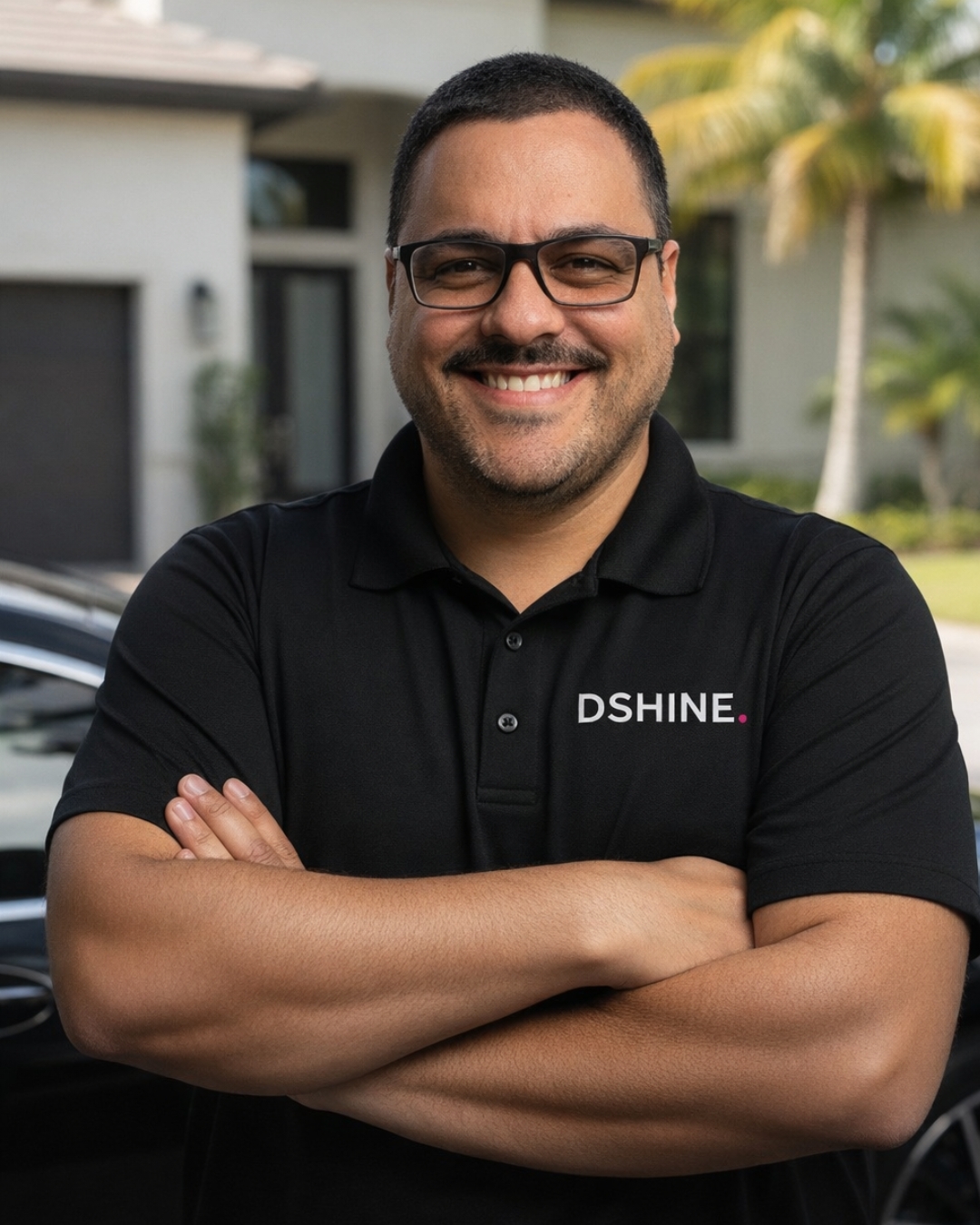
With more than 20 years of hands-on experience in the automotive care industry, Evelio launched DShine Details in August 2018 with one van and zero shortcuts. For the first six months he slept in the van to keep costs down and standards up. Today DShine runs 7 certified vans across Miami-Dade, Broward, and Palm Beach, and the commitment hasn't changed. Every vehicle is treated as if it were his own.
What clients say
in their own words.
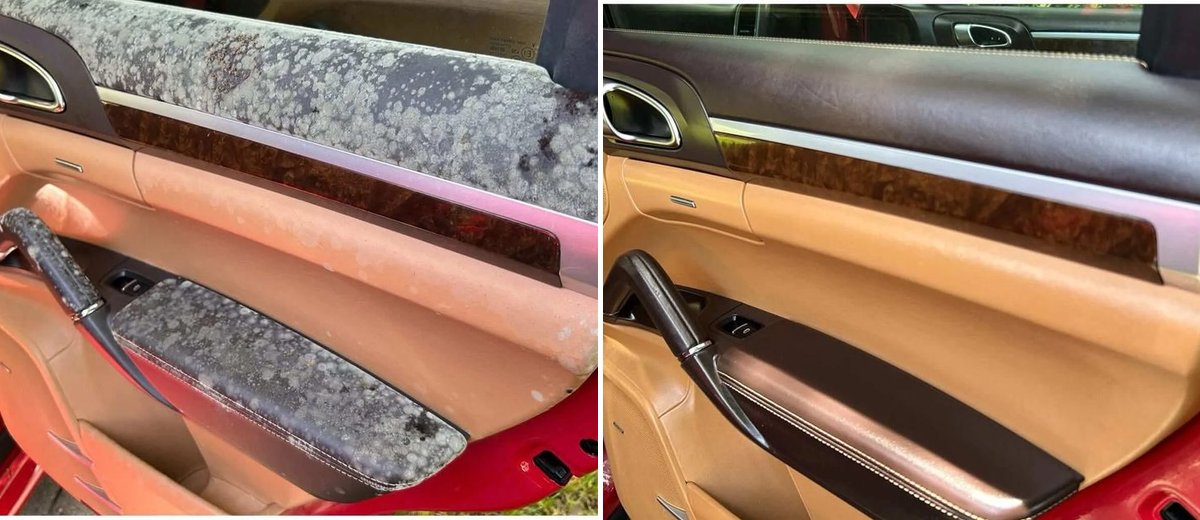
Before & After: Mold Removal We've Actually Done
No stock photos. These are real DShine mold removal jobs across South Florida, the same 11-step process and chemistry used on every Davie appointment.
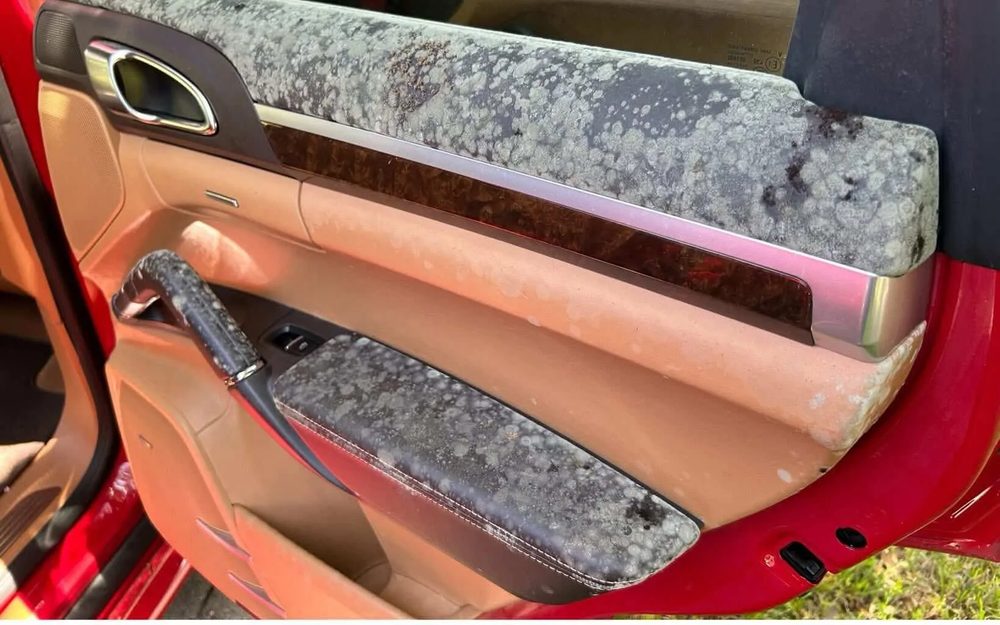 Before
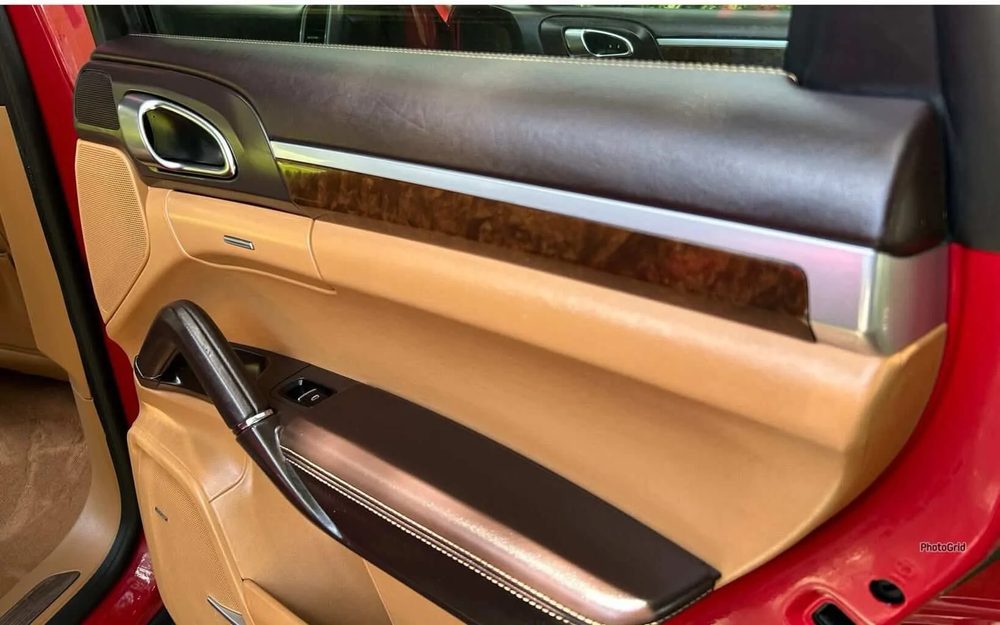 After
Porsche Cayenne — Door Panel & Armrest
Mold spread across the tan leather door panel and armrest, right up to the wood trim. On leather like this we use the leather-safe protocol: controlled steam and extraction, Concrobium on the surface and ozone for the cabin air, so the finish is not stripped. In Davie, this pattern fits a premium tow SUV that spends days closed up beside a barn or under trees, where the cabin never gets a chance to dry.
 Before
 After
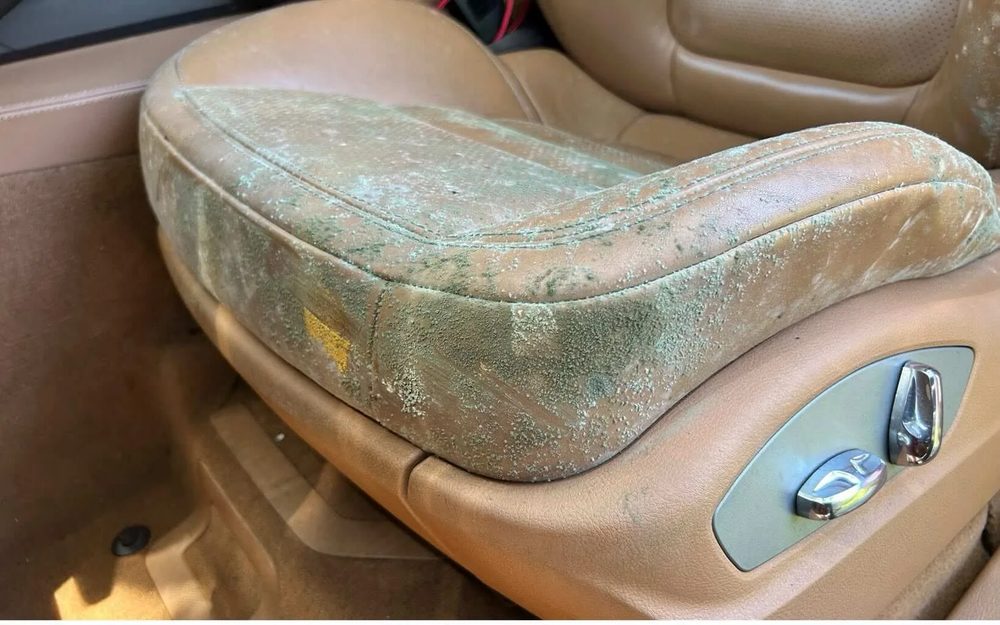
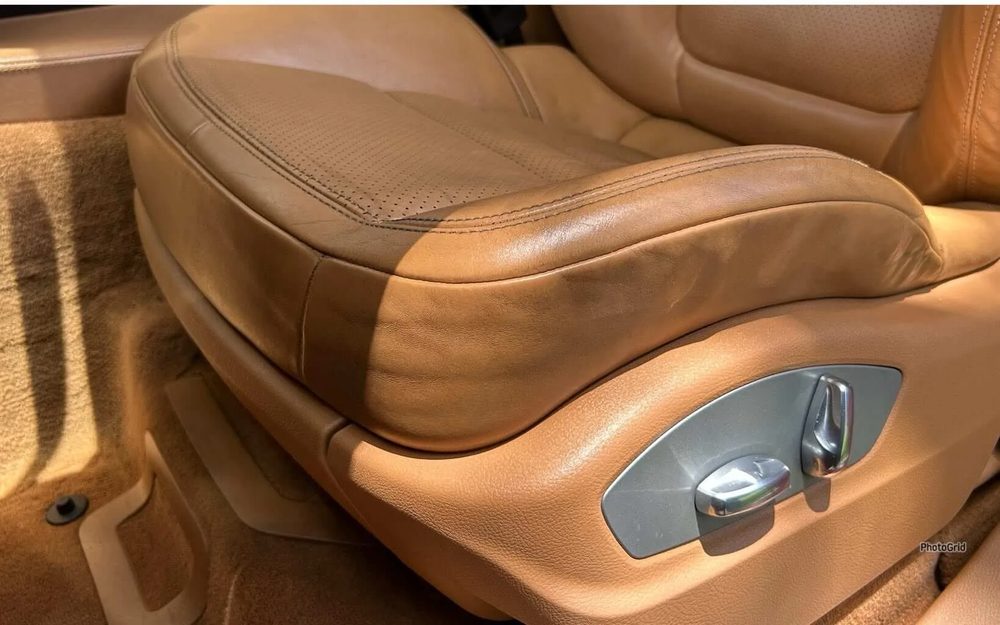
Leather Seat — Green-Blue Mold
Green-blue mold growing across a tan leather front seat bolster. This is established growth, and it can reach into the stitching and the foam under the leather. We treat it with the leather-safe protocol, then Concrobium and ozone for the cabin air. A truck that carries damp tack or sits in a closed cab through wet season afternoons in Davie is the kind of setting where a bolster like this develops.
 Before
 After
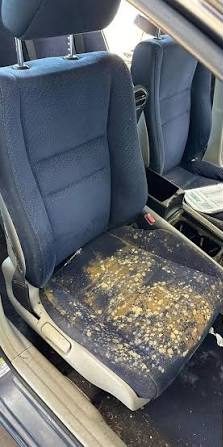
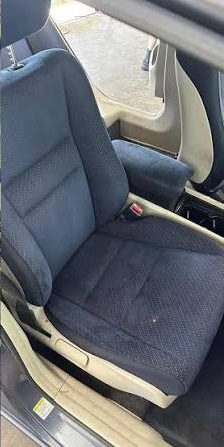
Cloth Bench Seat — Stain Residue Underneath
A dark blue cloth sedan bench with the cushion lifted, showing tan and yellow mold-stain residue on the underside. The top of a seat can look clean while the bottom stays damp, so we lift and inspect, then use steam and extraction to pull moisture from the foam before Concrobium and ozone. In Davie, hay chaff and spilled drinks that slip under a bench are an obvious way for this to start.
 Before
 After
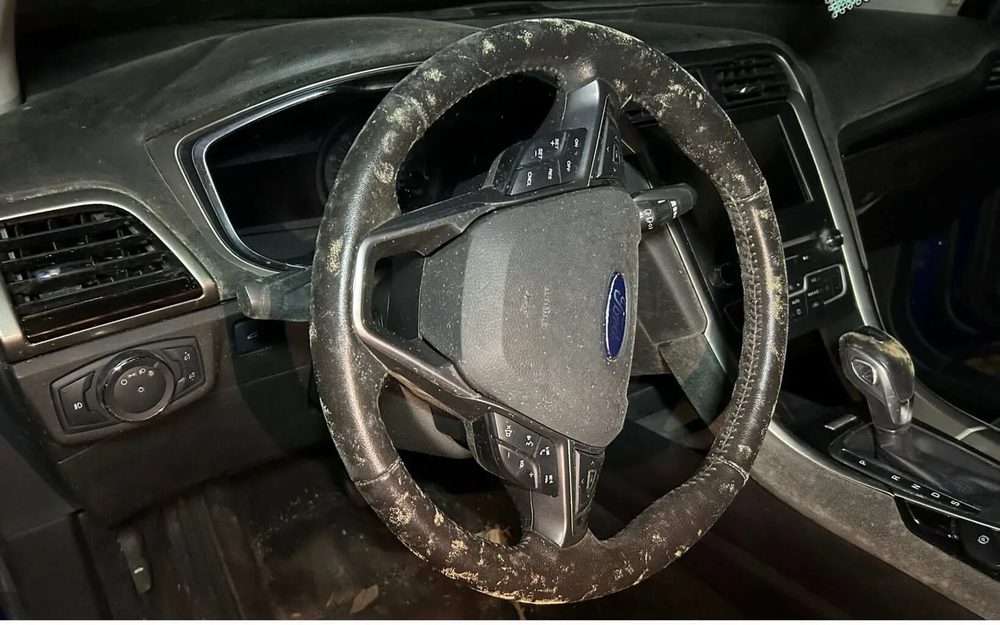
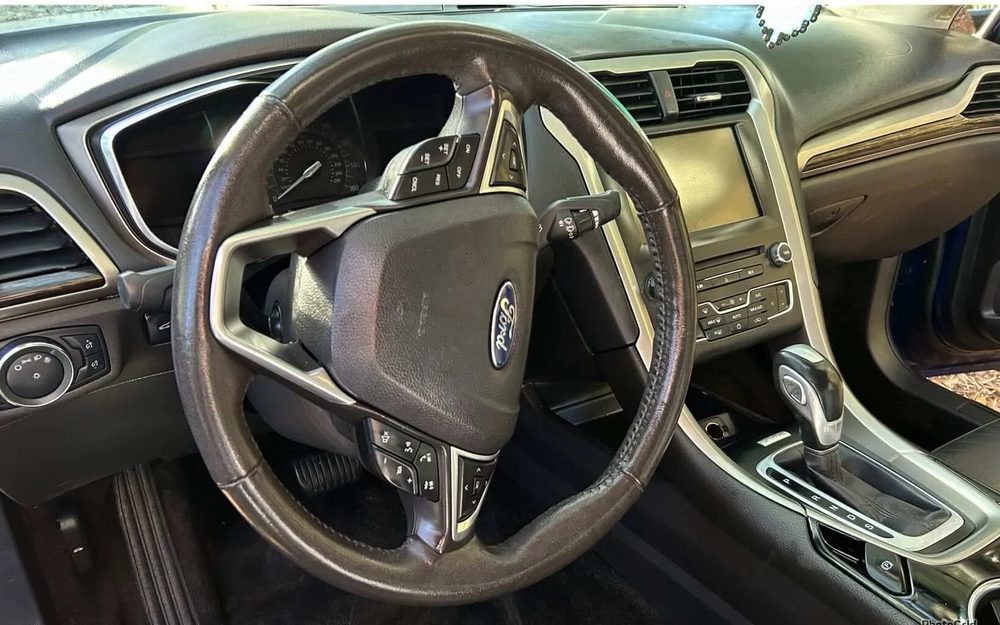
Steering Wheel, Dash & Vents — Grey-White Bloom
A Ford sedan interior with grey-white mold bloom on the steering wheel, dash and vents. Hard surfaces get wiped and steam-cleaned, and the vents get special attention, since spores travel through the A/C. The pattern appears after a vehicle sits closed up with warm, humid air, which describes plenty of Davie cars parked outdoors between afternoon storms through the wet season.
 Before
 After
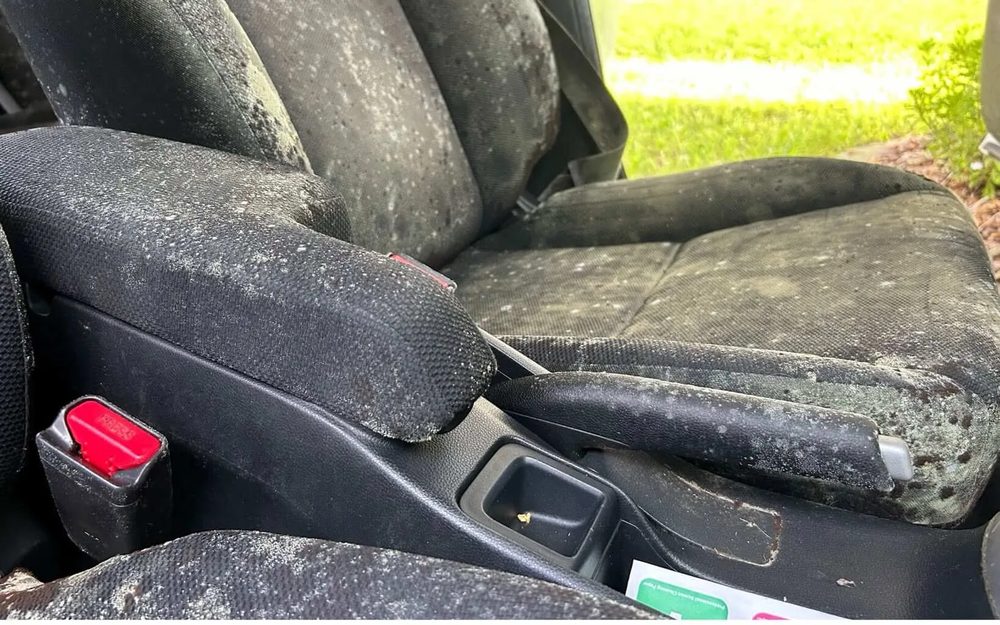
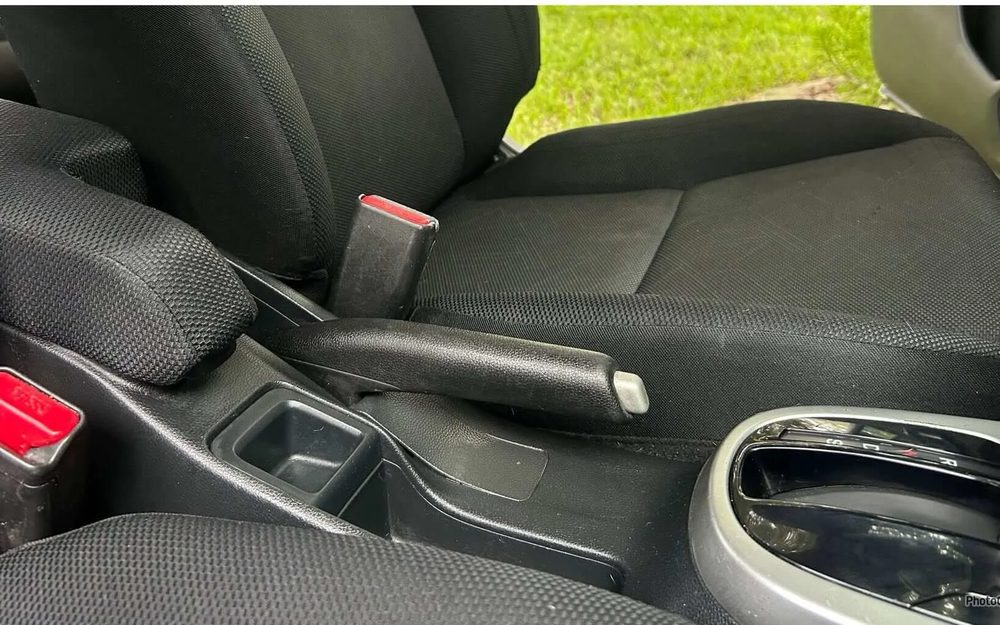
Cloth Driver Seat & Console — Mold Bloom
A black cloth driver seat, armrest and console covered in grey-white mold bloom, with green lawn visible outside. Cloth takes steam and extraction well, and the console seams are cleaned by hand, then Concrobium and ozone finish the job. Outdoor parking beside grass or pasture is common in Davie, and a cab that stays closed beside damp ground often ends up looking like this.
 Before
 After
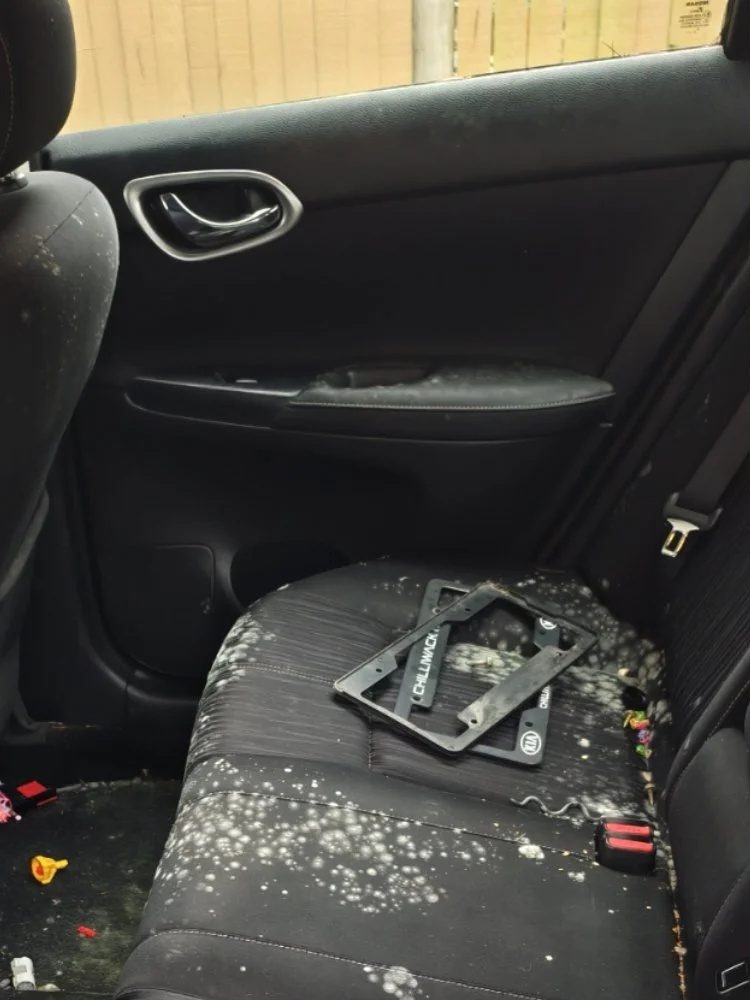
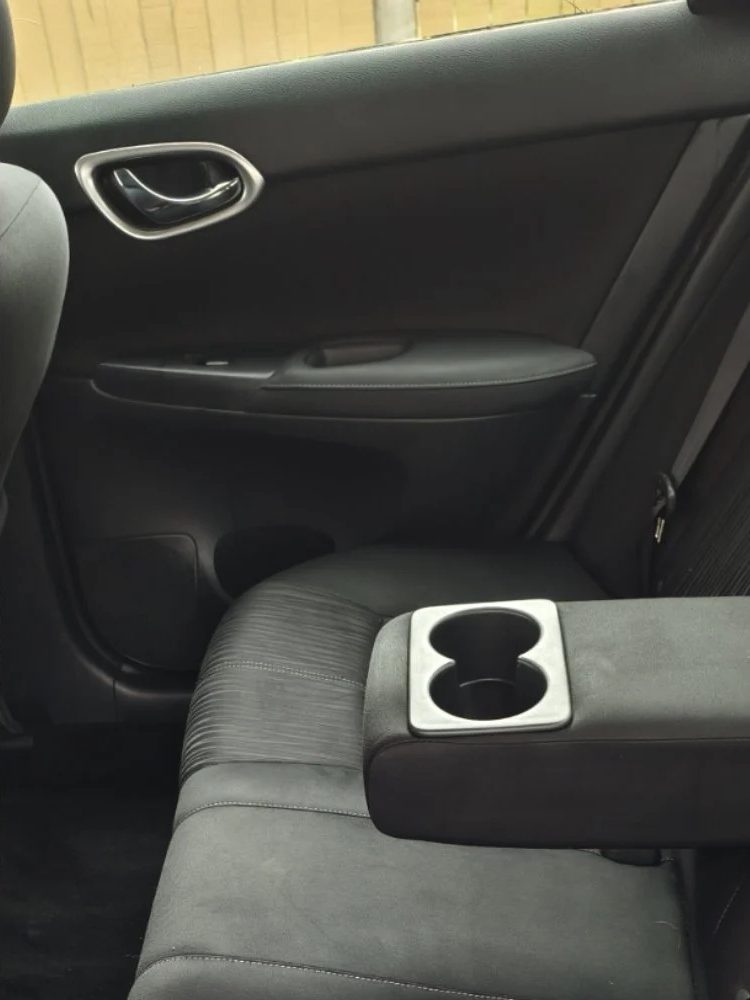
Rear Seat & Door Panel — White Mold Spots
A black sedan rear seat and door panel with white mold spots on the cushion, loose debris and a license plate frame sitting on the seat. Loose items on a rear seat hold moisture and give mold something to feed on. We clear the seat, HEPA vacuum the debris, steam and extract the cushion and treat the door panel. Davie rear seats often collect gear, which is why a rear bench is a frequent trouble spot.
 Before
 After
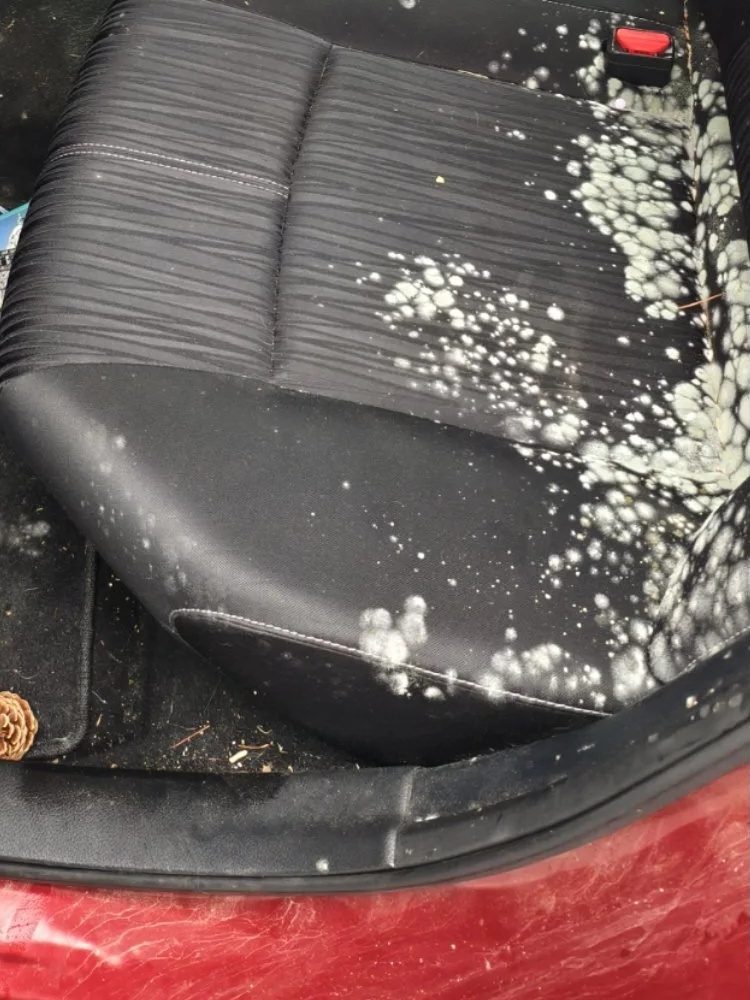
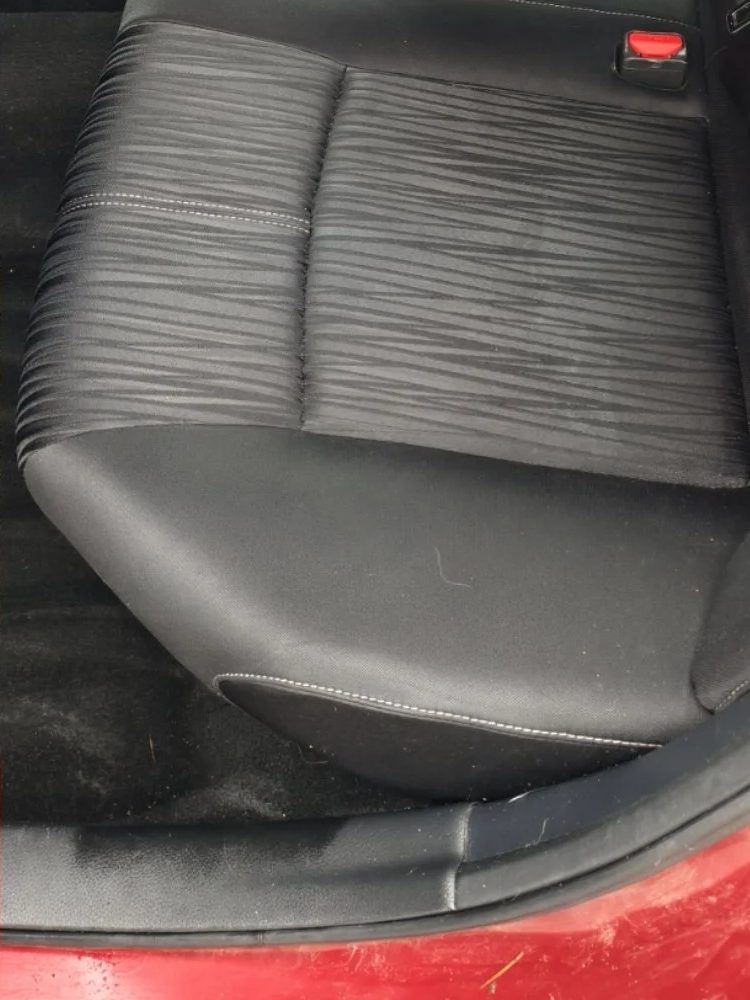
Black Cloth Seat — White Speckled Mold
A black cloth seat with white mold speckles, with the red car body visible below the window. Speckled growth like this is usually an early or moderate stage, and it is best treated before it spreads into the foam. We vacuum with HEPA filtration, steam and extract, then apply Concrobium and finish with ozone. In Davie, a window seal that lets in storm water is a common way for it to start.
 Before
 After
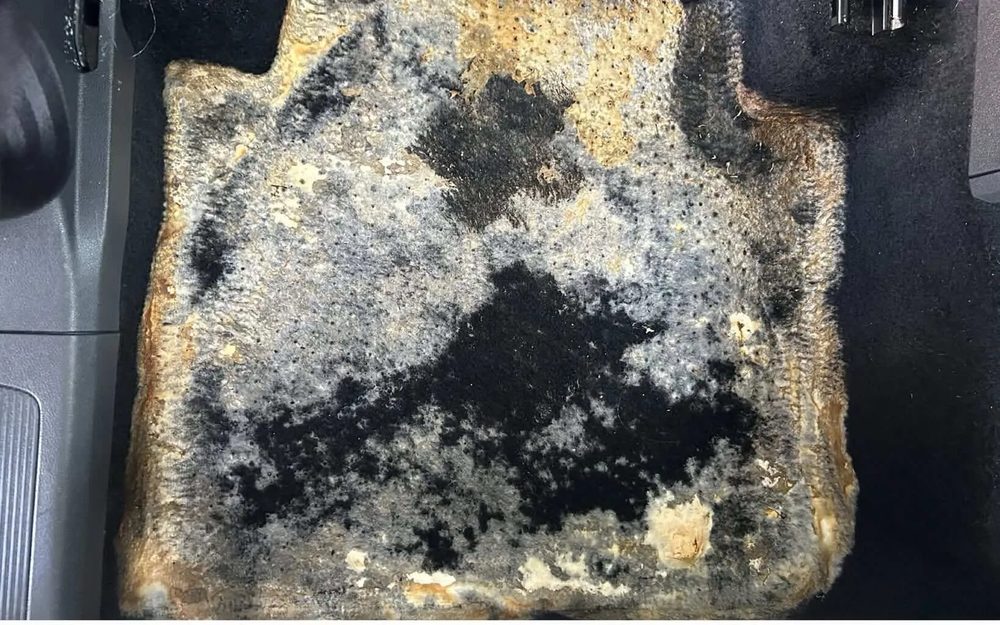
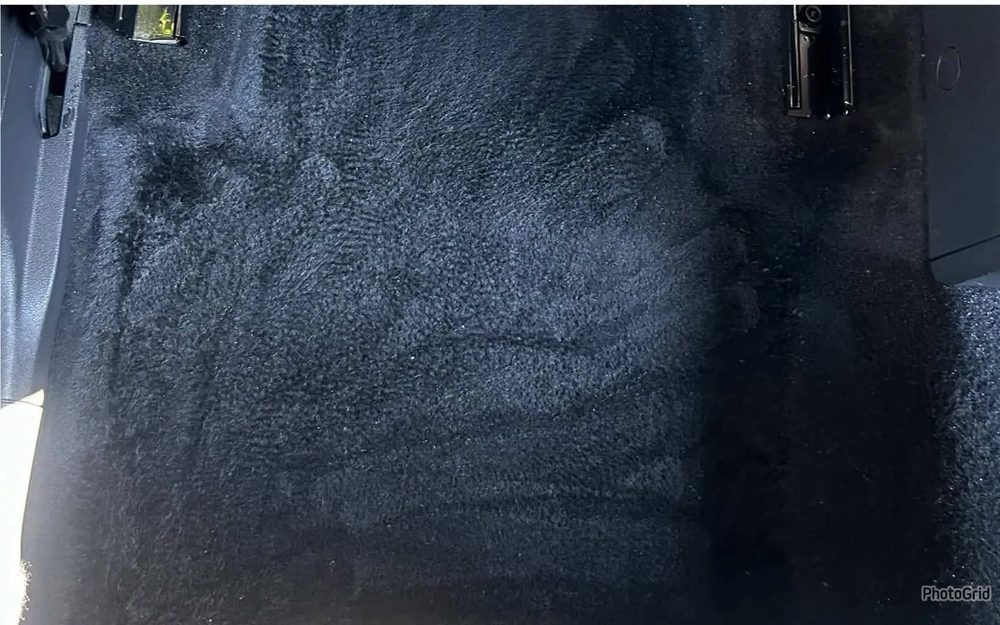
Floor Mat — Heavy Colony Growth
A carpeted floor mat with heavy black, brown and white mold colonies. Floor mats are where wet boots, spilled water and debris end up, so they often show the worst growth. We remove the mat, treat it and the carpet beneath it, and check the padding under it. For Davie work trucks, this pattern is typical: wet boots and chaff on a mat in a closed cab.
100% Satisfaction.
Written. No exceptions.
If the result doesn’t meet our standard, or yours, we come back and redo it at no charge. No forms to fill out, no arguing over what “counts.” The guarantee is in writing before we ever touch your vehicle.
Request Mold Removal in Davie · From $549
Fill this in once and send it. We get your address, vehicle, and the situation all in one message, no phone tag.
Rating
Detailed
Response
Three steps from musty cab to clean,
and we come to the barn, yard or lot.
No drop-off. No waiting. We come to Davie.
We come to you in Davie,
from the Bergeron Rodeo Grounds to the NSU campus.
Mobile service: home, office, condo, or marina. No drop-off, no travel fee.
Not seeing your city? Ask us — we likely cover it.
Hay, wet tack and low, damp ground,
the moisture mix in a Davie work truck.
Davie sits about 7 feet above sea level, with canals, pasture and tree cover that hold moisture, so a work truck's cabin rarely dries by itself after a damp haul. Left untreated, what starts as a musty smell becomes a real health issue for the next person who drives the car. DShine's Concrobium Mold Control and ozone process address the cause, not just the symptom, backed by $2M insurance and a written guarantee. Mold doesn't need much to get started, any trapped moisture inside a closed cabin is enough given South Florida's humidity. The source is almost always one of four things: a clogged AC condensation drain letting water pool silently on the floor pan, a failed door or window seal letting rain in, a clogged sunroof drain, or the car simply sitting unused for two or more weeks without the AC running. In Davie the cause we meet most is organic debris: hay chaff, wet shavings and damp saddle pads left on a mat or bench seat in a closed cab, which feeds mold faster than spilled water alone.
Davie neighborhoods we serve,
from Orange Drive to Pine Island Ridge.
Rodeo grounds, equestrian trails, campuses and canals: how each Davie area changes mold risk and how we work there.
Downtown Davie Western District — The Bergeron Rodeo Grounds sit at the corner of Davie Road and Orange Drive in the town's western-themed downtown. Vehicles here are parked at shops, offices and homes, and events at the grounds can bring heavy truck and trailer traffic through the same streets. We schedule around busy periods and coordinate access with whoever manages the lot.
Orange Drive — The Linear Park Trail runs 9.3 miles along Orange Drive and the South New River Canal, linking most of the town's equestrian parks. Housing along the corridor ranges from horse-friendly lots to subdivisions, so a truck may be parked beside a barn, on grass or in a garage. We ask about gates and where the vehicle sits.
Nova Southeastern University — NSU's main campus covers 314 acres in Davie, and students, faculty and staff park in surface lots and nearby apartment complexes. Cars here often sit outdoors for days under sun and sudden storms, so seals and drains do the work. We treat vehicles at your address, with permission from whoever manages the lot.
Robbins Lodge Area — Robbins Lodge & Open Space Preserve covers 160 acres at 4005 Hiatus Road, with equestrian trails and a pole barn equestrian center. Properties around the preserve are often larger lots, where gates, long drives and trucks that haul feed and tack are common. We confirm the gate code and a firm spot to set up in advance.
Oakhill Park Area — Oakhill Equestrian Park, at 3100 SW 130th Avenue, offers a round pen, arena, wash racks and horse trailer parking, and the 11.8-mile Oakhill Park Trail connects it to Robbins Lodge. Tow trucks and SUVs often return from a ride with wet gear and sweaty pads, which is a classic setup for a damp cab.
Flamingo Road & Flamingo Gardens — Flamingo Gardens, at 3750 S. Flamingo Road, is a 60-acre botanical garden and wildlife sanctuary established in 1927. Wherever tree cover is heavy along the Flamingo Road corridor, shade and leaf litter keep roofs, door seals and cowl drains wet long after the rain stops, so a car parked there can take on water quietly. We check those first.
Tree Tops Park & Pine Island Ridge — Tree Tops Park, a Broward County park, has an equestrian parking area with tie outs and a wash stand, and the Pine Island Ridge Trail starts there and passes the highest natural point in Broward County at 29 feet. Riders leave rigs parked for hours while on the trail, which gives a closed truck cab time to heat up and trap moisture. We coordinate with owners who live nearby.
Don't see your area? Ask us — we likely cover it.
Davie car mold,
answers for horse country and campus drivers.
Tap any topic to read the full breakdown.
Measured across 35.76 square miles, of which only 0.87 is water, Davie sits roughly 24 miles north of Miami at an elevation near 7 feet. No weather station is in town, so the closest long record is Fort Lauderdale: about 61 inches of rain per year on its 1991 to 2020 normals, May through October as the wet stretch, and 9.55 inches in June alone.
This is not a beach town, so salt air is not the story. The ground is low and wet instead, canals such as the South New River Canal run alongside Orange Drive, and pasture, barns and tree cover hold moisture long after a storm has passed. A vehicle parked beside any of that begins every morning in humid air. Even a short pasture drive after rain leaves the carpet wetter than a highway commute does.
What turns humid air into mold is what a truck carries into the cabin. Hay is known to grow mold once its moisture rises above roughly 14 to 15 percent, and the chaff, shavings and damp saddle pads that ride in a Davie work truck are the same kind of organic material. Add a shut door and a few warm hours, and the germination window is 24 to 48 hours.
Crew-cab pickups lead by a distance. The cab of a farm or ranch truck is where feed sacks, tack bags, wet boots and gloves ride, and the rear bench and floor mats take most of the damage. Growth often starts in the footwell behind the driver, under whatever was dropped there and not lifted again. Trucks that follow the Linear Park Trail corridor to trailheads often bring in sand and wet leaves as well.
Tow vehicles come next, the trucks and large SUVs that pull horse trailers to shows and trail rides. At the other end of town we meet the used sedans and compacts that belong to university students, often parked outdoors, driven irregularly and carrying gym bags, takeout containers and a door seal that has seen better days.
Then come family SUVs from the subdivisions and the occasional leather-trimmed car whose owner lives on acreage. We treat vehicles, so if what you have is a trailer or a horse van, send photos and we will say honestly whether it is something we can help with. Wherever the growth is, we survey the whole interior before naming a tier.
Barn aisle or open-sided shed: a truck parked in or beside a barn breathes dust, hay chaff and stall air all day. Airflow is good, which helps, but organic dust settles on every surface, and a door left ajar during a quick feed run turns the cab into a pantry for spores that only need a little moisture to start.
Pasture grass, sand or a gravel pad: a vehicle parked on the lawn of a ranch-style property sits above ground that stays damp after storms, with irrigation adding more. Wet boots go onto the mats, the air at floor level stays humid, and the cabin never fully dries between chores. Under oaks, shade and falling leaves make it worse by keeping the cowl and door seals wet.
Closed garage at a house in town: a garage kept shut with no air moving keeps its humidity for weeks, and the vehicle driven least, often the spare sedan, is the one that ends up on our list. A damp towel or a wet dog bed on the floor is all it takes, and a sealed cabin gives the spores a head start.
Apartment and campus lots: students and renters near the universities park outdoors in surface lots, often under a tree or beside a landscaped strip with sprinklers. The car gets sun and rain in turn, a seal fails slowly, and a car left through a break can have moisture sitting in it for weeks without anyone looking.
Rodeo and show calendar, February to November: the Bergeron Rodeo Grounds hosts the Orange Blossom Festival Rodeo in February, the Davie Pro Rodeo in June and September and the Southeastern Circuit Finals in November. Owners who compete haul tack and animals around those dates, and a hot, sweaty day often ends with wet pads and blankets thrown into the cab.
Wet season, May to October: rain arrives most afternoons, pastures stay soft, and boots carry that moisture into every cab. This is also when a clogged drain or a tired door seal gets exposed, because the truck takes in water on a schedule instead of once. Hurricane season, June 1 to November 30 with a peak around September 10, adds shut-up garages and forgotten windows, and most of our work lands in these months.
Semester breaks: student cars are often parked and left through summer and winter breaks, and the owner may be a plane ride away. Three or four weeks in a lot with a small leak or a damp bag on the floor is enough, and the student returns to a smell that was not there in May.
Cooler, drier months, November to April: comfortable weather lowers the risk, though not to zero. A truck used daily tends to dry itself out, so the cases we see now are usually a leak that began in the fall or a vehicle that sat unused while its owner was away at a show.
Many Davie properties sit behind a gate or at the end of a long drive, so we ask for the gate code or a name to call at arrival. Tell us when you book where the truck usually sits, whether the ground is firm, and where any dogs or horses will be. We would rather settle that on the phone than at the fence.
We work from your driveway, yard or barn apron, provided every door can open and air can move through the cabin. Animals should stay well clear of the vehicle during the ozone step. If a horse is tied near the spot we had in mind, we agree on a different one before we start.
For a vehicle at a business, a feed store lot or a campus, we need the go-ahead of whoever manages that space. Give us the lot, the row or level and a contact, and we will fit around that property's rules. Nobody has to wait beside the car unless access demands it. Rodeo and arena event days can make parking tight, so we pick quieter times when we can.
1. Hay chaff, shavings and feed ground into the carpet: the leader in this town. These are organic materials, so mold has food as well as water, and they work their way under floor mats and into seat seams where a car-wash vacuum never reaches. Once a little moisture arrives, growth is quick and deep.
2. Wet tack, blankets and boots: saddle pads, girths, horse blankets and muddy boots are damp for hours after a ride and often get tossed into the cab. If the truck then sits shut overnight with the A/C off, that moisture goes into the floor padding and upholstery, and the growth shows up days later.
3. Drains that cannot drain: the cowl drains under the windshield, the sunroof drains and the A/C evaporator drain all clog with leaves, pollen and dust. The result is a wet footwell or a damp evaporator box, and a sour smell for the first half minute after the A/C starts.
4. Spills, animal moisture, then open windows: water jugs, supplements, a dog that rides along after a swim in a canal, and a window cracked before an afternoon storm all soak seat foam, while the fabric on top may look dry. Barn smells such as urine or manure are a separate issue from mold, and photos help us tell the two apart.
We meet at the gate or at the barn road, within the arrival window you picked. The van goes on level ground with room to swing every door wide, and then we circle the cab with you, photographing the footwell, the seat seams, the headliner and the vents. The final price is set only after you have seen what we saw, and no product leaves the van before that.
After the walk-through come the eleven steps, in a fixed order. Inspection and HEPA vacuuming open the job; Benefect, deep cleaning, steam, extraction and drying fill the middle; Concrobium, ozone, a Meguiar's odor bomb and a last check close it. Where a truck has hauled feed, the opening vacuum is the slowest part, since chaff packs tight under the seat rails. Plan on a half day, three to four hours.
A set of before and after shots lands on your WhatsApp, with a plain note on what looked like the origin: a plugged cowl drain, a seal flattened by years of use, or a damp pad that rode home on the floor. Knowing that separates a one-time fix from a repeat call.
Can you come out to the barn? Nearly every Davie call opens there. We can, provided we can reach the vehicle and open it up. A gate code, a firm place to work and a phone number for someone on the property are normally all that stands between your call and a booking.
Next comes the chicken-or-egg question: is it the hay or is it the truck? Both play a part. Hay supplies food and dampness, the shut cab supplies the warmth and stillness. People also want to know whether the stall smell leaves with the mold. Urine and manure odor is its own problem, and photos show us quickly which one is in front of us.
A smaller group is asking about leather in the SUV that pulls the trailer, or about a student's hand-me-down that smells like a locker room. Leather gets the leather-safe protocol, and for the student's car, two or three photos usually settle the tier in a single reply.
Truck owners ask most often about Engine Bay Cleaning, since a pickup that works hay fields and gravel roads can carry a bay full of chaff and grime. We are at the property anyway, so it is easy to add, and any extra work is agreed before it starts. Pickups that spend their days on gravel pads and trail parking lots collect fine grit as well.
A ceramic coat or paint correction is the next most common request, usually on tow SUVs and trucks that spend their days in sun and sand. Someone who cares enough to call about the cabin tends to care about the paint too, and a single visit beats two.
If the real complaint is a barn or kennel smell and no mold shows, Odor Removal Detailing at $349 may be the better match, and we say so when the photos point that way. We would rather steer you to the right service than sell the larger one. Some owners also ask whether the smell in a horse trailer's tow vehicle counts, and the photos settle that quickly.
The earliest visible sign is a pale, powdery film on a seat bolster, the steering wheel or the dash, often on cloth or on the plastic around the shifter before anyone notices a smell. Look at the console lid and the belt webbing too, since those hold moisture and show growth early.
Windows that fog from the inside on a clear morning, a sour whiff when the A/C first kicks on, or a floor mat that stays clammy and heavy are the other early warnings. In a work truck, lift the mats and press the carpet. If it is damp or has dark patches, treat it as active.
Hay dust and ordinary dirt can mask the first stage, so slide a flashlight under the seats and check spots you have not touched in weeks. If something looks wrong, send a photo before you scrub it yourself, because wiping spreads spores and makes the picture harder to read. Check again after the next hard rain, since that is when a hidden leak shows itself.
Davie vehicles tend to sit idle for one of three reasons: the owner is away at a horse show, the truck is the second or third vehicle on the property, or a student has gone home for the break. The cure is the same each time. Remove whatever can hold water, then leave air able to move through the cabin.
Take out mats, bags, towels, hay scraps and any damp pad before parking. Let the fan push outside air through the ducts for a bit before switching the engine off, so the A/C box is dry rather than sitting wet in the dark, and tack bags and saddle pads belong in a ventilated tack room, not the cab.
A truck that is rarely used deserves a start-up and a spell of A/C every week or two, and a small moisture absorber in the footwell costs next to nothing. Above all, do not back a truck that is wet from a wash or a rainy trail ride into a closed space, because that is how a little dampness becomes a full cabin.
A Davie property often holds several vehicles: a work truck, a tow SUV, a daily driver and sometimes a student's car. When one shows mold, the others deserve a look, because all of them live on the same ground and carry the same wet boots and pads in and out.
A second vehicle can be inspected during the same visit if you mention it ahead of time. Each is judged and priced on its own, and the figure is agreed beforehand, so a car that needs a single area treated is not charged like the truck with growth in every row. If you tell us the make and color of each, the day runs more smoothly.
Ask for the least-used vehicle to be checked first. The spare sedan, or the truck that sat parked for a month, is usually the one quietly growing something. On a property with a gate, one visit also means one gate arrangement instead of several. That also keeps the paperwork tidy.
This is a written promise, good for thirty days. If the mold or its odor returns inside that window, we return and treat the vehicle again, free of charge. It is a full satisfaction guarantee, and your only job is to tell us the problem has reappeared. No receipt hunt is needed, just a message to the same number.
On Davie vehicles, a second round usually traces back to one story: the truck went straight back to hay, wet pads and muddy boots in the same cab, or a blocked drain kept sending rainwater into the footwell. That is why we explain our findings on the day. A cause that gets fixed beats a second round of work.
It covers the growth we treated. A fresh soaking, such as another storm through a window left down, is a different matter, though we handle it fairly and say plainly what we think happened. For the original problem, the thirty days belong to you. Ask us anything about it before you book.
An older farm truck with a cloth bench and vinyl floor is a different job from a tow SUV with leather seats. Cloth holds water, and so does the foam under it, so heat and suction do most of the work there. Vinyl and rubber wipe clean easily, but the seams around them need attention because that is where debris settles.
Leather is handled under the leather-safe protocol, with controlled heat, Concrobium on the surface and ozone for the air, so the finish is not stripped. Wood and gloss trim get a gentle touch, and perforated leather needs extra care because moisture can sit inside the holes.
High-mileage work trucks often have worn seals and cracked dash pads, and we point those out. We would rather say that a flat door seal is a likely source than sell you a second treatment next month. A work truck can be treated at your property, so it is out of service for as short a time as possible, and a small habit change goes a long way.
Before you leave, clear the cab of hay scraps, feed sacks, bottles and damp pads, then lift the mats and feel the carpet. If it is wet, dry it with towels and the heater before parking. A scoop of loose hay left on a rear floor can feed growth for weeks, so shake the mats out in the open first. Make sure every window and the sunroof are fully shut.
Clear leaves from the cowl at the base of the windshield, because a blocked drain sends water into the footwell while you are away. Pour a little water near the sunroof opening and watch that it actually leaves the car. A sunroof that holds a puddle has a clogged channel, and that water ends up in the headliner.
Park on the highest, best-ventilated spot you have, and not under a tree that drips for hours after rain. If a neighbor or a barn hand can start the truck now and then, better still. When you are back, throw the doors open and sniff the cab before anything else; if something seems off, send us a picture.
Mold does not hold still. A patch that could be handled as one area at $549 can reach the headliner, the rear bench and the ducts within a few weeks of wet-season weather, and then the job moves toward the $749 tier because the growth runs throughout the vehicle.
In a work truck it also keeps getting fed. Every load of hay, every wet pad and every pair of muddy boots adds organic material, and the foam under the seat stays damp long after the surface feels dry. The longer it sits, the deeper it gets, and the harder it is to reach.
There is a comfort side too. Spores move through the ducts each time the fan runs, and the cab is where you spend hours. Acting early costs less and puts the truck back to work with less downtime, which matters when the truck is how the chores get done. Treating the cab early also protects whatever you keep in it, from tack bags to paperwork.
Nova Southeastern University's main campus covers 314 acres in Davie and enrolled 20,910 students in fall 2024, and Florida Atlantic University and Broward College also have campuses in town. A lot of those students drive used cars that spend days parked outdoors.
Typical findings are a gym bag left on the floor, a takeout cup that leaked into the carpet, and a door seal that lets in the afternoon storm. A car left in a lot through a long break can hold moisture for weeks, and the owner returns to a musty cabin.
Parents are often the ones who call, and a few photos usually name the tier. The visit happens at the student's address or lot, with permission from whoever manages it, and the same 30-day written guarantee applies: if the mold or the smell returns, we re-treat free. Dorm-lot and apartment-lot cars are usually the easiest to reach, since there is no gate to coordinate.
Send two or three pictures, or just a few lines describing the problem, and a reply comes back inside 2 minutes naming which of two tiers it resembles: $549 for mold in one area, $749 when it runs throughout. Travel is folded into both figures, so a drive out to the barn adds nothing.
Next we study what you sent and lock in the exact number before any work begins. The cleaning, the ozone and the odor finish are all inside that figure, and the invoice carries no surprise lines. What you approve is what appears on the bill. Nothing else is billed.
Should the inspection uncover more mold than the pictures suggested, we phone you before moving up a tier. The decision stays with you, and nothing starts until you agree. That is why shots of the floor, the seat seams and any visible growth are so useful.
The usual cause in Davie is organic debris plus moisture: hay, shavings and wet tack in a closed cab, or a drain that cannot drain. Car Mold Removal costs $549 for one area and $749 when it spreads throughout, with travel included and the exact price agreed before any work begins.
We come to your barn, yard, driveway or lot, work through eleven steps and send before and after shots on WhatsApp. A visit takes a half day, and a written guarantee covers thirty days. Our eleven steps cover every surface, including the ones you cannot see.
Every visit carries IDA certification and $2M in liability insurance. Unsure whether what you smell is mold? Send pictures of the floor, the seat seams and anything visible, and we will name the tier it looks like in under 2 minutes. Travel is always included.
After the cleaning and Concrobium, the vehicle is closed up and an ozone machine runs inside the cabin. The gas works its way into the headliner, the ducts and the upholstery where no cloth can go, and breaks apart the compounds behind the smell on the spot.
The vehicle stays empty while the machine works, and children, dogs and any horses should keep their distance. Once the cycle finishes, the cabin is aired out completely, with the Meguiar's odor bomb and the closing inspection after that. The wait is usually a few hours, and you do not need to be on site for it.
Many Davie properties have open ground around the driveway or barn, which makes airing out straightforward. We say ahead of time where we plan to set up, and we tell you once it is fine to climb back in. If animals, children or a close neighbor worry you, mention it when you book and we will plan around it.
Straight answers
before you book in Davie.
Add-ons Davie clients book
Still deciding? Read: the complete mold removal guide · does insurance cover it? · why DIY mold removal fails.
Mold in your Davie truck or car? Get a price in 2 minutes.
Serving Davie and all of Broward County. Fixed pricing, no travel fee. We confirm in under 2 minutes.
It Might Just Be an Odor Problem
If there's no visible mold growth yet, the smell alone is usually an Odor Removal Detailing case ($349 flat) — faster than full mold remediation ($549–$749). See which one matches what you're dealing with: