What a Homestead Mold Job Includes
This is not a car wash. Car Mold Removal uses Concrobium Mold Control treatment, pH-balanced products, and machine assistance, the same process used in pre-sale preparations for luxury dealerships.
Why it matters for your health: Mold in a vehicle is a different exposure than mold on a wall at home. With the AC recirculating, everyone inside is breathing concentrated spores for the length of the drive. The EPA and CDC both link mold exposure to respiratory irritation, allergic reactions, headaches, and worsened asthma symptoms. Children, older passengers, and anyone with a compromised immune system typically react faster and more severely than a healthy adult would. By the time the smell is noticeable, spores have usually already spread through the HVAC system into every vent in the cabin.
Curious what actually happens during the visit? Tap through our real 11-step process below to see what we do at each stage and why it matters.
What every Homestead mold job gets you
Most detailers in Homestead charge less. Here’s exactly what you gain — and what you risk — with each choice.
| DShine DetailsFrom $549 · travel included | Avg Homestead Detailer$149 – $199 | |
|---|---|---|
| Industry certificationsIDA, Koch Chemie, Meguiar’s, 3M, Symplex, XPEL | ✓6 verified | —0 credentials |
| $2M liability insuranceWe cover any damage — in writing | ✓ | —Often uninsured |
| Deionized water systemZero mineral residue, no water spots | ✓ | —Tap water, water spots |
| Fresh microfibers per vehicleNo cross-contamination between jobs | ✓ | —Shared towels, swirl risk |
| Mold-specific chemistry onlyConcrobium, Benefect & Meguiar’s, no harsh acids | ✓ | —Industrial degreasers |
| Before & after photosSent via WhatsApp on completion | ✓ | —No documentation |
| 100% written satisfaction guaranteeReturn & redo at no cost if unsatisfied | ✓ | —No written guarantee |
| Travel to your address — $0Home, office, condo — no drop-off | ✓ | Sometimes adds fee |
DShine vs. any other detailer
in Homestead, Miami-Dade County
Three things most detailers won't tell you. We put them in writing.
 Since 2018
With more than 20 years of hands-on experience in the automotive care industry, Evelio launched DShine Details in August 2018 with one van and zero shortcuts. For the first six months he slept in the van to keep costs down and standards up. Today DShine runs 7 certified vans across Miami-Dade, Broward, and Palm Beach, and the commitment hasn't changed. Every vehicle is treated as if it were his own.
What clients say
in their own words.
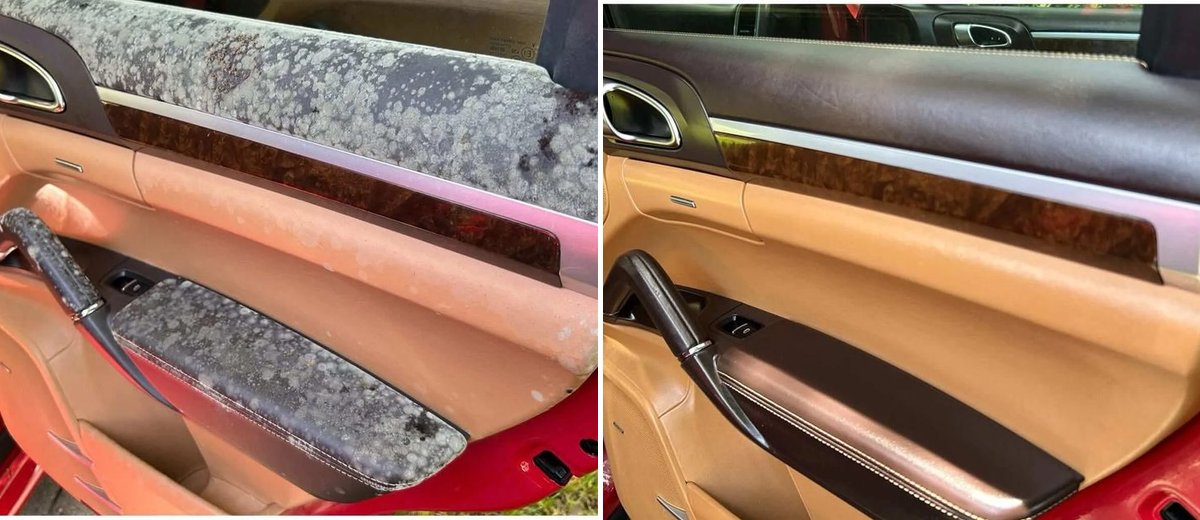
Before & After: Mold Removal We've Actually Done
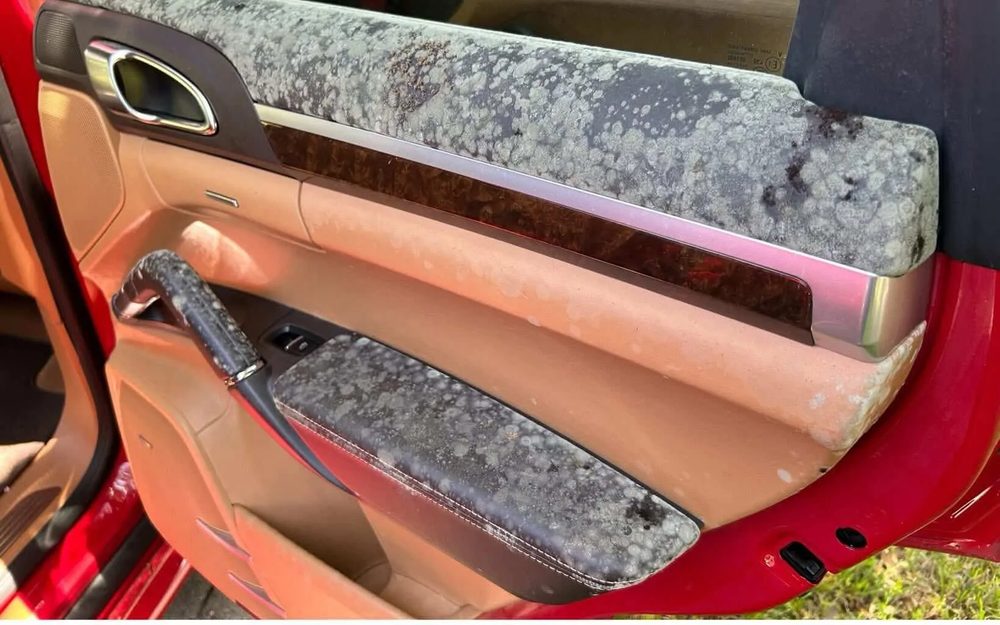
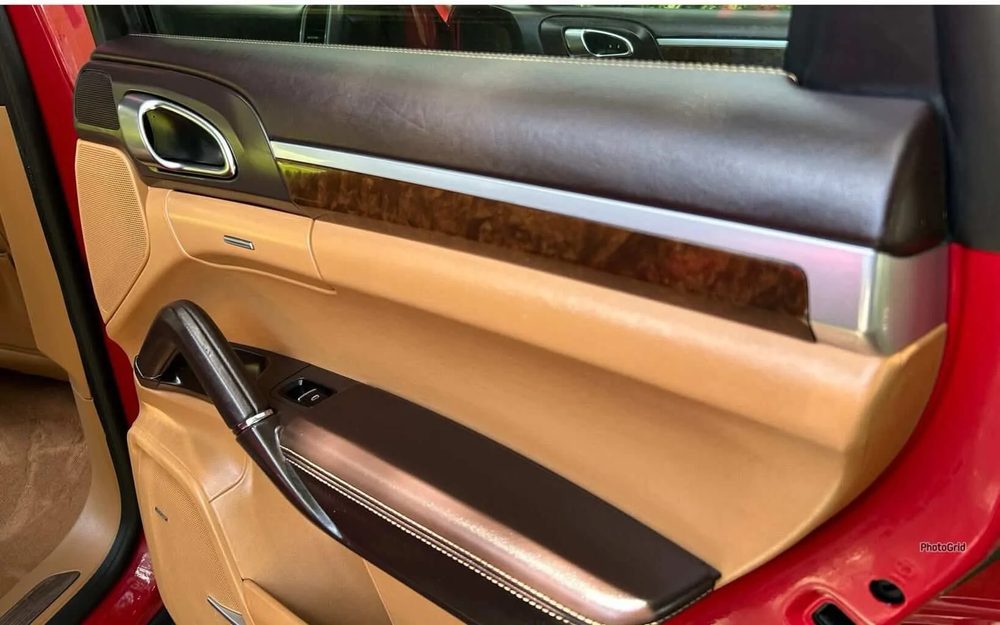
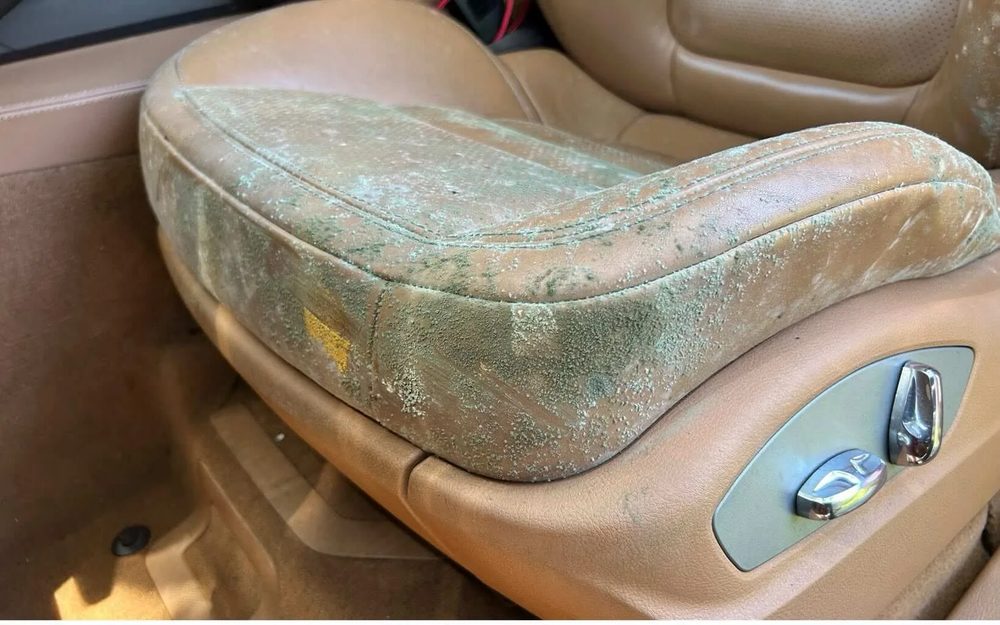
No stock photos. These are real DShine mold removal jobs across South Florida, the same 11-step process and chemistry used on every Homestead appointment.
 Before
 After
Porsche Cayenne — Door Panel & Armrest
Mold spread across the tan leather door panel and armrest of a red Porsche Cayenne, reaching up onto the wood trim. Leather like this cannot be scrubbed hard, so it gets the leather-safe protocol, steam and extraction around the trim, Concrobium and then the sealed ozone cycle. In a place of afternoon storms, a window cracked for air is a common way water reaches a door panel.
 Before
 After
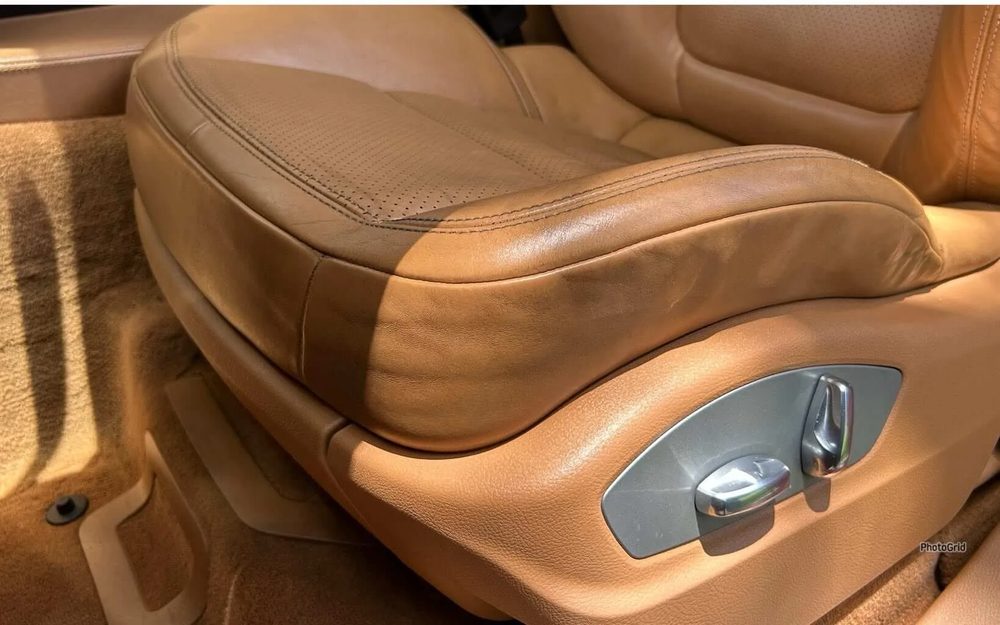
Leather Seat Bolster — Green-Blue Growth
The side bolster of a tan leather front seat covered in green-blue mold. Growth like this sits in the grain and along the stitching, so the leather-safe protocol uses controlled steam and extraction, then Concrobium on the surface and the ozone cycle for the cabin air. Heat and a sealed cabin after a wet day are the usual conditions behind this pattern in Homestead's summer.
 Before
 After
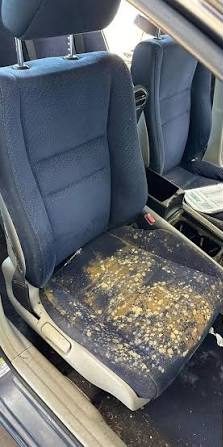
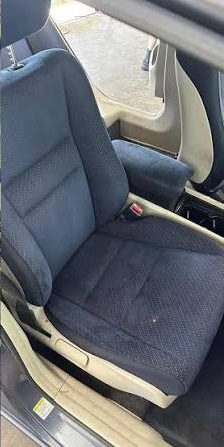
Cloth Bench Seat — Residue Under the Cushion
A dark blue cloth sedan bench seat with the cushion lifted, showing tan and yellow mold-stain residue on the seat bottom. The cushion hides the problem, which is why we check underneath every seat. Steam, extraction and Concrobium reach the fabric and foam, and the ozone cycle treats the air. Cloth bench seats take wet clothes and boots all day, and in a truck-heavy town they are a common starting point.
 Before
 After
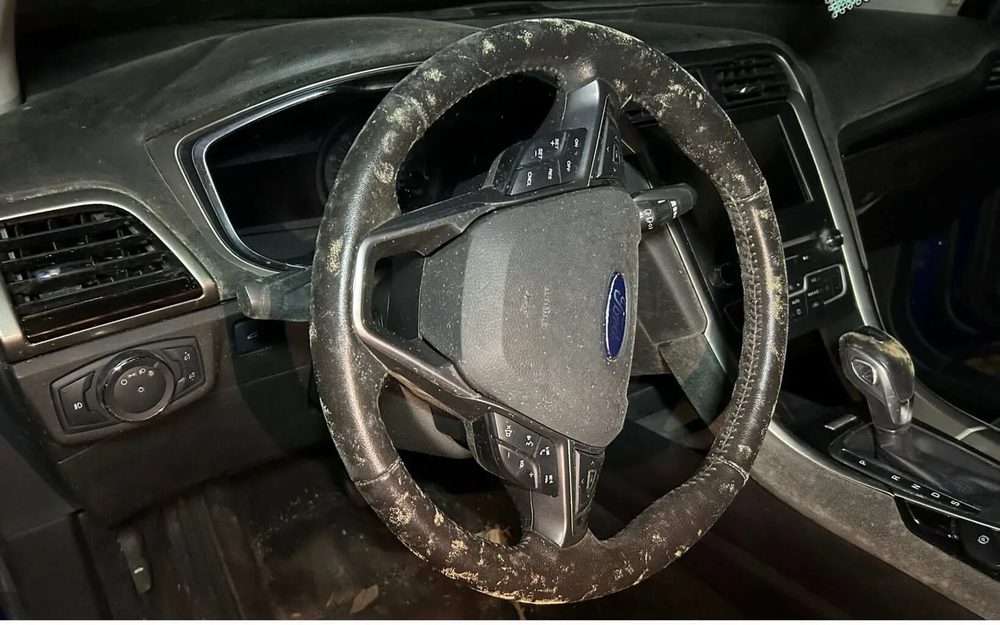
Steering Wheel, Dash & Vents — Grey-White Bloom
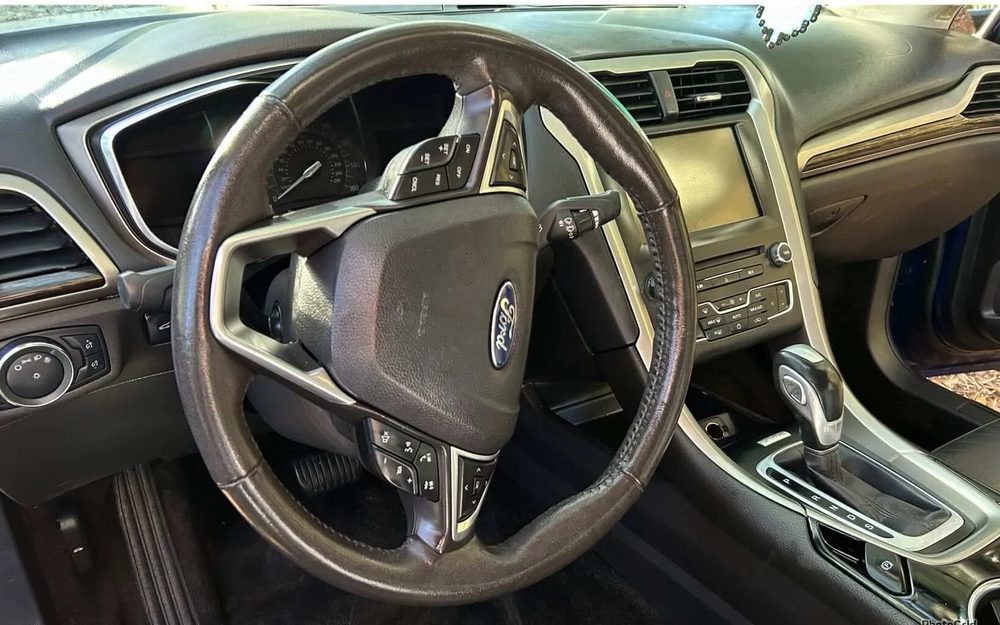
The interior of a Ford sedan with a grey-white mold bloom across the steering wheel, dash and vents. Hard surfaces are steam-cleaned, the vents are treated so growth in the housings is reached too, and the cabin receives Concrobium and an ozone cycle. A bloom on the dash points to humid air that sat for days inside a closed car, a pattern common when summer storms follow one another.
 Before
 After
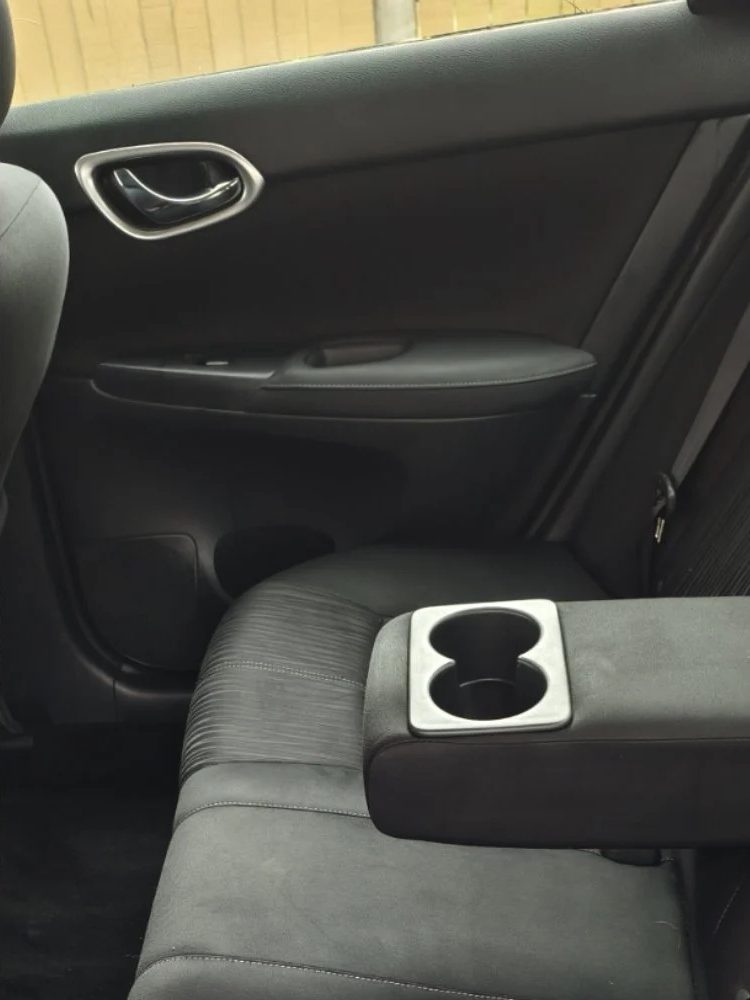
Driver Seat & Console — Grey-White Bloom
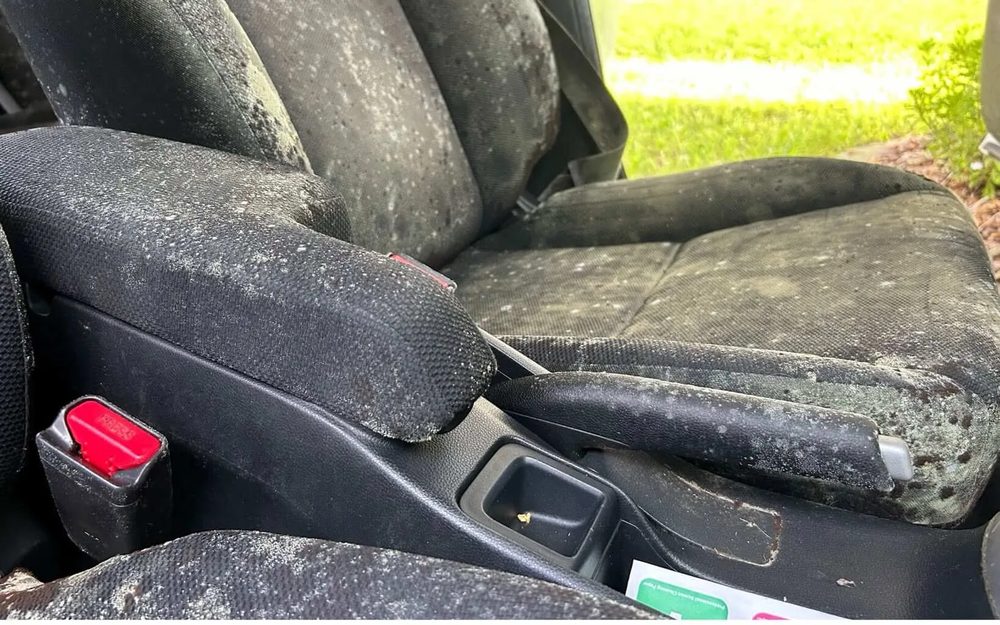
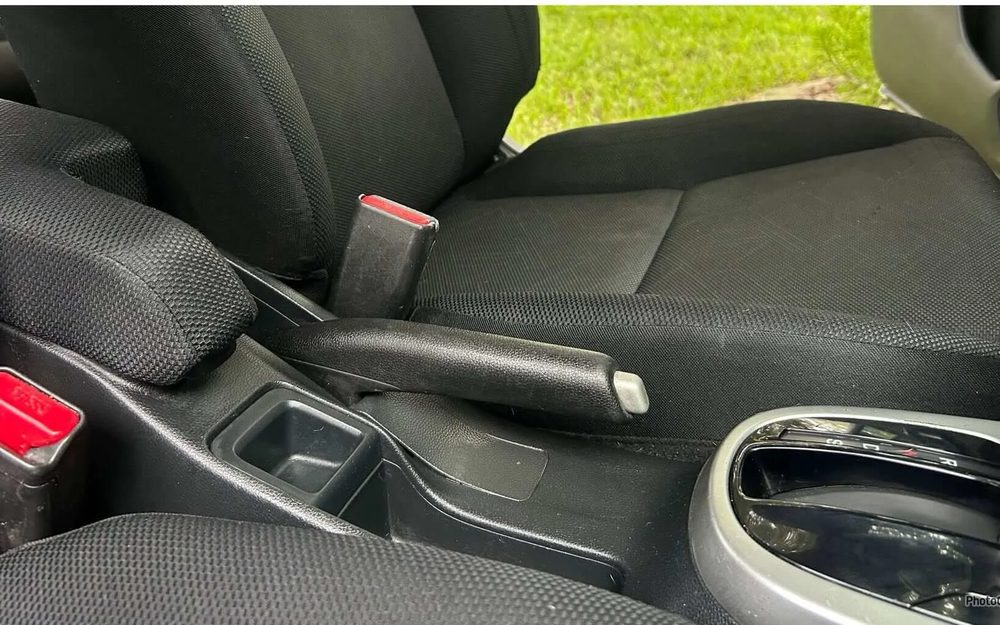
A black cloth driver seat and armrest console with grey-white mold bloom, with green lawn visible outside the window. Cloth takes the growth deep, so it gets steam and extraction rather than wiping, followed by Concrobium and the ozone cycle. Cars parked beside lawns and sprinkler lines in Homestead's yards often take on this kind of dampness through a window left open a crack.
 Before
 After
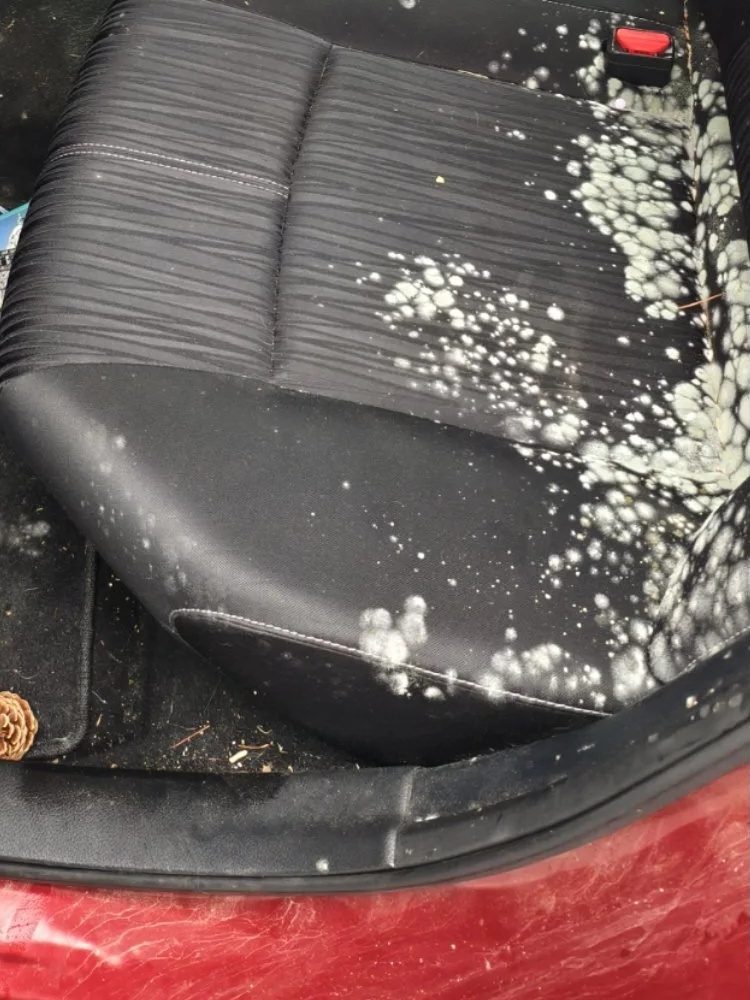
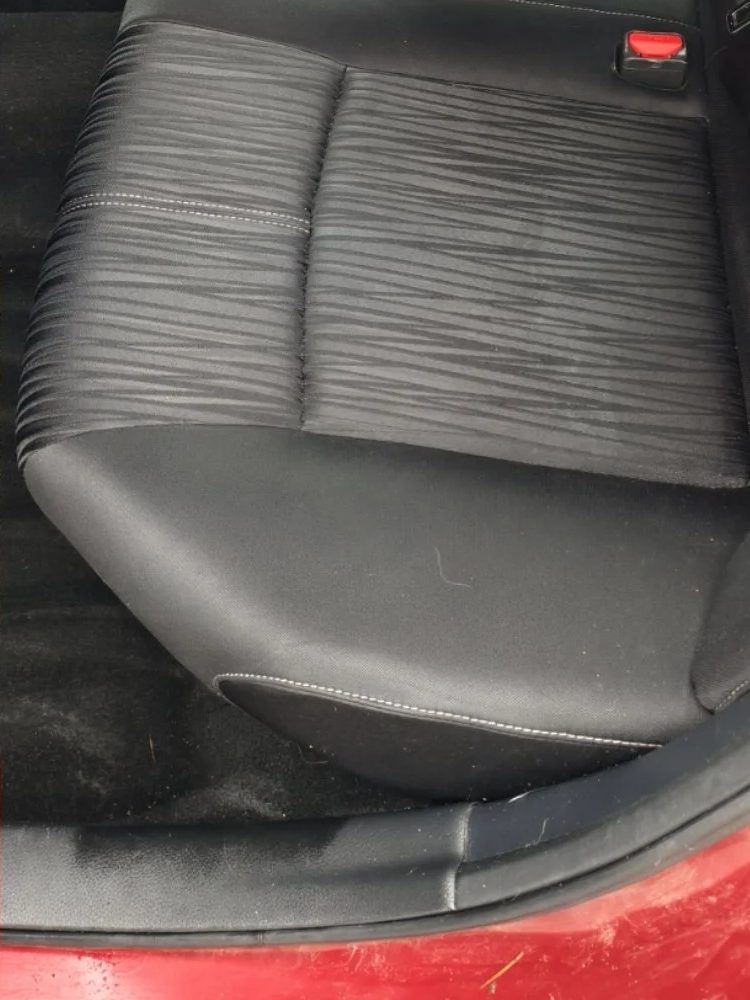
Rear Seat & Door Panel — White Mold Spots
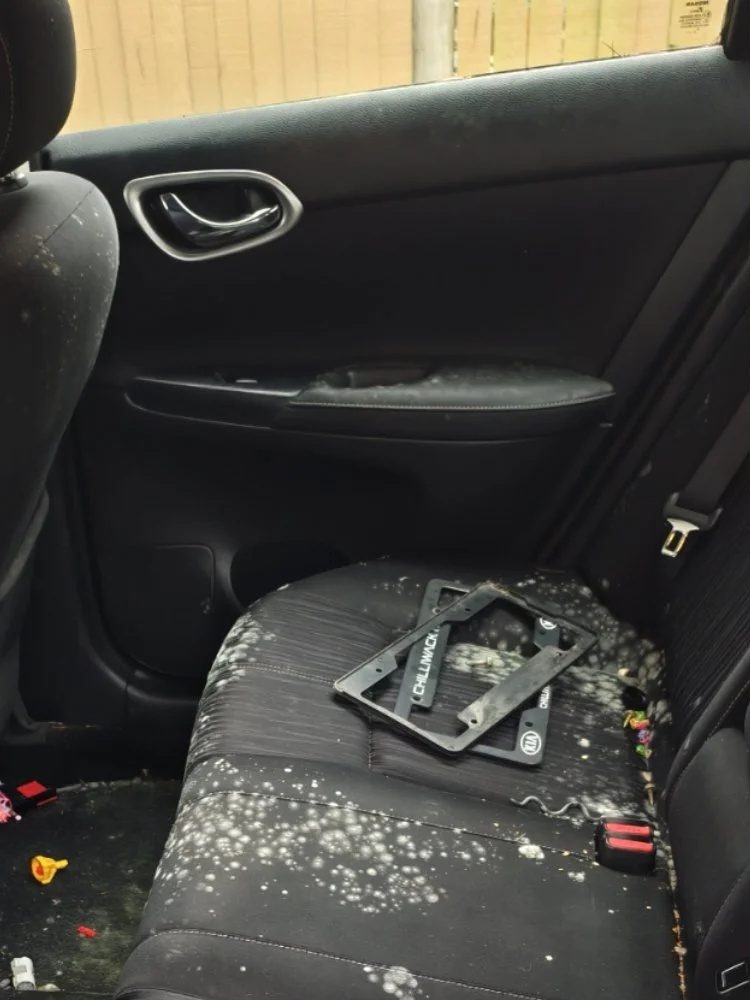
The rear seat and door panel of a black sedan with white mold spots on the cushion, plus loose debris and a license plate frame left on the seat. Loose items are cleared first, then the seat gets steam and extraction, Concrobium and the ozone cycle. The back seat is where wet towels, bags and crates ride, which makes it a frequent spot for growth after trips to the parks and the water.
 Before
 After
Black Cloth Seat — White Speckles
A black cloth seat with white mold speckles, with the red car body visible below the window. White speckling is often the early stage, and the growth underneath is usually further along than the surface shows, so the seat gets steam, extraction, Concrobium and the ozone cycle. Sun on a sealed cabin keeps moisture trapped, which is a typical pattern for open lots in Homestead's heat.
 Before
 After
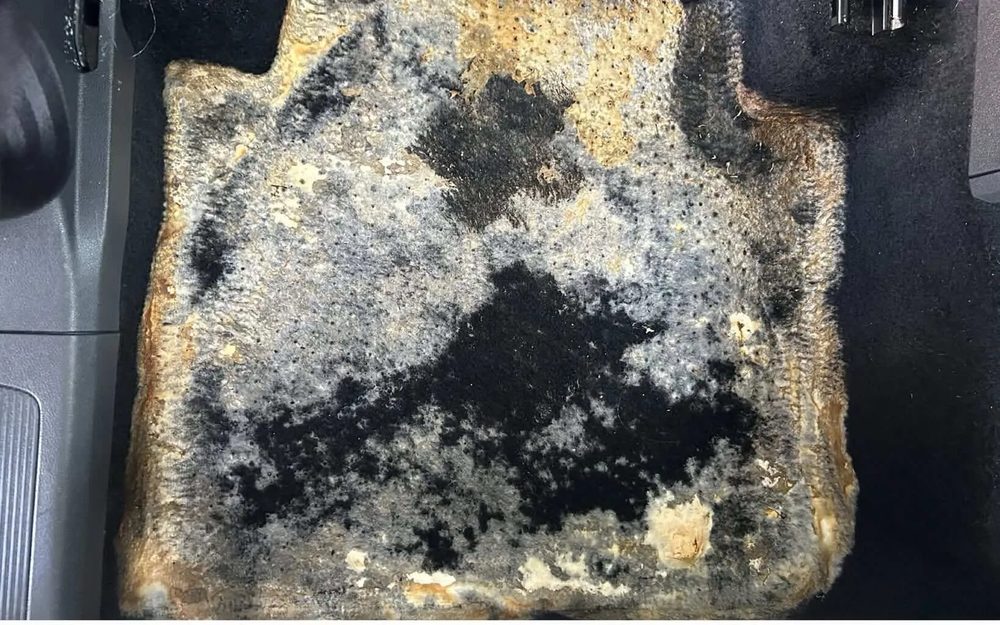
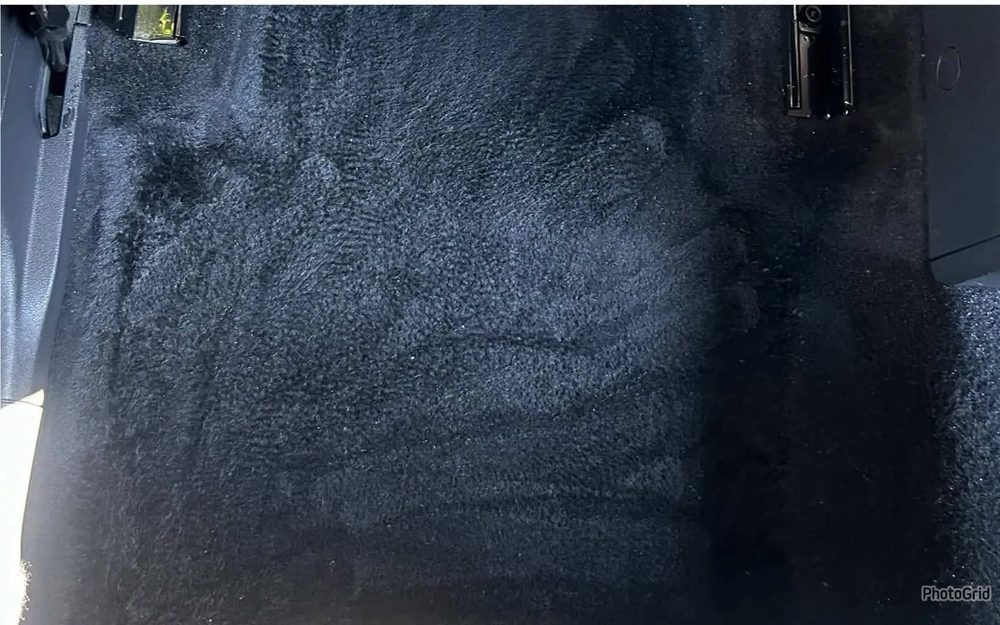
Floor Mat — Heavy Colony Growth
A carpeted floor mat with heavy black, brown and white mold colonies. Floors collect the most water and the most dirt, so mats and the carpet under them are among the first places we check. They get steam, extraction and Concrobium, and the pad is inspected, then the ozone cycle treats the air. Wet boots and field mud entering a cab day after day make this a familiar sight in farm country.
100% Satisfaction.
Written. No exceptions.
If the result doesn’t meet our standard, or yours, we come back and redo it at no charge. No forms to fill out, no arguing over what “counts.” The guarantee is in writing before we ever touch your vehicle.
Request Mold Removal in Homestead · From $549
Fill this in once and send it. We get your address, vehicle, and the situation all in one message, no phone tag.
Rating
Detailed
Response
Three steps from a muddy cab to a clean one,
and we handle everything in between.
No drop-off. No waiting. We come to Homestead.
We come to you in Homestead,
from Krome Avenue to the farm gates in Redland.
Mobile service: home, office, condo, or marina. No drop-off, no travel fee.
Not seeing your city? Ask us — we likely cover it.
Field mud, irrigation spray and daily storms
soak a cab quickly in Homestead.
Homestead sits about 3 feet above sea level between Biscayne and Everglades National Parks, and with close to 60 inches of rain a year, a wet carpet rarely dries on its own. Left untreated, what starts as a musty smell becomes a real health issue for the next person who drives the car. DShine's Concrobium Mold Control and ozone process address the cause, not just the symptom, backed by $2M insurance and a written guarantee. Mold doesn't need much to get started, any trapped moisture inside a closed cabin is enough given South Florida's humidity. The source is almost always one of four things: a clogged AC condensation drain letting water pool silently on the floor pan, a failed door or window seal letting rain in, a clogged sunroof drain, or the car simply sitting unused for two or more weeks without the AC running. Here the cause we meet most is water that rides in on boots and mats, field mud, irrigation spray and soaked gear in a cab that is then closed up and left until the next shift.
Homestead neighborhoods we serve,
from historic downtown to the Redland farms.
From the historic downtown on Krome Avenue to the Redland farms and the gateways to two national parks, parking and moisture change a lot across Homestead.
Historic Downtown Homestead — The Homestead Historic Downtown District, listed on the National Register of Historic Places in 2007, is centered on Krome Avenue, where the Seminole Theatre reopened in 2015 after a restoration. Cars here sit on the street or in surface lots, so the risk is a wet event followed by a sealed cabin. We work at your home or office address, not on the street.
Homestead-Miami Speedway — The speedway opened in 1995, covers about 650 acres and has a capacity of 43,000, and NASCAR's championship weekend returns on November 6 to 8, 2026. A car that spends a hot weekend in a lot with a cooler, wet towels and spilled drinks is the pattern here. We do not work at the track; we come to your address afterward.
Redland & Fruit and Spice Park — Redland is an unincorporated farm community in Miami-Dade County, known for tropical fruit, nurseries and nearly 8,000 acres of avocados, and it is home to the 37-acre Fruit and Spice Park run by the county. Trucks here come back from groves and nursery lots with mud on the mats. We coordinate gates and farm drives before we arrive.
SW 344th Street & the Everglades Road — State Road 9336, signed as SW 344th Street in its eastern stretch, runs from US 1 in Florida City to the Everglades National Park entrance, past Robert Is Here at 19200 SW 344th Street. Day-trippers bring wet gear and fruit crates home, so spills in the cargo area are the pattern. We come to your Homestead address.
Biscayne National Park Gateway — SW 328th Street, also called North Canal Drive, leads about four miles to the Dante Fascell Visitor Center at Biscayne National Park, which is about 95 percent water. Kayak, snorkel and boat days mean wet towels and dripping gear in the cabin. Send us your address and a few photos, and we plan the visit.
Homestead Air Reserve Base — Homestead Air Reserve Base sits northeast of the city and is home to the 482nd Fighter Wing, after being largely rebuilt following Hurricane Andrew in 1992. A service member or reservist who travels for training may leave a vehicle parked for weeks. We work at your home address, not on the installation.
Leisure City & Naranja — Leisure City, with 26,324 residents in 2020, and Naranja, with 13,509, are unincorporated communities beside Homestead. Naranja takes its name from historic orange groves, and US 1 runs along its northwest edge. Driveways, carports and apartment lots are typical, and we come to your address with travel included.
Don't see your area? Ask us — we likely cover it.
Homestead car mold,
the questions truck and family drivers ask us.
Tap any topic to read the full breakdown.
Start with the ground itself. Homestead lies roughly 3 feet above sea level on 15.09 square miles of land, about 26 miles southwest of Miami, with Biscayne National Park to the east and Everglades National Park to the west. Water has little slope to run down here, so a puddle at a driveway apron or a field entrance is an ordinary wet-season sight.
For rain we use the Homestead General Aviation Airport station and its 1991 to 2020 normals: 59.90 inches a year, August the heaviest month at 10.17 inches, January the lightest at 1.70. Measurable precipitation falls on about 139 days of the year, which means even the so-called dry months leave a parked car a few damp mornings to get through.
Heat finishes what rain starts. The July average high is 92.1 degrees and the average low 73.8, so a shut cabin never cools to a level that slows mold. Rainfall leaps from 2.92 inches in April to 9.34 in June, and that jump is when cars that spent the winter fine begin holding water. Hurricane season (June 1 to November 30) overlaps nearly all of it.
Work pickups lead the list. Crew-cab trucks and flatbeds that shuttle between a field, a nursery, a shed and home pick up wet mud, cut stems and soaked gloves, and the cab is where it all ends up. Rubber mats help, but soil washes under them and into the carpet seams, and the first mold usually shows on the floor and the lower door cards.
Cargo vans and small box trucks come next: landscaping crews, delivery drivers, contractors. Their cabs see constant door opening, wet boots and coolers, and the space behind the seats can hold a damp crate for days. Cloth bench seats are the norm in these vehicles, and white speckling along the seams is what gives the problem away.
Then the family cars. Census QuickFacts puts the average household in Homestead at 3.21 people, so there are often several drivers and a minivan or SUV handling school runs, ball games and weekend trips to the parks. Child seats, spilled drinks and wet swim bags are the usual starting points, and a cargo well nobody opens for a month is where it spreads.
The last group is the vehicle that is parked more than it is driven: an older truck kept as a spare, a retiree's sedan, a project car under a carport. Whatever the badge, we look at the whole cabin before we confirm which price applies.
Open driveway or yard on a larger lot: Many addresses on the farm side of Homestead sit on big lots with long driveways, and the truck simply parks beside the house or the barn. It takes every storm head-on, and sprinklers or irrigation lines nearby add water from the side. Tired door seals and a window left cracked show up as damp carpet on whichever side faced the weather.
Carport or garage at a single-family home: A garage that doubles as a workshop, with tools, feed bags and wet gear stacked around the car, stops air from moving, and an uncooled garage follows the weather outside. A carport keeps the sun and most rain off, but wind-driven rain still finds an open window or a sunroof that did not quite seal.
Apartment and townhome lots: Census QuickFacts reports a 48.3 percent owner-occupied rate in Homestead, so just over half of households rent, and many of those cars live in open lots where sun, rain and sprinklers all reach them. Nothing there is covered, which puts the risk in the seals, the sunroof drain and any window that was not fully closed.
Yards, work lots and street parking: Work trucks often spend the night where they work, on gravel beside a shed or at a field edge, with mud on the pedals and mats and another wet entry the next morning. Around Krome Avenue downtown, cars sit on the street for hours, and the usual trigger is a single wet event followed by a sealed cabin heating in the sun.
May and June, the switch: At the Homestead airport station, rainfall climbs from 2.92 inches in April to 5.77 in May and 9.34 in June. Cabins that were closed up through a dry winter suddenly meet near-daily storms, and the first wet floor mat of the year is often when a musty smell appears. Most of our early-summer calls are about this transition.
July to September, the peak: July averages 7.14 inches, August 10.17 and September 8.63. The National Park Service describes summer thunderstorms in the Everglades as almost a daily occurrence, and Homestead sits at the edge of that system. A truck that goes into a wet field every morning never gets a dry day to air out, and hurricane season, which runs June 1 to November 30, gets cars sealed shut before every watch.
The autumn tail, October into November: October still averages 5.86 inches before November falls to 2.34. Cabins that stayed damp through the summer start to smell as the weather turns and the windows go up for cooler mornings, so this is when many owners finally notice what has been building for weeks.
Winter, December through April: January averages 1.70 inches, and the National Park Service says the Everglades region gets only about a quarter of its yearly rain in winter. Risk drops, but irrigated rows, dew on the grass and wet boots still bring moisture into work trucks, and a cabin that took on water in the fall can stay musty well into spring.
Gate and drive: a farm address can mean a locked gate, a long rock driveway, or a lot tucked behind a nursery's office. Send the street number, a map pin and any code, and the first drive out ends at the right truck.
Level, out of the way: we need flat ground clear of tractors and delivery traffic, with shade or cover if you have it. If the yard is busy until noon, say so and we work around the quiet hours.
In town: driveways, carports and apartment lots are simpler. A gate code, a unit number and a phone number for someone who can open up are enough. Getting to a Homestead address costs nothing extra, so there is no mileage line on the quote.
Crews: name one person who knows which truck is which, with color, plate digits and where the keys are. A foreman in the rows all day can still see the result, because photos come by WhatsApp.
1. Field mud and wet gear carried into the cab: Soil on boots, soaked gloves, wet tools and cut plant material end up on the mats, the pedals and the carpet seams. Mold needs moisture and something to feed on, and soil supplies the second while the day supplies the first. It takes hold in the carpet and padding under the mats, which is why a floor that looks clean can still smell.
2. Daily summer storms and slow-drying cabins: From June through September the airport station averages more than seven inches of rain a month, and a cabin closed after every downpour never loses its moisture. Water gets in at door seals, window channels and the sunroof drain, and a window cracked for air before a storm is enough to start it.
3. Irrigation spray and open windows at the parking spot: A truck or car parked near a sprinkler line gets wet from the side, and a window opened a crack for ventilation lets that spray into the door card and seat. It surprises owners because it happens on a sunny day, and it tends to repeat every time the system runs.
4. Spills and wet cargo left closed up: Fruit crates, coolers with melting ice, wet produce bags, potted plants and damp beach or boat gear leak into the carpet or cargo area and then sit sealed in the heat. Sugary juice gives mold even more to feed on, so a single forgotten crate can seed a whole footwell.
You send a pin and a few photos, we confirm the price, and a technician drives out to wherever the vehicle is parked: a rock driveway, a nursery lot, a carport behind a duplex. The first ten minutes are spent looking, with the doors open, at the carpet under the mats, the seat seams, the headliner and the vents, so we know where the growth really is before the tier is final.
The work follows the same 11 steps every time, in the order listed on this page. A pickup with muddy floors takes most of its time in the vacuum, deep clean and extraction stages, while a family SUV with a spill under the third row spends more time in the steam and drying. Plan on 3 to 4 hours, and tell us up front if the vehicle must be back at a set hour.
You are free to carry on with your day. Many owners are in the rows or at a job site and only ask that we text when it is done. Photos arrive by WhatsApp, the doors stay shut while the generator runs, and when the cabin has aired out we let you know the vehicle can go back to work.
Price comes first, nearly every time. It is one of two numbers, $549 or $749, depending on whether the growth sits in one area or runs through the vehicle, and getting to you is already counted. One photo of the mat and one of the seat usually settles the tier.
Truck owners add a worry: does the whole floor come out? Seldom. Carpet is cleaned in place, and a pad is replaced only if it stayed soaked too long, which we explain before we start. Next is access, since a gated grove or a yard behind a packing shed is no ordinary driveway; a map pin and gate details fix that.
Finally, can the vehicle stay in service? For short work runs, probably, but keep children and anyone with asthma out of it on long trips until it is treated, and crack the windows on a dry day so the cab can breathe.
Pickups and work vans draw Engine Bay Cleaning more than anything else. The dust and mud that pack a cab also settle around the cowl and the battery tray, and owners like having both areas cleaned in one visit. Anything beyond the mold job is quoted first and goes ahead only if you agree.
Paint Correction and Ceramic Coating tend to follow on vehicles that live outdoors. Sprinkler water leaves mineral spots on paint and glass, field dust scratches and dulls clear coat, and once the cabin is clean the outside is suddenly the part that looks tired.
Some callers are unsure mold is even the right job. A smell with nothing visible belongs to Odor Removal Detailing at $349. Water that came in recently and was caught early belongs to Flooded Car Detailing, also $549. Send pictures and we say so honestly if the cheaper service is the better fit.
Check the floor first. A mat that is damp underneath, carpet that feels cool or springy in one corner, or a dark patch near the seat rails is an early sign, particularly in a truck where wet boots climb in every day. Lift the mat and press your palm into the carpet.
Then the glass and the vents. A windshield that fogs on the inside on a mild morning, a musty smell only when the A/C starts, or a faint dusty film along the dash and steering wheel all point to moisture that is not leaving the cab. If your allergies flare only in the car, take that seriously.
Last, look where nobody does: beneath the seat cushions, in the rear footwells, along the cargo floor and in the lower corners of the door cards. White speckles, a powdery bloom or a darker stain on cloth means growth has started, and what you see is rarely all of it.
Pull and shake the mats at the end of a wet day, not on Friday. Soil that dries in the open sweeps out in minutes, while soil that sits under a rubber mat in a shut cab stays wet and feeds growth. A cheap crate for gloves and boots stops half the trouble before it reaches the carpet.
When the A/C is on, switch off recirculation for the last few minutes before parking, so humid air moves out of the cab. Crack the vents on dry days, stay out of the sprinkler's arc, and check the seals and the sunroof drain as the rainy season begins in May.
If the truck must sit through a long weekend, leave the floor dry and the bed and cargo area free of anything that leaks. A sealed cab in summer heat turns a small damp patch into a larger one within days, and a dry floor is the best insurance you have.
In many Homestead households two or three vehicles share one driveway, and the cab that smells is not always the one nearest the door. List every vehicle when you book, and each gets a price from its own photos, so a clean second car never pays for the first one's problem.
Small crews can spread the work over several days so the whole lineup is not parked at once. Name the truck that matters most, the ones that sit idle on certain days and who holds the keys, and the order builds itself.
Every cab gets the complete treatment and its own finished photos, even with several in one trip. If a child seat, toolbox or cooler is still inside, a quick text beforehand keeps anything valuable from being moved at the last minute.
Should mold, or the musty smell that goes with it, reappear in the cab we treated during the 30 days that follow, the re-treatment is free. The promise is written down, it is a 100 percent satisfaction guarantee rather than a partial one, and it exists to be used.
Around Homestead, a repeat usually traces to a source still pumping water in: a seal that leaks in a downpour, a sunroof drain packed with debris, or a pickup that rolled back into a muddy row the next morning with wet boots. We name the likely culprit during the visit, because a cab that keeps taking on water will undo any treatment.
A fresh flood or a new leak after our visit is a separate event and sits outside the promise. If something changes, text a photo and a line or two, and we arrange the return trip to your address without a fuss or a new quote for the same problem.
A truck with a few hundred thousand miles has been soaked and dried hundreds of times. Its carpet is worn thin, its door seals have flattened, and the padding underneath can hold growth far deeper than the surface suggests. We examine the whole cab and the cargo area, and say plainly where a pad or a worn seal is the real problem.
Older vinyl and cloth get settings that suit the material, and leather follows the leather-safe protocol so the finish is not stripped. If the vehicle carries sentiment, such as a first truck or a family car kept for decades, mention it when you book and we handle it with extra care.
Some of what you see is simply age: a cracked dash, sun-faded fabric, split bolsters. We show you which part is a mold issue and which part is wear, so nothing gets blamed on the treatment afterward and your expectations match what the cab can actually look like.
Floor first: pull the mats, shake the soil out and hang them in the sun. Press the carpet under them with your palm; cool or springy means it needs a fan before you park. Coolers, crates, rags and cups go out of the cab too.
Seals and glass: shut every window and the sunroof, then wipe the rubber door seals so one grain of grit does not hold a door open a hair. A gap that thin is invisible to you and welcome to an afternoon thunderstorm.
Spot and air: choose the driest, breeziest ground, clear of sprinkler heads and the wet edge of a lawn. Let the A/C blow fresh air for the last stretch of the drive, and look inside after the next storm. Gone a month or more? Ask a neighbor to run the engine and the A/C every week or two.
The EPA says that in most cases mold will not grow if wet or damp material is dried within 24 to 48 hours of a leak or a spill. After that, Homestead's warmth carries the process along, and a damp mat in a shut cab can turn fuzzy in a matter of days.
Delay also changes the bill. A patch limited to one spot is $549; once it has moved across the vehicle, the figure is $749. The sooner the photos reach us, the likelier it is that the smaller number is still the right one.
Storm season adds to the pressure. Hurricane season runs June 1 to November 30, and a vehicle sealed up and parked ahead of a watch with a wet floor can stay that way for days. Looking inside the day after the weather passes costs nothing and beats a surprise a month later.
Homestead sits between two national parks. Biscayne National Park is about 95 percent water, and its visitor center on SW 328th Street is roughly four miles from the city. The Ernest F. Coe Visitor Center for Everglades National Park is at 40001 State Road 9336. Wet kayak gear, towels and swim bags ride home in the same cabin as the kids.
Robert Is Here, the fruit stand at 19200 SW 344th Street, has been in business since 1959, and a trip there often ends with a crate or a milkshake in the back seat. The 37-acre Fruit & Spice Park in Redland, run by Miami-Dade County, draws the same kind of day trips, so spills and damp bags are a regular story in the cargo area.
Then there is the Homestead-Miami Speedway, which opened in 1995 and holds 43,000 fans. NASCAR's championship weekend is scheduled to return there on November 6 to 8, 2026. A car that spends a hot weekend in a lot with a cooler of melting ice, wet towels and spilled drinks inside is the pattern, and it is worth airing out before the doors stay shut for the week.
You send: a few pictures and a line about where the mold is and what happened. The floor mat, a seat, the headliner and the cargo area are the useful ones, and a clear shot of any stain helps most.
We answer: a tier within 2 minutes. $549 means the growth is in one area; $749 means it runs through the vehicle. The drive to your Homestead address is already inside both numbers.
We confirm: the exact price is fixed after we have looked at your pictures, and before any product is opened. If a photo raises a question, such as whether the headliner is involved, we ask for one more picture rather than guess. If what we see in person is not what the pictures showed, we talk it through with you first.
Why here: a low, flat farm town about 3 feet above sea level, nearly 60 inches of annual rain and a wet season that starts in May. Boots, mud, sprinkler spray and shut cabs supply the rest.
What we do: treat the whole interior in 11 steps, from inspection and the HEPA vacuum through Benefect, steam, extraction, drying, Concrobium Mold Control and ozone to the Meguiar's odor bomb and a last check. It takes about 3 to 4 hours at your address and ends with photos on WhatsApp.
What it costs and what backs it: $549 for one area, $749 for mold throughout, travel included, confirmed first. Behind it sit IDA certification, $2M in liability coverage and a written 30-day promise: a free re-treatment if mold or its smell returns.
Ozone is the one stage where nobody touches the vehicle. Once the wet work is finished, the doors are closed, a generator is set inside, and a timed cycle begins. Ozone is a gas, so it goes into places a rag never will: the vent ducts, the cavity behind the glovebox, the seat foam under the fabric.
That is why the spot matters. On a rural lot we want it away from the equipment path and foot traffic, and we ask whoever is around to leave it shut. In an apartment lot we pick a stall in shade, because a sealed cab in a full Homestead sun heats like a greenhouse.
Afterward, we open all four doors and the tailgate or trunk and let the air turn over until the cab no longer smells sharp. The odor bomb and a last look are the final tasks, and you get the all-clear from us once it is truly safe to climb in.
A few answers first,
for drivers across Homestead and Redland.
Add-ons Homestead clients book
Still deciding? Read: the complete mold removal guide · does insurance cover it? · why DIY mold removal fails.
Mold in your Homestead truck or car? Get your price in under 2 minutes.
Serving Homestead and all of Miami-Dade County. Fixed pricing, no travel fee. We confirm in under 2 minutes.
It Might Just Be an Odor Problem
If there's no visible mold growth yet, the smell alone is usually an Odor Removal Detailing case ($349 flat) — faster than full mold remediation ($549–$749). See which one matches what you're dealing with: