What a North Miami Mold Job Includes
This is not a car wash. Car Mold Removal uses Concrobium Mold Control treatment, pH-balanced products, and machine assistance, the same process used in pre-sale preparations for luxury dealerships.
Why it matters for your health: Mold in a vehicle is a different exposure than mold on a wall at home. With the AC recirculating, everyone inside is breathing concentrated spores for the length of the drive. The EPA and CDC both link mold exposure to respiratory irritation, allergic reactions, headaches, and worsened asthma symptoms. Children, older passengers, and anyone with a compromised immune system typically react faster and more severely than a healthy adult would. By the time the smell is noticeable, spores have usually already spread through the HVAC system into every vent in the cabin.
Curious what actually happens during the visit? Tap through our real 11-step process below to see what we do at each stage and why it matters.
What every North Miami mold job gets you
Most detailers in North Miami charge less. Here’s exactly what you gain — and what you risk — with each choice.
| DShine DetailsFrom $549 · travel included | Avg North Miami Detailer$149 – $199 | |
|---|---|---|
| Industry certificationsIDA, Koch Chemie, Meguiar’s, 3M, Symplex, XPEL | ✓6 verified | —0 credentials |
| $2M liability insuranceWe cover any damage — in writing | ✓ | —Often uninsured |
| Deionized water systemZero mineral residue, no water spots | ✓ | —Tap water, water spots |
| Fresh microfibers per vehicleNo cross-contamination between jobs | ✓ | —Shared towels, swirl risk |
| Mold-specific chemistry onlyConcrobium, Benefect & Meguiar’s, no harsh acids | ✓ | —Industrial degreasers |
| Before & after photosSent via WhatsApp on completion | ✓ | —No documentation |
| 100% written satisfaction guaranteeReturn & redo at no cost if unsatisfied | ✓ | —No written guarantee |
| Travel to your address — $0Home, office, condo — no drop-off | ✓ | Sometimes adds fee |
DShine vs. any other detailer
in North Miami, Miami-Dade County
Three things most detailers won't tell you. We put them in writing.
 Since 2018
With more than 20 years of hands-on experience in the automotive care industry, Evelio launched DShine Details in August 2018 with one van and zero shortcuts. For the first six months he slept in the van to keep costs down and standards up. Today DShine runs 7 certified vans across Miami-Dade, Broward, and Palm Beach, and the commitment hasn't changed. Every vehicle is treated as if it were his own.
What clients say
in their own words.
Before & After: Mold Removal We've Actually Done
No stock photos. These are real DShine mold removal jobs across South Florida, the same 11-step process and chemistry used on every North Miami appointment.
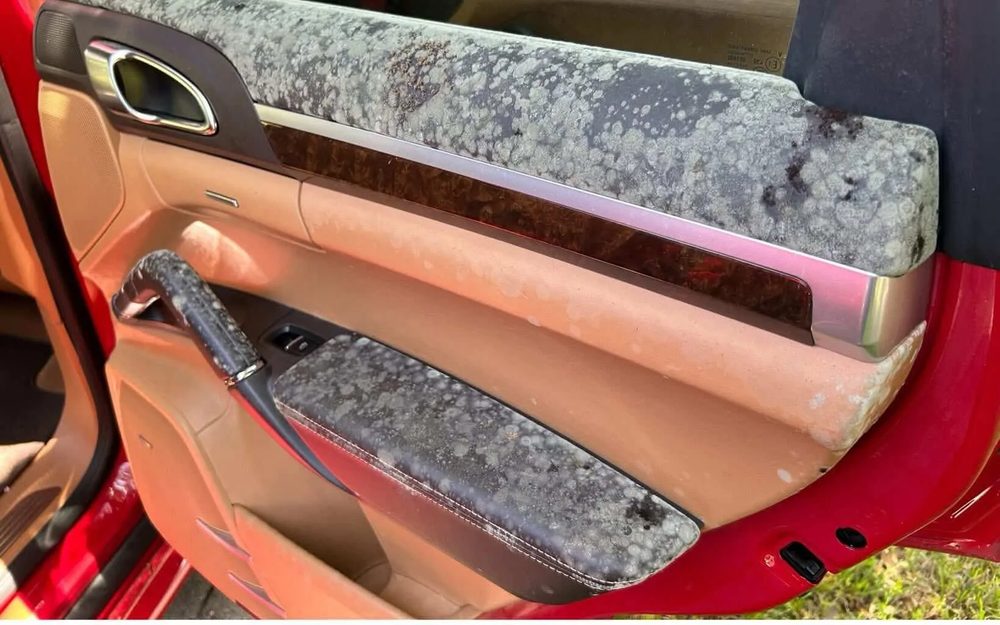 Before
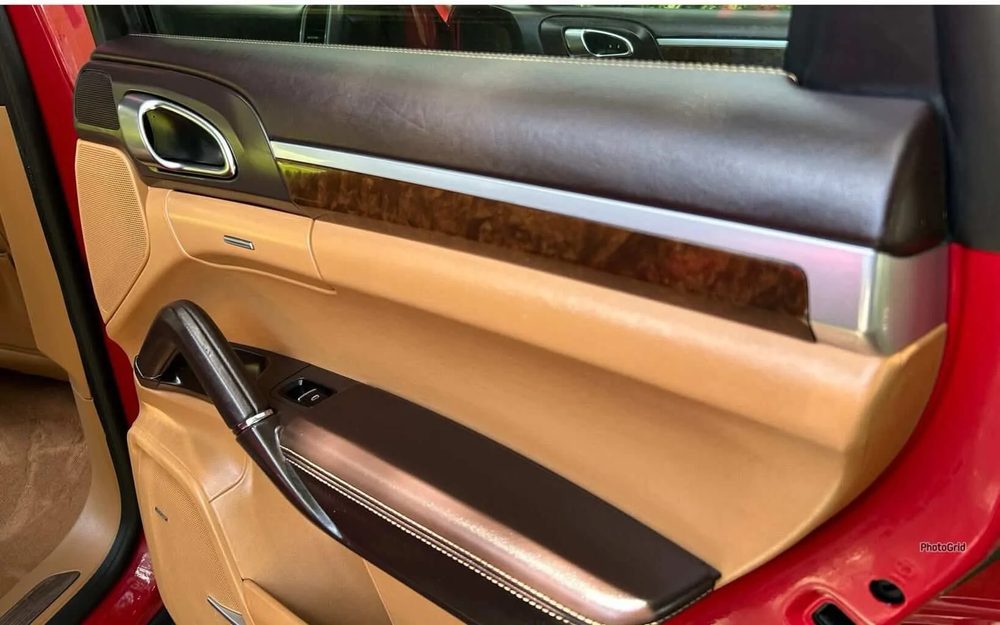 After
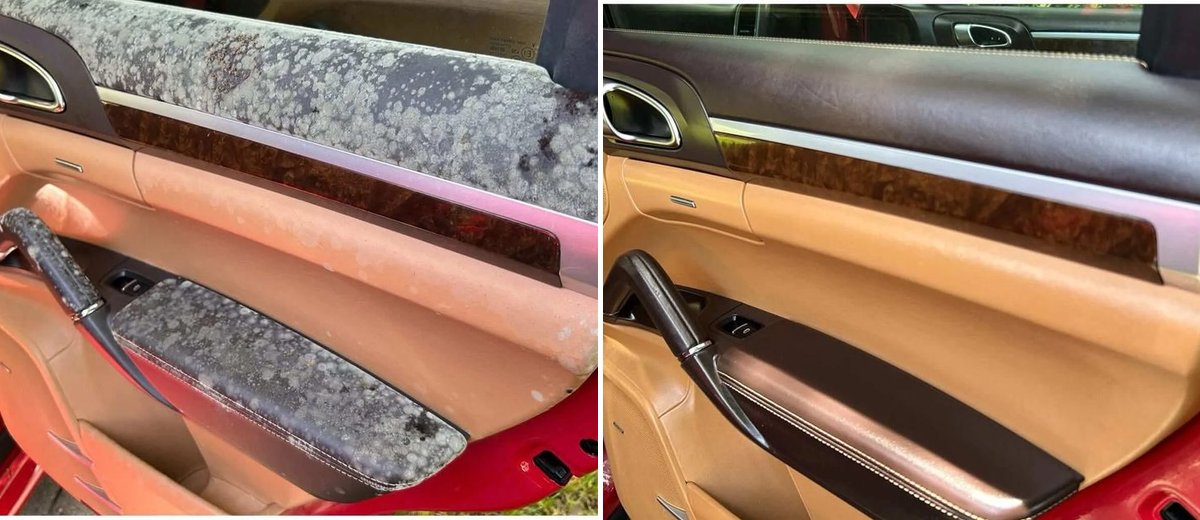
Porsche Cayenne — Door Panel & Armrest
Mold spread across the tan leather door panel and armrest of a red Porsche Cayenne, climbing onto the wood trim. Leather like this is never scrubbed hard: we use the leather-safe protocol, steam and extraction around the trim, Concrobium and then the sealed ozone cycle. In a humid, bay-side climate, door panels tend to be among the first places moisture settles, along the seals and lower panel edges.
 Before
 After
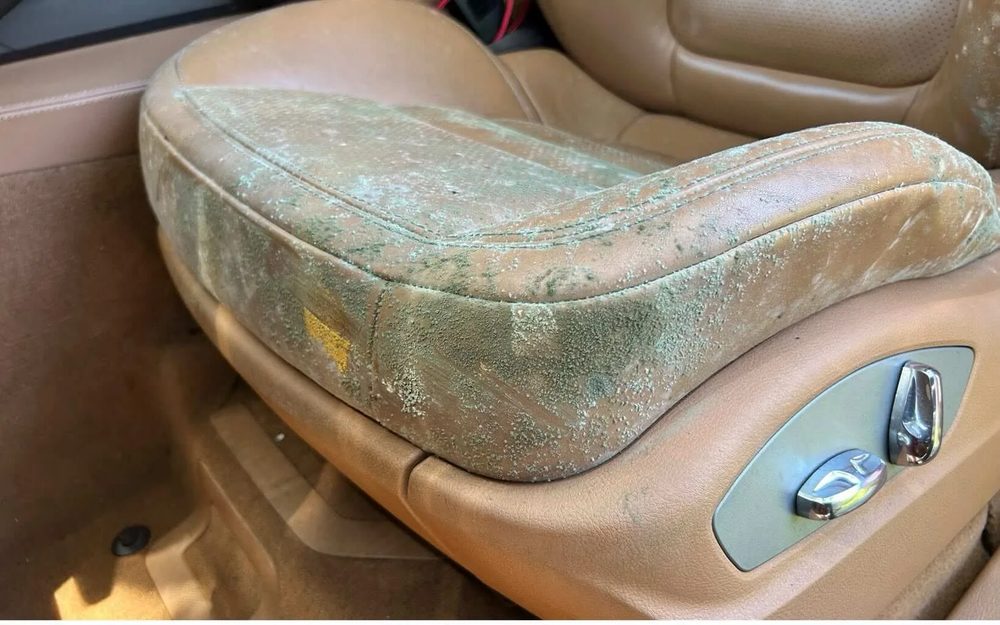
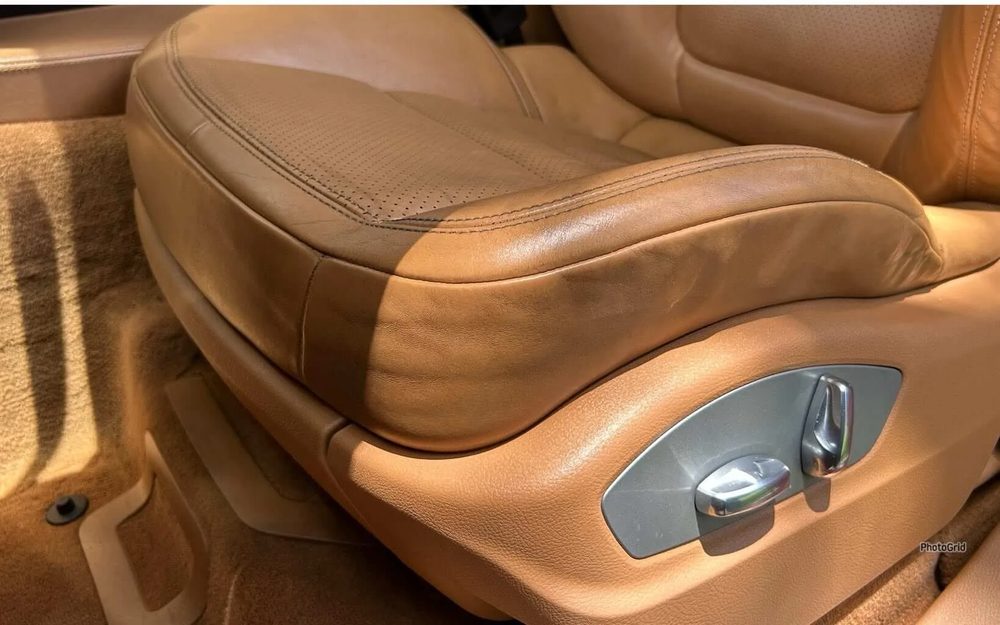
Leather Seat — Green Mold on the Bolster
Green-blue mold growing along the bolster of a tan leather front seat, the spot that flexes with every entry and exit and traps damp air against the hide. We treat leather with a leather-safe antimicrobial and avoid saturating the cushion, then ozone reaches spores in the air and the stitching. Damp clothing or a wet bag riding on a seat is a familiar way for this pattern to start.
 Before
 After
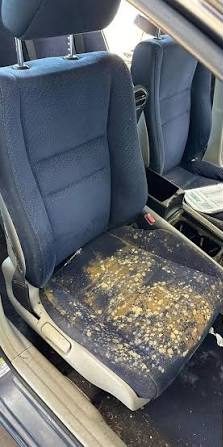
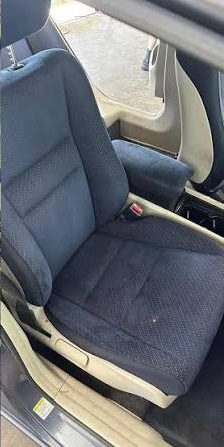
Cloth Bench Seat — Stained Cushion Bottom
A dark blue cloth sedan bench seat with the cushion lifted, showing tan and yellow mold-stain residue on the underside. Growth like this sits in the foam and the fabric backing where it never dries, so the work is steam, extraction and drying, not surface wiping. In a wet season that peaks in June, a spill or a damp seat can leave this kind of residue before anyone sees the top.
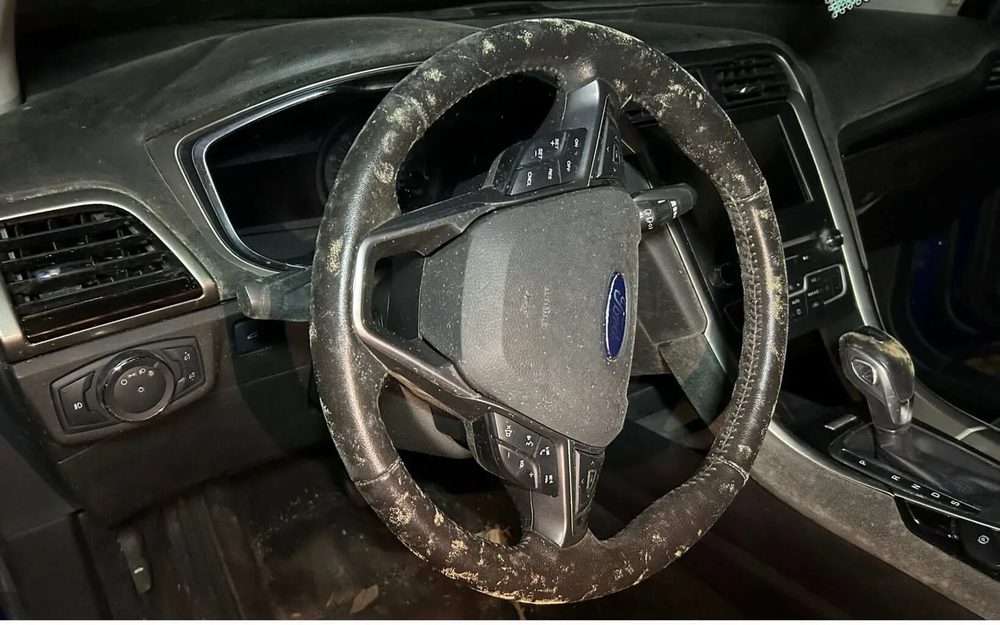 Before
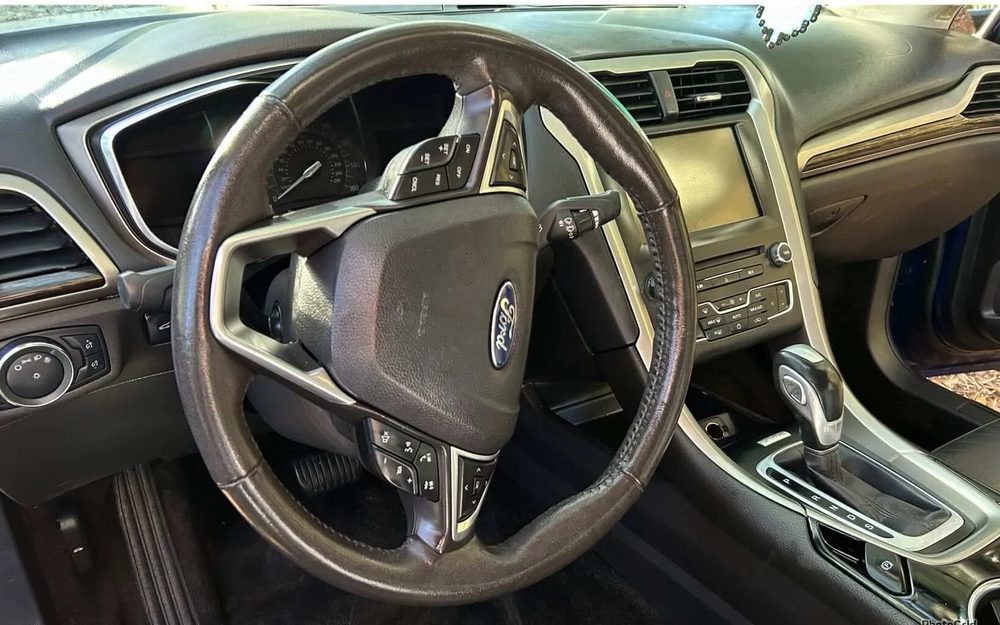 After
Ford Sedan — Steering Wheel, Dash & Vents
Grey-white mold bloom across the steering wheel, dashboard and vents of a Ford sedan. Hard surfaces like these get careful hand work and steam, and the vents get attention too, because growth near the A/C path spreads spores each time the fan runs. A cabin that sits closed after humid, rainy days, with no airflow, is a common setting for this film to form on touch surfaces.
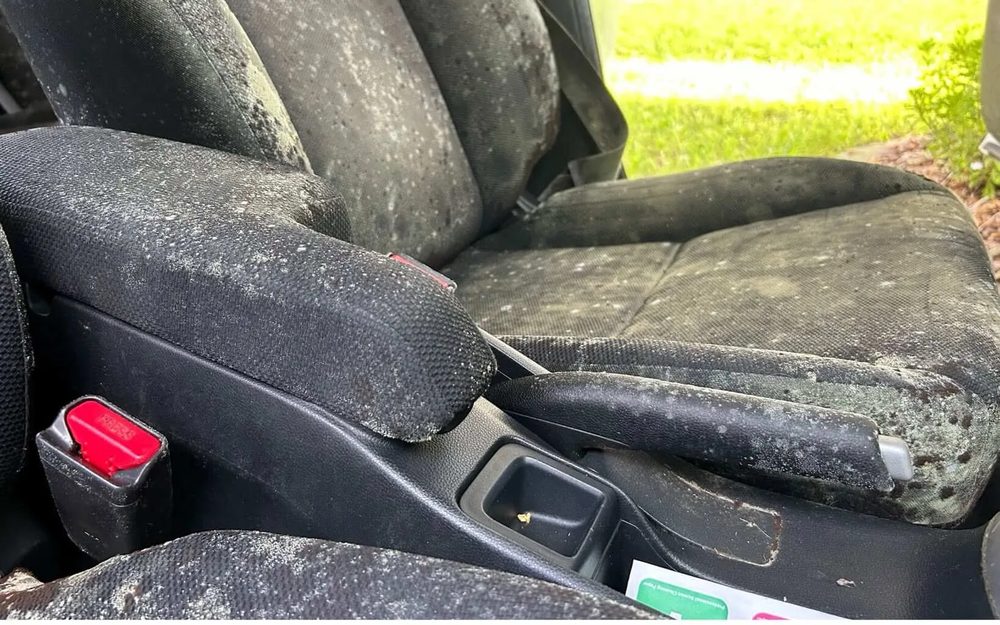 Before
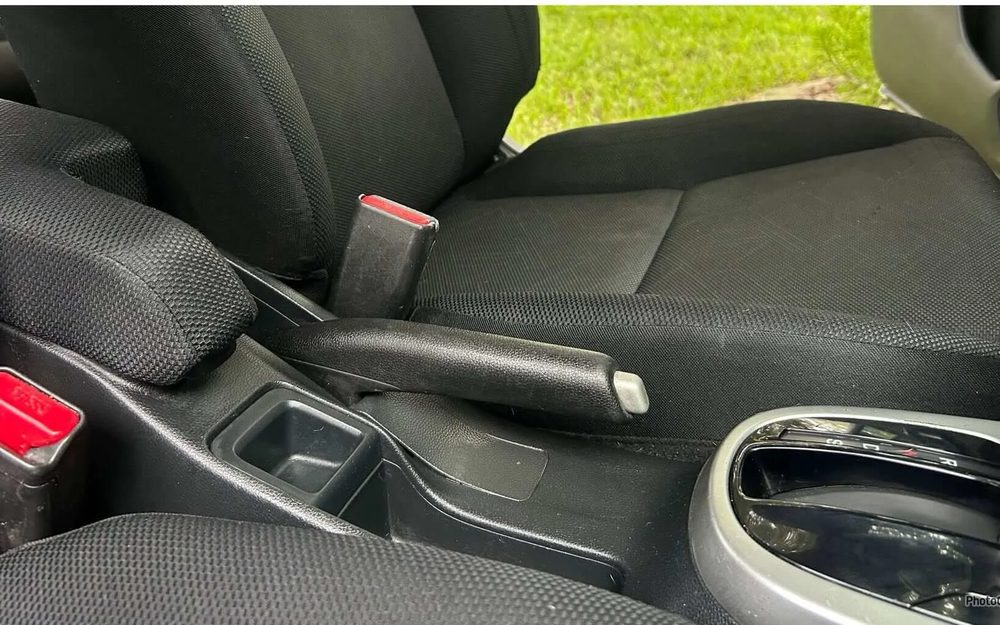 After
Black Cloth Seat & Console — Grey-White Bloom
A black cloth driver seat and the armrest and console, covered in a grey-white mold bloom, with green lawn visible outside the window. Dark fabric shows the powder clearly, and it often goes deeper than it looks. We vacuum with a HEPA filter, treat with Benefect and steam, extract, dry and then run ozone. Cars parked beside irrigated lawns and under trees often stay damp longer.
 Before
 After
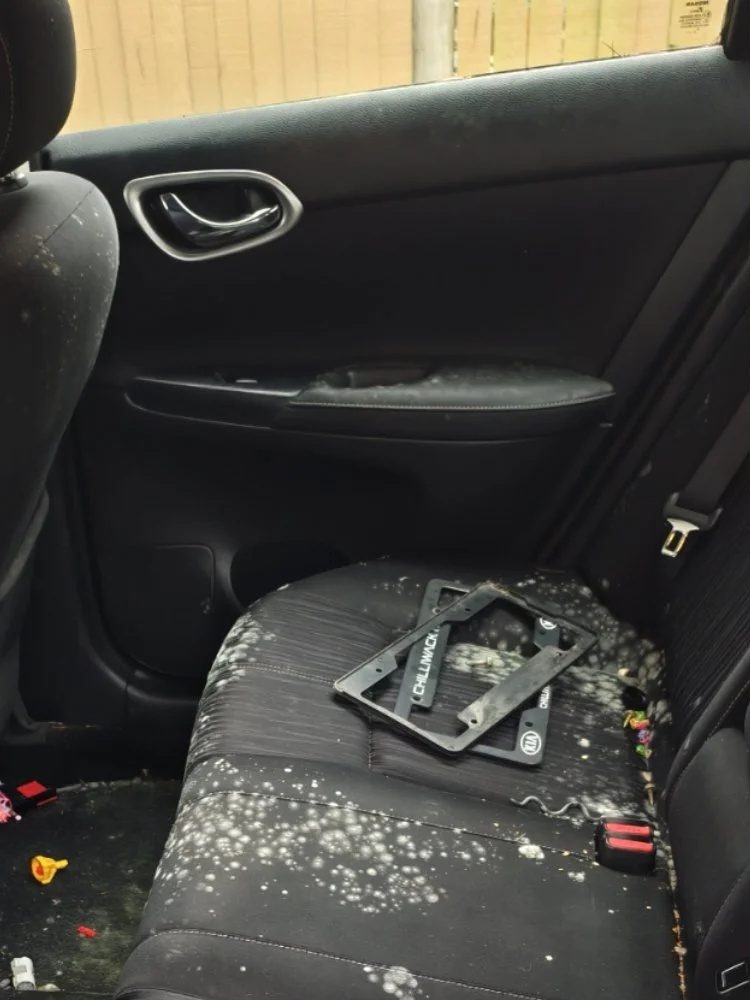
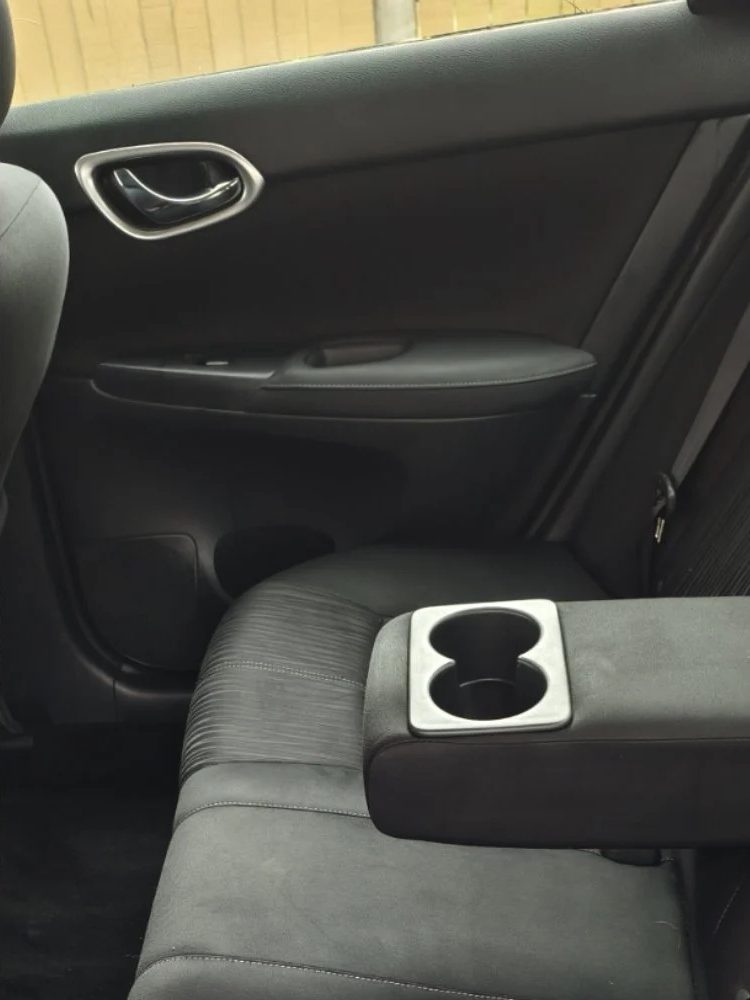
Rear Seat & Door Panel — White Spotting
The rear seat and door panel of a black sedan, with white mold spots on the cushion plus loose debris and a license plate frame left on the seat. We clear the debris, HEPA vacuum, and steam and extract the cushion before Concrobium and ozone. Back seats are where wet towels, bags and gear tend to land, so rear cushions often show growth first in cars that carry outing gear.
 Before
 After
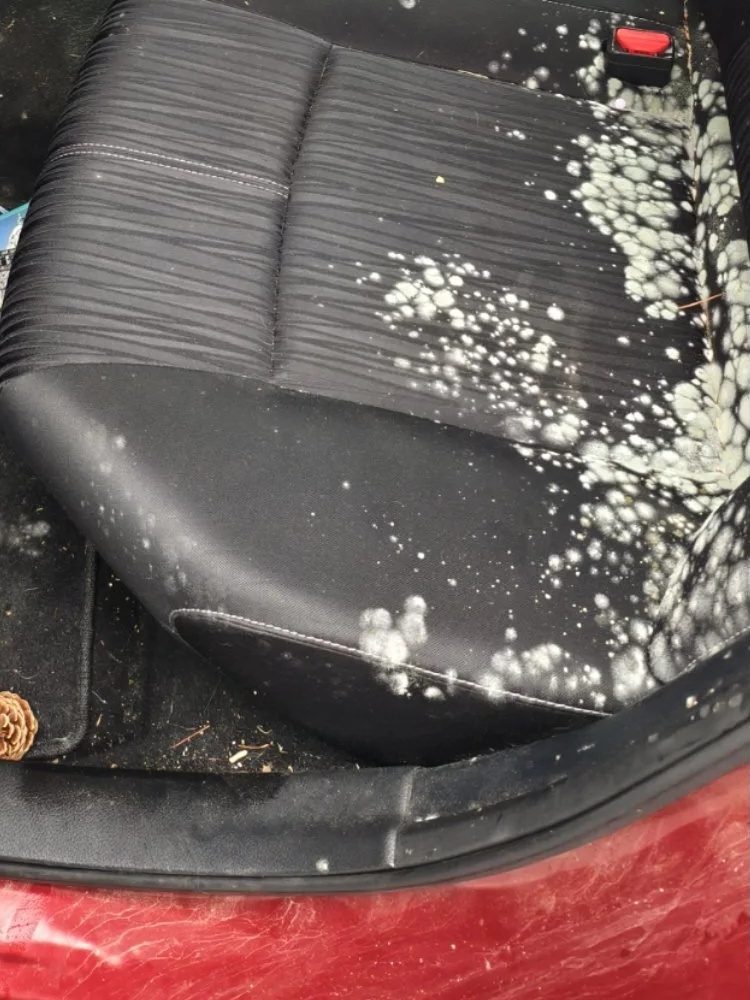
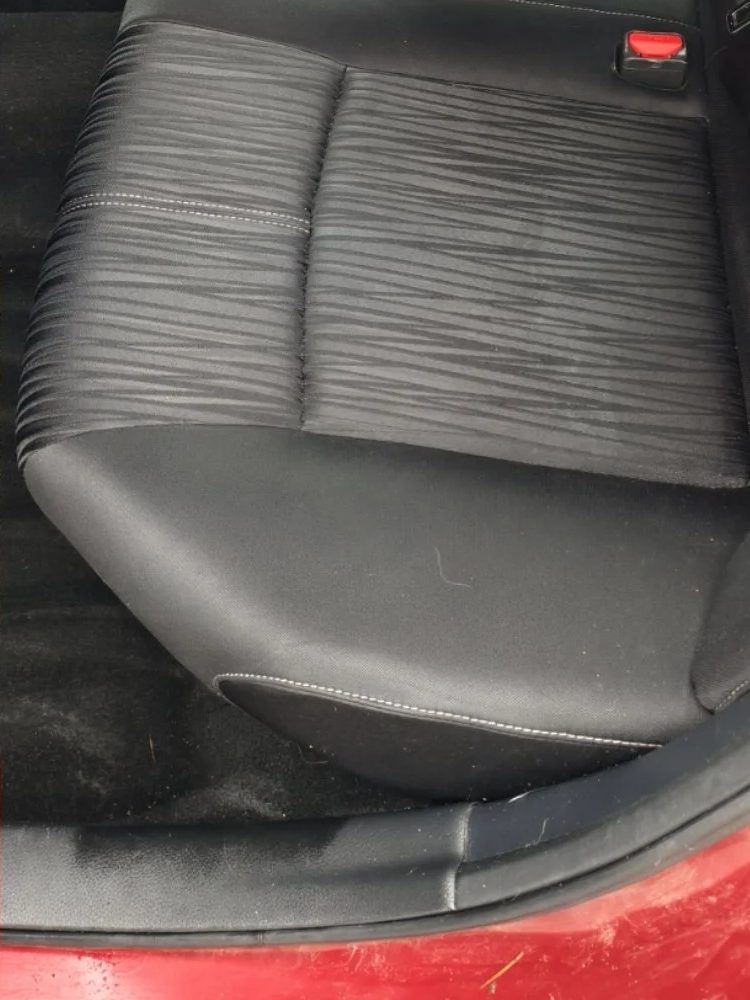
Black Cloth Seat — White Speckles
A black cloth seat peppered with fine white mold speckles, with the red car body visible below the window. Early speckling like this is the stage where treatment is simplest, because growth is mostly on the fabric surface. We steam and extract, apply Concrobium and finish with ozone. Cars that spend many afternoons in direct sun, then get closed up damp, can develop this pattern during the rainy months.
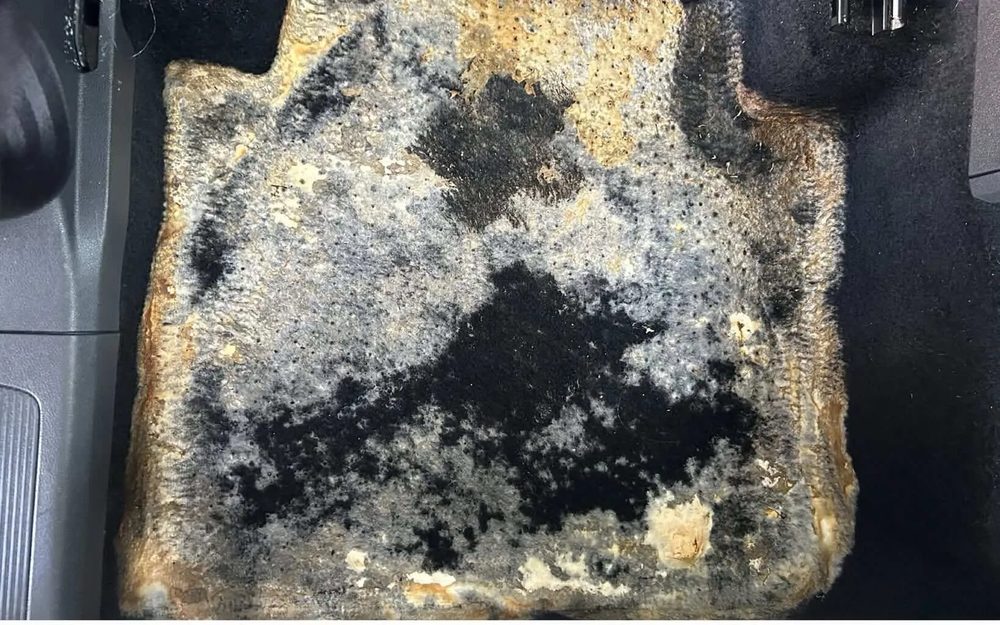 Before
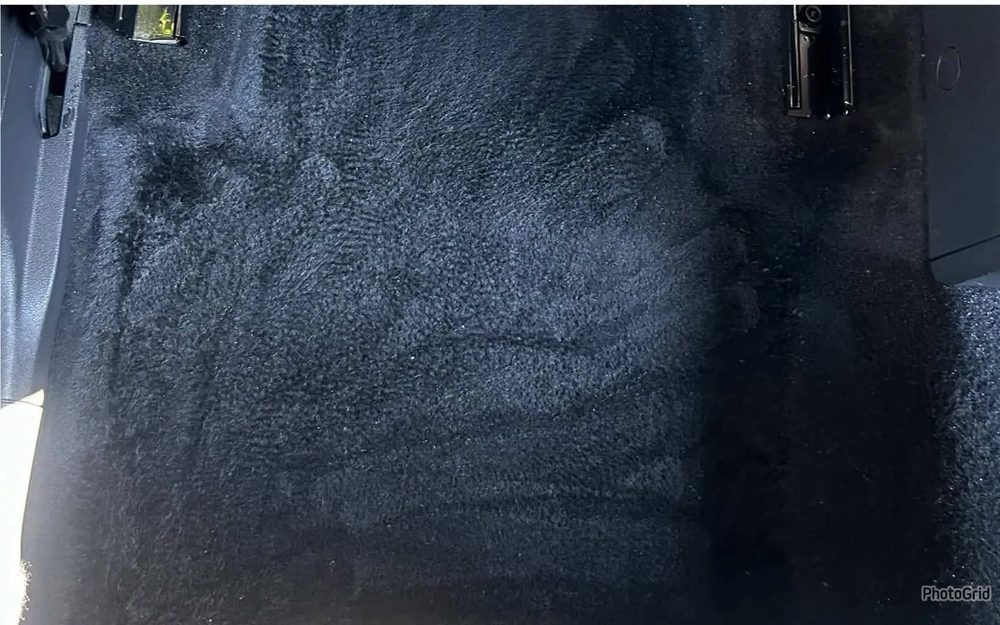 After
Floor Mat — Heavy Colony Growth
A carpeted floor mat with heavy black, brown and white mold colonies. This is what happens when the carpet stays wet for a long time, and the damage usually continues into the pad underneath. We lift the mats, HEPA vacuum, treat with Benefect, steam and extract the carpet and dry it thoroughly before Concrobium and ozone. A wet floor from park or beach days that never gets aired out is a classic route to this result.
100% Satisfaction.
Written. No exceptions.
If the result doesn’t meet our standard, or yours, we come back and redo it at no charge. No forms to fill out, no arguing over what “counts.” The guarantee is in writing before we ever touch your vehicle.
Request Mold Removal in North Miami · From $549
Fill this in once and send it. We get your address, vehicle, and the situation all in one message, no phone tag.
Rating
Detailed
Response
Three steps from a damp cabin to a dry, clean one,
and we handle everything in between.
No drop-off. No waiting. We come to North Miami.
We come to you in North Miami,
from Keystone Point driveways to Sans Souci apartment lots.
Mobile service: home, office, condo, or marina. No drop-off, no travel fee.
Not seeing your city? Ask us — we likely cover it.
Wet towels, bay air and a rainy June
are hard on a car's interior in North Miami.
North Miami sits about 7 feet above sea level on Biscayne Bay, with the Oleta River, Arch Creek and a web of canals nearby, so damp air lingers and a sealed cabin dries slowly. Left untreated, what starts as a musty smell becomes a real health issue for the next person who drives the car. DShine's Concrobium Mold Control and ozone process address the cause, not just the symptom, backed by $2M insurance and a written guarantee. Mold doesn't need much to get started, any trapped moisture inside a closed cabin is enough given South Florida's humidity. The source is almost always one of four things: a clogged AC condensation drain letting water pool silently on the floor pan, a failed door or window seal letting rain in, a clogged sunroof drain, or the car simply sitting unused for two or more weeks without the AC running. In North Miami the cause we meet most is wet gear left in a closed car after a day at the park, the bay or the pool, where damp fabric holds moisture against the carpet for days.
North Miami neighborhoods we serve,
from Keystone Point to Sunkist Grove.
From the bayfront and Keystone Point to Sunkist Grove and the Biscayne Boulevard corridor, North Miami's parking and moisture change street by street.
Oleta River State Park & FIU Bay Campus — Oleta River State Park, 1,043 acres on Biscayne Bay, sits beside the nearly 200-acre FIU Biscayne Bay Campus, which serves more than 7,000 students. Park-day cars come home with wet towels and paddling gear, and campus cars sit for long stretches. We work at your home or office, not inside park or campus lots.
Downtown & NE 125th Street — The downtown core runs along NE 125th Street, where the Museum of Contemporary Art (770 NE 125 Street) and the 1928 Spanish-Mediterranean City Hall sit. Apartment buildings and small lots mean many cars park in shared spaces. We plan access with the property office and choose a spot out of the foot traffic.
Biscayne Boulevard Corridor — Biscayne Boulevard runs through the city as US 1, and a county-mapped district covers the frontage from NE 125th to NE 163rd Street. Offices, shops and apartment buildings line it, so cars here are often commuter cars parked in lots. We can meet the car at your home or at a workplace that agrees to a visit.
Keystone Point — Keystone Point is a canal-front community of about 880 single-family homes on Biscayne Bay, off NE 135th Street. Driveways and carports are the norm, with a marina nearby, and boat gear rides in the car. Humidity off the water and tree cover slow drying, so wet fabric is the usual cause we see here.
Sans Souci — Sans Souci Boulevard is lined with condo and apartment buildings, the Penny Sugarman Tennis Center sits in the neighborhood, and North Bayshore Drive runs nearby. Most cars here live in shared lots, where no one checks a parked car for weeks. We confirm lot rules and the stall before we arrive, since access depends on the building.
Sunkist Grove — Sunkist Grove is a residential area west of I-95 around NW 125th Street, anchored by the Sunkist Grove Community Center on NW 13th Avenue. Many of its homes are mid-century single-family houses with driveways and carports. Cars here sit outside year-round, so worn door seals and sunroof drains are common starting points.
Arch Creek & Enchanted Forest — Arch Creek Park, at NE 135th Street and Biscayne Boulevard, protects a natural limestone bridge, and Enchanted Forest Elaine Gordon Park, 22 acres at 1725 NE 135th Street, borders the creek. Shaded streets nearby keep cars damp longer, and family outings with gear are common. We work at your address, not in the parks.
Don't see your area? Ask us — we likely cover it.
North Miami car mold,
the questions we hear after park days and storms.
Tap any topic to read the full breakdown.
Biscayne Bay forms the city's eastern edge, and the ground is low, at an elevation of about 7 feet. Wikipedia lists 10.05 square miles in total, 1.59 of them water, roughly 15 percent. Add the Oleta River, Arch Creek and the canals around places like Keystone Point, and moisture is rarely more than a few blocks away.
Rain follows a steep calendar. The climate table posted for North Miami gives roughly 66 inches a year, with June the peak at 10.24 inches and the five months from June to October adding up to about 42. January and February, by comparison, average near 2.3 and 2.2. The table names no station, so treat it as a regional guide.
Who lives here matters as much as the sky. Of 22,948 housing units in the 2020 Census, only 7.2 percent stood vacant, so cars are in daily use, not shut away. Census QuickFacts puts home ownership at 43.5 percent, which means most households rent, and a great many vehicles spend their nights in driveways, carports or open lots.
Ordinary family transport leads the list: sedans, crossovers and SUVs that spend the weekend hauling kids and gear. After a day at the park these come home with a damp towel in the back, a leaking cooler or a pair of soaked sneakers, and growth tends to begin low, in the rear carpet and cargo floor, then creeps up into the seat bases.
Next come the working commuters, among them students, campus staff and people with jobs along Biscayne Boulevard. Their cars log slow miles and sleep outdoors, so the story usually involves a hardened door seal, a blocked A/C drain or a sunroof that was left ajar when clouds built up.
A third group is the quiet one: an older car kept in the family for years, a second vehicle that only moves on weekends, or a work van with a wet floor. Whatever it is, the patch you can see is seldom the whole picture, so we check headliner, seats, carpet and vents before we say whether the job is one area or the entire interior.
Driveway or carport at a house: the standard setup on older streets. Sun dries the interior on clear days, yet a hardened door gasket or a plugged sunroof channel lets in the afternoon storm, and a car parked under a thick canopy stays damp much longer than one in the open. Growth usually starts at the sill carpet or the seat bolster nearest the leak.
Numbered stall in a shared lot: with more renters than owners, plenty of vehicles sleep in assigned spaces where nobody looks at a car that is not moving. A small leak or a forgotten gym bag has weeks to work, so the first warning is often the stale breath of the cabin on the day you finally drive.
Campus, workplace or trailhead lot: a car at FIU or at Oleta River State Park roasts for hours with the glass up, and a hot interior full of wet fabric behaves like a greenhouse. One outing seldom causes mold by itself. The same damp towels in the same shut car every weekend do.
Curbside and canal-side swales: vehicles on residential streets near the water catch every shower, and fallen leaves clog the drains under the windshield. When that water has nowhere to go, it backs toward the cabin, and the carpet beneath the pedals is the first thing to get wet.
Late May and June: the rains arrive in earnest, and June averages about 10 inches according to the climate table. A seal that coped all winter now admits real water. This is when a drip becomes a soggy carpet, and when drivers start noticing a smell that was absent in April.
July and August: hot, wet and busy. Park and bay days are at their peak, so kayaks, bikes, towels and swimsuits ride in and out of the vehicle, and students on summer break often leave a car untouched for weeks. Heat plus moisture plus stagnant air is the most direct route to growth.
The storm peak, mid-August into October: hurricane season officially runs from June 1 through the end of November, and the National Hurricane Center puts the climatological peak at September 10, with most activity between mid-August and mid-October. Vehicles are repositioned, windows rechecked and doors kept closed, which suits the storm plan but seals in any dampness already present.
November to April: rain drops to two or three inches a month and cooler weather invites more outings, so gear gets wet more often. The overall risk eases, yet an interior that soaked up water in autumn can still smell stale in January, and a winter-break trip leaves the vehicle closed for weeks.
Before we roll up, we picture the street. Many North Miami blocks have narrow driveways, low branches and swales where a van cannot pull in, so we ask where the car sits, whether it can move to the front, and where we can stop without blocking a neighbor. An ideal spot has room for four open doors, some shade and no sprinkler head aimed at the paint.
Tenants should clear the plan with the landlord or the leasing office first. Some communities allow outside vendors in the lot, others want a notice or prefer a guest space. Tell us what applies and we adapt. A manager who asks for proof of coverage can have it; our liability policy is $2M.
Vehicles that live at FIU, at a campus job or at an office are better handled elsewhere. Since the work runs 3 to 4 hours, most owners ask us to meet the car at home, or at a workplace whose manager agrees, instead of occupying a space through a class or a shift.
If you cannot be present, a roommate, relative or neighbor can pass over the keys. Photos reach your WhatsApp during the work, and the price is settled before any product goes onto the upholstery, so nobody has to approve work they cannot see.
1. Wet gear and damp fabric in a shut car: the leader here. Towels, swim bags, water shoes, a rain jacket, or the straps and pads from a paddling day go in wet and stay wet. The interior is sealed, the fabric presses water into carpet and foam for days, and the pad stays soggy long after the top layer feels dry.
2. A clogged A/C drain or an evaporator that never dries: when the drain backs up, the housing under the dash stays soaked, and turning the A/C off at the end of each short trip keeps it that way. A sour whiff from the vents right after start-up is the typical giveaway, and growth is often inside the ducts before it is on any seat.
3. Worn door seals and sunroof drains on daily drivers: older commuter cars with tired rubber take the heaviest summer downpours. Water finds the lowest corner, usually a front footwell or the base of the rear seat, and a vehicle left outside for months slowly soaks its carpet from underneath.
4. A cracked window or sunroof before a storm, or a long idle stretch: a quarter-inch gap on a bright morning becomes a drenched seat after an afternoon cell, and a car that begins a break slightly damp has nothing to dry it. Both start quickly, are easy to prevent, and show first in the headliner and seat seams.
First half hour: the van arrives at the agreed time and we settle on a spot with you or your contact: four doors open, a little shade, no sprinkler head pointed at the car. We photograph the trouble areas, then a HEPA vacuum pulls loose spores and grit from the surfaces before any liquid touches fabric.
Hours one to three: the wet stage. Benefect goes on first to decontaminate, then scrubbing, steam and extraction lift growth from cloth, carpet and foam, and the interior gets time to dry. Leather is handled with the leather-safe method. Concrobium Mold Control follows, and the vehicle is sealed for ozone with nobody inside.
The close: once the air has cleared, a Meguiar's odor bomb runs, and we make a final pass over the air vents, seat seams, roof lining and cargo area. Expect 3 to 4 hours, longer if the mold has spread everywhere. Photos land on your WhatsApp as we go, and the keys return to whoever let us in.
The opening line is nearly always about the smell: musty, sour, worse after rain, noticeable since a weekend at the park. People want to know whether it really is mold. Photos usually tell us, so send the worst patch, a shot of the vents if you can, and a line about where the vehicle is kept.
Money comes next. One affected area is $549, a vehicle with mold throughout is $749, and the drive to you is included. Which tier fits is confirmed in under 2 minutes, and the exact figure is fixed after we review what you sent, before anything begins.
Logistics follow: does the landlord need to know, can it happen at the curb, will the car vanish for a day. It stays where it is, nothing gets towed, and the work takes 3 to 4 hours. If mold or its odor comes back inside the 30-day window, the re-treatment is free.
When an interior smells stale but nothing is growing, Odor Removal ($349) is often the better fit, and the inspection settles it. If that lighter job is all the car needs, we say so rather than sell more than necessary. If growth turns up, the mold service covers it.
A vehicle that lives outdoors in sun, sprinkler spray and summer storms is a candidate for Ceramic Coating. A daily driver that has aged for years in a driveway may want Paint Correction for swirls and dull patches. Doing either on the same trip saves a second appointment.
After a storm that leaves water inside, Flooded Car Detailing ($549) sometimes comes up. Tell us what happened and when, and we steer you to the service that matches, whether that means flood treatment or mold removal. The inspection draws that line.
Look first. On a dry morning, wipe a thumb along the inner face of the windshield; a film or fog means moisture is coming from within. Scan the stitching and seams for pale flecks, and the wheel and shift knob for a powdery or tacky bloom. These show up well before any smell.
Then feel. Press the carpet under the mats, especially in the front footwells and behind the driver's seat. Cool, spongy carpet on a hot afternoon is holding water. The trunk floor and the spare-tire well are the other usual spots for dampness.
Finally, sniff the vents. Start the engine with the A/C on and pay attention to the first ten seconds. A sour, earthy or dishwater smell points at the evaporator, and often at growth in the ducts. If any check turns something up, send a photo before it spreads.
Up to two weeks: the danger is an interior that is already damp. A wet towel, a spilled drink or carpet that never dried is plenty. Remove everything, let the doors stand open in the sun for an hour, and park with the windows fully shut.
About a month: think of a family visit abroad or a work assignment out of town. Park the vehicle dry, confirm the sunroof is closed, and ask a friend to turn the engine over, switch on the A/C and circle the block once or twice while you are away.
A whole semester or summer: a car this long at rest needs a keyholder. Ask that person to switch the A/C on every fortnight and look for fogged windows or an earthy smell. A tub of moisture absorber alone will not dry a soaked carpet. Catching trouble in week three costs far less than finding it in month three.
Census QuickFacts puts North Miami at 2.91 people per household, which fits what we see: a daily driver, a family car and a third that mostly sits, all sharing a driveway or a pair of stalls. If one has mold, the vehicle parked beside it has usually weathered the same rain, so both deserve a look during the same stop.
Each vehicle gets its own price: $549 for one area, $749 throughout. The daily driver and the car that sat for a month can land in different tiers, so we inspect each and confirm each figure before starting. The written 30-day guarantee protects every vehicle we treat.
When the cars live at different addresses, say a student's lot space and the family driveway, mention it when you book. We sequence the work, take the worst one first and sort out the keys, so a single trip can cover the lot and nobody has to wait for a second appointment.
Coverage: if mold, or the smell of it, returns within 30 days of treatment, we re-treat at no charge. The promise is 100 percent, in writing, and in your hands before the job begins, so you know the terms before you commit to anything.
How to claim: send a photo or describe the smell, and we book a time at the same address. No form, no debate. We stand behind the outcome of our work on that vehicle, and a prompt photo makes the follow-up visit quicker to schedule.
What helps it last: dealing with the water source. If we spot a worn seal, a blocked drain or a habit such as stowing wet gear in a shut interior, we say so directly, because correcting it is the best protection for the result.
A car that has lived through a decade or more of North Miami humidity has hardened rubber, original carpet, brittle adhesives and foam that has absorbed years of damp. Those cars get more extraction and less scrubbing, restrained wet work and a longer drying window, and we flag any spot too fragile for a hard pull.
Leather is treated differently from cloth. We use a mild antimicrobial, measured steam and very little water, so the hide neither dries out nor cracks. Wood grain and dash trim get the same light touch, because both can be marked by too much water or too much rubbing.
A pickup that hauls kayaks and tools, a contractor's van or a rideshare sedan has a different problem: wet boots and gear every day, and no time to spare. Tough surfaces suit the full 11 steps, and we plan for 3 to 4 hours so the vehicle is back to earning quickly.
Dry it out. Pull every damp item from the interior, including swim gear, bags, reusable totes and cups. Press the carpet; if it feels cool, let sunlight and fresh air work on it, doors wide, until it does not. Vacuum the mats and check the cargo floor, where water pools, and take out the spare-tire cover if it feels damp.
Seal it up. Make sure every window and the sunroof are tight, and sweep leaves from the cowl below the windshield so rain can drain. In hurricane season, clear debris ahead of a forecast storm, then recheck the seals afterward.
Reset the A/C. During your last few minutes at the wheel, run the fan with the compressor off, so the evaporator coil is not dripping when the engine stops. Avoid parking straight after a damp outing, and give it a few minutes to dry.
Name a keyholder. Tell someone where the vehicle is parked and request a start-up and a brief drive every fortnight. Pass along our number too, so a first sour smell becomes a quick text instead of a surprise.
Week one: mold begins on cloth and hard plastics, and wipes away readily. A wet mat or damp seat caught now is typically a one-area job at $549, and sometimes the only consequence is a thoroughly cleaned carpet and a lesson about drying gear.
Month one: warm, damp air lets colonies push into the foam under the seats, the carpet pad and the roof lining. One patch becomes a whole-interior job, which is the gap between $549 and $749, and the smell stops being superficial.
After that: leather can stain or etch for good, and the A/C blows spores around the cabin each time it starts. Visible mold also dents resale value, and a lessor may notice it at turn-in. A photo costs nothing and tells you where the vehicle stands.
Oleta River State Park covers 1,043 acres on Biscayne Bay, the largest urban park in the Florida park system, and it offers kayak rentals, paddling and 15 miles of off-road bike trails. For many North Miami drivers a weekend means loading a car with bikes, helmets, paddles, dry bags and a cooler, then loading it up again, wet, for the drive home.
The telltale pattern is mold along the rear carpet and cargo floor, a smell strongest in the back seat, and white speckles on straps and fabric that never fully dried. A towel left to dry in a closed car on the way home does not dry; it holds water against the carpet instead.
A habit fixes most of it. Hang gear in the shade for an hour before it goes in the car, wring out towels, and drive home with the windows cracked or the A/C on before parking. If the interior already smells, we treat what has taken hold and can meet you at home after the weekend.
What we need from you is a handful of photos, a line on where the vehicle is kept and a guess at what happened. Against those we match it to a tier: $549 for one area, $749 for mold throughout. Travel is inside both figures, and you hear which tier fits within 2 minutes.
The exact price is locked once we have reviewed your photos, and never after the work has begun. Should we see something different in person that moves the job to the other tier, you hear it first and you decide. A quote that creeps upward once chemicals are on the upholstery is what we refuse to do.
Helpful extras: the address, whether it is a driveway or a lot, and who has the keys. With those, access is planned in advance, and on the day the van can go straight to work instead of waiting at a gate.
The place: a city on Biscayne Bay at roughly 7 feet of elevation, with a wet season that peaks in June, households that mostly rent, and plenty of vehicles parked outdoors in driveways and lots, many near the water or under trees.
The usual culprit: wet gear and damp fabric closed into an interior after a day at the park, bay or pool. A clogged A/C drain and worn door seals come right behind, followed by windows or sunroofs left open before a storm.
What happens: we drive to you, with travel included in the price, and work through 11 steps, among them Benefect, steaming, Concrobium and a sealed ozone cycle. It takes 3 to 4 hours, and the price, $549 or $749, is set before we start.
What backs it: IDA certification, $2M in liability coverage and a written 30-day promise. Write early; the first seven days are the least expensive, and one photo lets us name a tier.
Ozone is the final treatment, not the first. Steam, extraction and Concrobium handle surfaces; then we shut the doors and windows and operate an ozone unit inside the sealed interior. The gas travels through vents, foam, roof lining and seams, reaching airborne spores and the odor-causing molecules that no cloth can touch.
While it runs, no person or pet stays in or near the vehicle. We pick a spot out of the way, leaving space to swing every door wide when the cycle ends, and the car is not called ready until it has been aired out. Any ozone smell fades with ventilation.
After the cycle come the Meguiar's odor bomb and a last inspection of the air vents, seat seams, roof lining and cargo area. After photos arrive on your WhatsApp. The aim is an interior with no smell at all, not a perfumed cover-up.
Before you book,
answers for North Miami drivers and renters.
Add-ons North Miami clients book
Still deciding? Read: the complete mold removal guide · does insurance cover it? · why DIY mold removal fails.
Mold in your North Miami car? Get your price in under 2 minutes.
Serving North Miami and all of Miami-Dade County. Fixed pricing, no travel fee. We confirm in under 2 minutes.
It Might Just Be an Odor Problem
If there's no visible mold growth yet, the smell alone is usually an Odor Removal Detailing case ($349 flat) — faster than full mold remediation ($549–$749). See which one matches what you're dealing with: