What a Bal Harbour Mold Job Includes
This is not a car wash. Car Mold Removal uses Concrobium Mold Control treatment, pH-balanced products, and machine assistance, the same process used in pre-sale preparations for luxury dealerships.
Why it matters for your health: Mold in a vehicle is a different exposure than mold on a wall at home. With the AC recirculating, everyone inside is breathing concentrated spores for the length of the drive. The EPA and CDC both link mold exposure to respiratory irritation, allergic reactions, headaches, and worsened asthma symptoms. Children, older passengers, and anyone with a compromised immune system typically react faster and more severely than a healthy adult would. By the time the smell is noticeable, spores have usually already spread through the HVAC system into every vent in the cabin.
Curious what actually happens during the visit? Tap through our real 11-step process below to see what we do at each stage and why it matters.
What every Bal Harbour mold job gets you
Most detailers in Bal Harbour charge less. Here’s exactly what you gain — and what you risk — with each choice.
| DShine DetailsFrom $549 · travel included | Avg Bal Harbour Detailer$149 – $199 | |
|---|---|---|
| Industry certificationsIDA, Koch Chemie, Meguiar’s, 3M, Symplex, XPEL | ✓6 verified | —0 credentials |
| $2M liability insuranceWe cover any damage — in writing | ✓ | —Often uninsured |
| Deionized water systemZero mineral residue, no water spots | ✓ | —Tap water, water spots |
| Fresh microfibers per vehicleNo cross-contamination between jobs | ✓ | —Shared towels, swirl risk |
| Mold-specific chemistry onlyConcrobium, Benefect & Meguiar’s, no harsh acids | ✓ | —Industrial degreasers |
| Before & after photosSent via WhatsApp on completion | ✓ | —No documentation |
| 100% written satisfaction guaranteeReturn & redo at no cost if unsatisfied | ✓ | —No written guarantee |
| Travel to your address — $0Home, office, condo — no drop-off | ✓ | Sometimes adds fee |
DShine vs. any other detailer
in Bal Harbour, Miami-Dade County
Three things most detailers won't tell you. We put them in writing.
 Since 2018
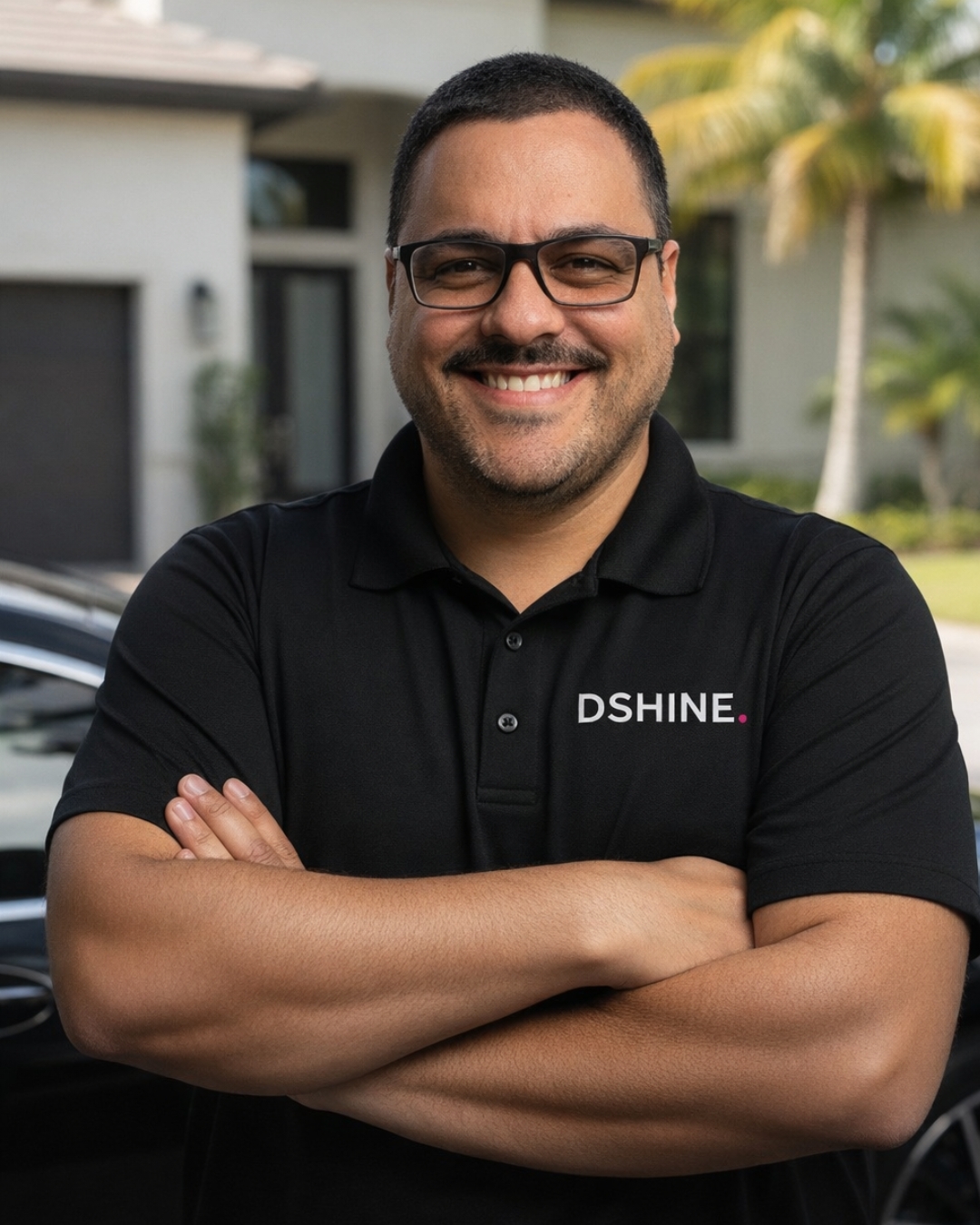
With more than 20 years of hands-on experience in the automotive care industry, Evelio launched DShine Details in August 2018 with one van and zero shortcuts. For the first six months he slept in the van to keep costs down and standards up. Today DShine runs 7 certified vans across Miami-Dade, Broward, and Palm Beach, and the commitment hasn't changed. Every vehicle is treated as if it were his own.
What clients say
in their own words.
Before & After: Mold Removal We've Actually Done
No stock photos. These are real DShine mold removal jobs across South Florida, the same 11-step process and chemistry used on every Bal Harbour appointment.
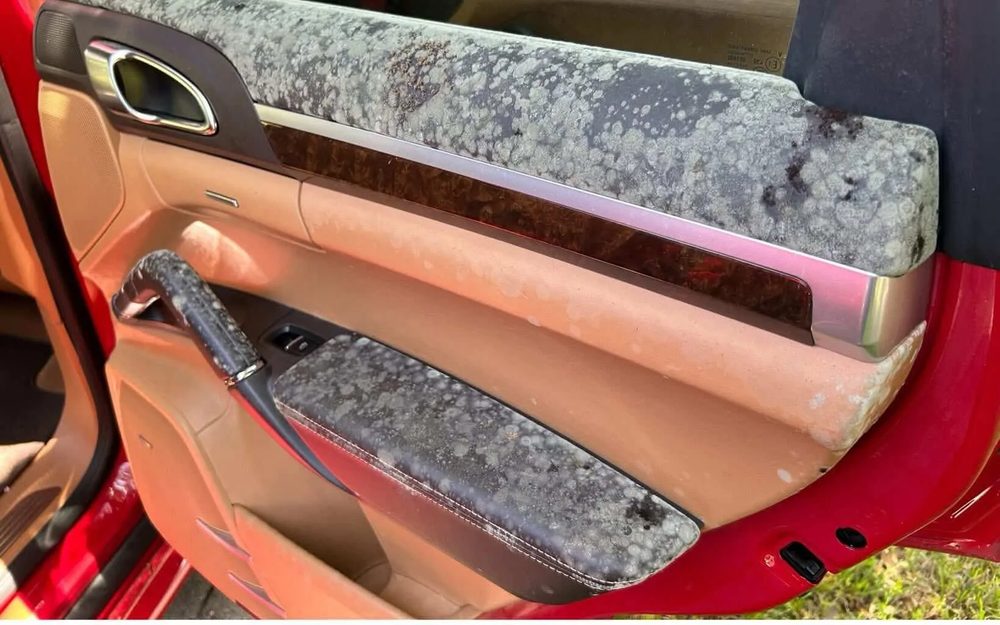 Before
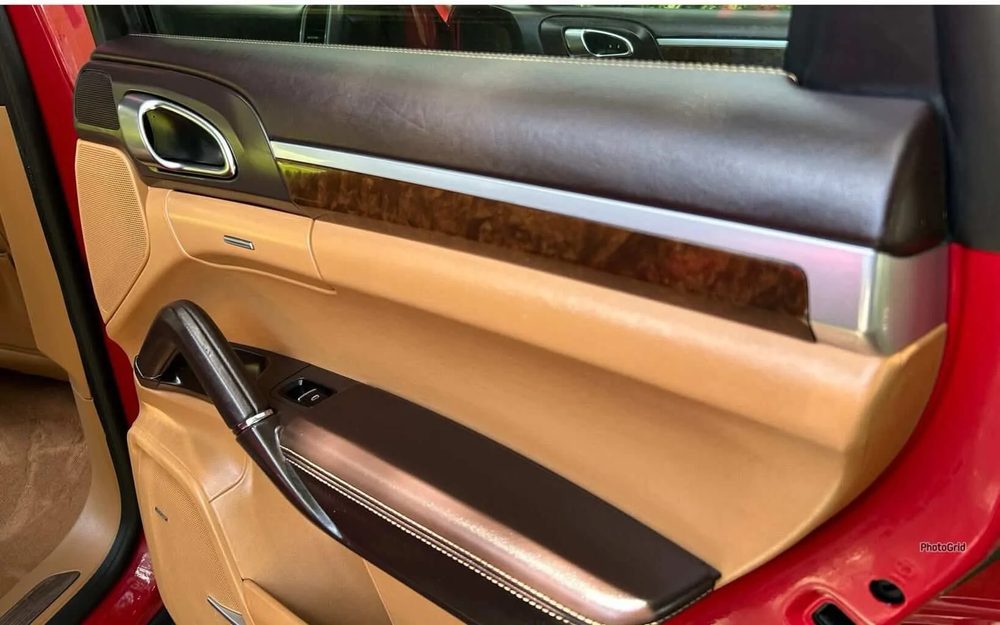 After
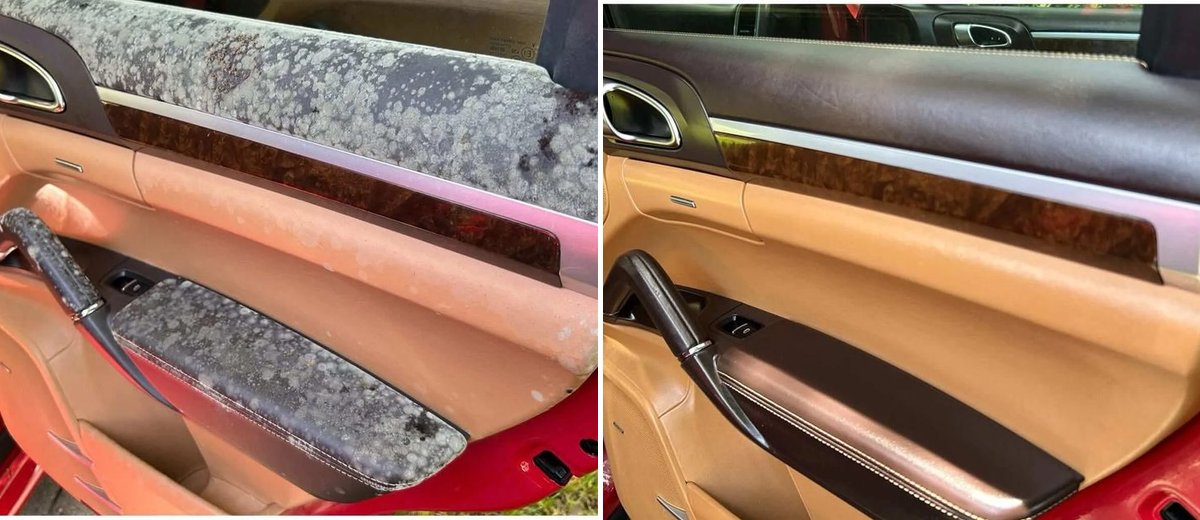
Porsche Cayenne — Door Panel & Armrest
Mold spread across the tan leather door panel and armrest of a red Porsche Cayenne, reaching up onto the wood trim. Leather like this is never scrubbed hard: we use the leather-safe protocol, steam and extraction kept clear of the trim, Concrobium and the sealed ozone cycle. In leather-heavy cars kept in closed garages, as is common around Bal Harbour, door panels are a classic first place for damp air to settle.
 Before
 After
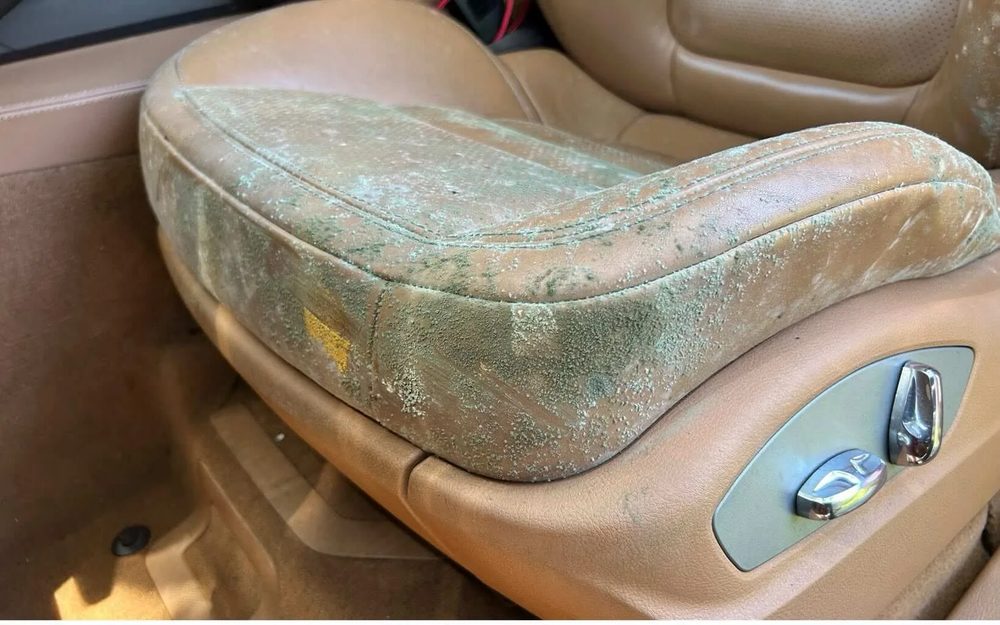
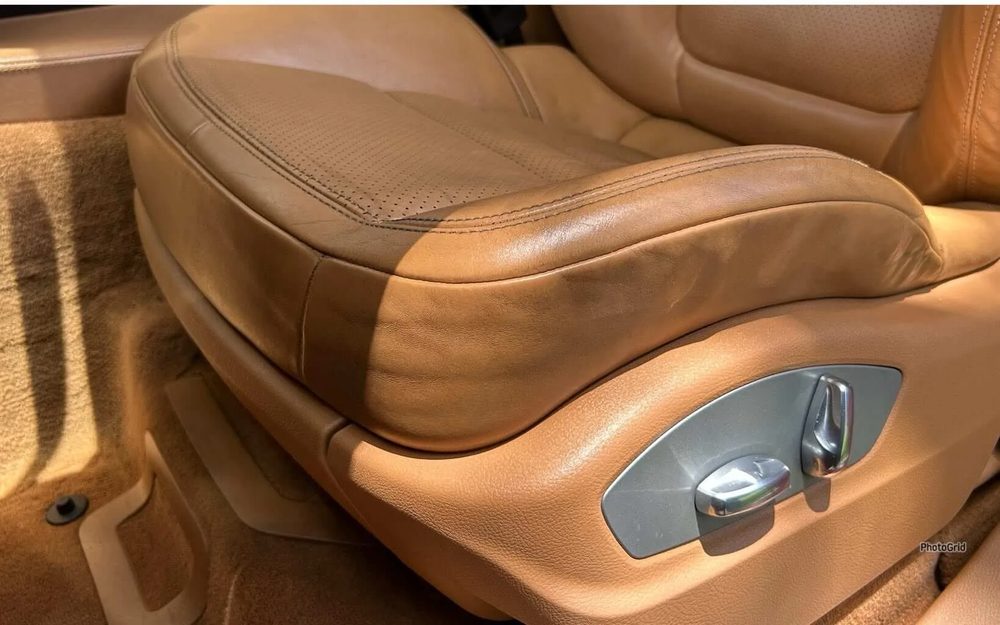
Leather Seat — Green-Blue Bolster Growth
Green-blue mold covering the bolster of a tan leather front seat, the spot where the seat flexes and traps damp air against the hide. We treat leather with a gentle antimicrobial, keep moisture low so the cushion is not saturated, and let ozone reach the spores in the air and the stitching. A leather cabin left shut in a humid garage for weeks, a pattern common near the Bal Harbour waterfront, sets up this kind of growth.
 Before
 After
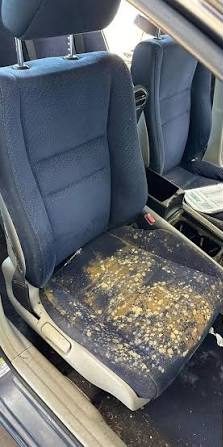
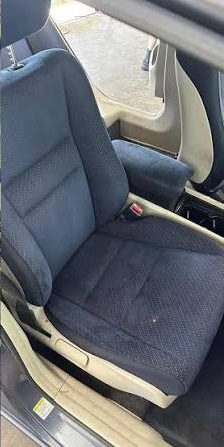
Cloth Bench Seat — Stain Residue Underneath
A dark blue cloth sedan bench seat with the cushion lifted, showing tan and yellow mold-stain residue on the underside of the seat bottom. What you see on top is rarely the whole story, so we lift, extract and treat the foam and the base, not only the cover. Wet beach towels or a spill left sitting under a cushion in humid coastal air is a typical way this pattern starts.
 Before
 After
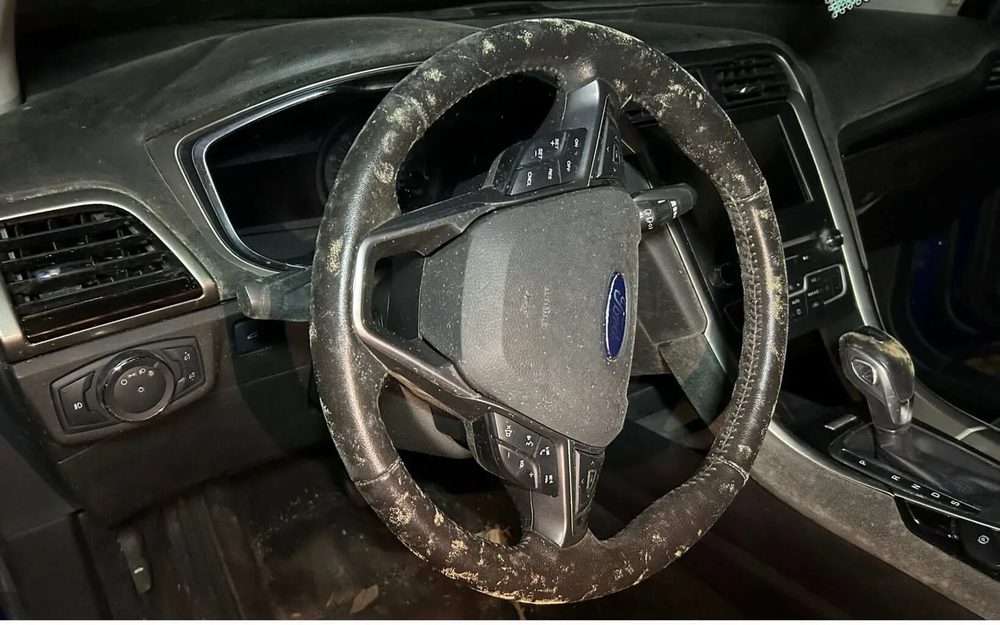
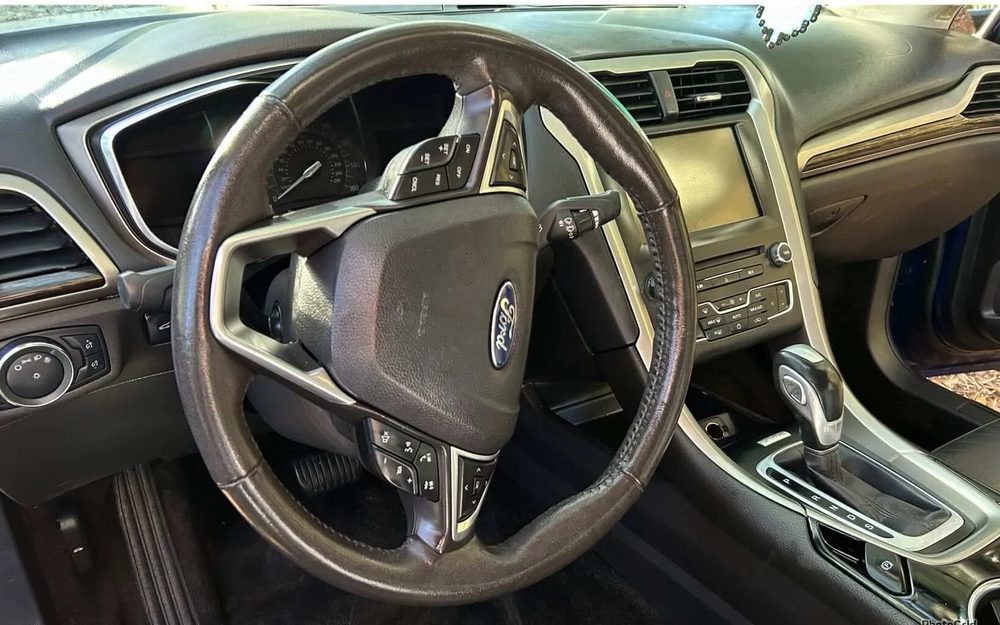
Ford Interior — Steering Wheel, Dash & Vents
Grey-white mold bloom on the steering wheel, dash and vents of a Ford sedan interior. The wheel and vents are the surfaces you touch and breathe from, so they get hand work with an antimicrobial, then steam, and the vent path is reached by the ozone cycle afterward. Short trips that switch the A/C off before the evaporator dries are a common source of this pattern in a compact, stop-and-go area like Bal Harbour.
 Before
 After
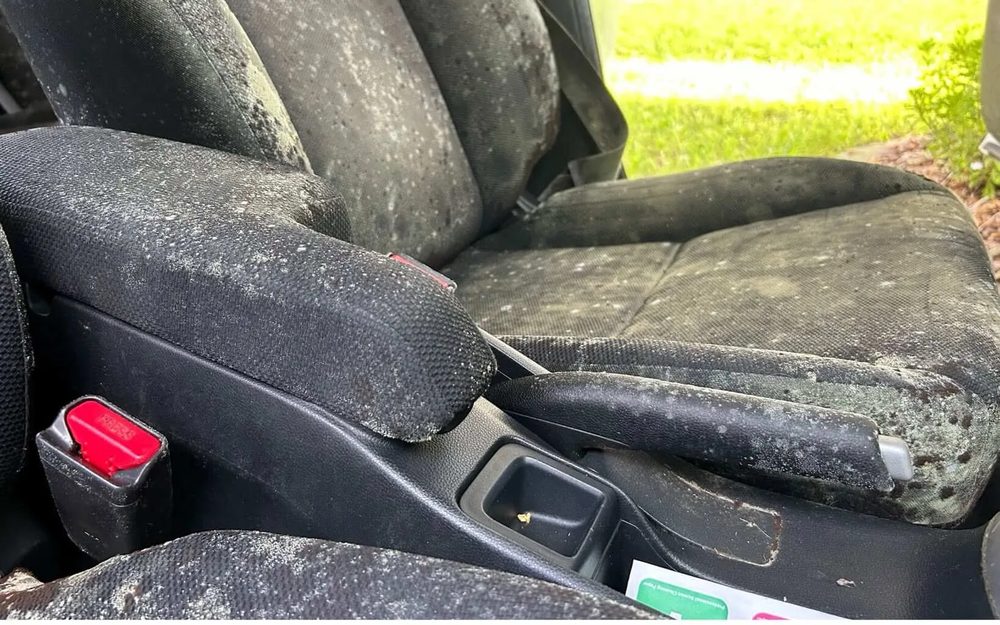
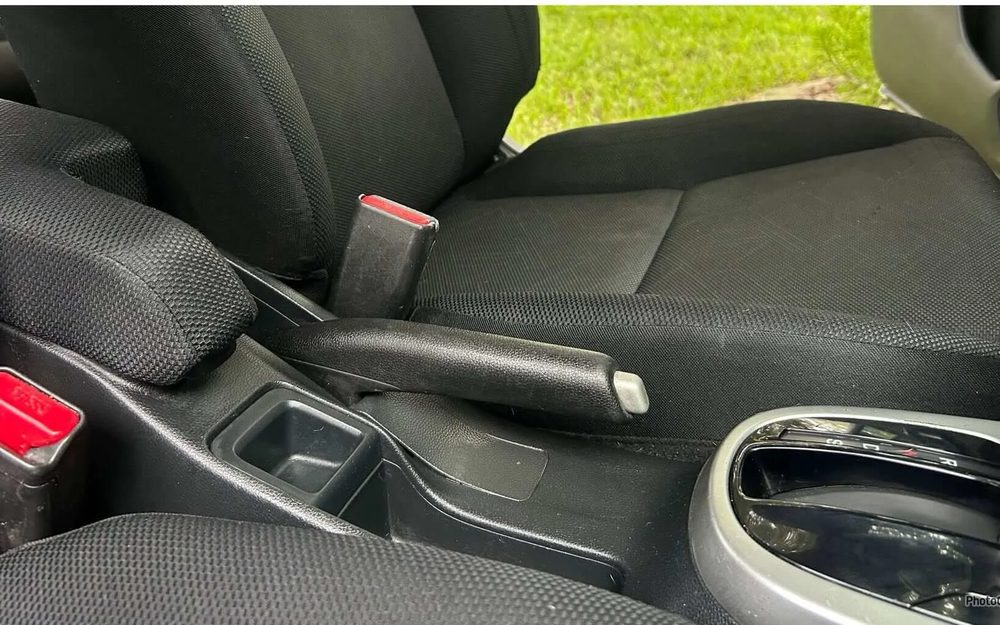
Black Cloth Seat & Console — Grey-White Bloom
A black cloth driver seat, armrest and console covered in a grey-white mold bloom, with a green lawn visible outside the window. Cloth is treated with Benefect, steam and extraction to pull moisture out of the foam, then Concrobium and ozone for the air. Cars parked beside landscaping and kept closed for days, a pattern common in driveways around Bal Harbour, collect the humidity that produces this bloom.
 Before
 After
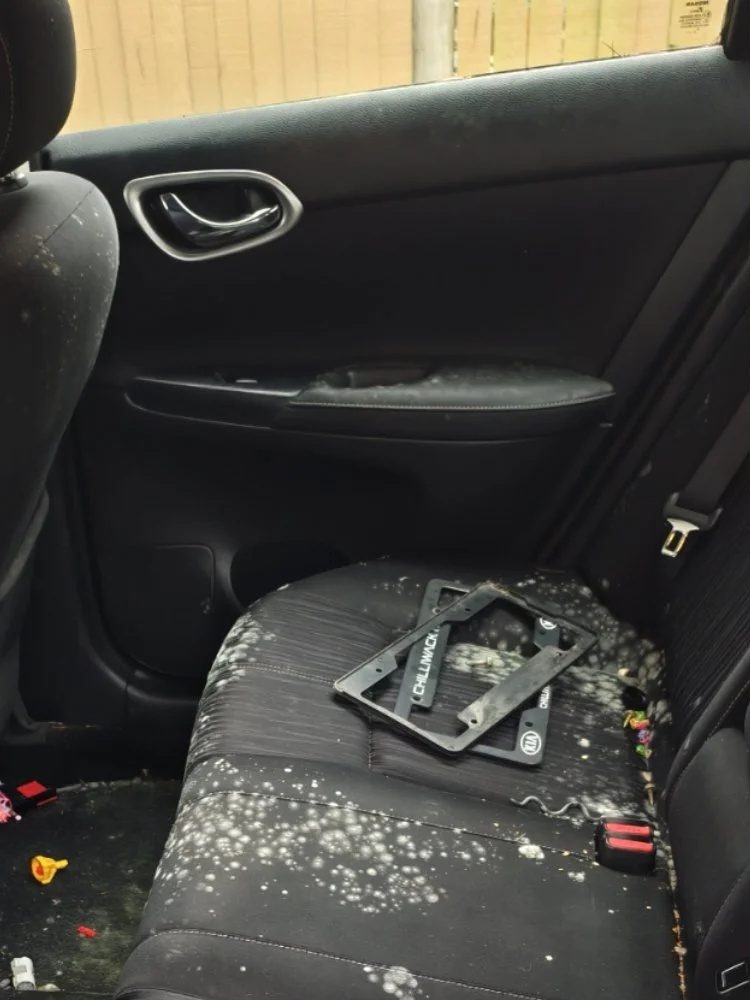
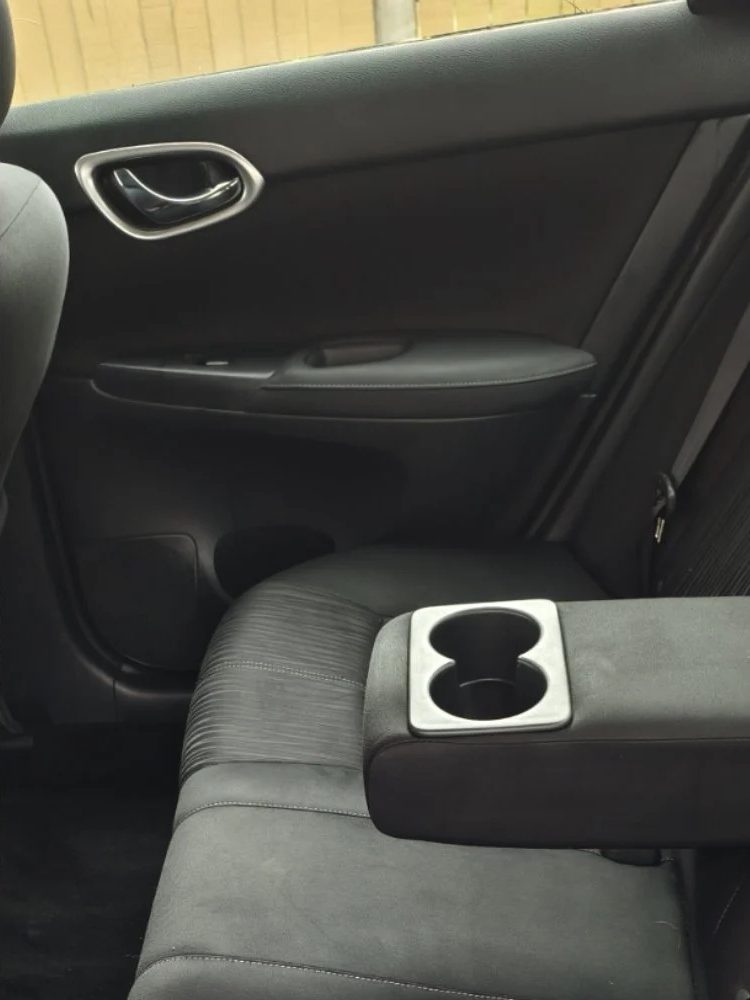
Rear Seat & Door Panel — White Spots
White mold spots across the rear cushion of a black sedan, with loose debris and a license plate frame left on the seat and mold along the door panel. Rear seats go unchecked for months, so growth sits undisturbed. We clear the debris, HEPA vacuum, treat the cushion and panel, and run the sealed ozone cycle. A car passed between several drivers or a valet is a typical case where a back seat is overlooked.
 Before
 After
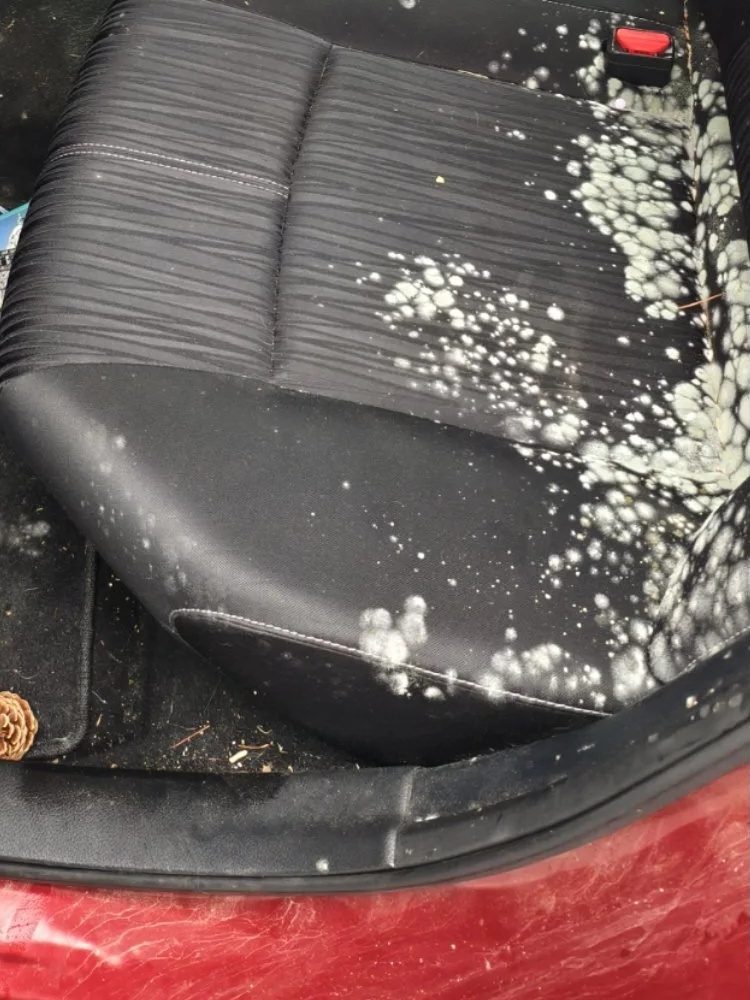
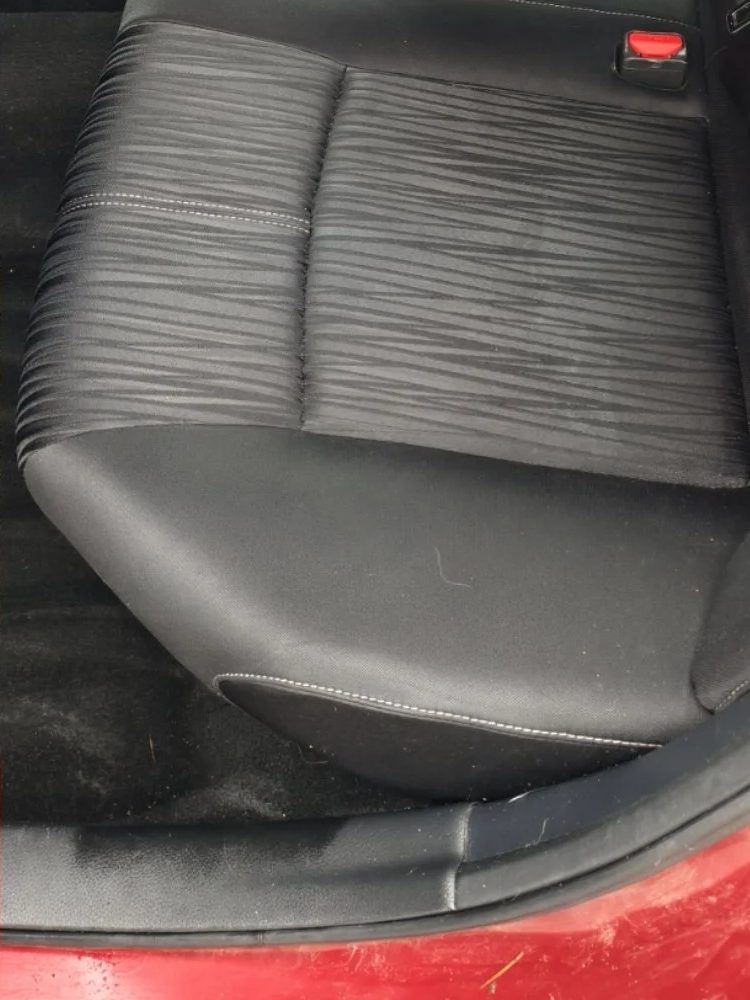
Black Cloth Seat — White Mold Speckles
Fine white mold speckles across a black cloth seat, with a red car body visible below the window. Speckling like this is often early, before growth turns into a full bloom, which makes it the best moment to treat and the likeliest to stay in the one-area tier. In humid coastal air, a cabin shut for a couple of weeks in the wet season from mid-May to mid-October is enough to start this pattern.
 Before
 After
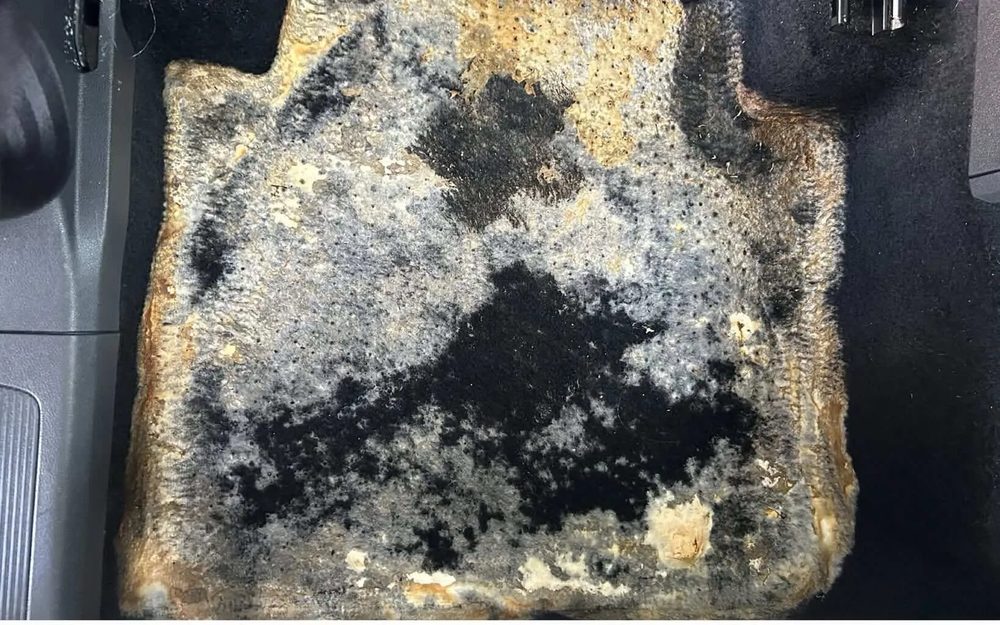
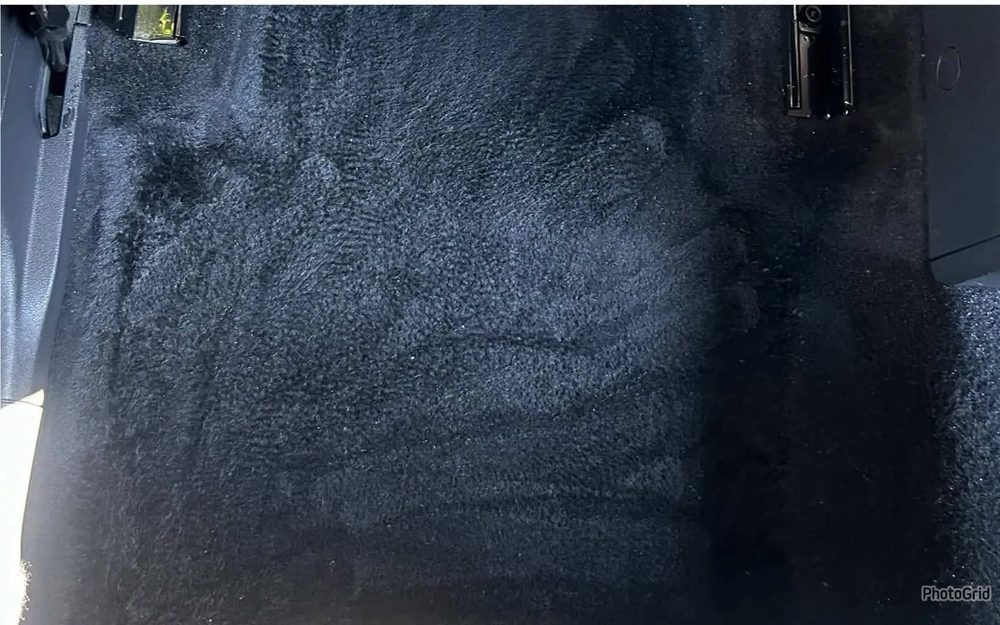
Floor Mat — Heavy Colony Growth
A carpeted floor mat with heavy black, brown and white mold colonies. Mats and the padding under them hold water longest, so we pull them, treat both sides, extract the carpet and padding and dry thoroughly before Concrobium and ozone. Damp towels, swimwear and sandy shoes carried home from the beach are a typical way a mat reaches this state, especially if the car then sits for a week or more.
100% Satisfaction.
Written. No exceptions.
If the result doesn’t meet our standard, or yours, we come back and redo it at no charge. No forms to fill out, no arguing over what “counts.” The guarantee is in writing before we ever touch your vehicle.
Request Mold Removal in Bal Harbour · From $549
Fill this in once and send it. We get your address, vehicle, and the situation all in one message, no phone tag.
Rating
Detailed
Response
Three steps from a damp leather cabin to a clean one,
and we handle the gate, the garage and the rest.
No drop-off. No waiting. We come to Bal Harbour.
We come to you in Bal Harbour,
from Collins Avenue towers to gated Bal Cross Drive.
Mobile service: home, office, condo, or marina. No drop-off, no travel fee.
Not seeing your city? Ask us — we likely cover it.
Ocean air and shut garages
are hard on leather in Bal Harbour.
Bal Harbour covers just 0.38 square miles of land, about 3 feet above sea level, with the Atlantic on one side and Biscayne Bay on the other, so no garage here is far from damp, salt-laden air. Left untreated, what starts as a musty smell becomes a real health issue for the next person who drives the car. DShine's Concrobium Mold Control and ozone process address the cause, not just the symptom, backed by $2M insurance and a written guarantee. Mold doesn't need much to get started, any trapped moisture inside a closed cabin is enough given South Florida's humidity. The source is almost always one of four things: a clogged AC condensation drain letting water pool silently on the floor pan, a failed door or window seal letting rain in, a clogged sunroof drain, or the car simply sitting unused for two or more weeks without the AC running. Here the cause we meet most is a leather-lined car closed up in a private or tower garage for weeks at a time, where a cabin that was slightly damp when parked never gets a chance to air out.
Bal Harbour neighborhoods we serve,
from the Shops to Haulover Inlet.
From the Shops to gated residential streets and Haulover Inlet, how we work changes with every parking setup in Bal Harbour.
Bal Harbour Shops — The open-air center at 9700 Collins Avenue opened in 1965 and runs valet alongside a garage entered from 96th Street. Cars here spend only hours at a time under cover, so mold seldom starts in the parking itself; it starts when a car stays on rotation for days with damp items inside. We plan around the staff and the schedule.
Collins Avenue Towers — Collins Avenue, also State Road A1A, is the village's main north-south road, and the oceanfront hotels and residences along it include the St. Regis Bal Harbour and the Ritz-Carlton Bal Harbour, which opened in 2014. For tower owners we need a name at the desk, a garage level and a time that suits the property. Assigned stalls are where cars sit longest.
Bal Cross Drive & the Gated Streets — Bal Cross Drive, where the village's first home was built, is part of the residential section the Village describes as gated. Garages here are private and closed, so a car can sit untouched for weeks. We coordinate gate access with you or a property manager, and a driveway or garage apron with room to open four doors is all we need.
96th Street & Village Hall — Village Hall at 655 96th Street, the planned 96th Street Plaza and the entrance to the Shops garage all sit along this stretch. Cars here are mostly in motion or parked short term, so mold in them usually traces to a wet cabin, a short-trip A/C habit or a leaking seal, not to where they were parked.
Bal Harbour Beach & 102nd Street Path — The Village's beach has access paths such as the 102nd Street Beach Access Path. Beach days send cars home with damp towels, wet swimwear and sandy mats, and when sargassum washes up, the smell of decomposing seaweed. We separate that smell from mold at inspection and treat the cabin accordingly.
Haulover Inlet & the Harbourfront Jetty — Baker's Haulover Inlet closes the village's northern end, and the Village's Harbourfront Park project covers the jetty from the Haulover Bridge to the beach, with work planned for 2025 to 2027. Cars here sit closest to open water, where salt-laden air reaches them first. We plan access around any construction closures.
Haulover Park & Bill Bird Marina — Just north of the village, Miami-Dade's 177-acre Haulover Park holds Bill Bird Marina, with 152 gated wet slips, dry storage and boat ramps open 24 hours. Boaters and anglers bring wet lines, cushions and footwear back to the car, which is a common moisture source. We can treat the car at your home or building.
Don't see your area? Ask us — we likely cover it.
Bal Harbour car mold,
answers for owners of leather-lined cars.
Tap any topic to read the full breakdown.
Bal Harbour covers 0.64 square miles in total, but only 0.38 of that is land. The other 0.26, roughly 41 percent, is water: the Atlantic frontage, Baker's Haulover Inlet at the northern end and Biscayne Bay on the west. Wikipedia lists the village at about 3 feet above sea level, so there is very little margin between the pavement and the water.
The village keeps no weather station of its own, so the numbers here belong to Miami International Airport, whose 1991 to 2020 normals give 67.41 inches of rain a year over about 141 wet days, with relative humidity averaging 73.2 percent. June, September and August are the soggiest months, and the stretch from about May 15 to October 15 is the airport's official wet season.
A village known for luxury shopping and oceanfront residences points us toward cars with a lot of leather in them: large SUVs, grand tourers, convertibles and sedans with full hide interiors, wood or carbon trim and suede or microfiber headliners. These materials hold a damp spell longer than plain cloth, and they show it more clearly.
A second group is the weekend car, the coupe or roadster that lives under a cover in a private garage and goes out on a good evening. Low mileage is the problem here, not a comfort. Cabin air that never moves, an A/C evaporator that rarely runs and a fitted cover that holds humidity close can quietly add up to a mold problem.
Early evidence sits on the seams. Look for a pale film along bolster stitching, a tacky patch on the wheel rim or shifter, or a faint stale whiff the first time the fan runs. All of it appears long before a strong smell, and by the time a nose notices, the foam or the headliner is often involved.
Private garage behind a residential gate: The Village describes its residential area as gated, and homes there keep cars in closed garages that can go weeks without a door opening. A still, warm garage, a cover on the car and a cabin that was driven in damp is the setup we picture most for a leather-heavy car left alone. A dehumidifier helps the room, but it does not dry seat foam.
Assigned stall in a tower garage: Many oceanfront buildings give each owner a stall in a structured garage, and the car next to yours may be driven daily, which hides how long yours has been idle. Poured concrete stays damp and air barely moves from deck to deck, so each untouched week adds risk, especially from May to October.
Valet rotation: Where a valet desk runs the parking, as at Bal Harbour Shops, a car goes wherever space allows, sometimes into a stacked row or an upper level. A short valet stay is harmless. The trouble starts when a car stays in rotation for weeks with a damp umbrella, wet towels or a spilled drink still in the cabin, because nobody is responsible for airing it out.
Open-air lot or street space: Air moves freely, which helps, but afternoon storms still find worn door seals, a sunroof drain can back up and a sun-heated cabin sweats as it cools. Cars that live outside rarely grow mold because of the spot itself. The cause is almost always a leak, an open window or a wet item left inside.
Mid-May to mid-October, the wet season: The airport station counts about May 15 to October 15 as its rainy stretch, and June leads the year at 10.51 inches in the 1991 to 2020 normals. Owners who close up a house and travel often park the car just as the air turns heavy, so this is the window in which we expect cabins to turn.
June to November, hurricane season: Between June 1 and November 30 the Atlantic is in storm season, and the busiest weeks fall from mid-August to late September. Covers go on, windows get checked and everything is buttoned up. That suits a storm and does the opposite for a cabin still holding moisture, because damp air in a sealed car has nowhere to go.
Summer sargassum weeks: On July 22, 2026 the Village posted a response to seaweed on its beach, noting daily county raking and extra cleanup near the jetty. As relayed there from the Florida Department of Health, decomposing sargassum releases hydrogen sulfide, a rotten-egg smell. That is not mold, but a cabin that came back from the beach can end up carrying both.
November to April, the drier months: Rain eases and the cooler air makes the A/C and its drain easy to forget. This is the best time to treat a car and fix its source so the next wet season starts clean. If you return to Bal Harbour after months away, open the doors and take a look before you drive.
The Village describes its residential area as gated, and the oceanfront buildings have their own front desks and garages, so nearly every visit starts with a name on a list. Give us the street address or tower, the villa or garage level and a contact who can clear us at the gate or desk, and we plan around that.
Each property writes its own vendor rules. Some want proof of insurance, which we can provide because DShine is insured for $2M in liability. Others restrict working hours, specify where a car can be set up, or send staff to accompany us. Mention yours when you book and the visit is planned accordingly.
Since the whole visit happens where the car is parked, nothing leaves the property and no stranger collects your keys for a shop. At a tower, a quiet end of the garage where every door swings open is ideal. At a home, a driveway or the garage apron does the job. We tell you in advance if we need more room.
1. A leather-lined car closed up in a private garage: The leading cause by a margin. The cabin goes in with a trace of dampness, the door closes, and leather, foam and a closed A/C box hold that moisture for weeks. A cover keeps dust off but also keeps the air still. When the owner opens the door, growth is usually on seams, bolsters and the underside of the headliner.
2. Short hops that never let the A/C dry: The Village's website calls Bal Harbour a one-mile enclave, and in a place that small most drives last minutes. The compressor chills the evaporator, the engine shuts off and the coil stays wet. A sharp, sour whiff when the fan first spins is the common symptom, and the vents often hold growth.
3. Beach and boat gear carried in the cabin: Damp towels, swimwear, wet sandals and sand from the beach or a day at Haulover are an easy source. Cloth mats hold the water, and moisture seeps into the padding underneath. If the car is then parked for a few days, the mats are the first place we find colonies, often with a crust of salt along the carpet edge.
4. Worn door seals and blocked sunroof or cowl drains: Summer storms test every seal. A cracked door gasket, a sunroof drain with debris in it or a cowl panel packed with leaves lets water into the footwell or headliner, and in a closed garage it never dries. We tell you whenever a source like this is likely to bring the problem back.
Your visit starts at the gate or front desk if your property keeps one. We meet you or your contact at the car and photograph each affected area, typically the bolsters, door cards, wheel, vents and carpet, so the after photos have an honest comparison.
Then the sequence: inspect, HEPA vacuum, Benefect decontamination, deep clean, steam, extraction, drying, Concrobium, ozone, Meguiar's odor-bomb finish and a closing inspection. On hide we keep water low and use the leather-safe protocol; wood and soft-touch trim get a lighter pass than carpet.
Budget three to four hours, a bit more if the headliner is involved. Before and after photos come by WhatsApp, and we call the cabin ready only when it truly is, which can be later than the end of the ozone cycle. You can be away while we work.
Leather comes up before price. Owners of cars with hide, wood and suede want to know whether treatment will fade, dry or mark them. We answer with the leather-safe protocol: a mild antimicrobial, restrained steam, minimal water and ozone for airborne spores in place of heavy scrubbing.
Access is second. Gate, tower garage or a hotel-style entrance? Does the property want proof of insurance? That typically takes a little planning, and we send our $2M liability certificate ahead on request. The car never leaves; we work wherever it is parked.
Price comes third. It is $549 for mold in one area and $749 for mold throughout, with travel already included. After photos or a short note, you hear your tier in under 2 minutes, and the final figure is confirmed once we have reviewed what you sent and before work begins.
A car that was parked for months often needs more than its interior. Paint that sat under a cover in humid, salt-touched air tends to collect haze and fine swirls, and many owners choose Paint Correction in the same appointment rather than scheduling twice.
Ceramic Coating suits cars that live in open parking or run Collins Avenue daily, with sun, rain and salt air working on the clear coat. Engine Bay Cleaning is a quieter add-on after a long idle, since a car that sat is often due for more than interior work.
At the inspection we decide whether the car needs full mold removal or just Odor Removal ($349), which suits a stale smell with no growth. If the cheaper service covers what we find, we book it; nobody gains from a bigger job than the car needs.
Start with leather. Chalky flecks in the stitching, a bloom on a bolster that wipes away and reappears within days, or a tacky wheel rim are the early flags, well ahead of any strong odor. Wood that looks hazed instead of glossy, or a suede headliner that feels clammy, deserves a photo too.
Then test the cabin. Lift a floor mat and press the carpet: cool and spongy means trapped water. Shine a flashlight along the base of each seat and across the rear shelf. If the glass keeps misting on the inside while the car is parked, the air in there carries more water than it should.
If a driver, manager or concierge checks on the car, ask them to open one door and take a breath. Musty, earthy or sweet-sour means send us a picture. Caught early, many jobs remain in the one-area tier; caught late, they rarely do.
The 2020 Census counted 56.6 percent of Bal Harbour's 3,507 housing units as vacant, a figure that includes second homes used part of the year, so long stretches without a driver are normal here. A car that waits well begins with an empty, dry cabin: clear out towels, bags, umbrellas and cups, vacuum the mats and let the carpet breathe in daylight before parking.
Give the leather a quick wipe with a barely damp microfiber cloth and let it dry fully, since body oils and sunscreen give growth something to feed on. Never put a cover over a damp car. A breathable cover on a clean, dry car is fine, and a plastic one is not. A desiccant tub in the garage helps the room, though not the seat foam.
If a trusted person can take the car out, a 20 to 30 minute drive with the A/C running, repeated every couple of weeks, swaps out the stale air and dries the A/C coil. Idling for a minute achieves nothing, and running an engine inside a shut garage is dangerous. Drive it, then park it.
Owners with three or four cars often rotate them, leaving one or two idle while another covers the daily miles. When several show trouble, we book them as one visit at your address: a single gate pass, one call to the property and one afternoon in place of several trips.
Pricing is car by car. One driven weekly rarely needs what one parked since spring does, so each is looked at and priced at $549 for mold in a single area or $749 for mold throughout. Our written 30-day guarantee goes with every vehicle we treat.
A useful habit in a multi-car garage is a simple log: which car was driven last, when and for how long. The car at the back of the row is nearly always the one that goes wrong, and a note on the garage wall beats good intentions. We can inspect the rest of the row while we are there.
Every job carries a guarantee: 100% satisfaction, in writing, for 30 days. If mold or the mold smell returns within that time, we re-treat the car without charge. You see the terms before work begins, so nothing needs interpreting later.
When a repeat happens, it nearly always traces to water that was never stopped: a tired seal, a plugged sunroof or cowl drain, carpet that soaked again, or a car pushed straight back under a cover in a stagnant garage. If we spot such a source during the visit, you hear about it that day so the repair can come first.
We are also direct about what treatment cannot undo. Mold that has already stained leather or etched a finish leaves a mark that antimicrobial and ozone treatment will stop but not reverse, and we tell you at the inspection where that has happened, not afterward.
Open-pore wood, stitched hide and a suede headliner call for a different hand than rubber mats do. On hide we follow the leather-safe protocol, which pairs a mild antimicrobial with restrained steam and minimal water, and ozone then handles the air. Wood and soft-touch trim are treated just as lightly.
Classics and rarities have their own demands. Brittle rubber, factory carpet and headliners that droop when wet mean we limit water and test products on a hidden patch first. If an area looks too delicate for strong extraction, we tell you before touching it.
Ozone is potent, and some vintage materials dislike it. If the car has irreplaceable trim, we go through the options with you instead of defaulting to the strongest cycle. On an expensive car, patience that leaves every surface intact beats speed that ends in a mark.
Begin inside the car. Pull out towels, swimwear, umbrellas, shopping bags, cups and any mat that still feels cool. Vacuum, and if the car was wet lately, let it sit in the sun with a door ajar for a while, because carpet padding dries much more slowly than the surface.
Then the seals. Look over each window, the sunroof and the door edges so nothing is left ajar. On the way home from your final drive, put the A/C on its dry setting for the closing minutes; so the evaporator is drier when the engine stops. Try not to park straight after a beach day.
Last, agree on a plan with whoever has access, whether a property manager, a driver or the building concierge. A short drive with the A/C on every couple of weeks is ideal, and a quick look inside is the minimum. Take a few photos of the clean cabin before you leave so a change is easy to spot.
Think of the first week as the cheap one. Mold is still on the surface then, and a single visit clears it. Leave it a month in a shut garage and the colony reaches seat foam, stitching and the headliner, which is how a $549 job becomes a $749 job.
Leather is where delay hurts most. A bolster that stays covered can end up permanently stained or dull, and once a smell is in the foam it is a stubborn guest. Re-trimming a hide seat is a far bigger bill than calling us early, and not every shade matches afterward.
Health matters too. Whenever the A/C starts, active mold puts spores into the airflow, and passengers inhale a share. Waiting for the season to change or the next trip is a poor plan, even if the car looks fine from the driver's seat.
Where resort entrances, boutique shopping and tower lobbies sit close together, a car may be driven by a valet, a household driver, a family member and its owner in the same week. Everyone treats the cabin a little differently, and nobody feels responsible for what gets left in it: a wet umbrella, a gym bag, a half-finished drink, damp shoes.
The pattern we expect is moisture in one spot, usually a floor mat or the driver's footwell, that goes unnoticed for days. In a leather cabin that moisture climbs to the seat bottoms and the lower door panels first. Ask whoever parks the car to keep the mats dry, and lift them once a week; it takes ten seconds.
If a car has been passed around and now smells off, do not try to guess who brought the moisture in. Send us photos of the seats, the mats and the vents, and tell us where it has been parked. Treatment is the same whoever is responsible, and you hear your tier in under 2 minutes, before anyone commits to anything.
Tell us where the mold is and what the interior is made of, with a few photos or a few sentences. A single area, such as one seat or one door panel, costs $549. Mold throughout the vehicle costs $749. Getting to Bal Harbour is included, and you will know your tier within 2 minutes.
The exact amount is set after we study your photos or notes, before any product is opened. If we see something different in person, we say so up front and you choose whether to continue. A price that shifts once the work has begun is what we avoid.
The photos that help most are one wide shot of each seat row, a close-up of any stitching or trim that looks off, the vents, and the floor mats lifted. Mention whether the interior is leather, wood or suede, how long the car sat and whether anything leaked. Those details let us answer faster and more accurately.
Bal Harbour is a 0.38-square-mile village about 3 feet above sea level, with the ocean on one side and Biscayne Bay on the other, humid air from May to October and many homes lived in only seasonally. Most often we find a leather-lined car closed up in a private or tower garage with a cabin that was slightly damp.
The visit happens at your gate, driveway or garage and takes about three to four hours. It covers all 11 steps (Benefect, steam, extraction, Concrobium, sealed ozone), with leather-safe methods for hide. The work is IDA certified, carries $2M of liability insurance and is guaranteed in writing for 30 days, and the price is fixed beforehand: $549 or $749.
Gates, valet stands and building desks shape the visit more than the weather does, so tell us the entrance, the level or villa and a contact name when you book. We handle the rest at your address and send photos by WhatsApp as we finish.
When the Concrobium is on, the car is closed and an ozone generator goes in. The gas drifts through the vents and the cabin air, where it deals with spores that wipes and steam never reach. Nobody stays inside the vehicle while it runs; people and pets keep away until it finishes.
At a gated home or tower garage we tell your contact the car is off-limits for the cycle and park it with room to open every door. Next we ventilate the cabin completely, set off the Meguiar's odor bomb and walk the car one more time before telling you when it is truly ready to drive.
Ozone is one stage of eleven, not the whole job. It comes late on purpose, after the wet work, so the air treatment reaches a cabin whose surfaces are already clean, and the final check confirms the smell is gone along with the visible growth.
Quick answers,
before you book in Bal Harbour.
Add-ons Bal Harbour clients book
Still deciding? Read: the complete mold removal guide · does insurance cover it? · why DIY mold removal fails.
Leather and mold don't mix. Get your Bal Harbour price in under 2 minutes.
Serving Bal Harbour and all of Miami-Dade County. Fixed pricing, no travel fee. We confirm in under 2 minutes.
It Might Just Be an Odor Problem
If there's no visible mold growth yet, the smell alone is usually an Odor Removal Detailing case ($349 flat) — faster than full mold remediation ($549–$749). See which one matches what you're dealing with: