What a North Palm Beach Mold Job Includes
This is not a car wash. Car Mold Removal uses Concrobium Mold Control treatment, pH-balanced products, and machine assistance, the same process used in pre-sale preparations for luxury dealerships.
Why it matters for your health: Mold in a vehicle is a different exposure than mold on a wall at home. With the AC recirculating, everyone inside is breathing concentrated spores for the length of the drive. The EPA and CDC both link mold exposure to respiratory irritation, allergic reactions, headaches, and worsened asthma symptoms. Children, older passengers, and anyone with a compromised immune system typically react faster and more severely than a healthy adult would. By the time the smell is noticeable, spores have usually already spread through the HVAC system into every vent in the cabin.
Curious what actually happens during the visit? Tap through our real 11-step process below to see what we do at each stage and why it matters.
What every North Palm Beach mold job gets you
Most detailers in North Palm Beach charge less. Here’s exactly what you gain — and what you risk — with each choice.
| DShine DetailsFrom $549 · travel included | Avg North Palm Beach Detailer$149 – $199 | |
|---|---|---|
| Industry certificationsIDA, Koch Chemie, Meguiar’s, 3M, Symplex, XPEL | ✓6 verified | —0 credentials |
| $2M liability insuranceWe cover any damage — in writing | ✓ | —Often uninsured |
| Deionized water systemZero mineral residue, no water spots | ✓ | —Tap water, water spots |
| Fresh microfibers per vehicleNo cross-contamination between jobs | ✓ | —Shared towels, swirl risk |
| Mold-specific chemistry onlyConcrobium, Benefect & Meguiar’s, no harsh acids | ✓ | —Industrial degreasers |
| Before & after photosSent via WhatsApp on completion | ✓ | —No documentation |
| 100% written satisfaction guaranteeReturn & redo at no cost if unsatisfied | ✓ | —No written guarantee |
| Travel to your address — $0Home, office, condo — no drop-off | ✓ | Sometimes adds fee |
DShine vs. any other detailer
in North Palm Beach, Palm Beach County
Three things most detailers won't tell you. We put them in writing.
 Since 2018
With more than 20 years of hands-on experience in the automotive care industry, Evelio launched DShine Details in August 2018 with one van and zero shortcuts. For the first six months he slept in the van to keep costs down and standards up. Today DShine runs 7 certified vans across Miami-Dade, Broward, and Palm Beach, and the commitment hasn't changed. Every vehicle is treated as if it were his own.
What clients say
in their own words.
Before & After: Mold Removal We've Actually Done
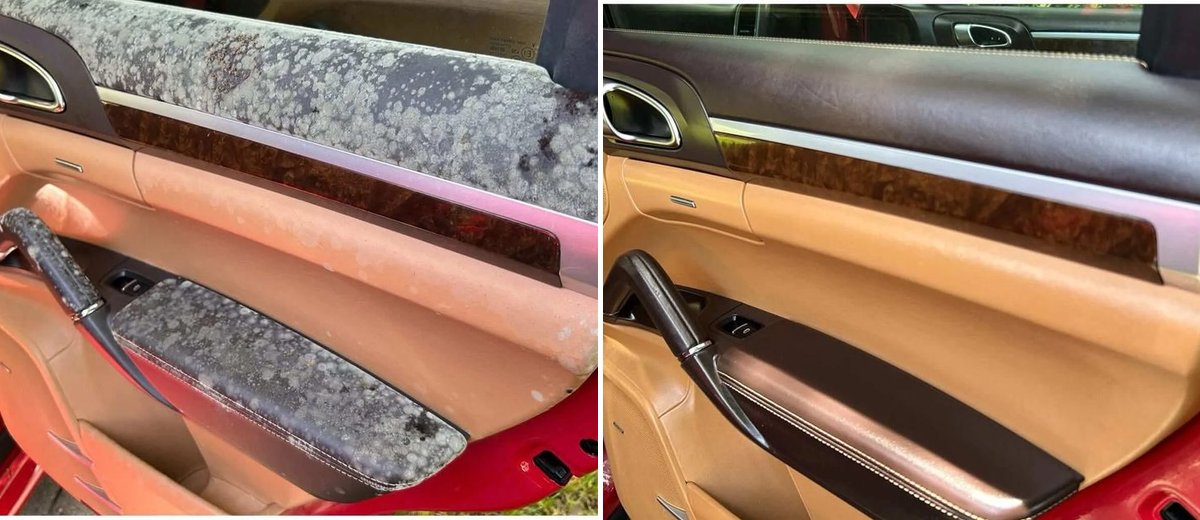
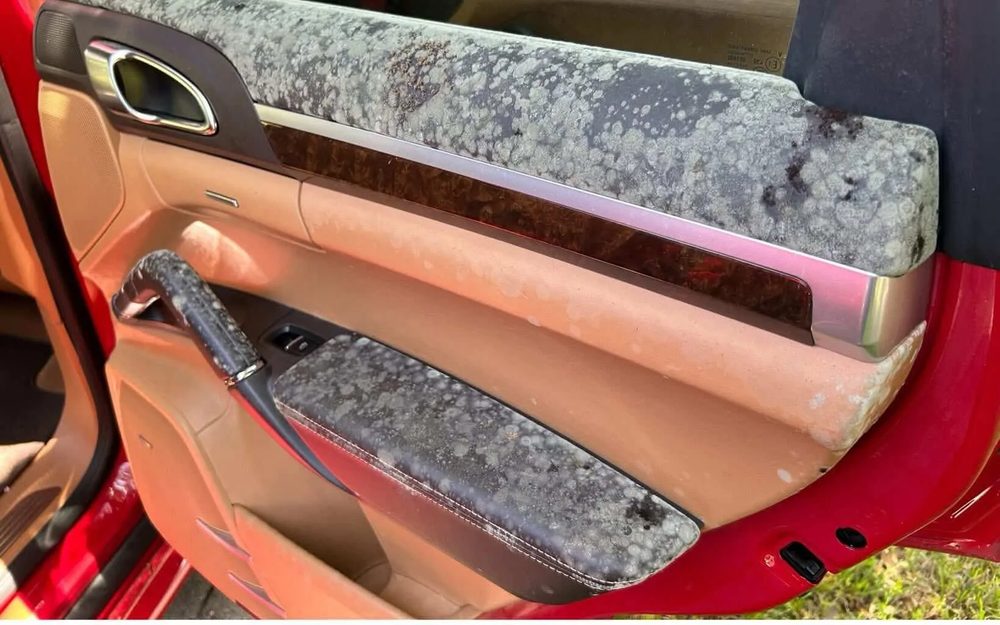
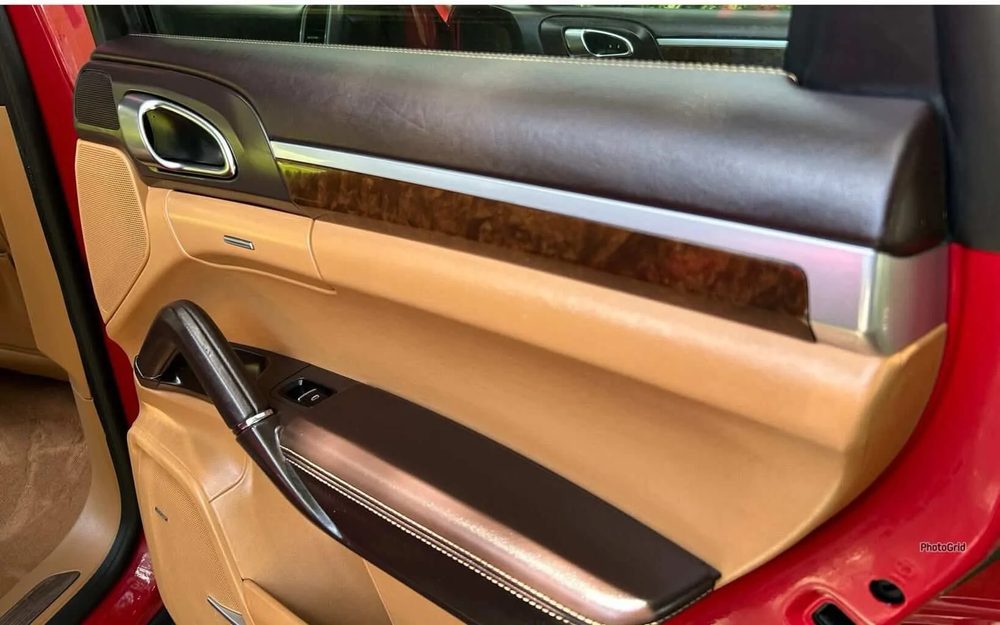
No stock photos. These are real DShine mold removal jobs across South Florida, the same 11-step process and chemistry used on every North Palm Beach appointment.
 Before
 After
Porsche Cayenne — Door Panel & Armrest
Mold has spread across the tan leather door panel and armrest of this red Porsche Cayenne, along with the wood trim. Leather like this needs a leather-safe protocol: steam and extraction at controlled heat, an antimicrobial application, then a sealed ozone cycle for airborne spores, without scrubbing the finish. On cars that rarely move in a low, damp place like North Palm Beach, door panels are often among the first surfaces to show it.
 Before
 After
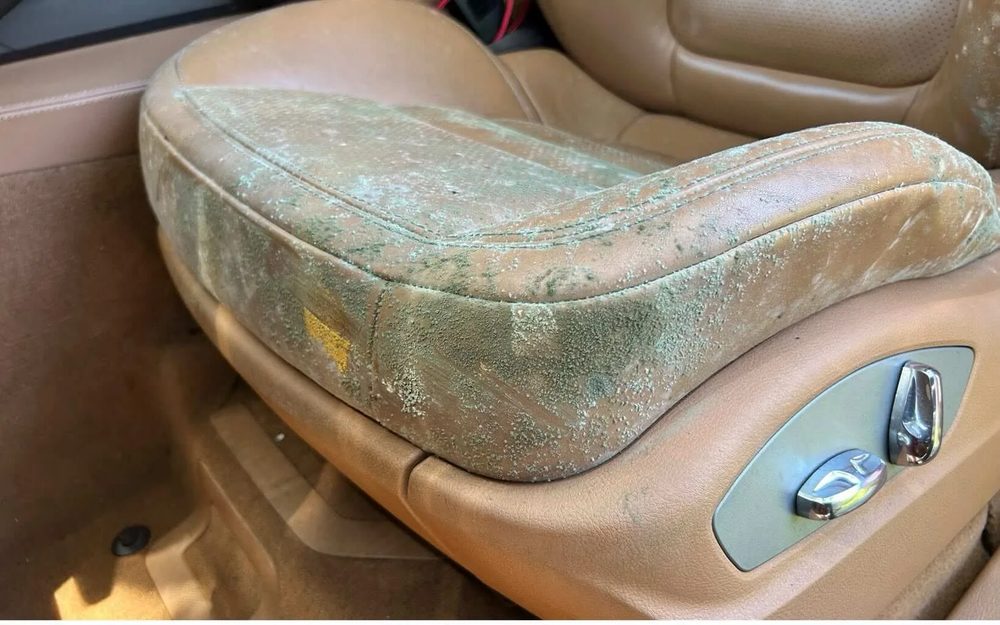
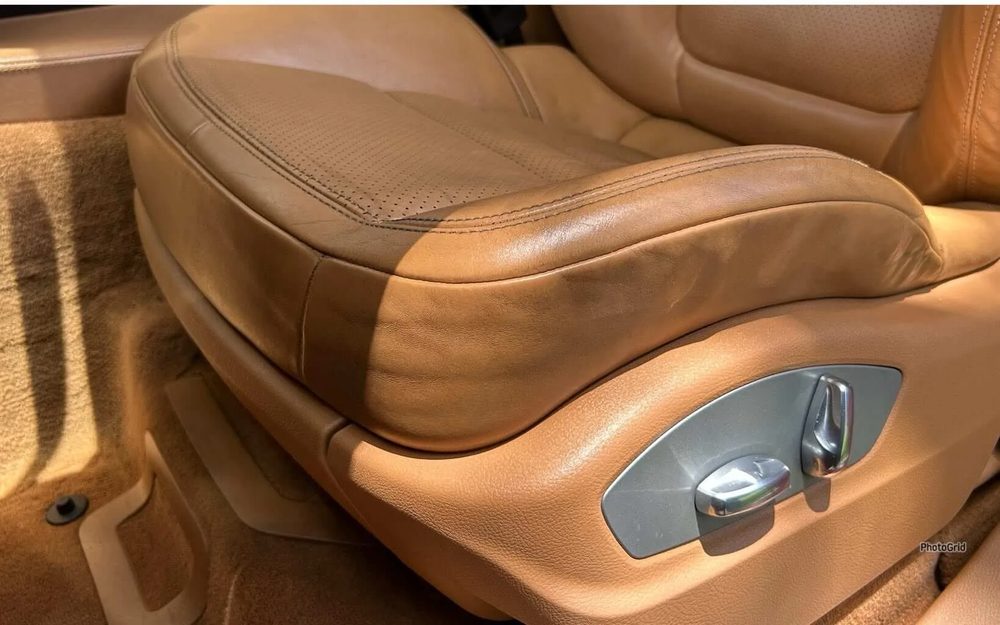
Tan Leather Seat — Green-Blue Mold
The bolster of this camel leather front seat is covered in a green-blue mold bloom, the kind that sets in when leather stays damp without airflow. A leather-safe antimicrobial application and gentle extraction lift the colony without drying or cracking the surface, and the ozone cycle reaches spores deeper in the cabin. Cars in waterfront-adjacent garages that are driven weekly or less often show this pattern.
 Before
 After
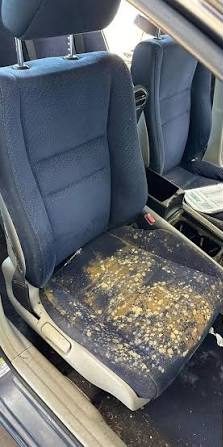
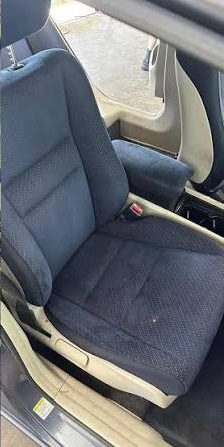
Cloth Bench Seat — Mold Stain Residue
With the cushion lifted on this dark blue cloth sedan bench seat, the underside shows tan and yellow mold-stain residue, evidence that moisture has been trapped in the foam. Steam, extraction and Concrobium work into the fabric and padding, and a sealed ozone cycle handles the rest. A seat cushion holding damp for weeks is a classic result of low use and a leaking seal or drain, common where air stays humid.
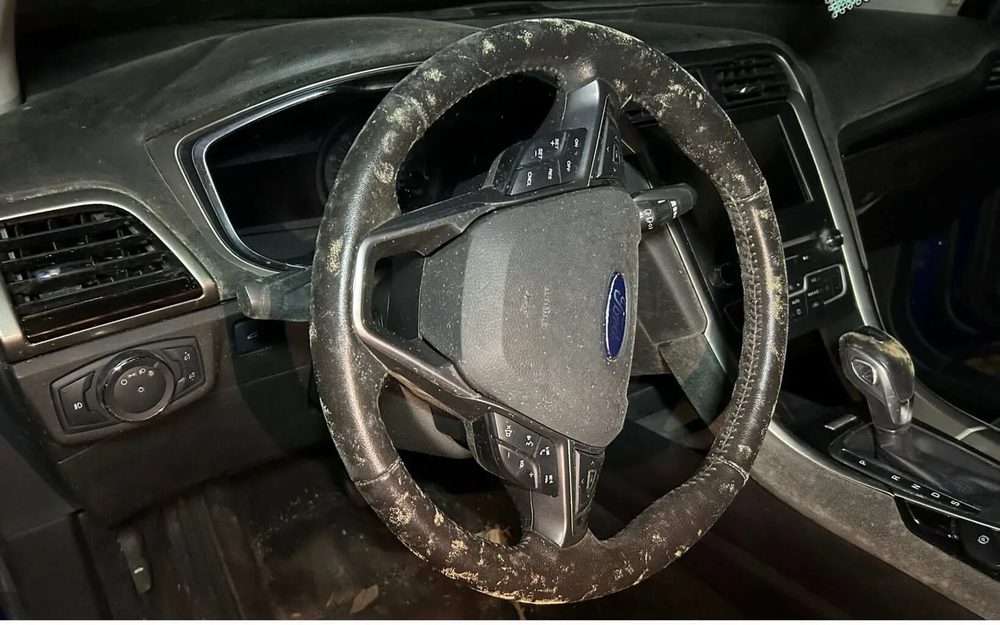 Before
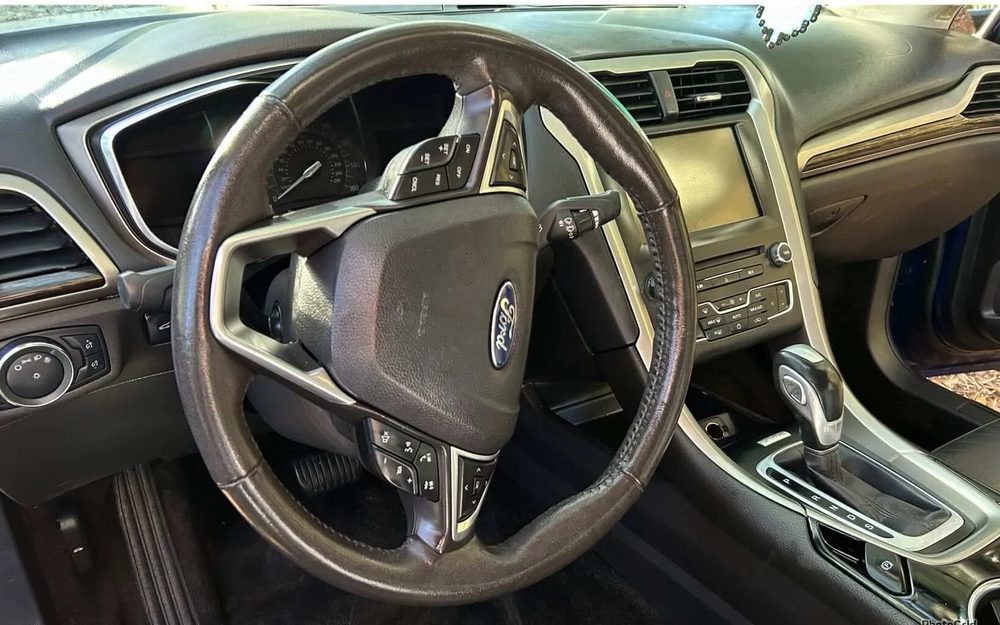 After
Ford Sedan — Steering Wheel, Dash & Vents
A grey-white mold bloom covers the steering wheel, dashboard and air vents of this Ford sedan. Mold on hard surfaces usually means the cabin air itself is damp. We steam and wipe the surfaces, treat the vents with Concrobium, and run the ozone cycle to reach the ductwork behind them. Cars here that sit with the A/C off and windows shut for long stretches are prone to exactly this.
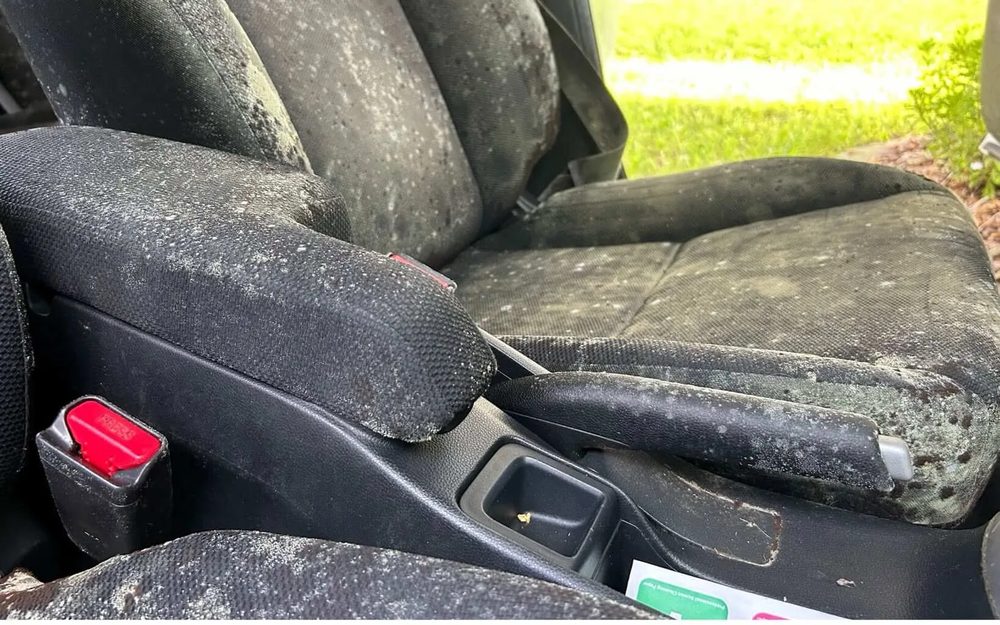 Before
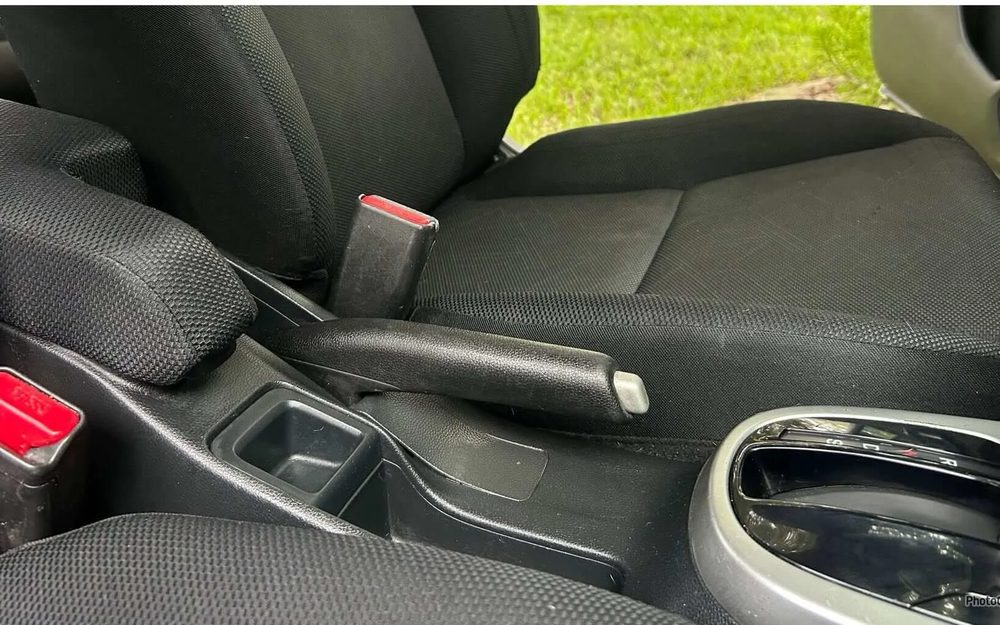 After
Black Cloth Seat & Console — Grey-White Bloom
Grey-white mold bloom has formed on the black cloth driver seat, armrest and console, with green lawn visible outside the window. Cloth holds moisture longer than leather, so steam and extraction do most of the work here, followed by Concrobium and a sealed ozone cycle. Parking on a lawn-side driveway or near irrigated grass adds moisture to a cabin that is already humid.
 Before
 After
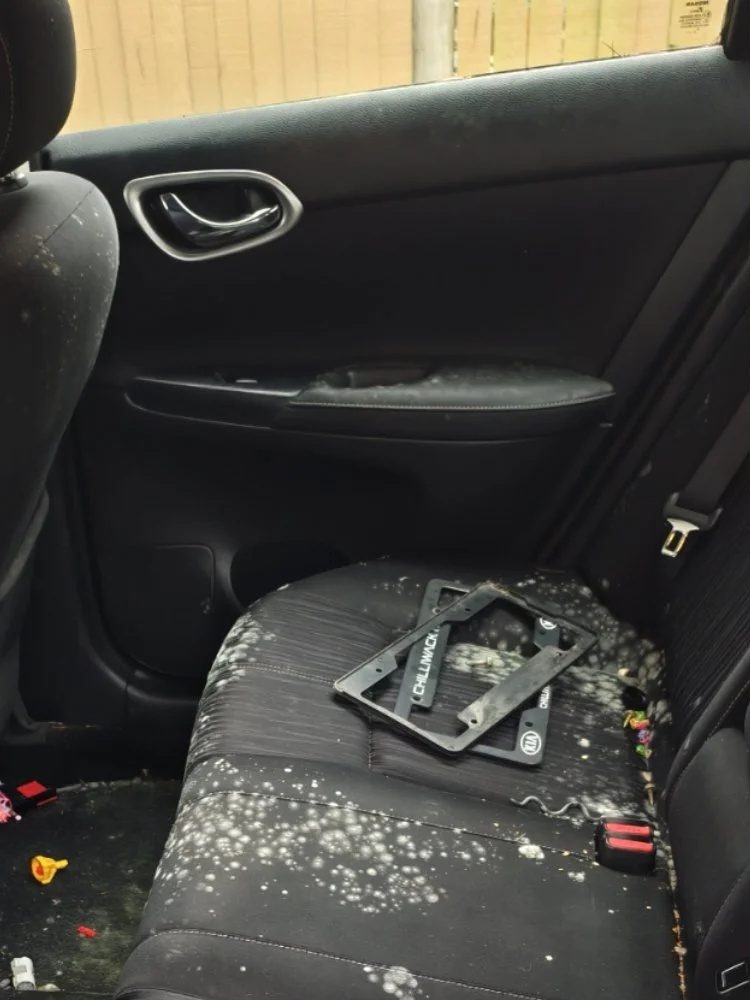
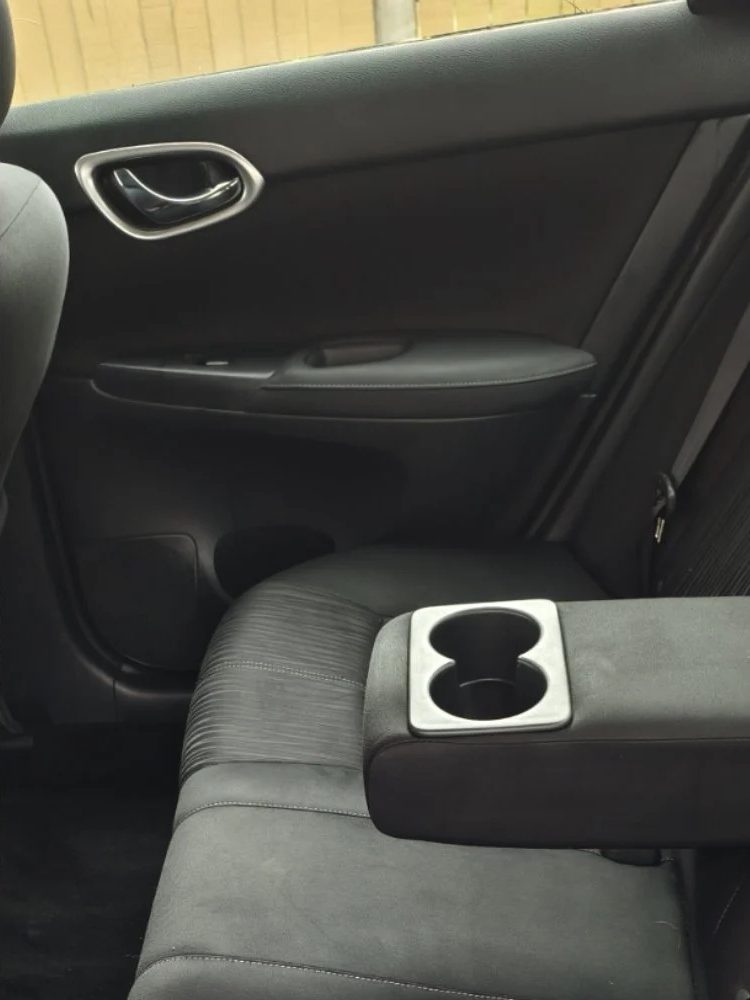
Rear Seat & Door Panel — White Mold Spots
White mold spots dot the rear cushion and door panel of this black sedan, with loose debris and a license plate frame sitting on the seat. Rear seats get the least airflow and the least attention, so mold often starts there unnoticed. We clear out the debris, steam and extract the fabric, and treat with Concrobium and ozone. A rear seat that nobody sits in for weeks is a typical spot for it.
 Before
 After
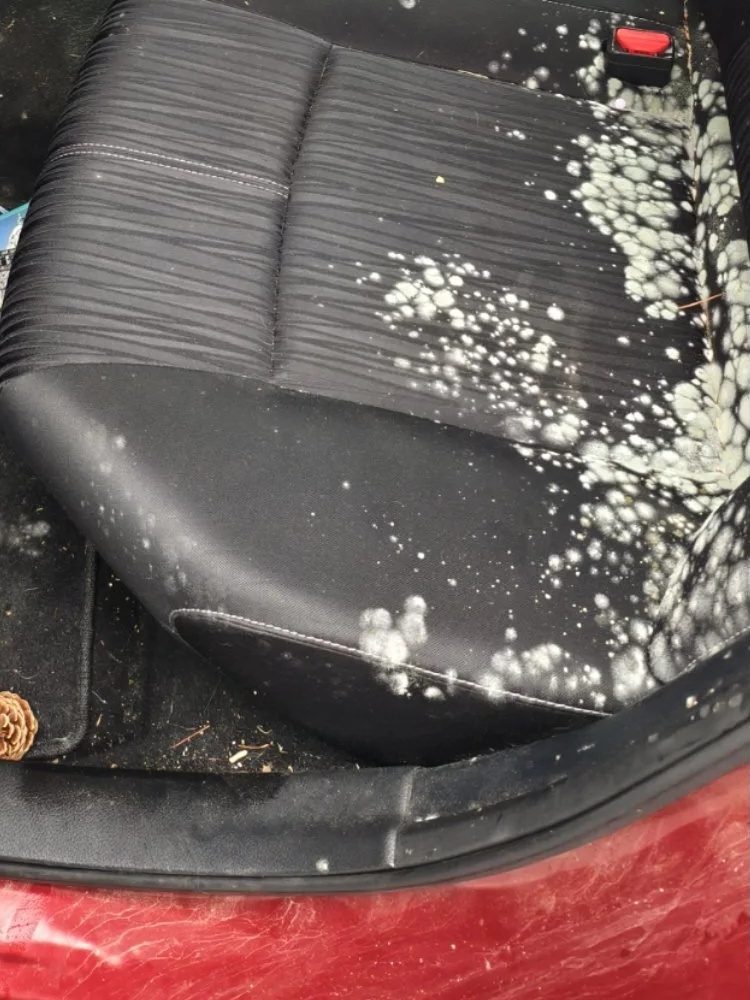
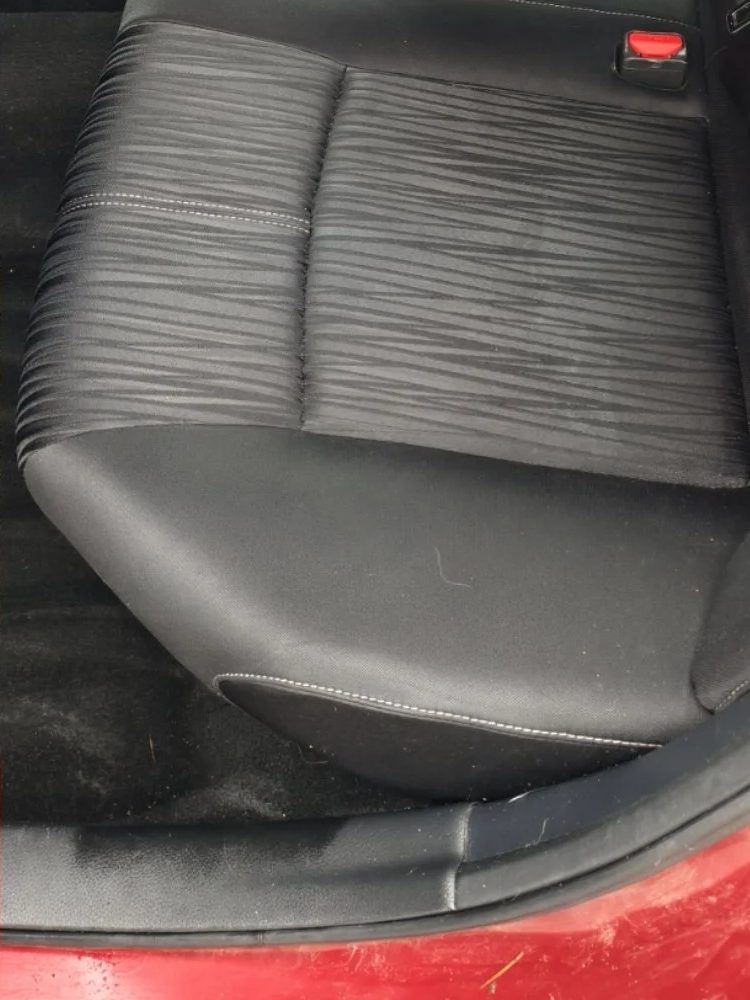
Cloth Seat — White Mold Speckles
White speckled mold dots the black cloth seat of a red car. Speckling like this is often the early stage: it sits on the fabric surface and can be cleared with steam, extraction and Concrobium before it reaches the foam. Catching it at this point usually keeps the job in the one-area category. A car that stays closed up in a damp driveway is how it begins.
 Before
 After
Floor Mat — Heavy Colony Growth
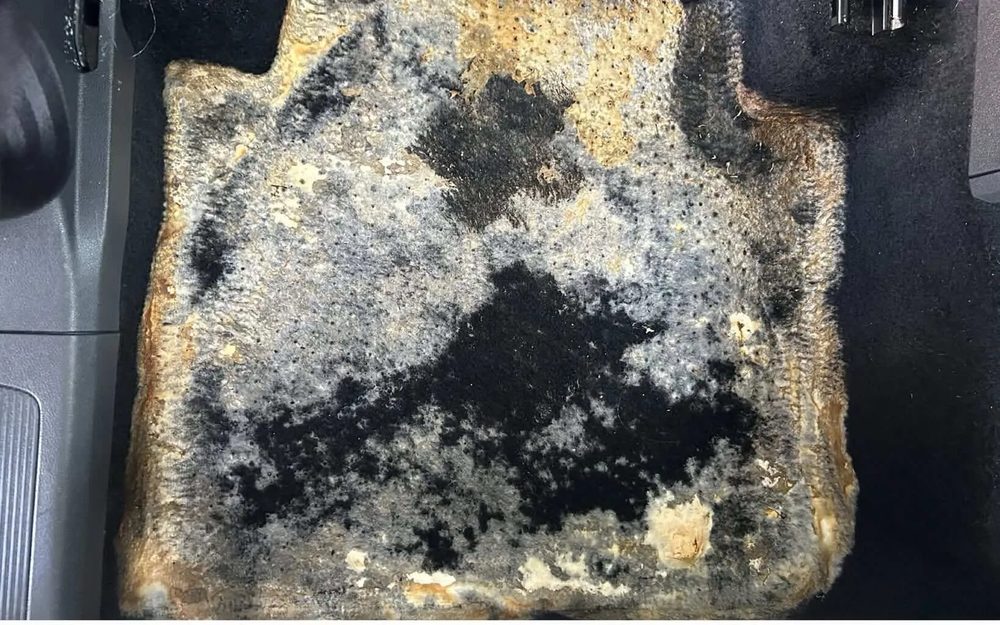
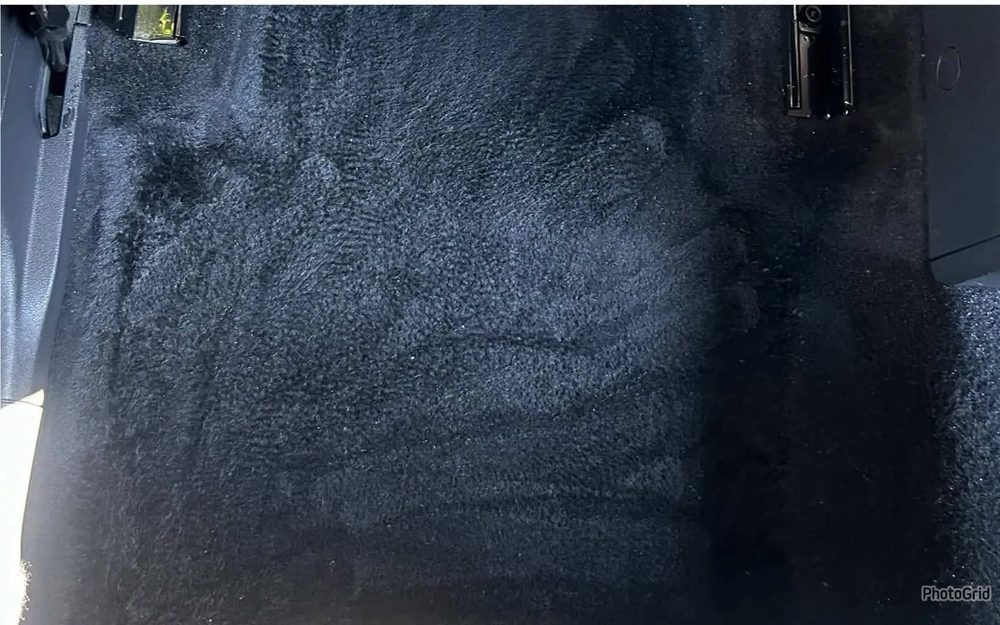
This carpeted floor mat carries heavy black, brown and white mold colonies. Floor mats and the carpet below them are where water collects first and dries last, so this is where long-term moisture shows up. The treatment is steam, extraction, Concrobium and ozone, and the padding underneath gets inspected too. Wet shoes, a blocked A/C drain or a leaking seal combined with infrequent driving are the usual story in a low, humid village like North Palm Beach.
100% Satisfaction.
Written. No exceptions.
If the result doesn’t meet our standard, or yours, we come back and redo it at no charge. No forms to fill out, no arguing over what “counts.” The guarantee is in writing before we ever touch your vehicle.
Request Mold Removal in North Palm Beach · From $549
Fill this in once and send it. We get your address, vehicle, and the situation all in one message, no phone tag.
Rating
Detailed
Response
Three steps in the village.
We handle everything else.
No drop-off. No waiting. We come to North Palm Beach.
We come to you in North Palm Beach,
Old Port Cove to Northlake.
Mobile service: home, office, condo, or marina. No drop-off, no travel fee.
Not seeing your city? Ask us — we likely cover it.
Low canal-side garages
and short weekly trips add up to mold.
The village sits about 7 feet above sea level, with roughly 2 of its 5.3 square miles under water, so damp air arrives from every direction and a car left idle for even a couple of weeks is already at risk. Left untreated, what starts as a musty smell becomes a real health issue for the next person who drives the car. DShine's Concrobium Mold Control and ozone process address the cause, not just the symptom, backed by $2M insurance and a written guarantee. Mold doesn't need much to get started, any trapped moisture inside a closed cabin is enough given South Florida's humidity. The source is almost always one of four things: a clogged AC condensation drain letting water pool silently on the floor pan, a failed door or window seal letting rain in, a clogged sunroof drain, or the car simply sitting unused for two or more weeks without the AC running. Of those four causes, long idle stretches are the most common here: in a village with a median age of 55.5, the usual version is a lightly driven car whose A/C never runs long enough to dry the cabin or clear its drain.
North Palm Beach areas we serve,
Lost Tree to the Three Bridges
Seven places and corridors we plan around in the Village of North Palm Beach, each with its own parking, access and moisture conditions.
North Palm Beach Country Club — The village-owned club, open to the public seven days a week, has a Jack Nicklaus Signature course and sits on the village island, ringed by the Intracoastal and reached by three bridges. Golf shoes, wet towels and bags ride in cars here, and we plan arrival around bridge traffic.
Lost Tree Club — Lost Tree Club, at 11520 Lost Tree Way, has a private Jack Nicklaus Signature course that opened in 2002. Where a household keeps more than one car, the second or third often sits for weeks between uses. Tell us about any gate or guest-access rules when you book and we arrange them ahead of the visit.
Old Port Cove — Old Port Cove is a marina on a roughly 60-acre peninsula off US 1, on the Intracoastal Waterway and serving the public since 1973, with room for over 250 vessels. Cars parked around a marina take in wind-driven damp, plus wet towels, coolers and gear after boating days. We work in the lot or garage.
Anchorage Park Area — Anchorage Park offers docks, courts and a dog park on the water, and Anchorage Drive is also home to the village library, opened in 1969. The streets around sit on low, dredged waterfront ground where afternoon storms hit driveways and carports directly, and cars under shade stay wet long after the rain.
John D. MacArthur Beach State Park — MacArthur Beach State Park covers about 438 acres, including a mangrove-lined estuary crossed by a 1,600-foot boardwalk. Beach and park days bring sand, wet towels and damp swimwear into cars, and that moisture lingers in the carpet and under the mats, especially if the car then goes back into a closed garage.
Lighthouse Drive & the Three Bridges — Lighthouse Drive on the west, the Earmon River bridge on the south and the Parker drawbridge on the north tie the village's core to the mainland. Lighthouse Drive was laid out in 1956 to join Old Dixie Highway and US 1. We build bridge openings into our arrival windows on these approaches.
Northlake Boulevard & US 1 Corridor — Northlake Boulevard, the village's main commercial corridor, ends at US 1, where the village hall also sits. Offices, shops and shared lots here hold commuter and work vehicles parked outdoors, plus the occasional car left for weeks in a lot. We coordinate with building managers and shared parking.
Don't see your area? Ask us — we likely cover it.
North Palm Beach car mold,
the questions we hear.
Tap any topic to read the full breakdown.
North Palm Beach was planned in 1956 on former mangrove swamp and farmland, and it still sits low: about 7 feet above sea level, with 2.02 of its 5.29 square miles made up of water. Dredged waterfront cul-de-sacs put many garages a short walk from a canal, so even a house with no dock lives with damp air that never fully drains away.
Low ground is only half the story; the other half is how little many cars move. The 2020 census put the median age at 55.5, found that 38.7% of households are one person living alone, and counted 16.6% of housing units as vacant. Cars living that rhythm make short weekly trips, the A/C never runs long enough to dry the cabin, and mold can take hold after a day or two of lingering damp.
Hurricane season officially runs June 1 to November 30, and at 7 feet of elevation a single storm week can leave driveways and garage aprons wet for days. For a car that already moves rarely, that is how a dry cabin becomes a damp one before anyone has a chance to notice.
The typical North Palm Beach mold job is not a neglected car. It is a clean, well-serviced sedan or SUV, often a decade or more old with modest mileage, that goes to the grocery store and the pharmacy and then returns to its spot. The paint looks great and the dealer visits are on time, while the carpet, door pockets and the area under the seats quietly stay damp.
Second cars come next. In a household of one or two people, the second vehicle may be driven a couple of times a month, kept for visiting grandchildren, or left over from a spouse who no longer drives. We also work on cars whose owners were away for weeks at a stretch, and cars parked in condo and marina lots where nobody walks past the vehicle every morning.
Less often it is a work truck or a commuter car with a plugged sunroof drain. But the pattern that repeats is low use, not abuse. These cars are not neglected; they are simply idle most of the week, and on low, waterfront ground, idle is enough.
Attached garage on a canal-end lot: Dredging in the 1950s turned old mangrove into streets that stop at the water, so a garage can sit a few steps from the shoreline. A tight garage traps whatever damp the car brings in, while a leaky one lets canal-side air wander through. Either way, a car that leaves once a week gets almost no drying.
Open carport or driveway: Airflow is better, but the door and sunroof seals take every afternoon downpour head on. Mature shade keeps everything wet long after the storm, and leaves packed into the cowl drains below the windshield are a classic way for water to find the cabin. A fitted cover over a car that went under damp makes it worse; use a breathable one, and only on a dry car.
Shared condo garage or building lot: A concrete structure with little airflow, a space nobody walks past, and a car that can sit for weeks. Moisture from a wet umbrella or damp shoes stays exactly where it landed and the cabin air goes stale. If you are going away, ask a neighbor or the building staff to look in on it.
Marina and dock parking: Boating days send cars home with wet towels, coolers, life vests and damp shoes, closed up in the cabin behind rolled-up windows. Add wind-driven mist off the water and the car starts from a higher humidity baseline than one parked a few blocks inland. That holds around a large marina like Old Port Cove as much as at a private dock.
Winter, roughly December to March: cooler nights and less humidity make this the kindest stretch of the year. The trap is condensation. Windows stay up, the A/C sleeps, and a mat soaked in one wet week stays damp well into spring. A slow leak is easiest to catch now, before the rains come back.
Spring heat, April and May: dry afternoons breed complacency, yet this is when a winter of unnoticed damp starts to bloom. The first strong shower also exposes every tired seal, so a quick hand under the floor mats costs almost nothing.
Summer, June to September: thunderstorms roll over saturated ground most afternoons. With the village at 7 feet, water drains slowly, and sunroof drains, cowl drains and door seals run at their limit. Many small problems turn into large ones in this stretch.
Late fall, October and November: hurricane season does not officially end until November 30. After a storm, high tides can leave low driveways and garage aprons under standing water, and a car that waited out a stormy week behind shutters often announces itself with a smell as soon as the door opens.
We drive to you, which means route planning comes first. The village's core sits inside a loop of the Intracoastal Waterway, reached by the Lighthouse Drive bridge on the west, the Earmon River bridge on the south and the Parker drawbridge on the north. We allow for bridge openings and US 1 traffic when we give an arrival window.
Dead-end streets cut both ways. They are quiet, with almost no through traffic, but turnarounds can be tight and driveways short. If your street ends at the water or access looks narrow, a photo of the driveway when you book lets us plan where the van will sit and how the car will be positioned for the ozone cycle.
Communities with a gate, a staffed entrance or guest-parking rules need a name on the list or a code before we arrive, so mention it when you book. For a condo garage or a marina lot, all we need is a space where the car can sit closed and undisturbed through the whole visit.
Plenty of owners are not the person standing in the driveway when we show up. A neighbor, an adult child, a property manager or a building concierge can meet us and receive the same WhatsApp updates and photos you do, and the price you agreed to does not change.
1. Low use: The weekly-errand car. A ten-minute trip never runs the A/C long enough to dry the evaporator or the carpet, while umbrellas, damp shoes and humid air keep adding moisture that nothing ever pulls back out. By a wide margin this is the usual story in North Palm Beach, and it shows up before any other cause on the list.
2. A blocked condensate drain: It can happen on any car, but on one that rarely moves it goes unseen: water backs up onto the floor pan under the front carpet and sits for weeks until the smell finally gives it away. A damp driver-side footwell with no spill to explain it is often the first clue.
3. Low, damp parking: A garage or carport near the water at 7 feet of elevation stays humid, and an apron that holds water after a downpour pulls dampness into the door seals. Irrigation overspray along a driveway adds a little more. None of it is dramatic; it just never lets the car dry out.
4. Old seals and storm water: Door, window and sunroof rubber hardens after a decade or two, so a car kept and loved for fifteen years may carry a hairline leak nobody noticed. Add a window left cracked, a sunroof not fully latched or a flooded apron during a storm, and there is water in the car with no daily drive to dry it out.
Picture the first ten minutes. You send a handful of WhatsApp photos of the damp seat, the carpet or the vents, and a price comes back in under 2 minutes, either $549 or $749. That figure is confirmed once we have looked at what you sent, before we begin anything on the car.
Then the visit itself. A technician walks the whole interior first, roof lining to trunk mat, so nothing is a surprise once the steam comes out. The 11 steps take 3–4 hours at your driveway, garage or condo space: no drop-off, no ride needed, and your day goes on as planned.
At the end the car has to breathe before anyone drives it. You hear from us when it is truly ready, along with before and after photos by WhatsApp. A neighbor or relative who let us in sees the same messages, so nobody has to play go-between.
Is it safe to keep driving? That comes up before almost anything else. With a mild smell and a small patch, short trips with the windows cracked are reasonable, but anyone with asthma or allergies, and young grandchildren in the back seat, are better off in another car until this one is treated.
Is the canal to blame? Rarely on its own. Nearby water sets the humidity baseline, yet the actual way in is usually a clogged drain, a tired seal or something damp left in the cabin. Pinpointing that entry point is part of every inspection, and we tell you what we find.
Will a seat have to be replaced? Usually not. Surface mold and early foam mold respond to steam, extraction and Concrobium. Growth that has soaked deep into seat foam over months is harder, and we say so during the inspection, before any work begins. A seat that has to go is the exception rather than the rule.
Do I have to be home? No. We work at your address with no drop-off, a neighbor or family member can meet us, and a message tells you once the car has aired out after ozone. Nobody stays inside the vehicle during that cycle. Most owners simply carry on with their day.
Most of the cars we hear about here have good paint and a tired interior. That is why owners often pair the visit with Ceramic Coating, a hardened layer over the clear coat for a car that lives outdoors through summer downpours and strong sun.
A hazy, dulled finish points toward Paint Correction, and a car that sat all year may also need its Engine Bay Cleaning. If the cabin smells musty but nothing visible is growing, Odor Removal Detailing ($349) may be the cheaper and better answer. We tell you which one fits after seeing the car.
After the mold is gone, some owners add a protectant for fabric or leather and ask how to keep the cabin dry between visits. We keep suggestions tied to what the car needs, not to what pads the invoice. None of it is required to get the mold out.
The windshield tells you first. Glass that keeps fogging from the inside on an ordinary morning, and takes a long time to clear, means the cabin is storing water in its carpet or foam. A single foggy day proves nothing; a week of them is a pattern.
Then use your hands. On a dry day, press a palm flat into the carpet beneath the front seats; cool and spongy is a warning even without any odor. Reach into the bottom of each door pocket, and lift the trunk mat and the spare-tire cover, because water settles in those low spots long before it reaches the seats.
Finally, turn the fan on and sniff for ten seconds. A sour, earthy, wet-sock smell that fades after a moment points to growth on the evaporator or in the ducts. White powder on a seat belt or stitching, or webbing gone stiff, shows up later and deserves quick attention.
If the car makes one trip a week, make it count. A 20 to 30 minute drive with the A/C running does what a loop around the block cannot: it warms the cabin, dries the evaporator and pulls moisture out of the carpet. It is the cheapest prevention there is, and the one most people skip.
Keep the mats dry and the cabin clear of wet umbrellas, towels, sneakers and sweating grocery bags. A small desiccant tub under a front seat costs little, and in a sealed garage a window left open an inch keeps the air moving. A car shut up tight for weeks in a damp garage is asking for trouble.
If the car will sit, ask someone to start it every couple of weeks and run the A/C properly, not idle it for a minute in the driveway. A minute of idling makes condensation without drying anything out, and that can leave the car worse off than before.
Households here are small, and 38.7% are a single person living alone, so a second car often becomes a once-in-a-while car. If that is the one you ring us about, we look at the first as well, since both share a roof and a humidity level. When both need work, we say so immediately.
Two vehicles means a longer day, or two separate visits, since each one gets a full process and a sealed ozone cycle of its own. If a neighbor also has a musty car, mention it when you call and we will check whether back-to-back slots work.
Timing bends around your routine. Tell us which days the driveway is crowded, when a gate attendant is on shift or when the condo garage is quiet. Few people here keep a rigid calendar, so a calm morning that leaves the car alone through the ozone cycle and the airing afterward is usually easy to find.
Every job comes with a written guarantee of 100% satisfaction that lasts 30 days. If mold, or its musty smell, shows up again inside that window, we return and treat the car again at no cost. A canal-side garage, a damp driveway or a rainy month does not void it.
In our experience a return visit traces back to something still wet rather than to the treatment itself: a drain that never got cleared, a door seal that still weeps, or a car going straight back to the old damp routine. That is why we point out any suspect during the visit. A fix that lasts beats a second appointment. Even a free second visit is one more than you should need.
Claiming it takes one message. Text us on WhatsApp with a photo or a few words, and we schedule the follow-up at your address. If the smell is creeping back in week two, say so then; there is no prize for waiting until week four. The 30 days start when we finish the job.
A well-kept older sedan or SUV with its original leather and trim is a common sight here, and we handle it differently from a daily commuter: gentler steam near the leather, a test patch somewhere out of sight before any product touches the cabin, and a longer visual check up front. Original finishes are hard to replace and easy to damage.
Leather gets the leather-safe approach: no aggressive scrubbing, no strong chemistry that strips the finish and invites cracking down the road. If the hide has already split or discolored beneath the mold, no treatment restores it, and we would rather tell you that on day one than overpromise.
Sometimes the real culprit is rubber, a door or sunroof seal that has hardened and lets water in. Cleaning cannot stop a leak. A dealer or body shop can swap the seal, and doing so first keeps the treatment from being undone. If we spot that during the inspection, you hear about it first.
Before a few weeks away, whether for a trip, a hospital stay or a long family visit, give the car ten minutes. Clear out food, wet towels and gym bags, check that the mats are dry and that no window or sunroof is cracked, and finish your last drive with the A/C running for a good while so the evaporator goes into storage dry.
Choose the driest parking spot you have, skip dense shade over a damp driveway, and leave off a fitted cover unless the car is bone dry. A desiccant tub under a front seat helps. If the garage seals completely, leave a small gap where it is safe to do so, or ask someone to open it now and then.
Give a neighbor, relative or building manager our number and ask them to run the car with the A/C on for a while every couple of weeks. And if the last storm brought water close to the driveway or garage, have us look before you leave.
Pair the checklist with a reminder on your phone. A calendar nudge every two weeks to check the car, or to ask whoever is looking after it, costs nothing and catches most problems while they are still a one-area job instead of a summer-long one.
Mold limited to one spot is a $549 visit. Give it a summer of storms and the same patch creeps into carpet, seat foam and ductwork while the car sits, turning it into a $749 whole-vehicle job. Waiting rarely shrinks anything. The sooner someone looks, the smaller the visit tends to stay.
Condition matters too. Growth that reaches original leather, stitching or the headliner can leave marks that treatment contains but cannot always erase, which counts for a well-kept older car, and a musty cabin is a real obstacle at trade-in or sale. Treating it early keeps the originals in play.
Then there is the air you breathe. Every time the fan runs, even on a short weekly trip, it moves whatever is growing in the vents into the cabin. A small spot caught early is no emergency, but time seldom works in your favor, and early treatment keeps the air cleaner for everyone who rides along.
If you are the son, daughter, neighbor or caregiver who noticed a musty smell or a damp spot while moving someone else's car, you can start the process without the owner on the phone: send photos and the address, and we take it from there with the owner's approval.
We confirm a price in under 2 minutes, a neighbor, relative or building manager can meet us at the car, and before and after photos go to everyone in the WhatsApp thread, so you can see the result from across town or across the country.
Tell us who is authorizing the work and who will be at the car, and we confirm both in the thread. No long call is needed, and nobody has to stay on site for the whole visit, which makes this easy to arrange for a parent who no longer drives much.
Two prices cover everything: $549 when the mold sits in one area and $749 when it has spread through the vehicle. Getting to your North Palm Beach address costs nothing extra. Send photos or a short description on WhatsApp and an answer arrives in under 2 minutes.
That answer turns into a firm quote once we have studied your photos or description, and it is locked in before the work begins. If the car looks different when we arrive, you hear it from us first and decide whether to continue. The figure never changes once product touches the upholstery.
The dividing line is simple. One seat, one panel or one stretch of carpet remains $549. Headliner, carpet, seats and vents all involved is $749. Sharp, well-lit photos help us put the car on the right side of that line before we show up.
In a sentence: North Palm Beach is low, wet at its edges and full of well-kept cars that rarely go far. At roughly 7 feet above sea level, a damp garage or carport is never far away, and mold usually begins in the carpet and foam before anyone smells it. That is the whole story; the rest of this page is detail.
The cure is an 11-step visit at your address, built on Concrobium Mold Control and ozone, lasting about 3–4 hours. The price is $549 for one area or $749 throughout, travel included, with a written 30-day guarantee. Whether it is a canal-end garage or a condo lot, the sequence is the same.
If you are unsure whether it is mold, the quickest route is two or three photos and your address. A reply with a price arrives in under 2 minutes, along with our read on what is causing it and an appointment time. Sometimes that conversation ends in odor removal or a cleared drain instead.
When the steam, the extraction and the Concrobium are finished, we close the car up and let a professional-grade ozone generator work inside the cabin. Ozone reaches what wipes and sprays can't: the ductwork, the seat foam, the air itself. Nobody stays in the vehicle during the cycle, and people and pets should keep clear while it runs.
With an attached garage, keep the door into the house shut during the cycle and let the garage air out afterward. Then the cabin needs a full airing before anyone gets in, and we tell you exactly when that moment arrives instead of when the machine switches off. In a closed garage with little airflow that airing-out can take a little longer, and we would rather wait than send you back into a cabin that is not ready.
The last stage is the Meguiar's odor bomb and a final check of every surface, so the cabin smells clean, not covered up. Your WhatsApp photos show the interior as we found it and as we left it. Passengers and pets wait outside until we give the all-clear.
Plain answers
for North Palm Beach drivers.
Add-ons North Palm Beach clients book
Still deciding? Read: the complete mold removal guide · does insurance cover it? · why DIY mold removal fails.
Car sitting in a North Palm Beach garage? Book the visit.
Serving North Palm Beach and all of Palm Beach County. Fixed pricing, no travel fee. We confirm in under 2 minutes.
It Might Just Be an Odor Problem
If there's no visible mold growth yet, the smell alone is usually an Odor Removal Detailing case ($349 flat) — faster than full mold remediation ($549–$749). See which one matches what you're dealing with: