What a Cooper City Mold Job Includes
This is not a car wash. Car Mold Removal uses Concrobium Mold Control treatment, pH-balanced products, and machine assistance, the same process used in pre-sale preparations for luxury dealerships.
Why it matters for your health: Mold in a vehicle is a different exposure than mold on a wall at home. With the AC recirculating, everyone inside is breathing concentrated spores for the length of the drive. The EPA and CDC both link mold exposure to respiratory irritation, allergic reactions, headaches, and worsened asthma symptoms. Children, older passengers, and anyone with a compromised immune system typically react faster and more severely than a healthy adult would. By the time the smell is noticeable, spores have usually already spread through the HVAC system into every vent in the cabin.
Curious what actually happens during the visit? Tap through our real 11-step process below to see what we do at each stage and why it matters.
What every Cooper City mold job gets you
Most detailers in Cooper City charge less. Here’s exactly what you gain — and what you risk — with each choice.
| DShine DetailsFrom $549 · travel included | Avg Cooper City Detailer$149 – $199 | |
|---|---|---|
| Industry certificationsIDA, Koch Chemie, Meguiar’s, 3M, Symplex, XPEL | ✓6 verified | —0 credentials |
| $2M liability insuranceWe cover any damage — in writing | ✓ | —Often uninsured |
| Deionized water systemZero mineral residue, no water spots | ✓ | —Tap water, water spots |
| Fresh microfibers per vehicleNo cross-contamination between jobs | ✓ | —Shared towels, swirl risk |
| Mold-specific chemistry onlyConcrobium, Benefect & Meguiar’s, no harsh acids | ✓ | —Industrial degreasers |
| Before & after photosSent via WhatsApp on completion | ✓ | —No documentation |
| 100% written satisfaction guaranteeReturn & redo at no cost if unsatisfied | ✓ | —No written guarantee |
| Travel to your address — $0Home, office, condo — no drop-off | ✓ | Sometimes adds fee |
DShine vs. any other detailer
in Cooper City, Broward County
Three things most detailers won't tell you. We put them in writing.
 Since 2018
With more than 20 years of hands-on experience in the automotive care industry, Evelio launched DShine Details in August 2018 with one van and zero shortcuts. For the first six months he slept in the van to keep costs down and standards up. Today DShine runs 7 certified vans across Miami-Dade, Broward, and Palm Beach, and the commitment hasn't changed. Every vehicle is treated as if it were his own.
What clients say
in their own words.
Before & After: Mold Removal We've Actually Done
No stock photos. These are real DShine mold removal jobs across South Florida, the same 11-step process and chemistry used on every Cooper City appointment.
 Before
 After
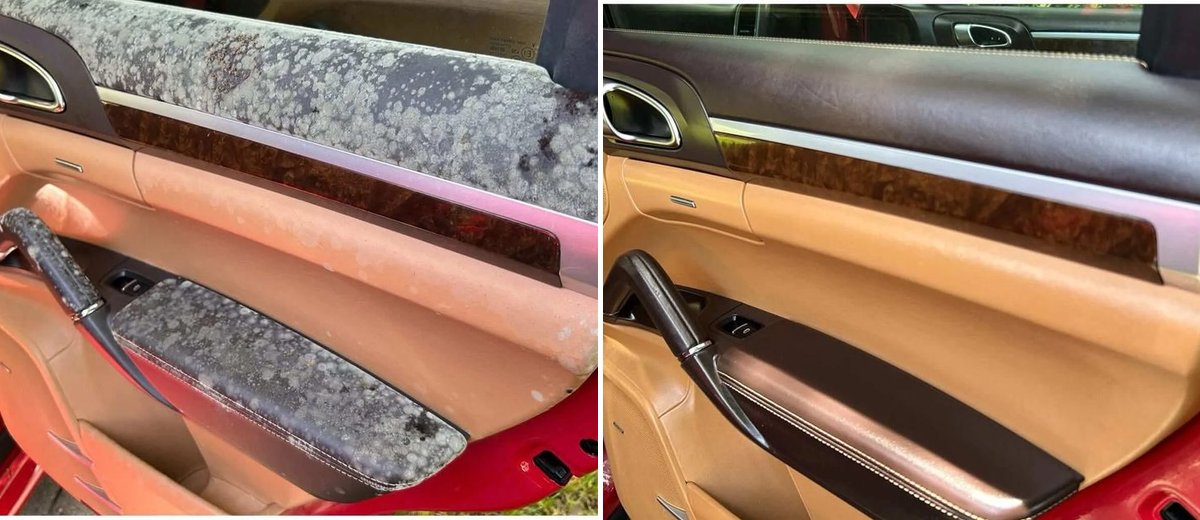
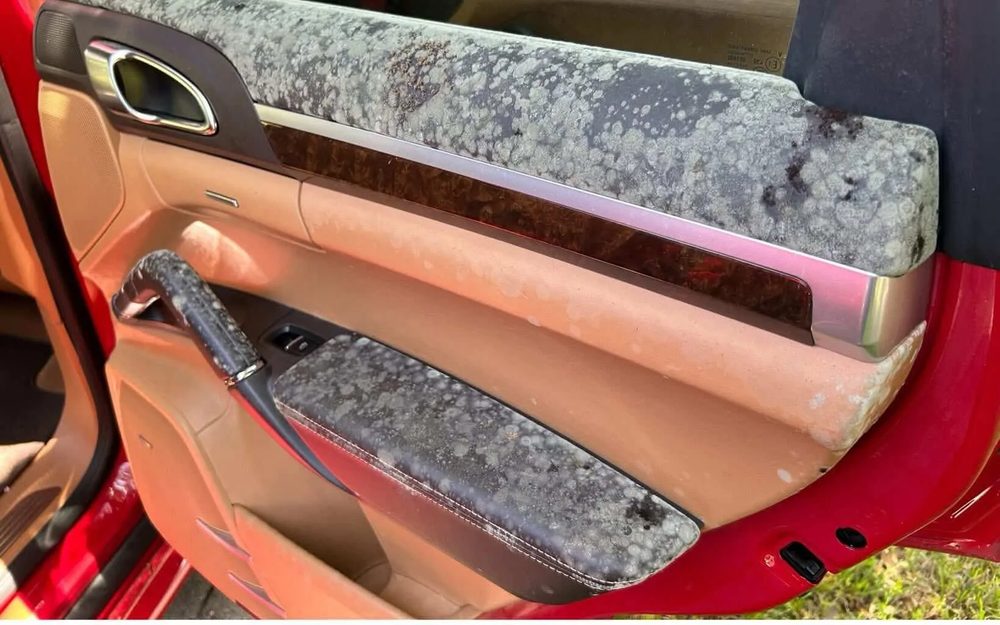
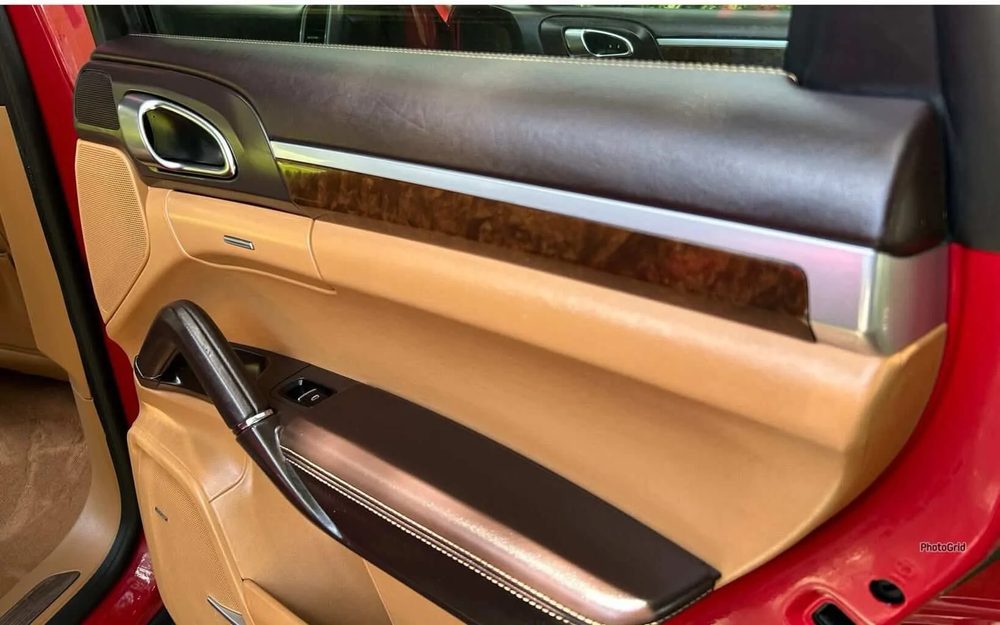
Porsche Cayenne — Door Panel & Armrest
Mold spread across the tan leather door panel and armrest of a red Porsche Cayenne, right up to the wood trim. Leather like this gets the leather-safe protocol: controlled steam and extraction, Concrobium on the surface and the ozone cycle for the cabin air, so the finish is not stripped. On luxury SUVs, a pattern we often see in family-heavy suburbs like Cooper City is a pale film on the armrest first, from hands, damp towels and closed doors.
 Before
 After
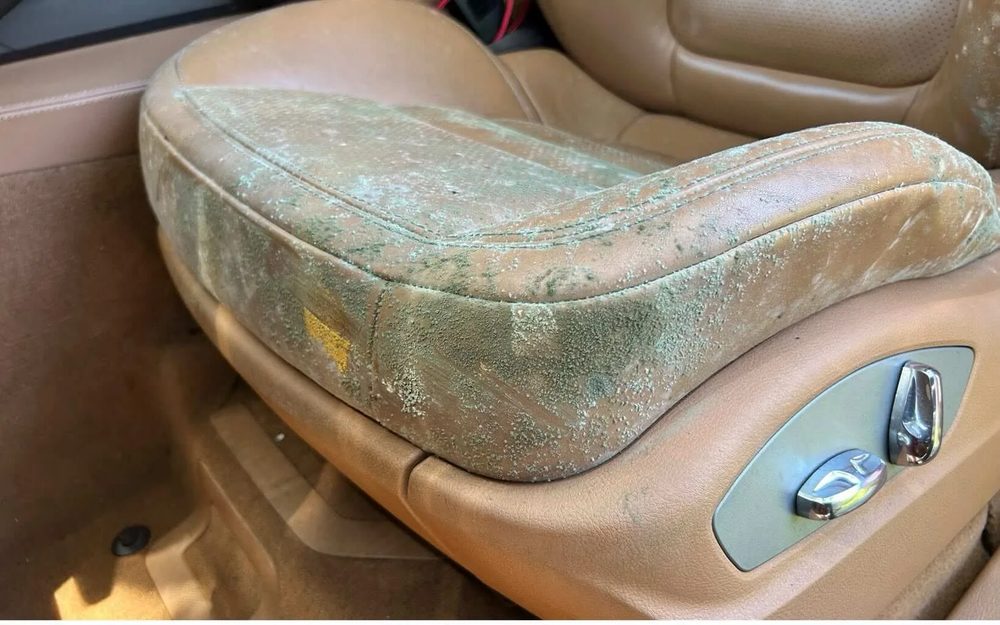
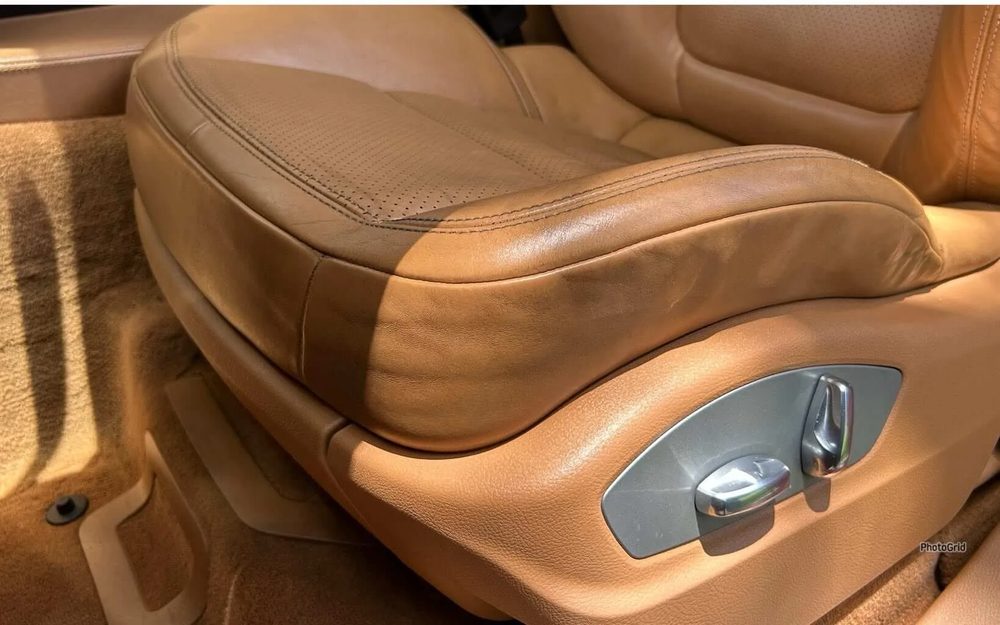
Leather Seat Bolster — Green-Blue Mold
A tan leather front seat bolster covered in green-blue mold. Leather is porous, so it needs a gentler method than cloth: steam and extraction at controlled settings, a Concrobium application and then the ozone step, with the leather-safe protocol throughout. In a city where the family SUV doubles as a locker, this kind of growth tends to start where a damp bag or a sweaty back rests against the bolster in a closed cabin.
 Before
 After
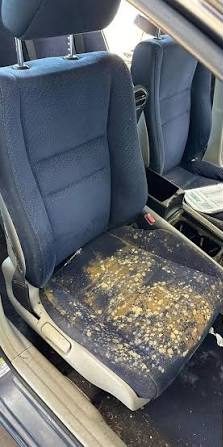
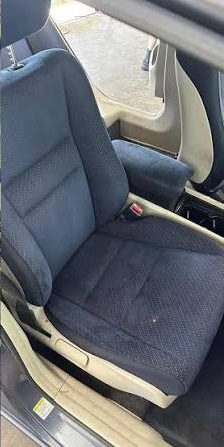
Cloth Bench Seat — Mold Stains Under the Cushion
A dark blue cloth sedan bench seat with the cushion lifted, showing tan and yellow mold-stain residue on the seat bottom. Stains like this mean moisture sat in the foam for a long time, and it is why we inspect underneath, not just the top. We treat it with HEPA vacuuming, steam and extraction, Concrobium and ozone. A bench seat that carries kids and gear day after day is a common place for a spill to soak in and stay.
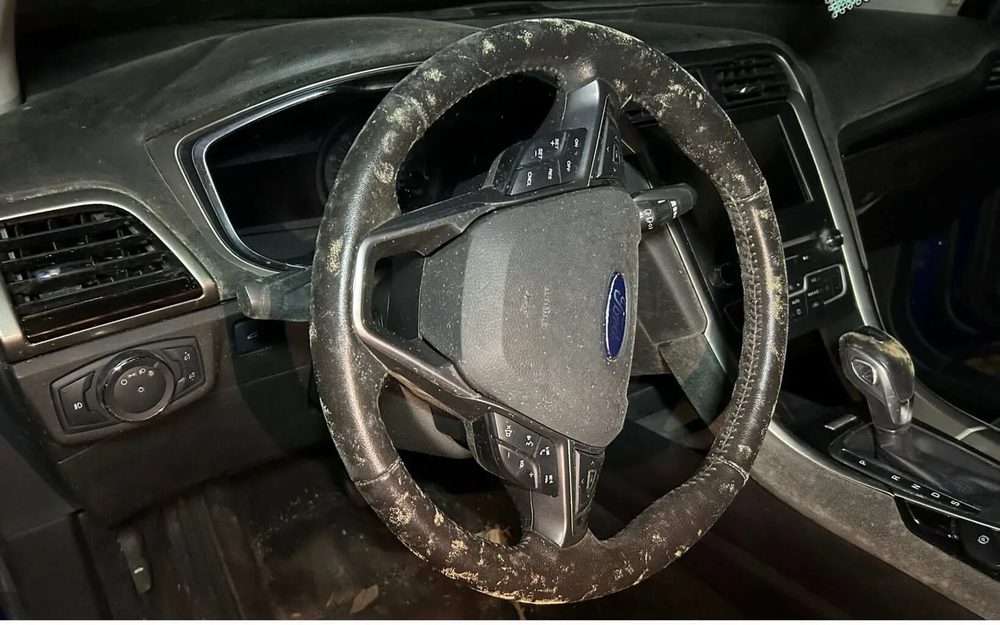 Before
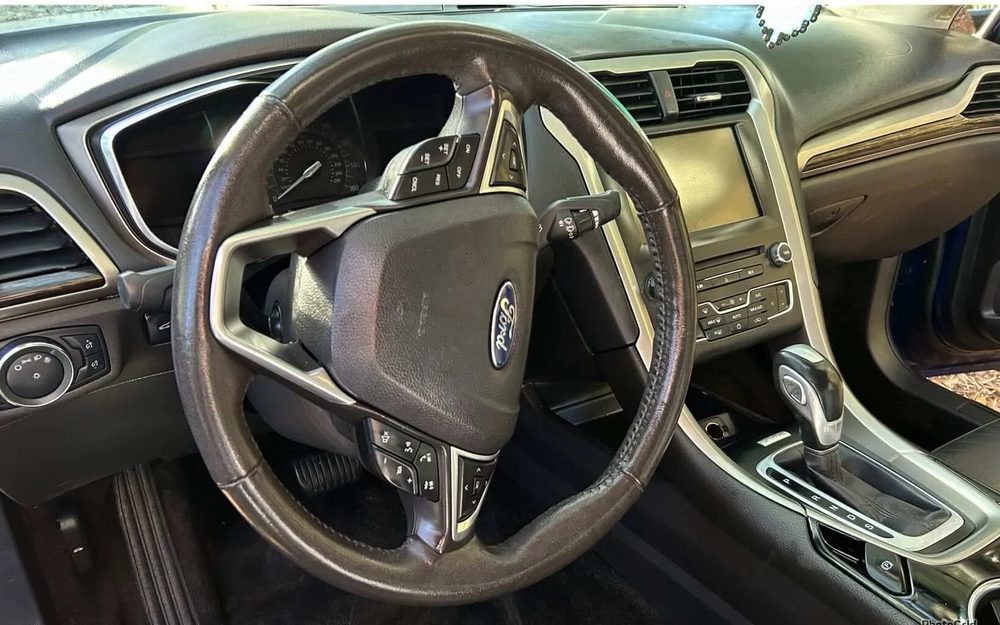 After
Steering Wheel, Dash & Vents — Grey-White Bloom
The interior of a Ford sedan with a grey-white mold bloom on the steering wheel, dashboard and vents. When it reaches the vents, the cabin air carries the smell, so we steam the plastics, treat the vent surfaces with Concrobium and run the sealed ozone cycle. In a place with a long wet season, as in Cooper City, a car left closed after a stretch of rainy afternoons is a typical setup for this kind of surface growth.
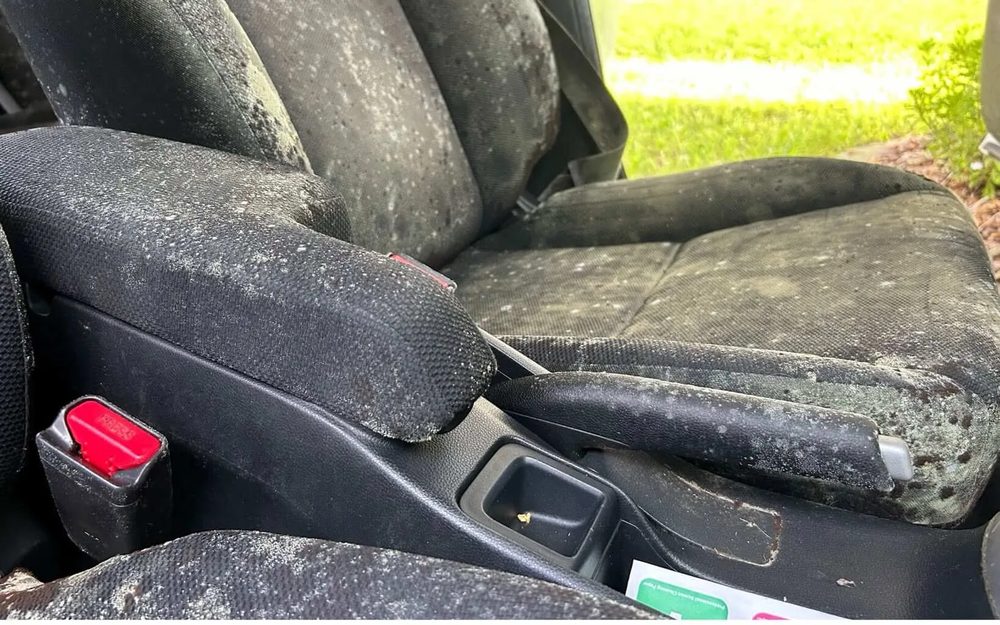 Before
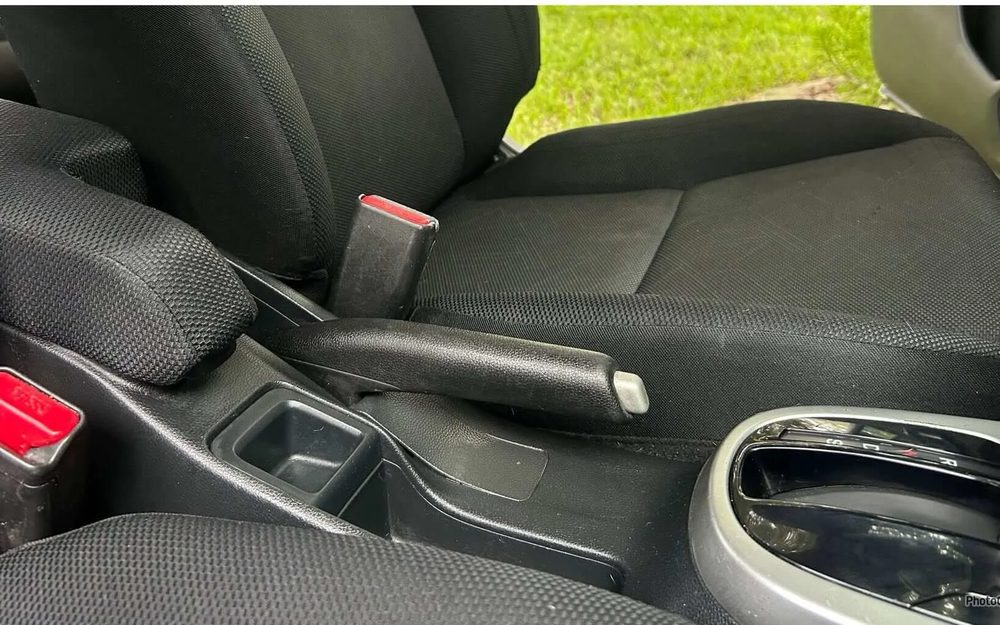 After
Black Cloth Seat & Console — Grey-White Mold
A black cloth driver seat and the armrest and console, covered in a grey-white mold bloom, with green lawn visible outside the window. Cloth holds moisture, so we use HEPA vacuuming, steam, extraction and Concrobium, then the ozone cycle to reach the foam and the vents. A driver's seat is where a damp uniform or a wet towel gets sat on first, which is why this pattern shows up in cars that shuttle athletes between practice and home.
 Before
 After
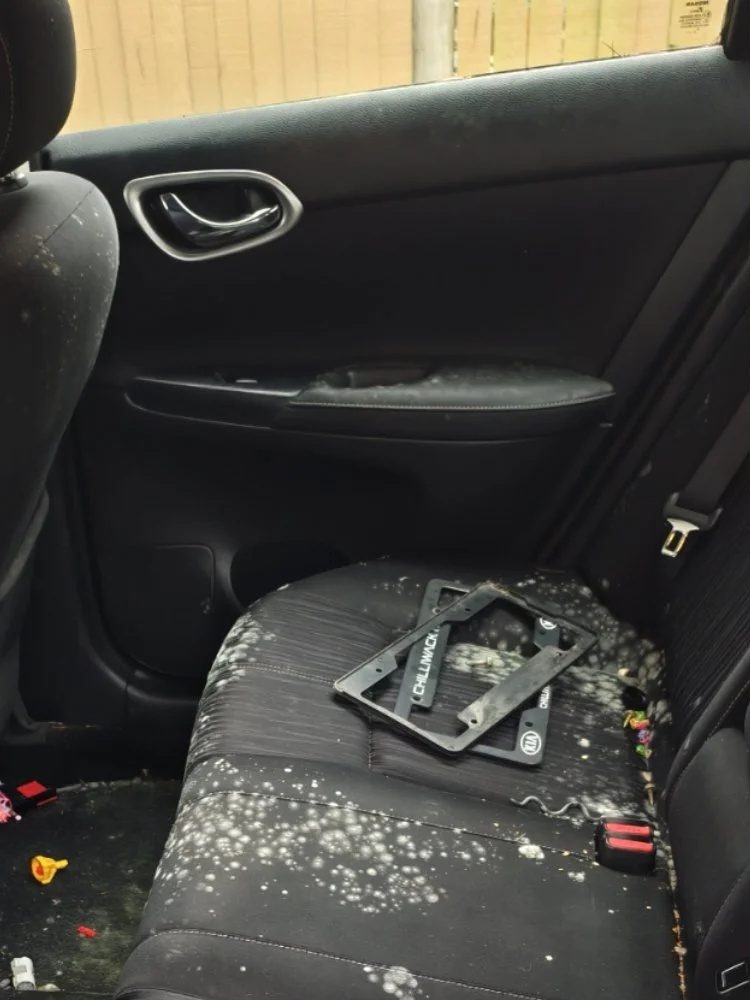
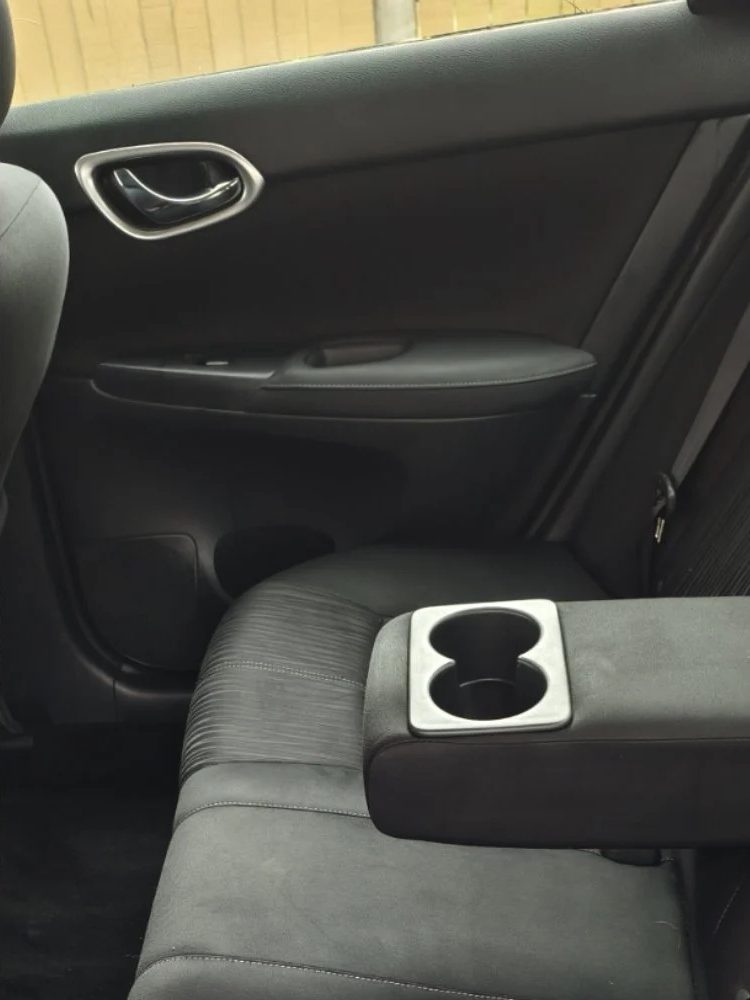
Rear Seat & Door Panel — White Mold Spots
The black rear seat and door panel of a Nissan-style sedan, with white mold spots on the rear cushion, loose debris and a license plate frame lying on the seat. The back seat is where bags, shoes and loose items collect, and anything wet there keeps the cushion damp. We vacuum and clear it, then steam, extract, apply Concrobium and finish with ozone. A hand-me-down teen's car that doubles as storage is a classic setting for this.
 Before
 After
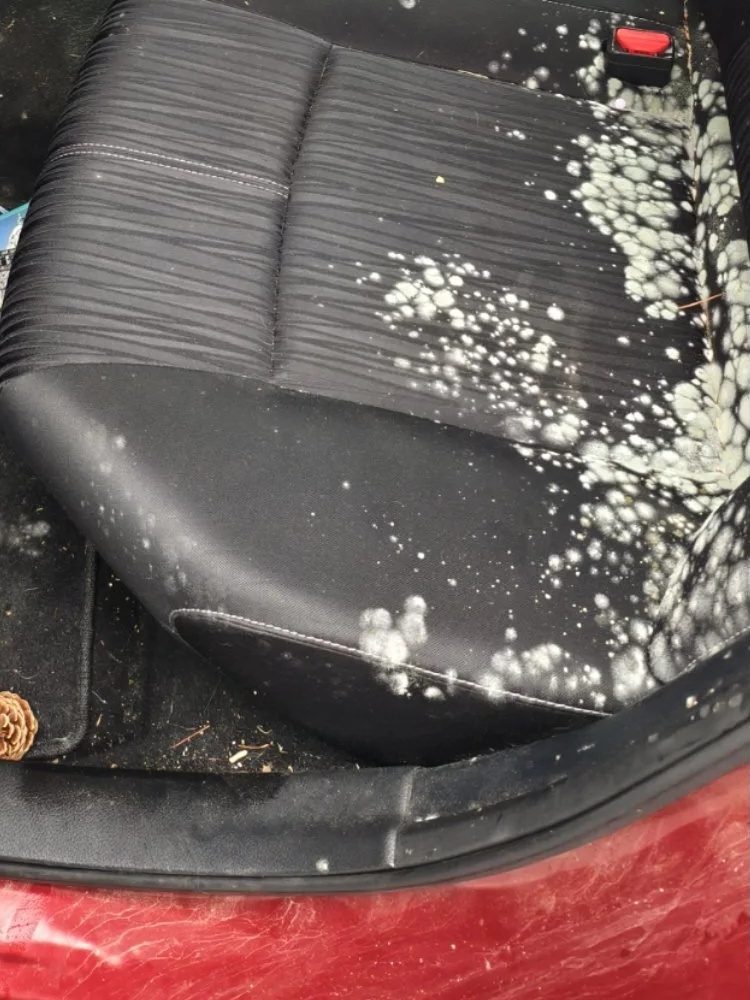
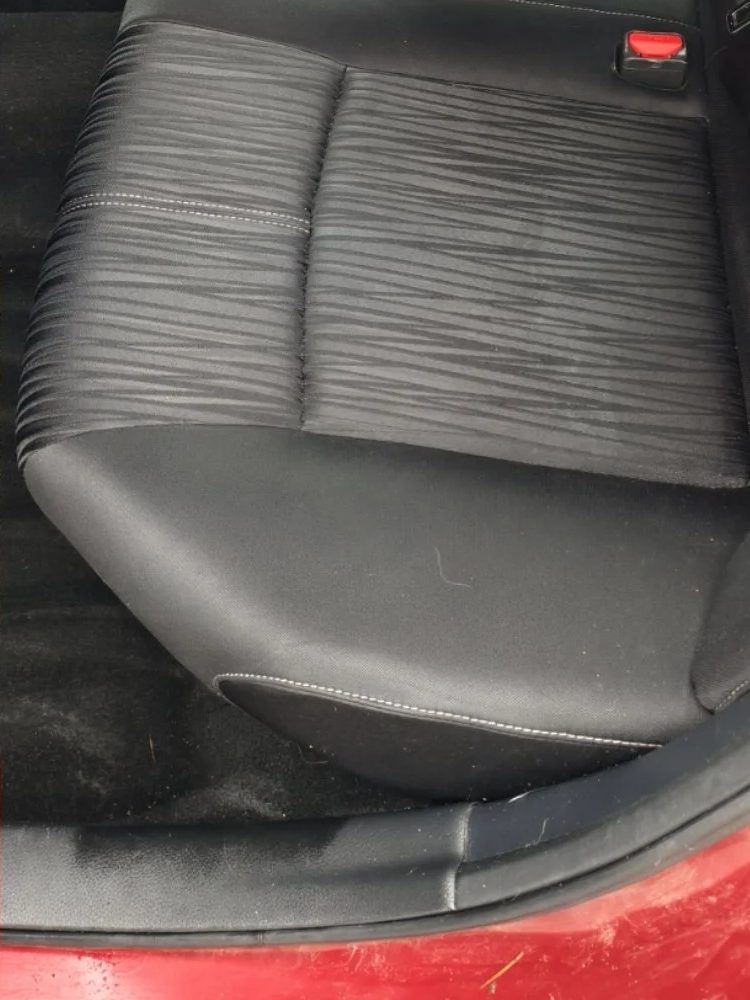
Black Cloth Seat — White Mold Speckles
A black cloth seat covered in fine white mold speckles, with the red car body visible below the window. Speckled growth like this is typically an early or surface-level stage, and it is easiest to treat when caught here: steam and extraction pull moisture from the fabric, Concrobium treats the growth and ozone reaches what the cloth cannot. A car that is driven daily but never gets a full dry-out, as many family cars do in a wet season, tends to start this way.
 Before
 After
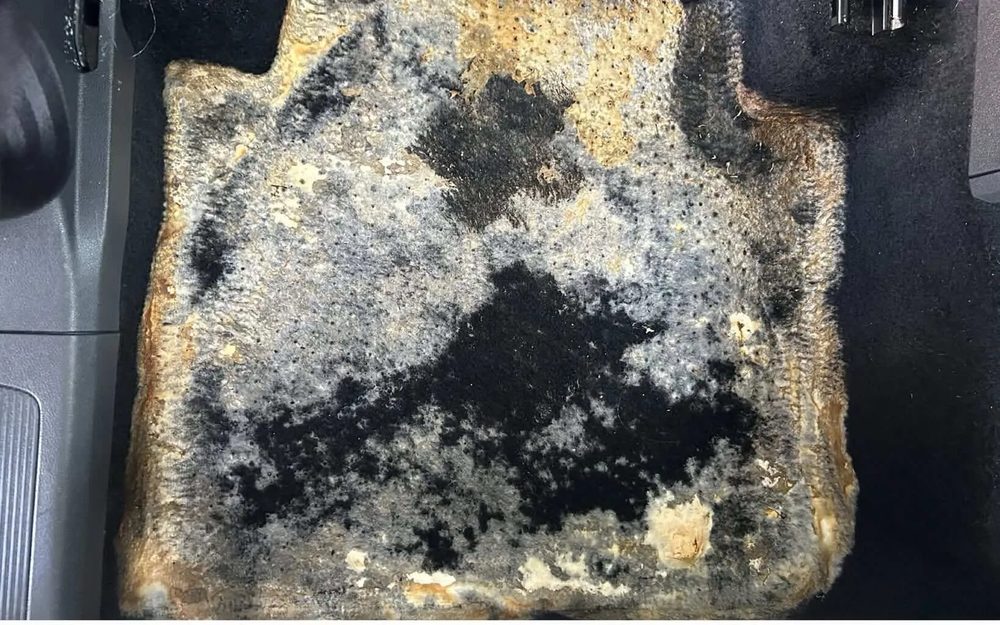
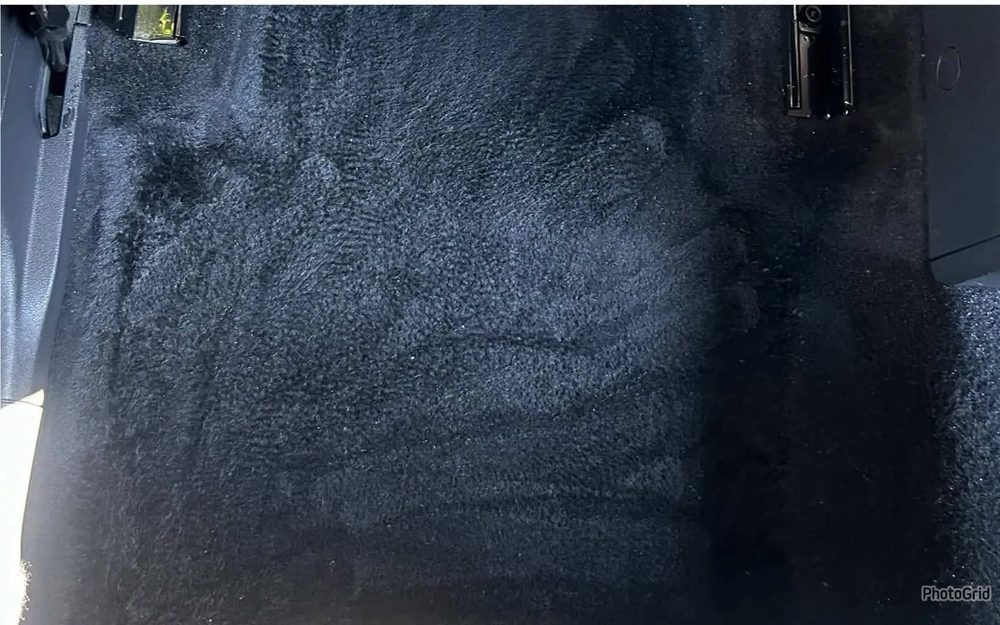
Floor Mat — Heavy Colony Growth
A carpeted floor mat with heavy black, brown and white mold colonies. Floor mats and the carpet beneath are where water collects, and the padding below holds it for weeks. We remove the mats, vacuum with HEPA, steam and extract the carpet, apply Concrobium and run the ozone cycle. Wet cleats, soaked towels and sports drinks dropped on a footwell are the usual way a floor mat reaches this point in a family car.
100% Satisfaction.
Written. No exceptions.
If the result doesn’t meet our standard, or yours, we come back and redo it at no charge. No forms to fill out, no arguing over what “counts.” The guarantee is in writing before we ever touch your vehicle.
Request Mold Removal in Cooper City · From $549
Fill this in once and send it. We get your address, vehicle, and the situation all in one message, no phone tag.
Rating
Detailed
Response
Three steps from after-practice funk to fresh,
and we handle everything else.
No drop-off. No waiting. We come to Cooper City.
We come to you in Cooper City,
from Embassy Lakes driveways to the Stirling Road school run.
Mobile service: home, office, condo, or marina. No drop-off, no travel fee.
Not seeing your city? Ask us — we likely cover it.
Wet cleats, damp towels and a closed cabin:
the Cooper City mold recipe is rarely the weather alone.
Cooper City sits about 7 feet above sea level in a tropical climate, and with 44 percent of households raising children under 18, the family car doubles as locker, snack bar and lost-and-found. Left untreated, what starts as a musty smell becomes a real health issue for the next person who drives the car. DShine's Concrobium Mold Control and ozone process address the cause, not just the symptom, backed by $2M insurance and a written guarantee. Mold doesn't need much to get started, any trapped moisture inside a closed cabin is enough given South Florida's humidity. The source is almost always one of four things: a clogged AC condensation drain letting water pool silently on the floor pan, a failed door or window seal letting rain in, a clogged sunroof drain, or the car simply sitting unused for two or more weeks without the AC running. In Cooper City the cause we meet most is not a storm but wet gear: uniforms, towels, shin guards and bottles left in a warm closed cabin overnight, then driven to school the next morning.
Cooper City neighborhoods and landmarks we serve,
from Embassy Lakes to Brian Piccolo Park.
Gated lakes, school corridors and sports parks: how each Cooper City area shapes mold risk and how we work there.
Embassy Lakes — A gated community of single-family homes and townhomes, with a clubhouse, pool, tennis and pickleball courts, a dog park, walking trails and a waterfront pier. Gate access and townhome garages shape how we work: we confirm entry details in advance, and a one-car garage or assigned space dries slowly after wet gear goes in.
Brian Piccolo Park — A 175-acre sports park opened in 1989 with soccer fields, two cricket fields, basketball courts and a velodrome. Families heading home from here often have damp kit, towels and helmets in the car. We do not work at the park, but we come to the home or office where the car sits afterward.
Flamingo West Park — A 26.3-acre park at Flamingo Road and Stirling Road with four synthetic fields, a fishing pier, walking trails and a playground. It opened in July 2019, and its synthetic fields were designed to avoid the flooding that used to cancel games for up to four days after rain. Sweaty, rain-soaked gear from game days is a typical source of damp in family cars.
Cooper City High School — On Stirling Road between Palm Avenue and SW 90th Avenue, with around 2,400 students and 18 sports, including football, soccer and water polo. A teen's car near here often doubles as a gear locker. We treat it at the family's driveway or garage, with timing planned around the school day.
Stirling Road corridor — The road that links Cooper City High School, Flamingo West Park and the nearby shops and strip centers. Cars here make short, frequent trips with stops in a hot, closed cabin between them. We schedule visits at your home or office on or near the corridor, and travel is included in the price.
Bill Lips Park and the Cooper City Sports Complex — Two more of the city's named parks, listed alongside Flamingo West Park. Wherever kids play, the pattern is the same: wet gear, water bottles and snacks end up in the family car afterward. We come to your address, so there is no need to bring the car anywhere; just tell us where it parks and how to get in.
Pioneer Middle School — A Cooper City middle school that Wikipedia reports ranked second among Broward County middle schools. Pickup lines and carpools put the family minivan in a daily cycle of kids, bags and snacks. Embassy Creek Elementary, zoned for Embassy Lakes, adds to that school-run rhythm. We schedule visits at your home to avoid those busy windows.
Don't see your area? Ask us — we likely cover it.
Cooper City car mold,
answers for families with a car full of sports gear.
Tap any topic to read the full breakdown.
Morris Cooper's 1959 town grew from farmland and orange grove, and in 2006 it annexed the Waldrep Dairy Farm. Today it spreads across 8.34 square miles, 0.30 of them water, at an elevation near 7 feet. Wikipedia files the climate under tropical rainforest (Köppen Af), a shade away from tropical monsoon: no true dry season, just a winter that feels drier.
Fort Lauderdale, the closest long-record station, logs about 61 inches of rain a year. Rain concentrates between May and October, peaking in June at 9.55 inches, and the Atlantic hurricane window runs June 1 through November 30. Rain alone will not breed mold in a parked car; wet material in a shut cabin will, and spores can germinate inside 24 to 48 hours.
That is why the weather app matters less here than the habits behind the wheel. Humidity sets the stage, but the trigger is usually something a person put in the car: a wet towel, a soaked jersey, a sweating bottle. It explains why a family car in a dry-looking week can still be the worst-off vehicle on the block.
Family haulers dominate, meaning minivans and three-row SUVs, which suits a city where 44 percent of households have children under 18. Growth tends to start low and in back: the footwell under the second row, the seat rails, the pocket where a mouthguard or half a juice box ended up. Child-seat bases and boosters hide trouble too, since nothing under them ever dries.
Teenagers' cars come next, usually older sedans or compact SUVs with tired door seals and a rear seat that doubles as a locker. After those come leather-trimmed crossovers, where a chalky haze on a bolster is the first clue, and second cars that idle in a driveway because one parent works from home.
Pickups and work vans appear as well, often with a damp tool bag or tarp on the floor. The visible patch is almost never the full story, so the whole cabin, trunk and vents get inspected, front to back, before we name a price tier.
Garage bay with the door down: the default for single-family homes here. Rain stays out, but so does airflow. A wet jersey tossed on a floor mat at 6 p.m. is still there on Thursday, and the cabin spends three nights marinating. The vehicle driven least, usually the second one, is the one we end up treating.
Driveway: better air, worse exposure. Lawn sprinklers hit the lower door seals, afternoon cloudbursts hit the sunroof, and a window cracked a finger-width is enough to let a storm in. Parked under a tree, a car also collects leaves in the cowl drain, which can then spill water toward the cabin.
Townhome or reserved spot in a gated community: Embassy Lakes mixes single-family homes with townhomes behind its gate. One-car garages and assigned spaces leave a lone vehicle sharing cramped, still air with bikes and storage, and a space tucked into a building's shade dries slowly after rain.
School, field and practice lots: here the car becomes the place wet kit gets dumped. Two or three hours closed in the sun with sweaty gear on the seat cooks moisture into upholstery, and the same car then sleeps in the garage. Do that three times a week and the cabin never gets a real dry-out.
First day of school through October: practices restart while the rainy months are still going, and NOAA places the heart of hurricane season between mid-August and mid-October, with the peak on September 10. Wet cleats and towels get tossed into closed cars, and gusty rain finds any tired window or sunroof gasket.
Late October through February: cooler mornings and fewer storms make people relax, a deceptive stretch. Swim kits and sweaty uniforms still come home, and winter break leaves cars parked for two or three weeks. A half-dry gym bag on the floor can turn the first day back into a musty surprise.
March through May: spring leagues and tournaments overlap with the start of the wet season in May. This is when owners finally trace a sour smell to something from months earlier, because the padding under a mat never dried and rising warmth woke it up.
June and July: no school, but camps, pool days and road trips fill the calendar, and June is the wettest month at the Fort Lauderdale station, averaging 9.55 inches. Beach towels ride home in the back and a car left alone for weeks with the A/C off is the other classic setup.
Timing: our day starts where yours does, in a family driveway or garage bay. Plenty of parents pick a slot while the kids are in class. The job runs three to four hours, so we time the start for the car to be aired, dry and back in the driveway ahead of the afternoon pickup line.
Gates: gated communities such as Embassy Lakes need a name at the guard house, so give us the entry instructions when you book: a guest-list entry, a call-in contact or a code. That way nobody sits at the barrier while the appointment slips.
Space: everything happens at your address; we never set up at a school lot or a ball field. We need room to swing every door open and a corner where no one will stroll past while the ozone runs. If the garage is tight or your association restricts equipment, say so up front and we will choose the driveway or the apron.
1. Wet kit left in the cabin. Uniforms, towels, shin guards, cleats, water-polo suits, bottles. In a city built around youth sports this is our leading finding. One damp item on a floor mat is enough for growth to begin within 24 to 48 hours, and a household that repeats the habit all season hands mold a permanent address.
2. Spills nobody extracted. Juice boxes, smoothies, milk, sports drinks. Wiping the surface leaves the sugar and the water down in the padding and along the seat tracks, and warm weather finishes the job. Crumbs plus a damp patch make a very good meal for mold.
3. Pool, beach and swim towels. Summer's version of number one, with more water. Wet swimsuits and towels end up under a seat, in the trunk well or in a bag nobody wants to unpack, so the damp outlasts the outing by days and the whole cabin starts to smell of it.
4. Hardware and idle time. A clogged A/C drain stops carrying condensation out, and it pools on the floor pan; rain finds a worn door or sunroof seal the same way. Those are quieter causes, but they return if nobody fixes them. A car left idle for weeks with the A/C off ranks last here because most family cars are used daily; when it does happen, it is usually the second car that sat.
On arrival: a flashlight tour of the interior comes before any tool leaves its case. Seat rails, the fabric under child-seat bases, headliner, door cards, trunk lining and vent louvers all get checked, and we show you what we find so the price tier makes sense.
The long middle: the heavy lifting. HEPA vacuuming, Benefect, steam and extraction pull moisture and spores out of seats and carpet, then Concrobium goes on and everything dries. Leather follows its own gentler protocol. You are free to work from home, run errands or just hand over the keys.
Wrap-up: a sealed ozone cycle, a Meguiar's odor finish and a final inspection, with before and after photos sent to you by WhatsApp. You also hear what we think caused it. If it is a drain or a gear habit, fixing that matters, since a clean car returned to the same dampness will not stay clean.
Question one is nearly always whether a wet uniform can really do this. It can. A damp item in a shut car is all mold needs, and a garage keeps the moisture in overnight. We then ask for a photo or two, because the stain, the spots or the bloom usually show whether the job is one area or the whole interior.
Questions two and three: how much, and when can the kids ride again? We confirm the tier in under two minutes, then lock the exact figure after reviewing your photos and before any work. On the second, we tell you when the car has aired out and is ready, which is not always when the machine stops.
After that come the logistics: must I be home, do you come to the house, can it fit around school pickup? You do not have to hover as long as we can reach the car and clear the gate, we come to you, and we plan the timing together.
Ceramic Coating: the most common add-on, usually for a family SUV that lives under sprinklers and afternoon sun. The vehicle is already in your driveway, so the protection can share the same day and you avoid a second appointment.
Paint Correction: it follows, mostly for black and navy paint where swirls show in every parking lot and under every garage light. **Engine Bay Cleaning** appears now and then on an older hand-me-down that sat a long time and is due for more than an interior refresh.
Odor Removal Detailing, $349: not an add-on but the right call if the problem is only a smell from spills, smoke or food, with no visible growth. Send photos and we will tell you honestly which service your car needs. Anything extra is agreed with you first, and mold treatment always goes first.
The door test: after the car has been shut overnight, open a door and breathe in before the A/C starts. A flat, earthy, wet-towel smell that fades within a minute is the classic early warning. Households that live in the car every day stop noticing it, so borrow a neighbor's nose if you can.
The palm test: press a hand flat on the carpet beneath the mat and on the seat bottom along its seam. Coolness or clamminess means trapped water. **The light test:** rake a phone flashlight across the dash and seat fabric; fine frosting, dark freckles or a whitish haze on leather show up in angled light.
If a passenger keeps getting stuffy or irritated only while riding, treat that as a reason to look, not as a diagnosis. Send photos and we will say what we see. Catching one patch early is how a $549 job stays a $549 job instead of growing into a treatment of the whole vehicle.
Before you leave: make the car look like a rental return. Bags, towels, bottles, wrappers and loose mats come out, and anything damp dries in open air, never zipped into the trunk. At the last stop, tap the A/C button off and leave the fan blowing for a short spell, so the coil dries instead of staying wet all week.
While you are away: pull into the garage only when the vehicle itself is dry, check that every window and the sunroof are fully shut, and park a moisture absorber in a tray on the floor if the trip is long. In many households the idle stretch is a fortnight or three weeks: summer vacation, holiday travel, a spare car while a student is away.
When you return: open the doors and let the interior breathe before you drive. A damp odor is not something an air freshener should cover, because that only buys time while growth continues. A quick photo sent to us will tell you whether it deserves a closer look.
The hauler: the minivan or three-row SUV takes the juice, the cleats and the pool towels, and it is usually the first to need us. **The commuter:** a sedan that mostly meets a wet umbrella and the odd coffee, so it often needs only a look. **The teenager's car:** everything left on the back seat, plus the oldest gaskets in the driveway.
Every vehicle is priced on its own, from what we actually find in it. When two cars need work, we sequence them: the first is dried, aired out and handed back before the second begins, and we suggest starting with whichever carries the most passengers.
Tell us which days the vehicles are free and we fit the work around school runs and shift changes. While we are at the house with a flashlight anyway, we will peek into the spare car; two minutes usually settle whether it needs its own appointment.
The promise: if the mold, or the odor it leaves behind, shows up again inside 30 days, the re-treatment is on us. Our written 100 percent satisfaction pledge needs just one thing from you, a quick message that it is back, ideally with a photo or two.
Why repeats happen: almost always for a mundane reason. A freshly soaked towel in the footwell, a drain still clogged, a gasket still weeping. If we spotted any of those during the visit, we told you then, because the aim is a treatment that holds, not a second appointment.
Before and after you book: ask us anything about the terms. Message us on WhatsApp and we will walk through what is covered, what we found in your car, and the one or two habits that keep a cabin clean once the job is done. No question is too small.
Hand-me-down sedans: years of spilled drinks, brittle door gaskets and a rear seat that has served as a closet. Growth tends to sit deeper, in seat bottoms and trunk carpet, so those spots get extra probing before we name a tier.
Leather-trimmed SUVs: the clue is optical rather than smelly, a whitish bloom along a bolster, a stitched seam or the armrest. Hard scrubbing ruins leather, so we go gently: low-pressure steam, careful extraction, Concrobium, then ozone for the air. Stiff brushes never come out.
Pickups and work vans: a damp canvas bag on the floor mat, a wet tarp, a cooler that leaked. The sequence is the same, adapted to the surfaces, and the price tier comes from what we find, not from the badge on the tailgate or the age of the paint.
Unload completely: every bag, towel, bottle and wrapper, plus whatever hides in the trunk and the seat-back pockets. One forgotten item restarts the whole problem, and a gym bag in the trunk counts as much as one on the floor.
Air the mats: pull them out and lay them in open air. If a seat or carpet took a soaking, blot it, then dry it fully with a fan or the vents instead of hoping the heat will handle it. Sun alone tends to bake moisture deeper into the padding.
Peek at the seals: windows, sunroof, door gaskets. Run a hand along the door sills and under the dash for a cool, damp patch, because that is where water collects first and where owners seldom look, especially on a car that is driven daily.
Dry the system: press the A/C button off but leave the fan running a couple of minutes before you park, then leave the car in a dry spot. On your return, open the doors, let it air out for a few minutes and look inside before loading it up again.
The pricing has two rungs: $549 when mold sits in one area, $749 when it spans the vehicle. Waiting is how a car climbs from the first rung to the second, because a patch that begins under one seat creeps into carpet, the next row and the vents while the weather stays warm.
There is the cost of riding in it, too. A car that handles the school run, practice and errands exposes the same passengers daily, and kids spend long stretches in the back. An odor that is mild in September tends to strengthen while the weather stays warm.
And the cause never leaves by itself. A wet-gear habit or a clogged drain keeps feeding the problem, and every extra week widens what has to be treated. Sending a photo costs nothing, and within two minutes we can say which rung applies.
Soccer is the obvious one, but this city's sports map is wider. Brian Piccolo Park has two cricket fields and one of the few cycling tracks in South Florida, and Cooper City High School fields a water polo program among its 18 sports. Each of those leaves a different kind of dampness in a car.
Cricket pads, gloves and kit bags are padded, so they hold sweat for a long time. Cycling means wet helmets, jerseys and sometimes a bike bundled into a hatchback with a muddy tire on the cargo floor. Water polo and swim gear go in soaked, and a swim bag in a closed trunk can stay damp for days.
None of this needs to stop anyone from playing. The fix is a habit: gear comes out of the car and into the open air the same day, and the mats get a look after a wet week. When that slips and the smell has already set in, we are the people to call.
Think of it as a two-line price list. Mold confined to one spot, for instance one seat bolster, a patch of carpet or a door panel, is $549. Once it has run through the whole cabin, the figure is $749. The drive to your Cooper City door is already inside both numbers, so a visit near Flamingo Road costs the same as one near Stirling Road.
To pick the line, you send photos or a few sentences by message. Inside two minutes we tell you which line your car most likely falls on. Then we study the pictures properly and confirm the final figure before any equipment comes out, so the number you hear first is the number you pay.
If we open the doors and find the mold goes further than the pictures showed, we stop and talk it through with you, and the work does not begin until you have agreed to the new figure. The price covers all eleven steps, the ozone cycle, the odor finish, WhatsApp photos and the 30-day guarantee, so there is nothing to tally at the end.
Where: an 8.34-square-mile suburb hemmed in by Davie, Pembroke Pines, Hollywood and Southwest Ranches, with Embassy Lakes behind its gates and Brian Piccolo Park's 175 acres of fields. Elevation is about 7 feet and the climate is tropical, so damp never fully leaves.
Who and why: 44 percent of households are raising children, which is why the mold we find starts with a wet jersey, a soaked towel or a toppled smoothie, not with a flood. Risk peaks from the first week of school into October and again once summer break begins.
What you get: a $549 or $749 price confirmed before work starts, a visit at your address that typically takes three to four hours, IDA certified technicians, liability coverage of $2M and a written 30-day guarantee with free re-treatment if mold or its odor returns. A photo is all we need to start.
Once the surfaces are done, every door and window is shut and a professional ozone generator goes to work in the sealed cabin. Ozone seeps into air ducts, headliner and the padding behind plastic trim, spots no towel ever touches. Nobody sits in the vehicle during the cycle, and people and pets stay back until it finishes.
Next the cabin must ventilate. An open driveway clears it fast, a closed garage slowly, which is why we pick the spot before starting. Then come the Meguiar's odor finish and one last inspection. We say when passengers can ride, and that moment is not always the instant the machine shuts off.
It is a quiet step, but it covers what hands and towels cannot: air, vents, hidden foam. Paired with the steam, extraction and Concrobium before it, it is a big part of why we can put a written 30-day guarantee behind the work, so you are not guessing whether the smell is truly gone.
Before you book,
answers for Cooper City parents and drivers.
Add-ons Cooper City clients book
Still deciding? Read: the complete mold removal guide · does insurance cover it? · why DIY mold removal fails.
Mold in your Cooper City car? Get a price in under 2 minutes.
Serving Cooper City and all of Broward County. Fixed pricing, no travel fee. We confirm in under 2 minutes.
It Might Just Be an Odor Problem
If there's no visible mold growth yet, the smell alone is usually an Odor Removal Detailing case ($349 flat) — faster than full mold remediation ($549–$749). See which one matches what you're dealing with: