What a Southwest Ranches Mold Job Includes
This is not a car wash. Car Mold Removal uses Concrobium Mold Control treatment, pH-balanced products, and machine assistance, the same process used in pre-sale preparations for luxury dealerships.
Why it matters for your health: Mold in a vehicle is a different exposure than mold on a wall at home. With the AC recirculating, everyone inside is breathing concentrated spores for the length of the drive. The EPA and CDC both link mold exposure to respiratory irritation, allergic reactions, headaches, and worsened asthma symptoms. Children, older passengers, and anyone with a compromised immune system typically react faster and more severely than a healthy adult would. By the time the smell is noticeable, spores have usually already spread through the HVAC system into every vent in the cabin.
Curious what actually happens during the visit? Tap through our real 11-step process below to see what we do at each stage and why it matters.
What every Southwest Ranches mold job gets you
Most detailers in Southwest Ranches charge less. Here’s exactly what you gain — and what you risk — with each choice.
| DShine DetailsFrom $549 · travel included | Avg Southwest Ranches Detailer$149 – $199 | |
|---|---|---|
| Industry certificationsIDA, Koch Chemie, Meguiar’s, 3M, Symplex, XPEL | ✓6 verified | —0 credentials |
| $2M liability insuranceWe cover any damage — in writing | ✓ | —Often uninsured |
| Deionized water systemZero mineral residue, no water spots | ✓ | —Tap water, water spots |
| Fresh microfibers per vehicleNo cross-contamination between jobs | ✓ | —Shared towels, swirl risk |
| Mold-specific chemistry onlyConcrobium, Benefect & Meguiar’s, no harsh acids | ✓ | —Industrial degreasers |
| Before & after photosSent via WhatsApp on completion | ✓ | —No documentation |
| 100% written satisfaction guaranteeReturn & redo at no cost if unsatisfied | ✓ | —No written guarantee |
| Travel to your address — $0Home, office, condo — no drop-off | ✓ | Sometimes adds fee |
DShine vs. any other detailer
in Southwest Ranches, Broward County
Three things most detailers won't tell you. We put them in writing.
 Since 2018
With more than 20 years of hands-on experience in the automotive care industry, Evelio launched DShine Details in August 2018 with one van and zero shortcuts. For the first six months he slept in the van to keep costs down and standards up. Today DShine runs 7 certified vans across Miami-Dade, Broward, and Palm Beach, and the commitment hasn't changed. Every vehicle is treated as if it were his own.
What clients say
in their own words.
Before & After: Mold Removal We've Actually Done
No stock photos. These are real DShine mold removal jobs across South Florida, the same 11-step process and chemistry used on every Southwest Ranches appointment.
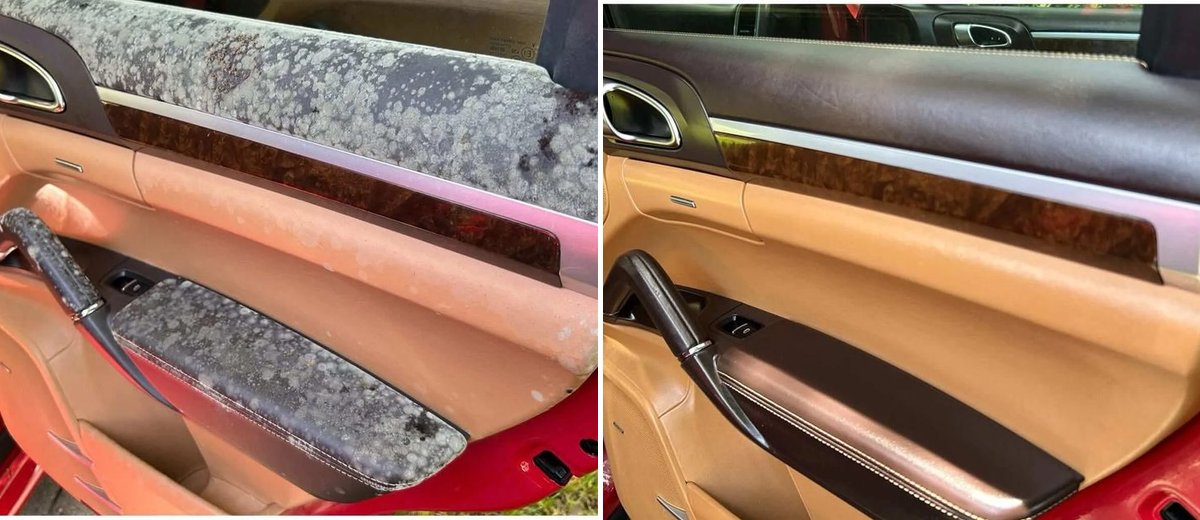
 Before
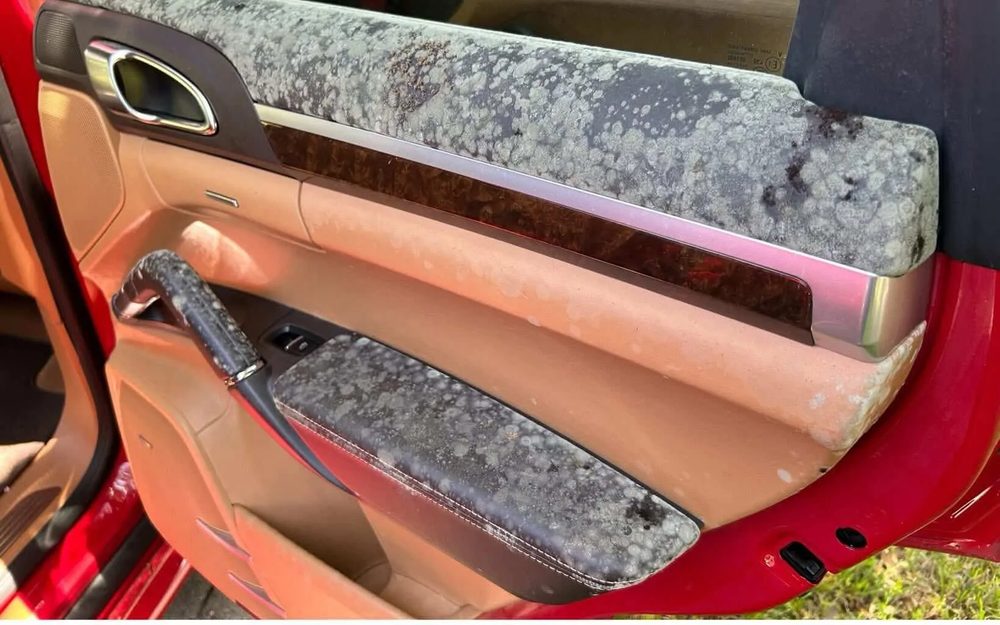
 After
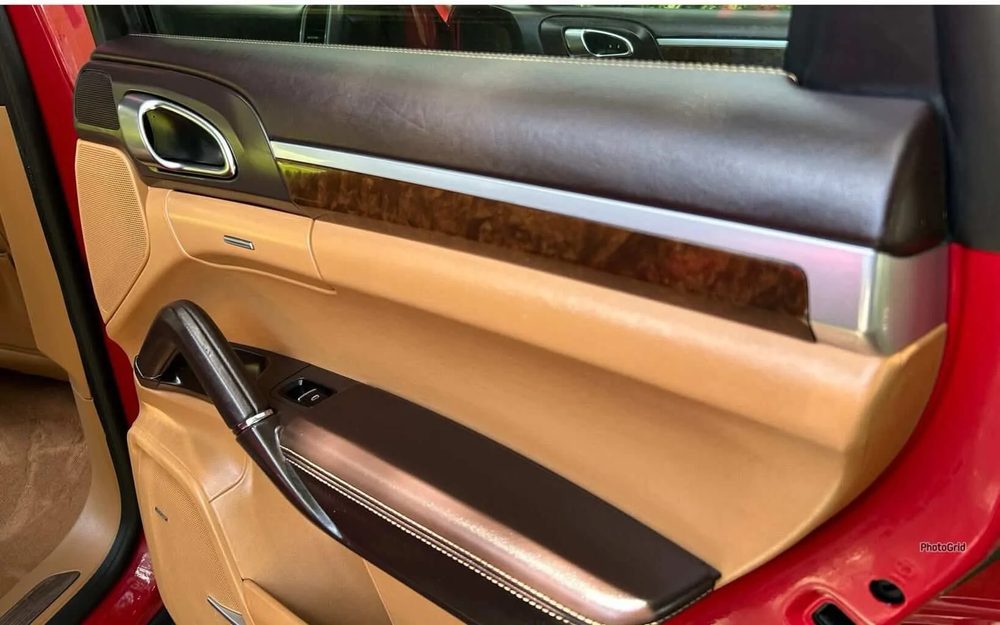
Porsche Cayenne — Door Panel & Armrest
Mold across the tan leather door panel and armrest, running up to the wood trim on a red Porsche Cayenne. Leather like this gets the leather-safe protocol: controlled steam and extraction, Concrobium on the surface and a sealed ozone cycle for the cabin air, so the finish is not stripped. In a town where an afternoon storm can arrive while a window is cracked, door cards are where water settles first.
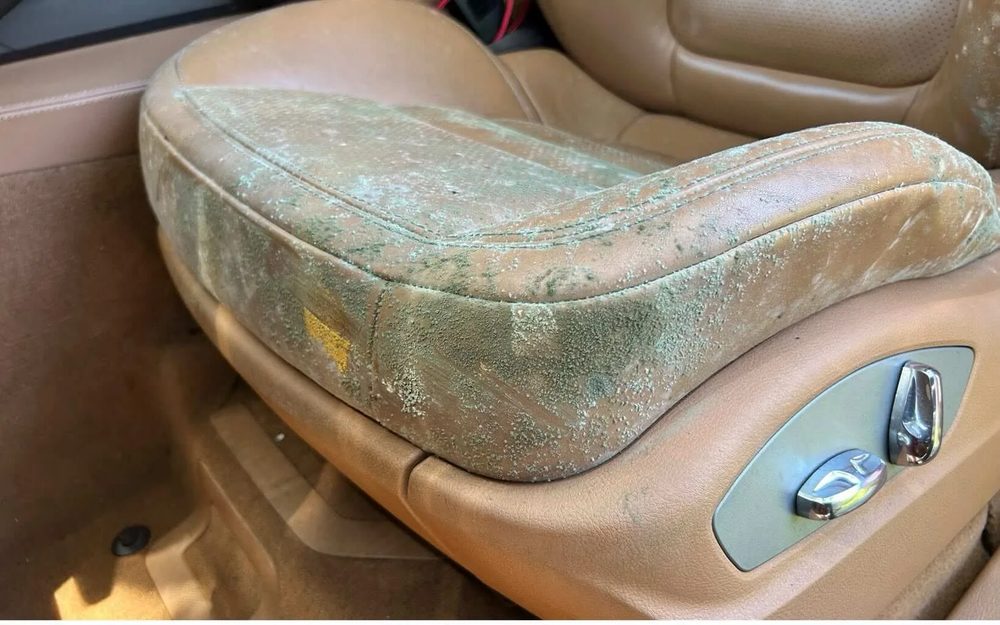 Before
 After
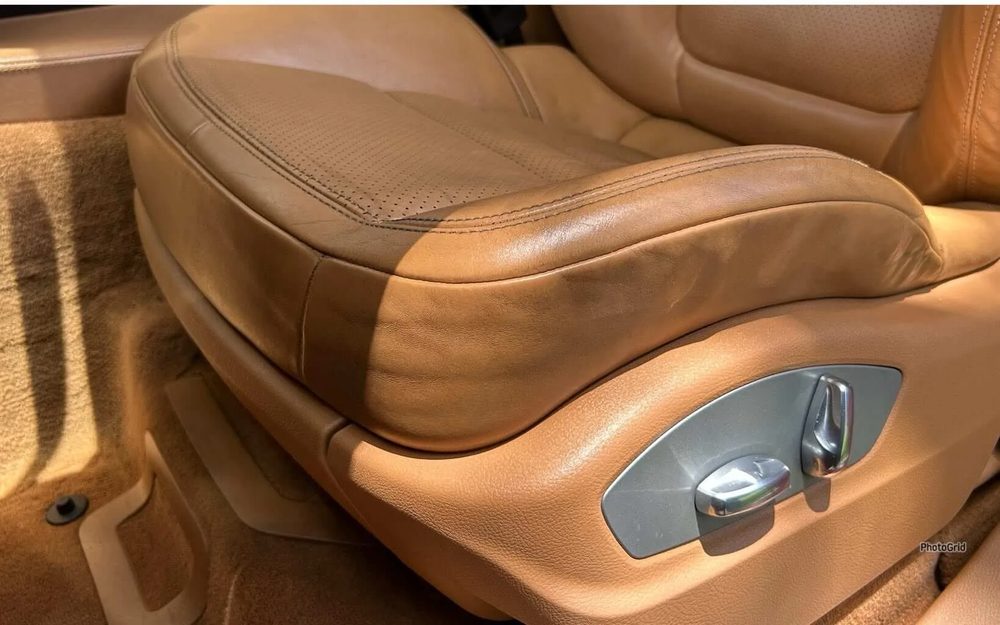
Tan Leather Seat Bolster — Green-Blue Growth
The side bolster of a tan or camel leather front seat, covered in green-blue mold. The bolster is where a rider or driver sits down and where moisture and body heat collect, and light leather shows growth early. We treat it with the leather-safe protocol and Concrobium, then ozone the cabin. The pattern is common where owners climb in with damp boots or gear after hosing or rain.
 Before
 After
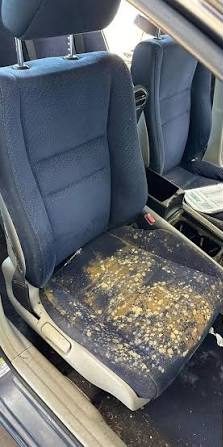
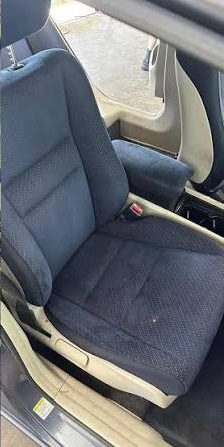
Cloth Bench Seat — Mold-Stain Residue Under the Cushion
A dark blue cloth sedan bench seat with the cushion lifted, showing tan and yellow mold-stain residue on the underside of the seat bottom. Growth hidden beneath a cushion is easy to miss, which is why we lift and inspect rather than treat only what shows on top. Steam, extraction, drying and Concrobium reach the foam, and the pattern fits a seat that stayed damp in a closed cab through a long wet season.
 Before
 After
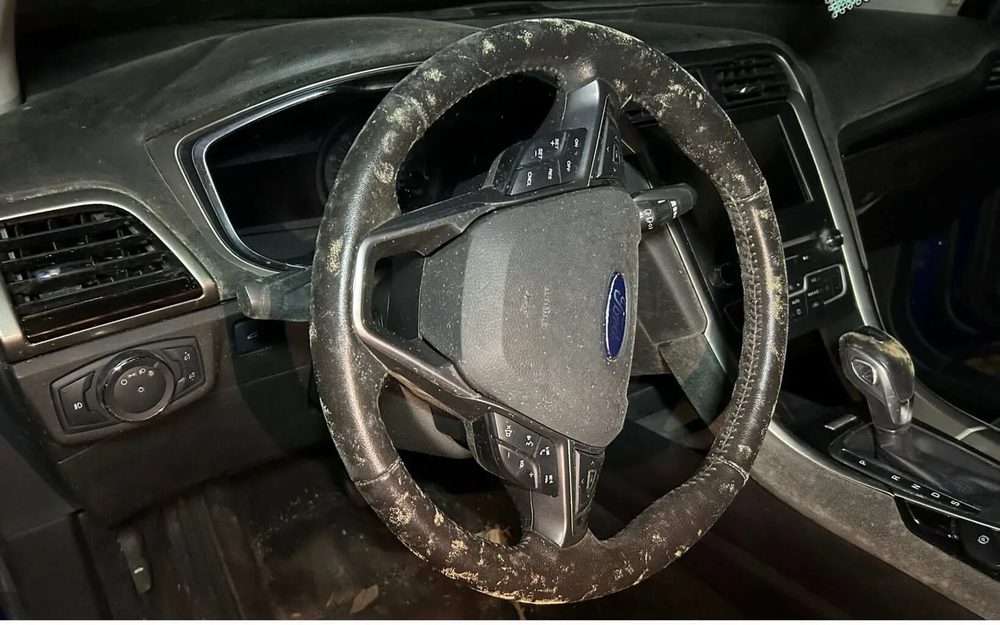
Ford Interior — Steering Wheel, Dash & Vents
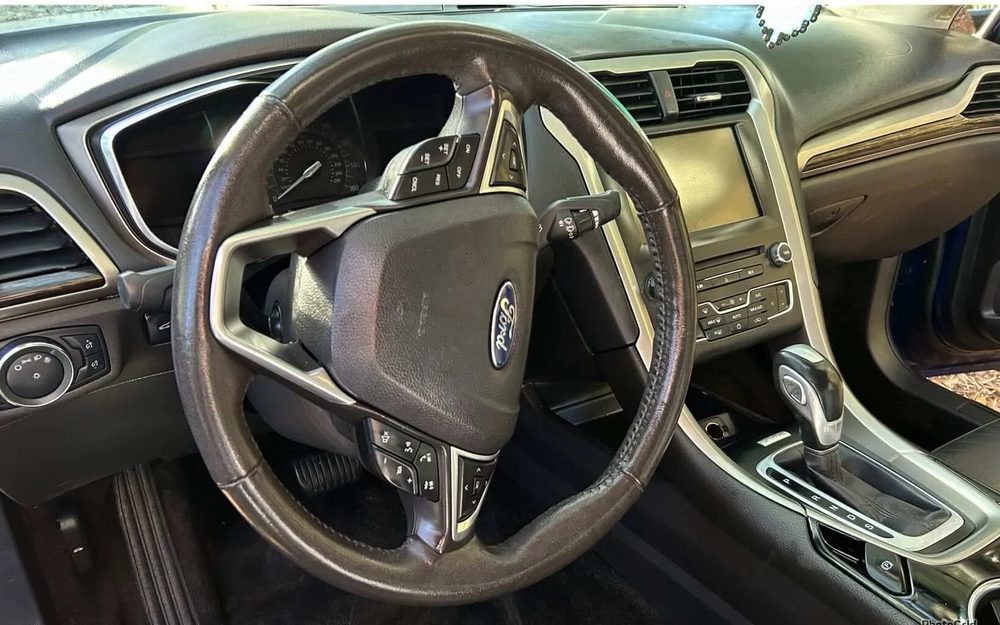
A Ford sedan interior with grey-white mold bloom on the steering wheel, the dash and the vents. Hard surfaces and vents are where a musty smell comes from when the A/C starts, so we steam the plastics, treat the vent housings and finish with ozone to reach the air paths. This pattern is common after a cab has been shut and humid for weeks, as can happen when a vehicle sits between uses.
 Before
 After
Black Cloth Seat & Console — Grey-White Bloom
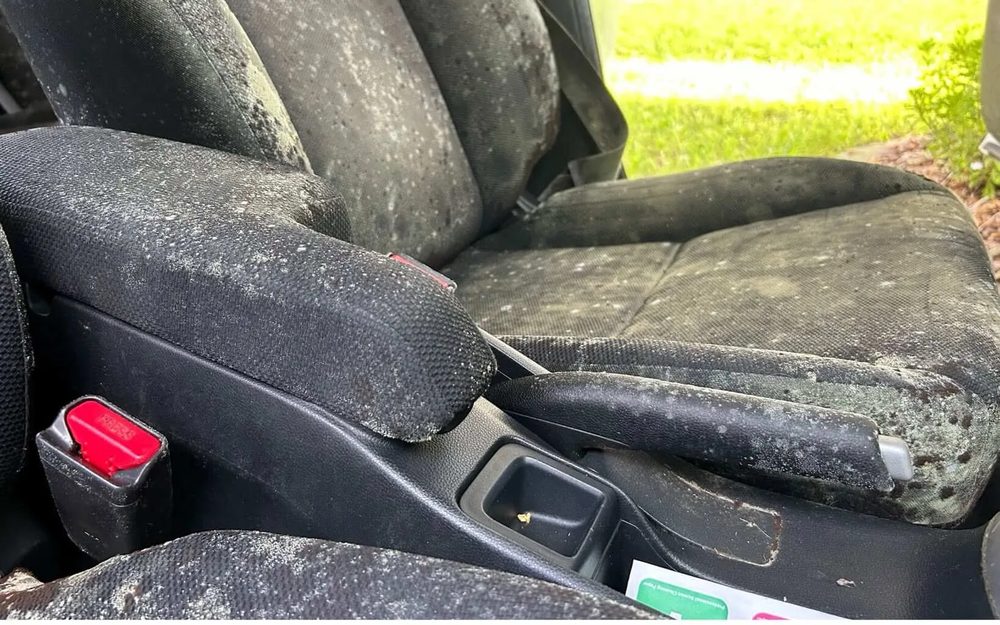
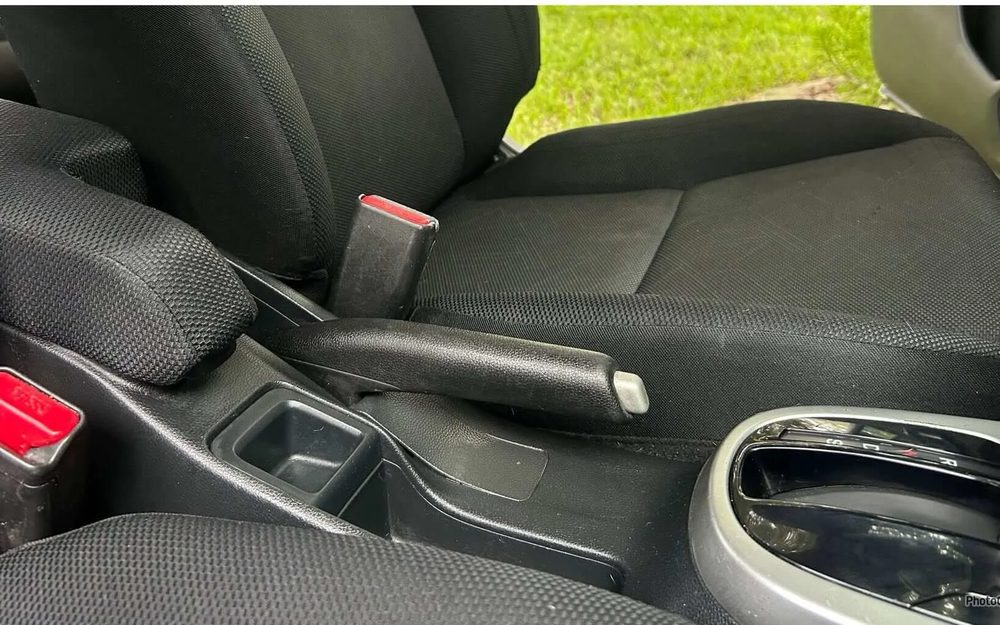
A black cloth driver seat with the armrest and console covered in grey-white mold bloom, with green lawn visible outside the window. Dark cloth hides early growth until it turns powdery, and the console and armrest are touched constantly. We vacuum, steam and extract the cloth, treat the console plastics and run ozone. A vehicle parked beside grass, where wet ground adds humidity and open windows let it in, shows this pattern often.
 Before
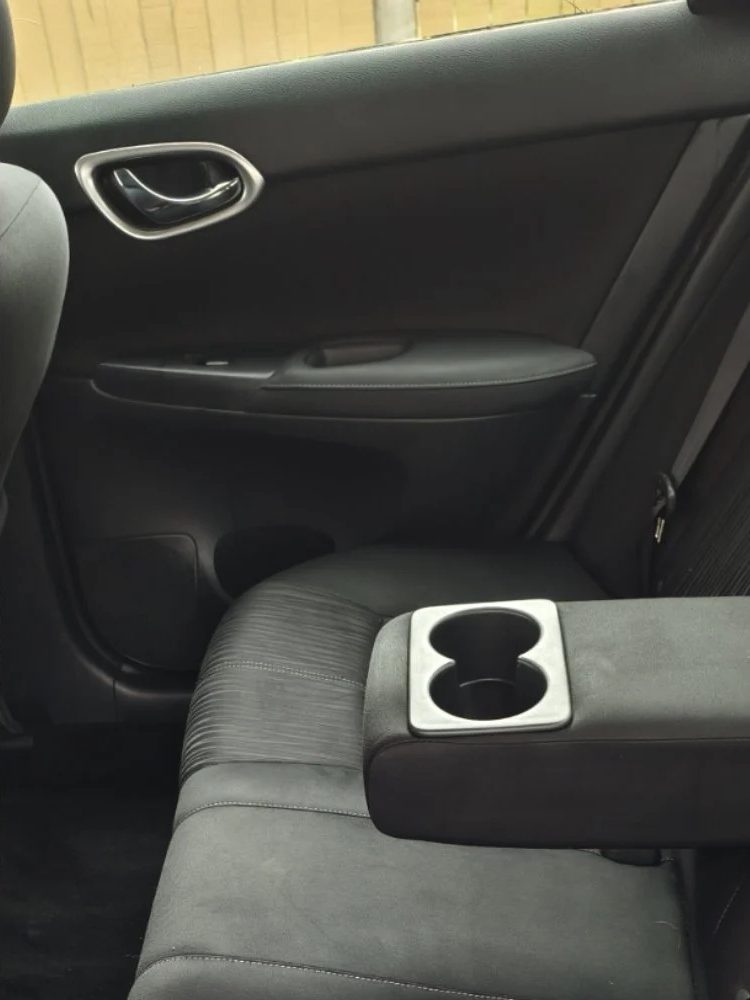 After
Black Sedan Rear Seat & Door Panel — White Spots
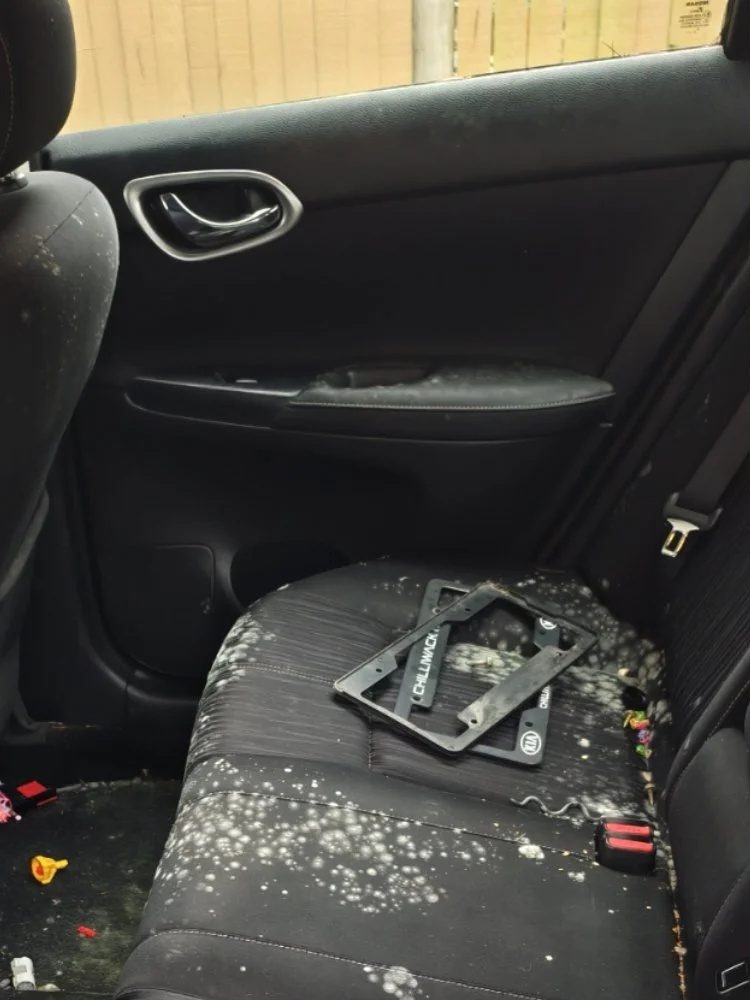
The rear seat and door panel of a black sedan, with white mold spots across the back cushion and loose debris and a license plate frame left on the seat. Rear seats collect crumbs, dust and damp items, and mold feeds on debris once it is wet. We remove the loose items, vacuum with HEPA, then steam and extract. The pattern is common where gear rides in the back and the cab never fully dries.
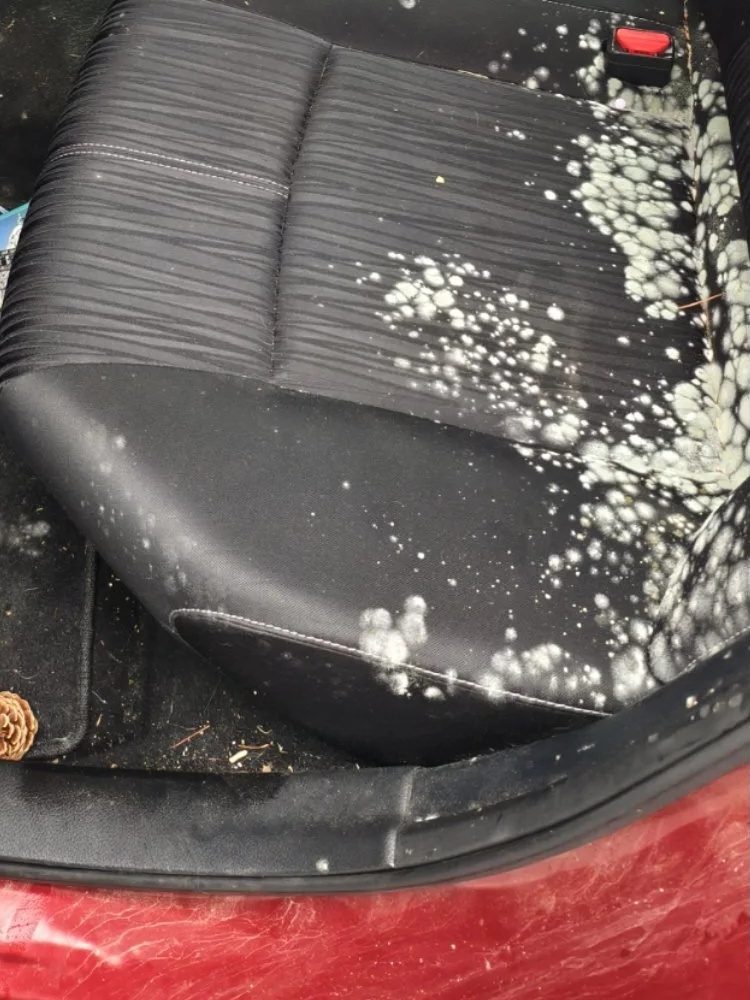 Before
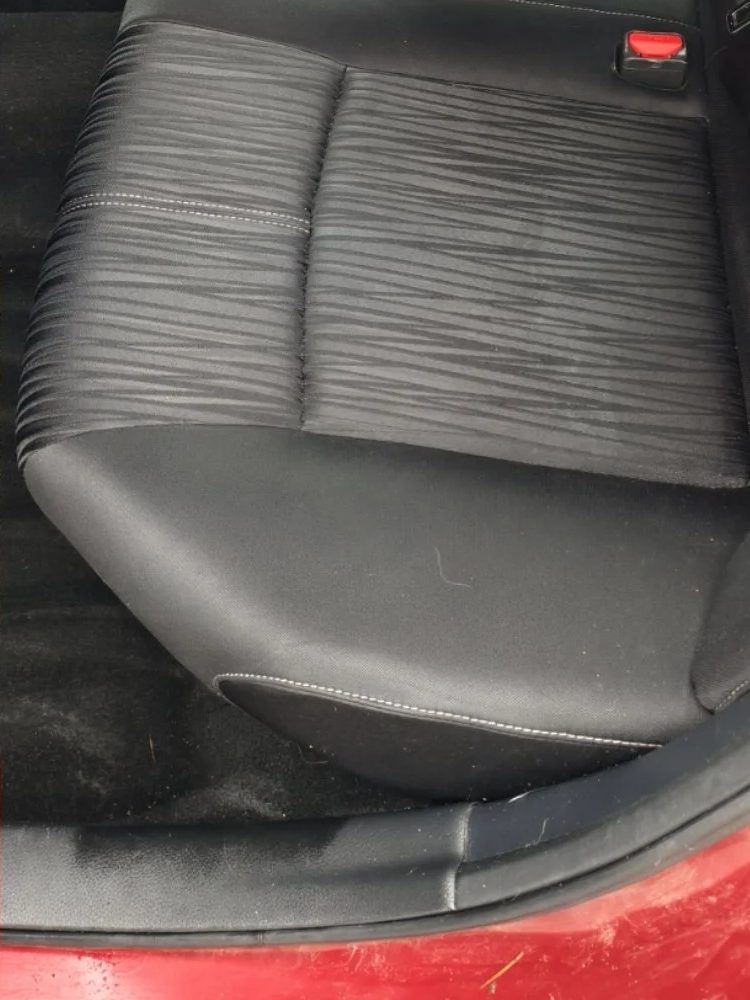 After
Black Cloth Seat — White Speckled Growth
A black cloth seat covered in fine white mold speckles, with a red car body visible below the window. Speckled growth like this often means a surface that stays slightly damp rather than soaked, and cloth holds that moisture in the weave. Steam and extraction lift it, Concrobium treats the fabric and ozone clears the cabin air. In humid, shaded parking, this is a pattern we see where cars are used lightly.
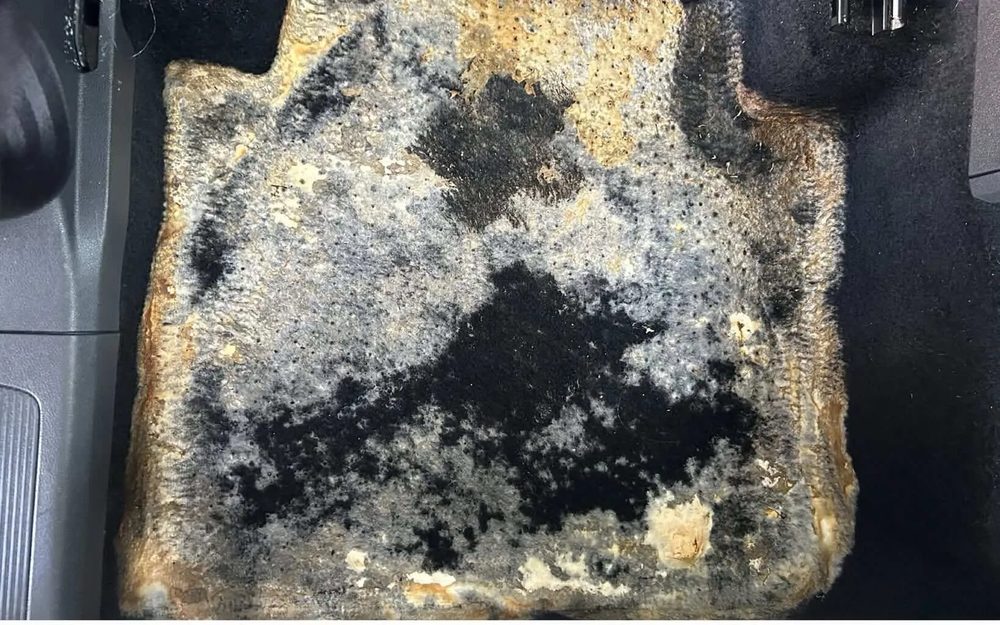 Before
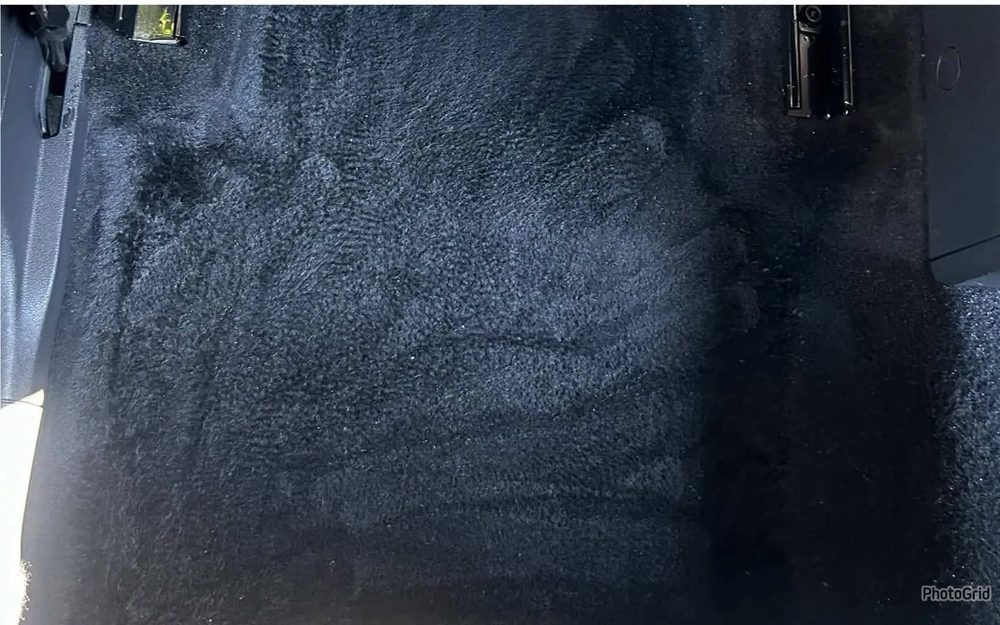 After
Floor Mat — Heavy Colony Growth
A carpeted floor mat covered with heavy black, brown and white mold colonies. This is the advanced end of the range: the mat has stayed wet long enough for several kinds of growth to take hold, and the carpet and padding underneath need checking. We vacuum, steam, extract and treat, and tell you during inspection if anything needs replacing. Mud, hay and wet boots on a mat are how this pattern starts on a ranch vehicle.
100% Satisfaction.
Written. No exceptions.
If the result doesn’t meet our standard, or yours, we come back and redo it at no charge. No forms to fill out, no arguing over what “counts.” The guarantee is in writing before we ever touch your vehicle.
Request Mold Removal in Southwest Ranches · From $549
Fill this in once and send it. We get your address, vehicle, and the situation all in one message, no phone tag.
Rating
Detailed
Response
Three steps from muddy mats to a clean cab,
and we handle everything down the long driveway.
No drop-off. No waiting. We come to Southwest Ranches.
We come to you in Southwest Ranches,
from the Griffin Road side to Sheridan Street, gate or barn.
Mobile service: home, office, condo, or marina. No drop-off, no travel fee.
Not seeing your city? Ask us — we likely cover it.
Wet pastures, hosed-down trucks and a closed-up cab,
the moisture problem on a Southwest Ranches acre.
Southwest Ranches sits on the eastern edge of the Everglades at about 7 feet above sea level, with one-acre lots, open pasture and very little pavement, so vehicles here live outdoors or in a barn far more often than in a sealed suburban garage. Left untreated, what starts as a musty smell becomes a real health issue for the next person who drives the car. DShine's Concrobium Mold Control and ozone process address the cause, not just the symptom, backed by $2M insurance and a written guarantee. Mold doesn't need much to get started, any trapped moisture inside a closed cabin is enough given South Florida's humidity. The source is almost always one of four things: a clogged AC condensation drain letting water pool silently on the floor pan, a failed door or window seal letting rain in, a clogged sunroof drain, or the car simply sitting unused for two or more weeks without the AC running. On the ranchettes, the cause we meet most is water carried in by the work itself: wet boots, hosed-down mats and damp tack in a truck that then sits closed up beside the barn.
Southwest Ranches neighborhoods we serve,
from Sunshine Ranches to Country Estates.
From the old Sunshine Ranches and Rolling Oaks areas to the town's parks and trails, we come to your gate, barn or driveway in Southwest Ranches.
Sunshine Ranches — A former census-designated place that is now a town neighborhood, on the eastern side of Southwest Ranches. Lots are large and many are horse properties, so trucks and tow vehicles that work on the property often park by the barn or the gate. Send a map pin when you book, so we can find the right driveway.
Rolling Oaks — Another former census-designated place folded into the town in 2000. Rolling Oaks lies toward the western side of Southwest Ranches, and the town's 46-acre Rolling Oaks Park is nearby. On acre-plus lots, the vehicle in question is often in a detached garage or beside an outbuilding, so tell us where it sits.
Country Estates — A former census-designated place on the western side of town, with a mix of large residential lots. Vehicles may be parked in a long driveway, under trees or in a side garage. We plan the visit around the layout of the property, and ask about gates and animals when you book.
Green Meadow — One of the five former census-designated places that became Southwest Ranches neighborhoods. Wide lots mean the car may sit far from the street, and open grass around the driveway adds humidity to a cabin with the windows down. Share the driveway length and the gate code when you book.
Ivanhoe Estates — A small community in Southwest Ranches that is part of a larger Ivanhoe area shared with neighboring Davie. Because the boundary crosses, the exact address matters, so send us the street address and a map pin. We come to the vehicle wherever it is parked on the property.
Sunshine Ranches Equestrian Park — The town's 20-acre equestrian park at 5840 SW 148th Avenue has practice and show rings, a wash rack and a trailer parking area. Riders who arrive here often come home with damp gear in the cab. We can treat a vehicle at your home or workplace, wherever it is parked.
Frontier Trails — A 30-acre town park at 19300 SW 51st Manor, with about 26 acres of restored wetland, a multi-use trail and an archaeological site. That much restored wetland is a reminder of how much low, wet ground is part of the local landscape. We come to your driveway, not the park, and plan around gates and the property layout.
Don't see your area? Ask us — we likely cover it.
Southwest Ranches car mold,
the questions we hear from ranch and horse owners.
Tap any topic to read the full breakdown.
Southwest Ranches covers about 13 square miles on the eastern edge of the Everglades, bounded by Griffin Road to the north, Sheridan Street to the south, Flamingo Road to the east and State Road 27 to the west. The town sits at roughly 7 feet above sea level, and low ground like that tends to hold water, so pastures, swales and driveways stay wet well after an afternoon storm has passed.
The closest published climate table we found belongs to neighboring Pembroke Pines: about 62 inches of annual rainfall, with June near 8.7 inches, August near 8.5 and September and October still close to 8. December, the driest month, is just over 2. For a truck or a family car that means roughly five months of near-daily afternoon moisture before the air finally lets up.
Pickups come first. On an acre property the truck is a tool: it hauls feed, hay, fence posts, mulch and tack, then sits beside the barn, at the pasture gate or next to the arena. The cab collects wet boots, spilled water, dusty cargo and windows left cracked for the heat, and it rarely gets parked somewhere the A/C and the sun can dry it out.
Tow vehicles are a close second. The SUV or heavy truck that pulls a horse trailer comes home with damp boots, sweaty saddle pads and wet towels on the floor, then waits a week or more for the next trip. The cargo area and the second-row mats are where we usually find the first growth, long before anyone notices a smell up front.
The rest looks like any family driveway: the SUV, the teenager's sedan, the weekend car in a side bay. They share the same wet air but get less attention than the truck. The town describes its own character as grazing animals, nurseries and farms, so nursery pickups and utility trucks from working properties turn up on the schedule too.
Beside the barn or at the pasture gate: the default for the working truck. The air moves, which helps, but the spot gets hose overspray, wet grass, dust and splash from the wash rack. A window left down an inch for the heat is the usual way an afternoon storm gets into the cab, and nobody checks until the next morning.
Under a shade tree: shade keeps the cab cooler, but the roof, the door seals and any sunroof drain stay wet long after the rain stops. Leaves, seed pods and pollen collect right where water is supposed to run off, so a clogged drain on a car that lives under trees can quietly soak the floor for weeks.
Detached garage or workshop: many acre lots carry a separate outbuilding, shared with tools, feed or equipment. If it stays shut and unconditioned, humid air settles into carpet and seats. The vehicle parked deepest inside, driven least, is nearly always the first one that needs us.
Carport, shed or trailer lot: a roof overhead does not stop wind-driven rain, and open sides let humid air in without ever drying a damp mat. The town's Sunshine Ranches Equestrian Park lists a trailer parking area, and lots like that are where tow vehicles wait while riders are out. A truck closed up in the sun with a wet saddle pad on the seat turns into a small greenhouse.
June through October, the long wet stretch: monthly rainfall in the nearest published table runs from about 7 to nearly 9 inches for most of this period. Fields stay soft, hoses run constantly and mud comes into the cab on every pair of boots. This is the stretch when most of the cars we treat first picked up their moisture.
The storm season, June 1 to November 30: the preparation itself can cause trouble. Vehicles get moved into barns or garages, windows get shut on a damp cabin, and an outage afterward means no A/C for a closed-up car. A truck that rode out a storm in a shut outbuilding deserves a look inside once the power is back.
November through April, the drier months: December is the driest at just over 2 inches, and January through March stay under 3. Doors and windows open more, vehicles get driven more and risk falls. The exception is damp riding gear and wet towels in a closed cab, which cause trouble in any month.
May and late October, the shoulders: May jumps to just over 5 inches and October is still above 7. These are the weeks owners relax, because the weather feels easier, while the first heavy storms or the last ones catch a window left open or a drain that never got cleared.
Roads in town have no sidewalks, and the town works to keep it that way, so finding the right gate matters. When you book, send a map pin or the gate description along with the address. Addresses fall under several ZIP codes (33330, 33331, 33332 and 33029 are listed for the town), and a pin saves a driver from guessing at a long driveway.
Tell us where the vehicle is: by the barn, in a detached garage, under the trees or at the end of a driveway. We look for a flat, firm spot with space to swing every door wide and, if possible, some shade. The job runs about 3 to 4 hours, so it helps to know that a hose, a tractor or a delivery will not need that spot partway through.
Horses, dogs and other animals are part of the property, so mention them when you book. We ask that animals and people stay clear of the vehicle and the work area, especially during the sealed-cabin ozone cycle, and we choose a spot away from stalls and open windows. Nobody is inside the vehicle while ozone runs.
1. Barn water carried into the cab: wet boots, saddle pads, towels, buckets and a hosed-down floor mat. On a working property this is the cause we meet most, because moisture arrives with the work itself and is repeated every day. A cab that never fully dries between uses is a cab that grows mold.
2. A window or sunroof left open for the heat, then a storm: the afternoon cloudburst arrives while the truck is at the far gate and nobody is near it. Water runs down the door cards and settles in the carpet pad, where it can stay damp for days before the smell appears.
3. A vehicle that sits closed up between uses: the tow vehicle waiting for the next trip, or the third car in a detached garage. Doors shut, A/C off, a slightly damp cabin and warm air are all mold needs, and a week or two can be enough for growth to start in the humid months.
4. Clogged drains and tired seals: leaf litter and grit block the A/C drain on cars parked under trees or beside dusty ground, so water pools on the floor, and old seals on a hard-worked truck let rain in a little at a time. **5. Mud, hay and feed debris:** organic matter feeds mold once it is damp, so we vacuum and extract instead of just wiping.
Everything starts with a few photos or a note by WhatsApp or text, plus directions to the gate. We read the tier off what you sent, $549 for one area or $749 throughout, and pin the exact figure down after a closer look at the photos, before we begin. Then we agree on a time and on where the vehicle will be parked.
Once the van is beside the truck, the first stretch is inspection: every seat, the carpet and the pad beneath it, the headliner, door cards, cargo area and vents. Then the sequence runs in order: HEPA vacuum, Benefect, deep clean, steam, extraction, drying, Concrobium, ozone, the Meguiar's odor treatment and a last check.
Plan on 3 to 4 hours, a bit more when mold runs through the entire cab. You can stay at the barn, go to work or take a ride; we message before-and-after photos on WhatsApp, and tell you once the cab is fit to climb back into. There is no drop-off and no shop wait.
The most common opener is whether a work truck needs something different from a family car. The steps are the same 11, but we spend more time on rubber and cloth floors, cargo areas and the seams where dust and hay gather. Leather, where a crew cab has it, gets the leather-safe protocol.
Owners with animals ask whether the products and the ozone cycle are safe around them. We keep people and animals away from the vehicle during the ozone step, choose a spot away from stalls and open windows, and ventilate the vehicle fully before anyone gets back in.
Many callers want to know if what they smell is mold or just barn and horse odor. A truck smells like its work, so we look at the carpet, the seat seams and the vents. If there is no growth but the smell lingers, Odor Removal Detailing at $349 may be a better fit, and we say so.
Odor Removal Detailing at $349 is the pairing we hear about most on working vehicles, because feed, damp tack and animal smells can outlast the mold itself. If a smell lingers after the growth is gone, this service goes after the odor rather than the colonies, and we can often talk it through during the same visit.
Engine Bay Cleaning comes up for trucks that live in dust and mud and have not had the engine area cleaned in a long time. The hood goes up for the inspection anyway, so owners sometimes ask us to handle it in the same visit rather than book twice.
Ceramic Coating and Paint Correction come up for newer trucks and SUVs that sit out under open sky and sprinkler spray all week. Hard water spots and faded paint are as common as an interior problem on a vehicle parked outside all year, and owners like to handle both while a technician is on the property anyway.
Look at the glass first. A cab that fogs on the inside after sitting overnight, with no one having breathed in it, is holding moisture. Press a thumb into the carpet by the pedals and the seat rails: if it feels cool, gritty or springy and damp, the pad underneath is wet even though the top looks dry.
Check the places a work vehicle hides things: under the floor mats, the lowest door pockets, the seat tracks and the cargo area. Pale or grey specks along a seam, a green-blue film on leather, or dark freckles on a cloth seat are all mold that has started to take hold and will keep spreading.
Notice the first few seconds when the A/C starts. A musty wave from the vents, a smell that comes back an hour after the windows are down or a sour hay-and-damp note that does not leave when the truck airs out all point to moisture below the surface, which is what we treat.
The idle pattern here is rarely a car left for months. It is the second truck that only goes out for hauling days, the tow vehicle between trips or the spare car in the detached garage. Start by taking out anything damp: saddle pads, towels, buckets, boots and the water bottle that rolled under the seat.
Let the cabin dry before closing it up. Run the A/C for several minutes before you shut the doors, leave the mats lifted or out for a day after hosing, and park out of the sprinkler and hose path. If the vehicle lives in a closed outbuilding, a little airflow does more good than a tight shut.
A moisture absorber left in the cab helps on slow weeks. So does a monthly walk-around: open a door, press the carpet, smell the vents. Five minutes on a vehicle that has sat is cheaper than the same thing found after a month of wet-season weather.
Acre properties often hold more vehicles than a suburban lot: the work truck, the tow rig, the family SUV and a car or two in the garage. If one of them has mold, it is worth having us check the others while we are there, since they share the same air, the same weather and often the same habits.
We price each vehicle on its own, using the same two tiers: $549 for one area and $749 throughout. Send photos of each one when you book so we can give a tier for every vehicle in advance and plan the day around the longest job. A visit is typically 3 to 4 hours per vehicle.
We also work around the property itself. Tell us when feed deliveries, farrier visits, lessons or hauling days happen, so we can schedule the treatment and the airing-out period afterward without blocking a gate or a driveway that someone on the property needs to use that day.
The guarantee is a written one: 100 percent satisfaction for 30 days. Should mold or a mold smell reappear in that window, we return and redo the treatment without charging you again. Your part is simple, a message or a photo as soon as you notice the spots or the smell.
On ranch vehicles, a repeat usually traces to a cause nobody fixed: a door seal that still lets rain in, a drain still plugged, or damp tack going straight back into a closed cab. When we find one during the visit, we point it out right then so you can deal with it before the treatment is undone.
Prevention is cheap. Shut windows when rain is possible, pull wet pads and towels out, let the cab breathe after the hose comes out, and message us at the first musty whiff instead of after a month. A quick look under the mats every week or two, with a hand pressed to the carpet, catches most trouble early.
An older ranch truck with a cloth bench seat, vinyl door cards and a rubber floor takes steam and extraction well, but we still go slowly around brittle plastic, cracked dash pads and tired headliner glue. We test an inconspicuous spot first and set steam and moisture to protect what is already worn.
A newer crew cab with leather, stitched trim and soft-touch plastics gets the leather-safe protocol: controlled steam, an extraction pass, Concrobium on the surface and the ozone cycle afterward, while leaving the finish intact. Light leather shows green and grey growth quickly, and it cleans up well when caught early.
Work vehicles carry another variable, which is what is on the floor. Dust, hay, feed and soil absorb moisture and feed growth, so we vacuum and extract thoroughly rather than only treating the visible spot. If the padding or headliner is too far gone, we tell you during inspection, before work starts.
Before the truck sits for a week or more, pull everything damp out of the cab: saddle pads, towels, boots, buckets, bags and wet jackets. Shake out the mats, vacuum hay and dust from the seats and the cargo area, then lift the mats to check that the carpet underneath is completely dry.
Roll every window all the way up, close the sunroof and its shade, and confirm the doors seal tightly. Look at the drain area at the base of the windshield for leaves. Let the fan and A/C run a while with a window cracked to dry the evaporator, then close up and park under cover if you can.
If a storm is forecast while you are away, move the vehicle out of low ground and away from tree limbs, and leave someone with our number. If anything smells musty when you return, send us a photo within the first few days rather than waiting for the next trip.
The two price tiers map to how far the growth has traveled. Spots on one seat or one stretch of carpet price at $549; growth that has reached the headliner, several rows of carpet and the vents prices at $749. Waiting is how a smaller job turns into the bigger one.
In wet-season conditions, a damp cab with hay, feed or dust in the carpet gives mold food as well as moisture. A small patch that was noticed in June can be across the whole cabin by the time the rains slow down in October. The sooner you send photos, the more likely it stays a one-area job.
There is a health side too. Spores get pulled through the vents and recirculated in a closed cabin, which matters for kids, riders with allergies and anyone with sensitive airways. We cannot give medical advice, but a vehicle that smells musty is worth treating before it becomes the family's daily ride.
A tow vehicle has a different pattern from a daily driver: long trips, hot hours, then days of rest. It comes home from the trailer lot with sweaty gear, wet boots and muddy floors, then sits closed up. The mold usually starts in the cargo area or the second row, and travels forward to the front seats and the vents.
Other ranch vehicles bring their own mix: nursery and landscaping pickups with soil and plant debris on the floor, feed trucks with dust in the seams and utility vehicles used by several family members with no one person watching them. These are the vehicles where moisture builds up unnoticed.
Our service is for the vehicle's interior. If you have a question about a trailer, an enclosed compartment or equipment, tell us when you send photos and we will tell you whether we can help. For the truck or SUV that pulls it, the 11 steps and the written guarantee are the same.
Photos or a short description are all we need to start. From them we read which tier you are in, $549 for mold in one area or $749 for mold throughout, and travel to your property is part of either number, so a long driveway or a gate at the back of the lot costs nothing extra. Tell us how long the vehicle sat and whether it was hosed out.
Before work starts, we confirm the exact price after going over what you sent. If the inspection on site shows something different from the photos, we say so first and you decide from there. What you agree to beforehand is what appears on the bill, with nothing added afterward.
Clear photos help: one of the whole interior, one of the carpet or mat, one of any visible growth and one of the vents or headliner if you can. A short note about how long the vehicle sat, whether there was a leak and whether it was hosed out gives us what we need to name a tier quickly.
Southwest Ranches is low, wet and rural: about 7 feet above sea level on the edge of the Everglades, with one-acre-minimum lots, long driveways and trucks that live outside or in a barn. The usual cause is moisture carried in by the work itself, plus windows left open for the heat and a cab that never dries.
The wet stretch runs roughly June through October and overlaps the storm season, which ends November 30. Pricing is $549 for one area and $749 when mold is throughout the vehicle, travel covered, with the exact figure settled after we look at your photos and before work begins.
We come to your property and work through the 11 steps in a typical 3 to 4 hours, including a sealed ozone cycle with people and animals kept clear. Before-and-after photos arrive by WhatsApp. Behind the work stand our IDA certification, $2M of liability coverage and a written 30-day guarantee.
Ozone comes after the wet work. Once the surfaces are steamed, extracted, dried and treated with Concrobium, we seal the doors and run a professional ozone generator in the closed cabin. The gas reaches the vent ducts, the headliner and the foam where a cloth cannot, and it attacks spores and smells at the source instead of covering them up.
Nobody stays inside the vehicle during this stage. On a property with animals, we also ask that dogs, horses and other animals stay clear of the vehicle and the work area, and we pick a spot away from stalls, open barn doors and the house windows. Children and visitors should stay out of the area too.
When the cycle is done we crack the doors and give the cab time to clear before anyone climbs in. An open, breezy spot clears faster than a shut outbuilding, so we may roll the vehicle outside. You get a message from us when it is genuinely ready, not merely when the generator stops.
Short answers
for Southwest Ranches truck and car owners.
Add-ons Southwest Ranches clients book
Still deciding? Read: the complete mold removal guide · does insurance cover it? · why DIY mold removal fails.
Mold in your Southwest Ranches truck? Get a price in 2 minutes.
Serving Southwest Ranches and all of Broward County. Fixed pricing, no travel fee. We confirm in under 2 minutes.
It Might Just Be an Odor Problem
If there's no visible mold growth yet, the smell alone is usually an Odor Removal Detailing case ($349 flat) — faster than full mold remediation ($549–$749). See which one matches what you're dealing with: