What a Palmetto Bay Mold Job Includes
This is not a car wash. Car Mold Removal uses Concrobium Mold Control treatment, pH-balanced products, and machine assistance, the same process used in pre-sale preparations for luxury dealerships.
Why it matters for your health: Mold in a vehicle is a different exposure than mold on a wall at home. With the AC recirculating, everyone inside is breathing concentrated spores for the length of the drive. The EPA and CDC both link mold exposure to respiratory irritation, allergic reactions, headaches, and worsened asthma symptoms. Children, older passengers, and anyone with a compromised immune system typically react faster and more severely than a healthy adult would. By the time the smell is noticeable, spores have usually already spread through the HVAC system into every vent in the cabin.
Curious what actually happens during the visit? Tap through our real 11-step process below to see what we do at each stage and why it matters.
What every Palmetto Bay mold job gets you
Most detailers in Palmetto Bay charge less. Here’s exactly what you gain — and what you risk — with each choice.
| DShine DetailsFrom $549 · travel included | Avg Palmetto Bay Detailer$149 – $199 | |
|---|---|---|
| Industry certificationsIDA, Koch Chemie, Meguiar’s, 3M, Symplex, XPEL | ✓6 verified | —0 credentials |
| $2M liability insuranceWe cover any damage — in writing | ✓ | —Often uninsured |
| Deionized water systemZero mineral residue, no water spots | ✓ | —Tap water, water spots |
| Fresh microfibers per vehicleNo cross-contamination between jobs | ✓ | —Shared towels, swirl risk |
| Mold-specific chemistry onlyConcrobium, Benefect & Meguiar’s, no harsh acids | ✓ | —Industrial degreasers |
| Before & after photosSent via WhatsApp on completion | ✓ | —No documentation |
| 100% written satisfaction guaranteeReturn & redo at no cost if unsatisfied | ✓ | —No written guarantee |
| Travel to your address — $0Home, office, condo — no drop-off | ✓ | Sometimes adds fee |
DShine vs. any other detailer
in Palmetto Bay, Miami-Dade County
Three things most detailers won't tell you. We put them in writing.
 Since 2018
With more than 20 years of hands-on experience in the automotive care industry, Evelio launched DShine Details in August 2018 with one van and zero shortcuts. For the first six months he slept in the van to keep costs down and standards up. Today DShine runs 7 certified vans across Miami-Dade, Broward, and Palm Beach, and the commitment hasn't changed. Every vehicle is treated as if it were his own.
What clients say
in their own words.
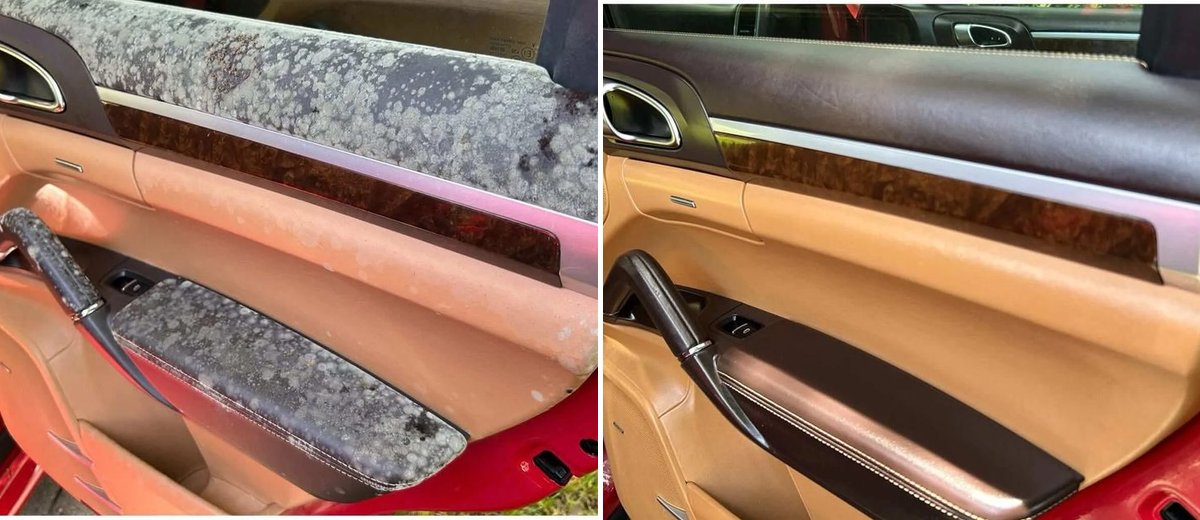
Before & After: Mold Removal We've Actually Done
No stock photos. These are real DShine mold removal jobs across South Florida, the same 11-step process and chemistry used on every Palmetto Bay appointment.
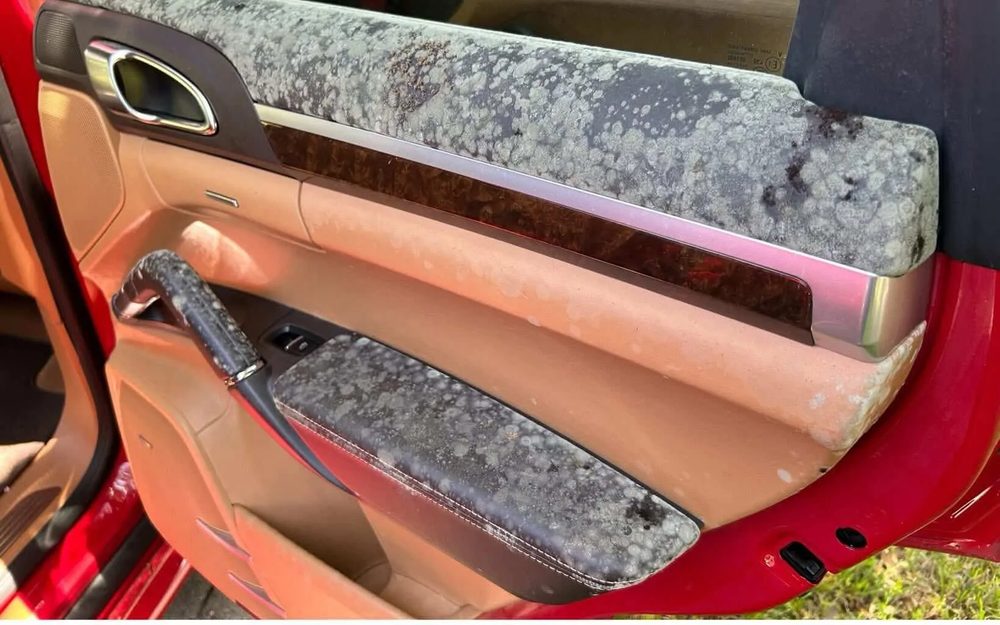 Before
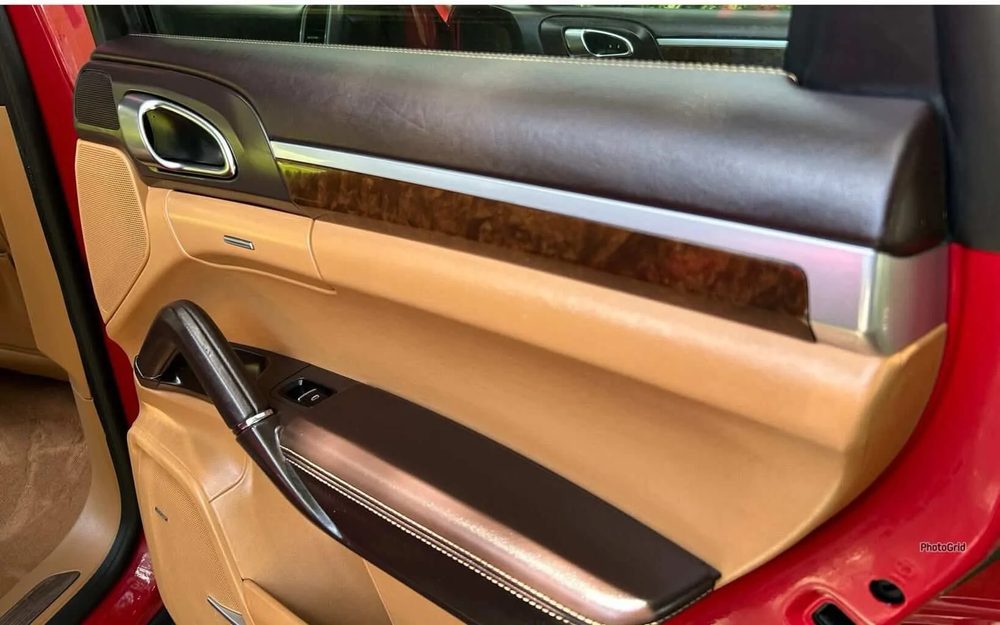 After
Porsche Cayenne — Leather Door Panel & Armrest
Mold across the tan leather door panel and armrest of a red Porsche Cayenne, reaching the wood trim. Leather like this cannot be scrubbed hard, so it gets the leather-safe protocol, steam and extraction around the trim, Concrobium and then the sealed ozone cycle. Door panels collect moisture first at the seals, and in Palmetto Bay's long wet season, with sprinkler spray and tree drip around the driveway, those seals stay damp for hours.
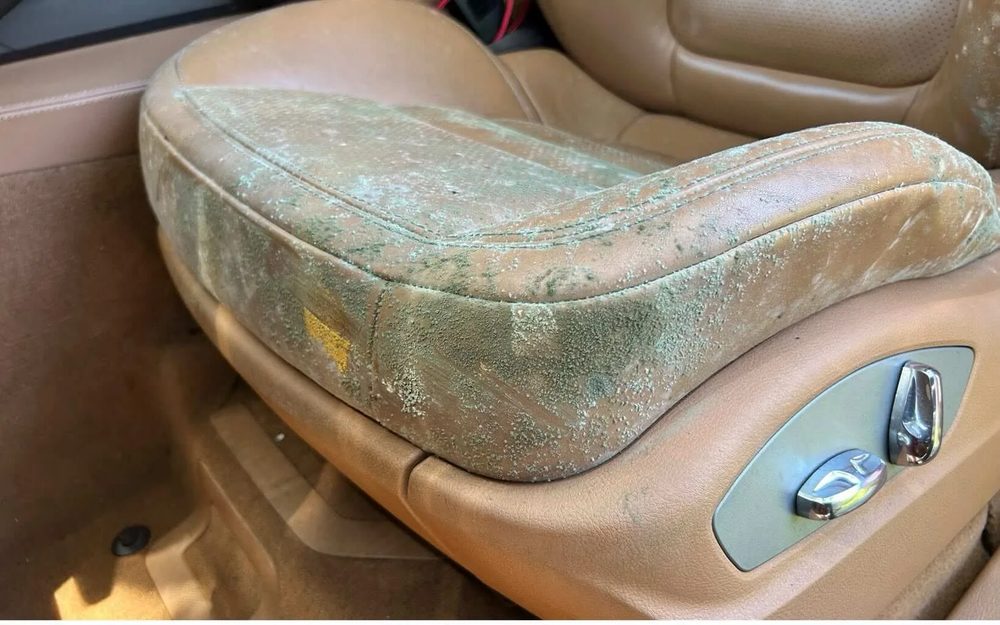 Before
 After
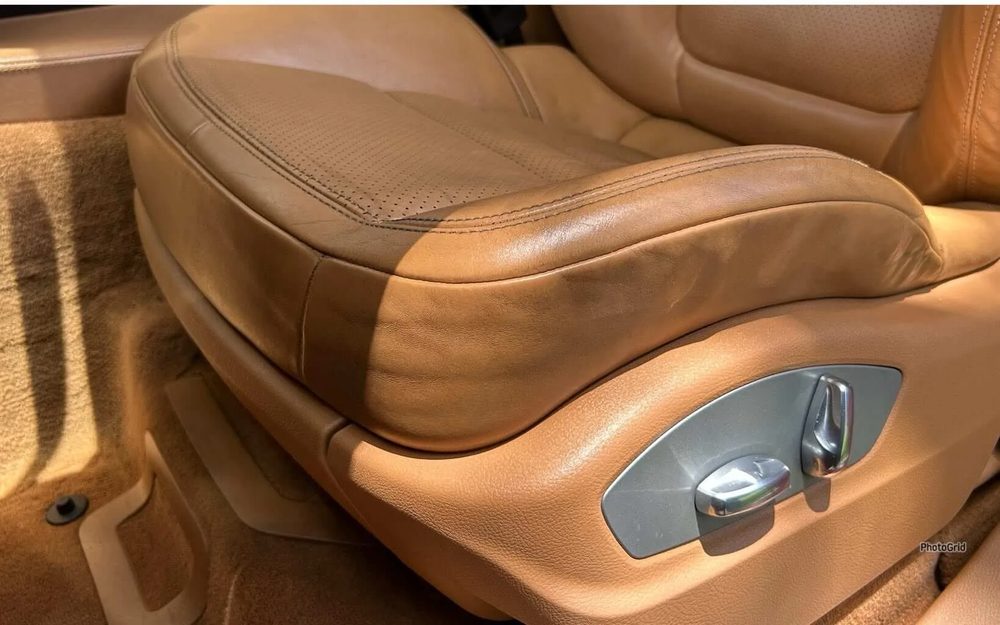
Tan Leather Seat Bolster — Green-Blue Growth
A camel-colored leather front seat bolster covered in green-blue mold. The bolster rubs against the door every time someone gets in and traps moisture in its folds, and leather will not tolerate harsh scrubbing, so it receives controlled steam, careful extraction and Concrobium before the ozone cycle. A family car that is entered with wet swimwear or damp gear many times a week can build this kind of growth.
 Before
 After
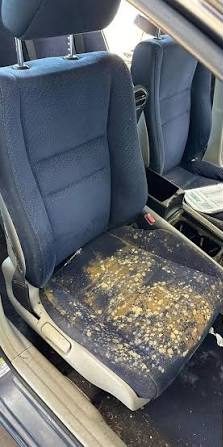
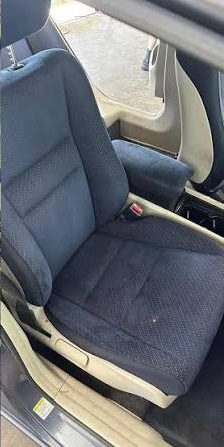
Cloth Bench Seat — Stain Residue Under The Cushion
A dark blue cloth sedan bench seat with the cushion lifted, showing tan and yellow mold-stain residue on the underside. This is moisture that soaked down through the fabric into the foam, where a surface wipe never reaches it. The seat gets HEPA vacuuming, steam, extraction and Concrobium, then drying. Spills, wet towels and rain through a cracked window can all put moisture in a seat like this on the busy driveways of Palmetto Bay.
 Before
 After
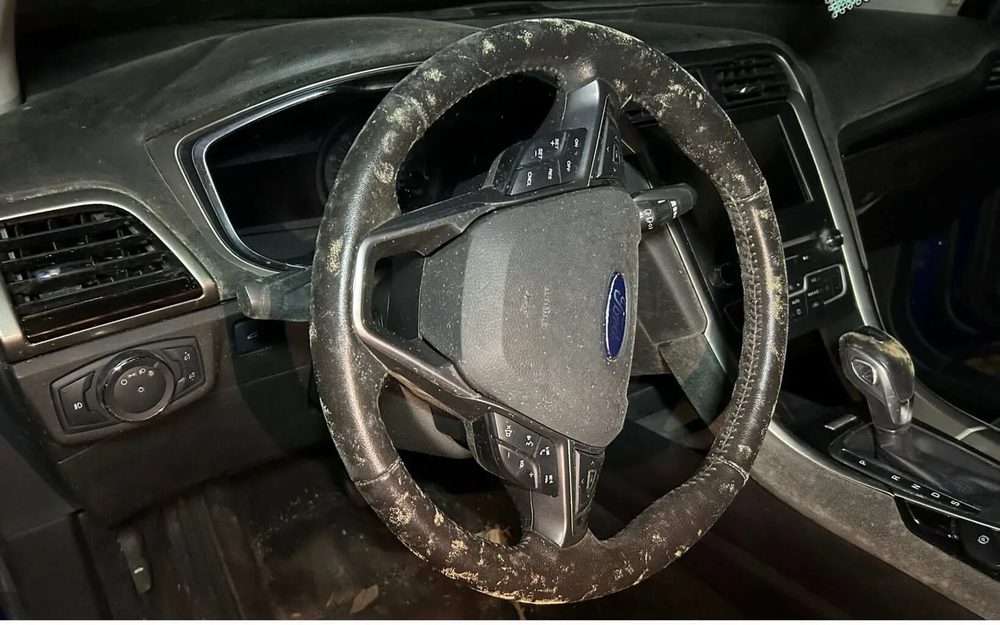
Ford Interior — Steering Wheel, Dash & Vents
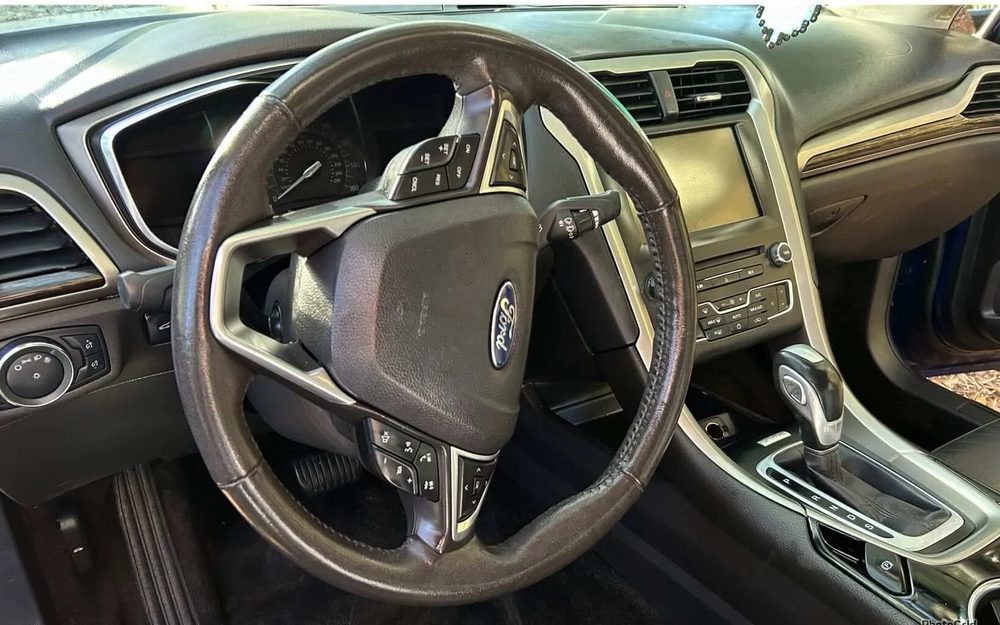
Grey-white mold bloom on the steering wheel, dashboard and vents of a Ford sedan. Growth on the parts a driver touches usually points to a cabin that stayed closed and humid, often with A/C moisture in the mix. Hard surfaces are steamed and treated with Concrobium, the vents are cleaned out, and the ozone cycle reaches the air paths. Humid, heavily shaded driveways in Palmetto Bay are a typical setting for this pattern.
 Before
 After
Black Cloth Seat & Console — Grey-White Bloom
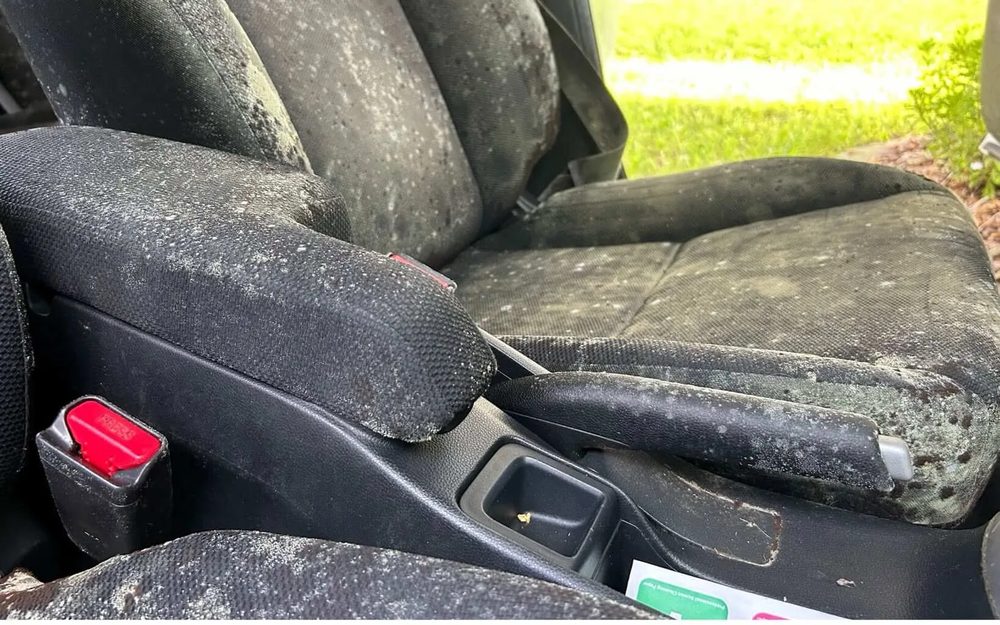
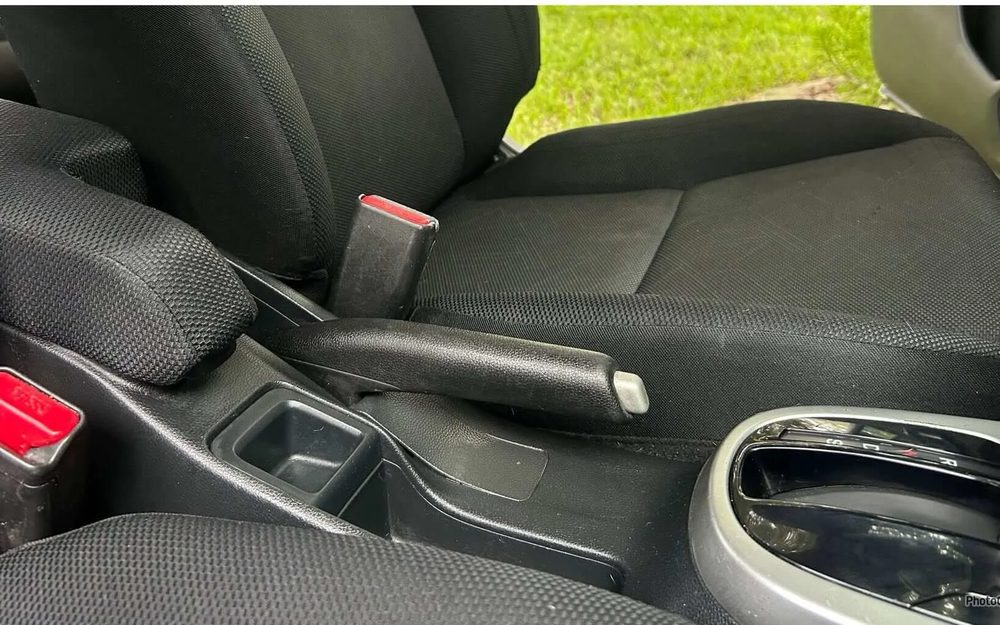
A black cloth driver seat and the armrest and console, covered in grey-white mold bloom, with a green lawn visible through the window. Dark upholstery shows the bloom clearly, but the growth underneath is usually wider than the visible patch. We treat it with steam, extraction and Concrobium, then run the sealed ozone cycle. Lawns, sprinklers and humid air around a Palmetto Bay house mean cars here rarely dry out quickly after rain.
 Before
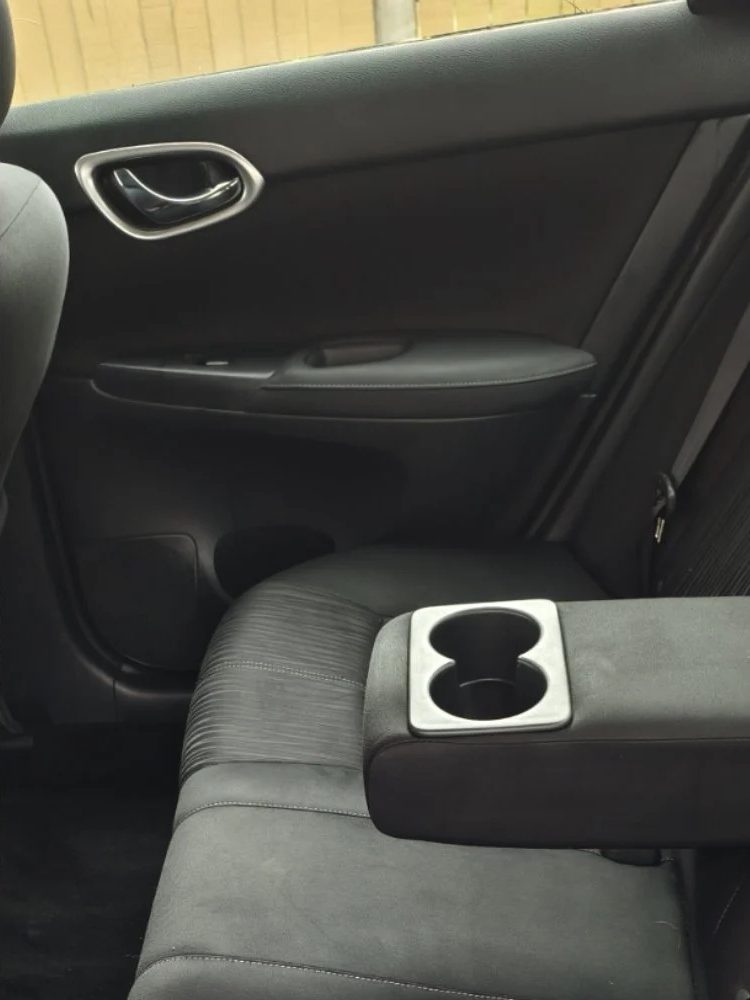 After
Rear Seat & Door Panel — White Mold Spots
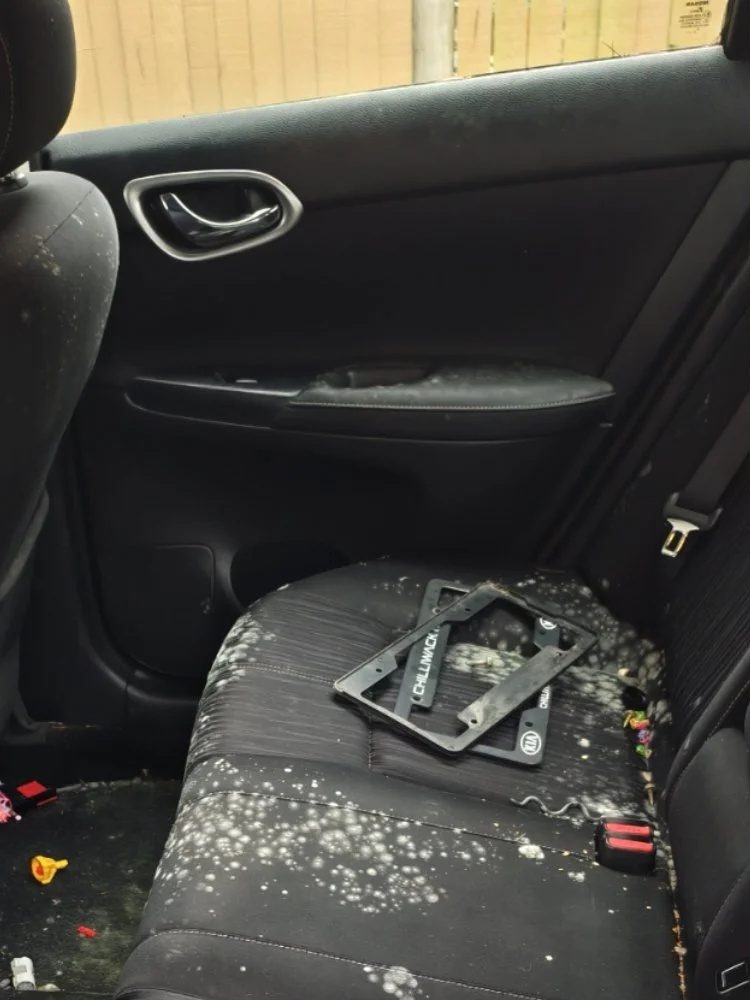
The rear seat and door panel of a black sedan, with white mold spots on the rear cushion, loose debris and a license plate frame lying on the seat. Back seats are where wet towels, snacks and gear get left, and nobody checks them for weeks. The seat is cleared, vacuumed with a HEPA filter, steamed, extracted and treated with Concrobium, and the ozone cycle finishes the cabin. It is a familiar pattern in family cars.
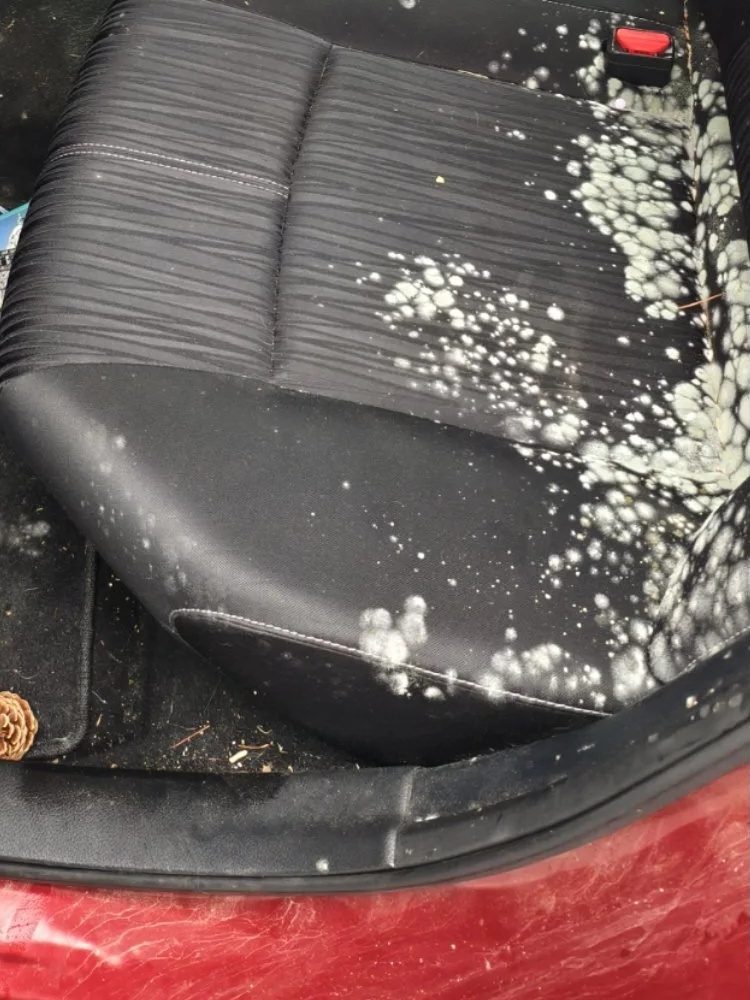 Before
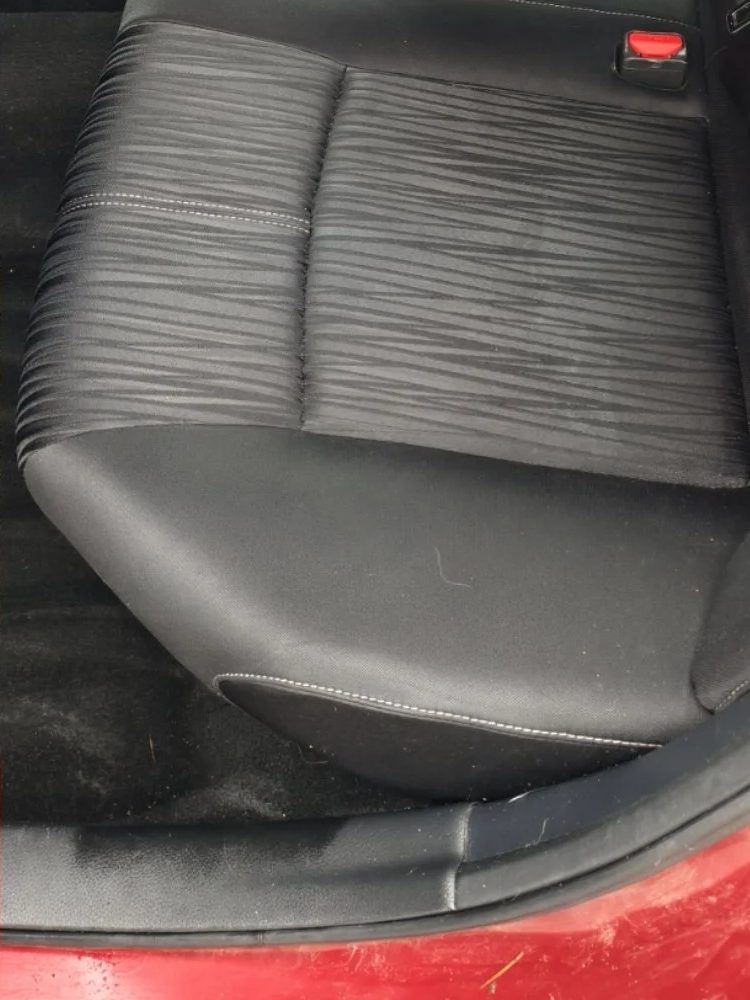 After
Black Cloth Seat — White Speckles
A black cloth seat covered in white mold speckles, with a red car body visible below the window. Speckled growth like this is often an early or moderate stage, and it is easier to treat than a full colony in the foam. We use HEPA vacuuming, steam and extraction, Concrobium and then the sealed ozone cycle. Short trips and a damp seat after a sprinkler pass or a rainy afternoon are typical ways this starts.
 Before
 After
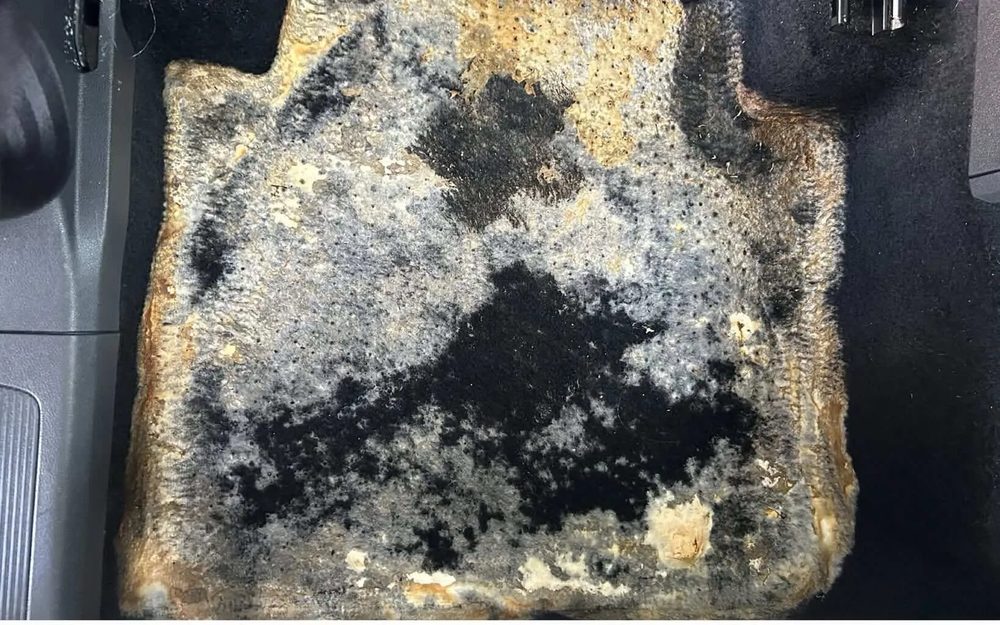
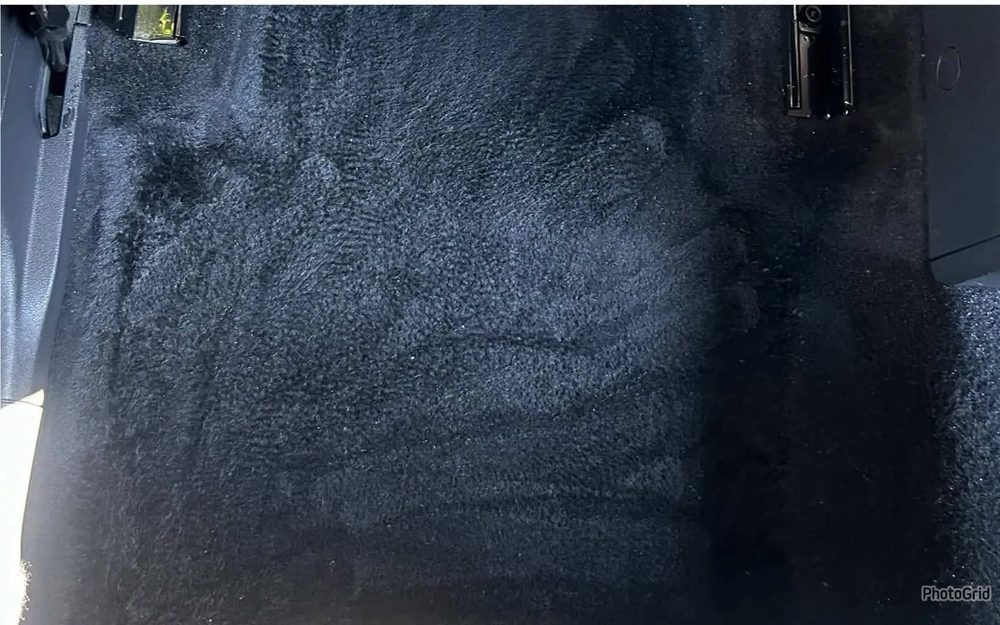
Floor Mat — Heavy Colony Growth
A carpeted floor mat with heavy black, brown and white mold colonies. Floor mats sit where wet shoes, cleats and spilled drinks land, and the carpet under them stays damp for a long time. The mat and the carpet beneath are vacuumed, steamed, extracted and treated with Concrobium, then the cabin is ozone-treated. Wet shoes from sports fields and storms are a common source of this growth in family cars.
100% Satisfaction.
Written. No exceptions.
If the result doesn’t meet our standard, or yours, we come back and redo it at no charge. No forms to fill out, no arguing over what “counts.” The guarantee is in writing before we ever touch your vehicle.
Request Mold Removal in Palmetto Bay · From $549
Fill this in once and send it. We get your address, vehicle, and the situation all in one message, no phone tag.
Rating
Detailed
Response
Three steps from a damp, musty family car to a clean one,
wet cleats and sprinkler spray included. We handle the rest.
No drop-off. No waiting. We come to Palmetto Bay.
We come to you in Palmetto Bay,
from Old Cutler Road driveways to bay-side gates.
Mobile service: home, office, condo, or marina. No drop-off, no travel fee.
Not seeing your city? Ask us — we likely cover it.
Sprinklers, shade and wet-season storms
keep a parked Palmetto Bay car damp.
Palmetto Bay sits about 10 feet above sea level just west of Biscayne Bay, and its shaded driveways, sprinkler-watered lawns and wet-season storms keep a parked car's glass and seals damper than most owners expect. Left untreated, what starts as a musty smell becomes a real health issue for the next person who drives the car. DShine's Concrobium Mold Control and ozone process address the cause, not just the symptom, backed by $2M insurance and a written guarantee. Mold doesn't need much to get started, any trapped moisture inside a closed cabin is enough given South Florida's humidity. The source is almost always one of four things: a clogged AC condensation drain letting water pool silently on the floor pan, a failed door or window seal letting rain in, a clogged sunroof drain, or the car simply sitting unused for two or more weeks without the AC running. Here the most common cause is not a car left alone but a busy family car, where wet gear, spilled drinks and short school-run trips leave the cabin and the A/C damp and give mold the stagnant, humid pocket it needs.
Palmetto Bay neighborhoods we serve,
from Thalatta Estate to Coral Reef Drive.
From Thalatta Estate on Old Cutler Road to the gated bay streets off Coral Reef Drive, driveways and shade vary block by block.
Thalatta Estate & Old Cutler Road — Thalatta Estate Park at 17301 Old Cutler Road is a Mediterranean-Revival house from 1926 on about four acres of bay frontage and mangroves; the Village bought it in 2005. Old Cutler Road follows a limestone ridge above the bay, and nearby driveways see plenty of bay-side humidity. We confirm the access point and driveway room first.
Deering Estate — The Charles Deering Estate covers 444 acres of hardwood hammock, with a boat basin on Biscayne Bay, and is run by Miami-Dade County. Homes close to the hammock and the bay see humid air and heavy greenery, so cars dry slowly after rain. We work at your home or office, not on the grounds, and agree a driveway spot beforehand.
Palmetto Bay Park — Palmetto Bay Park, at 17535 SW 95 Avenue, covers 25 acres with six softball fields, a skate park, courts and a pine preserve. Cars here are used daily, and wet cleats, drinks and sports bags are the usual moisture source. Neighbors nearby get a visit at the driveway, with gate or HOA details sent in advance.
Coral Reef Park — Coral Reef Park, at 7895 SW 152nd Street, has a Tennis Center and a Recreation Center, so cars that serve it are driven constantly, picking up gear and wet shoes. Streets around the park are residential, with long driveways and garages. We work around school-run hours, and photos by WhatsApp keep you posted.
Ludovici Park & Village Hall — Ludovici Park, at 9705 East Hibiscus Street, holds the Palmetto Bay Branch Library and an amphitheater overlooking Biscayne Bay, and the Village Hall shares the address. It links to the Old Cutler Road bike path. Homes nearby sit close to the bay, so cars see more humidity. We meet you at the driveway and confirm gate access beforehand.
Coral Reef Drive & Paradise Point — Coral Reef Drive (SW 152nd Street) enters Palmetto Bay east of U.S. 1 as a two-lane residential street, crosses Old Cutler Road and ends near Ludlam Road, where Paradise Point Drive leads into a gated community on the bay. Gated streets need a code or guest-list name, and we ask for it at booking.
Palmer Trinity School Area — Palmer Trinity School, formed in 1991, has a campus of almost 60 acres in Palmetto Bay. School traffic means cars here are in constant short-trip use, with kids, backpacks and wet umbrellas riding along. Short drives keep the A/C from drying out, so musty smells are common. We schedule around drop-off and pick-up times.
Don't see your area? Ask us — we likely cover it.
Palmetto Bay car mold,
the questions we hear from bay-side families.
Tap any topic to read the full breakdown.
Start with the ground. The village occupies 8.29 square miles of land plus 0.16 of water, facing Biscayne Bay, at an elevation of about 10 feet. Miami's downtown towers are about 15 miles up the coast. No instruments are stationed in the village, so the rainfall below comes from Miami: about 67 inches a year, spread over some 141 wet days, with humidity averaging 73 percent.
The rain arrives in a long block, mid-May through mid-October, with highs in the 80s and 90s and a thunderstorm most afternoons, while hurricane season is officially June 1 through November 30. Those readings describe the region, not one gauge in Palmetto Bay. The rest comes from how the village lives: about 3.0 residents per household means towels, cleats and juice boxes riding around in vehicles that sit shut in the sun between errands. So in this village the trouble tends to come from daily use, not from a car left alone.
Three-row SUVs and minivans lead the list, which suits a village where a typical household has about three people and plenty of errands. Cloth third rows, bench seats and rubber-backed mats hold a surprising amount of moisture, and the first sign is often a grey-white film on a seat seam or around a seat-belt housing rather than a smell.
After those come the second and third cars: the sedan that carries someone to work every morning, a teenager's first set of keys, an older crossover that hauls the team to practice. Census figures give Palmetto Bay workers a mean trip of about 35 minutes each way, so these cars run the A/C often, yet wet gear and spilled drinks still find the carpet and foam.
We also meet leather SUVs from the larger lots, older cars that outlived their loans, and pickups that haul hoses and pool supplies. The visible patch seldom tells the full story, so the whole cabin gets checked, cargo area and spare-tire well included, before we say whether the job belongs in the $549 tier or the $749 tier.
Garage that doubles as a storage room: bikes, bins, a spare freezer and holiday boxes crowd the car against the wall, and the closed door traps air that never gets conditioned. After a few weeks of travel the space smells of cardboard and damp concrete, and a cabin parked there with any moisture inside stays that way.
Shaded driveway with old trees overhead: on large lots, old shade trees drop leaves into the cowl and sunroof drains, drip onto the roof and slow its drying after every storm. Water slips in at the windshield seal and the sunroof tray, and it shows up as a damp patch on the headliner or the front carpet. The village holds Tree City USA status and runs a Tree Advisory Board, which tells you how much canopy the lots carry.
Driveway next to a sprinkler zone: lawns are watered on two set days a week, and when a head is aimed a little wide, the car's side glass and door seals take the spray. Add a window left a crack, or a tired seal, and the water ends up at the bottom of the door card and in the sill carpet.
Bay-side streets, school lots and sports lots: nearer Biscayne Bay the air is moister and gardens are heavier, so carports dry slowly. A car at Palmetto Bay Park or in a school pick-up line is driven daily, so neglect is not the cause. The culprits are wet cleats, a dripping umbrella and a sealed cabin heating in the sun. The same goes for streets running off Old Cutler Road, a State Historic Highway since 1974 that follows a limestone ridge above the bay.
Mid-May to mid-June, the first big rains: the calendar says the wet season opens on May 15, right as classes are ending for the year. A car that was fine through a dry spring now gets daily thunderstorms, wet end-of-year gear and windows cracked on warm mornings, so the first musty cabins of the year usually turn up here. Vehicles that wait outdoors through those first weeks take the brunt.
Summer break and peak storm weeks, June to September: families travel, camps start, and some cars sit in a driveway or garage for weeks with the A/C off. Miami's records show about 17 to 19 days with rain each month from June to September, and the storm season peaks from mid-August through September, so cars get shut tight whenever a system approaches.
Mid-October into November, the reveal: the rainy season ends October 15 and drier air arrives, but a cabin that stayed damp all summer shows it now, as a smell when the A/C starts or as spots along seat seams. Owners tend to call at this point, and the earlier the call, the smaller the job.
Winter and early spring, the drier stretch: lower humidity and a full sports calendar keep cars moving. Risk drops, but lawn irrigation runs year-round on its two-day schedule, and wet gear shut in a car on a mild afternoon can start something you only notice in spring. A car that sat shut through the summer is the one to check first.
Almost all of our visits here are at houses, so the first thing to settle is how we reach the car. Some streets are gated, including the bay-side community that Paradise Point Drive leads into at the end of Coral Reef Drive. Pass along the gate code or the guest-list name at booking, and the arrival is planned around it.
We work at your address, whether that is a driveway, a garage or a shaded strip beside the house. What we need is room to swing every door open and a place for the van that does not block the street. If a long driveway has three cars lined up, tell us which one has the mold and where its keys are.
Timing usually follows the family calendar: between school drop-off and pick-up, or on a work-from-home day. You do not have to be there, and a spouse, neighbor or property contact can hand over the keys. If your association asks for proof of coverage, our $2M liability policy paperwork can reach the manager before the visit. Visit times are agreed in advance, so nobody is waiting at the gate.
1. Wet gear and spills in a busy family cabin: a swim towel, soaked cleats, a leaking bottle, a snack cup in a seat pocket. Fabric and foam drink it in, the doors shut, and after a few warm afternoons a colony sits under the mat. It is the most frequent cause on our list, and the third row is a favorite starting point.
2. A cooling system that stays wet: short school-run trips, recirculate left on and a clogged evaporator drain keep the evaporator box wet. A sour whiff right after you start the engine is the giveaway, and growth on the vent slats and around the cabin filter is what we usually find.
3. A window or sunroof left open to a storm or sprinkler: a window cracked on a hot driveway, then an afternoon storm or a sprinkler pass. Rain on a seat bolster or door-side carpet sinks into foam that is slow to dry, and mold needs only 24 to 48 hours to begin.
4. Seals and drains under the trees: leaves collect in the cowl and sunroof drain tubes, and water finds its way into the footwell or headliner. Damp carpet after every hard rain is the clue, and it will keep wetting the cabin after a cleaning unless the source is fixed. A car shut in a crowded garage while the family travels comes fifth. If the seal is the cause, the fix is a part and an hour at a shop.
The first stage happens by message. You send pictures, we reply with a tier, and once we have studied them the exact price is set. Then we agree a window that suits your day and check how to reach the car: a gate code, a long driveway, a garage door that sticks.
At the car, the opening stretch goes to inspection of seats, carpet, headliner, door cards, trunk and vents. Next the 11 steps run in sequence, from HEPA vacuuming and Benefect, through steam, extraction and drying, to Concrobium on the affected surfaces. The seats and the carpet are where the hours go.
Ozone, the Meguiar's odor bomb and the closing check wrap up the visit, so plan on three to four hours from start to finish. Nobody sits in the car during ozone, so if the household needs wheels that day, plan for another one. You receive a photo set by WhatsApp to put beside the first pictures.
Callers open with the cost, and the reply is short: $549 for mold in one area, $749 when it runs throughout, travel to your Palmetto Bay address included. Callers like that a handful of photos is enough to place the car in a tier, and that the exact price is settled before a tool comes out of the van.
The second question concerns the yard. People want to know whether the sprinklers, the trees or the bay air did it. Usually it is a mix, and none of them alone: spray, leaf litter and humid air supply the moisture, but mold needs that moisture to end up inside the cabin. We trace where the water got in and say so.
After that the questions turn practical: can I stay home, how long does it take, can the kids ride in it tonight? You can go about your day, a visit runs three to four hours, and you hear from us once the car has finished airing out after ozone. If child seats ride in the car, mention them when you book. If the car is leased or under warranty, mention that too.
Ceramic Coating tends to ride along with owners who plan to keep their car for the long haul. With the interior clean and dry, protecting the paint from the same tropical sun, rain and tree drip is a logical next step, and it can be scheduled for the same visit. It is a pairing, not a requirement.
Paint Correction comes up for cars that spent a long time under trees or beside a sprinkler zone, where sap and mineral spots from irrigation water have etched the clear coat. Engine Bay Cleaning is a lesser add-on for older vehicles that rested a long time or carried wet equipment.
Odor Removal Detailing, at $349, is a separate service for smells without mold behind them, such as spilled milk, smoke or a pet accident. When a cabin has visible growth, or the smell comes from the A/C vents, mold removal is the right choice and the odor is handled as part of that job.
Windows that fog from the inside and clear slowly are an early sign of a damp cabin, especially on mornings after rain. A floor mat that feels cold, a seat that is clammy to the touch, or a seat belt that sticks as it retracts also suggests moisture sitting where you cannot see it.
Check the places a family car hides things. Pull the mats up, look under the third-row seat, feel the bottom of the seat-back pockets and the cup-holder wells, and scan stitching for grey, white or green specks. That is the first visible stage, and it is nearly always larger underneath than on top.
A musty whiff the second you start the A/C, or one that fades after a minute, usually signals moisture in the A/C box. A smell you stop noticing has not gone away. Someone sensitive to mold may notice it before the driver does, and when in doubt a photo costs nothing and saves a guess.
Begin with the cabin itself: towels, swim bags, wet shoes, water bottles, lunch boxes. Run a vacuum over the crumbs and empty the seat pockets; leftover food is a meal for mold. A dry, empty cabin is the easiest car to leave behind for a family trip or a storm week.
On the last drive, switch the A/C off a few minutes early and let the fan run alone, which helps the evaporator dry out. Park with the windows fully up and the doors locked. If the garage is full of boxes, clear some room around the car, since moving air does more good than any product.
During storm weeks, clear leaves from the base of the windshield and from sunroof drains before rain arrives, and look at the rubber around the doors. For an absence of a month or longer, ask a neighbor to run the engine with the A/C on for ten minutes every other week.
A household of about three people commonly keeps two or three vehicles on the property, and mold rarely stays inside just one. A damp minivan and a sedan that share a garage or a sprinkler zone usually have the same cause, so it makes sense to look at all of them while we are at the house.
Every vehicle is quoted on its own from its own photos, at $549 when the mold sits in one area and $749 when it is throughout. Send pictures of each car and we place each in its tier before arrival. Travel to your Palmetto Bay address is included. We send each photo set separately so nothing gets mixed up.
A driveway usually has room to work on only one car at a time, so we take them in turn and tell you which is which in the photo set. If you want one car kept available for school runs, say so when booking and we can spread the jobs over two days. A second visit date is fine too.
Our guarantee is written down, not a handshake. For the 30 days after the visit, a returning mold smell or fresh growth brings us back to re-treat the car at no charge. It covers the work we did, so all we ask is a quick message with a picture when something seems off.
A repeat nearly always traces to water that is still getting in. Locally the suspects are a perished door gasket, a sunroof drain stuffed with leaves, an A/C drain that no longer runs, or a spot where a sprinkler head keeps hitting the same door. We name what we see while we are there, because a shop can fix a gasket in an hour and that does more than a second cleaning.
Palmetto Bay weather gives you an easy test: after the first heavy rain that follows the visit, lift a floor mat and press the carpet. A dry carpet means the water source has been handled. A wet patch means you should message us at once, since the 30 days are still running.
Leather is handled with more restraint. Hard scrubbing strips the finish and invites cracking, so we use the leather-safe protocol: controlled steam, careful extraction and Concrobium, with the ozone cycle left to deal with airborne spores. Leather already cracked or stained will not bounce back, and the inspection tells you so.
Older SUVs and minivans are often paid off and driven hard, with cloth seats that have absorbed years of spills. Foam in those seats can hold mold well below the surface, so we check how far it goes before we promise anything, and if a cushion cannot be saved, you hear it first.
Work trucks and vans haul wet tools, hoses and yard debris, which means soil and moisture ride into the cab every day. They need the full process, but habit matters as much: a rubber liner you can hose off and leave in the sun is better than carpet that sits wet for days. Whatever the age of the vehicle, the quote stays tied to what the inspection actually finds.
Clear out everything damp: towels, swim bags, wet cleats, bottles, lunch boxes and anything from the beach or the field come out. Pull up each mat and squeeze the carpet beneath it. If it feels damp, dry it in the sun before the mat goes back in. It takes ten minutes and does more than any product.
Clear the drains and seals: sweep leaves from the cowl below the windshield, flush a sunroof drain channel if you know how, and look for cracked or loose rubber around doors and windows. A small seal problem is easy to fix before the rainy months and hard to fix after.
Dry the A/C and park with air around the car: let the fan run by itself for the last few minutes, shut every window all the way and, if possible, leave a little space around the car. For a month or more away, line up someone to start the engine and run the A/C every couple of weeks.
Mold can start within 24 to 48 hours once moisture reaches fabric or foam, and each extra week it goes deeper. One bolster today can become carpet and headliner by the end of summer, and that spread is exactly what moves a job from the $549 tier to the $749 tier.
Delay also costs in quieter ways. Spores travel through the A/C every time the fan runs, so the smell spreads through the cabin, and upholstery wears faster while it stays wet. A car with a lingering odor is harder to sell or trade in, and your family keeps breathing it every day.
Acting early costs less and is gentler on the interior. If you notice a smell, photograph the spot and send it over. We tell you whether it looks simple or needs the full treatment, and there is no obligation in asking. Waiting rarely makes the job smaller, and often it turns a quick fix into a full treatment.
The family car handed down to a teenager is a classic mold story. Gym bags, water bottles and fast-food bags pile up, and shared use means nobody owns the wet towel on the back seat. Within a few warm weeks the carpet has a patch of growth that nobody has noticed.
These cars are often older, with cloth seats and aging seals, and they tend to be parked outside, under a tree or beside the lawn, because the garage is taken. A few leaks and a few spills are enough, and the smell is usually noticed when a friend refuses to ride along.
If you are handing a car down, a cleaning beforehand helps, and so does one house rule: wet things come out of the car the same evening. If mold is already there, we treat it, point out the likely cause and give you the same written 30-day guarantee as on any other job. Keep the WhatsApp photos from the visit as a before-and-after for the next owner.
Picture two cars. One has a grey film on a single seat bolster after a wet week; the other has spots on the carpet, the third-row seat and the vents. The first is $549, the second $749, and both prices include the drive to your Palmetto Bay address.
Send a few pictures, or simply describe the damage, and we name the tier in about 2 minutes. After we have reviewed them, the exact price is set, and that is always before any work starts. Should the car look worse or better in person, you hear it from us before any product is opened. Daylight photos of the seat surface, the carpet with the mat lifted, the headliner and a vent opening help most.
The tier follows how far the mold has spread, not the make of the car or the length of the driveway. Households with several vehicles send one set of pictures per car, and each car is placed in its own tier, so a clean sedan never pays for a mold-covered minivan.
Palmetto Bay sits about 10 feet above sea level beside Biscayne Bay. Wet-season downpours, old shade trees, lawn irrigation and family cars full of damp gear meet here, so the mold we find usually began with water trapped inside the cabin, not with a car forgotten for months.
The price is $549 if the mold sits in one place and $749 if it is everywhere, with the drive included. The visit happens in your own driveway or garage and fits into a morning or an afternoon, with an IDA-certified team, $2M in liability coverage and a written 30-day guarantee behind it.
A quick local check: windows that fog from the inside after rain, carpet that feels cool under a mat, or a sour-smelling A/C are the usual early signs here. Spot one of these and you can send pictures, and we say which tier it resembles.
Ozone is the quiet stage of the visit. Once the wet work is done and every surface is treated, the doors and windows are shut and a generator fills the car with ozone, which reaches the ducts, the seat foam and the headliner and breaks apart spores and odor molecules still floating in the air.
The vehicle is off limits while it runs, for people and pets alike. At a home with children or a dog, say that the driveway car is out of bounds until we say otherwise. When the machine stops, we open every door to air the cabin, add the Meguiar's odor bomb and walk the car once more. Readiness is judged by how the cabin smells, not by the machine's clock.
A driveway with a breeze clears the air faster than a shut garage, so we confirm that the car is fit to drive before it goes back to the family. Owners are often surprised that the cabin smells of nothing rather than of a cover-up, and that is the aim.
Before you book,
answers for Palmetto Bay drivers.
Add-ons Palmetto Bay clients book
Still deciding? Read: the complete mold removal guide · does insurance cover it? · why DIY mold removal fails.
Mold in your Palmetto Bay car? Get your price in under 2 minutes.
Serving Palmetto Bay and all of Miami-Dade County. Fixed pricing, no travel fee. We confirm in under 2 minutes.
It Might Just Be an Odor Problem
If there's no visible mold growth yet, the smell alone is usually an Odor Removal Detailing case ($349 flat) — faster than full mold remediation ($549–$749). See which one matches what you're dealing with: